

The History of William Marshal was commissioned by his son shortly after William’s death in 1219 to celebrate the Marshal’s remarkable life; it is an authentic, contemporary voice. The manuscript was discovered in 1861 by French historian Paul Meyer. Meyer published the manuscript in its original Anglo-French in 1891 in two books. This book is a line by line translation of the first of Meyer’s books; lines 1-10152. Book 1 of the History begins in 1139 and ends in 1194. It describes the events of the Anarchy, the role of William’s father John, John’s marriages, William’s childhood, his role as a hostage at the siege of Newbury, his injury and imprisonment in Poitou where he met Eleanor of Aquitaine and his life as a knight errant. It continues with the accusation against him of an improper relationship with Margaret, wife of Henry the Young King, his exile, and return, the death of Henry the Young King, the rebellion of Richard, the future King Richard I, war with France, the death of King Henry II, and the capture of King Richard, and the rebellion of John, the future King John. It ends with the release of King Richard and the death of John Marshal.
Available at Amazon in eBook and Paperback format.
Bishop of Chichester is in Bishop. See Chichester Cathedral [Map].
Chronicon ex Chronicis by Florence and John of Worcester. 23rd May 1070. On Whitsunday [3rd May] the king [aged 42], at Windsor, Berkshire [Map], gave the archbishopric of York to the venerable Thomas, canon of Bayeux, and the bishopric of Winchester to his chaplain, Walkeline. On the following day, by the king's command, Ermenfrid, bishop of Sion, held a synod, [the other legates] the cardinals John and Peter having returned to Rome. At this synod, Ethelric, bishop of Sussex, was uncanonically deposed; and although he was guilty of no crime, the king soon afterwards placed him in confinement at Marlborough, Wiltshire [Map]; several abbots were also deprived. After these depositions, the king gave the bishopric of East-Anglia to Arfast, and the bishopric of Sussex to Stigand79, who were both his chaplains; which Stigand transferred his see to Chichester, the chief city in his diocese: the king also gave abbeys to some Norman monks. The archbishop of Canterbury being degraded, and the archbishop of York dead, Walkeline was, by the king's command, consecrated by the same Ermenfrid, bishop of Sion, on the octave of Whitsunday [30th May].
Note 79. This first bishop of Chichester must not be confounded with the archbishop of the same name.
Chronicon ex Chronicis by Florence and John of Worcester. 1125. Simon, the queen's chancellor, and Sigefred, abbot of Glastonbury, both men of distinguished worth and piety, were chosen bishops while they were in Normandy; Simon being appointed to the see of Worcester, and Sigefred to the see of Chichester. Hugh, a man of great prudence, archdeacon successively to Samson and Theowulf, bishops of Worcester, died on the twelfth of the calends of April [21st March). After Easter [29th March], the bishops-elect, Simon and Sigefred, with the archbishops William [aged 55] and Thurstan [aged 55], and a cardinal of Rome named John, came to England,
Chronicon ex Chronicis by Florence and John of Worcester. 12th April 1125. ... and Sigefred was consecrated as bishop of Chichester at Lambeth by archbishop William [aged 55] on the second of the ides [the 12th] of April; there being present at this consecration the Roman cardinal, Thurstan [aged 55], archbishop of York, Everard, bishop of Norwich, Richard of Hereford, Bernard of St. David's, David of Bangor, Urban of Glamorgan [aged 49], and John, bishop-elect of Rochester.
On 16th November 1180 Bishop Seffrid was consecrated Bishop of Chichester.
In or before 1215 Bishop Richard Poore was appointed Bishop of Chichester.
Before 1st November 1222 Bishop Ralph Neville was elected Bishop of Chichester.
On 5th April 1305 Bishop John Langton was elected Bishop of Chichester.
On 19th September 1305 Bishop John Langton was consecrated Bishop of Chichester.
Between 23rd July 1337 and 18th August 1337 Robert de Stratford [aged 45] was elected Bishop of Chichester.
On 17th November 1389 Bishop Richard Mitford was elected Bishop of Chichester.
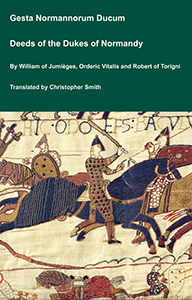
The Deeds of the Dukes of Normandy
The Gesta Normannorum Ducum [The Deeds of the Dukes of Normandy] is a landmark medieval chronicle tracing the rise and fall of the Norman dynasty from its early roots through the pivotal events surrounding the Norman Conquest of England. Originally penned in Latin by the monk William of Jumièges shortly before 1060 and later expanded at the behest of William the Conqueror, the work chronicles the deeds, politics, battles, and leadership of the Norman dukes, especially William’s own claim to the English throne. The narrative combines earlier historical sources with firsthand information and oral testimony to present an authoritative account of Normandy’s transformation from a Viking settlement into one of medieval Europe’s most powerful realms. William’s history emphasizes the legitimacy, military prowess, and governance of the Norman line, framing their expansion, including the conquest of England, as both divinely sanctioned and noble in purpose. Later chroniclers such as Orderic Vitalis and Robert of Torigni continued the history, extending the coverage into the 12th century, providing broader context on ducal rule and its impact. Today this classic work remains a foundational source for understanding Norman identity, medieval statesmanship, and the historical forces that reshaped England and Western Europe between 800AD and 1100AD.
Available at Amazon in eBook and Paperback format.
On 10th April 1390 Bishop Richard Mitford was consecrated Bishop of Chichester.
In 1429 Bishop Thomas Brunce [aged 41] was elected Bishop of Chichester although Bishop Simon Sydenham was awared the position.
On 11th February 1431 Bishop Simon Sydenham was consecrated Bishop of Chichester.
On 24th September 1445 Bishop Adam Moleyns was elected Bishop of Chichester.
On 6th February 1446 Bishop Adam Moleyns was consecrated Bishop of Chichester at Lambeth Palace [Map].
On 23rd March 1450 Bishop Reginald Peacock [aged 55] was translated to Bishop of Chichester.
In January 1459 Bishop Reginald Peacock [aged 64] was forced to resign as Bishop of Chichester.
On 11th February 1478 Bishop Edward Story was translated to Bishop of Chichester.
On 29th November 1503 Bishop Richard Fitzjames was translated to Bishop of Chichester.
In 1508 Bishop Robert Sherbourne [aged 55] was appointed Bishop of Chichester.
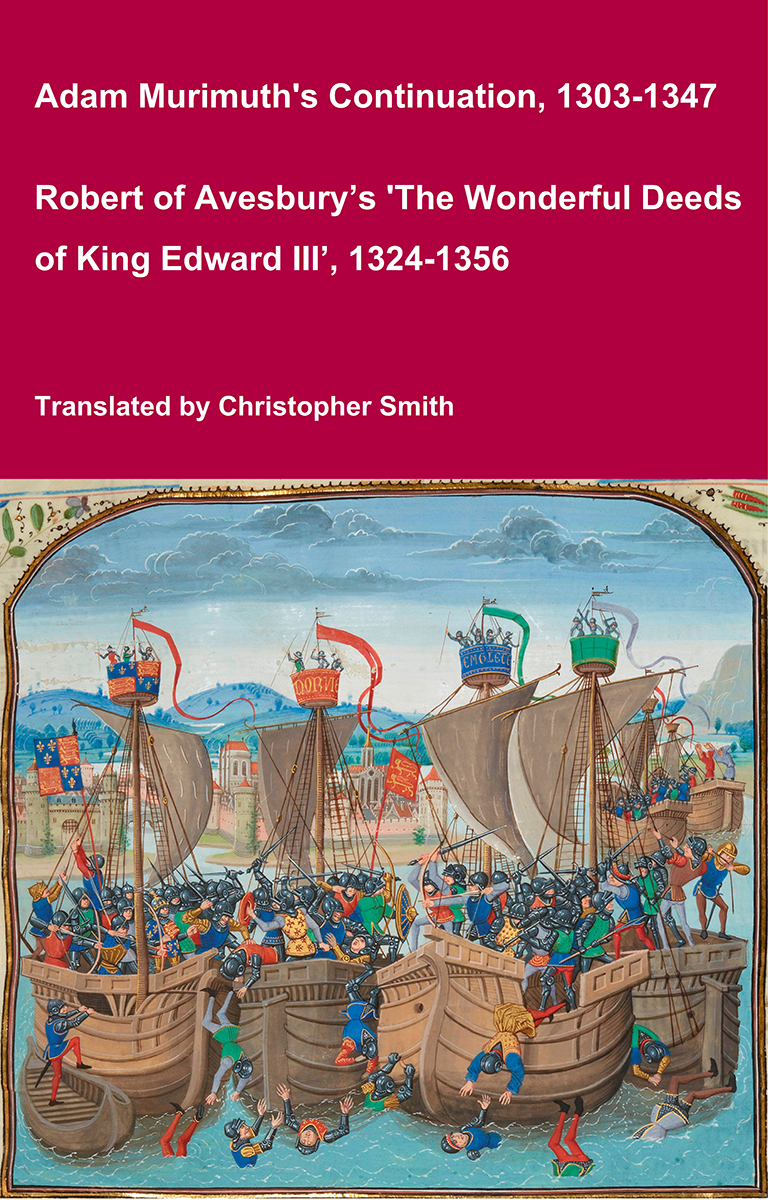
Adam Murimuth's Continuation and Robert of Avesbury’s 'The Wonderful Deeds of King Edward III'
This volume brings together two of the most important contemporary chronicles for the reign of Edward III and the opening phases of the Hundred Years’ War. Written in Latin by English clerical observers, these texts provide a vivid and authoritative window into the political, diplomatic, and military history of fourteenth-century England and its continental ambitions. Adam Murimuth Continuatio's Chronicarum continues an earlier chronicle into the mid-fourteenth century, offering concise but valuable notices on royal policy, foreign relations, and ecclesiastical affairs. Its annalistic structure makes it especially useful for establishing chronology and tracing the development of events year by year. Complementing it, Robert of Avesbury’s De gestis mirabilibus regis Edwardi tertii is a rich documentary chronicle preserving letters, treaties, and official records alongside narrative passages. It is an indispensable source for understanding Edward III’s claim to the French crown, the conduct of war, and the mechanisms of medieval diplomacy. Together, these works offer scholars, students, and enthusiasts a reliable and unembellished account of a transformative period in English and European history. Essential for anyone interested in medieval chronicles, the Hundred Years’ War, or the reign of Edward III.
Available at Amazon in eBook and Paperback format.
On 11th June 1536 Bishop Richard Sampson was elected Bishop of Chichester.

In 1543 Bishop George Day [aged 42] was consecrated Bishop of Chichester by Archbishop Thomas Cranmer [aged 53].
In October 1551 Bishop George Day [aged 50] was deprived of the Bishopric of Chichester.
In 1552 Bishop John Scory [aged 42] was appointed Bishop of Chichester.
Before 30th September 1553 Bishop George Day [aged 52] was restored to the Bishopric of Chichester.
In 1557 Bishop John Christopherson was appointed Bishop of Chichester which post he held until 1558.
In 1559 five new Bishops were consecrated including:
Archbishop Edwin Sandes [aged 40] was consecrated Bishop of Worcester.
Bishop William Barlow [aged 61] was consecrated Bishop of Chichester.
Archbishop Edmund Grindal [aged 40] was consecrated Bishop of London.
In 1596 Bishop Anthony Watson was appointed Bishop of Chichester.
On 31st October 1605 Bishop Lancelot Andrewes [aged 50] was elected Bishop of Chichester.
On 3rd November 1605 Bishop Lancelot Andrewes [aged 50] was consecrated Bishop of Chichester.
On 18th November 1605 Bishop Lancelot Andrewes [aged 50] was installed Bishop of Chichester at Chichester Cathedral [Map].

In 1638 Bishop Brian Duppa [aged 48] was elected Bishop of Chichester.
On 6th February 1642 Bishop Henry King [aged 50] was appointed Bishop of Chichester.
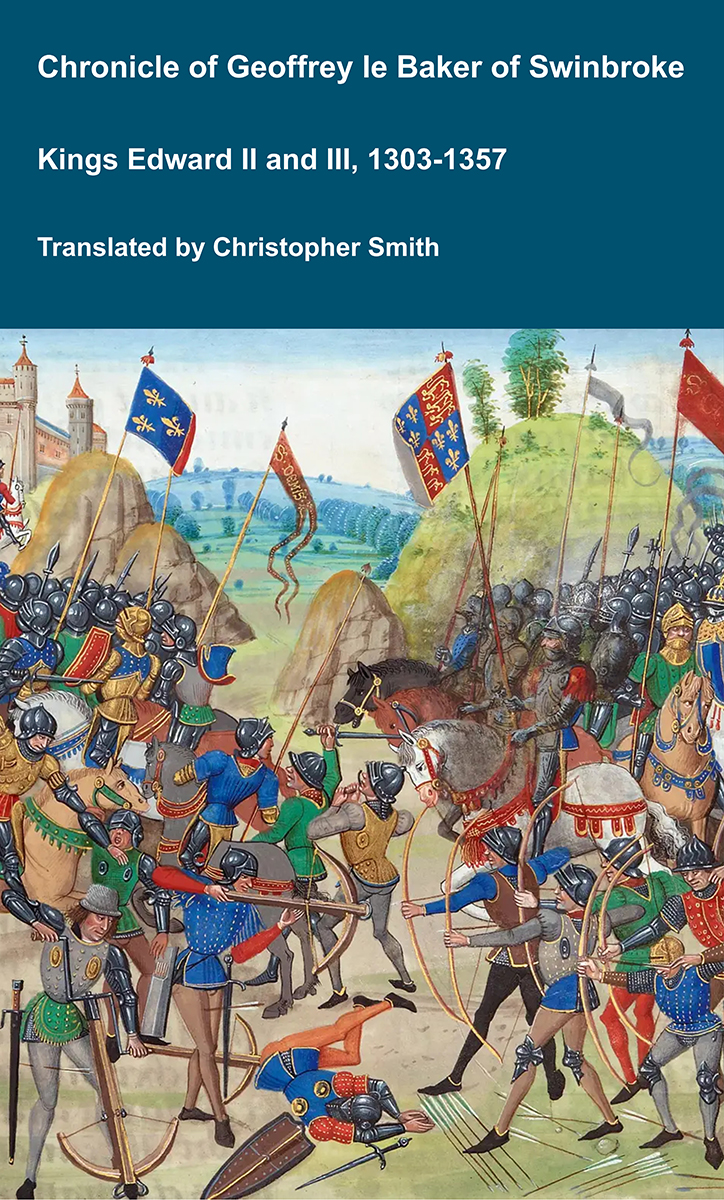
Chronicle of Geoffrey le Baker of Swinbroke
Baker was a secular clerk from Swinbroke, now Swinbrook, an Oxfordshire village two miles east of Burford. His Chronicle describes the events of the period 1303-1356: Gaveston, Bannockburn, Boroughbridge, the murder of King Edward II, the Scottish Wars, Sluys, Crécy, the Black Death, Winchelsea and Poitiers. To quote Herbert Bruce 'it possesses a vigorous and characteristic style, and its value for particular events between 1303 and 1356 has been recognised by its editor and by subsequent writers'. The book provides remarkable detail about the events it describes. Baker's text has been augmented with hundreds of notes, including extracts from other contemporary chronicles, such as the Annales Londonienses, Annales Paulini, Murimuth, Lanercost, Avesbury, Guisborough and Froissart to enrich the reader's understanding. The translation takes as its source the 'Chronicon Galfridi le Baker de Swynebroke' published in 1889, edited by Edward Maunde Thompson.
Available at Amazon in eBook and Paperback format.

In 1669 Bishop Peter Gunning [aged 55] was appointed Bishop of Chichester.
John Evelyn's Diary. 26th March 1675. Dr. Brideoak [aged 62] was elected Bishop of Chichester, on the translation of Dr. Gunning [aged 61] to Ely.
John Evelyn's Diary. 24th March 1676. Dr. Brideoake [aged 63], Bishop of Chichester, preached a mean discourse for a Bishop. I also heard Dr. Fleetwood [aged 72], Bishop of Worcester, on Matt. xxvi. 38, of the sorrows of Christ, a deadly sorrow caused by our sins; he was no great preacher.

On 19th October 1685 Bishop John Lake [aged 61] was translated to Bishop of Chichester.
In 1689 Bishop Simon Patrick [aged 62] was appointed Bishop of Chichester.
On 30th August 1691 Bishop Robert Grove [aged 57] was consecrated Bishop of Chichester.
In 1824 James Lloyd 1st Baronet [aged 61] was appointed Bishop of Chichester.
In 1831 Bishop Edward Maltby [aged 60] was appointed Bishop of Chichester.
In 1836 Bishop William Otter [aged 67] was appointed Bishop of Chichester.