

Abbot John Whethamstede’s Chronicle of the Abbey of St Albans
Abbot John Whethamstede's Register aka Chronicle of his second term at the Abbey of St Albans, 1451-1461, is a remarkable text that describes his first-hand experience of the beginning of the Wars of the Roses including the First and Second Battles of St Albans, 1455 and 1461, respectively, their cause, and their consequences, not least on the Abbey itself. His text also includes Loveday, Blore Heath, Northampton, the Act of Accord, Wakefield, and Towton, and ends with the Coronation of King Edward IV. In addition to the events of the Wars of the Roses, Abbot John, or his scribes who wrote the Chronicle, include details in the life of the Abbey such as charters, letters, land exchanges, visits by legates, and disputes, which provide a rich insight into the day-to-day life of the Abbey, and the challenges faced by its Abbot.
Available at Amazon in eBook and Paperback format.
Lord Lieutenant of Ireland is in Lieutenant.
After 2nd December 1307 Piers Gaveston 1st Earl Cornwall [aged 23] was appointed Lord Lieutenant of Ireland.
In April 1311 Parliament exiled Piers Gaveston 1st Earl Cornwall [aged 27]. Piers Gaveston 1st Earl Cornwall was appointed Lord Lieutenant of Ireland by King Edward II of England [aged 26] who immediately started to plot for his return.
On 19th April 1319 Thomas Beauchamp 11th Earl Warwick [aged 6] and Katherine Mortimer Countess Warwick [aged 5] were married. She by marriage Countess Warwick. An arranged marriage although not clear who arranged it or whose ward Thomas Beauchamp 11th Earl Warwick was (his father Guy Beauchamp 10th Earl Warwick had died four years before) - possibly by King Edward II of England [aged 34] as a means of securing the Welsh March. The Beauchamp family established, the Mortimer family aspirational. The marriage took place after Roger Mortimer 1st Earl March [aged 31] had returned from his tenure as Lord Lieutenant of Ireland and before he rebelled against King Edward II of England in opposition to Hugh "Younger" Despencer 1st Baron Despencer [aged 33]. She the daughter of Roger Mortimer 1st Earl March and Joan Geneville Baroness Mortimer 2nd Baroness Geneville [aged 33]. He the son of Guy Beauchamp 10th Earl Warwick and Alice Tosny Countess Warwick [aged 34]. They were half second cousin once removed. She a great x 4 granddaughter of King John of England.
In 1372 Richard Pembridge [aged 52] refused the offer of Lord Lieutenant of Ireland and as a result was somewhat disgraced thereafter.
In 1386 John Stanley [aged 36] was appointed Lord Lieutenant of Ireland.
In 1413 John Stanley [aged 63] was appointed Lord Lieutenant of Ireland.
In 1428 John Sutton 1st Baron Dudley [aged 27] was appointed Lord Lieutenant of Ireland.
In 1438 Lionel Welles 6th Baron Welles [aged 32] was appointed Lord Lieutenant of Ireland.
On 30th July 1447 Richard Duke of York [aged 35] was appointed Lord Lieutenant of Ireland. An attempt by the Council to isolate Richard.
On 19th July 1483 Edward York Prince of Wales [aged 9] was appointed Lord Lieutenant of Ireland.

Diary of Edward VI. 18th January 1551. The lord Cobhame [aged 54] was apointed to bee generall lieutenant of Irland.1
Note 1. "Jan. xix. Upon consideracion that the French king maketh greate preparacion of warres by sea, specially in Brettaigne, and that he hath alreadie Scotland in possession, being thought by great presumpoions he should meane some enterprise into Irelande, it was resolved preparacions should be made for his resistence both by sea and land: and by the King's owne eleccion the lorde Cobham appointed lieutenant for that purpose." On the 28th the council addressed "A letter to the deputie of Irelande, advertising him of the counsaill's determination touching the sending over of the lord Cobham with a power this next spring, with further circumstances as by the mynute appeareth." (Council Book.) This was afterwards found unnecessary: see the note in p. 310.
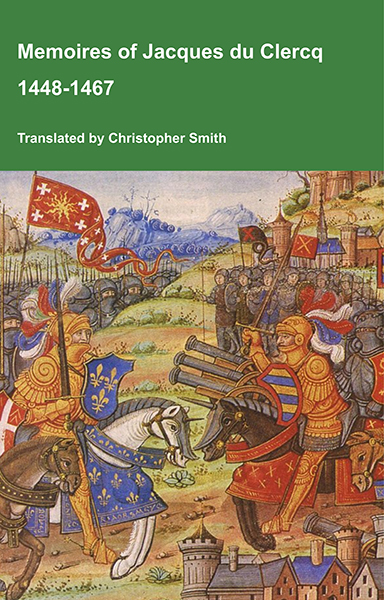
This is a translation of the 'Memoires of Jacques du Clercq', published in 1823 in two volumes, edited by Frederic, Baron de Reissenberg. In his introduction Reissenberg writes: 'Jacques du Clercq tells us that he was born in 1424, and that he was a licentiate in law and a counsellor to Philip the Good, Duke of Burgundy, in the castellany of Douai, Lille, and Orchies. It appears that he established his residence at Arras. In 1446, he married the daughter of Baldwin de la Lacherie, a gentleman who lived in Lille. We read in the fifth book of his Memoirs that his father, also named Jacques du Clercq, had married a lady of the Le Camelin family, from Compiègne. His ancestors, always attached to the counts of Flanders, had constantly served them, whether in their councils or in their armies.' The Memoires cover a period of nineteen years beginning in in 1448, ending in in 1467. It appears that the author had intended to extend the Memoirs beyond that date; no doubt illness or death prevented him from carrying out this plan. As Reissenberg writes the 'merit of this work lies in the simplicity of its narrative, in its tone of good faith, and in a certain air of frankness which naturally wins the reader’s confidence.' Du Clercq ranges from events of national and international importance, including events of the Wars of the Roses in England, to simple, everyday local events such as marriages, robberies, murders, trials and deaths, including that of his own father in Book 5; one of his last entries.
Available at Amazon in eBook and Paperback format.
In 1599 Robert Devereux 2nd Earl Essex [aged 33] was appointed Lord Lieutenant of Ireland.


On 9th May 1671 Colonel Thomas Blood [aged 53] attempted to steal the Crown Jewels from the Tower of London [Map]. He was captured whilst trying to escape the Tower of London [Map] with the Crown. Following his capture he refused to answer to anyone but the King [aged 40]. He was questioned by the King and Prince Rupert Palatinate Simmern 1st Duke Cumberland [aged 51]. For unknown reasons he was pardoned by the King Charles II of England Scotland and Ireland and rewarded with land in Ireland worth £500 per year much to the irritation of James Butler 1st Duke Ormonde [aged 60], Lord Lieutenant of Ireland, whom Blood had attempted to kidnap twice before.

John Evelyn's Diary. 18th April 1680. My Lord was not long since come from his Lord-Lieutenancy of Ireland, where he showed his abilities in administration and government, as well as prudence in considerably augmenting his estate without reproach. He had been Ambassador-extraordinary in Denmark, and, in a word, such a person as became the son of that worthy hero his father to be, the late Lord Capel, who lost his life for King Charles I.

John Evelyn's Diary. 2nd September 1685. Lord Clarendon (Lord Privy Seale) wrote to let me know that the King being pleas'd to send him Lord Lieutenant into Ireland, was also pleas'd to nominate me one of the Commissrs to execute ye office of Privy Seale during his Lieutenancy there, it behoving me to wait upon his Ma* to give him thanks for this greate honour.
John Evelyn's Diary. 26th October 1685. We return'd to London, having ben treated with all sorts of cheere and noble freedom by that most religious and vertuous lady. She was now preparing to go for Ireland with her husband, made Lord Deputy, and went to this country-house and antient seate of her father and family, to set things in order during her absence; but never were good people and neighbours more concern'd than all the country (the poor especialy) for the departure of this charitable woman; every one was in teares, and she as unwilling to part from them. There was amongst them a maiden of primitive life, the daughter of a poore labouring man, who had sustain'd her parents (sometime since dead) by her labour, and has for many years refus'd marriage, or to receive any assistance from the parish, besides ye little hermitage my lady gives her rent-free; she lives on foure pence a day, which she gets by spinning; says she abounds and can give almes to others, Jiving in greate humility and content, without any apparent affectation or singularity; she is continualy working, praying or reading, gives a good account of her knowledge in religion, visites the sick; is not in the least given to talke; very modest, of a simple not unseemly behaviour; of a comely countenance, clad very plaine, but cleane and tight. In sum, she appeares a saint of an extraordinary sort, in so religious a life as is seldom met with in villages now a-daies.
In 1693 Henry Sidney 1st Earl Romney [aged 51] was appointed Lord Lieutenant of Ireland.
Calendar of the State Papers of William and Mary 1693 Febaruary. 11th February 1693. Whitehall. The Earl of Nottingham to the Lord Lieutenant of Ireland.
The King has promoted Colonel Cunningham as colonel of one of the new raised regiments; his post as lieut.-colonel of Colonel HKchlin's regiment therefore becomes void, and the King commands me to recommend to you the bearer, Lieut.-Colonel Oliver Long as successor to Colonel Cunningham. — [ bid.]
John Evelyn's Diary. 8th December 1700. Great alterations of officers at Court, and elsewhere, - Lord Chief Justice Treby died; he was a learned man in his profession, of which we have now few, never fewer; the Chancery requiring so little skill in deep law-learning, if the practicer can talk eloquently in that Court; so that probably few care to study the law to any purpose. Lord Marlborough [aged 50] Master of the Ordnance, in place of Lord Romney [aged 59] made Groom of the Stole. The Earl of Rochester [aged 58] goes Lord Lieutenant of Ireland.


In 1710. John James Baker. Known as "Whig Junto". From www.tate.org ... This is a portrait of a political group named the Whig Junto and a Black servant, whose identity is unknown. It is the only known portrait of the Junto, which was an ideologically close-knit group of political peers who formed the leadership of the Whig party in the late seventeenth and early eighteenth centuries. The members of the group are shown gathered together on a grand terrace, while a vista onto a garden is revealed by the Black servant, who holds back a heavy velvet curtain. The grand architectural setting is imagined, and is deliberately evocative of power and status. The picture was commissioned by Edward Russell, 1st Earl of Orford [aged 57], who stands on the right, as if welcoming the company. It is not known if Orford had a Black servant in his household or whether the individual was included to emphasise Orford's wealth and social standing. At the time, Britain was profiting heavily from the trade of enslaved people from West Africa. The presence of Black servants, many of whom were enslaved, in both aristocratic and merchant households had come to symbolise property and wealth. This reflected the dehumanising view of enslaved Black people held by the British elite.
The scene conjures one of the Junto's country house meetings where, in between parliamentary sessions, policy and party strategy were formulated. From left to right the sitters round the table can be identified as Charles Spencer, 3rd Earl of Sunderland [aged 34]; Thomas Wharton, 1st Marquess of Wharton [aged 61]; John Somers, 1st Baron Somers (1C 1697) [aged 58]; Charles Montagu, 1st Earl of Halifax [aged 48]; and William Cavendish, 2nd Duke of Devonshire [aged 38]. The lavish surroundings probably represent Orford's house, Chippenham, where Junto meetings sometimes took place. It was also ideally located for the nearby Newmarket horse races, which the members of the Junto frequently attended when parliament was not sitting.
The portrait is dated 1710, before the crushing electoral defeat of the Whigs in October of that year. It shows the political allies while in power, when Sunderland was Secretary of State, Wharton Lord Lieutenant of Ireland, Somers Lord President of the Privy Council, Devonshire Lord Steward and a member of the Privy Council, and Orford First Lord of the Admiralty. On the surface the portrait shows a relaxed gathering of fellow connoisseurs, seated round a table consulting antique medals and books of prints. Fittingly, Somers and Halifax sit at the centre of the company, holding a book and handling a medal respectively. Both were known collectors and antiquarians - Somers was one of the founders of the Whig Kit-Cat Club, a convivial drinking and dining club, but which also had a political propagandist agenda; he had also purchased the Resta collection of drawings from Italy in 1709. Halifax had a celebrated library and a collection of antique medals (sold in 1740), to which those being consulted presumably allude. Behind this exterior of cultural appreciation, however, the portrait advertises Whig policy in 1709-10, which supported the continuation of war against France in opposition to Tory calls for peace. The two visible prints are friezes from Trajan's column showing episodes from the Dacian wars, with the Roman army crossing the Danube. The viewer is invited to make parallels between the valour and victories of the Roman emperors and the current military greatness achieved for Britain by the Duke of Marlborough's campaigns. The globe, showing the Pacific, presumably alludes to Whig foreign policy ambitions beyond Europe. By defeating France in Europe, they aimed to gain commercial access to Spanish American trade routes. It reflects the competitive European colonial pursuit of new markets, including the selling of enslaved West African people to Spanish territories overseas.
John James Baker (or Backer, or Bakker) is thought to have been Flemish, from Antwerp. He was Godfrey Kneller's [aged 63] (1646-1723) long-time studio assistant and drapery painter, and this is his largest, most ambitious and complex work. The symbolic programme was presumably devised by Orford in discussion with Baker. The Duke of Devonshire was not a regular member of the Junto, although an increasingly important Whig peer, but his inclusion here is presumably because of his kinship relationship with Orford. The picture is thus a demonstration of Orford's private as well as professional networks, and also his pride and ambition. It would have been displayed at Chippenham in the newly appointed, fashionable interiors, alongside other works that Orford commissioned to advertise his public achievement and the private and professional networks that sustained his power and influence.


In 1720 Charles Fitzroy 2nd Duke Grafton [aged 36] was appointed Lord Lieutenant of Ireland.
In 1765 Thomas Thynne 1st Marquess of Bath [aged 30] was appointed Lord Lieutenant of Ireland.
William of Worcester's Chronicle of England
William of Worcester, born around 1415, and died around 1482 was secretary to John Fastolf, the renowned soldier of the Hundred Years War, during which time he collected documents, letters, and wrote a record of events. Following their return to England in 1440 William was witness to major events. Twice in his chronicle he uses the first person: 1. when writing about the murder of Thomas, 7th Baron Scales, in 1460, he writes '… and I saw him lying naked in the cemetery near the porch of the church of St. Mary Overie in Southwark …' and 2. describing King Edward IV's entry into London in 1461 he writes '… proclaimed that all the people themselves were to recognize and acknowledge Edward as king. I was present and heard this, and immediately went down with them into the city'. William’s Chronicle is rich in detail. It is the source of much information about the Wars of the Roses, including the term 'Diabolical Marriage' to describe the marriage of Queen Elizabeth Woodville’s brother John’s marriage to Katherine, Dowager Duchess of Norfolk, he aged twenty, she sixty-five or more, and the story about a paper crown being placed in mockery on the severed head of Richard, 3rd Duke of York.
Available at Amazon in eBook and Paperback format.
In 1776 John Hobart 2nd Earl Buckinghamshire [aged 52] was appointed Lord Lieutenant of Ireland.


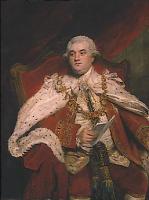
In 1783 Robert Henley 2nd Earl Northington [aged 35] was appointed Lord Lieutenant of Ireland which office he held until the 12th of February 1784.
On 11th February 1784 Charles Manners 4th Duke Rutland [aged 29] was appointed Lord Lieutenant of Ireland.
In 1803 King George III of Great Britain and Ireland [aged 64] created new Garter Knights as follows:
624th John Henry Manners 5th Duke Rutland [aged 25].
625th Philip Yorke 3rd Earl of Hardwicke [aged 45]. His brother Admiral Joseph Sydney Yorke [aged 34] stood in for the Earl at the investiture since the Earl was Lord Lieutenant of Ireland at the time and unable to be present.
In 1817 Charles Chetwynd-Talbot 2nd Earl Talbot [aged 39] was appointed Lord Lieutenant of Ireland.


In 1855 George Howard 7th Earl Carlisle [aged 52] was appointed Lord Lieutenant of Ireland which office he held until 1858.
In 1859 George Howard 7th Earl Carlisle [aged 56] was appointed Lord Lieutenant of Ireland which office he held until 1864.
In 1915 Ivor Churchill Guest 1st Viscount Wimborne [aged 41] was appointed Lord Lieutenant of Ireland.