

Abbot John Whethamstede’s Chronicle of the Abbey of St Albans
Abbot John Whethamstede's Register aka Chronicle of his second term at the Abbey of St Albans, 1451-1461, is a remarkable text that describes his first-hand experience of the beginning of the Wars of the Roses including the First and Second Battles of St Albans, 1455 and 1461, respectively, their cause, and their consequences, not least on the Abbey itself. His text also includes Loveday, Blore Heath, Northampton, the Act of Accord, Wakefield, and Towton, and ends with the Coronation of King Edward IV. In addition to the events of the Wars of the Roses, Abbot John, or his scribes who wrote the Chronicle, include details in the life of the Abbey such as charters, letters, land exchanges, visits by legates, and disputes, which provide a rich insight into the day-to-day life of the Abbey, and the challenges faced by its Abbot.
Available at Amazon in eBook and Paperback format.
MP Southampton is in Member Parliament.
In 1572 Henry Wallop (age 32) was elected MP Southampton.
In 1581 Fulk Greville 13th Baron Latimer 5th Baron Willoughby 1st Baron Brooke (age 26) was elected MP Southampton.
In 1624 John Mill 1st Baronet (age 36) was elected MP Southampton. He was re-elected in 1625 and 1626.
In April 1640 John Mill 1st Baronet (age 52) was elected MP Southampton.
In 1661 Richard Ford (age 47) was elected MP Southampton.
In 1729 William Heathcote 1st Baronet (age 35) was elected MP Southampton.
In 1780 Hans Sloane Stanley (age 40) was elected MP Southampton.
In 1784 James Amyatt of Freemantle in Hampshire (age 49) was elected MP Southampton which seat he held until 1806.
In 1841 James Bruce 12th Earl Kincardine 8th Earl Elgin (age 29) was elected MP Southampton but the election was declared void on petition.
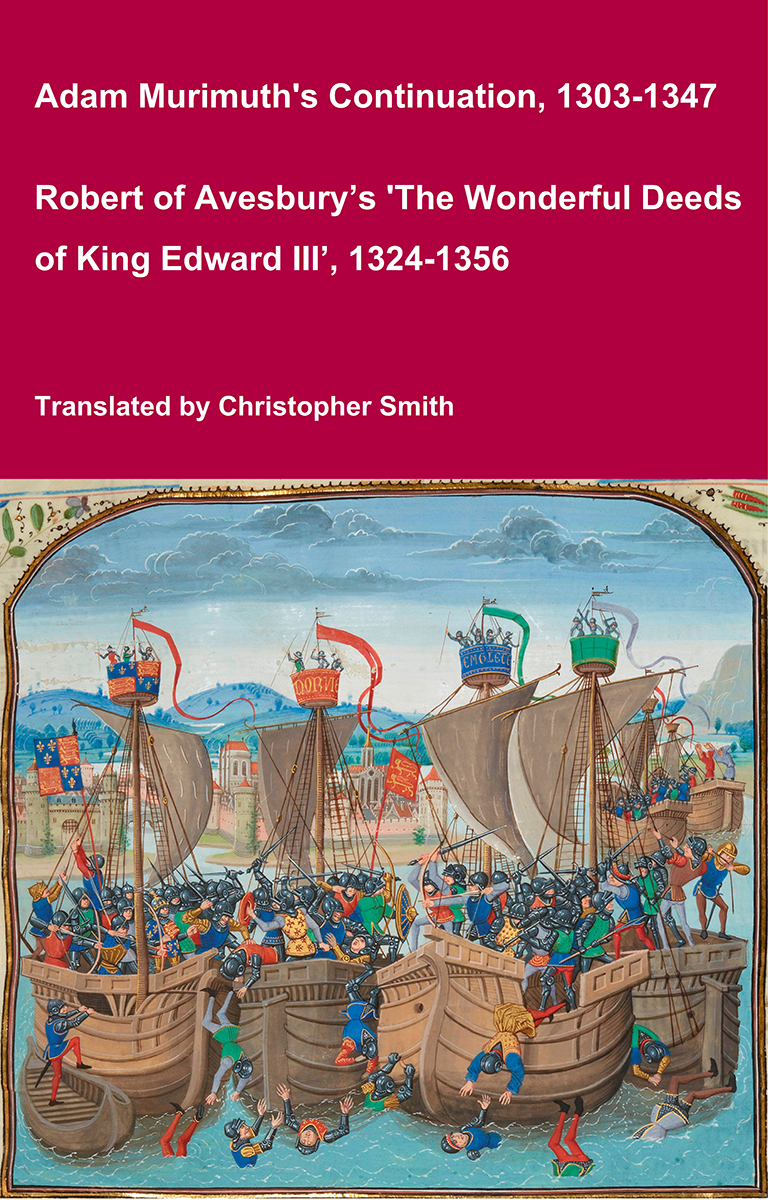
Adam Murimuth's Continuation and Robert of Avesbury’s 'The Wonderful Deeds of King Edward III'
This volume brings together two of the most important contemporary chronicles for the reign of Edward III and the opening phases of the Hundred Years’ War. Written in Latin by English clerical observers, these texts provide a vivid and authoritative window into the political, diplomatic, and military history of fourteenth-century England and its continental ambitions. Adam Murimuth Continuatio's Chronicarum continues an earlier chronicle into the mid-fourteenth century, offering concise but valuable notices on royal policy, foreign relations, and ecclesiastical affairs. Its annalistic structure makes it especially useful for establishing chronology and tracing the development of events year by year. Complementing it, Robert of Avesbury’s De gestis mirabilibus regis Edwardi tertii is a rich documentary chronicle preserving letters, treaties, and official records alongside narrative passages. It is an indispensable source for understanding Edward III’s claim to the French crown, the conduct of war, and the mechanisms of medieval diplomacy. Together, these works offer scholars, students, and enthusiasts a reliable and unembellished account of a transformative period in English and European history. Essential for anyone interested in medieval chronicles, the Hundred Years’ War, or the reign of Edward III.
Available at Amazon in eBook and Paperback format.

In 1862 Colonel William Anderson Rose (age 41) was elected MP Southampton.