

The Deeds of the Dukes of Normandy
The Gesta Normannorum Ducum [The Deeds of the Dukes of Normandy] is a landmark medieval chronicle tracing the rise and fall of the Norman dynasty from its early roots through the pivotal events surrounding the Norman Conquest of England. Originally penned in Latin by the monk William of Jumièges shortly before 1060 and later expanded at the behest of William the Conqueror, the work chronicles the deeds, politics, battles, and leadership of the Norman dukes, especially William’s own claim to the English throne. The narrative combines earlier historical sources with firsthand information and oral testimony to present an authoritative account of Normandy’s transformation from a Viking settlement into one of medieval Europe’s most powerful realms. William’s history emphasizes the legitimacy, military prowess, and governance of the Norman line, framing their expansion, including the conquest of England, as both divinely sanctioned and noble in purpose. Later chroniclers such as Orderic Vitalis and Robert of Torigni continued the history, extending the coverage into the 12th century, providing broader context on ducal rule and its impact. Today this classic work remains a foundational source for understanding Norman identity, medieval statesmanship, and the historical forces that reshaped England and Western Europe between 800AD and 1100AD.
Available at Amazon in eBook and Paperback format.
Master of the Horse is in Master.
1470 March 1470 Welles' Rebellion and Battle of Losecoat Field aka Empingham
In 1397 Richard Redman [aged 47] was appointed Master of the Horse.
On 20th November 1399 Robert Waterton [aged 39] was appointed Master of the Horse to the newly crowned King Henry IV of England [aged 32].
Before 3rd February 1470 Robert Welles 8th Baron Willoughby 8th Baron Welles attacked Gainsborough Old Hall, Lincolnshire [Map] home of Thomas Burgh 1st Baron Burgh of Gainsborough [aged 39], a senior Yorkist, Edward IV's [aged 27] Master of the Horse. It isn't known whether this attack was a consequence of local or national issues. King Edward IV of England summoned Robert's father Richard Welles 7th Baron Welles, Baron Willoughby [aged 42] and uncle-in-law Thomas Dymoke [aged 42] (married to Margaret Welles [aged 38] sister of Robert Welles 8th Baron Willoughby 8th Baron Welles) to London. Both initially went into Sanctuary, Westminster Abbey [Map] but were pardoned on 3rd March 1470.
In 1479 John Cheney 1st Baron Cheyne [aged 37] was appointed Master of the Horse.
Around 1504 Thomas Brandon was appointed Master of the Horse.
On 6th November 1515 Henry Guildford [aged 26] was appointed Master of the Horse.


In 1522 Nicholas Carew of Beddington in Surrey [aged 26] was appointed Master of the Horse.
Before 1533 William Goring of Burton in Sussex [aged 32] was appointed Master of the Horse.
On 1st June 1533 the six months pregnant Queen Anne Boleyn of England [aged 32] was crowned Queen Consort England by Archbishop Thomas Cranmer [aged 43] at Westminster Abbey [Map]. See Coronation of Anne Boleyn.
John de Vere 15th Earl of Oxford [aged 62] bore the Crown. Henry Grey 1st Duke of Suffolk [aged 16] carried the Salt. Margaret Wotton Marchioness Dorset [aged 46] rode in the procession. William Coffin [aged 38] was appointed Master of the Horse. Robert Radclyffe 1st Earl of Sussex [aged 50] served as Lord Sewer. Henry Parker [aged 20] and William Coffin were knighted. Thomas Berkeley 6th Baron Berkeley [aged 28], Thomas Stanley 2nd Baron Monteagle [aged 26] and Henry Capell [aged 27] were created Knight of the Bath. Margaret Wotton Marchioness Dorset rode in the procession. Arthur Hopton [aged 44] attended.
Thomas More [aged 55] refused to attend. Shortly thereafter, More was charged with accepting bribes, but the charges had to be dismissed for lack of any evidence.
Anne Braye Baroness Cobham [aged 32] was the attendant horsewoman.
Charles Wriothesley [aged 25] attended.


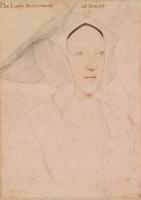


Letters and Papers Foreign and Domestic Henry VIII 1539. 32. Sir Anth. Brown [aged 36]. To be Master of the Horse, with fees of 40l. a year, vice Sir Nich. Carewe [aged 40] attainted. Westm. 27 February [1536] 30 Hen. VIII. Del. Westm. 12 March. P.S. Pat. p. 7, m. 1.
In 1544 Robert Tyrwhitt Master [aged 41] was appointed Master of the Horse.
In 1553 Edward Hastings 1st Baron Hastings of Loughborough [aged 32] was appointed Master of the Horse by Queen Mary I of England and Ireland [aged 36].


Henrici Quinti, Angliæ Regis, Gesta, is a first-hand account of the Agincourt Campaign, and subsequent events to his death in 1422. The author of the first part was a Chaplain in King Henry's retinue who was present from King Henry's departure at Southampton in 1415, at the siege of Harfleur, the battle of Agincourt, and the celebrations on King Henry's return to London. The second part, by another writer, relates the events that took place including the negotiations at Troye, Henry's marriage and his death in 1422.
Available at Amazon in eBook and Paperback format.

Henry Machyn's Diary. 5th August 1553. And the Qwene [aged 37] grace mad ser Edward Hastyngs [aged 32] master of the horse, and ser Thomas Jernyngham [Note. Mistake for Henry made before.] vysse-chamburlayne and captayn of the gard, and master Rochastur [aged 59] master controller; my lord marqwes of Wynchaster [aged 70] lord tresorer of England, and dyvers odur offeserse, and dyvers odur.

In April 1554 Anthony Browne 1st Viscount Montagu [aged 25] was appointed Master of the Horse.
On 25th December 1557 Henry Jerningham of Cotesby Hall [aged 45] was appointed Master of the Horse.
Henry Machyn's Diary. 25th December 1557. The xxv day of Desember wher dyvers [courtiers] was removyd unto he-her [higher] rommys; as ser Edward Hastynges [aged 36], master of the quen's hors, was mad lord chamburlayn; and ser Thomas Cornwalles comptroller; ser Hare Jarnyngham [aged 45] the master of the hors; and ser Hare Benefeld [aged 48] fee-chamburlayn and captayn of the gard.
In June 1587 Robert Devereux 2nd Earl Essex [aged 21] was appointed Master of the Horse.


On 1st January 1616 George Villiers 1st Duke of Buckingham [aged 23] was appointed Master of the Horse. See Diary of Anne Clifford.


In 1628 Henry Rich 1st Earl Holland [aged 37] was appointed Master of the Horse.


Samuel Pepys' Diary. 22nd April 1661. King's Going from ye Tower to White Hall1. Up early and made myself as fine as I could, and put on my velvet coat, the first day that I put it on, though made half a year ago. And being ready, Sir W. Batten [aged 60], my Lady, and his two daughters and his son and wife, and Sir W. Pen [aged 39] and his son and I, went to Mr. Young's, the flag-maker, in Corne-hill2; and there we had a good room to ourselves, with wine and good cake, and saw the show very well.
In which it is impossible to relate the glory of this day, expressed in the clothes of them that rid, and their horses and horses clothes, among others, my Lord Sandwich's [aged 35]. Embroidery and diamonds were ordinary among them. The Knights of the Bath was a brave sight of itself; and their Esquires, among which Mr. Armiger was an Esquire to one of the Knights. Remarquable were the two men that represent the two Dukes of Normandy and Aquitane. The Bishops come next after Barons, which is the higher place; which makes me think that the next Parliament they will be called to the House of Lords. My Lord Monk [aged 52] rode bare after the King, and led in his hand a spare horse, as being Master of the Horse. The King, in a most rich embroidered suit and cloak, looked most noble. Wadlow3, the vintner, at the Devil [Map]; in Fleetstreet, did lead a fine company of soldiers, all young comely men, in white doublets. There followed the Vice-Chamberlain, Sir G. Carteret [aged 51], a company of men all like Turks; but I know not yet what they are for.
The streets all gravelled, and the houses hung with carpets before them, made brave show, and the ladies out of the windows, one of which over against us I took much notice of, and spoke of her, which made good sport among us. So glorious was the show with gold and silver, that we were not able to look at it, our eyes at last being so much overcome with it.
Both the King [aged 30] and the Duke of York [aged 27] took notice of us, as he saw us at the window. The show being ended, Mr. Young did give us a dinner, at which we were very merry, and pleased above imagination at what we have seen. Sir W. Batten going home, he and I called and drunk some mum4 and laid our wager about my Lady Faulconbridge's name5, which he says not to be Mary, and so I won above 20s. So home, where Will and the boy staid and saw the show upon Towre Hill, and Jane at T. Pepys's, The. Turner [aged 9], and my wife at Charles Glassecocke's, in Fleet Street. In the evening by water to White Hall to my Lord's, and there I spoke with my Lord. He talked with me about his suit, which was made in France, and cost him £200, and very rich it is with embroidery. I lay with Mr. Shepley, and Coronacion Day.
Note 1. The king in the early morning of the 22nd went from Whitehall to the Tower by water, so that he might proceed from thence through the City to Westminster Abbey, there to be crowned.
Note 2. The members of the Navy Office appear to have chosen Mr. Young's house on account of its nearness to the second triumphal arch, situated near the Royal Exchange [Map], which was dedicated to the Navy.
Note 3. Simon Wadlow was the original of "old Sir Simon the king", the favourite air of Squire Western in "Tom Jones". "Hang up all the poor hop-drinkers, Cries old Sim, the king of skinkers". Ben Jonson, Verses over the door into the Apollo.
Note 4. Mum. Ale brewed with wheat at Brunswick. "Sedulous and stout With bowls of fattening mum". J. Phillips, Cyder, Vol. ii. p. 231.
Note 5. Mary [aged 52], third daughter of Oliver Cromwell, and second wife of Thomas Bellasis [aged 62], second Viscount Fauconberg, created Earl of Fauconberg, April 9th, 1689.


Samuel Pepys' Diary. 8th March 1662. In the Hall I met with Serjeant Pierce; and he and I to drink a cup of ale at the Swan [Map], and there he told me how my Lady Monk [aged 42] hath disposed of all the places which Mr. Edwd. Montagu hoped to have had, as he was Master of the Horse to the Queen [aged 23]; which I am afraid will undo him, because he depended much upon the profit of what he should make by these places. He told me, also, many more scurvy stories of him and his brother Ralph, which troubles me to hear of persons of honour as they are.
John Evelyn's Diary. 15th July 1685. Thus ended this quondam Duke [aged 36], darling of his father and ye ladies, being extreamly handsome and adroit; an excellent souldier and dancer, a favourite of the people, of an easy nature, debauch'd by lust, seduc'd by crafty knaves who would have set him up only to make a property, and took the opportunity of the King being of another religion, to gather a party of discontented men. He fail'd, and perish'd. He was a lovely person, had a virtuous and excellent lady that brought him greate riches, and a second dukedom in Scotland. He was Master of the Horse, General of the King his father's Army, Gentleman of the Bedchamber, Knight of the Garter, Chancellor of Cambridge, in a word had accumulations without end. See what ambition and want of principles brought him to! He was beheaded on Tuesday 14th July [Note. Most sources quote 15th July 1685]. His mother, whose name was Barlow [Note. Lucy Walter is often spoken of incorrectly as Mrs. Walters or Waters, and during her career she seems to have adopted the alias of Mrs. Barlo or Barlow (the name of a family with which the Walters of Pembrokeshire had intermarried). From Dictionary of National Biography.], daughter of some very meane creatures, was a beautiful strumpet, whom I had often seene at Paris; she died miserably without any thing to bury her; yet this Perkin had ben made to believe that the King had married her; a monstrous and ridiculous forgerie; and to satisfy the world of the iniquity of the report, the King his father (If his father he really was, for he most resembl'd one Sidney, who was familiar with his mother) publickly and most solemnly renounc'd it, to be so enter'd in the Council Booke some yeares since, with all ye Privy Councellors at testation.

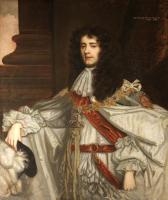
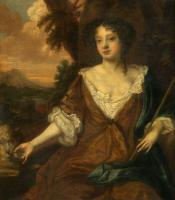
In 1760 Francis Hastings 10th Earl Huntingdon [aged 30] was appointed Master of the Horse which position he held until 1761.

In 1761 John Manners 3rd Duke Rutland [aged 64] was appointed Master of the Horse.
The History of William Marshal was commissioned by his son shortly after William’s death in 1219 to celebrate the Marshal’s remarkable life; it is an authentic, contemporary voice. The manuscript was discovered in 1861 by French historian Paul Meyer. Meyer published the manuscript in its original Anglo-French in 1891 in two books. This book is a line by line translation of the first of Meyer’s books; lines 1-10152. Book 1 of the History begins in 1139 and ends in 1194. It describes the events of the Anarchy, the role of William’s father John, John’s marriages, William’s childhood, his role as a hostage at the siege of Newbury, his injury and imprisonment in Poitou where he met Eleanor of Aquitaine and his life as a knight errant. It continues with the accusation against him of an improper relationship with Margaret, wife of Henry the Young King, his exile, and return, the death of Henry the Young King, the rebellion of Richard, the future King Richard I, war with France, the death of King Henry II, and the capture of King Richard, and the rebellion of John, the future King John. It ends with the release of King Richard and the death of John Marshal.
Available at Amazon in eBook and Paperback format.

In 1768 Henry Somerset 5th Duke Beaufort [aged 23] was appointed Master of the Horse to the Queen Consort.
In 1790 George Harcourt 2nd Earl Harcourt [aged 53] was appointed Master of the Horse to Charlotte Mecklenburg Strelitz Queen Consort England [aged 45] which position he held until his death in 1809.


In 1795 George Bussy Villiers 4th Earl Jersey [aged 59] was appointed Master of the Horse to the Prince of Wales, the future King George IV of Great Britain and Ireland [aged 32].


In 1804 Francis Ingram Seymour-Conway 2nd Marquess Hertford [aged 60] was appointed Master of the Horse by William "The Younger" Pitt [aged 44].


The London Gazette 15888. Whitehall, February 11, 1806.
The King has been pleased .to appoint the Right Honorable Henry Earl of Carnarvon [aged 64] to be Master of the Horse to His Majesty.
The London Gazette 25486. Whitehall, July 1, 1885. The Queen [aged 66] has been pleased to direct Letters Patent to be passed under the Great Seal of the United Kingdom of Great Britain and Ireland, appointing the Right Honourable Orlando George Charles [aged 66], Earl of Bradford, to be Master of the Horse to Her Majesty.
The London Gazette 26321. Whitehall, August 30, 1892.
The Queen [aged 73] has been pleased to direct Letters Patent to be passed under the Great Seal of the United Kingdom of Great Britain and Ireland, appointing the Right Honourable William John, Viscount Oxenbridge [aged 63], to be Master of the Horse to Her Majesty.
The London Gazette 26496. Crown Office, March 19, 1894.
The Queen [aged 74] has been pleased by Letters Patent to appoint the Right Honourable Richard Edmund Saint Lawrence, Earl of Cork and Orrery, K.P., to be Master of Her Majesty's Horses.