


Prebendary is in Lords Spritual England.

In 1661 Archbishop John Dolben (age 36) was appointed Prebendary London.
In 1449 Archbishop Lawrence Booth (age 29) was appointed Prebendary St Paul's Cathedral.
In 1545 Dean William May was appointed Prebendary St Paul's Cathedral.

In 1676 Thomas Gale (age 41) was appointed Prebendary St Paul's Cathedral.

John Evelyn's Diary. 15th March 1684. At Whitehall [Map] preached Mr. Henry Godolphin (age 35), a prebend of St. Paules, and brother to my deare friend Sydnie (age 38), on 55 Isaiah 7. I dined at the Lord Keeper's (age 46), and brought to him Sir John Chardin (age 40), who shewed him his accurate draughts of his travells in Persia.
On 26th June 1888 Bishop John Wogan Festing (age 50) was appointed Prebendary of Brondesbury in St Paul's Cathedral.
On 30th March 1663 Robert South (age 28) was appointed Prebendary Westminster Abbey.
John Evelyn's Diary. 9th August 1675. Dr. Sprat (age 40), prebend of Westminster, and Chaplain to the Duke of Buckingham (age 47), preached on the 3d Epistle of Jude, showing what the primitive faith was, how near it and how excellent that of the Church of England, also the danger of departing from it.


In 1679 Richard Annesley 3rd Baron Altham (age 24) was appointed Prebendary Westminster Abbey.

On 4th October 1806 Bishop Joseph Allen (age 36) was appointed Prebendary Westminster Abbey.
In 1595 Charles Fotherby (age 46) was appointed Archdeacon of Canterbury and Prebendary of Canterbury.

Chronicle of a Bourgeois of Valenciennes
Récits d’un bourgeois de Valenciennes aka The Chronicle of a Bourgeois of Valenciennes is a vivid 14th-century vernacular chronicle written by an anonymous urban chronicler from Valenciennes in the County of Hainaut. It survives in a manuscript that describes local and regional history from about 1253 to 1366, blending chronology, narrative episodes, and eyewitness-style accounts of political, military, and social events in medieval France, Flanders, and the Low Countries. The work begins with a chronological framework of events affecting Valenciennes and its region under rulers such as King Philip VI of France and the shifting allegiances of local nobility. It includes accounts of conflicts, sieges, diplomatic manoeuvres, and the impact of broader struggles like the Hundred Years’ War on urban life in Hainaut. Written from the perspective of a burgher (bourgeois) rather than a monastery or royal court, the chronicle offers a rare lay viewpoint on high politics and warfare, reflecting how merchants, townspeople, and civic institutions experienced the turbulence of the 13th and 14th centuries. Its narrative style combines straightforward reporting of events with moral and civic observations, making it a valuable source for readers interested in medieval urban society, regional politics, and the lived experience of war and governance in pre-modern Europe.
Available at Amazon in eBook and Paperback format.
In 1596 Bishop Martin Fortherby (age 36) was appointed Prebendary of Canterbury.

In 1670 Archbishop John Tillotson (age 39) was appointed Prebendary of Canterbury.
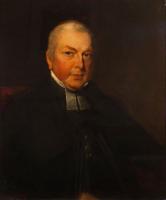
On 30th November 1799 Charles Henry Hall (age 36) was appointed Prebendary of the second stall of Christ Church Cathedral, Oxford [Map].
In December 1624 Bishop John Cosins (age 30) was appointed Prebendary of Durham.
In 1768 Reverend Newton Ogle (age 42) was appointed Prebendary of Durham of the 7th stall which office he held until his death in 1804.

Around 1441 Charles Hervey was appointed Prebendary of Ely Cathedral.
In 1725 George Baker (age 38) was appointed Prebendary of Exeter Cathedral which office he held for life.
On 5th May 1748 Charles Lyttelton (age 34) was appointed Prebendary of Exeter Cathedral.
In 1798 Charles Henry Hall (age 35) was appointed Bampton lecturer and Prebendary of Exeter Cathedral.
In 1694 Reverend John Clutton was appointed Prebendary of Hereford Cathedral.
In 1505 Bishop Thomas Ruthall (age 33) was appointed Prebendary of Lincoln Cathedral.
In 1660 Bishop Thomas Sprat (age 25) was appointed Prebendary of Lincoln Cathedral.
Before 6th February 1737 Edward Fane (age 63) was appointed Prebendary of Lincoln Cathedral.
William of Worcester's Chronicle of England
William of Worcester, born around 1415, and died around 1482 was secretary to John Fastolf, the renowned soldier of the Hundred Years War, during which time he collected documents, letters, and wrote a record of events. Following their return to England in 1440 William was witness to major events. Twice in his chronicle he uses the first person: 1. when writing about the murder of Thomas, 7th Baron Scales, in 1460, he writes '… and I saw him lying naked in the cemetery near the porch of the church of St. Mary Overie in Southwark …' and 2. describing King Edward IV's entry into London in 1461 he writes '… proclaimed that all the people themselves were to recognize and acknowledge Edward as king. I was present and heard this, and immediately went down with them into the city'. William’s Chronicle is rich in detail. It is the source of much information about the Wars of the Roses, including the term 'Diabolical Marriage' to describe the marriage of Queen Elizabeth Woodville’s brother John’s marriage to Katherine, Dowager Duchess of Norfolk, he aged twenty, she sixty-five or more, and the story about a paper crown being placed in mockery on the severed head of Richard, 3rd Duke of York.
Available at Amazon in eBook and Paperback format.
Before 1755 Henry Best (age 23) was appointed Prebendary of Lincoln Cathedral.
Before 1782 Henry Best (age 50) was appointed Prebendary of Lincoln Cathedral.
In 1870 Bishop John Wordsworth (age 27) was appointed Prebendary of Lincoln Cathedral.
In 1517 Bishop Richard Sampson was appointed Prebendary of Newbald.
On 27th September 1815 Prebendary Joseph Parsons (age 53) was appointed Prebendary of Peterborough Cathedral.
In 1502 Bishop Thomas Ruthall (age 30) was appointed Prebendary of Wells Cathedral.
On 25th March 1848 Harry Mengden Scarth (age 33) was appointed Prebendary of Wells Cathedral.
Patent Rolls. On 10th July 1461. Westminster Palace [Map]. Ratification for life of the estate of Master Robert Stillyngton (age 41), king's clerk as deacon of the king's free chapel of St Martin le Grand, London, archdeacon of Colchester in the cathedral of London and of Taunton in the cathedral of Wells, prebendary of Wetewang in the cathedral of York, Marther (possibly typo since 'Martha' unknown) in the cathedral of St Davids and the prebend which John Luca lately had in the king's free chapel of St Stephen within his palace of Wesminster, and person of the church of Aysshebury, in the diocese of Salisbury.
In 1696 Bishop Welbore Ellis (age 45) was appointed Prebendary of Winchester.
Before 18th August 1825 Charles Augustus North (age 40) was appointed Prebendary of Winchester.
Before 1835 William Garnier was appointed Prebendary of Winchester.
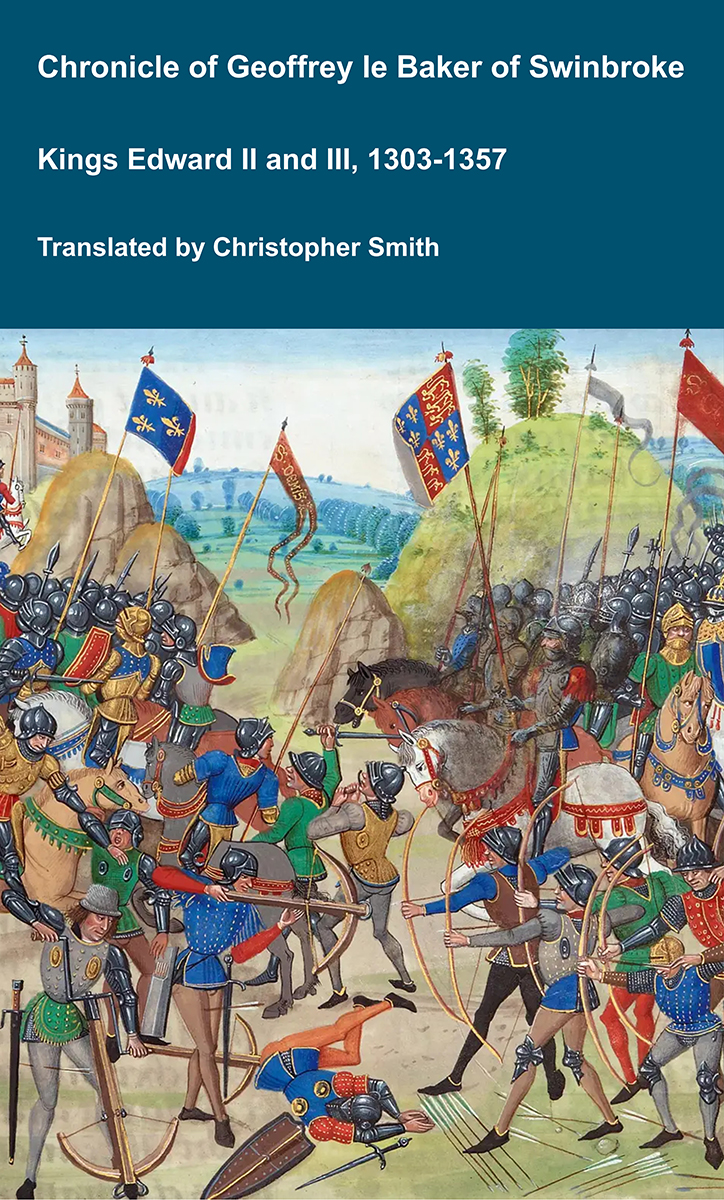
Chronicle of Geoffrey le Baker of Swinbroke
Baker was a secular clerk from Swinbroke, now Swinbrook, an Oxfordshire village two miles east of Burford. His Chronicle describes the events of the period 1303-1356: Gaveston, Bannockburn, Boroughbridge, the murder of King Edward II, the Scottish Wars, Sluys, Crécy, the Black Death, Winchelsea and Poitiers. To quote Herbert Bruce 'it possesses a vigorous and characteristic style, and its value for particular events between 1303 and 1356 has been recognised by its editor and by subsequent writers'. The book provides remarkable detail about the events it describes. Baker's text has been augmented with hundreds of notes, including extracts from other contemporary chronicles, such as the Annales Londonienses, Annales Paulini, Murimuth, Lanercost, Avesbury, Guisborough and Froissart to enrich the reader's understanding. The translation takes as its source the 'Chronicon Galfridi le Baker de Swynebroke' published in 1889, edited by Edward Maunde Thompson.
Available at Amazon in eBook and Paperback format.
On 30th August 1808 Bishop John Jenkinson (age 26) was appointed Prebendary of Worcester Cathedral.
In 1779 Charles Wheler 7th Baronet (age 48) was appointed Prebendary of York which office he held until his death in 1821.