Abbot John Whethamstede’s Chronicle of the Abbey of St Albans
Abbot John Whethamstede's Register aka Chronicle of his second term at the Abbey of St Albans, 1451-1461, is a remarkable text that describes his first-hand experience of the beginning of the Wars of the Roses including the First and Second Battles of St Albans, 1455 and 1461, respectively, their cause, and their consequences, not least on the Abbey itself. His text also includes Loveday, Blore Heath, Northampton, the Act of Accord, Wakefield, and Towton, and ends with the Coronation of King Edward IV. In addition to the events of the Wars of the Roses, Abbot John, or his scribes who wrote the Chronicle, include details in the life of the Abbey such as charters, letters, land exchanges, visits by legates, and disputes, which provide a rich insight into the day-to-day life of the Abbey, and the challenges faced by its Abbot.
Available at Amazon in eBook and Paperback format.
River Trent is in Humber Estuary.
See: River Derwent, River Dove, River Soar, River Sow, River Tame.
The River Trent rises on Biddulph Moor, Staffordshire [Map] and flows, in a great horseshoe through, or near, Stoke-on-Trent, Staffordshire [Map], Stone, Staffordshire [Map], Essex Bridge [Map], Bishton Hall, Staffordshire [Map], Colwich, Staffordshire [Map] passing St Michael and All Angels Church, Colwich [Map], Rugeley, Staffordshire [Map], Kings Bromley, Staffordshire [Map], Alrewas, Staffordshire [Map], Burton-upon-Trent, Staffordshire [Map], Newton Solney, Derbyshire [Map], Repton, Derbyshire [Map], under Swarkestone Bridge, Derbyshire [Map], Sawley, Derbyshire [Map], Nottingham, Nottinghamshire [Map], Holme Pierrepoint, Nottinghamshire [Map], Stoke Ferry, Shelford [Map], under Gunthorpe Bridge, Nottinghamshire [Map], past Gunthorpe Lock [Map], Hoveringham, Nottingham [Map], Newark on Trent, Nottinghamshire [Map], Knaith [Map], Dunham Bridge [Map], Sutton on Trent, Nottinghamshire [Map], the Isle of Axholme [Map] and Gainsborough [Map] before joining the Humber Estuary at Trent Falls [Map].
John Evelyn's Diary. 14th August 1654. Went by Newark-on-Trent [Map], a brave town and garrison. Next, by Wharton House, belonging to the Lord Chaworth, a handsome seat; then by Home, a noble place belonging to the Marquis of Dorchester [aged 48], and passed the famous River Trent, which divides the South from the North of England; and so lay that night at Nottingham [Map].
In September 1678 Humphrey Ferrers [aged 25] drowned in the River Trent.
Gunthorpe Bridge, Nottinghamshire [Map] is a bridge over the River Trent which replaced a ferry which operated until 1875. The original bridge opened in 1875. It was built largely in iron. The current bridge was built in 1927 400 metres upstream from the old one.
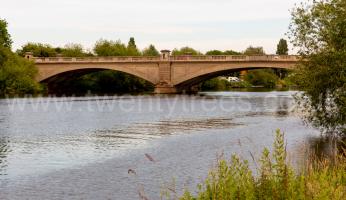
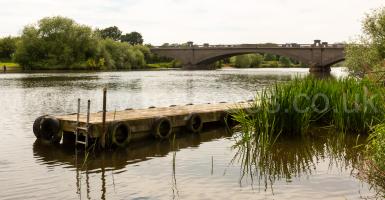
Gunthorpe Lock [Map] is a lock and weir on the River Trent.
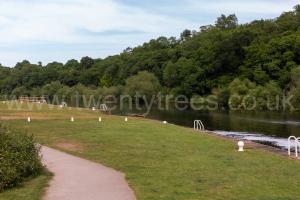
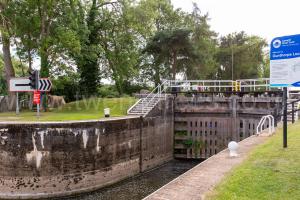
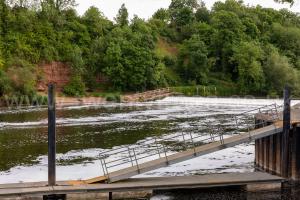
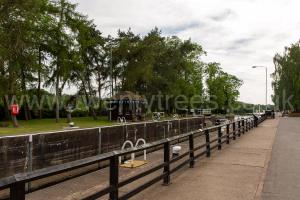
Stoke Ferry, Shelford [Map] is a former crossing point on the River Trent that gives its name to Shelford, Nottinghamshire [Map].
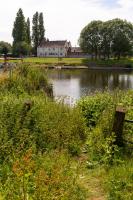
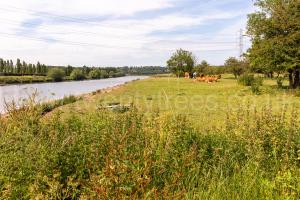
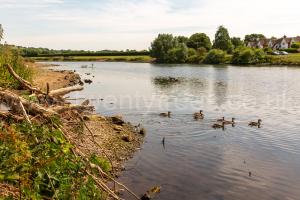
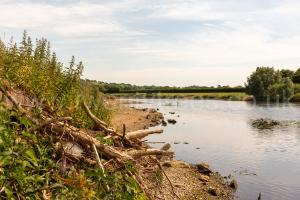
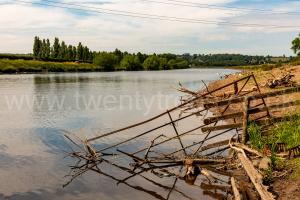
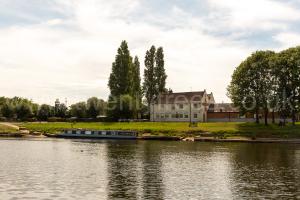
Bishton Hall, Staffordshire [Map] is located 150m north of the River Trent.
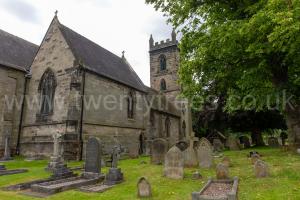
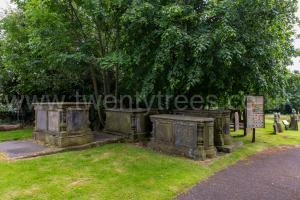
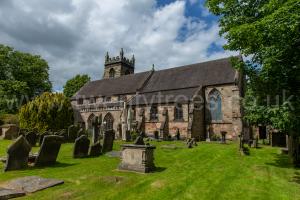
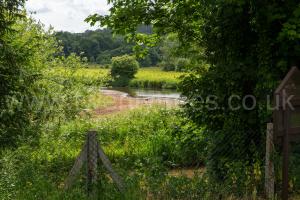
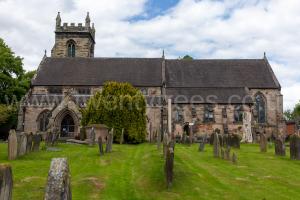
St Michael and All Angels Church, Colwich [Map] with a view of the River Trent from the churchyard.