


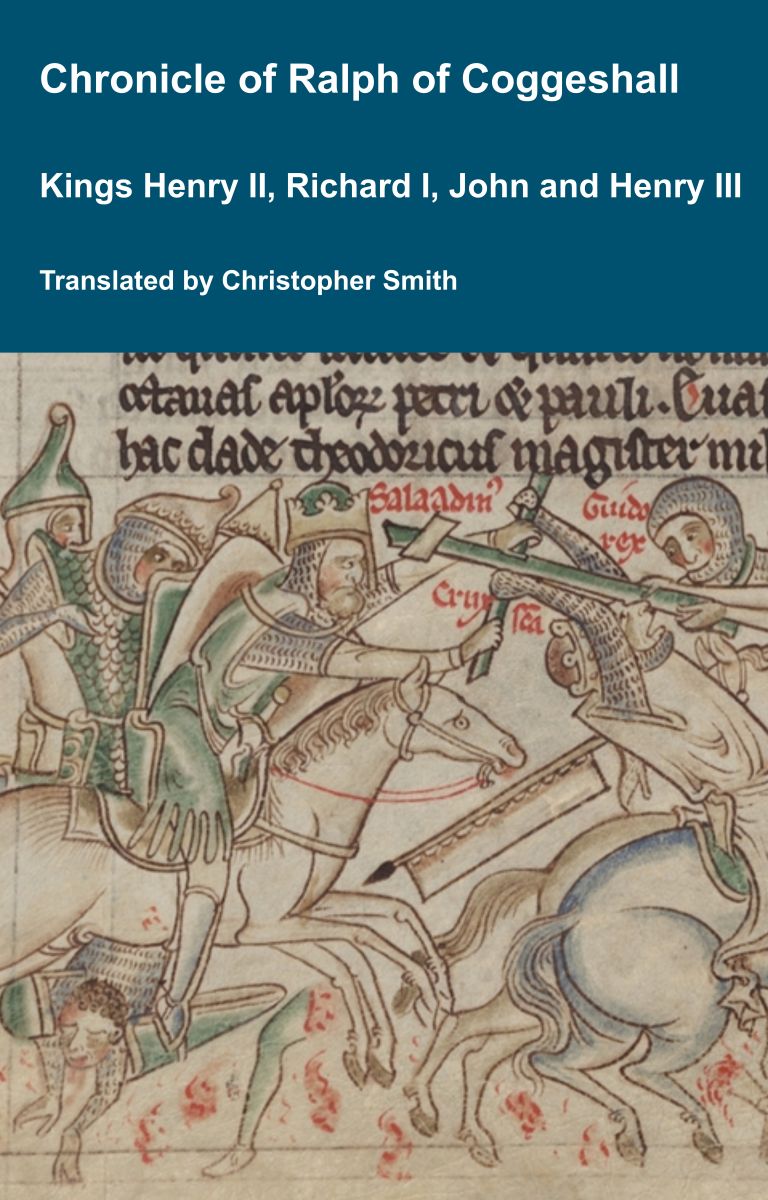
Chronicle of Abbot Ralph of Coggeshall
The Chronicle of Abbot Ralph of Coggeshall (Chronicon Anglicanum) is an indispensable medieval history that brings to life centuries of English and European affairs through the eyes of a learned Cistercian monk. Ralph of Coggeshall, abbot of the Abbey of Coggeshall in Essex in the early 13th century, continued and expanded his community’s chronicle, documenting events from the Norman Conquest of 1066 into the tumultuous reign of King Henry III. Blending eyewitness testimony, careful compilation, and the monastic commitment to record-keeping, this chronicle offers a rare narrative of political intrigue, royal power struggles, and social upheaval in England and beyond. Ralph’s work captures the reigns of pivotal figures such as Richard I and King John, providing invaluable insights into their characters, decisions, and the forces that shaped medieval rule. More than a simple annal, Chronicon Anglicanum conveys the texture of medieval life and governance, making it a rich source for scholars and readers fascinated by English history, monastic authorship, and the shaping of the medieval world.
Available at Amazon in eBook and Paperback format.
River Waveney is in East Anglia Rivers.
The River Waveney rises at Redgrave and Lopham Fen, Norfolk [Map] from where it flows past BressIngham, Norfolk [Map], Diss, Norfolk [Map], Scole, Norfolk [Map], Oakley, Norfolk [Map], Hoxne, Norfolk [Map] where it is joined by the Norfolk River Dove, St Margaret's Church, Syleham [Map], Brockdish, Norfolk [Map], Needham, Norfolk [Map], All Saint's Church, Mendham [Map], Homersfield, Norfolk [Map], Flixton, Suffolk [Map], Bungay, Norfolk [Map], Wainford, Norfolk [Map], EllIngham, Norfolk [Map], Geldeston, Norfolk [Map], Beccles, Norfolk [Map], Aldeby, Norfolk [Map] and Burgh St Peter, Norfolk [Map]. Here it continues past Somerleyton, Norfolk [Map] and Saint Olaves, Norfolk [Map] to join the River Yare at Burgh Castle, Norfolk [Map]. After Burgh St Peter, Norfolk [Map] it is also joined by the Oulton Dyke that joins it to the Oulton Broad, Norfolk [Map] that then becomes Lake Lothing, Norfolk [Map] that then becomes Lowestoft Inner Harbour [Map] where it joins the North Sea.
Burgh Castle Roman Fort, Norfolk [Map] is a Roman shore fort where the River Waveney meets the River Yare. One of nine constructed around 250AD to hold troops as a defence against Saxon raids up the rivers of the east and south coasts of southern Britain.
It was possibly known as Gariannonum, although the single record, the Notitia Dignitatum, a Roman Army "order of battle", may perhaps be referring to the Roman site at Caister-on-Sea [Map].
The Norfolk River Dove rises near Wetheringsett, Norfolk [Map] from where it flows past Thwaite, Norfolk [Map], under Thornton Bridge, Norfolk [Map], past Old St Mary's Church, Braiseworth [Map], Eye, Norfolk [Map] and Hoxne, Norfolk [Map] after which it joins the River Waveney.
