Henrici Quinti, Angliæ Regis, Gesta, is a first-hand account of the Agincourt Campaign, and subsequent events to his death in 1422. The author of the first part was a Chaplain in King Henry's retinue who was present from King Henry's departure at Southampton in 1415, at the siege of Harfleur, the battle of Agincourt, and the celebrations on King Henry's return to London. The second part, by another writer, relates the events that took place including the negotiations at Troye, Henry's marriage and his death in 1422.
Available at Amazon in eBook and Paperback format.
22 Jun is in June.
1283 Execution of David Prince of Wales
1483 The Princes of the Tower described as Illegitimate
1528 Sweating Sickness Outbreak
1535 Execution of Bishop Fisher and Thomas More
1660 June Creation of Baronets
The Feast Day of Saint Amphibalus is the 22nd of June.
On 22nd June 209 (or 251 or 304) St Alban was beheaded.
On 22nd June 1000 Robert "Magnificent" Normandy I Duke Normandy was born to Richard "Good" Normandy II Duke Normandy (age 36) and Judith Penthièvre Duchess Normandy (age 18).
On 22nd June 1239 King Edward I of England was christened at Westminster Abbey [Map]. Humphrey Bohun 2nd Earl Hereford 1st Earl Essex (age 35) was godfather. He was named after King Edward "The Confessor" of England.
On 22nd June 1279 Archbishop William de Wickwane was elected Archbishop of York.
Annals of Dunstable. And on the feast of Saint Alban [22nd June 1283] next following, the aforesaid David (age 44), hiding on a certain mountain with a few men, was captured through the treachery of one of his own, and bound in irons was kept in the safest custody until the following feast of Saint Michael [29th June 1283]. His wife [Elizabeth Ferrers (age 43)] also was likewise taken and kept safely. On the said feast of Saint Michael, the said David, by the judgment of all the baronage of England, received four sentences in this manner:
1. Because he had been a traitor to his lord the king, who had made him a knight, he was drawn by horses at a slow pace to the place of execution.
2. Because he had committed the homicide of Fulk Trigald and of other English nobles, he was hanged alive.
3. Because he did this in the time of the Lord's Passion, for that blasphemy his entrails were burned with fire.
4. Because in many places of England he had plotted the death of his lord the king, he was cut limb from limb [on 3rd October 1283], and his members sent through the regions of England for the terror of evil-doers.
But his head was fixed upon the Tower of London on a very high stake, facing the sea. And this likewise was done in the eleventh year of the aforesaid lord King Edward's reign.
Et die Sancti Albani proximo subsequenti, prædictus David in quodam monte latitans cum paucis, captus est per proditionem cujusdam ex suis, et ferro vinctus tutissime servabatur usque ad sequens festum Sancti Michaelis. Uxor etiam sua similiter capta est et salvo custodita. In predicto festo Sancti Michaelis, dictus David per totum barnagium Angliæ quatuor judicia suscepit in hune modum.
1. Quia proditor fuit domini regis, qui eum militem fecerat; tractus est equis lento passu ad locum suspendii.
2. Quia homicidium fecerat Fulconis Trigald, et aliorum nobilium Angliæ; suspensus est vivus.
3. Quia illud fecit tempore Dominicæ Passionis; propter blasphemiam viscera ejus incendio sunt cremata.
4. Quia in pluribus locis Angliæ mortem domini regis fuerat machinatus; membratim est partitus, et per climata Angliæ ad terrorem malignantium destinatus.
Caput autem ejus in Turri Londoniæ super palum altissimam est affixum, versus mare; et hoc similiter factum est anno undecimo prædicti domini regis Edwardi durante.
On 22nd June 1283 Dafydd ap Gruffudd Aberffraw Prince of Wales (age 44) and Owain ap Dafydd Aberffraw (age 8) were captured at Bera Mawr, Bangor. Dafydd, seriously wounded in the struggle, was brought to King Edward's (age 44) camp at Rhuddlan [Map] that same night. Dafydd was taken from there to Chester, Cheshire [Map] and then on to Shrewsbury, Shropshire [Map]. Dafydd and Dafydd's wife Elizabeth de Ferrers (age 43), their daughter Gwladys, infant niece Gwenllian ferch Llywelyn (age 1), and Dafydd's six illegitimate daughters were also taken prisoner at the same time.
Calendar Scottish Documents Volume 3. 22nd June 1308. 48. The K. having ordered that Elizabeth de Brus (age 24) wife of Robert de Brus, late earl of Carrick, shall change her residence, commands the bailiff of Brustwyk [Map] to deliver her with her retinue and baggage to his vallet John de Bentelee to be conducted where the K. has instructed him. Marlborough [Close, 1 Edw. II. m.1]
On 22nd June 1370 John Duke of Görlitz was born to Charles IV King Bohemia Holy Roman Emperor Luxemburg (age 54) and Elizabeth Pomerania Holy Roman Empress Luxemburg (age 23).

On 22nd June 1402 Owain ap Gruffudd "Glyndŵr" Mathrafal Prince Powys (age 43) defeated the army of Edmund Mortimer (age 25) at Knighton, Radnorshire [Map], who was captured, at the Battle of Bryn Glas.
King Henry IV of England (age 35) made no attempt to ransom Mortimer and, consequently, Mortimer changed his allegiance, and subsequently married Owain's daughter.
Walter Devereux (age 41) died from wounds.
Scotichronicon Book 15 Chapter 13. [22nd June 1402]. After the withdrawal of the earl of March from Scotland (as explained above) the English in the company of Scots in that earl's following [because these Scots knew very well the weak places in the country] inflicted many evils on Scotland. To ward off their malicious attacks from the opposite side (because for the time being the earldom: of March and its inhabitants favoured the said earl as their born lord), the magnates and nobles of Lothian, with the advice and support of the earl of Douglas who for the time being had possession of the castle of Dunbar and the earldom, agreed among themselves that some of the leading lords from among the great men of the country should separately conduct campaigns and gather armies to attack England in warlike raids. One of these in his turn should be the leader, and take responsibility for the name [and fame] of the band of horsemen; the others should assist him [for that turn] and obey him as their captain. The noble and warlike man Sir John de Haliburton of Dirleton made a start before the others, and in manly fashion advanced into England with his companions to the appointed target, plundering and burning as they went, and returned home safely with his men. Following on this a second band was led by the magnanimous knight and doughty warrior Patrick de Hepburn of Hailes the younger (his father was left at home since he was of very great age, being an octogenarian and more). He bore himself' creditably at all stages in England; but because he was a man of lofty spirit who desired an extension of the [fame of his name], he delayed there against the advice of his comrades longer than he ought and than had been decided, by the length of one day from sunrise to sunset. Meanwhile the said earl of March strongly supported by armed men and the power of the earl of Northumberland along with his own Scots came upon our Scots at Nisbet Moor in the Merse 22° June 1402, where they bitterly fought it out thenceforward until the English were thought to be the losing side. But at length Sir George de Dunbar, son and heir of the said earl, arrived with thirty horses, each with two riders, who attacked our men anew unexpectedly when they were worn out from the earlier fight and from fatigue, and easily secured a victory over them. The captain (the noble Patrick de Hepburn aforesaid) was at once killed with many worthy men, of whom many were first wounded and then died. Others were helped by the skill of doctors and recovered in time. Some famous knights were taken prisoner there, namely John [de Haliburton of Dirleton and Thomas Haliburton of Dalcove], Robert Lauder of the Bass, [the brothers] John and William Cockburn, with many worthy men- at-arms and the flower as it were of the fighting men of a great part of Lothian. Sir John and Sir Thomas Haliburton gave hostages, but after they arrived home they both went to the grave as a consequence of looseness of the bowels.
On 22nd June 1402 George Dunbar 10th Earl March (age 64) commanded a force of around 200 men from the Berwick garrison who defeated a Scottish army of around 400 men at Nisbet during the Battle of Nesbit Moor. Patrick "Younger" of Hailes Hepburn (age 50) was killed. John Cockburn, Thomas Haliburton, John Haliburton and Robert Lawedre were captured.
Anne Boleyn. Her Life as told by Lancelot de Carle's 1536 Letter.
In 1536, two weeks after the execution of Anne Boleyn, her brother George and four others, Lancelot du Carle, wrote an extraordinary letter that described Anne's life, and her trial and execution, to which he was a witness. This book presents a new translation of that letter, with additional material from other contemporary sources such as Letters, Hall's and Wriothesley's Chronicles, the pamphlets of Wynkyn the Worde, the Memorial of George Constantyne, the Portuguese Letter and the Baga de Secrets, all of which are provided in Appendices.
Available at Amazon in eBook and Paperback format.
On 22nd June 1450 Eleanor Trastámara was born to Ferdinand I King Naples (age 27) and Isabella Clermont Queen Consort Naples (age 26).
On 22nd June 1476 John Luxemburg Count Soissons was killed at the Battle of Morat. His brother Peter (age 36) succeeded Count Soissons.

Memoirs of Philip de Commines [1447-1511]. Our master was a cunning politician, and understood well enough that Flanders was of little importance to him, unless he could have Artois with it, which lies betwixt France and them, and is as it were a bridle to the Flemings, affording good soldiers upon occasion, to correct their wantonness and folly; and therefore in taking from the Earl of Flanders the county of Artois, he would leave him the most inconsiderable prince in Europe, without either subjects or authority, except by the permission of the Gantois; whose commissioners, William Ryn and Coppenole, whom I mentioned before (governors of Ghent), were at that time principal in the embassy. Upon the return of the ambassadors, the Lady Margaret (age 2) was conducted to Hesdin, and delivered into the hands of the Lord des Cordes, in the year 1483, and with her came Madame de Eavestain, Duke Philip of Burgundy's natural daughter, and they were received by the present Monsieur and Madame de Bourbon1, the Lord d'Albret2, and others from the king; and they brought her to Amboise, where the dauphin met her3. If the Duke of Austria could have taken her from her convoy, he would willingly have done it before she left his dominions; but the Gantois had placed too strong a guard about her, for they had begun to abate much of their obedience to him, and many considerable persons joined with them, as having the custody of the young heir, and power of placing and displacing whom they pleased. Among the nobility who were resident in Ghent, there was the Lord of Ravestain, brother to the Duke of Cleves, and chief governor to the young prince, whose name is Philip, still living, and like to possess vast territories, if it please God to spare his life.
Note 1. Anne of France (age 21), daughter of Louis XI (age 59) and Charlotte of Savoy (age 41), married Pierre de Bourbon, Lord of Beaujeu, in 1474, and assumed the title of Duchess of Bourbon in 1488. She died on the 14th of November, 1522, after having governed the kingdom with great prudence and energy during the minority of Charles V1IL
Note 2. Alain le Grand (age 43), son of Jean d'Albret, Viscount de Tartas, succeeded his grandfather Charles II in 1471. He married Frances, daughter of Jean de Blois, Count of Penthievre; and in virtue of this marriage, set up a claim to the duchy of Brittany, and became a competitor for the hand of Anne of Brittany. He died in October, 1522. [Note. This note appears incorrect? Alain married Francois Chatillon, daughter of William Viscount of Limoges.]
Note 3. Margaret was then three years and a half old, and the Dauphin rather more than twelve. Their meeting took place on Sunday, the 22nd of June, 1483, at a place called Metairie le Rayne, near Amboise. "The Dauphin," says a contemporary letter, "left the Castle of Amboise, dressed in a robe of crimson satin, lined with black velvet, and mounted on a hackney, and attended by thirty archers. At the bridge he dismounted, after having saluted the ladies, and changed his dress and put on a long robe of cloth of gold... Presently the Dauphiness arrived, and descended from her litter; and immediately they were betrothed by the prothonotary, nephew of the Grand Seneschal of Normandy, who demanded of the Dauphin in a loud voice, so that all could hear him, If he would have Margaret of Austria in marriage? and he answered, Yes; and a similar question was put to the Dauphiness, who gave the same answer. Upon which, they joined hands, and the Dauphin kissed the Dauphiness twice; and then they returned to their lodgings. And the streets of Amboise were hung with cloth, and in the market place was a figure of a Siren, who spouted forth white wine and red from her breasts." The next day, the young couple went through the ceremony of marriage in the chapel of the castle.— Dupont, iii. 345. 352.
On 22nd June 1483 Ralph Shaa preached the bastardy of Edward IV's children by Elizabeth Woodville, including Edward V, and who were therefore ineligible to be King, at St Paul's Cross [Map].
The History of King Richard the Third by Thomas More. [22nd June 1483] Of these two, the one had a sermon in praise of the Protector (age 30) before the coronation, the other after; both so full of tedious flattery that no man's ears could abide them. Penker in his sermon so lost his voice that he was glad to leave off and come down in the midst. Doctor Shaa by his sermon lost his honesty and soon after his life, for very shame of the world, into which he dared never after come abroad. But the friar cared not for shame, and so it harmed him the less. However, some doubt and many think that Penker was not of counsel of the matter before the coronation, but after the common manner fell to flattery afterwards; namely, because his sermon was not immediately after it, but at Saint Mary's Hospital on the Easter after. But certain is it that Doctor Shaa was of counsel in the beginning so far forth that they determined he should first break the matter in a sermon at Paul's Cross, in which he should, by the authority of his preaching, incline the people to the Protector's ghostly purpose.
Chronicles of London Vitellius A XVI. [22nd June 1483] And vpon the sonday after was declared at powles Crosse, that kyng Edwardes childern wer not Ryghtfull Enheritours vnto the Crowne, but that the Duke of Glowcetir's title was bettir than thers.
The Usurpation of Richard III by Mancini Chapter 6. When he exhibited himself through the streets of the city he was scarcely watched by anybody, rather did they curse him with a fate worthy of his crimes, since no one now doubted at what he was aiming. After that he took a special opportunity of publicly showing his hand; since he so corrupted preachers of the divine word,90 that in their sermons to the people they did not blush to say, in the face of decency and all religion, that the progeny of King Edward should be instantly eradicated, for neither had he been a legitimate king, nor could his issue be so. Edward, said they, was conceived in adultery and in every way was unlike the late duke of York, whose son he was falsely said to be, but Richard, duke of Gloucester, who altogether resembled his father, was to come to the throne as the legitimate successor.
Note 90. Mancini speaks of preachers and sermons as though more than one preacher was induced to advocate Richard's claim. On Sunday, 22 June [1483], Doctor Ralph Shaw preached at Paul's Cross, declaring Richard's right to the crown and the bastardy of Edward IV and his children (Great Chronicle, f. 207; Fabyan, Chronicles, 669; Chronicles of London, 190; More, Richard 111, 433-9; Polydor Vergil, Anglica Historia, 691-2. These sources give the vite date, i.e. the Sunday after Hastings's death; the true date is fixed by counting the days backward from Richard's accession on 26 June 1483). More also records a sermon preached in favour of Richard by Penket (called Penker by More), an Augustinian Hermit, but this was not until Easter 1484 (More, Richard III, 433).
The History of King Richard the Third by Thomas More. "For as that worshipful man thoroughly made clear to you1, the children of King Edward the Fourth were never lawfully begotten, forasmuch as the King (while his true wife, Dame Elizabeth Lucy, was still living) was never lawfully married unto the Queen (age 46), their mother, whose blood, except that he set voluptuous pleasure before his honor, was fully unsuitable to be matched with his; and the mingling of their bloods together has been the effusion of the greater part of the noble blood of this realm. Whereby it may well seem that the marriage was not well made, out of which there is so much mischief grown. For lack of such lawful coupling, and also of other things which the said worshipful Doctor rather signified than fully explained, and which things shall not be spoken by me as the things wherein every man forbears to say because he knows to avoid the displeasure of my noble Lord Protector (age 30), who bears, as nature requires, a filial reverence to the Duchess his mother (age 68), for these causes before mentioned, I say, that is, for lack of other issue lawfully coming of the late noble Prince Richard, Duke of York, to whose royal blood the crown of England and of France is by the high authority of Parliament entailed, the right and title of the same is by the just course of inheritance, according to the common law of this land, handed down and come unto the most excellent Prince, the Lord Protector, as the very lawfully begotten son of the remembered noble Duke of York.
Note 1. A reference to Ralph Shaa preaching on the 22nd June 1483 that the children of King Edward IV and Elizabeth Woodville were illegitimate.


Polydore Vergil [1470-1555]. [22nd June 1483] He [Richard] had a private conversation with Ralph Shaa, a priest of the time who enjoyed great popular esteem, and explained to him that his father's heritage was his by right, being the eldest of all the children whom his father Duke Richard of Gloucester had sired by his mother Cecily. For it was a well known fact that Edward, who had reigned previously, was a bastard, that is, that he was not born of a legal and legitimate wife, and that this was shown by well-known evidence. And he asked Shaa to consent to deliver a sermon from St. Paul's pulpit instructing the people in this thing, so that at length they would acknowledge their true sovereign. And he said he was asking this so urgently because he thought it better to slight his mother's dignity and honor than to allow the realm to be dishonored by such a royal line any longer. Either stricken by fear or seized by folly, Ralph undertook to humor him. And when the day was at hand, Richard, who had made himself more powerful under the pretext of attending to some other item of business, came to St. Paul's cathedral with an armed escort, in royal style, and there attended the sermon with ears pricked up. With him in the audience, Ralph (who was a learned man) took this occasion to speak, not of some divine matter, but of a tragic one, and produced many arguments to show that Edward was not fathered by Richard Duke of York, but rather by someone else, who had seduced his mother by stealth. And was shown by certain proofs: that Edward resembled his father Richard neither in face nor in form, since he was tall while Richard was a small man, and had a large face, whereas Richard's was small and compact. But no man could doubt, if he considered such things, that Richard was the duke's genuine son, who should possess his father's throne, which was rightfully his. And he particularly urged the lords, seeing that they lacked a king at present, to choose Richard, the true royal offspring, as their sovereign, repudiating others, who were base-born. When the people heard these words, they were wonderfully distraught, for, angry at the indignity of the thing, with all their hearts they cursed the preacher's temerity, boldness, uncouthness, and the error of Richard's criminal mind. For he failed to see how much shame, how much disgrace, how much of a blot he was casting on both his family and the entire realm by publicly condemning his mother, a most chaste woman, as an adulteress, by branding his brother, who had deserved well of him, with a lasting mark of infamy, and by covering his most innocent nephews with an enduring reproach. So at one and the time you could see some men standing as amazed as madmen by the novelty and strangeness of the thing, others frightened for themselves because they were friends of the royal boys, and yet others grieving for the boys themselves, for they believed that by now they were ruined. There is a popular story that in that sermon it was Edward's sons who were called bastards, not Edward himself, which is far from the truth, since Edward's mother Cecily, as I have said, was falsely accused of adultery and afterwards complained to a number of lords, some of whom are still living, of this insult she received at the hands of her son. But after his mother had thus been slandered in public and his brother Edward covered with shame, Richard was affected by happiness that this thing had been made public, which he had arranged so as to make plain to all men that the throne belonged him as a matter of right, rather than by the shame he should have felt. And he returned to the Tower with his royal escort, as if he had already been proclaimed king by parliament. But Ralph Shaa, the preacher of such a disgraceful thing, was soon thereafter chastised by his friends, embarrassed by his infamy, and returned to his sanity, and he so greatly repented what he had done that he soon died of a broken heart and paid the deserved penalty for his silliness.
On 22nd June 1528 William Carey (age 28) died of sweating sickness. He was buried at Compton Wynyates, Warwickshire [Map].
The Love Letters of Henry VIII to Anne Boleyn. Letter 10. Henry VIII (age 36) to Anne Boleyn (age 27).
The cause of my writing at this time, good sweetheart, is only to understand of your good health and prosperity; whereof to know I would be as glad as in manner mine own, praying God that (an it be His pleasure) to send us shortly together, for I promise you I long for it. How be it, I trust it shall not be long to; and seeing my darling is absent, I can do no less than to send her some flesh, representing my name, which is hart flesh for Henry, prognosticating that hereafter, God willing, you may enjoy some of mine, which He pleased, I would were now.
As touching your sister's (age 29) matter, I have caused Walter Welze to write to my lord my mind therein, whereby I trust that Eve shall not have power to deceive Adam; for surely, whatsoever is said, it cannot so stand with his honour but that he must needs take her, his natural daughter, now in her extreme necessity.
No more to you at this time, mine own darling, but that with a wish I would we were together an evening.
With the hand of yours,
H.R.
Note. The date of this letter is presumed to be after 22nd June 1528 when William Carey (deceased), husband of Mary Boleyn, Anne's sister, died of sweating sickness.


Letters and Papers Foreign and Domestic Henry VIII 1530. 22nd June 1530. S. B. 6469. PARLIAMENT.
Authority to Sir Tho. More (age 52), chancellor, Thomas duke of Norfolk (age 57), treasurer, Robert earl of Sussex (age 47), and John bishop of Carlisle to prorogue the Parliament from this present day, Wednesday, to the 1st of October next, on account of the pestilence in London and its suburbs. Del. Westm., 22 June 22 Hen. VIII.


Before 22nd June 1535 Thomas Audley 1st Baron Audley Walden (age 47) presided over the trial of Bishop John Fisher (age 65) and Thomas More (age 57) both of whom refused to take the Oath Of Supremacy. The judges including Anne Boleyn's father Thomas Boleyn 1st Earl Wiltshire and Ormonde (age 58). Thomas Cromwell 1st Earl Essex (age 50) brought Richard Rich 1st Baron Rich (age 38) as a witness who testified that Thomas More had denied that the King was the legitimate head of the Church. However, Richard Southwell (age 32) to the contrary.
The jury took, somewhat unsurprisingly, only fifteen minutes to conclude Thomas More was guilty. He was sentenced to be hanged, drawn and quartered; the King (age 43) commuted this to beheading.


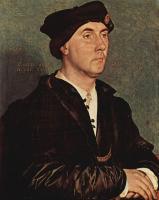


On 22nd June 1535 Bishop John Fisher (age 65) was beheaded on Tower Hill [Map].
Chronicle of Edward Hall [1496-1548]. 22nd June 1535 Also the twenty-second day of the same month John Fisher Bishop of Rochester (age 65) was beheaded, and his head set upon London bridge [Map]. This bishop was of very many men lamented, for he was reported to be a man of great learning, and a man of very good life, but therein wonderfully deceived, for he maintained the Pope to be Supreme Head of the Church, and very maliciously refused the King's title of Supreme Head. It was said that the Pope, for that he held so manfully with him and stood so stiffly in his cause, did elect him a Cardinal, and sent the Cardinals hat as far as Calais, but the head it should have stood on, was as high as London Bridge or ever the hat could come to Bishop Fisher, and then it was too late and therefore he neither ware it nor enjoyed his office. This man as I said was accomplished learned, yea, and that very notably learned, and yet have you heard how he was deceived with Elizabeth Barton that called herself the Holy Maid of Kent, and no doubt so was he in the defence of that usurped authority, the more pity. Wonderful it is that a man being learned should be so blind in the scriptures of God that prove the supreme authority of Princes so manifestly.
Chronicle of Walter of Guisborough
A canon regular of the Augustinian Guisborough Priory, Yorkshire, formerly known as The Chronicle of Walter of Hemingburgh, describes the period from 1066 to 1346. Before 1274 the Chronicle is based on other works. Thereafter, the Chronicle is original, and a remarkable source for the events of the time. This book provides a translation of the Chronicle from that date. The Latin source for our translation is the 1849 work edited by Hans Claude Hamilton. Hamilton, in his preface, says: 'In the present work we behold perhaps one of the finest samples of our early chronicles, both as regards the value of the events recorded, and the correctness with which they are detailed; Nor will the pleasing style of composition be lightly passed over by those capable of seeing reflected from it the tokens of a vigorous and cultivated mind, and a favourable specimen of the learning and taste of the age in which it was framed.'
Available at Amazon in eBook and Paperback format.
Spanish Chronicle Chapter 18. How Thomas More and the Bishop of Rochester died.
Wriothesley's Chronicle [1508-1562]. 22nd June 1535. Allso, the 22th of June, beinge Tewsday, John Fisher (age 65), Bishopp of Rochester, was beheaded at the Tower Hill, and the residue of his execution pardoned; his bodie was buried within Barkinge churche [Map] yeardb next the Towre of London, and his head was sett on London Bridge.
Note b. Bishop Fisher's body was taken up out of Barking churchyard [Map], and re-buried with Sir Thomas More, both in the Tower. — Stow, p. 672.
Letters and Papers Foreign and Domestic Henry VIII 1535. 22nd June 1535. Add. MS. 8,715, f. 76 b. B. M. 909. Bishop of Faenza to M. Ambrogio.
The Admiral (age 43), who was 22 days at Calais, returned on the 17th, though it was said everywhere that he would go on to England. Mons. de Ricciafort (age 32) (Rochford), the brother of the new Queen (age 34), came here for eight days, but, as far as could be seen, did nothing. It is only from his relation to the Queen that he is employed, for the King has very few to trust in. All business passes through the hands of people who depend on the new Queen, and must therefore be settled according to her purpose. This was the case in the negociations with the Admiral, which were broken off on account of his refusal to allow the duke of Angoulême to go to England until the girl was old enough to be married, and because he would not declare in any way against the Church, or in favour of the King's second wife (ne voler difendere in alcun modo contro la chiesa o declaratione del concilio la causa della seconda moglie1). Every one knows that the alliance (parentado) has not been concluded, as both sides confidently affirmed it would be, but that the ambassadors separated very ill satisfied, and the English are guarding Calais more carefully than they have done, even when the French were there in greater numbers. However, both sides affirm the friendship to be firmer than ever. The French king and Council say that their respect to the Holy See and the Pope has been the principal cause of their not coming to some other understanding (ad altro ristretto) with the king of England, who is a most bitter enemy of the Church, and so firm in his opinion that he intends to die in it, and tries to have this kingdom for company. The Duke of Norfolk (age 62), according to the Admiral, affirms that he would sooner die than see any change as regards the King or the new Queen; which is not unlike what the writer has heard in other ways of Norfolk, viz., that this breaking off might reasonably have been expected, matters depending very much on his dexterity, and the affairs of England being commonly managed more than barbarously. For he, being one of the greatest men in the kingdom, and having sons, and the Duke of Richmond (age 16) for his son-in-law, might hope one day to have that daughter for one of his sons, or, if disorders ensued, to get the rule into his own hands. The French lords are not too well contented with the English, who, since Norfolk's return, have despatched a courier, and show themselves displeased that nothing was concluded at Calais. The Admiral, though he takes Fisher's (age 65) case much to heart, has great fears for his life, especially as the Pope says in the brief that the created him a cardinal to make use of him in the Council. He says also that the English pretended that he could not live much more than a month, being a valetudinarian of 90; which shows what they mean to do with him, reckoning him 25 years older than he is, although they declare there is no hope in any case of his coming out of prison. These are truly the most monstrous things seen in our time. The French make great account with the Pope of not listening to anything proposed to them by the English which might turn to the damage of the Holy See.
Ital., pp. 9, modern copy. Headed: In Amoien, al Sig. M. Ambrogio, alli 12 (sic) ut supra.
2. An extract copy from the original is in the Vatican transcripts, dated Amiens, 22 June 1535. Pp. 3.
Note 1. nor want to defend the cause of the second wife in any way against the church or declaration of the council
Letters and Papers Foreign and Domestic Henry VIII 1535. 22nd June 1535. Add. MS. 8,715, f. 80 b. B. M. 910. Bishop of Faenza to M. di Fossumbrone, Papal Nuncio with the Emperor.
The Admiral (age 43), who was at Calais with the Duke of Norfolk (age 62), returned six days ago without having concluded the marriage of the duke of Angoulême with the last daughter (age 1) of the King, which was spoken of as certain on both sides, or anything else that one can hear of; but the capitulation and the old friendship remain. The cause was the exorbitant demand of the English that the French king should bind himself to maintain Henry's marriage against the Pope and any determination of the Council; and finally they wished him to act in Church matters as had been done in England. They are very anxious about Fisher (age 65). The English who were at Calais say that he will not come out of prison; that he is 90 years of age, and very ill, giving him 25 years more than he has; and that he cannot live more than a month; so that it is easily seen that in this their actions correspond with the others. The cardinal of Paris set out four days ago for Rome. * * *
Ital., pp. 2, modern copy. Headed: A Mons. di Fossumbrone, Nuntio di Sua Santita all a Maesta Casarea. D'Amien, alli 22 di Giugno 1535.


Henry Machyn's Diary. 22nd June 1562. The xxij day of June was the masters the Salters' fest, and ther dynyd my lord keper of the selle (age 51) and my lord of Bedfoord (age 35) and my lord cheyff justes.
On 22nd June 1610 William Seymour 2nd Duke of Somerset (age 22) and Arabella Stewart (age 35) were married in secret at Palace of Placentia, Greenwich [Map]. For having married without permission King James I of England and Ireland and VI of Scotland (age 44) had Arabella Stewart imprisoned in Sir Thomas Perry's House, Lambeth and he in the Tower of London [Map]. She the daughter of Charles Stewart 5th Earl Lennox and Elizabeth Cavendish Countess Lennox. They were third cousin once removed. He a great x 3 grandson of King Henry VII of England and Ireland. She a great x 2 granddaughter of King Henry VII of England and Ireland.


Diary of Anne Clifford. 22nd June 1617. The 22nd my Lord (age 28) sent Adam to trim the Child's hair, and sent me the dewsetts of two deer and wrote me a letter between kindness and unkindness.
Note 1. Mr. Adam Bradford, Barber.
Autobiography Simon D'Ewes. 22nd June 1621. About Friday the 22nd of this month was Doctor Williams (age 39), Dean of Westminster, sworn of the Privy Council, after he bad been first made Bishop of Lincoln; and the Earl of Southampton (age 47) was committed prisoner to him at his Deanery of Westminster1. For what cause none of his own servants yet knew, from which imprisonment he was again awhile after freed by the mediation of some noble persons with the beloved Marquis of Buckingham (age 28), whom the issue showed he had only offended, crossing him often during the continuance of Parliament, and answering him shortly since it had been adjourned.
Note 1. "The Earl of Southampton is committed to Dr. Dean of Westminster, his keeper being Sir Richard Weston (age 44). The Earl desired three things of the Lords, 1. That in regard his lady (age 49) was much subject unto sudden grief and passion, his letter might be the first messenger of his detainment, 2. That because his son (age 16) was ready to go to travel, he might first speak with him and give some directions. 3. That he might be permitted, in his Majesty's presence, to answer all that should be objected against him. The two former were granted conditionally, that Sir Richard Weston might see the one and hear the other; which were accordingly performed. The third was not in them to grant, but in his Majesty, and therefore put it off." - HarL MSS,
On 22nd June 1644 Francis Newport 1st Earl Bradford (age 24) was captured during the Battle of Oswestry fighting for the Royalists.
In June 1660 King Charles II of England Scotland and Ireland (age 30) rewarded those who supported his Restoration...
6th William Wray 1st Baronet (age 35) and John Talbot of Lacock (age 29) were knighted.
7th Geoffrey Palmer 1st Baronet (age 62) was created 1st Baronet Palmer of Carlton in Northampton
7th Orlando Bridgeman 1st Baronet (age 54) was created 1st Baronet Bridgeman of Great Lever in Lancashire.
7th John Langham 1st Baronet (age 76) was created 1st Baronet Langham of Cottesbrooke in Northamptonshire.
11th Henry Wright 1st Baronet (age 23) was created 1st Baronet Wright of Dagenham. Ann Crew Lady Wright by marriage Lady Wright of Dagenham.
13th Nicholas Gould 1st Baronet was created 1st Baronet Gould of the City of London.
14th Thomas Allen 1st Baronet (age 27) was created 1st Baronet Allen of Totteridge in Middlesex.
18th Thomas Cullum 1st Baronet (age 73) was created 1st Baronet Cullum of Hastede in Suffolk.
19th Thomas Darcy 1st Baronet (age 28) was created 1st Baronet Darcy of St Osith's.
22nd Robert Cordell 1st Baronet was created 1st Baronet Cordell of Long Melford.
22nd John Robinson 1st Baronet (age 45) was created 1st Baronet Robinson of London. Anne Whitmore Lady Robinson (age 48) by marriage Lady Robinson of London.
25th William Bowyer 1st Baronet (age 47) was created 1st Baronet Bowyer of Denham Court. Margaret Weld Lady Bowyer (age 43) by marriage Lady Bowyer of Denham Court.
25th Thomas Stanley 1st Baronet (age 63) was created 1st Baronet Stanley of Alderley in Cheshire.
26th Jacob Astley 1st Baronet (age 21) was created 1st Baronet Astley of Hill Morton.
27th William Wray 1st Baronet was created 1st Baronet Wray of Ashby in Lincolnshire. Olympia Tufton Lady Ashby (age 36) by marriage Lady Wray of Ashby in Lincolnshire.
28th Oliver St John 1st Baronet (age 36) was created 1st Baronet St John of Woodford in Northamptonshire.
29th Ralph Delaval 1st Baronet (age 37) was created 1st Baronet Delaval of Seaton in Northumberland. Anne Leslie Lady Delaval by marriage Lady Delaval of Seaton in Northumberland.
30th Andrew Henley 1st Baronet (age 38) was created 1st Baronet Henley of Henley in Somerset.


Samuel Pepys' Diary. 22nd June 1660. To my Lord, where much business. With him to White Hall, where the Duke of York not being up, we walked a good while in the Shield Gallery. Mr. Hill (who for these two or three days hath constantly attended my Lord) told me of an offer of £500 for a Baronet's dignity, which I told my Lord of in the balcone in this gallery, and he said he would think of it. I to my Lord's and gave order for horses to be got to draw my Lord's great coach to Mr. Crew's (age 62). Mr. Morrice the upholsterer came himself to-day to take notice what furniture we lack for our lodgings at Whitehall. My dear friend Mr. Fuller (age 52) of Twickenham and I dined alone at the Sun Tavern, where he told me how he had the grant of being Dean of St. Patrick's, in Ireland; and I told him my condition, and both rejoiced one for another. Thence to my Lord's, and had the great coach to Brigham's, who went with me to the Half Moon [Map], and gave me a can of good julep, and told me how my Lady Monk (age 51) deals with him and others for their places, asking him £500, though he was formerly the King's (age 30) coach-maker, and sworn to it. My Lord abroad, and I to my house and set things in a little order there. So with Mr. Moore to my father's (age 59), I staying with Mrs. Turner (age 37) who stood at her door as I passed. Among other things she told me for certain how my old Lady Middlesex--herself the other day in the presence of the King, and people took notice of it. Thence called at my father's, and so to Mr. Crew's, where Mr. Hetley had sent a letter for me, and two pair of silk stockings, one for W. Howe, and the other for me. To Sir H. Wright's (age 23) to my Lord, where he, was, and took direction about business, and so by link home about 11 o'clock. To bed, the first time since my coming from sea, in my own house, for which God be praised.


Samuel Pepys' Diary. 22nd June 1662. Coming home to-night, I met with Will. Swan, who do talk as high for the Fanatiques as ever he did in his life; and do pity my Lord Sandwich (age 36) and me that we should be given up to the wickedness of the world; and that a fall is coming upon us all; for he finds that he and his company are the true spirit of the nation, and the greater part of the nation too, who will have liberty of conscience in spite of this "Act of Uniformity", or they will die; and if they may not preach abroad, they will preach in their own houses. He told me that certainly Sir H. Vane (deceased) must be gone to Heaven, for he died as much a martyr and saint as ever man did; and that the King (age 32) hath lost more by that man's death, than he will get again a good while. At all which I know not what to think; but, I confess, I do think that the Bishops will never be able to carry it so high as they do.


Samuel Pepys' Diary. 22nd June 1664. Thence home, there coming to me my Lord Peterborough's (age 42) Sollicitor with a letter from him to desire present dispatch in his business of freight, and promises me £50, which is good newes, and I hope to do his business readily for him. This much rejoiced me. All the afternoon at his business, and late at night comes the Sollicitor again, and I with him at 9 o'clock to Mr. Povy's (age 50), and there acquainted him with the business. The money he won't pay without warrant, but that will be got done in a few days.

Samuel Pepys' Diary. 22nd June 1664. At noon to the 'Change [Map] and Coffee-house, where great talke of the Dutch preparing of sixty sayle of ships. The plague grows mightily among them, both at sea and land. From the 'Change [Map] to dinner to Trinity House, Deptford [Map] with Sir W. Rider and Cutler, where a very good dinner. Here Sir G. Ascue (age 48) dined also, who I perceive desires to make himself known among the seamen.
Samuel Pepys' Diary. 22nd June 1665. Up pretty betimes, and in great pain whether to send my another into the country to-day or no, I hearing, by my people, that she, poor wretch, hath a mind to stay a little longer, and I cannot blame her, considering what a life she will through her own folly lead when she comes home again, unlike the pleasure and liberty she hath had here. At last I resolved to put it to her, and she agreed to go, so I would not oppose it, because of the sicknesse in the towne, and my intentions of removing my wife. So I did give her money and took a kind leave of her, she, poor wretch, desiring that I would forgive my brother John (age 24), but I refused it to her, which troubled her, poor soul, but I did it in kind words and so let the discourse go off, she leaving me though in a great deal of sorrow.
John Evelyn's Diary. 22nd June 1665. We waited on the Chancellor of the Exchequer (age 43), and got an Order of Council for our money to be paid to the Treasurer of the Navy for our Receivers.


The History of William Marshal was commissioned by his son shortly after William’s death in 1219 to celebrate the Marshal’s remarkable life; it is an authentic, contemporary voice. The manuscript was discovered in 1861 by French historian Paul Meyer. Meyer published the manuscript in its original Anglo-French in 1891 in two books. This book is a line by line translation of the first of Meyer’s books; lines 1-10152. Book 1 of the History begins in 1139 and ends in 1194. It describes the events of the Anarchy, the role of William’s father John, John’s marriages, William’s childhood, his role as a hostage at the siege of Newbury, his injury and imprisonment in Poitou where he met Eleanor of Aquitaine and his life as a knight errant. It continues with the accusation against him of an improper relationship with Margaret, wife of Henry the Young King, his exile, and return, the death of Henry the Young King, the rebellion of Richard, the future King Richard I, war with France, the death of King Henry II, and the capture of King Richard, and the rebellion of John, the future King John. It ends with the release of King Richard and the death of John Marshal.
Available at Amazon in eBook and Paperback format.
Samuel Pepys' Diary. 22nd June 1667. They being gone, by and by comes Sir W. Pen (age 46) home, and he and I together talking. He hath been at Court; and in the first place, I hear the Duke of Cambridge (deceased) is dead; a which is a great loss to the nation, having, I think, never an heyre male now of the King's or Duke's to succeed to the Crown. He tells me that they do begin already to damn the Dutch, and call them cowards at White Hall, and think of them and their business no better than they used to do; which is very sad.
Samuel Pepys' Diary. 22nd June 1668. Thence with him to my Lord Brouncker's (age 48), where a Council of the Royall Society; and there heard Mr. Harry Howard's (age 39) noble offers about ground for our College, and his intentions of building his own house there most nobly. My business was to meet Mr. Boyle (age 41), which I did, and discoursed about my eyes; and he did give me the best advice he could, but refers me to one Turberville (age 56), of Salsbury, lately come to town, which I will go to1. Thence home, where the streets full, at our end of the town, removing their wine against the Act begins, which will be two days hence, to raise the price. I did get my store in of Batelier this night. So home to supper and to bed.
Note 1. Daubigny Turberville, of Oriel College; created M.D. at Oxford,1660. He was a physician of some eminence, and, dying at Salisbury on the 21st April, 1696, aged eighty-five, he was buried in the cathedral, where his monument remains. Cassan, in his "Lives of the Bishops of Sarum", part iii., p. 103, has reprinted an interesting account of Turberville, from the "Memoir of Bishop Seth Ward", published in 1697, by Dr. Walter Pope. Turberville was born at Wayford, co. Somerset, in 1612, and became an expert oculist; and probably Pepys received great benefit from his advice, as his vision does not appear to have failed during the many years that he lived after discontinuing the Diary. The doctor died rich, and subsequently to his decease his sister Mary, inheriting all his prescriptions, and knowing how to use them, practised as an oculist in London with good reputation. B.


Samuel Pepys' Diary. 22nd June 1668. Thence to the Harp and Ball I to drink, and so to the Coffee-house in Covent Garden [Map]; but met with nobody but Sir Philip Howard (age 37), who shamed me before the whole house there, in commendation of my speech in Parliament, and thence I away home to dinner alone, my wife being at her tailor's, and after dinner comes Creed, whom I hate, to speak with me, and before him comes Mrs. Daniel about business....[Note. Missing text "and yo did tocar su cosa with mi mano"1] She gone, Creed and I to the King's playhouse, and saw an act or two of the new play ["Evening's Love"] again, but like it not. Calling this day at Herringman's, he tells me Dryden (age 36) do himself call it but a fifth-rate play.
Note 1. "And I did touch her thing with my hand."


John Evelyn's Diary. 22nd June 1679. There were now divers Jesuits executed about the plot, and a rebellion in Scotland of the fanatics, so that there was a sad prospect of public affairs.
On 22nd June 1680 Elisabeth Saxe Coburg Altenburg (age 1) died of smallpox at Gotha.
John Evelyn's Diary. 22nd June 1684. Last Friday Sir Tho. Armstrong (deceased) was executed at Tyburn [Map] for treason, without tryal, having ben outlaw'd and apprehended in Holland, on the conspiracy of the Duke of Monmouth (age 35), Lord Russell, &c. which gave occasion of discourse to people and lawyers, in reguard it was on an outlawry that judgment was given and execution.

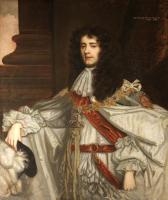


John Evelyn's Diary. 22nd June 1685. Argyle (age 56) taken in Scotland and executed, and his party dispers'd..
John Evelyn's Diary. 22nd June 1702. I dined at the Archbishop's (age 65) with the newly made Bishop of Carlisle, Dr. Nicolson, my worthy and learned correspondent.

On 22nd June 1713 John Sackville was born to Lionel Cranfield Sackville 1st Duke Dorset (age 25) and Elizabeth Colyear Duchess Dorset (age 24). He married 1744 his half third cousin Frances Leveson-Gower, daughter of John Leveson-Gower 1st Earl Gower and Evelyn Pierrepont Baroness Gower, and had issue.
On 22nd June 1725 Susan Murray (age 26) died in childbirth.
On 22nd June 1772 Henry George Herbert 2nd Earl Carnarvon was baptised at St George's Church, Hanover Square.
On or before 22nd June 1777, the date he was baptised, John Thirtle was born.
On 22nd June 1778 George Percy 5th Duke Northumberland was born to Algernon Percy 1st Earl Beverley (age 28) and Isabella Susan Burrell Countess Beverley (age 27). He married 22nd June 1801 his fifth cousin once removed Louisa Harcourt Stuart-Wortley-Mackenzie and had issue.
The Deeds of the Dukes of Normandy
The Gesta Normannorum Ducum [The Deeds of the Dukes of Normandy] is a landmark medieval chronicle tracing the rise and fall of the Norman dynasty from its early roots through the pivotal events surrounding the Norman Conquest of England. Originally penned in Latin by the monk William of Jumièges shortly before 1060 and later expanded at the behest of William the Conqueror, the work chronicles the deeds, politics, battles, and leadership of the Norman dukes, especially William’s own claim to the English throne. The narrative combines earlier historical sources with firsthand information and oral testimony to present an authoritative account of Normandy’s transformation from a Viking settlement into one of medieval Europe’s most powerful realms. William’s history emphasizes the legitimacy, military prowess, and governance of the Norman line, framing their expansion, including the conquest of England, as both divinely sanctioned and noble in purpose. Later chroniclers such as Orderic Vitalis and Robert of Torigni continued the history, extending the coverage into the 12th century, providing broader context on ducal rule and its impact. Today this classic work remains a foundational source for understanding Norman identity, medieval statesmanship, and the historical forces that reshaped England and Western Europe between 800AD and 1100AD.
Available at Amazon in eBook and Paperback format.
On 22nd June 1801 John Francis (age 20) and Mary Evetts (age 21) were married at Thornham, Norfolk.
On 22nd June 1801 George Percy 5th Duke Northumberland (age 23) and Louisa Harcourt Stuart-Wortley-Mackenzie (age 19) were married. He the son of Algernon Percy 1st Earl Beverley (age 51) and Isabella Susan Burrell Countess Beverley (age 50). They were fifth cousin once removed.
On 22nd June 1819 Mary Anastasia Grace Mordaunt 11th Baroness Mordaunt (age 80) died. Her second cousin Alexander (age 76) succeeded 12th Baron Mordaunt.


On 22nd June 1820 George John Manners was born to John Henry Manners 5th Duke Rutland (age 42) and Elizabeth Howard Duchess Rutland (age 39). He married 4th October 1855 his second cousin Adeliza Matilda Fitzalan, daughter of Henry Charles Howard 13th Duke of Norfolk and Charlotte Sophia Leveson-Gower Duchess Norfolk, and had issue.
On 22nd June 1821 Augustus Charles Lennox Fitzroy 7th Duke Grafton was born to Henry Fitzroy 5th Duke Grafton (age 31) and Mary Caroline Berkeley Duchess Grafton (age 26). He married 9th June 1847 Anne Balfour and had issue.
Saint Michael and All Angels Church, Church Broughton [Map] was restored by J. R. Naylor of Derby. It was re-opened by the Bishop of Southwell (age 58) on 22 June 1886.
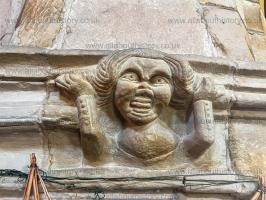
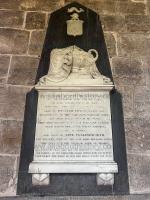
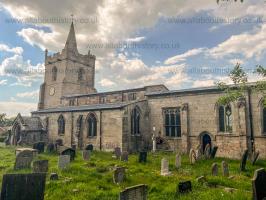
Archaeologia Cambrensis 1900 Basingwerk Abbey. Basingwerk Abbey [Map]. The effort (says a correspondent of the Manchester Guardian) which is to be made with the view of preserving the remains of Basingwerk Abbey, Flintshire, from further dilapidation, is rousing keen interest among archaeologists in Flintshire, Cheshire, and even more distant places. The Flintshirc County Council have also the matter in hand, and the probability is that a strong committee will be formed to deal with the matter, and to preserve this beautiful ruin, with its rich historical associations, from being yet more rudely dealt with by the hand of time. The Abbey stands on rising ground not far distant from the Holyhead railway station. The origin of the name Basingwerk" is absolutely unknown. Learned writers in the Archceologia Cambrensis, and kindred publications, have made ingenious guesses and deductions on the subject, but none of them agree. With regard to the date of the foundation of the Abbey, it is stated by Bishop Tanner that Ranulph, Earl of Chester, began to build it about 1131, and that it was afterwards added to by Henry II, and bestowed upon the Cistercian Order in 1159. The accuracy of Tanner's conjecture is borne out by the confirmation of grants made to God, St. Mary, and the monks of Basingwerk" by Henry II, wherein the King says:—" And I moreover do grant and confirm to them all their tenements which Ranulph Earl of Chester and other barons have given to them, that is to say, Halliwelle and Falibroch, and the chapel of Basingwerk, in which they at first dwelt, with the mills and all their apourtenances." From the words "in which they at first dwelt," it is evident the monks had been some time settled at Basingwerk at the date of the granting of this charter. The charters of Llewelyn ap Iorwerth and his son, David, both speak of gifts which their predecessors had bestowed upon the monks of Basingwerk, and the probability, therefore, is that the original foundation was by one of the earlier princes of Wales. The Cistercians had no religious house in this country before 1128, so that the first monks at Basingwerk must have belonged to some other Order, perhaps the Fratres Gresei, as conjectured by the l% laborious" Leland. Giraldus de Barri (Cambrensis) was here in the train of Archbishop Baldwin, and he describes it as "cellula de Basingwerk" (the little cell of Basingwerk"). In the time of the first Edward we find that the Abbas de Basingwerk" was called to Parliament, and Edward gave one of them a tract of land at Gelli, in Whitford, where there used to be a chapel belonging to the monks of Basingwerk (it is now a farmhouse). There is no doubt that at one time the Abbey was a rich and flourishing one, with property in various parts of the country. Henry II confirmed to them, among other possessions, "a hundred shillings out of the revenues of Chester," and they also had the church of Holywell and the chapel of Colsul (Coleshill), the village of Wenhewm," tithes of fish from Rhuddlan and other places, and property in the English dioceses of Coventry and Lichneld. Tanner states they also had a silver mine at Basingwerk. About the end of the fifteenth century, the Abbot of Basingwerk was Thomas ap Davydd Pennant. The herald bard, Guttyn Owain (who in those days resided alternately at Basingwerk and Strata Florida), wrote a poem (still extant) in which he compliments this abbot upon his illustrious pedigree, and then proceeds to describe the Abbey in most interesting fashion:
It is a part of heaven he is the Sovereign of our language Excellent are the buildings the houses of the district Of faultless freestone abundant are the materials. And native oaks in an extensive park. Houses of delicious wine the temple of the saints Houses of the choir a house for the convent A good house for the corn on the other side. There is a malt house and it has a brick house. There is a stone wall by Cilgwri, And upon it a gate house. Upon a rampart, where a load of gold might be obtained, Has a narrow fortress shutting in the monks. With mills has he tilled with every available glen and hill. Generous God, wherever his lot falls There the work of water and wind is not in vain. Gold has been bestowed upon the fabric On the land of God, like the leaves in number. Should the gold of a king have been there contributed, He has given twice as much in wine. Goods and victuals without number He daily gives to all the world."
In 1543 (32 Henry VIII) letters patent were passed under the Great Seal, being a grant of the reversion of the Abbey to Harrye ap Harrye and Peter Mutton, in consideration of the sum of £280 8s. 8d. The daughter of the first named married one of the Mostyns of Talacre, and the Abbey and grounds now belong to Sir Pyers Mostyn, of Talacre, the head of one of the chief Roman Catholic families in North Wales. — Wrexham Advertiser, June 22nd, 1901.
22nd June 1908 Northumberland Regiments Boer War Memorial, Newcastle upon Tyne [Map] was unveiled by Lieutenant Genral Sir Laurence Oliphant
Sculpted by Thomas Eyre Macklin. The Mason was Mr J C Ferguson and the founders were Messrs Montacutelli Freres. It cost £4,707 to build.
The winged figure of victory stands with her right arm holding out a laurel garland and a sword in her left hand and the figure of Northumbria at the base stands looking upwards with a palm branch in memory of her fallen sons in her out-stretched right hand and a standard in the other. The relief panel shows a battle scene; each panel is linked by a garland.


On 22nd June 1909 Beatriz Bourbon was born to Alfonso XIII King Spain (age 23) and Victoria Eugénie Mountbatten Queen Consort Spain (age 21). She a great granddaughter of Queen Victoria of the United Kingdom.


The Times. 22nd June 1910. LORD ACHESON (age 33) AND MISS CARTER (age 22).
The marriage of Viscount Acheson, elder son of the Earl (age 68) and Countess of Gosford (age 54), and Miss Mildred Carter, only daughter of Mr. J. Ridgely Carter (age 46), American Minister to Rumania, and Mrs. Ridgely Carter (age 45), took place yesterday at St. George's, Hanover-square. The Sub-Dean of the Chapels Royal (the Rev. Edgar Sheppard, D.D.) performed the ceremony, assisted by the Rev. David Anderson and other clergy, and Mr. Ridgely Carter gave his daughter away. She wore a very simple wedding gown of soft white satin with a long train draped with old point de Venise, and a Venetian lace cap over a spray of myrtle and orange blossom, covered by a plain tulle veil. Master David Stanley, Master Julian Ward, and Miss Diana Roberts, dressed all in white, followed the bride, and there were seven bridesmaids, Lady Theo Acheson (age 28) (sister of the bridegroom), Lady Victoria Stanley, Mlle. Irene deo La Grange, Miss Canilla Morgan, the Hon. Rhoda Astley, Miss Elsie Nicholl, and Miss Marian Scranton, who wore white chiffon dresses with draped bodices and wreaths of myrtle beneath tulle veils. They also wore diamond neckislides and carried loose bunches of red roses. The Hon. Patrick Acheson (age 26) was best man to his brother.
Mrs. Ridgely Carter afterwards held a large reception at Dorchester House (lent by the American Ambassador and Mrs. Whitelaw Reid), and among the many who came on from the church were the French, Russian, German, Spanish, and Italian Ambassadors, the Danish Minister, tho Rumanian Minister, the Swedish Minister and Countess Wrangel, Mme. Dominguez, the Servian Charge d'Affaires and Mme. Grouitel, the Chilian Minister and Mme. Gana, the Belgian Minister and Countess de Lalaing, the Duke (age 63) and Duchess of Somerset (age 57), Katharine Duchess of Westminster (age 53) and Lady Helen Grosvenor (age 22), Prince and Princess Alexis Dolgorouki, the Marquis and Marchioness of Hamilton, the Marchioness of Tweeddale, the Marquis (age 48) and Marchioness of Salisbury (age 42), the Marchioness of Anglesey (age 26), the Countess of Powis (age 45), the Earl (age 56) and Countess of Chesterfield, the Countess of Kintore and Lady Hilda Keith-Falconer, the Earl and Countess of Gosford, Prince and Princess Frederick Liechtenstein, the Countess of Kimberley, Countess Grey, the Marquis d'Hautpoul, the Countess of Leicester (age 54) and Lady Bridget Coke (age 19), the Earl (age 41) and Countess of Craven (age 38), the Earl of Desart, Countess Fritz Hochberg, the Earl and Countess of Meath, the Countess of Bilmorey, the Countess of Londesborough (age 49) and Lady Irene Denison (age 19), the Earl and Countess of Derby (age 70), the Earl (age 51) and Countess of Yarborough, Ellen Lady Inchiquin and the Hon Lilah O'Brien, Lord and Lady Charles Beresford, Lord and Lady Leith of Fyvie, Lady Saltoun, Baroness Nunburnholme (age 30), Baroness Newborough, Sir John and Lady Lister-Raye, Lord and Lady Monson, Lord and Baroness Savile, Lady Rothschild, Viscount and Viscountess AIdleton, Lady Alexander Paget, Lady Harcourt, Lady Desborough, Lord Suffield, Sir Herbert and Lady Jekyll and Miss Jekyll, the Hon. Sir Francis and Baroness Ufford and Miss Viliers, Lady Heien Vincent, Lord Knaresborough and the Hon. Helen Meysey-Thompson, Lady Pauncefote, Lord and Lady Weardale, Lady Grace Baring, Lord Strathcona, Lady Margaret Graham and Miss Graham, Sir Francis and Lady Channing, Mary Baroness Gerard, Baroness Manners and the Hon. Misses Manners, Lady Edward Cavendish, Mme. Langenbach, Lord Revelstoke, the Countess of Bessborough (age 84) and Ladv Gweneth Ponsonby (age 22), Lord Aberdare and the Hon. Eva Bruce, the Hon. Harry and Mrs. Lawson, Mr. and Mrs. Bradley Martin, Mrs. F. Vanderbilt, Mrs. Arthur James, Mrs. Walter Burns, Mrs. Lewis Harcourt, Mrs. Lowther and Miss Lokther, Mine. Vagliano, Captain and Mrs. Clonman, Miss Ralli, Mr. William Giuett, Mrs: Hwfa Williams, the Hon. Mrs. Derek Keppel, Mr. William Phillips, Mrs. Frank D'Arcy, the Hon. Lady Murray, Mr. and Mrs. Meyer Sassoon, Sir Bartle Frere, Mme. de Bille, Mrs. Featherstonhaugh, Mrs. Cotton Jodrell, Mrs. Frank Mackay, the Hon. Urs. Charles Lawrence, the Hon. Mrs. Rochfort Maguire, Lady Barrymore, Mrs. Chauncey, and Mrs. Ronalds.
Lord and Lady Acheson left later in the afternoon for the Continent, the bride travelling in a dress of grey chiffon and a large hat swathed in tulle to match the dress.
A list of the principal wedding presents was published in The Times yesterday.
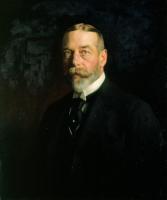
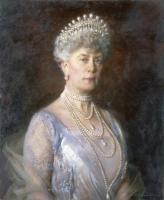
On 22nd June 1911 King George V of the United Kingdom (age 46) was crowned V King of the United Kingdom. Victoria Mary Teck Queen Consort England (age 44) was crowned Queen Consort England Scotland and Ireland.
Dorothy Margaret Browne (age 23) bore Queen Mary's train.
Edward Knollys 2nd Viscount Knollys (age 16) carried the King's train





Chronicle of Walter of Guisborough
A canon regular of the Augustinian Guisborough Priory, Yorkshire, formerly known as The Chronicle of Walter of Hemingburgh, describes the period from 1066 to 1346. Before 1274 the Chronicle is based on other works. Thereafter, the Chronicle is original, and a remarkable source for the events of the time. This book provides a translation of the Chronicle from that date. The Latin source for our translation is the 1849 work edited by Hans Claude Hamilton. Hamilton, in his preface, says: 'In the present work we behold perhaps one of the finest samples of our early chronicles, both as regards the value of the events recorded, and the correctness with which they are detailed; Nor will the pleasing style of composition be lightly passed over by those capable of seeing reflected from it the tokens of a vigorous and cultivated mind, and a favourable specimen of the learning and taste of the age in which it was framed.'
Available at Amazon in eBook and Paperback format.
On 22nd June 1911 Cecilie Glücksburg Grand Duchess was born to Andrew Glücksburg (age 29) and Princess Alice of Battenburg (age 26). She a great x 2 granddaughter of Queen Victoria of the United Kingdom. She married 1931 her first cousin once removed Georg Donatus Hesse Darmstadt Grand Duke, son of Ernest Louis Hesse Darmstadt Grand Duke and Eleonore Solms Hohensolms Lich Grand Duchess, and had issue.

St James' Church, Antony [Map]. 22nd June 1918. Grave of Gordon Marshall Davey. Stoker Petty Officer, Royal Navy, K/2554, HMS P.15.
Note. P.15 probably denotes a Patrol Boat twenty-four ships to this design were ordered in May 1915; numbered P.11 to P.34.
Petty Officer Stoker K/2554, H.M.S. P.15, Royal Navy. Died from Lobar Pneumonia in Royal Naval Hospital Haslar 22nd June 1918. Aged 27. Born 4 February 1890 in Antony, Cornwall. In the 1901 census he was aged 8, son of George and Elizabeth Ann Davey, born Cornwall, resident 1 Pato Point, Antony, St Germans, Cornwall. Prior to enlistment he was a Market Gardener. Enlisted 13 April 1909 for 12 years.
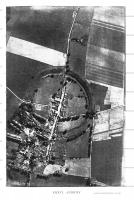
Wessex from the Air Plate 36. Reference No. 117. Height above Sea-level. Between 500 and 530 ft. (152 and 161 metres). County. Wilts. 28 NW. and SW. (112: D. 5). Parish. Avebury. Geological Formation, Middle Chalk, Latitude. 51° 25' 40" N Longitude. 1° 51' 12" W. (cross-roads near centre of the Great Circle) Time and Date of Photograph. 9.7 a.m., 22nd June [1928]. Height of Aeroplane. 5,400 ft. (1,645 metres). Speed of Shutter. 1/180th of a second.
On 22nd June 1945 Iona Colquhoun Duchess of Argyll was born to Ivar Iain Colquhoun 8th Baronet (age 29). She married 1964 Ian Campbell 12th Duke of Argyll, son of Ian Campbell 11th Duke of Argyll and Louise Clews Duchess of Argyll, and had issue.

After 22nd June 1958. Church of the Holy Trinity Embleton [Map]. Memorial to Constance Grey (deceased).
Constance Grey: On 31st January 1872 she was born to Lieutenant Colonel George Henry Grey and Harriet Jane Pearson. Before 22nd June 1958 E B C Curtis and she were married. On 22nd June 1958 Constance Grey died.
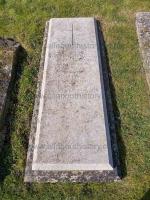
On 22nd June 2004 Adeline Mary Constance Hone Baroness Ampthill (age 94) died. She was buried at St Michael's Church, Chenies [Map].
Adeline Mary Constance Hone Baroness Ampthill: On 24th July 1909 she was born at Queensland, Australia. On 24th July 1948 John Russell 3rd Baron Ampthill and she were married. She by marriage Baroness Ampthill of Ampthill in Bedfordshire.
On 22nd June 2015 James George Alexander Bannerman Carnegie 3rd Duke of Fife (age 85) died.

On 22nd June 2018 Caroline Anne Pole-Carew (age 85) died. She was buried at St James' Church, Antony [Map].
Caroline Anne Pole-Carew: On 11th January 1933 she was born to John Pole-Carew 12th Baronet and Cynthia Mary Burns Lady Pole. On 16th July 1963 Paul Asquith and she were married.
On 22nd June 1000 Robert "Magnificent" Normandy I Duke Normandy was born to Richard "Good" Normandy II Duke Normandy (age 36) and Judith Penthièvre Duchess Normandy (age 18).
On 22nd June 1370 John Duke of Görlitz was born to Charles IV King Bohemia Holy Roman Emperor Luxemburg (age 54) and Elizabeth Pomerania Holy Roman Empress Luxemburg (age 23).
Henrici Quinti, Angliæ Regis, Gesta, is a first-hand account of the Agincourt Campaign, and subsequent events to his death in 1422. The author of the first part was a Chaplain in King Henry's retinue who was present from King Henry's departure at Southampton in 1415, at the siege of Harfleur, the battle of Agincourt, and the celebrations on King Henry's return to London. The second part, by another writer, relates the events that took place including the negotiations at Troye, Henry's marriage and his death in 1422.
Available at Amazon in eBook and Paperback format.
On 22nd June 1450 Eleanor Trastámara was born to Ferdinand I King Naples (age 27) and Isabella Clermont Queen Consort Naples (age 26).
On 22nd June 1477 Thomas Grey 2nd Marquess Dorset was born to Thomas Grey 1st Marquess Dorset (age 22) and Cecily Bonville Marchioness Dorset (age 16). He married (1) after 1483 his half third cousin Eleanor St John Marchioness Dorset (2) 1509 Margaret Wotton Marchioness Dorset and had issue.
On 22nd June 1593 John Gell 1st Baronet was born to Thomas Gell (age 61) and Millicent Sacheverell in Hopton Hall, Derbyshire [Map]. He married (1) January 1609 Elizabeth Willoughby Lady Gell and had issue (2) December 1647 Mary Radclyffe Lady Gell.
On 22nd June 1677 Washington Shirley 2nd Earl Ferrers was born to Robert Shirley 1st Earl Ferrers (age 26) and Elizabeth Washington Baroness Ferrers Chartley. He married 1704 Mary Levinge Countess Ferrers and had issue.


On 22nd June 1713 John Sackville was born to Lionel Cranfield Sackville 1st Duke Dorset (age 25) and Elizabeth Colyear Duchess Dorset (age 24). He married 1744 his half third cousin Frances Leveson-Gower, daughter of John Leveson-Gower 1st Earl Gower and Evelyn Pierrepont Baroness Gower, and had issue.
On 22nd June 1767 Brook William Bridges 4th Baronet was born to Brook Bridges 3rd Baronet (age 33) and Fanny Fowler (age 20). He married 14th August 1800 Eleanor Foote and had issue.
On 22nd June 1778 George Percy 5th Duke Northumberland was born to Algernon Percy 1st Earl Beverley (age 28) and Isabella Susan Burrell Countess Beverley (age 27). He married 22nd June 1801 his fifth cousin once removed Louisa Harcourt Stuart-Wortley-Mackenzie and had issue.
On 22nd June 1784 Henrietta Cole Countess de Grey was born to William Willoughby Cole 1st Earl Enniskillen (age 48) and Anne Lowry-Corry Countess Enniskillen (age 42). She married 20th July 1805 Thomas de Grey 2nd Earl de Grey, son of Thomas Robinson 2nd Baron Grantham and Mary Jemima Yorke Baroness Grantham, and had issue.
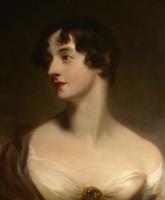

On 22nd June 1787 George Gough-Calthorpe 3rd Baron Calthorpe was born to Henry Gough-Calthorpe 1st Baron Calthorpe (age 38) and Frances Carpenter Baroness Calthorpe (age 26).

On 22nd June 1788 William Pole Tylney Long Wellesley 4th Earl Mornington was born to William Wellesley aka Wellesley-Pole 3rd Earl Mornington (age 25) and Katherine Forbes Countess Mornington (age 27). He married (1) 14th March 1812 his half sixth cousin Catherine "The Wiltshire Heiress" Tylney Long, daughter of James Long aka Tylney-Long 7th Baronet and Catherine Sydney Windsor, and had issue (2) 1828 Helena Paterson Bligh Countess Mornington.
Jean de Waurin's Chronicle of England Volume 6 Books 3-6: The Wars of the Roses
Jean de Waurin was a French Chronicler, from the Artois region, who was born around 1400, and died around 1474. Waurin’s Chronicle of England, Volume 6, covering the period 1450 to 1471, from which we have selected and translated Chapters relating to the Wars of the Roses, provides a vivid, original, contemporary description of key events some of which he witnessed first-hand, some of which he was told by the key people involved with whom Waurin had a personal relationship.
Available at Amazon in eBook and Paperback format.

On 22nd June 1803 George Venables-Vernon aka Warren 5th Baron Vernon was born to George Charles Venables-Vernon 4th Baron Vernon (age 23) and Frances Maria Warren Baroness Vernon (age 19). He married (1) 30th October 1824 Isabella Caroline Ellison and had issue (2) 14th December 1859 his first cousin Frances Maria Emma Boothby.
On 22nd June 1808 Henry Delves Broughton 9th Baronet was born to Henry Delves Broughton 8th Baronet (age 31) and Mary Pigott Lady Broughton (age 20).
On 22nd June 1820 George John Manners was born to John Henry Manners 5th Duke Rutland (age 42) and Elizabeth Howard Duchess Rutland (age 39). He married 4th October 1855 his second cousin Adeliza Matilda Fitzalan, daughter of Henry Charles Howard 13th Duke of Norfolk and Charlotte Sophia Leveson-Gower Duchess Norfolk, and had issue.
On 22nd June 1821 Augustus Charles Lennox Fitzroy 7th Duke Grafton was born to Henry Fitzroy 5th Duke Grafton (age 31) and Mary Caroline Berkeley Duchess Grafton (age 26). He married 9th June 1847 Anne Balfour and had issue.
On 22nd June 1826 Charles Russell 3rd Baronet was born to Henry Russell 2nd Baronet (age 43).
On 22nd June 1857 Ida Louise Bennet Countess Dalhousie was born to Charles Bennet 6th Earl Tankerville (age 47) and Olivia Montagu Countess Tankerville (age 26). She married 1877 John William Maule Ramsay 13th Earl Dalhousie and had issue.
On 22nd June 1858 Charles Francis Boothby 11th Baronet was born to Reverend Brooke William Boothby 9th Baronet (age 49) and Martha Serena Boothby. Coefficient of inbreeding 3.12%.
On 22nd June 1870 Mary Constable Baroness Stourton, Segrave and Mowbray was born to Thomas Angus Constable (age 65). She married 26th July 1893 Charles Botolph Joseph Stourton 21st Baron Stourton 23rd Baron Segrave 22nd Baron Mowbray, son of Alfred Stourton 20th Baron Stourton 22nd Baron Segrave 21st Baron Mowbray, and had issue.
On 22nd June 1872 Cyril Arthur Liddell was born to Arthur Thomas Liddell 5th Baron Ravensworth (age 34) and Sophia Harriett Waller Baroness Ravensworth.

On 22nd June 1881 Henry Page Croft 1st Baron Croft was born to Richard Benyon Croft (age 38) and Anne Elizabeth Page (age 38) at Fanhams Hall. He married 1916 Nancy Beatrice Borwick Baroness Croft and had issue.
On 22nd June 1883 Beatrice Eleanor Paget Countess Pembroke and Montgomery was born to Alexander Victor Paget (age 44). She married 21st January 1904 her third cousin once removed Reginald Herbert 15th Earl Pembroke 12th Earl Montgomery, son of Sidney Herbert 14th Earl Pembroke 11th Earl Montgomery and Beatrix Louisa Lambton Countess Pembroke and Montgomery, and had issue.

On 22nd June 1886 John Holford Parker was born to Albert Parker 3rd Earl Morley (age 43) and Margaret Holford Countess Morley (age 31). He married 1919 Marjory Katharine, daughter of John Townshend St Aubyn 2nd Baron St Levan and Edith Hilaria Edgecumbe, and had issue.
On 22nd June 1891 Leverne Elton Reade was born to George Compton Reade 9th Baronet (age 45) and Melissa Ray Lady Reade.
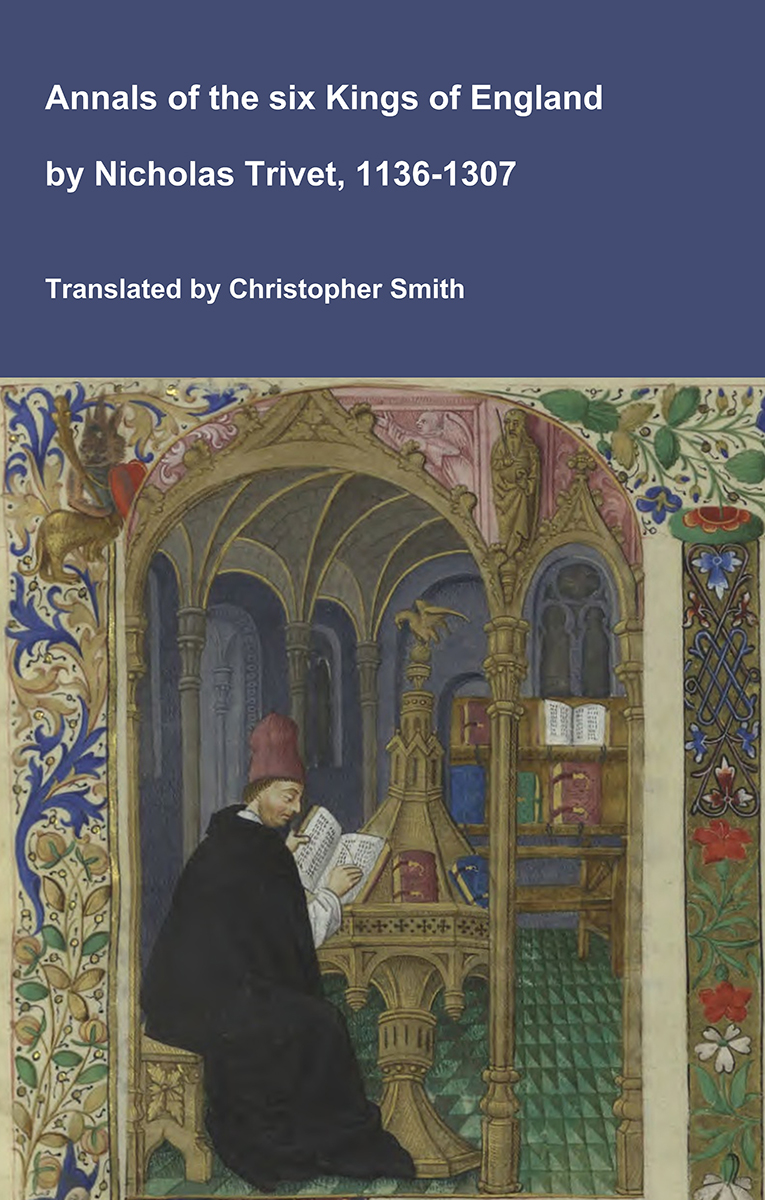
Annals of the six Kings of England by Nicholas Trivet
Translation of the Annals of the Six Kings of England by that traces the rise and rule of the Angevin aka Plantagenet dynasty from the mid-12th to early 14th century. Written by the Dominican scholar Nicholas Trivet, the work offers a vivid account of English history from the reign of King Stephen through to the death of King Edward I, blending political narrative with moral reflection. Covering the reigns of six monarchs—from Stephen to Edward I—the chronicle explores royal authority, rebellion, war, and the shifting balance between crown, church, and nobility. Trivet provides detailed insight into defining moments such as baronial conflicts, Anglo-French rivalry, and the consolidation of royal power under Edward I, whose reign he describes with particular immediacy. The Annals combines careful year-by-year reporting with thoughtful interpretation, presenting history not merely as a sequence of events but as a moral and political lesson. Ideal for readers interested in medieval history, kingship, and the origins of the English state, this chronicle remains a valuable and accessible window into the turbulent world of the Plantagenet kings.
Available at Amazon in eBook and Paperback format.
On 22nd June 1896 Elizabeth Mary Theodora Hughes Lady Shaw was born to Robert Heywood Hughes 12th Baronet (age 30). She married 28th March 1921 John James Kenward Shaw aka Best-Shaw 9th Baronet, son of Charles John Monson Shaw 8th Baronet, and had issue.
On 22nd June 1907 Helen Diana Bridgeman was born to Orlando Bridgeman 5th Earl Bradford (age 33) and Margaret Cecilia Bruce Countess Bradford (age 24). She married 10th February 1930 Robert Abdy 5th Baronet, son of Henry Abdy 4th Baronet and Anna Adele Coronn, and had issue.


On 22nd June 1909 Beatriz Bourbon was born to Alfonso XIII King Spain (age 23) and Victoria Eugénie Mountbatten Queen Consort Spain (age 21). She a great granddaughter of Queen Victoria of the United Kingdom.
On 22nd June 1911 Cecilie Glücksburg Grand Duchess was born to Andrew Glücksburg (age 29) and Princess Alice of Battenburg (age 26). She a great x 2 granddaughter of Queen Victoria of the United Kingdom. She married 1931 her first cousin once removed Georg Donatus Hesse Darmstadt Grand Duke, son of Ernest Louis Hesse Darmstadt Grand Duke and Eleonore Solms Hohensolms Lich Grand Duchess, and had issue.
On 22nd June 1924 Ronald Arthur Somerset Gough-Calthorpe 9th Baron Calthorpe was born to Frederick Somerset Gough-Calthorpe (age 32) and Rose Mary Dorothy Vernon-Harcourt (age 24).
On 22nd June 1945 Iona Colquhoun Duchess of Argyll was born to Ivar Iain Colquhoun 8th Baronet (age 29). She married 1964 Ian Campbell 12th Duke of Argyll, son of Ian Campbell 11th Duke of Argyll and Louise Clews Duchess of Argyll, and had issue.
On 22nd June 1948 James Charteris 13th Earl of Wemyss was born to David Charteris 12th Earl of Wemyss (age 36).
On 22nd June 1382 John Ros 5th Baron Ros Helmsley (age 13) and Mary Percy Baroness Ros of Helmsley (age 15) were married. She by marriage Baroness Ros Helmsley. He the son of Thomas Ros 4th Baron Ros Helmsley (age 47) and Beatrice Stafford Countess Desmond (age 41). They were third cousins. He a great x 3 grandson of King Edward I of England.
On 22nd June 1558 Thomas Percy 7th Earl of Northumberland (age 30) and Anne Somerset Countess Northumberland (age 20) were married. She by marriage Countess of Northumberland. She the daughter of Henry Somerset 2nd Earl of Worcester and Elizabeth Browne Countess of Worcester (age 56). They were third cousins. He a great x 5 grandson of King Edward III of England. She a great x 5 granddaughter of King Edward III of England.
On 22nd June 1596 William Cockayne (age 35) and Mary Morris Countess Dover (age 31) were married.
On 22nd June 1610 William Seymour 2nd Duke of Somerset (age 22) and Arabella Stewart (age 35) were married in secret at Palace of Placentia, Greenwich [Map]. For having married without permission King James I of England and Ireland and VI of Scotland (age 44) had Arabella Stewart imprisoned in Sir Thomas Perry's House, Lambeth and he in the Tower of London [Map]. She the daughter of Charles Stewart 5th Earl Lennox and Elizabeth Cavendish Countess Lennox. They were third cousin once removed. He a great x 3 grandson of King Henry VII of England and Ireland. She a great x 2 granddaughter of King Henry VII of England and Ireland.
On 22nd June 1612 Alexander Seton aka Montgomerie 6th Earl Eglinton (age 24) and Anne Livingstone Countess Eglinton were married. She the daughter of Alexander Livingston 1st Earl Linlithgow and Helen Hay. He the son of Robert Seton 1st Earl Winton and Margaret Montgomerie Countess Winton. They were half third cousins.
On 22nd June 1695 Basil Feilding 3rd Earl Desmond 4th Earl Denbigh (age 27) and Hester Firebrace Countess Desmond and Denbigh (age 19) were married. She by marriage Countess Desmond and Countess Denbigh. He the son of William Feilding 2nd Earl Desmond 3rd Earl Denbigh and Mary Carey Countess Desmond and Denbigh.
William of Worcester's Chronicle of England
William of Worcester, born around 1415, and died around 1482 was secretary to John Fastolf, the renowned soldier of the Hundred Years War, during which time he collected documents, letters, and wrote a record of events. Following their return to England in 1440 William was witness to major events. Twice in his chronicle he uses the first person: 1. when writing about the murder of Thomas, 7th Baron Scales, in 1460, he writes '… and I saw him lying naked in the cemetery near the porch of the church of St. Mary Overie in Southwark …' and 2. describing King Edward IV's entry into London in 1461 he writes '… proclaimed that all the people themselves were to recognize and acknowledge Edward as king. I was present and heard this, and immediately went down with them into the city'. William’s Chronicle is rich in detail. It is the source of much information about the Wars of the Roses, including the term 'Diabolical Marriage' to describe the marriage of Queen Elizabeth Woodville’s brother John’s marriage to Katherine, Dowager Duchess of Norfolk, he aged twenty, she sixty-five or more, and the story about a paper crown being placed in mockery on the severed head of Richard, 3rd Duke of York.
Available at Amazon in eBook and Paperback format.
On 22nd June 1744 William Fitzwilliam 1st and 3rd Earl Fitzwilliam (age 24) and Anne Watson Wentworth Countess Fitzwilliam were married at St George's Church, Hanover Square. She by marriage Countess Fitzwilliam, Baroness Fitzwilliam of Liffer in Donegal. She the daughter of Thomas Watson 1st Marquess Rockingham (age 50). He the son of John Fitzwilliam 2nd Earl Fitzwilliam and Anne Stringer.
On 22nd June 1749 Gilbert Heathcote 3rd Baronet (age 29) and Margaret Yorke Lady Heathcote (age 16) were married. She the daughter of Philip Yorke 1st Earl of Hardwicke (age 58) and Margaret Cocks Countess Hardwicke.

On 22nd June 1754 Brinsley Butler 2nd Earl Lanesborough (age 26) and Jane Rochfort Countess Lanesborough (age 16) were married. She by marriage Countess Lanesborough. She the daughter of Robert Rochfort 1st Earl of Belvedere (age 46) and Mary Molesworth. He the son of Humphrey Butler 1st Earl Lanesborough.

On 22nd June 1782 Charles Jenkinson 1st Earl Liverpool (age 53) and Catherine Bishopp Countess Liverpool (age 37) were married at her house in Hertford Street.
On 22nd June 1786 Henry Paulet St John-Mildmay 3rd Baronet (age 21) and Jane Mildmay Lady St-John Mildmay (age 21) were married. She by marriage Lady St John-Mildmay of Farley in Southampton.
On 22nd June 1801 George Percy 5th Duke Northumberland (age 23) and Louisa Harcourt Stuart-Wortley-Mackenzie (age 19) were married. He the son of Algernon Percy 1st Earl Beverley (age 51) and Isabella Susan Burrell Countess Beverley (age 50). They were fifth cousin once removed.
On 22nd June 1801 John Francis (age 20) and Mary Evetts (age 21) were married at Thornham, Norfolk.
On 22nd June 1809 Admiral John Beresford 1st Baronet (age 43) and Mary Molloy were married. He the illegitmate son of George de la Poer Beresford 1st Marquess Waterford.
On 22nd June 1814 Stapleton Cotton 1st Viscount Combermere (age 40) and Caroline Greville Viscountess Comberemere (age 25) were married. She by marriage Baroness Combermere.
On 22nd June 1826 James Henry Legge Dutton 3rd Baron Sherborne (age 22) and Elizabeth Howard (age 23) were married. She the daughter of Thomas Howard 16th Earl Suffolk 9th Earl Berkshire (age 49) and Elizabeth Jane Dutton Countess Suffolk and Berkshire (age 51). They were first cousins.
On 22nd June 1830 Robert Dillon 3rd Baron Clonbrook (age 23) and Caroline Elizabeth Spencer (age 24) were married.
On 22nd June 1832 Archibald Acheson 3rd Earl Gosford (age 25) and Theodosia Brabazon Countess Gosford (age 21) were married. She the daughter of John Brabazon 10th Earl Meath (age 60). He the son of Archibald Acheson 2nd Earl Gosford (age 55) and Mary Sparrow Countess Gosford.

On 22nd June 1848 George Glyn 2nd Baron Wolverton (age 24) and Georgiana "Giana" Maria Tufnell Baroness Wolverton (age 23) were married. No issue.
On 22nd June 1870 Major Charles Norton (age 35) and Katharine Buckner McVickar Baroness Grantley were married.
Chronicle of a Bourgeois of Valenciennes
Récits d’un bourgeois de Valenciennes aka The Chronicle of a Bourgeois of Valenciennes is a vivid 14th-century vernacular chronicle written by an anonymous urban chronicler from Valenciennes in the County of Hainaut. It survives in a manuscript that describes local and regional history from about 1253 to 1366, blending chronology, narrative episodes, and eyewitness-style accounts of political, military, and social events in medieval France, Flanders, and the Low Countries. The work begins with a chronological framework of events affecting Valenciennes and its region under rulers such as King Philip VI of France and the shifting allegiances of local nobility. It includes accounts of conflicts, sieges, diplomatic manoeuvres, and the impact of broader struggles like the Hundred Years’ War on urban life in Hainaut. Written from the perspective of a burgher (bourgeois) rather than a monastery or royal court, the chronicle offers a rare lay viewpoint on high politics and warfare, reflecting how merchants, townspeople, and civic institutions experienced the turbulence of the 13th and 14th centuries. Its narrative style combines straightforward reporting of events with moral and civic observations, making it a valuable source for readers interested in medieval urban society, regional politics, and the lived experience of war and governance in pre-modern Europe.
Available at Amazon in eBook and Paperback format.
On 22nd June 1872 Henry Coster Lea Edwards 2nd Baronet (age 32) and Agnes Harcourt Clark were married.
On 22nd June 1875 John Wodehouse 2nd Earl Kimberley (age 27) and Isabel Geraldine Stracey Countess Kimberley were married. He the son of John Wodehouse 1st Earl Kimberley (age 49) and Florence Fitzgibbon Countess Kimberley (age 50).
On 22nd June 1880 Robert Wellington Stapleton-Cotton 3rd Viscount Combermere (age 35) and Isabel Marion Chetwynd Viscountess Combermere were married.

On 22nd June 1893 Arthur Hill 6th Marquess of Downshire (age 21) and Katherine Mary "Kitty" Hare Marchioness Downshire (age 20) were married. She by marriage Marchioness Downshire. He the son of Arthur Hill 5th Marquess Downshire and Georgiana Elizabeth Balfour.
On 22nd June 1927 Charles Fitzroy 5th Baron Southampton (age 23) and Margaret Drake Baroness Southampton were married. She by marriage Baroness Southampton.
On 22nd June 1343 Aymon "Peaceful" Savoy Count Savoy (age 51) died. His son Amadeus (age 9) succeeded VI Count Savoy.
On 22nd June 1379 Millicent Zouche Baroness Deincourt died at Blankney, Lincolnshire.
On 22nd June 1402 Owain ap Gruffudd "Glyndŵr" Mathrafal Prince Powys (age 43) defeated the army of Edmund Mortimer (age 25) at Knighton, Radnorshire [Map], who was captured, at the Battle of Bryn Glas.
King Henry IV of England (age 35) made no attempt to ransom Mortimer and, consequently, Mortimer changed his allegiance, and subsequently married Owain's daughter.
Walter Devereux (age 41) died from wounds.
On 22nd June 1402 George Dunbar 10th Earl March (age 64) commanded a force of around 200 men from the Berwick garrison who defeated a Scottish army of around 400 men at Nisbet during the Battle of Nesbit Moor. Patrick "Younger" of Hailes Hepburn (age 50) was killed. John Cockburn, Thomas Haliburton, John Haliburton and Robert Lawedre were captured.
On 22nd June 1476 John Luxemburg Count Soissons was killed at the Battle of Morat. His brother Peter (age 36) succeeded Count Soissons.
On 22nd June 1498 Elizabeth Hopton Countess of Worcester (age 71) died at Hopton Castle, Shropshire [Map].
On 22nd June 1535 Bishop John Fisher (age 65) was beheaded on Tower Hill [Map].
On 22nd June 1549 John Scrope 8th Baron Scrope of Bolton (age 39) died. His son Henry (age 15) succeeded 9th Baron Scrope of Bolton.

On 22nd June 1634 Elizabeth Carey Baroness Savile (age 64) died.
On 22nd June 1689 Edward Watson 2nd Baron Rockingham (age 58) died. His son Lewis (age 33) succeeded 3rd Baron Rockingham of Northampton, 3rd Baronet Watson of Rockingham Castle in Northamptonshire
Abbot John Whethamstede’s Chronicle of the Abbey of St Albans
Abbot John Whethamstede's Register aka Chronicle of his second term at the Abbey of St Albans, 1451-1461, is a remarkable text that describes his first-hand experience of the beginning of the Wars of the Roses including the First and Second Battles of St Albans, 1455 and 1461, respectively, their cause, and their consequences, not least on the Abbey itself. His text also includes Loveday, Blore Heath, Northampton, the Act of Accord, Wakefield, and Towton, and ends with the Coronation of King Edward IV. In addition to the events of the Wars of the Roses, Abbot John, or his scribes who wrote the Chronicle, include details in the life of the Abbey such as charters, letters, land exchanges, visits by legates, and disputes, which provide a rich insight into the day-to-day life of the Abbey, and the challenges faced by its Abbot.
Available at Amazon in eBook and Paperback format.
On 22nd June 1714 Penelope Evelyn Lady Alston (age 41) died. She was buried on 28th June 1714 at Long Ditton, Surrey.
On 22nd June 1731 Edward Howard 8th Earl Suffolk (age 59) died. His brother Charles (age 56) succeeded 9th Earl Suffolk. Henrietta Hobart Countess Suffolk (age 42) by marriage Countess Suffolk.


On 22nd June 1759 Zachary Hamlyn (age 82) died. He was buried at All Hallows' Church Woolfardisworthy [Map]. He has a monument at All Saints Church Clovelly, Devon with the inscription: "To the memory of Zachary Hamlyn Esq. late of Lincoln's Inn and of Court in this parish who departed this life June 22d MDCCLIX in the LXXXII year of his age. Whose body lies interred in the parish church of Woolfardisworthy [Map]. He was a sincere Christian, a tender and beneficent relation, a faithfull and kind friend an inoffensive and chearfull companion. Exemplarily modest, diligent, capable, communicative, he acquired a handsome fortune not only unenvied but with the esteem and love of all who had the pleasure of knowing him". His great-nephew James Hammett aka Hamlyn 1st Baronet (age 24) inherited his estates including the manor of Clovelly, Devon, and adopted his surname and arms.
On 22nd June 1764 John Philipps 6th Baronet (age 63) died. His son Richard (age 20) succeeded 7th Baronet Philips of Picton Castle.
On 22nd June 1767 Charles Bond 4th Baronet (age 32) died unmarried. Baronet Bond of Peckham extinct.
On 22nd June 1819 Mary Anastasia Grace Mordaunt 11th Baroness Mordaunt (age 80) died. Her second cousin Alexander (age 76) succeeded 12th Baron Mordaunt.
On 22nd June 1840 Thomas Reynolds-Moreton 1st Earl Ducie (age 63) died. His son Henry (age 38) succeeded 2nd Earl Ducie, 5th Baron Ducie. Elizabeth Dutton Countess Ducie (age 33) by marriage Countess Ducie.
On 22nd June 1865 William Wright aka Lawson 1st Baronet (age 69) died. His son John (age 35) succeeded 2nd Baronet Lawson of Brough Hall in Yorkshire.
On 22nd June 1878 Bertram Ashburnham 4th Earl Ashburnham (age 80) died. His son Bertram (age 37) succeeded 5th Earl Ashburham, 7th Baron Ashburnham of Ashburnham in Sussex.
On 22nd June 1879 William Twysden 8th Baronet (age 90) died. His nephew Louis (age 49) succeeded 9th Baronet Twysden of Roydon in Kent. Helen Bazalgette Lady Twysden (age 50) by marriage Lady Twysden of Roydon in Kent.
On 22nd June 1894 Orlando Weld-Forester 4th Baron Forester (age 81) died. He was buried at Willey Church, Shropshire. His son Cecil (age 51) succeeded 5th Baron Forester of Willey Park in Shropshire.
On 22nd June 1904 Richard Boyle 9th Earl Cork (age 75) died at Berkeley Square, Mayfair. His son Charles (age 42) succeeded 10th Earl Cork.
Henrici Quinti, Angliæ Regis, Gesta, is a first-hand account of the Agincourt Campaign, and subsequent events to his death in 1422. The author of the first part was a Chaplain in King Henry's retinue who was present from King Henry's departure at Southampton in 1415, at the siege of Harfleur, the battle of Agincourt, and the celebrations on King Henry's return to London. The second part, by another writer, relates the events that took place including the negotiations at Troye, Henry's marriage and his death in 1422.
Available at Amazon in eBook and Paperback format.
On 22nd June 1919 Algitha Frederica Lumley Baroness Bolton (age 71) died.
On 22nd June 1935 Rowland Allanson-Winn 5th Baron Headley (age 80) died. His son Rowland (age 34) succeeded 6th Baron Allanson and Winn of Aghadoe in County Kerry, 6th Baronet Winn of Little Warley in Essex, 12th Baronet Winn of Nostel in Yorkshire.
On 22nd June 1940 Ethel Jemima Ponsonby Baroness Raglan (age 83) died.
On 22nd June 1989 William Fletcher-Vane 1st Baron Inglewood (age 80) died. His son William (age 37) succeeded 2nd Baron Inglewood of Hutton in the Forest of Cumberland.
On 22nd June 2004 Adeline Mary Constance Hone Baroness Ampthill (age 94) died. She was buried at St Michael's Church, Chenies [Map].
Adeline Mary Constance Hone Baroness Ampthill: On 24th July 1909 she was born at Queensland, Australia. On 24th July 1948 John Russell 3rd Baron Ampthill and she were married. She by marriage Baroness Ampthill of Ampthill in Bedfordshire.
On 22nd June 2008 Edward Woodford Wheler 14th Baronet (age 88) died. His son Trevor (age 62) succeeded 15th Baronet Wheler of the City of Westminster.
On 22nd June 2015 James George Alexander Bannerman Carnegie 3rd Duke of Fife (age 85) died.
On 22nd June 2021 Hugh Lowther 8th Earl Lonsdale (age 72) died. His half brother William (age 63) succeeded 9th Earl Lonsdale, 10th Viscount Lowther, 10th Baron Lowther.