

Chronicle of Walter of Guisborough
A canon regular of the Augustinian Guisborough Priory, Yorkshire, formerly known as The Chronicle of Walter of Hemingburgh, describes the period from 1066 to 1346. Before 1274 the Chronicle is based on other works. Thereafter, the Chronicle is original, and a remarkable source for the events of the time. This book provides a translation of the Chronicle from that date. The Latin source for our translation is the 1849 work edited by Hans Claude Hamilton. Hamilton, in his preface, says: 'In the present work we behold perhaps one of the finest samples of our early chronicles, both as regards the value of the events recorded, and the correctness with which they are detailed; Nor will the pleasing style of composition be lightly passed over by those capable of seeing reflected from it the tokens of a vigorous and cultivated mind, and a favourable specimen of the learning and taste of the age in which it was framed.'
Available at Amazon in eBook and Paperback format.
1190 Attacks on the Jews in England is in 1190-1200 Crusade and Richard I Captured.
On 16th March 1190 at York [Map] the Jewish population sought protection from violence in Clifford's Tower. The tower was besieged by the mob. The Jewish men killed their wives and children, after which they set fire to the wooden keep. Those who did escape were murdered.
On 18th March 1190 at Bury St Edmunds, Suffolk [Map] fifty-seven of the Jewish population were murdered.
Flowers of History by Roger of Wendover 1190. Of the dreadful slaughter of the Jews at York. In the same year, during Lent, that is, on the 15th of March, the Jews of the city of York, to the number of five hundred, besides women and children, through fear of an attack on the part of the Christians, by permission of the sheriff and the governor of the castle, shut themselves up in that fortress [Clifford's Tower], and when the garrison required them to give up possession of it, they refused to do so. On this refusal, repeated attacks were made both by day and night, and at length the Jews after reflecting, offered a large sum of money for their lives, but this was refused by the people. Then one of them skilled in the law, rose and addressed his companions thus, "Oh, men of Israel, hear my counsel. It is better, as our law instructs us, to die for our law than to fall into the hands of our enemies." This being agreed to by all, each head of a family came with a sharp razor, and cut the throats first of his wife, sons, and daughters, and afterwards of all his family, and threw the dead bodies, which they considered as sacrificed to devils, on the Christians outside the castle; they then shut themselves up in the king's house, and setting fire to it, both living and dead were burned together with the buildings. After this the citizens and soldiers burned the Jews' houses, with the papers of their debtors, but retained their money for their own use.
Flowers of History by Roger of Wendover 1190. Of the massacre of the Jews in sundry places. In this same year, many persons throughout England who were about to journey to Jerusalem, determined previous to their departure, to cause a rising against the Jews. This first broke out at Norwich, where the Jews, as many as could be found, were slain in their own houses; some few, however, escaped, and took refuge in the castle at that place. After this, on the 7th of March [1190], many were slain at Stamford on market day; on the 18th day of March fifty-seven were said to have been slaughtered at St. Edmund's; thus, wherever the Jews were found they were slain by the hands of the crusaders, except those who were protected by the municipal officers. But we must not believe that such a massacre of the Jews was pleasing to wise men, since it is written, "Do not kill them, lest my people should forget."
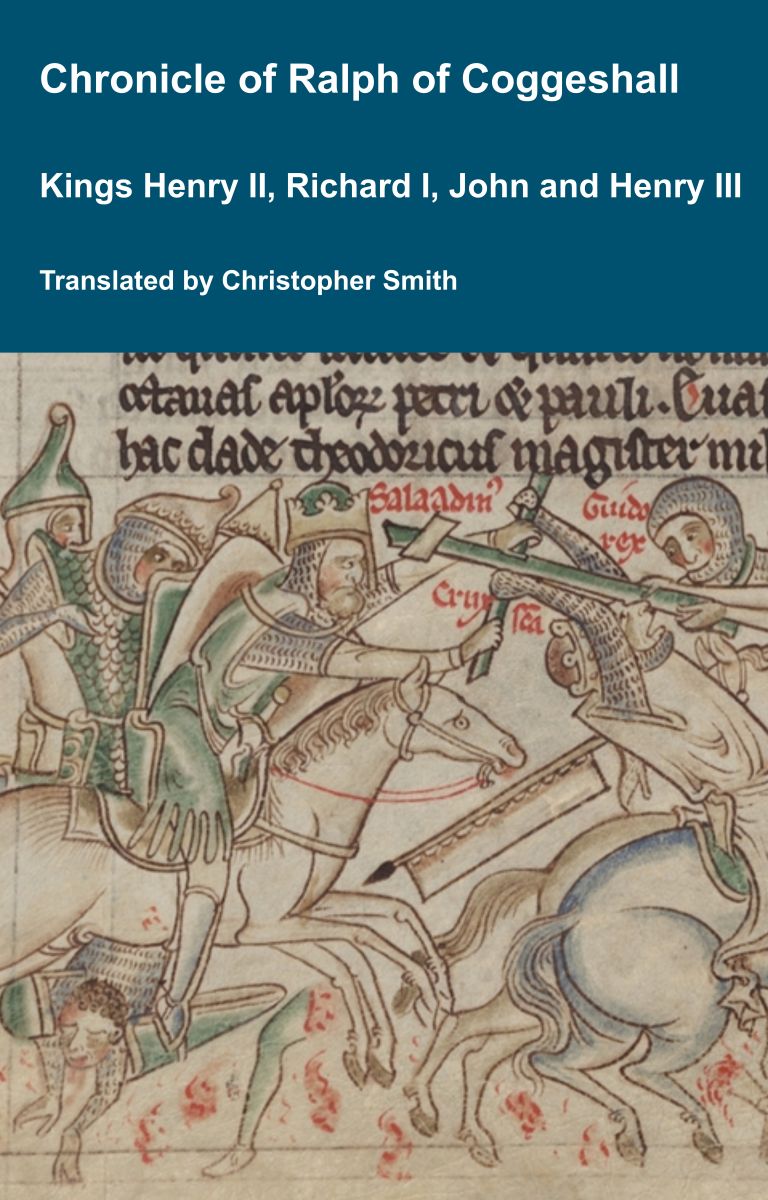 Chronicum Anglicanum by Ralph Coggeshall. For at York, more than four hundred Jews had taken refuge in the royal fortress [Clifford's Tower] to escape the persecution of the Christians, who had gathered there for the county assembly. Nevertheless, they were besieged and fiercely attacked by certain knights and citizens of the aforementioned city. When they could no longer withstand the assaults of their besiegers and all hope of escape was lost, they voluntarily brought upon themselves a wretched death out of fear of a more dreadful fate. They chose to perish by mutual slaughter rather than be savagely and disgracefully butchered by their persecutors' fury. Now, among them was a man of advanced age and well-versed in Mosaic law, whom they called Rabbi. All, from the least to the greatest, listened to him. He encouraged them to accept such a horrific manner of death through exhortations and by citing the exemplary teachings of the forefathers in the Old Law. And so, nearly all of them, except for a few who later pretended to convert to belief in the Lord Jesus, obeyed his urging. Taking up a knife, he cut the throats and arteries of each one, having first thrown their wealth into the filthy water that ran below. At last, he likewise took his own life in the same manner. Thus, the enemies of the Christian name left their bodies unburied, exposed to dogs and birds, while their souls were consigned to eternal torment in the flames of Hell.
Nam cum apud Eboracum quadringenti et eo amplius Judæi in munitione regia inclusi haberentur, ob persecutionem Christianorum, qui tunc ad comitatus convenerant, declinandam, nihilominus tamen a quibusdam militibus et prædictæ urbis civibus sunt obsessi et acrius expugnati. Cumque assultus expugnantium diutius ferre non possent, et jam omnis spes evadendi sublata fuisset, miserabilem mortem dirioris mortis metu voluntarie sibi ipsimet accersierunt, eligentes potius mutua cede deperire quam persequentium rabie truculentius atque impudentius jugulari. Erat autem quidam inter eos natu major et in lege Mosaica instructior, quem Rabi cognominabant, cui omnes auscultabant, a minimo usque ad maximum, qui eosdem ad tam horribile genus mortis exhortationibus et exemplari doctrina patrum in Veteri Lege præcedentium, animaveret. Cumque fere omnes, exceptis quibusdam paucis, qui se postmodum in Dominum Jesum credere simularunt, ejus hortatui obtemperarent, ille, arrepto cultro, incidit fibras gutturis singulorum cum arteriis, projectis prius eorum pecuniis in aqua ccenulenta, que subtus decurrebat, ac tandem semetipsum simili morte jugulans. Sicque inimici Christiani nominis cadavers inhumata canibus et avibus exposuerunt; animas vero gehennalibus flammis in perpetuum cruciandas tradentes.
Gesta Regis Henrici by Benedict of Peterborough. In the same year, in the month of March, on the seventeenth day before the Kalends of April [16th March 1190], being Palm Sunday, five hundred Jews of the city of York, both men and women, excluding small children, fearing an attack from the Christians, took refuge in the tower of York. They did so with the consent and approval of the castle's custodian and the sheriff. However, when the sheriff and the custodian of the tower attempted to reclaim control, the Jews refused to surrender it to them. This refusal greatly angered the sheriff and the castle's custodian, who then urged the knights of the shire and the townspeople to storm the tower and drive out the Jews. As the Christians laid siege to the tower day and night, the Jews, desperate to save their lives, offered a large sum of money in exchange for peace. But the people refused to accept any ransom. Then, a certain Jewish legal scholar stood up and addressed his fellow Israelites, saying: "Men of Israel, listen to my counsel. It is better for us to die for our law than to fall into the hands of the enemies of our faith; and indeed, our law itself commands this."
All the Jews, both men and women, agreed to this counsel. Then, each head of a household, taking a sharp knife, first cut the throats of his own wife and children, and then the rest of his household. They threw the bodies of their dead, whom they had sacrificed to demons, over the walls of the tower onto the crowd below. The remaining Jews, having killed their families, locked themselves inside the royal house; setting it on fire, they burned themselves along with the king's buildings. This massacre of the Jews took place in the city of York in the year 1190, on the Friday before Palm Sunday. Afterward, the citizens of York and the knights of the shire burned the houses of the Jews, seized their possessions, and destroyed all the records of debts that Christians owed to them by setting them on fire.
Eodem anno, mense Martio, xviio. kalendas Aprilis, Dominica in Ramis Palmarum, Judai civitatis Eboraci numero quingenti, viri ac mulieres exceptis parvulis, timentes impetum Christianorum, incluserunt se infra: turrim Eboraci consensu et voluntate custodis ejusdem turris et vicecomitis. Qua cum idem vicecomes et custos turris recepissent, Judi noluerunt eis illam tradere, unde vicecomes et custos turris valde indignati sunt; et in quantum poterant hortabantur milites co mitatus et homines civitatis, ut turrim liberarent a Judeis illis. Qui cum insultum fecissent in turrim die ac nocte, Judai obtulerunt pecuniam magnam oppido pro vita habenda; et noluit populus recipere. Tunc surrexit quidam legisperitus et ait, "Viri Israelitæ, audite consilium meum. Melius est nobis nobis mori pro lege nostra, quam incidere in manus inimicorum legis nostra; et illud idem precepit lex nostra".
Omnes igitur Judæi, tam viri quam mulieres, assensum præ consilio illi. Et accedens unusquisque paterfamilias cum novaculo acuto inprimis inciderunt guttura uxorum et filiorum et filiarum suarum; deinde totius familiæ suæ. Et proiecerunt mortuos suos quos sacrificaverant demoniis extra muros turris super populum. Cæteros autem interfectos et seipsos incluserunt in domo regia; et apposito igne seipsos et domos regis combusserunt. Hæc autem interfectio Judæorum facta fuit in civitate Eboraci anno MCXC., feria sexta ante Dominicam Palmarum. De- The men inde cives Eboraci et milites comitatus combusserunt phmder domos Judæorum, et possessiones eorum diripiebant houses. sibi, et cartas universorum debitorum combusserunt.
Images of Histories by Ralph Diceto. On the seventeenth day before the Kalends of April [16th March 1190] at York, as it is said, almost five hundred were put to death, wounding one another with mutual blows; for they preferred to be struck down by their own people rather than perish by the hands of the uncircumcised.
Images of Histories by Ralph Diceto. On the fifteenth day before the Kalends of April [18th March 1190], namely on Palm Sunday, as it is said, fifty-seven were killed at St Edmund’s [Map]. Wherever Jews were found, they were struck down by the hands of the pilgrims, except those whom the townspeople rescued with their assistance. It must not be believed that men of wisdom approved of so dreadful and destructive a slaughter of the Jews, since that saying of David so often comes to our ears: "Do not kill them."
Multi per Angliam, tendere Jerosolimam properantes, prius in Judæos insurgere decreverunt quam invaderent Sarraeenos. Igitur viii1 idus Februarii Judæi quotquot inventi sunt in domibus propriis apud Norwieum trucidati sunt; aliqui refugium habuerunt in castellum. Nonis Martii, tempore sceilieet nundinarum apud Stamford sunt multi. Septimo decimo kalendas Aprilis apud Eboracum, sicut. dicitur, fere quingenti neci traditi sunt, mutuis sese vulneribus appetentes. Malebant enim a propria gente percuti, quam manibus incircumcisorum perire. Xvto kalendas Aprilis, seilicet in Ramis Palmarum, sicut. dicitur, quinquaginta septem jugulati sunt apud Sanetum Eadmundum. Ubicunque reperti sunt Judæi manibus peregrinantium percussi sunt, nisi qui municipalium eruebantur auxilio. Necem Judæorum tam funestam, tam exitialem, viris prudentibus placuisse credendum non est, cum Daviticum illud auribus nostris frequenter occurrat, "Ne occidas eos."