

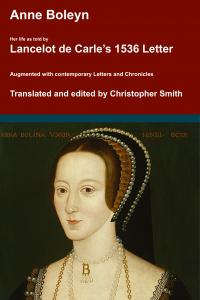
Anne Boleyn. Her Life as told by Lancelot de Carle's 1536 Letter.
In 1536, two weeks after the execution of Anne Boleyn, her brother George and four others, Lancelot du Carle, wrote an extraordinary letter that described Anne's life, and her trial and execution, to which he was a witness. This book presents a new translation of that letter, with additional material from other contemporary sources such as Letters, Hall's and Wriothesley's Chronicles, the pamphlets of Wynkyn the Worde, the Memorial of George Constantyne, the Portuguese Letter and the Baga de Secrets, all of which are provided in Appendices.
Available at Amazon in eBook and Paperback format.
1300-1309 Scottish Succession is in 14th Century Events.
In July 1300 Robert Clifford 1st Baron Clifford [aged 26], Hugh Courtenay 1st or 9th Earl Devon [aged 23], Simon Fraser, John Mohun 1st Baron Dunster [aged 31] and Simon Montagu 1st Baron Montagu [aged 50] fought at Caerlaverock during the Siege of Caerlaverock Castle.
On 7th February 1301 King Edward II of England [aged 16] was created Prince of Wales by his father King Edward I of England [aged 61]; the first English heir to receive the title. He was created 1st Earl Chester the same day.
On 11th July 1302 the army of Flanders unexpectedly defeated the army of France at Kortrijk during the Battle of the Golden Spurs aka Courtrai. Robert Artois II Count Artois [aged 51], Raoul II de Clermont [aged 57], Raoul Nesle and Godfrey Reginar were killed.
Simon de Clermont-Nesle [aged 47] died.
John Brienne II Count of Eu was killed. His son Raoul succeeded I Count Eu.
John of Avesnes [aged 32] was killed
Jacques de Saint Pol died from wounds.
 Annals of Six Kings of England by Nicholas Trivet [1258-1328]. In Flanders, the men of Bruges, being greatly oppressed by the unjust exactions of the French, expelled James of Saint-Pol, who held the place of the king among them, from the town, many Frenchmen being slain in this tumult. They then called to be their lord and defender Guy, Count of Namur, son of the Count of Flanders, who was still held in custody. Guy, having associated with himself William of Juliers, came with a numerous host of warriors, and greatly strengthened the spirit of the Flemings against the French. Meanwhile Robert, Count of Artois, sent into Flanders with a very large army, pitched his camp between Courtrai and Bruges; against whom the Flemings, going out, almost all on foot, engaged the French in a most severe battle [on 11th July 1302]. The French being overthrown, there fell slain in that battle the Count of Artois, the Counts of Eu and Aumale, and noble men, Geoffrey, brother of the Duke of Brabant, with his son, the son of the Count of Hainault, Ralph de Nesle, Constable of France, with his brother Guy, Marshal of France, Reginald de Trie, knight, Aymer, Chamberlain of Tancarville, Peter Flotte, chief counsellor of the King of France, and the principal author of the said exactions, and James of Saint-Pol; while of lesser knights, esquires, and foot soldiers a very great multitude was slain. The Counts of Saint-Pol and Boulogne, and Louis, son of the Count of Clermont, with many others, fleeing, left to the Flemings immense spoil.
In Flandria Brugenses, Gallicorum exactionibus [injustis] nimis oppressi, Jacobum S. Pauli, qui apud eos locum regis tenebat, expulerunt de villa, plurimis in hoc tumultu Gallicis interfectis. In dominum vero et defensorem vocaverunt Guidonem comitem Namarcii, fillum comitis Flandrensis in custodia adhuc detenti. Guido, associato sibi Willelimo de Juliariis, cum numerosa multitudine bellatorum adveniens, auxit Flandrensium animos plurimum contra Gallos. Interea Robertus, comes Attrabatensis, cum exercitu maximo missus in Flandriam, inter Corturiacum et Brugas tentoria sua fixit; contra quem Flandrenses egressi, omnes fere pedites, prælium gravissimum conseruerunt cam Gallicis. Quibus subcumbentibus, comites Attrabatensis, Augi, et Albæ-marlæ, virique nobiles Godefridus ducis Brabantiæ germanus cum filio suo, filius comitis Hanoniæ, Radulfus de Nigella constabularius Franciæ, cum fratre suo Guidone marescallo [Franciæ,] Reginaldus de Tria miles, Emericus Camerarius de Tancrevilla, Petrus Flote regis Francorum consiliarius præcipuus, et exactionum prædictarum auctor maximus Jacobus S. Pauli, in eo prælio ceciderunt occisi : aliorum vero militam minorum, scutiferorumque, et peditum, interfecta est maxima multitudo. Comites S. Pauli et Boloniæ, Lodovicusque comitis Claremontensis filius, cum aliis pluribus fugientibus, reliquerunt Flandrensibus spolia infinita.
Bourgeois de Valenciennes. When Count Robert of Artois learned that the Flemings had drawn near to Courtrai, he immediately ordered his host to strike camp and advanced in that direction as swiftly as he could. And when they were close to their enemies [on 11th July 1302], they went into council, at which were Lord Guy of Nesle, marshal of the host; Lord Renaud of Trie; Lord James of Saint-Pol; the Count of Aumale; the Count of Eu; Lord Geoffrey of Brabant; and John of Hainaut, son of the Count of Hainaut, whom the Count of Artois at once made a knight, together with fifty new knights, and Count Robert of Artois himself was also present in the council. And when they were all assembled, they drew up their order of battle and formed their battle-lines, and they were so close to one another that they were ready to strike together.
Quant le conte Robert d'Artois sceult que les Flamens estoient approchiés à Courtray, il commanda tantost son ost à deslogier, et tira celle part au plus tost qu’il peult. Et quant ils furent près de leurs ennemis, ils allèrent en conseil auquel furent monseigneur Guy de Nielle, mareschal de l’ost, monseigneur Renault de Trye, monseigneur Jaques de Saint-Pol, le conte d’Aumarle, le conte d’Eu, monseigneur Joffroy de Brabant, Jehan de Haynau fils du: conte de Haynau, que le conte d'Artois fit tantost chevalier et L nouveaulx avoec luy, et sy estoit en la compaignie du conseil ledit Robert conte d’Artois. Et quant ils furent tous assamblés, ils se ordonnèrent et firent leurs batailles, et furent si près les ungs des aultres que pour férir ensamble.
 Chronicle of Walter of Guisborough. In the same year, the Flemings defeated the French three times in the field. The Count of Artois [aged 51], a man of great renown and the seneschal of France, together with the lord of Nesle, more than forty chosen standard-bearers, and an innumerable multitude of armed men and foot soldiers, fell in a single day [11th July 1302]; and the flower of their knighthood perished, to their everlasting shame. Yet they still would not cease from the fury they had begun; for the king, assembling a great army, went there with thirty thousand fully armed horsemen, not counting the other riders and infantry beyond number. And in the following year many fell, and they retreated; and they made a truce for a time, yet they were always at a disadvantage. For they were excommunicated along with their king by Pope Boniface, and their land was laid under ecclesiastical interdict. The king of France had claimed for himself, and actually given away, the prebends and dignities of those in his realm who were elected and confirmed or consecrated in the papal court, appointments which the pope had always been accustomed to confer. For this reason, the lord pope first and second time warned him to desist from his error, and not to attempt such things, to the peril of his soul and the prejudice of his mother, the Roman Church. But because he refused to obey the warnings, at last the pope sent the archbishop of Narbonne, with canonical powers of coercion, to compel him and check his error. When the king heard this, he grew angry, and ordered him to be buried alive. The pope was greatly stirred by this deed, and also by the imprisonment of certain bishops and clerics; so that, by reason of the king's demerits, he excommunicated him and placed his kingdom under ecclesiastical interdict. After the death of Pope Boniface, the king swore an oath that he would abide by the commands of the Church, and he was absolved by Pope Benedict, who soon died, and thus the king's crime afterwards remained unpunished.
Eodem anno Flandrenses devicerunt Francos tribus vicibus in campo. Et comes de Arthoys, homo magni nominis et senescallus Franciæ, una cum domino de Neel, et plusquam XL vexillariis electis, et innumerosa plebe armatorum et peditum, corruerunt in una die; ceciditque flos militiæ suæ, in eorum opprobrium sempiternum, Et adhuc ab incepto furore noluerunt quiescere; rex enim, congregato exercitu copioso, perrexit ibidem, cum XXX millibus armatorum in equis armatis, præter alios equitantes et pedestres absque ullo numero. Et in anno sequenti corruerunt multi, et retrorsum abierunt; inieruntque treugas ad tempus, et de teriorem partem semper habuerunt. Erant enim excommunicati cum rege eorum per papam Bonifacium, et terra eorum ecclesiastico supposita interdicto. Rex enim Franciæ præbendas et dignitates electorum terræ suæ, qui confirmabantur et consecrabantur in curia, quas dominus papa semper conferre consueverat, ipse novo more dare voluit et dedit; propter quod dominus papa primo et secundo monuit eum ut ab incepto errore desisteret, et non aggrederetur talia, in periculum animæ suæ et præjudicium Romanæ ecclesiæ matris suæ. Sed quia monitis parere noluit, misit tandem papa archiepiscopum de Nerbone, cum coercione canonica, ut compelleret eum et errantem reprimeret. Quod audiens rex, iratus est, et jussit eum humari vivum. Et commotus est papa in hoc facto, et pro incarceratione etiam quorundam episcoporum et clericorum, ita quod, exigentibus ipsius demeritis, excommunicavit eum, et regnum ejus ecclesiastico supposuit interdicto. Post mortem autem Bonifacii papæ, præstito sacramento quod staret mandatis ecclesiæ, per papam Benedictum absolutus est, qui cito obiit, et crimen regis remansit subsequenter impunitum.
On 24th February 1303 at Roslyn a Scottish force commanded by Simon Fraser and John Comyn 3rd Lord Baddenoch [aged 34] ambushed the English army led by John Segrave 2nd Baron Segrave [aged 47] who was captured and subsequently released.
Annals of Six Kings of England by Nicholas Trivet [1258-1328]. In this year, about the beginning of Lent, the Scots, lying in ambush, suddenly attacked [on 24th February 1303] John de Segrave, who was passing near the castle called the Maidens [Edinburgh] with a small force of armed men; and, some being slain on both sides, the Scots, prevailing by their greater numbers, captured certain English knights, among whom was John himself, their captain, severely wounded. But other knights from the English army arriving, rescued John from his captors and carried him away. While this engagement was taking place, a certain noble knight, Robert de Neville, attending the solemnity of Mass (for it was the first Sunday of Lent), knew nothing at all of what had occurred. After Mass, however, when he had heard from those returning that the Scots were prevailing over the English, he hastened thither armed with his men, slew many, and, the rest being put to flight, brought back some prisoners; and of those who had been present with him at the Mass, not one was captured or seriously wounded, nor did a single man fall.
Hoc anno, circa principium Quadragesimæ, Scoti latentes in insidiis Joannem de Segrave, cum paucis armatis transeuntem juxta castrum quod dicitur Puellarum, subito invaserunt ; peremptisque hinc inde nonnullis, Scoti multitudine prævalentes, ceperunt aliquos milites Anglicos, inter quos et ipsum Joannem aliorum capitaneum graviter vulneratum: sed supervenientes milites alii de exercitu Anglicorum, ipsum Joannem a suis ereptum custodibus abduxerunt. Dum fieret iste conflictus, miles quidam nobilis Robertus de Nevile, missarum audiens solemnia, (erat enim Dominica prima Quadragesimæ,) quæ gesta fuerant penitus ignorabat. Post missam vero egressus, cum a redeuntibus audisset Scotos prævalere in Anglicos, illuc cum suis armatus properans, multos peremit; aliisque fugatis, captivos aliquos reduxit: nec de his qui missæ cum eo interfuerant quisquam captus fuit, aut graviter vulneratus, sed nec corruit unus solus.
Chronicle of Walter of Guisborough. In the year of our Lord 1303, after the truce had expired, the king sent the strength of his army into Scotland under Sir John de Segrave [aged 47] and his brothers, for they were very valiant knights. Thinking themselves in no danger, and being near Edinburgh at the beginning of Lent, and unaware of the Scots' ambush, our men divided into three companies, each about two leagues apart from the others. Sir John himself, with three hundred men-at-arms, was the nearest to the enemy, who lay hidden from him. Then, early at dawn on the first Sunday of Lent [24th February 1303], one of his own squires came and told him that the enemy was at hand, advising him to rejoin his companions, for together they need have no fear. But he refused, unwilling that a blemish should be set on his courage by seeming to retreat. Instead, armed, he advanced to meet them. Many fell on both sides, and Sir John himself was grievously wounded and taken prisoner. More than twenty chosen knights were captured with him. Yet when some of our men from the second company arrived, they seized him from his guards and carried him away. Also slain there was Sir Ralph le Coffrere, who was in the king's pay. The rest returned to England, bringing the king ill news.
Anno Domini MCCCII, elapsis treugis, misit rex robur exercitus in Scotiam, cum domino Johanne de Segrave et fratribus suis, erant enim milites strenuissimi. Cumque non timerent sibi, et essent juxta Edeneburgh, in principio Quadragesimæ, nec scirent Scotorum insidias, diviserunt se nostri per tres turmas, et distabant ab invicem quasi per duas leucas. Eratque ipse dominus Johannes cum trecentis armatis proximior hostibus, qui latebant eum. Et ecce puer unus ex suis summo diluculo primæ Dominicæ Quadragesimæ veniens, nunciavit ei hostes ad manum esse; consuluitque ut reverteretur ad consocios, et conglobati non timerent. Sed noluit suæ strenuitati notam impingi ut retrocederet; imo armatus processit eis obviam, cecideruntque multi hinc et inde, et ipse letaliter vulneratus est et captus. Captique sunt cum eo plusquam viginti milites electi; sed supervenientibus quibusdam ex nostris de secunda turma, rapuerunt eum a custodibus suis et abduxerunt. Corruit etiam ibi dominus Radulphus le Coffrere, qui ex parte regis stipendia ministrabat. Et reversi sunt alii in Angliam, deferentes sinistra nova regi.
Abbot John Whethamstede’s Chronicle of the Abbey of St Albans
Abbot John Whethamstede's Register aka Chronicle of his second term at the Abbey of St Albans, 1451-1461, is a remarkable text that describes his first-hand experience of the beginning of the Wars of the Roses including the First and Second Battles of St Albans, 1455 and 1461, respectively, their cause, and their consequences, not least on the Abbey itself. His text also includes Loveday, Blore Heath, Northampton, the Act of Accord, Wakefield, and Towton, and ends with the Coronation of King Edward IV. In addition to the events of the Wars of the Roses, Abbot John, or his scribes who wrote the Chronicle, include details in the life of the Abbey such as charters, letters, land exchanges, visits by legates, and disputes, which provide a rich insight into the day-to-day life of the Abbey, and the challenges faced by its Abbot.
Available at Amazon in eBook and Paperback format.
Scotichronicon Book 15 Chapter 2. The battle of Roslin, where the forces of the English were defeated three times in one day
When this was made known to the king of England, [he sent] a spirited nobleman called Ralph the Cofferer, a man truly vigorous in warfare and mature in experience and judgment, with a large force of picked cavalry very well armed, to seek out those who troubled and disturbed his peace even in the most remote places, and not to stop short of inflicting the supreme punishment. So they entered Scotland and went round it, going from place to place; and at Roslin they divided into three contingents and pitched their tents separately because the space available for their quarters was restricted and confined. When John Comyn and Simon Fraser came to know of their presence, in their eagerness to surprise their enemies rather than be surprised by them, they marched rapidly with very few of their followers from Biggar to Roslin in the space of one night, a distance of nearly sixteen miles, and with picked men who preferred to die rather than be shamefully subjected to the English nation they boldly rushed suddenly against the foe [on 24th February 1303]. But a little earlier some sentries had been alarmed, and all those in the first contingent [of the English] seized their arms and stoutly faced up to their enemies as they burst in. In the end, however, the English were beaten, some being captured, some slain, and some taking flight to other contingents; and at once, while the Scots were dividing the booty, there came upon them a second contingent larger than the first and all ready for battle. When the Scots saw this they were alarmed in their hearts, but took courage from the brief admonition of their leaders; slaying their prisoners and arming their followers with the spoils of the dead, and driving away the unfit horses and mounting the stronger ones, they hastened with fearless hearts readily to the fight. Once the enemy had been beaten (though not without difficulty) and the Scots thought they had finished, there appeared before the Scots a more numerous third contingent, stronger than its predecessors and more finely armed. At the sight of this the Scots were stunned. Greatly worn out by the fatigue of the journey, lack of sleep and also by lack of food, and overheated by the continual toil of battle, they had removed their helmets and gone apart to expose themselves to the fresh air; grievously affected by bruises from blows which they had received and by their wounds, they began to falter, lose heart more than one would credit, and make ready to flee. Amid these doubts the said leaders John and Simon assumed along with their military task the function of preacher, and with dauntless spirit gave life to their men who were so fearful.
John of Fordun's Chronicle. 24th February 1303. 108. When the aforesaid king [aged 63] had got news of this, he sent off a certain nobleman, Ralph Confrere, his treasurer (Ralph de Manton, the Cofferer), a man stout in battle, and of tried judgment and wisdom, with a certain body of chosen knights, thoroughly well-armed, to seek out, in every hole and corner, those who troubled and disturbed the king's peace, and not to forbear punishing them with the penalty of death. So they entered Scotland, and went about ranging through the land, until they, at Roslyn, pitched their tents, split up into three lines apart, for want of free camping room. But the aforesaid John Comyn [aged 34] and Simon, with their abettors, hearing of their arrival, and wishing to steal a march rather than have one stolen upon them, came briskly through from Biggar to Roslyn, in one night, with some chosen men, who chose rather death before unworthy subjection to the English nation; and, all of a sudden, they fearlessly fell upon the enemy. But having been, a little before, roused by the sentries, all those of the first line seized their weapons, and manfully withstood the attacking foe.
Original Chronicle of Scotland by Andrew of Wyntoun. [24th February 1303] That thare wes thretty full thowsand [30,000],
That come in Scotland wyth Confrere,
The Kyng off Inglandis Tresorere;
And bot ten thowsand Scottis men,
That gaddryd war agayne thame then.
In othir Cornykyllis twa I fand,
That thai ware twenty full thowsand,
That come in Scotland off Inglis men;
And noucht attoure aucht thowsand then
Off Scottis men togyddyr syne
Agayne thame gaddryd at Roslyne.
Swa trybyll thai war, or dowbill then
Be the lest sowmyd, off Inglis men
Agayne the Scottis gadryde thare,
Quhen all the nowmyre sowmyd ware.
Swa agayne a Scottis man
Twa Inglis be the lest war than.
And lang or the Sowne yhed down
The Scottis men thare wan the Crown.
Armowris, that war gud and fyne
Off Inglis men, that thai tuk syne,
Wyth all laysere, and othir pelff
Thai departyd amang thame-selff.
And till thare awne syne alsa fast
Ilkane hame wyth tothir past.
In May 1303 John Comyn 3rd Lord Baddenoch [aged 34] ambushed the English army who were camped at Melrose Abbey, Melrose. Thomas Grey [aged 23] was captured. Most of his comrades were killed.
Bourgeois de Valenciennes. In the year 1303, on the day of Maundy Thursday [4th April 1303], there was a cruel and terrible battle at Pont-à-Arques near Saint-Omer, between Lord Walter of Châtillon, Constable of France, and the Flemings and the men of Douai. And there was great fighting and great slaughter and massacre of men that day. And so many were killed on both sides that the river at Pont-à-Arques left its course and was choked by the great number of dead and wounded who fell into it, and the water of the river was entirely reddened with the blood of the slain for the space of two leagues downstream. And there Lord Walter of Châtillon, Constable of France and commander of the French in that battle, was defeated and lost upon the field. And there were fully twelve thousand men slain, from one side and the other. And then the Flemings burned the city of Thérouanne and as many as one hundred and forty belfried towns in the county of Artois.
En l'an mil IIIc et III le jour du joeudy absolud y eult une bataille cruele et orrible au Pont-à-Arques vers SaintOmer de monseigneur Gaultier de Chastillon, connestable de France, encontre les Flamens et ceulx de Douay. Sy y eult grande bataille et grande ochision et murdre de gens celle journée. Et tant en y eult de mors d’une partye et d’auitre que la rivière du Pont-à-Arques en laissa le courrir et en entancha de la grande quantité des mors et des navrés qui y chéoient, et en fut l’eawe de la rivière toutte vermeille du sang des mors le train de II lieues aval l’eawe. Et là fut monseigneur Gaultier de Chastillon, connestable de France et chièvetaine des Franchois en celle bataille, desconfis et perdus en la plache. Et y eult bien tués XII mille hommes, que de l’une partye, que de l’aultre. Et ardirent adont les Flamens la cité de Terewane et bien VIIxx villes à clocquiers en la conté d'Artois.
Around 20th February 1304 a chevauchée of English knights including Robert Clifford 1st Baron Clifford [aged 29], William Latimer 2nd Baron Latimer of Corby [aged 28], John Mohun 1st Baron Dunster [aged 35], John Segrave 2nd Baron Segrave [aged 48] and the future King Robert the Bruce I of Scotland [aged 29] attempted, unsuccessfully, to capture Simon Fraser and William Wallace at Happrew, Peebles.
On 22nd April 1304 King Edward I of England [aged 64] began a siege of Stirling Castle [Map].
Thomas Grey [aged 24] fought under Henry Beaumont Earl Buchan [aged 25].
On 20th July 1304 William Oliphant, Governor of Stirling Castle [Map], surrendered the castle to King Edward I of England [aged 65]. King Edward refused the surrender, wanting to test his new trebuchet 'Warwolf'. He eventually accepted the surrender four days later on 24th July 1304. See
Walter of Guisborough and John of Fordun.
 Chronicle of Geoffrey le Baker of Swinbroke. In this year [1304], King Edward moved into Scotland, where he besieged Stirling Castle,1 which was held by William Oliphant. After enduring a relentless assault for ninety days with great bravery, the besieged defenders, no longer able to resist, emerged barefoot with ropes around their necks and threw themselves at the king's feet, surrendering their lives and bodies to his mercy. The royal clemency granted them their lives, but they were nonetheless taken into custody and sent as prisoners to England.
Hoc anno rex Edwardus se transtulit in Scociam, castrum de Strivelin, quod custodiebat Willelmus Olifard, cum per nonaginta dies crebris insultibus viriliter obsedisset, obsessi repugnare non diucius valentes, discalciati et funibus colla constricti exeuntes, coram rege se prostrarunt, vitam et membra misericordie regis commendantes, quos ad vitam reservatos carceri tamen mancipatos in Angliam transmisit pietas regalis.
Note 1. The siege of Stirling castle lasted from the 22nd April 1304 to the 24th July 1304, or ninety-three days.
Chronicle of Walter of Guisborough. Then he turned back and besieged Stirling Castle [Map], which earlier he had passed by without besieging, so that, indeed, his men fleeing from him might fear to pass into the hands of the enemy. He wintered at Dunfermline, and there his wife the queen came to him, she having stayed long at Tynemouth. When winter was over [22nd April 1304], he attacked the castle more fiercely than before; for he had many wooden siege engines throwing stones weighing one hundred, two hundred, or three hundred pounds. These battered the walls and broke down the high parts of the walls with continual blows; yet the besieged still refused to surrender, and defended themselves manfully with their own engines, killing many. The king ordered the ditches to be filled each day with branches and wood; but the defenders set fire to them and burned them all. At last, when siege engines had been set up by which the walls might be scaled, the ditches were filled with stones and earth.
Reversusque est et obsedit castrum Strivelyn, quod prius obsidere gratis prætermiserat, ut sui scilicet fugientes ab eo per manus hostium pertransire timerent, hiemavitque ad Dunfermelyn, et ibi venit ad eum uxor sua regina quæ apud Tynemw diu manserat. Transacto hieme, fortius solito insultum fecit ad castrum; habuit enim ligneas machinas multas, projicientes lapides ponderis centum, ducentarum, vel trecentarum librarum. Concusseruntque muros et demolierunt excelsa murorum continuatis ictibus; et adhuc se dare noluerunt obsessi, sed viriliter defenderunt se cum machinis suis et multos occiderunt. Jussitque rex indies impleri fossata cum ramis et lignis. Sed illi, igne apposito, omnia combusserunt. Ordinatisque demum machinis per quas possent muros ascendere, impleverunt fossata lapidibus et humo.
John of Fordun's Chronicle. 111. Stirling Castle [Map] besieged by the King of England
Just after Easter, in the year 1304, that same king besieged Strivelyn [Map] Castle for three months without a break. For this siege, he commanded all the lead of the refectory of Saint Andrews [Map] to be pulled down, and had it taken away for the use of his engines. At last, the aforesaid castle was surrendered [20th July 1304] and delivered unto him on certain conditions, drawn up in writing, and sealed with his seal. But when he had got the castle, the king [aged 64] belied his troth, and broke through the conditions: for William Oliphant, the warden thereof, he threw bound into prison in London, and kept him a long time in thrall. The same year, when both great and small in the kingdom of Scotland (except William Wallace alone) had made their submission unto him; when the surrendered castles and fortified towns, which had formerly been broken down and knocked to pieces, had been all rebuilt, and he had appointed wardens of his own therein; and after all and sundry of Scottish birth had tendered him homage, the king, with the Prince of Wales [aged 19], and his whole army, returned to England. He left, however, the chief warden as his lieutenant, to amend and control the lawlessness of all the rest, both Scots and English. He did not show his face in Scotland after this.
Annals of Six Kings of England by Nicholas Trivet [1258-1328]. 1304. The King of England, the winter having passed, came in person to the siege of the castle of Stirling, and, having prepared various engines1, assaulted it more vigorously than usual. Those who held the castle, defending it stoutly, slew many with their machines. A certain religious man, who was personally present at the siege, was accustomed to relate this of the King of England, that on a certain day, while he was riding about surveying the castle, and had approached within the range of the crossbows, a bolt discharged from the castle struck upon his upper armour without causing any bodily injury. When this had been drawn out, the king, spitting upon it, turned his face towards the castle, and, showing the bolt to him who had discharged it, threatened him with hanging in a loud voice. The garrison, seeing the siege pressing heavily upon them, offered the castle to the king, with life and limb preserved; and afterwards placed themselves simply at his mercy. But the king would in no way accept them on those terms, but only on this condition, that they should surrender themselves purely and simply to his will. And although this at first seemed hard to them, yet when they saw the ditches being filled with earth and stone, and ladders prepared for scaling the walls, which were being shattered by continual blows of stones, at length, on the day of Saint Margaret the Virgin 20th July 1304, they surrendered the castle and submitted themselves to the king’s pleasure. Their captain, William Oliphant, a knight very valiant and resolute, he sent to the Tower of London, and the rest he dispatched to various other castles to be kept in custody. After this, Scotland having been brought into subjection according to his desire, and its custody committed to John de Segrave, the king, returning into England, when he had come to York, ordered that the sessions of the justices, who are called those of the Bench, and the Exchequer, which had now remained at York for seven years, should be transferred to London to their former place.
1304. REX Angliæ, transacta hieme ad obsidionem castri de Strivelin, personaliter accedens, diversis præparatis 'machinis, illud solito fortius impugnavit. Qui vero castrum custodiebant, illud fortiter defendentes, cum machinis suis plurimos occiderunt. Religiosus quidam, qui obsidioni personaliter intererat, de rege Angliæ hoc referre solebat, quod die quadam cum castrum considerando obequitaret, ac quodam loco infra jactum balistarum obequitando appropinquaret, jaculum quoddam de castro emissum, superiori ejus armaturæ affixum sine ulla corporis læsione. In quod extractum rex exspuens, conversa facie ad castrum, alta voce ei, qui illud emiserat, jaculum ostendendo, suspendium minabatur. Castellani, videntes obsidionem super se aggravari, obtulerunt castrum regi, salvis vita et membris ; ac postea, simpliciter se in ejus gratia ponentes. Sed neutro modo voluit eos rex admittere, sed tantum in ea forma, ut pure et simpliciter se dederent regiæ voluntati. Quod licet eis primo videretur difficile, tamen cum fossata conspicerent terra impleri et lapide, scalasque ad transcensionem murorum, qui assiduis jactibus petrarum conquassabantur, parari ; tandem in die B. Margaretæ virginis castrum reddentes, se regis placito subdiderunt. Quorum capitaneum Willelmum Olifardi, militem admodum strenuum et cordatum, ad castrum Londoniarum, reliquos vero ad alia castra diversa transmisit custodiæ mancipandos. Exinde subacta ad votum Scotia, commissaque ejus custodia Joanni de Segrave, rex in Angliam rediens, cum venisset Eboracum, jussit sessionem justitiariorum, qui dicuntur de Banco, et scaccarium, quæ jam septennio manserant Eboraci, Londonias ad antiquum locum transferri.
Note 1. It is Langtoft's Chronicle that describes King Edward's trebuchet 'Ludgar' i.e. 'Lupus Guerre' i.e. 'Warwolf': 'The engines without are put to work, And cause the stones to pass walls and towers; They overthrow the battlements around, And throw down to the ground the houses inside. In the midst of these doings the king causes to be built of timber, A terrible engine, and to be called Ludgar; And this at its stroke broke down the entire wall.'
Langtoft's Chronicle. Of the taking of the castle of Stirling.
The king after Easter takes his departure,
With his knighthood, to besiege Stirling.
When they are come there, they go ad examine the place,
And cause to be raised there thirteen great engines.
Two knights had the castle in ward,
Sir William Olifard was the first,
I heard the other named sir William of Dipplyn,
And twenty gentlemen, besides pages and porter,
A Jacobin friar, à monk as counsellor,
And thirteen gentlewomen with their laundress ;
No more persons they numbered there.
They had an engine, and brought it out to cast;
The rod broke, afterwards it was of no use.
The engines without are put to work,
And cause the stones to pass walls and towers;
They overthrow the battlements around,
And throw down to the ground the houses inside.
In the midst of these doings the king causes to be built of timber
A terrible engine, and to be called Ludgar;
And this at its stroke broke down the entire wall.
Three months and eight days, reckoning by days,
Lasted the storm ; the endurance was hard
To wretches within, who had nothing to eat.
From no side came to them succour or power,
Wherefore they desire much to have the king's peace;
By intermessengers they often solicit him.
The king sends them word that he will not grant it so soon.
So long the conference for peace dragged out,
That I know not nor can I record the half of it;
But I have heard well that, in the sequel,
The eastle was surrendered to the king at his will,
So that those within, knight, squire,
And all the others, without making conditions,
Put themselves in his pardon with piteousness of heart.
The castle is taken possession of; the king causes to be appointed
Wardens throughout the land to judge the people;
He will not dwell in a land so wasted,
Returns with vietory back into England.
The History of William Marshal was commissioned by his son shortly after William’s death in 1219 to celebrate the Marshal’s remarkable life; it is an authentic, contemporary voice. The manuscript was discovered in 1861 by French historian Paul Meyer. Meyer published the manuscript in its original Anglo-French in 1891 in two books. This book is a line by line translation of the first of Meyer’s books; lines 1-10152. Book 1 of the History begins in 1139 and ends in 1194. It describes the events of the Anarchy, the role of William’s father John, John’s marriages, William’s childhood, his role as a hostage at the siege of Newbury, his injury and imprisonment in Poitou where he met Eleanor of Aquitaine and his life as a knight errant. It continues with the accusation against him of an improper relationship with Margaret, wife of Henry the Young King, his exile, and return, the death of Henry the Young King, the rebellion of Richard, the future King Richard I, war with France, the death of King Henry II, and the capture of King Richard, and the rebellion of John, the future King John. It ends with the release of King Richard and the death of John Marshal.
Available at Amazon in eBook and Paperback format.
Bourgeois de Valenciennes. When William of Hainaut, to whom the land belonged, learned of this, he came onto the dunes with as many men as he could gather, planted and raised his banner in the ground, and defended the town so stoutly with those who joined him that he and his men fought against the host of my lord Guy of Flanders throughout the whole night of Saint Lawrence [10th August 1304] and the following day. There was such grievous, terrible, dreadful, and deadly slaughter in that battle that the river ran wholly red for two leagues and more. They fought so fiercely that my lord Guy was taken and his men defeated; for as they were retreating, they encountered my lord Charles of Grimaldi, admiral of the sea on behalf of the king of France, who captured my lord Guy of Flanders and brought him to William of Hainaut as a prisoner. And the said William sent him by that admiral to the king of France and made William of Hainaut lord of Zierikzee.
Et quant Guillame de Haynau le sceult, à qui la terre estoit, il s’en vint sur les dunes à tout ce qu’il peult avoir de gens, et planta et drescha sa banière en terre et deffendy sy bien la ville parmi ceulx qui luy venoient, qu’il se combaty luy et ses gens à tout l’ost monseigneur Guion de Flandres la nuit Saint-Laurent toutte nuit et lendemain. Et là y eult sy pénible, sy terrible, sy orrible et sy grande ochision et mortele bataille que la rivière en fut toutte vermeille le cours de II lieues et plus. Et tant se combatirent que monseigneur Guy fut prins et ses gens desconfis; car ainsy qu’ils retournoient, ils rencontrèrent monseigneur Charles de Grymaus, admiral de mer de par le roy de France, lequel print monseigneur Guion de Flandres et l’amena à Guillame de Haynault comme prisonnier. Et le dit Guillame l'envoia par ledit admiral au roy de France et fist Guillame de Haynau seigneur de Sirizel.
On 18th August 1304 John II Duke Brittany [aged 65] fought during the Battle of Mons en Pévèle.
William IV Count of Auxerre [aged 34] was killed.
Bourgeois de Valenciennes. When the host of the King of France perceived that that of the Flemings was preparing for battle, the king and his princes drew up their battle-lines [on 18th August 1304]; and they made three divisions: Lord Charles of Valois, the king’s brother, had the first; the Count of Évreux had the second; and the king and his men had the third. And when the hour came to fight, toward low noon, and to join their battle-lines, the king charged into the Flemings in three places, and the Flemings received him and his men very boldly and vigorously.
Quant l’ost du roy de France se percheut que celuy des Flamens s’apparilloit pour combatre, le roy et ses princes ordonnèrent leurs batailles; s’en fisrent III dont monsei gneur Charles de Valois frère du roy eult la première, et le conte d’Évreux eult la seconde, et le roy et ses gens la tierche. Et quant vint l'eure de combatre envers basse nonne et d'assambler leurs batailles, le roy se férit ès Flamens et en trois lieux, et les Flamens rechurent luy et ses gens moult hardyment et vigoreusement.
On 10th February 1306 John Comyn 3rd Lord Baddenoch [aged 37] was murdered by Robert the Bruce [aged 31], future King of Scotland, before the High Altar of the Greyfriars Monastery [Map]. Robert Comyn, John's uncle, was killed by Christopher Seton [aged 28]. Christopher's brother John Seton [aged 28] was also present.
Murder, in a church, in front of the altar, regarded as a terrible crime. The act gave King Edward I of England [aged 66] cause to invade Scotland. Robert the Bruce was ex-communicated by the Pope for his actions.
King Edward I of England charged Bishop David de Moravia as being complicit in the murder.
John of Fordun's Chronicle. 117. John Comyn's Death
1305. The same year, after the aforesaid Robert [aged 30] had left the king of England [aged 65] and returned home, no less miraculously than by God's grace, a day is appointed for him and the aforesaid John [aged 36] to meet together at Dumfries [Map]; and both sides repair to the above-named place. John Comyn is twitted with his treachery and belied troth. The lie is at once given. The evil-speaker is stabbed, and wounded unto death, in the church of the Friars [Map]; and the wounded man is, by the friars, laid behind the altar. On being asked by those around whether he could live, straightway his answer is: - "I can." His foes, hearing this, give him another wound; - and thus was he taken away from this world on the 10th of February.
Scalaronica. 10th February 1305. He took the said John Comyn, and they approached the altar.
'Sir,' then spoke the said Robert de Brus to the said John Comyn, 'this land of Scotland is entirely laid in bondage to the English, through the indolence of that chieftain who suffered his right and the franchise of the realm to be lost. Choose one of two ways, either take my estates and help me to be king, or give me yours and I will help you to be the same, because you are of his blood who lost it, for I have the hope of succession through my ancestors who claimed the right and were supplanted by yours; for now is the old age of this English King.
'Certes,' then quoth the said John Comyn, 'I shall never be false to my English seigneur, forasmuch as I am bound to him by oath and homage, in a matter which might be charged against me as treason/
'No?' exclaimed the said Robert de Brus; 'I had different hopes of you, by the promise of yourself and your friends. You have betrayed me to the King in your letters, wherefore living thou canst not escape my will — thou shalt have thy guerdon!'
So saying, he struck him with his dagger, and the others cut him down in the middle of the church before the altar. A knight, his [Comyn's] uncle1,who was present, struck the said Robert de Brus with a sword in the breast2, but he [Bruce] being in armour, was not wounded, which uncle was slain straightway.
Note 1. Sir Robert Comyn, whom Barbour calls 'Schir Edmund.'
Note 2. Hu pice: apparently the same word as pix, which de Roquefort gives as poitrine, estomac, pectus.
Annals of Six Kings of England by Nicholas Trivet [1258-1328]. In the same year, on the fourth day before the Kalends of February [29th January 1306], Robert de Bruce, aspiring to the kingdom of Scotland, treacherously slew the noble John Comyn in the church of the Friars Minor at the town of Dumfries, within whose castle the justiciars of the King of England were then sitting, because he would not consent to his treasonable faction.
Eodem anno, quarto kalendas Februarii, Robertus de Brus, ad regnum Scotiæ adspirans, nobilem virum Joannem Comin, quia suæ proditiosæ factioni noluit assentire, apud villam de Dumfreis, in cujus castro justitiarii regis Angliæ tunc sedebant, in ecclesia fratrum Minorum sacrilegus interfecit:
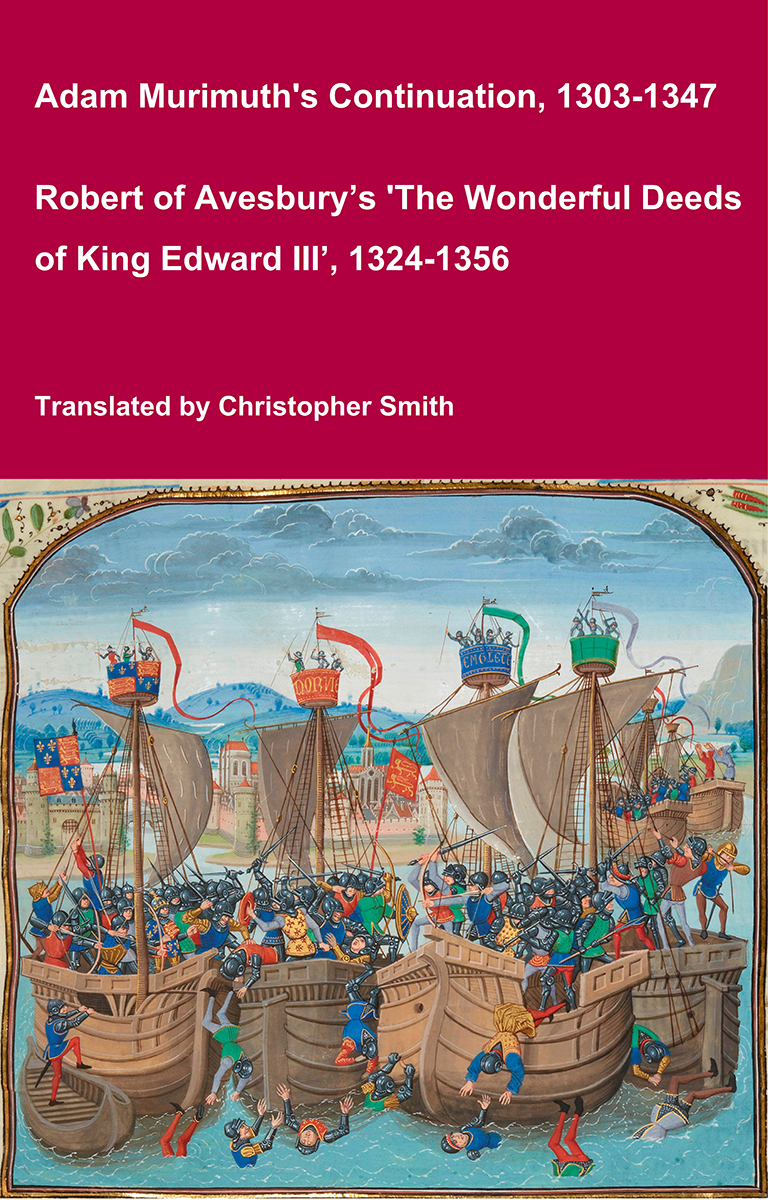 Adam Murimuth Continuation. In this year, around the feast of the Purification of the Blessed Mary [2nd February 1306], Robert le Bruce, wishing to reign in Scotland, summoned an assembly of the leading men of Scotland in the church of the Friars Minor at Dumfries. There, in that same church, he killed Sir John Comyn [10th February 1306] because he would not agree with him, thus beginning an evil undertaking with a shameful beginning, which the outcome of the affair afterwards proved.
Hoc anno, circa festum Purificationis beate Mariæ, Robertus le Bruys, volens regnare in Scocia, fecit unam convocationem majorum Scociæ in ecclesia Fratrum Minorum apud Dounfres; ubi in eadem ecclesia interfecit dominum Johannem Comyn, quia sibi noluit consentire, malum processum turpi principio inchoando, quod rei exitus postea comprobavit.
Chronicle of Geoffrey le Baker of Swinbroke. Around the Feast of the Purification [10th February 1306], Robert the Bruce, an English-born noble,1 seeking to usurp the Kingdom of Scotland by right of his wife, without the knowledge or consent of his liege lord, the King of England, gathered the Scottish magnates. Among them, in the church of the Friars Minor at Dumfries, he murdered Lord John Comyn, a faithful friend of the king, who had opposed his conspiracy.
Circa festum Purificacionis, Robertus le Bruys, nacione Anglicus, volens iure uxoris sue sine scitu et assensu ligii domini sui regis Anglie regnum Scocie usurpare, fecit convocacionem magnatum Scocie, inter quos in ecclesia fratrum Minorum apud Dunfres dominum Iohannem de Komyn, fidelem amicum regis, conspiracioni sue dissencientem trucidavit.
Note 1. English-born. Later in this Chronicle, when describing the death of Robert the Bruce, the chronicler describes Bruce as being "born in Essex". Other sources describe Bruce as being born at Turnberry Castle, Ayrshire, and Lochmaben, Dumfriesshire.
Chronicle of Walter of Guisborough. In the year of our Lord 1306, Robert de Brus [aged 31], the fifth son of the son of that Robert de Brus who, as mentioned above, disputed with John de Balliol before the King of England over the kingdom of Scotland, and was, as has been shown, judicially dismissed from his claim, relying on wicked counsel, aspired to the kingdom of Scotland. Fearing Lord John Comyn [aged 37], Earl of Badenoch, who was a powerful man in that land and loyal to the lord King of England, to whom he had done homage, and knowing that he could be hindered by him, sent to him deceitfully two of his brothers, namely Thomas de Brus [aged 22] and Nigel [aged 21], asking that he would deign to come to him at Dumfries to discuss certain matters which concerned them both. Now the justices of the lord King of England were sitting that same day in the castle, namely, on the fourth day before the Ides of February [10th February 1306] Comyn, suspecting no evil, came to him with a few companions, and they exchanged the kiss [of greeting], but not of peace, in the cloister of the Friars Minor [Franciscans] [Map]. When they were speaking together, in words that appeared peaceable, [Bruce] suddenly turned his face, twisted his words, and began to reproach him for his treachery, that he had accused him before the King of England and worsened his position to his harm. Comyn, speaking calmly and making excuses for himself, was not listened to; but Bruce, as he had conspired, struck him with his foot and sword, and stepped back. Then his men, following him, threw Comyn down on the floor of the altar, leaving him for dead. But a certain knight of Comyn's, Lord Robert Comyn, his uncle, ran to bring him aid; yet Christopher Seton [aged 28], who had married the sister [aged 33] of Lord Robert de Brus, met him and struck his head with a sword, and he died. Lord Robert de Brus then went out, and seeing Comyn's fine warhorse, mounted it; his men mounted likewise and they went on to the castle and seized it. When what had happened became known, the Scots flocked to him. The justices, fearing for themselves, shut the doors of the hall in which they sat with the few English who were with them. Hearing this, Bruce ordered fire to be set to it unless they at once surrendered; and they gave themselves up, asking for their lives and safe departure from the land, which he granted. When these things had been done, certain ill-wishers told him that Lord John Comyn was still alive; for the friars had carried him into the vestibule of the altar to tend to him and hear his confession. When he had confessed and was truly penitent, by order of the tyrant he was dragged from the vestibule and killed on the steps of the high altar, so that his blood touched the altar slab and the altar itself. After this Bruce went around the greater part of Scotland, occupying and fortifying castles and plundering the lands of the dead man; and the relatives of the deceased fled from his face, and all the English returned to their own land.
Anno Domini MCCCV Robertus de Brus, quintus filius filii illius Roberti de Brus qui, ut supradictum est, disceptavit cum Johanne de Balliolo coram rege Angliæ circa regnum Scotia, et judicialiter, ut supra patet, a sua petitione absolutus est, perverso fretus consilio ad regnum Scotia aspiravit; timensque dominum Johannem Cumyn, comitem de Badenach, qui erat homo potens in terra illa, et fidelis domino regi Angliæ, cui homagium fecerat; et sciens se impediri posse per eum, misit ad eum in dolo duos ex fratribus suis, Thomam videlicet de Brus et Nigellum, rogans ut dignaretur venire ad se apud Dunfres, super quibusdam negotiis tractaturus cum eo quæ tangebant utrosque. Sedebant enim justitiarii domini regis Angliæ eodem die in castro, IV scilicet idus Februarii. Qui, nihil mali suspicans, venit ad eum cum paucis, et mutuo se receperunt in osculum, sed non pacis, in claustro fratrum Minorum. Cumque mutuo loquerentur ad invicem, verbis, ut videbatur, pacificis, statim convertens faciem, et verba pervertens, cœpit improperare ei de seditione sua, quod eum accusaverat apud regem Angliæ, et suam conditionem deterioraverat in damnum ipsius. Qui cum pacifice loqueretur et excusaret se, noluit exaudire sermonem ejus, sed, ut conspiraverat, percussit eum pede et gladio, et retrorsum abiit. At sui extunc insequentes eum, prostraverunt eum in pavimento altaris, pro mortuo dimittentes. Cucurrit autem quidam miles ex suis, dominus Robertus Comyn avunculus ejus, ut auxilium ferret ei; sed occurrit ei Christoforus de Sethon, qui sororem domini Roberti de Brus duxerat in uxorem, et percussit caput ejus in gladio, et mortuus est. Egressusque est dominus Robertus de Brus, et videns dextrarium domini Johannis elegantem, ascendit in eum; ascenderuntque sui cum eo, et profecti sunt usque in castrum, et ceperunt illud. Cumque divulgaretur quod factum fuerat, cucurrerunt ad eum Scoti. Et justitiarii timentes sibi, clauserunt ostia aulæ in qua sedebant cum paucis Anglicis qui erant cum eis: quod audiens ipse, jussit ignem apponi, nisi confestim redderent eos; at illi dederunt se, vitam postulantes et salvum egressum a terra, quod et ipse concessit eis. Quibus ita gestis, nunciaverunt ei quidam malevoli quod dominus Johannes Comyn adhuc viveret; fratres enim asportaverant eum infra vestibulum altaris, ut medicarentur ei et confiteretur peccata sua. Qui cum confessus esset et vere pœnitens, jussu tyranni extractus est a vestibulo, et in gradibus majoris altaris interfectus, ita quod sanguis ipsius tabulam altaris tetigit, et etiam ipsum altare. Circuivit extunc the principal terram Scotia, occupando et muniendo castra, et deprædando terras mortui, fugeruntque a facie ipsius parentes defuncti, et omnes Anglici reversi sunt in terram suam.
Flowers of History. [10th February 1306] After all these events had taken place, fresh disturbances and wars broke out in Scotland. For Robert Bruce, earl of Carrick, conferred at first secretly, and afterwards openly, with some of the great nobles of Scotland, saying to them, "Ye know that by the right of hereditary relationship this kingdom belongs to me, and how this nation intended to have crowned my father king, but the cunning of the king of England disappointed him of his desire. If, therefore, you will crown me king, I will fight your battles, and deliver this kingdom and this people from its slavery to the English." This he said, and presently he received the consent of many perjured men. And when he asked of John Comyn, a very noble and powerful knight, whether he also agreed to this, he steadily replied, that he did not. And he said, "All the nations know that the king of England has four times subdued our nation and country, and that we all, both knights and clergy, have sworn fealty and homage to him for the present and all future generations. Far be it from me to do this; I will never consent to this measure, that I may be free from perjury." Bruce persuades, Comyn dissuades; the one threatens, the other is perplexed; at last, Bruce, drawing his sword, strikes the unarmed Comyn on the head. And when he had thrown him down, as he was striving to wrest the sword from the hands of his assassin (for he was a man of great personal strength), the servants of the traitor ran up, and stabbed him with their swords, and released their master. But the lord John escaped as well as he could to the altar; and Robert pursued him, and, as he would not agree to his proposals, the wicked and inhuman man there sacrificed the pious victim. These things were done in the church of the Minor Brothers, at Dumfries, on the twenty-ninth of January, in the year subsequent to this one. Behold the beginning of the homicide, aspiring to the kingdom by the shedding of the blood of Abel.
On 25th March 1306, King Robert the Bruce I of Scotland [aged 31] was crowned King Scotland at Scone Abbey [Map] by Bishop of St Andrews and Bishop Robert Wishart. Elizabeth Burgh Queen Consort Scotland [aged 22] was crowned Queen Consort Scotland. Christopher Seton [aged 28] and Bishop David de Moravia were present. He was wearing royal robes and vestments previously hidden from the English by Bishop Robert Wishart.
The following day, 26th March 1306, King Robert the Bruce I of Scotland was crowned by Isabella Countess Buchan whose family held the hereditary right to place the crown on the King's head; she had arrived too late for the coronation the day before. The right was held by her brother Duncan Fife 4th Earl Fife [aged 18] who was under-age and held by the English so she assumed the right in his place.
The Deeds of the Dukes of Normandy
The Gesta Normannorum Ducum [The Deeds of the Dukes of Normandy] is a landmark medieval chronicle tracing the rise and fall of the Norman dynasty from its early roots through the pivotal events surrounding the Norman Conquest of England. Originally penned in Latin by the monk William of Jumièges shortly before 1060 and later expanded at the behest of William the Conqueror, the work chronicles the deeds, politics, battles, and leadership of the Norman dukes, especially William’s own claim to the English throne. The narrative combines earlier historical sources with firsthand information and oral testimony to present an authoritative account of Normandy’s transformation from a Viking settlement into one of medieval Europe’s most powerful realms. William’s history emphasizes the legitimacy, military prowess, and governance of the Norman line, framing their expansion, including the conquest of England, as both divinely sanctioned and noble in purpose. Later chroniclers such as Orderic Vitalis and Robert of Torigni continued the history, extending the coverage into the 12th century, providing broader context on ducal rule and its impact. Today this classic work remains a foundational source for understanding Norman identity, medieval statesmanship, and the historical forces that reshaped England and Western Europe between 800AD and 1100AD.
Available at Amazon in eBook and Paperback format.
Annals of Six Kings of England by Nicholas Trivet [1258-1328]. On the feast of the Annunciation of the Blessed Virgin [25th March 1306], in the abbey of the canons regular at Scone, he caused himself to be solemnly crowned king. The wife of the Count of Buchan secretly departed from her husband, taking all his great horses with her, and hastened to Scone to place the crown upon the head of the new king; for her brother, the Count of Fife, to whom this office belonged by hereditary right, was at that time absent in England. This countess, however, having been captured by the English in the same year, when some wished to put her to death, the king did not permit it; but she was placed in a certain wooden house set upon the wall of the castle of Berwick, so that those passing by might see her.
... in festo vero Annuntiationis beatæ Virginis, in abbatia canonicorum regularium de Scone, se fecit in regem solemniter coronari. Uxor comitis de Bokan a marito suo furtive discessit, omnes equos ejus magnos secum adducens, et properans usque Scone, ut diadema imponeret capiti novi regis ; frater enim ejus, comes de Fif, ad quem de jure hereditario spectabat hoc officium, tunc absens in Anglia morabatur. Hanc autem comitissam eodem anno ab Anglicis captam, cum quidam perimere voluissent, non permisit rex ; sed in domuncula quadam lignea super murum castri Berewici posita est, ut possent eam transeuntes conspicere.
Chronicle of Walter of Guisborough. In the year of our Lord 1306, at its beginning, the aforesaid Robert de Brus, on the Feast of the Annunciation of the Blessed Mary [25th March 1306], had himself crowned King of Scotland at Scone [Map], in the presence and with the consent of four bishops, five earls, and the people of the land. Now the wife [Isabella Countess Buchan] of the Earl of Buchan, who was the daughter of the Earl of Fife and by hereditary right had the privilege of placing the crown upon the head of the new king, secretly left her lord, bringing with her the destriers of her husband, which she had left at home, so that she might perform that office. For this reason her husband, who had been faithful to the King of England, was angry, and when she was captured in the same year and he wished to put her to death, the king forbade him and ordered that she be placed upon the wall of the castle of Berwick in a wooden turret fixed there, so that she might be seen and recognized by those passing by. She remained thus confined for many days, on a meagre diet. As for the two bishops, namely the Bishop of Glasgow [Robert Wishart] and the Bishop of St Andrews [William de Lamberton] in Scotland, together with the Abbot of Scone, when they were captured in that same year, the king sent them into England to various castles, and they remained strictly imprisoned until the king's death. Therefore, when the coronation of the new king had been heard of and confirmed, the lord king of England, on the Feast of Pentecost, sent ahead some of his knights with an armed force, namely Sir Henry de Percy, Sir Aymer de Valence, and Sir Robert de Clifford, so that they might oppose and pursue the new king.
Anno Domini MCCCVI incipiente, Robertus de Brus prædictus, die Annunciationis Beatæ Mariæ fecit se coronari in regem Scotiæ apud at Scone, Scone, præsentibus et consentientibus quatuor episcopis, quinque comitibus, et populo terræ. Uxor autem comitis de Bouchan, quæ erat filia comitis de Fyth, cui de jure hæreditario competit coronam apponere capiti novi regis, furtive recessit a domino suo, adducens secum dextrarios domini sui quos domi dimiserat, ut illud officium exerceret; propter quod iratus dominus ejus, qui regi Angliæ fidelis extiterat, cum in eodem anno esset capta et vellet eam perimere, inhibuit ei rex, et jussit eam poni supra murum castri de Berewyk in tristega lignea fixa, ut sic a transeuntibus videri posset et cognosci; mansitque sic clausa multis diebus, et in arcta dieta. Duos autem episcopos, Glasguensem scilicet et Sancti Andreæ in Scotia, cum abbate de Scone, cum essent infra eundem annum capti, misit rex in Angliam ad diversa castra, manseruntque clausi in arcto usque ad obitum regis. Audita itaque et cognita coronatione novi regis, præmisit dominus rex Angliæ in festo Pentecostes quosdam ex militibus suis cum manu armata, dominum scilicet Henricum de Percy, dominum Almericum de Walence, et dominum Robertum de Clyfford, ut novo regi resisterent, et persequerentur eum.
Scalaronica. The said Robert caused himself to be crowned as King of Scotland at Scone on the feast of the Annunciation of Our Lady [25th March 1306] by the Countess of Buchan, because of the absence of her son, who at that time was living at his manor of Whitwick near Leicester, to whom the duty of crowning the Kings of Scotland belonged by inheritance, in the absence of the Earl of Fife, who at that time was in ward of the King in England. The said Countess this same year was captured by the English and taken to Berwick, and by command of King Edward of England was placed in a little wooden chamber in a tower of the castle of Berwick with sparred sides, that all might look in from curiosity.
John of Fordun's Chronicle. 118. Coronation of King Robert Bruce.
Now, when a few days had rolled on, after the said John's death, this Robert of Bruce, taking with him as many men as he could get, hastened to Scone; and, being set on the royal throne, was there crowned, on the 27th of March 1306, in the manner wherein the kings of Scotland were wont to be invested; and great was the task he then undertook, and unbearable were the burdens he took upon his shoulders. For, not only did he lift his hand against the king of England, and all partakers with him, but he also launched out into a struggle with all and sundry of the kingdom of Scotland, except a very few well-wishers of his, who, if one looked at the hosts of those pitted against them, were as one drop of water compared with the waves of the sea, or a single grain of any seed with the multitudinous sand. His mishaps, flights, and dangers; hardships, and weariness; hunger, and thirst; watchings, and fastings; nakedness, and cold; snares, and banishment; the seizing, imprisoning, slaughter, and downfall of his near ones, and even more dear ones (for all this had he to undergo, when overcome and routed in the beginning of his war) no one, now living, I think, recollects, or is equal to rehearsing, all this. Indeed, he is reported to have said to his knights, one day, when worn out by such numberless and ceaseless hardships and dangers:
"Were I not stirred by Scotland's olden bliss,
Not for earth's empire would I bear all this."
Moreover, with all the ill-luck and numberless straits he went through with a glad and dauntless heart, were any one able to rehearse his own struggles, and triumphs single-handed — the victories and battles wherein, by the Lord's help, by his own strength, and by his human manhood, he fearlessly cut his way into the columns of the enemy, now mightily bearing these down, and now mightily warding off and escaping the pains of death — he would, I deem, prove that, in the art of fighting, and in vigour of body, Robert had not his match in his time, in any clime. I will, therefore, forbear to describe his own individual deeds, both because they would take up many leaves, and because, though they are undoubtedly true, the time and place wherein they happened, and were wrought, are known to few in these days. But his well-known battles and public exploits will be found set down below, in the years wherein they took place.
On 22nd May 1306 the Feast of the Swans was a collective knighting of two hundred and sixty seven men at Westminster Abbey [Map].
At the feast, following the knightings, two swans were brought in. King Edward I of England [aged 66] swore before God and the swans to avenge the death of John Comyn 3rd Lord Baddenoch - see Murder of John "Red" Comyn.
King Edward I of England first knighted his son King Edward II of England [aged 22].
King Edward II of England then knighted the remaining two-hundred and sixty-six including...
Hugh "Younger" Despencer 1st Baron Despencer [aged 20]
Edmund Fitzalan 2nd or 9th Earl of Arundel [aged 21]
John le Blund, Mayor of London
William Brabazon
Roger Mortimer 1st Baron Mortimer of Chirk [aged 50]
Piers Gaveston 1st Earl Cornwall [aged 22] - this may have been the first time Piers Gaveston 1st Earl Cornwall and King Edward II of England met?
John Harrington 1st Baron Harington [aged 25]
John Maltravers 1st Baron Maltravers [aged 16]
Roger Mortimer 1st Earl March [aged 19]
William Montagu 2nd Baron Montagu [aged 31]
John Mowbray 2nd Baron Mowbray [aged 19]
Thomas Multon 1st Baron Multon [aged 30]
John Warenne 7th Earl of Surrey [aged 19]
Chronicle of Geoffrey le Baker of Swinbroke. After this, at the Feast of Pentecost [22nd May 1306], the king adorned his firstborn son, Edward of Caernarfon [aged 22], with the military belt,1 and at Westminster, he ordained a hundred other knights along with him. He also endowed his aforementioned son with the Duchy of Aquitaine.
Exinde, ad festum Pentecosten, rex filium suum primogenitum, Edwardum de Carnarvan, cingulo militari decoravit, et cum ipso alios centum milites ordinavit, apud Westmonasterium; filium quoque suum predictum ducatu Aquitannie dotavit.
Note 1. See the curious account of the ceremony as given by Matthew of Westminster 454-5 and Paris, Flowers of History, 132. Compare Edward's instructions in this last sentence with the dying charge which Froissart 53 says he gave to his son. The duchy of Aquitaine was conferred upon the prince, 7th April 1306. Rymer's Fœdera 1.983.
Annals of Six Kings of England by Nicholas Trivet [1258-1328]. The King of England, after having already exercised himself in sport along the coasts of Dorset and the county of Hampshire, as the season of Lent approached, withdrew to the city of Winchester. While he was passing the time of the fast there, he received certain reports concerning the events which had taken place in Scotland, to the prejudice of his royal majesty. Therefore, having summoned his son Edward and the magnates of England for the following Easter [3rd April], he granted and bestowed upon him entirely the lands of Gascony; and he also caused it to be proclaimed that he would provide at his own expense for all who wished, together with his son, to receive the order of knighthood. After Easter the king set out towards London in a carriage, because, owing to an infirmity which he had in his legs, he was unable to ride. On the feast of Pentecost [22nd May 1306] the king girded his son with the arms of knighthood, and with him the Earls of Warenne and Arundel and others, whose number is said to have exceeded two hundred and forty. On that same day, while the king sat at table surrounded by the newly made knights, a company of minstrels entered, clothed in varied and elaborate attire, in order especially to encourage and induce the new knights to make some vow of arms before the sign. And first the king himself vowed that he would take vengeance for the outrage done to God and the Church by Robert de Bruce; and that, this accomplished, he would never bear arms against Christians again, but would set out for the Holy Land without return. The king’s son, moreover, vowed that he would never remain two nights in one place until he had, so far as in him lay, fulfilled his father’s vow and reached Scotland. The vows of the other knights do not come to mind.
Rex Angliæ, cum jam ludo per riparias Dorsetiæ et comitatus Hamptoniæ se exercuisset, instante Quadragesimali tempore, in civitate Wintoniæ se recepit. Ubi dum jejunii tempus transfugeret, certos recepit rumores de iis, quæ gesta sunt in Scotia, in præjudicium suæ regiæ majestatis. Vocato igitur filio suo Edwardo in Paschale sequens, ac majoribus Angliæ, terras Vascones eidem ex integro contulit et donavit ; præconizari etiam nihilominus fecit, quod omnes, volentes una cum filio suo militarem recipere ordinem, impensis propriis, in omnibus exhiberet. Post Pascha movit se rex versus Londonias currizando, quia ob infirmitatem, quam habuit in tibiis, non potuit equitare. In festo igitur Pentecostes rex fillum suum armis militaribus cinxit, et cum eo comites Warenniæ et Arundeliæ, aliosque, quorum numerus ducentos et quadraginta dicitur excessisse. Eodem die cum sedisset rex in mensa, novis militibus circumdatus, ingressa menestrellorum multitudo, portantium multiplici ornatu amictum, ut milites præcipue novos invitarent et inducerent ad vovendum factum armorum aliquod coram signo. Vovit et imprimis rex ipse, quod vindictam accipiet de contemptu illato Do et ecclesiæ per Robertum de Brus; et hoc expleto nunquam contra Christianos arma portaret, sed in Terram Sanctam sine reditu dirigeret iter suum. Vovit autem regis filius, quod nunquam duas noctes in uno loco moraretur, quousque prosecuturus, quantum in ipso erat, votum paternum, in Scotiam perveniret. Ceterorum vota militum memoriæ non occurrunt.
Chronicle of Walter of Guisborough. The king himself, having called together his magnates, ordered it to be publicly proclaimed throughout the kingdom that all who wished to take up the profession of arms should be ready in London on the Feast of Pentecost [22nd May 1306], together with Edward, his son, the Prince of Wales. On that same day the king himself ceremoniously made his son a knight, along with 297 new companions, all of whom received their full equipment from the royal treasury. Immediately afterwards, by his father's order, the prince went on ahead into Scotland with many of his fellow knights and with great display, while the king himself and the queen followed at a slower pace. However, the king had ordered that all should be ready with the prince at Carlisle on the fifteenth day after the Feast of Saint John the Baptist [8th July 1306]. When the king arrived, he stayed at Lanercost [Map].
Ipse vero rex convocatis magnatibus suis, ex edicto præconizari præcepit in regno, quod omnes qui arma militaria suscipere vellent, cum Edwardo The Prince filio suo, principe Walliæ, essent parati Londoniis in festo Pentecostes: fecitque ipse rex honorifice filium suum militem eodem die cum novis commilitonibus ducentis nonaginta et septem viris, qui omnem apparatum ex ærario regis acceperunt; statimque, ex præcepto patris, præcessit princeps filius cum multis commilitonibus suis et magno apparatu in Scotiam, ipse vero rex et regina lento gradu insequebantur; jusserat tamen rex ut omnes essent parati cum principe in quindenam Sancti Johannis Baptistæ apud Carliolum. Rex autem in adventu suo mansit apud Lanercost.
Adam Murimuth Continuation. Afterwards, at the feast of Pentecost [22nd May 1306], King Edward made his son Edward, called of Caernarfon, a knight at Westminster, together with nearly a hundred others1. There he granted to his said son the duchy of Aquitaine and vowed under the sign of the cross that he would avenge the death of the said John Comyn and that he would recover Scotland from the hands of Robert le Bruce. And almost all present unanimously made the same vow with him, preparing themselves to carry it out in the following year.
Postea vero, ad festum Pentecostes, rex Edwardus fecit filium suum Edwardum, dictum de Carnervan, militem apud Westmonasterium, et alios fere centum; ubi dedit filio suo prædicto ducatum Aquitaniæ et vovit ad signum crucis quod mortem dicti Johannis Comyn vindicaret, et quod Scociam de manibus Roberti le Bruys recuperaret. Et idem votum quasi omnes unanimiter cum ipso voverunt, ad quod faciendum in anno proximo se pararunt.
Note 1.
Walter of Guisborough: "The king himself, having called together his magnates, ordered it to be publicly proclaimed throughout the kingdom that all who wished to take up the profession of arms should be ready in London on the Feast of Pentecost, together with Edward, his son, the Prince of Wales. On that same day the king himself ceremoniously made his son a knight, along with 297 new companions, all of whom received their full equipment from the royal treasury. Immediately afterwards, by his father's order, the prince went on ahead into Scotland with many of his fellow knights and with great display, while the king himself and the queen followed at a slower pace. However, the king had ordered that all should be ready with the prince at Carlisle on the fifteenth day after the Feast of Saint John the Baptist [8th July 1306]. When the king arrived, he stayed at Lanercost."
On 19th June 1306 the forces of Aymer de Valence 2nd Earl Pembroke [aged 31], including Robert Pierrepont, ambushed and routed the Scottish army of King Robert the Bruce I of Scotland [aged 31] including Simon Fraser, Christopher Seton and John Strathbogie 9th Earl Atholl [aged 40] at Methven. John Strathbogie 9th Earl Atholl was captured as well as many others.
Henrici Quinti, Angliæ Regis, Gesta, is a first-hand account of the Agincourt Campaign, and subsequent events to his death in 1422. The author of the first part was a Chaplain in King Henry's retinue who was present from King Henry's departure at Southampton in 1415, at the siege of Harfleur, the battle of Agincourt, and the celebrations on King Henry's return to London. The second part, by another writer, relates the events that took place including the negotiations at Troye, Henry's marriage and his death in 1422.
Available at Amazon in eBook and Paperback format.
Annals of Six Kings of England by Nicholas Trivet [1258-1328]. Meanwhile Robert de Bruce, going about the country and receiving the homage of many, having assembled a considerable army, approached the town of Saint John [Perth], into whose garrison Aymer de Valence had recently come. The Scottish horsemen, by order of their new prince, were all clad in linen over their armour, so that they might not be distinguished. When invited by him to battle, Aymer replied that he would fight with him not that day [19th June 1306], but on the morrow. But Robert, withdrawing with his men to the distance of a mile, and wishing to refresh himself, as evening approached, Aymer with his men went out armed, and suddenly falling upon the Scots, slew many while unarmed; and although Robert and the others who had quickly armed themselves resisted for some time, yet at length, the English prevailing, they were forced to flee. Pursuing them with his men as far as the island of Kintyre, he besieged its castle, thinking that Robert had taken refuge there; but, the castle having been taken, he did not find him, for he had fled to the outermost islands of the region; but he captured his wife and his brother Nigel, with certain others, all of whom he caused to be taken as far as Berwick. Not long afterwards the Earl of Atholl, who had fled from the aforesaid castle, was taken. About the feast of Saint Michael [29th September], Robert returned to Kintyre, and, coming upon Henry de Percy, who was in the neighbourhood, slew some of his household, and took many horses and other spoils; and he besieged Henry himself in the castle of that place, until, by the strength of an army sent by the king, he was compelled to abandon the siege.
Interim Robertus de Brus circuiens terram, et homagia multorum recipiens, coadunato exercitu copioso, appropinquavit ad villam sancti Joannis, in cujus præsidium nuper advenerat Aymericus de Valentiis. Equites autem Scotorum omnes lineis super arma sua, ne discernerentur, induti erant ex jussu principis sui novi. Invitatus ab eo Aymericus de congressu respondit, quod cum eo non die illo, sed in crastino, dimicaret. Subtrahente vero se Roberto cum suis ad spatium unius milliarii,! et se reficere volente, appropinquante hora vespertina Aymericus cum suis egreditur armatis, et subito superveniens Scotis, multos peremit inermes ; cui cum aliquandiu Robertus, ceterique qui se cum celeritate armaverant, restitissent, tandem prævalentibus Anglicis fugere sunt coacti; quos insecutus cum suis usque in insulam de Kintyr, castrum illius, putans Robertum se recepisse in eo, obsedit. Expugnato tamen castro, non eum invenit, quia ad extremas regionis fugerat insulas; sed uxorem, ac fratrem suum Nigellum, cum aliis quibusdam, quos omnes usque Berewicum deduci fecit. Captus est non multo post comes de Athel, qui de castro fugerat antedicto. Circa festum S. Michaelis reversus est Robertus usque Kintyr, et Henrico de Percy in propinquo exsistenti superveniens, quosdam de familia ejus occidit, equosque dextrarios et alia spolia multa cepit ; ipsumque Henricum in castro loci ejusdem obsedit, quousque robore exercitus a rege misso, obsidionem dimittere cogeretur.
Chronicle of Walter of Guisborough. [19th June 1306] So they went out in the evening as they had agreed, and found them lying about at ease; and before they could all mount up, they fell upon them fiercely. Many were cut down, and the king, with a few men resisting for a while, was at length put to flight. The new king fled, and they pursued him as far as the island of Kintyre; and they besieged the castle of that place [Methven Castle], believing that he had taken refuge there, but he had gone into the farthest islands of that region. When they had taken the castle, they found one of the new king's brothers, namely Lord Nigel Bruce [aged 30], along with the new queen [Elizabeth de Burgh [aged 22]] and many others. Bringing them with them to Berwick, there before the justiciars of the lord king of England, who by the king's command had assembled there, they were formally condemned: the men were drawn, hanged, and beheaded. But the new queen, because she was the daughter of the earl of Ulster [aged 47] (and that earl, at the beginning of the war started by his son-in-law, Lord Robert de Bruce, so that the lord king of England should suspect no ill will from him, had sent two of his sons to the king to be kept at the king's pleasure, as an excuse that he had always been loyal), and because of a certain remark she had made to her husband, when at his coronation he had spoken to her and said, "Rejoice now, my consort, for you have become queen and I king," she is reported to have answered him thus: "I fear, my lord, that we have become king and queen as children do in their summer games", for these two reasons, the king sent her with an honourable household to be lodged at his manor of Burstwick, and ordered that she be maintained with honour.
Exierunt ergo in vesperis ut condixerant, et invenerunt eos recumbentes secure, et antequam possent omnes ascendere, irruerunt in eos vehementer, cæsisque multis, regem cum paucis aliquamdiu resistentem, in fugam tandem converterunt. Fugitque rex novus, et insecuti sunt eum usque in insulam de Kentyr; obsederuntque castrum loci illius, credentes eum se ibidem recepisse sed ille abierat in extremas insulas regionis illius. Expugnatoque castro, invenerunt unum ex fratribus novi regis dominum scilicet Nigellum de Brus, cum nova regina, et multis Nigel Bruce aliis; quos adducentes secum usque Berewyk, Kildrummie ibi coram justitiariis domini regis Angliæ, qui is hanged at ex præcepto regis ibidem convenerant, judicialiter damnati sunt homines, tracti, suspensi et decollati. Reginam autem novam, quia filia comitis de Huluerster erat, (qui quidem comes, in principio guerræ motæ per generum dominum Robertum de Brus, ne dominus rex Angliæ quicquam mali contra eum suspicaretur, misit ad regem duos filios suos pro voluntate regis retinendos in excusationem sui quod semper ei fidelis extiterat,) et propter unum verbum quod marito suo dixerat cum in coronatione sua loqueretur ei et diceret, "Lætare modo consocia, quia regina effecta es, et ego rex," fertur eam sic respondisse ei: "Timeo, domine, quod sumus effecti rex et regina, sicut efficiuntur pueri in ludis æstivalibus:" propter istas ergo duas causas, misit eam rex cum honesta familia perendinandam in manerio suo de Bruscewych, et jussit eam honorifice sustentari.
John of Fordun's Chronicle. 119. Battle of Methven
The same year [1306], on the 19th day of June, King Robert was overcome and put to flight, at Methven, by Odomar of Valence, who was then warden of Scotland on behalf of the king of England, and was staying at the then well - walled town of Perth, with a great force of both English and Scots who owed fealty and submission to the king of England, Now, though the foresaid king did not lose many of his men in this struggle, yet, because of the bad beginning, which is often crowned by an unhappy ending, his men began to be disheartened, and the victorious side to be much emboldened by their victory. Then, all the wives of those who had followed the king were ordered to be outlawed by the voice of a herald, so that they might follow their husbands; by reason whereof, many women, both single and married, lurked with their people in the woods, and cleaved to the king, abiding with him, under shelter.
On 9th February 1307 the Battle of Loch Ryan was a victory of local forces, led by Dungal MacDowall, supporter of King Edward I, over a force consisting of 1000 men and eighteen galleys led by Thomas Bruce [aged 23] and Alexander Bruce [aged 22], brothers of King Robert the Bruce I of Scotland [aged 32], supported by Malcolm McQuillan, Lord of Kintyre, and Sir Reginald Crawford. Only two galleys escaped. Malcolm McQuillan was captured an summarily executed.
Thomas Bruce, Alexander Bruce and Reginald Crawford were hanged (possibly hanged, drawn and quartered) at Carlisle, Cumberland [Map].
Scalaronica. [9th February 1307]. The King and his son moved to the Marches of England. Aymer de Valence [aged 32] remained the King's lieutenant in Scotland. Robert de Brus [aged 32] resumed [his] great conspiracy; he sent his two brothers Thomas [aged 23] and Alexander [aged 22] into Nithsdale and the vale of Annan to draw [to him] the hearts of the people, where they were surprised by the English and captured,1 and taken by command of the King to Carlisle, and there hanged, drawn and decapitated. Robert de Brus had assembled his adherents in Carrick.
Note 1. On the shore of Loch Ryan,9th February, 1307.
Annals Londonienses. [1307]. At that time, the King of England, observing that his son, the Prince of Wales, loved a certain Gascon knight [aged 23] beyond measure, from which the king himself conjectured that many troubles might befall the kingdom after his death, upon the advice of his earls and barons, compelled the knight to abjure his kingdom for as long as he lived. The name of this knight was Peter de Gaveston.
Sub illo quoque tempore cernens rex Angliæ quod filius suus, princeps Walliæ, adamaret quendam Vasconiensem militem ultra modum, ex quo multa incommoda conjecturabat ipse rex post mortem suam regno posse contingere, ex consilio comitum et baronum suorum compulit rex ipsum militem abjurare quoad viveret regnum suum. Huic autem militi Petrus de Gavastone nomen erat.
Chronicle of Geoffrey le Baker of Swinbroke. 26th February 1307. Moreover, Piers Gaveston, by order of the king, abjured the kingdom of England.1
Petrus eciam de Gavestone ex precepto regis regnum Anglie abiuravit.
Note 1. Gaveston was ordered by the king, at Lanercost, 26th February 1307, to leave the kingdom in three weeks, dating from 11th of April. Rymer's Fœdera 1.1010: "Be it remembered, that on Sunday, the 26th day of February, at Lanercost, our lord the King ordained and commanded, for certain reasons, that immediately, after the three weeks following the next tournament which is to be at the Quindene of Easter next to come, Sir Piers Gaveston shall be ready to cross the sea at Dover, towards Gascony, and there remain without returning on this side, until recalled by our said lord the King and by his leave. And, to hold to this ordinance without in any point going against it, the said Sir Piers made oath on the day and at the place aforesaid, upon the Body of God, upon the True Cross, and upon the other relics of our lord the King. And, moreover, Sir Edward, Prince of Wales, son of our lord the King, swore upon the Body of God and upon the other relics that he would not receive or keep near him, nor with him, the said Sir Piers against the aforesaid ordinance, without recall or licence of our said lord the King, as is aforesaid. And, by command of our said lord the King, it was ordained that the said Sir Piers should have yearly, for the aid of his expenses, so long as he shall remain overseas at the will and recall of our lord the King, as is aforesaid, one hundred marks sterling, or the value thereof in victuals, to be received from the issues of the land of Gascony. And the first year is to begin the day after he shall have crossed the sea at Dover to Wissant, to go into Gascony, there to remain according to the said ordinance. And he is to take the said sum at the will of the King, and until the King shall have caused inquiry to be made what the said Sir Piers has on this side and beyond, and of the profits he has had since he came into England. So that, when the matter shall be well inquired into, and the King shall be fully informed thereof, he may ordain to increase or diminish the estate of the said Sir Piers, according as shall please the King, and as he shall see fit."
See the curious account of Edward's quarrel with his son, when the latter asked for the county of Ponthieu for his favourite, as told by
Guisborough, 2.272.
Chronicle of Walter of Guisborough. [26th February 1307] And he (the prince) sent him to his father the king on that very matter. And the messenger said to the king: "My lord king, though unwilling, I come on behalf of my lord, your son the prince, to request in his name, by the living Lord that with your permission, he might grant the earldom of Ponthieu to his bachelor, Lord Peter of Gaveston [aged 23]." But the king, greatly enraged, said: "Who are you, to dare ask such a thing? By the living Lord, were it not for your saying at the outset that you undertook this task unwillingly and out of fear of God, you would not escape my hands. But now I will see what the one who sent you has to say do not leave." When the prince was called in, the king said to him: "What business did you send this man for?" And he replied: "That, with your blessing, I might give the earldom of Ponthieu to Lord Peter of Gaveston." Then the king said: "Son of a whore, ill-born! Would you now presume to grant lands, when you have never yet won any for yourself? As the Lord lives, were it not for fear of the kingdom falling into disorder, you would never enjoy your inheritance." And seizing him by the hair with both hands, he tore at it as much as he could, and finally, exhausted, threw him out.
Immediately afterward, he summoned his nobles who were with him in his war against Scotland, and after taking counsel with them, he made Lord Peter of Gaveston swear an oath that, whether the king were alive or dead, he would never accept lands from his son, and that he would go into perpetual exile from the kingdom of England, being given a fixed day by which he must depart, under penalty of death. And so he did. The king also made his son swear that he would never grant lands to him. But after the king died, and before he had even been buried, his son the new king sent swift messengers and recalled Peter.
Misitque eum ad regem patrem suum pro eodem negotio: et dixit regi, Domine mi rex, exparte domini mei domini principis filii vestri missus, licet invitus, vivit Dominus, ut ipsius nomine petam a vobis quod bachalarium suum, dominum Petrum de Caberston, possit promovere, de licentia vestra, ad comitatum de Pontyff. Et iratus rex nimis, ait: Quis es tu, qui talia audes postulare? Vivit Dominus nisi essct timor Domini, et quod ab initio dixisti, quod invitus suscepisti negotium, non evaderes manus meas. Nunc autem videbo, quid dicturus erit qui misit te, et non recedas. Quo vocato, dixit ei rex; Quid negotii misisti per hominem istum? Qui ait, Ut cum pace vestra dare possem domino Petro de Caberston comitatum de Pontyff. Et ait rex, Fili meretricis, male generate, vis tu modo terras dare qui nunquam aliquas impetrasti? Vivit Dominus, nisi esset timor dispersionis regni, nunquam gauderes hæreditate tua. Et apprehensis capillis utraque manu, dilaceravit eos in quantum potuit, et in fine lassus ejecit eum.
Statimque, vocatis proceribus suis, qui cum eo erant in guerra sua versus Scotiam, et, communicato cum eis consilio, fecit ipsum dominum Petrum de Gaverston jurare, quod ipso vivente neque mortuo nunquam a filio suo terras acciperet, et quod exularet regno Angliæ suo perpetuo, certum diem habens ut exiret sub pœna capitis; qui sicita fecit. Fecitque rex filium suum jurare quod nunquam ei terras daret. Mortuo autem rege, et nondum adhuc sepulto, misit ipse filius novus rex celeres nuncios, et revocavit Petrum.
On 26th February 1307 Piers Gaveston 1st Earl Cornwall [aged 23] exiled by King Edward I of England [aged 67] for being his son Edward's [aged 22] favourite.
Annals of Six Kings of England by Nicholas Trivet [1258-1328]. Meanwhile Robert de Bruce, going about the country, slew many who were rebellious against him, and sent with part of his army his two brothers, Thomas, a knight, and Alexander, a cleric, into another part of the land, to draw the people to himself by persuasion and threats; but they were surprised by the English coming upon them by night, captured, brought before the justices, and condemned, first drawn, and afterwards hanged. After Easter, Robert de Bruce, his army now increased, engaged with Aymer de Valence [on 10th May 1307] and put him to flight, a few of those who were with him being slain; within the next three days he also routed the Earl of Gloucester, and, many being slain on both sides, besieged him in the castle of Ayr, until the siege was raised by an army sent by the king. Thereafter, the English pursuing him, he fled into marshy and wooded places, where, seeking hiding places, they were by no means able to capture him.
Interim Robertus de Brus circuiens terram multos sibi rebelles peremit, misitque cum parte exercitus duos fratres suos, Thomam militem et Alexandrum clericum, ad aliam partem terræ, ut homines terræ ad se allicerent blanditiis atque minis; qui ab Anglicis de nocte supervenientibus capti sunt, et ducti ad justitiarios, ac condemnati, primo tracti, et postea sunt suspensi. Post Pascha Robertus de Brus, aucto jam suo exercitu, congressus cum Aymerico de Valentiis, ipsum compulit in faram, paucis de his qui erant cum eo peremptis; infra triduum etiam sequens fugavit comitem Gloverniæ, multisque hinc inde occisis, ipsum obsedit in castro de Are, quousque per exercitum a rege missum fuit obsidio dissoluta. Extunc autem insequentibus um Anglicis, fugit ad loca palustria et nemorosa, in quibus latibula quæritantem comprehendere minime potuerunt.
Chronicle of Geoffrey le Baker of Swinbroke
Baker was a secular clerk from Swinbroke, now Swinbrook, an Oxfordshire village two miles east of Burford. His Chronicle describes the events of the period 1303-1356: Gaveston, Bannockburn, Boroughbridge, the murder of King Edward II, the Scottish Wars, Sluys, Crécy, the Black Death, Winchelsea and Poitiers. To quote Herbert Bruce 'it possesses a vigorous and characteristic style, and its value for particular events between 1303 and 1356 has been recognised by its editor and by subsequent writers'. The book provides remarkable detail about the events it describes. Baker's text has been augmented with hundreds of notes, including extracts from other contemporary chronicles, such as the Annales Londonienses, Annales Paulini, Murimuth, Lanercost, Avesbury, Guisborough and Froissart to enrich the reader's understanding. The translation takes as its source the 'Chronicon Galfridi le Baker de Swynebroke' published in 1889, edited by Edward Maunde Thompson.
Available at Amazon in eBook and Paperback format.
Scalaronica. [10th May 1307]. Hearing of this, Aymer de Valence marched against him, when the said Robert de Brus encountered the said Aymer de Valence at Loudoun, and defeated him, and pursued him to the castle of Ayr;1 and on the third day [after] the said Robert de Brus defeated Rafe de Monthermer [aged 37], who was called Earl of Gloucester because Joan [deceased] the King's daughter and Countess of Gloucester had taken him for husband out of love [for him].
Note 1. Battle of Loudoun Hill, May 1307.
On 2nd November 1307 Piers Gaveston 1st Earl Cornwall [aged 23] and Margaret Clare Countess Gloucester were married. Arranged by King Edward II of England [aged 23]. Margaret Clare Countess Gloucester grand-daughter of Edward I through his daughter Joan and, as such, significantly higher than Gaveston in the nobility. She the daughter of Gilbert "Red Earl" Clare 7th Earl Gloucester 6th Earl Hertford and Joan of Acre Countess Gloucester and Hertford.
Life of Edward II by a Monk of Malmesbury. [2nd November 1307] So much so that, in order to strengthen Peter's faction and surround him with loyal friends, the lord king gave him in marriage the daughter of his sister, who was herself the daughter of the late Gilbert, Earl of Gloucester. Truly, this marriage alliance greatly advanced his cause; for it powerfully increased his favour among friends and helped restrain the hatred of the barons.
In tantum etiam ut ad partem Petri fortificandam et amicis stipandam, filiam sororis sum, que fuit filia quondam Gilberti comitis Gloucestriæ, dominus rex dicto Petro collocavit [in] matrimoninm. Sane hæc copulatio matrimonialis partem ejus non modicum valebat; favorem namque amicorum sibi vehementer augebat et odium baronum refrænabat.
Margaret de Clare, daughter of Gilbert de Clare and Joan of Acre
Chronicle of Walter of Guisborough. In the year of our Lord 1309, on the fifteenth day after Easter, the king held his parliament in London, and the magnates granted him twenty-five pence in return for his confirmation of Magna Carta and the Charter of the Forest, but they would not agree that Piers [aged 25] should remain Earl of Cornwall. Because of this, at the king's request, the magnates met again on the morrow [26th July 1309] of the Feast of Saint James the Apostle, at Stamford; and in the meantime the king had Piers marry the sister of the Earl of Gloucester1. Thus, by means of the king and the same earl whose sister he had married, some of the earls consented that Piers should remain earl for the term of his life.
Anno Domini MCCCIX in quindena Paschæ tenuit rex parliamentum suum Londoniis, et concesserunt sibi magnates XXV denarium pro confirmatione Magna Charta et Chartæ de Foresta, et noluerunt consentire regi ut Petrus remaneret comes Cornubiæ. Propter quod, ad rogatum regis, in crastino Sancti Jacobi apostoli convenerunt iterato magnates apud Stamfordiam, et interim fecit rex ipsum Petrum ducere in uxorem sororem comitis Gloucestriæ; et sic, mediante rege et ipso comite cujus sororem duxerat, consenserunt aliqui ex comitibus quod iste Petrus remaneret comes pro termino vitæ suæ.
Note 1. This lady was Margaret, niece of King Edward, being the daughter of Gilbert de Clare, seventh earl of Gloucester, and Joan of Acre, second daughter of Edward I. The marriage occurred in November 1307.
On 2nd December 1307 King Edward II of England [aged 23] held a tournament to celebrate Piers Gaveston's [aged 23] recent wedding. Gaveston took the opportunity to humiliate the older nobility including John Warenne 7th Earl of Surrey [aged 21], Humphrey Bohun 4th Earl Hereford 3rd Earl Essex [aged 31] and Edmund Fitzalan 2nd or 9th Earl of Arundel [aged 22] further increasing his unpopularity.
On 28th January 1308 King Edward II of England [aged 23] and Isabella of France Queen Consort England [aged 13] were married at Boulogne sur Mer [Map]. She the daughter of King Philip IV of France [aged 39] and Joan Blois I Queen Navarre. He the son of King Edward I of England and Eleanor of Castile Queen Consort England. They were second cousin once removed. She a great x 4 granddaughter of King Henry "Curtmantle" II of England.
Adam Murimuth Continuation. In the year of our Lord 1307, in the second year of Pope Clement V, reckoning from the feast of Saint Michael, the aforesaid Edward of Caernarfon [aged 22], in the first year of his reign, took Isabella [aged 12], daughter of King Philip of France [aged 38], as his wife at Boulogne-sur-Mer on the 22nd day of January. And at Westminster, on Sunday in Quinquagesima, that is, on the 25th day of February, both he and the queen were crowned by Henry, bishop of Winchester, by commission of Lord Robert, archbishop of Canterbury. And at the said coronation were present Charles, the queen’s brother, who afterwards became king of France; the duke of Brittany; Henry, count of Luxembourg, who afterwards became emperor; and Peter of Gaveston, who appeared in splendid fashion, surpassing all others, and thereby incurred the envy and hatred of everyone. Also Louis, brother of the king of France, was there.
Anno Domini millesimo CCCVII, pape Clementis V anno secundo, inchoando a festo sancti Michaelis, Edwardus prædictus de Carnervan, anno regni sui primo, duxit lsabellam, filiam regis Philippi Franciæ, in uxorem apud Bononiam supra mare XXIJ die Januarii; et apud Westmonasterium, die Dominica in Quinquagesima, scilicet XXV die Februarii, tam ipse quam ipsa regina fuerunt coronati per episcopum Wyntoniensem Henricum, ex commissione domini Roberti archiepiscopi Cantuariensis. Et dicte coronationi interfuerunt Karolus, frater regine, qui postea fuit rex Francie, dux Britanniæ, Henricus comes Luceburgiæ, qui postea fuit imperator, et Petrus de Gavestone, qui nobiliter apparuit omnes transcendens, invidiam et odium omnium incurrebat. Item, Lodowycus, frater regis Francis, fuit ibidem.
Life of Edward II of Carnarvan by a Monk of Bridlington. Likewise, in the same year, on the twenty-fourth day of January [1308], Edward, King of England, took in marriage at Boulogne-sur-Mer the daughter of Philip, called "the Fair," King of France, in the hope of peace and of recovering the lands in the overseas regions which had been seized by the aforesaid King of France, as had most recently been agreed between him and the King of England. But, once the marriage had been completed, he retained, as before, the lands in Gascony and elsewhere which, as is said, had at first been unjustly occupied.
Item eodem anno, XXIIIIo die Januarii Edwardus rex Angliæ filiam regis Francie Philippi dicti Pulcri apud Bononiam super mare duxit in uxorem, sub spe pacis et recuperationis terrarum in partibus transmarinis, per prædictum regem Francorum occupatarum, prout inter ipsum et regem Angliæ ultimo fuerat prælocutum; sed, completo matrimonio, terras in Gasconia et alibi, ut prædicitur, injuste primitus occupatas, detinuit sicut prius.
Chronicle of Geoffrey le Baker of Swinbroke. Immediately after acquiring the paternal crown, he [King Edward II] crossed the sea to reconcile himself with Philip the Fair, King of France, whose disposition had previously been much estranged from him. Between them, the fire of the Holy Spirit kindled such a fervor of charity that King Edward took Isabella,1 daughter of the aforementioned King of France, as his wife. With great celebration among the kings and nobles of both kingdoms, their marital union was solemnized in Boulogne on the 28th January 1308.
Qui statim post adepcionem diadematis paterni transfretavit, conciliaturus sibi animum Philippi le Beals regis Francorum, ab ipso perantea multum aversum; inter quos ignis Sancti Spiritus talem fervorem caritatis succendit, quod rex Edwardus Isabellam, filiam predicti regis Francie, cum magna celebritate regum atque procerum utriusque regni apud Boloniam ritu maritali sibi copulavit V kalendas Februarii.
Note 1. Edward in a letter to the king of France, 30th December, 1307, announced his intention of being in Boulogne on the eve of St. Vincent, 21st January 1308; the marriage to take place on the following Wednesday, 24th January 1308. He did not, however, sail from Dover till the morning of the 22nd. He landed at Boulogne on the 24th, and was married on the 28th.
Thomas Walsingham [~1422]. In the year of grace 1308, which is the second year from the Conquest of the reign of King Edward, not yet crowned, the second, the king kept Christmas at Wye, a manor of the Abbot of Battle, with a very large household. A few days after Christmas had passed, he crossed over into France to take as his wife Isabella, daughter of the King of France, who was a little over twelve years old. He entrusted the custody of the kingdom to the aforesaid Piers [Gaveston]; for which cause excessive murmuring arose among the magnates of the realm. The marriage in France at Boulogne-sur-Mer [28th January 1308], at which four kings were present, namely, the King of France [aged 39], the son of the King of France [aged 18], the King of Germany, and the King of Sicily, was solemnly celebrated. Then he returned to the kingdom of England with his wife. The magnates went out to meet their king and his new queen, and all strove to see who could show them greater honour. Among them came Piers himself, whom the king at once admitted into a most special embrace and regarded with the greatest familiarity. The magnates grew envious, but they put off their vengeance for another time.
Note 1. The four kings being King Philip IV of France, his son Louis, King of Navarre, Albert [aged 52], King of Germany and Philip IV's brother Charles [aged 37], King of Sicily.
Anno gratiæ millesimo trecentesimo octavo, qui est annus regni Regis Edwardi, nondum coronati, a Conquæstu Secundi, secundus, tenuit idem rex Natale apud Wy, manerium Abbatis de Bello, cum familia multa nimis. Paucis post Natale diebus transactis, transfretavit in Franciam, ut Regis Francorum filiam in uxorem duceret, nomine Isabellam, qua paulo plus annis duodecim habuit in ætate. Commisit autem regni custodiam Petro præfato; ob quam causam murmur immodicus inter proceres regni succrevit. Nuptiis in Francia apud Boloniam supra Mare, quibus quatuor Reges interfuerunt, videlicet Rex Franciæ, filius Regis Franciæ, Rex Alemanniæ, et Rex Siciliæ, celebratis solemniter, ad regnum Angliæ revertitur cum uxore. Igitur proceres occurrunt regi suo conjugique novæ; et a cunctis elaboratur, quis propensiorem honorem impendere possit illis. Occurrit inter cæteros ipse Petrus, quem mox Rex in amplexus specialius admittebat, et familiarins respiciebat. Invidebant ergo proceres, sed vindictam in tempus aliud differebant.
Adam Murimuth's Continuation and Robert of Avesbury’s 'The Wonderful Deeds of King Edward III'
This volume brings together two of the most important contemporary chronicles for the reign of Edward III and the opening phases of the Hundred Years’ War. Written in Latin by English clerical observers, these texts provide a vivid and authoritative window into the political, diplomatic, and military history of fourteenth-century England and its continental ambitions. Adam Murimuth Continuatio's Chronicarum continues an earlier chronicle into the mid-fourteenth century, offering concise but valuable notices on royal policy, foreign relations, and ecclesiastical affairs. Its annalistic structure makes it especially useful for establishing chronology and tracing the development of events year by year. Complementing it, Robert of Avesbury’s De gestis mirabilibus regis Edwardi tertii is a rich documentary chronicle preserving letters, treaties, and official records alongside narrative passages. It is an indispensable source for understanding Edward III’s claim to the French crown, the conduct of war, and the mechanisms of medieval diplomacy. Together, these works offer scholars, students, and enthusiasts a reliable and unembellished account of a transformative period in English and European history. Essential for anyone interested in medieval chronicles, the Hundred Years’ War, or the reign of Edward III.
Available at Amazon in eBook and Paperback format.
Bourgeois de Valenciennes. After these things had come to pass as we have told you above, it happened that King Philip of France laboured, negotiated, and contrived so earnestly with Edward, King of England, that the marriage and alliance were arranged between Isabel his daughter and Edward, the young King of England his son of whom we have spoken before. The wedding was celebrated at Boulogne-sur-Mer [on 28th January 1308] with great joy and festivity. And there, in the press of the crowd, Hugh, Count of Soissons, was crushed to death in the year 13081. After the solemnities, the dances, jousts, mêlées, tournaments, revels, and all manner of festivities held for the occasion of this marriage, the young King of England took Isabel his wife overseas with him2. Soon afterward, the King of England his father died, and the kingdom of England remained to Edward his son, and he became king.
Après ces choses ainsy advennues comme dessus vous avons dit, advint que le roy Philippe de France exploita, diligenta et pourcacha tant devers Édouart roy d'Engleterre que le mariage et accointage fut fait entre Yzabel sa fille et Édouart le josne roi d'Engleterre son fils, dont nous vous avons chy-dessus parlé. Et en furent les nopces faites à Boullongne-sur-la-mer à moult grant joye et à grant feste. Et là fut en la presse Hue le conte de Soisson estaint en l’an mil IIIe et IX, et puis, après la solempnité, les danses, joustes, behours, tournois, esbanois et touttes manières de joyeuseté faites à l’occasion de ce mariage, emmena le josne roy d'Engleterre Yzabel sa femme oultre mer. Et peu après morut le roy d’Engleterre son père, et demoura à Édouart son fils le royalme d’Engleterre, et en fut roy.
Note 1. The original French text has 1309.
Note 2. King Edward and Queen Isabela returned to England on 7th February 1308, as described in the Fine Rolls, Edward II m. 9: "Memorandum that on the Wednesday [7th February 1308] next after the feast of the Purification of the Blessed Virgin Mary, in the first year of the reign of King Edward, son of King Edward, the same king, returning from overseas, namely from Boulogne-sur-Mer, where he had taken Lady Isabella, daughter of the King of France, as his wife, landed at Dover in his barge, at about the ninth hour [around 3 p.m.]."
Chronicle of Walter of Guisborough. Our king crossed over the sea with his nobles, and at Paris1 he solemnly took her as his wife in the same year of our Lord 1308, on the fifth day before the Kalends of February [28th January 1308], which was a Sunday.
Transfretavit rex noster cum magnatibus suis, et Parisius duxit eam solemniter in uxorem, eodem scilicet anno Domini MCCCVII quinto kalendas Februarii, quæ Dominica dies erat.
Note 1. The Kings marriage was celebrated at Boulogne, as appears by the following extract from a memorandum on the Fine Rolls, Edward II m. 9:
"Memorandum that on the Wednesday [7th February 1308] next after the feast of the Purification of the Blessed Virgin Mary, in the first year of the reign of King Edward, son of King Edward, the same king, returning from overseas, namely from Boulogne-sur-Mer, where he had taken Lady Isabella, daughter of the King of France, as his wife, landed at Dover in his barge, at about the ninth hour [around 3 p.m.]."
"Memorandum quod die Mercurii proxima post festum Purificationis beatæ Mariæ Virginis anno regni regis Edwardi filii regis Edwardi primo, idem rex rediens de partibus transmarinis, videlicet de Bononia-supra-mare, ubi dominam Isabellam filiam regis Franciæ duxerat in uxorem, applicuit apud Dovor' in bargia sua, circa horam nonam,"
The location is corroborated by Walsingham's Chronicle of England and also by
Geoffrey the Baker.
On 31st January 1308 King Edward II of England [aged 23] and a group of England's leading nobles signed the Boulogne Agreement that attempted to curtail King Edward's rule. The signatories included Antony Bek, Bishop of Durham and Patriarch of Jerusalem [aged 63], John Warenne 7th Earl of Surrey [aged 21], Aymer de Valence 2nd Earl Pembroke [aged 33], Henry Lacy 4th Earl Lincoln, Earl Salisbury [aged 57] and Guy Beauchamp 10th Earl Warwick [aged 36].
On 29th September 1308 (possibly 30th) in a Siblings Marriage de Clare siblings married de Burgh siblings at Waltham Abbey, Essex [Map] in the presence of King Edward II of England [aged 24].
John Burgh [aged 22] and Elizabeth Clare Lady Verdun [aged 13] were married. She the daughter of Gilbert "Red Earl" Clare 7th Earl Gloucester 6th Earl Hertford and Joan of Acre Countess Gloucester and Hertford. He the son of Richard "Red Earl" Burgh 2nd Earl of Ulster [aged 49] and Margaret Burgh Countess Ulster. They were sixth cousins. She a granddaughter of King Edward I of England.
Gilbert de Clare 8th Earl Gloucester 7th Earl Hertford [aged 17] and Matilda Burgh Countess Gloucester and Hertford [aged 20] were married. She by marriage Countess Gloucester, Countess Hertford. She the daughter of Richard "Red Earl" Burgh 2nd Earl of Ulster and Margaret Burgh Countess Ulster. He the son of Gilbert "Red Earl" Clare 7th Earl Gloucester 6th Earl Hertford and Joan of Acre Countess Gloucester and Hertford. They were sixth cousins. He a grandson of King Edward I of England.