

Anne Boleyn. Her Life as told by Lancelot de Carle's 1536 Letter.
In 1536, two weeks after the execution of Anne Boleyn, her brother George and four others, Lancelot du Carle, wrote an extraordinary letter that described Anne's life, and her trial and execution, to which he was a witness. This book presents a new translation of that letter, with additional material from other contemporary sources such as Letters, Hall's and Wriothesley's Chronicles, the pamphlets of Wynkyn the Worde, the Memorial of George Constantyne, the Portuguese Letter and the Baga de Secrets, all of which are provided in Appendices.
Available at Amazon in eBook and Paperback format.
1640-1649 Civil War and Regicide is in 17th Century Events.
On 11th May 1640 apprentices attacked Lambeth Palace [Map].
John Evelyn's Diary. 10th June 1640. London, and especially the Court, were at this period in frequent disorders, and great insolences were committed by the abused and too happy City: in particular, the Bishop of Canterbury's [aged 66] Palace [Map] at Lambeth was assaulted by a rude rabble from Southwark, Surrey [Map], my Lord Chamberlain [aged 55] imprisoned and many scandalous libels and invectives scattered about the streets, to the reproach of Government, and the fermentation of our since distractions: so that, upon the 25th of June, I was sent for to Wotton, Surrey [Map], and the 27th after, my father's [aged 53] indisposition augmenting, by advice of the physicians he repaired to the Bath, Somerset [Map].


Between June 1640 and October 1640 the Second Bishop's War was an attack by the Scottish Covenanters into England against King Charles I of England, Scotland and Ireland [aged 39]. The Scots crossed into Northumberland reaching Newcastle upon Tyne, Northumberland [Map]. In October 1640 King Charles I of England, Scotland and Ireland sued for peace.


On 28th August 1640 the Battle of Newburn was fought at the Newburn, Northumberland [Map] ford over the River Tyne between the Scottish army of 20,000 men commanded by Alexander Leslie 1st Earl Leven [aged 60] and the English army of 5000 commanded by Edward Conway 2nd Viscount Conway [aged 46]. The Scottish army was successful.
On 26th October 1640 the Treaty of Ripon was a peace treaty signed by King Charles I of England, Scotland and Ireland [aged 39] to cease the war with Scotland in the North. Charles agreed the Scots could retain large parts of northern England, and to pay them £850 per day until the August 1641 1641 Treaty of London.
John Evelyn's Diary. 30th December 1640. I saw his Majesty [aged 40] (coming from his Northern Expedition) ride in pomp and a kind of ovation, with all the marks of a happy peace, restored to the affections of his people, being conducted through London with a most splendid cavalcade; and on the 3d of November following (a day never to be mentioned without a curse), to that long ungrateful, foolish, and fatal Parliament, the beginning of all our sorrows for twenty years after, and the period of the most happy monarch in the world: Quis talia fando!

On 13th April 1641 Thomas Wentworth 1st Earl Strafford [aged 48] was attainted by 204 votes to 59 ostensibly for his authoritarian rule as Lord Deputy of Ireland. Despite his promise not to King Charles I of England, Scotland and Ireland [aged 40] signed the death warrant on the 10th May 1641 in the light of increasing pressure from Parliament and the commons.
Wenceslaus Hollar [aged 33]. Engraving of the Trial of Thomas Wentworth 1st Earl Strafford with the following marked:
A. King Charles I of England, Scotland and Ireland.
C. Henrietta Maria Bourbon Queen Consort England [aged 31].
D. King Charles II of England Scotland and Ireland [aged 10].
E. Thomas Howard 14th or 21st Earl of Arundel 4th Earl of Surrey 1st Earl Norfolk [aged 55], Lord High Steward.
F. Henry Montagu 1st Earl Manchester [aged 78], Lord Keeper of the Great Seal.
G. John Paulet 5th Marquess Winchester [aged 43].
H. Robert Bertie 1st Earl Lindsey [aged 58], Lord Chamberlain.
I. Philip Herbert 4th Earl Pembroke 1st Earl Montgomery [aged 56], Lord Chamberlain of the Household.
V. Thomas Wentworth 1st Earl Strafford.
Z. Alethea Talbot Countess Arundel, Surrey and Norfolk [aged 56].

On 12th May 1641 Thomas Wentworth 1st Earl Strafford [aged 48] was beheaded at Tower Hill [Map]. Earl Strafford, Viscount Wentworth, Baron Wentworth, Baronet Wentworth of Wentworth Woodhouse in Yorkshire forfeit. His execution was attended by an enormous crowd.
Wenceslaus Hollar [aged 33]. Engraving of the execution of Thomas Wentworth 1st Earl Strafford marked as C with James Ussher [aged 60] marked as A.
John Evelyn's Diary. 15th April 1641 I repaired to London to hear and see the famous trial of the Earl of Strafford, Lord-Deputy of Ireland [aged 48], who, on the 22nd of March, had been summoned before both Houses of Parliament, and now appeared in Westminster Hall [Map], which was prepared with scaffolds for the Lords and Commons, who, together with the King [aged 40], Queen [aged 31], Prince [aged 10], and flower of the noblesse, were spectators and auditors of the greatest malice and the greatest innocency that ever met before so illustrious an assembly. It was Thomas Earl of Arundel and Surrey [aged 55], Earl Marshal of England, who was made High Steward upon this occasion; and the sequel is too well known to need any notice of the event.
John Evelyn's Diary. 12th May 1641. I beheld on Tower-hill [Map] the fatal stroke which severed the wisest head in England from the shoulders of the Earl of Strafford [aged 48], whose crime coming under the cognizance of no human law, or statute, a new one was made, not to be a precedent, but his destruction. With what reluctancy the King [aged 40] signed the execution, he has sufficiently expressed; to which he imputes his own unjust suffering - to such exorbitancy were things arrived.


On 6th July 1641 Louis Bourbon Condé Count Soissons [aged 37] was killed at the Battle of La Marfée. His sister Marie [aged 35] succeeded Countess Soissons.
Anne Boleyn. Her Life as told by Lancelot de Carle's 1536 Letter.
In 1536, two weeks after the execution of Anne Boleyn, her brother George and four others, Lancelot du Carle, wrote an extraordinary letter that described Anne's life, and her trial and execution, to which he was a witness. This book presents a new translation of that letter, with additional material from other contemporary sources such as Letters, Hall's and Wriothesley's Chronicles, the pamphlets of Wynkyn the Worde, the Memorial of George Constantyne, the Portuguese Letter and the Baga de Secrets, all of which are provided in Appendices.
Available at Amazon in eBook and Paperback format.
On 14th July 1641 King Charles I of England, Scotland and Ireland [aged 40] created new Baronets:
John Cotton 1st Baronet [aged 25] was created 1st Baronet Cotton of Landwade in Cambridgeshire.
Thomas Abdy 1st Baronet [aged 29] was created 1st Baronet Abdy of Felix Hall in Kelveden in Essex.
John Bampfylde 1st Baronet [aged 31] was created 1st Baronet Bampfylde of Poltimore in Devon.
On 29 or 30th July 1641 William Strickland 1st Baronet [aged 45] was created 1st Baronet Strickland of Boynton in Yorkshire. Frances Finch Lady Strickland by marriage Lady Strickland of Boynton in Yorkshire.
On 26th October 1640 the Treaty of Ripon was a peace treaty signed by King Charles I of England, Scotland and Ireland [aged 39] to cease the war with Scotland in the North. Charles agreed the Scots could retain large parts of northern England, and to pay them £850 per day until the August 1641 1641 Treaty of London.
John Evelyn's Diary. 23rd November 1641. I returned to London; and, on the 25th, saw his Majesty [aged 41] ride through the City after his coming out of Scotland, and a Peace proclaimed, with great acclamations and joy of the giddy people.
On 23rd October 1641 the 1641 Irish Rebellion was an attempt by Catholic gentry to seize Dublin Castle. The Rebellion was foiled when details of its plot were revealed to Owen O'Connolly who informed the Irish Justices. The leaders were arrested.
In 1645 Connor Maguire 2nd Baron of Enniskillen [aged 29] was hanged, drawn and quartered at Tyburn [Map].
On 4th January 1642 King Charles I of England, Scotland and Ireland [aged 41] sent soldiers into Parliament to arrest a five MPs: Pym, John Hampden [aged 46], Hazlerigg, Holies and Strode [aged 44]. They had received warning and sought safety. After this Civil War was certain, and men began to choose their side.
The Battle of Kilrush was a fought during the Irish Confederate Wars. It was fought on 15th April 1642 between a Royalist army under the James Butler, then Earl, subsequently Duke, or Ormond [aged 31] and Irish Confederate troops commanded by Richard Butler 3rd Viscount Mountgarret [aged 64]. Ormonde, though outnumbered, successfully defeated Mountgarret's army.


In 2nd September 1642 David Barry 1st Earl Barrymore [aged 37] led a regiment at the Battle of Liscarroll.
Lewis Boyle 1st Viscount Boyle [aged 23] was killed. His brother Richard [aged 29] succeeded 2nd Viscount Boyle of Kinalmeaky.
On 23rd September 1642 Maurice Palatinate Simmern [aged 21] was wounded at during the Battle of Powick Bridge.
Lawrence Carey [aged 32] was killed.
Charles Lucas [aged 29] was wounded.
Between 10th August 1642 and 7th September 1642 Portsmouth, Hampshire [Map] was besieged by Parliamentary forces.
September 1642 William Waller [aged 45] concluded the Siege of Portsmouth.
The Deeds of the Dukes of Normandy
The Gesta Normannorum Ducum [The Deeds of the Dukes of Normandy] is a landmark medieval chronicle tracing the rise and fall of the Norman dynasty from its early roots through the pivotal events surrounding the Norman Conquest of England. Originally penned in Latin by the monk William of Jumièges shortly before 1060 and later expanded at the behest of William the Conqueror, the work chronicles the deeds, politics, battles, and leadership of the Norman dukes, especially William’s own claim to the English throne. The narrative combines earlier historical sources with firsthand information and oral testimony to present an authoritative account of Normandy’s transformation from a Viking settlement into one of medieval Europe’s most powerful realms. William’s history emphasizes the legitimacy, military prowess, and governance of the Norman line, framing their expansion, including the conquest of England, as both divinely sanctioned and noble in purpose. Later chroniclers such as Orderic Vitalis and Robert of Torigni continued the history, extending the coverage into the 12th century, providing broader context on ducal rule and its impact. Today this classic work remains a foundational source for understanding Norman identity, medieval statesmanship, and the historical forces that reshaped England and Western Europe between 800AD and 1100AD.
Available at Amazon in eBook and Paperback format.
John Evelyn's Diary. 3rd October 1642. To Chichester [Map], and hence the next day to see the Siege of Portsmouth; for now was that bloody difference between the King and Parliament broken out, which ended in the fatal tragedy so many years after. It was on the day of its being rendered to Sir William Waller [aged 45]; which gave me an opportunity of taking my leave of Colonel Goring [aged 34], the governor, now embarking for France. This day was fought that signal battle at Edgehill. Thence I went to Southampton, Hampshire [Map] and Winchester, Hampshire [Map], where I visited the castle, school, church, and King Arthur's Round Table; but especially the church [Map], and its Saxon kings' monuments, which I esteemed a worthy antiquity.
On 18th September 1642 Dutch Seafarer Abel Janszoon i.e. Tasman, anchored his two ships near Wainui in Mohua (Golden Bay). He was the first European visitor to visit Aotearoa, New Zealand. Tasman is responsible for the name New Zealand ie Nieuw Zeeland. His boats were attacked by Māori; four of his men were killed.
John Evelyn's Diary. 3rd October 1642. To Chichester [Map], and hence the next day to see the Siege of Portsmouth; for now was that bloody difference between the King and Parliament broken out, which ended in the fatal tragedy so many years after. It was on the day of its being rendered to Sir William Waller [aged 45]; which gave me an opportunity of taking my leave of Colonel Goring [aged 34], the governor, now embarking for France. This day was fought that signal battle at Edgehill. Thence I went to Southampton, Hampshire [Map] and Winchester, Hampshire [Map], where I visited the castle, school, church, and King Arthur's Round Table; but especially the church [Map], and its Saxon kings' monuments, which I esteemed a worthy antiquity.
On 14th October 1642 Richard Newport 1st Baron Newport [aged 55] was created 1st Baron Newport of High Ercall in Shropshire; by King Charles I of England, Scotland and Ireland [aged 41] in return for having provided £6000 for the purchase of artillery before the Battle of Edge Hill.
On 23rd October 1642 the Battle of Edge Hill was fought at Edge Hill [Map]. The Royal army was commanded by King Charles I of England, Scotland and Ireland [aged 41] (with his son King Charles II of England Scotland and Ireland [aged 12] present), Prince Rupert Palatinate Simmern 1st Duke Cumberland [aged 22] and Richard Spencer [aged 49] commanded the army that included Maurice Palatinate Simmern [aged 21], Richard Byron 2nd Baron Byron [aged 36], Lucius Carey 2nd Viscount Falkland [aged 32], Charles Cavendish [aged 22], Henry Newton aka Puckering 3rd Baronet [aged 24], Spencer Compton 2nd Earl of Northampton [aged 41], Thomas Salusbury 2nd Baronet [aged 30], John Byron 1st Baron Byron [aged 43] and William Feilding 1st Earl Denbigh [aged 55].
George Stewart 9th Seigneur D'Aubigny [aged 24] was killed.
Of the Parliamentary army Basil Feilding 2nd Earl Denbigh [aged 34] and Robert Devereux 3rd Earl Essex [aged 51]. Oliver St John 5th Baron St John [aged 39] was wounded.
Samuel Sandes [aged 27] commanded a troop of horse.
Richard Sandes [aged 26] was killed.
Thomas Strickland [aged 20] was knighted on the field for his gallantry.
Henry Hunloke 1st Baronet [aged 24] was knighted by King Charles I of England, Scotland and Ireland.
William Dugdale [aged 37] witnessed the battle and subsequently surveyed the battlefield.
John Hinton [aged 38] was present.
Edward Verney [aged 52] was killed.
John Assheton [aged 29] was killed.
Robert Bertie 1st Earl Lindsey [aged 59] was killed. His son Montagu [aged 34] succeeded 2nd Earl Lindsey, 15th Baron Willoughby de Eresby.
William Pennyman 1st Baronet [aged 35] commanded a regiment, of which he served as Colonel, which he led for the King.
Edward Stradling 2nd Baronet [aged 42] fought for the King, was captured imprisoned for seven months, and died a month after his release.
On 24th October 1642 Oliver St John 5th Baron St John [aged 39] died from wounds received at the Battle of Edge Hill the day before. His nephew Oliver [aged 9] succeeded 6th Baron St John of Bletso. Frances Cavendish Countess Bolingbroke by marriage Baroness St John of Bletso.
On 12th November 1642 the Battle of Brentford was a small pitched battle which took place on 12 November 1642, between a detachment of the Royalist army (predominantly horse with one regiment of Welsh foot) under the command of Prince Rupert [aged 22], and two infantry regiments of Parliamentarians with some horse in support. The result was a victory for the Royalists.
John Evelyn's Diary. 12th November 1642. The 12th of November was the Battle of Brentford, surprisingly fought; and to the great consternation of the City, had his Majesty [aged 41] (as it was believed he would) pursued his advantage. I came in with my horse and arms just at the retreat; but was not permitted to stay longer than the 15th, by reason of the army marching to Gloucester [Map]; which would have left both me and my brothers exposed to ruin, without any advantage to his Majesty.

On 25th December 1642 Isaac Newton was born to Isaac Newton and Hannah Ayscough posthumously at Woolsthorpe Manor [Map]. His father had died three months before Isaac was born.
Around February 1643, John Hotham [aged 33] was ready to switch to the Royalist side. He considered himself a better commander than Thomas Fairfax 3rd Lord Fairfax [aged 31] and resented being under his command. In February or March 1643, Hotham started negotiating with the William Cavendish 1st Duke Newcastle upon Tyne [aged 50], the Royalist commander in Yorkshire at Bridlington, supposedly about a prisoner exchange. In exchange for surrendering Hull and changing sides, Hotham demanded 20,000 pounds cash, the rank of viscount for his father and the rank of baron for himself.
The History of William Marshal was commissioned by his son shortly after William’s death in 1219 to celebrate the Marshal’s remarkable life; it is an authentic, contemporary voice. The manuscript was discovered in 1861 by French historian Paul Meyer. Meyer published the manuscript in its original Anglo-French in 1891 in two books. This book is a line by line translation of the first of Meyer’s books; lines 1-10152. Book 1 of the History begins in 1139 and ends in 1194. It describes the events of the Anarchy, the role of William’s father John, John’s marriages, William’s childhood, his role as a hostage at the siege of Newbury, his injury and imprisonment in Poitou where he met Eleanor of Aquitaine and his life as a knight errant. It continues with the accusation against him of an improper relationship with Margaret, wife of Henry the Young King, his exile, and return, the death of Henry the Young King, the rebellion of Richard, the future King Richard I, war with France, the death of King Henry II, and the capture of King Richard, and the rebellion of John, the future King John. It ends with the release of King Richard and the death of John Marshal.
Available at Amazon in eBook and Paperback format.

In April 1643 John Hotham [aged 33] joined his troops with the Parliamentarian forces in Lincolnshire. The bad behaviour of Hotham's troops, coupled with what appeared to be attempts by Hotham to co-opt the Parliamentarian officers, raised suspicions with then Colonel Oliver Cromwell [aged 43] and John Hutchinson, the governor of Nottingham Castle. They denounced him to the Parliamentary Committee of Safety. In summer 1643 his arrest was ordered. He fled to Nottingham then attempted to travel to Hull. He was arrested with his father John Hotham 1st Baronet [aged 53].
In December 1644 Parliament decided to execute the Hothams, father and son, John Hotham 1st Baronet [aged 55] and John Hotham [aged 34].
On 1st January 1645 John Hotham was beheaded for treason by Parliamentarians at Tower Hill [Map]. His father was executed the next day.
On 2nd January 1645 John Hotham 1st Baronet was beheaded for treason by Parliamentarians; his son having been executed the previous day. His grandson John [aged 12] succeeded 2nd Baronet Hotham of Scorborough in Yorkshire.
Diary of Isabella Twysden 1645. 1st January 1645. The first of Janua Mr Jo: hothum [aged 35] was beheaded on tower hill [Map].
Diary of Isabella Twysden 1645. 2nd January 1645. The 2 of Janu Sr Jo: hothum [aged 55] (father to Mr hothum) was beheaded on tower hill [Map].
On 19th March 1643 William Compton [aged 18] and James Compton 3rd Earl of Northampton [aged 20] fought for the Royalist army at Hopton Heath, Staffordshire.
Spencer Compton 2nd Earl of Northampton [aged 41] was killed. His son James succeeded 3rd Earl of Northampton, 4th Baron Compton of Compton in Warwickshire.


On 30th March 1643, during the First English Civil War, at the Battle of Seacroft Moor, a Parliamentarian force commanded by Lieutenant-General Thomas Fairfax was decisively beaten by a Royalist cavalry force commanded by George Goring [aged 34].

On 3rd April 1643 a company of Parliamentarians from the Lichfield garrison with the support of some of the local townsmen, approximately 300 men, attempted to stop a detachment of 1,400 Royalists under the command of Prince Rupert [aged 23] from passing through the unfortified parliamentary town of Birmingham.
William Feilding 1st Earl Denbigh [aged 56] was wounded during the Battle of Camp Hill; he died five days later.
On 8th April 1643 William Feilding 1st Earl Denbigh [aged 56] died from wounds received at the Battle of Camp Hill at Monks Kikby, Warwickshire. His son Basil [aged 35] succeeded 2nd Earl Denbigh, 2nd Viscount Feilding, 2nd Baron Feilding of Newnham Paddocks in Warwickshire. Elizabeth Bourchier Countess Denbigh [aged 17] by marriage Countess Denbigh.
On 25th April 1643 near Sourton, in Devon, a Parliamentarian force under James Chudleigh [aged 25] defeated a Royalist army under Sir Ralph Hopton. Casualties on both sides were light, and the result had little impact on the strategic position in the West Country.

On 16th May 1643 Henry Grey 1st Earl Stamford [aged 44] fought for the Parliamentary army at Stratton, Cornwall.
Colonel James Chudleigh [aged 25] was wounded and captured, and subsequently changed sides to the Royalist cause. His father also changed sides to the Royalist cause at the same time.
The History of William Marshal was commissioned by his son shortly after William’s death in 1219 to celebrate the Marshal’s remarkable life; it is an authentic, contemporary voice. The manuscript was discovered in 1861 by French historian Paul Meyer. Meyer published the manuscript in its original Anglo-French in 1891 in two books. This book is a line by line translation of the first of Meyer’s books; lines 1-10152. Book 1 of the History begins in 1139 and ends in 1194. It describes the events of the Anarchy, the role of William’s father John, John’s marriages, William’s childhood, his role as a hostage at the siege of Newbury, his injury and imprisonment in Poitou where he met Eleanor of Aquitaine and his life as a knight errant. It continues with the accusation against him of an improper relationship with Margaret, wife of Henry the Young King, his exile, and return, the death of Henry the Young King, the rebellion of Richard, the future King Richard I, war with France, the death of King Henry II, and the capture of King Richard, and the rebellion of John, the future King John. It ends with the release of King Richard and the death of John Marshal.
Available at Amazon in eBook and Paperback format.
After March 1643 the town of Gainsborough [Map] was placed under the command of the Royalist Robert Pierrepont 1st Earl Kingston [aged 58] from which they harassed Parliamentarians in Lincolnshire. Royalist attacks at Louth and Market Rasen, together with the capture of gunpowder intended for Rotherham, provoked Parliament into action.
On 16th July 1643 Francis Willoughby 5th Baron Willoughby of Parham launched a night attack on Gainsborough [Map] and captured it and Robert Pierrepont 1st Earl Kingston [aged 58].
On 25th July 1643 Robert Pierrepont 1st Earl Kingston Was accidentally shot and killed while a prisoner on board a vessel bound for Hull. His son Henry [aged 37] succeeded 2nd Earl Kingston upon Hull, 2nd Viscount Newark, 2nd Baron Pierrepont of Holme Pierrepoint. Catherine Stanley Marchioness Dorchester by marriage Countess Kingston upon Hull.
On 28th July 1643 the Parliamentary arms commanded by Oliver Cromwell [aged 44] and the Royalist army commanded by Charles Cavendish [aged 23] fought at the Battle of Gainsborough at North Scarle.
Charles Cavendish was killed by James Berry. He was buried at Newark on Trent, Nottinghamshire [Map].
On 4th August 1643 the Royalist Newdigate Poyntz [aged 34] died probably from wounds received at the battle.
On 31st July 1643 Francis Willoughby 5th Baron Willoughby of Parham surrendered Gainsborough [Map] to William Cavendish 1st Duke Newcastle upon Tyne [aged 50] after a three day siege.
On 4th May 1643 the Cheapside Cross [Map] was destroyed by order of the Committee for the Demolition of Monuments of Superstition and Idolatry.
On 5th July 1643 the Battle of Lansdowne was an inconclusive battle between a Royalist army commanded by Ralph Hopton 1st Baron Hopton [aged 47] and a Parliamentary Army commanded by William Waller [aged 46] at Lansdown Hill, Bath. The two commanders being old friends.
Edward Leke was killed.
Bevil Grenville [aged 48] was killed at the at the head of the Cornish infantry as it reached the top of Lansdown Hill. He received a blow to the head with a pole-axe and was taken to the rectory at nearby Cold Ashton, Gloucestershire where he died.
On 13th July 1643 a Royalist cavalry force under Lord Wilmot [aged 30] won a crushing victory over the Parliamentarian Army of the West under Sir William Waller [aged 46] at Roundway Down Devizes, Wiltshire.
Maurice Palatinate Simmern [aged 22] fought.
In 1643 Edward Fitton 2nd Baronet [aged 40] died of consumption at the Siege of Bristol without surviving issue. He was buried at the Church of St James, Gawsworth [Map]. Baronet Fitton of Gawsworth Hall extinct.
Originally a canopied monument what remains of the canopy is fixed to the wall. His daughter Margaret Fitton who predeceased him kneeling.
The inscription: Sacred to Memory. Among his most noble ancestors, Sir Edward Fitton of Gawsworth, Baronet, lies here, himself the greatest of them all. He at once completed and fulfilled the ancient house of the Fittons: the last, and yet in a sense the first, so the fates willed it. For he set the final crown upon the old glory of his lineage, gathering in himself alone all the virtues and praises of his forebears: grace, strength, and brilliance of body; honesty, faith, and uprightness of soul. This was his particular distinction: though nurtured in the lap of peace, he thundered more powerfully than any when engulfed in the fury of war, never having before known the field of Mars, he bore arms with unmatched brilliance. He was knighted as military tribune by King Charles I (that most blessed martyr), and remained a loyal companion through the king's dangers and distresses, bringing welcome support with no small forces. At Edgehill, on that bloody day, he served as commander of the royal artillery, with his cannons shaking the rebel ranks more than all others. Then at Banbury, Brentford, Reading, and in many other places, he served bravely with his fellow Cheshire men, never without praise or victory. Finally, at Bristol, but alas, though the city was captured and he was triumphant, he fell!
He married two wives. Both most excellent. The first was Jane, daughter of Sir John Trevor, knight, of Denbighshire, by whom he had one daughter, who, alas, was taken away in infancy. The second, second to none, was Felicia [aged 23], daughter of Ralph Sneyd, esquire, of Staffordshire, whom he left behind sorrowing, for their union was childless. He died at Bristol in the month of August, in the same year in which he was born: 1643, at the age of 43. There, in the Church of St Peter, his faithful heart, mind, and tender organs rest in a fragile urn. The remainder of his ashes, first deposited at Oxford due to the disturbances of war, after twenty years were at last, undamaged, untouched, moved here to Gawsworth, to the bosom of his most beloved home, according to his will. He named as his heir the Baron of Brandon, son of his sister. O posterity, celebrate his memory!
M.S. Inter nobilissimos majores ipse maximus D. Eduardus Fytton de Gawsworth, baronettus, heic situs est, qui antiquiss. Fyttonor' gentem clausit simul atq; implevit, ultimus primusq', sic fata voluere; nempe ut vetusto stirpis splendori coronidem sūmam imponeret, in se uno omnium virtutes atq; præconia congessit, decus, robur, fulgorem corporis, candorem, fidem, probitatem animi; hoc sibi proprium habuit, quod pacis gremio lactatus, belli furiis implicitus nemo grandius intonuit, nec rem Martis prius inexpertam præclarius gessit; a Carolo (beatiss. martyre) trib. mil. insignitus illius angustiis periculisq ; fidus comes adhæsit, nec spernendis copiis auxilium gratum tulit, primum ad Edghill, ubi die cruento tormentis regiis præfectus: omnibus magis tormentis rebelles tūrmas concussit, dein ad Banburiam, Brainford, Redding, atq: alibi sæpius, nunquam sine laude et lauro cum Cestriensibus suis fortissime meruit, demum Bristolliæ, sed urbe capta, atq; triumphans, Heu occidit!
Uxores duxit duas. lectissimas utrasq : primam Janam, fil D Joh. Trevor, in comit. Denbigh militis, e qua filiolam unicam sed imature ereptam suscepit; alteram, sed nulli secundam, Feliciam, filiam D Rad. Sneyd in agro Stafford, armig quam tristiorem, quia improlem, reliquit. Denatus Bristolliæ mense Aug, quo et natus An° D. MDCXLIII, ætat XLIIL ibi fidum cor, cerebrum, et mollia viscera in B Petri templo fragili urna conduntur; reliquus cinis Oxon. primo ob bellicas turbas depositus, inde demum post XX annos intercepedinem infractus, illæsus, heic in Gawsworthe su dilectiss sinu prout voluit, requiescit, Baronis de Brandon, Sororis filii, quem heredem instituit, Celebrate posteri.
Edward Fitton 2nd Baronet: In 1603 he was born to Edward Fitton 1st Baronet and Anne Barratt. Before 1631 Edward Fitton 2nd Baronet and Jane Trevor were married. After 1638 Edward Fitton 2nd Baronet and Felicia Sneyd were married.
Margaret Fitton: Around 1631 she was born to Edward Fitton 2nd Baronet and Jane Trevor. In 1638 Margaret Fitton died.


On 7th August 1643 Charles Moore 2nd Viscount Moore of Drogheda [aged 40] was killed at Ballivor, County Meath. His son Henry [aged 21] succeeded 3rd Viscount Moore of Drogheda, 3rd Baron Moore of Mellefont in Louth.
On 20th September 1643 the First Battle of Newbury was fought at Newbury, Berkshire [Map] with King Charles I of England, Scotland and Ireland [aged 42] commanding the Royalist army and Robert Devereux 3rd Earl Essex [aged 52] commanding the victorious Parliamentary army. For King Charles I of England, Scotland and Ireland John Byron 1st Baron Byron [aged 44] fought with distinction.
Henry Bertie was killed.
Robert Dormer 1st Earl Carnarvon [aged 33] was killed. His son Charles [aged 10] succeeded 2nd Earl Carnarvon, 3rd Baron Dormer of Wyng in Buckinghamshire, 3rd Baronet Dormer of Wyng in Buckinghamshire.
William Villiers 2nd Viscount Grandison [aged 29] was killed. His brother John succeeded 3rd Viscount Grandison.
Edward Villiers [aged 23] fought.
Lucius Carey 2nd Viscount Falkland [aged 33] was killed. His son Lucius [aged 11] succeeded 3rd Viscount Falkland.
Richard Neville [aged 28] served under the Earl Carnarvon. Carnarvon was killed and Neville took up the command as a Colonel of Horse.
Major General Charles Fleetwood [aged 25] was wounded.


Abbot John Whethamstede’s Chronicle of the Abbey of St Albans
Abbot John Whethamstede's Register aka Chronicle of his second term at the Abbey of St Albans, 1451-1461, is a remarkable text that describes his first-hand experience of the beginning of the Wars of the Roses including the First and Second Battles of St Albans, 1455 and 1461, respectively, their cause, and their consequences, not least on the Abbey itself. His text also includes Loveday, Blore Heath, Northampton, the Act of Accord, Wakefield, and Towton, and ends with the Coronation of King Edward IV. In addition to the events of the Wars of the Roses, Abbot John, or his scribes who wrote the Chronicle, include details in the life of the Abbey such as charters, letters, land exchanges, visits by legates, and disputes, which provide a rich insight into the day-to-day life of the Abbey, and the challenges faced by its Abbot.
Available at Amazon in eBook and Paperback format.

After 20th September 1643. Monument to Lucius Carey 2nd Viscount Falkland [deceased] who was killed at the First Battle of Newbury and who is buried in St Michael & All Angels Church, Great Tew [Map]. The inscription reads:
This tablet is erected to record the fact that LUCIUS CAREY, VISCOUNT FALKLAND distinguished in the time of Charles the First is buried in this Church. The exact spot where his remains lie is not known, nor was there, so far as is known, any memorial to him in this Church until the erection of the present one in 1885, but his burial at Tew is certified by the parish register He fell fighting on the side of the King in the battle of Newbury, on the 20th September 1643, in the 34th year of his age. He was lord of the manor of Great Tew, and resided at Tew, attracting round him there a society of learned friends from Oxford, as is mentioned by Clarendon, who has celebrated his worth with an eloquent pen and with the warmth of friendship. The praises of Clarendon are confirmed by Sir Philip Warwick, Waller and Cowley, who all extol the eminence of his natural gifts and the variety and extent of his learning. But that which has yet more contributed to keep his memory and shed lustre upon it, is the admiration which he won by his fine and blameless character.
On 29th March 1644 John Stewart [aged 22] was killed during the Battle of Cheriton fighting for the Royalists.
On 22nd June 1644 Francis Newport 1st Earl Bradford [aged 24] was captured during the Battle of Oswestry fighting for the Royalists.
On 29th June 1644 the Battle of Cropredy Bridge was fought near Banbury, Oxfordshire [Map].
Robert Howard [aged 18] fought.
James Harington 3rd Baronet [aged 36] led out a brigade of suburban Trained Bands, the Tower Hamlets Regiment and the Southwark White Auxiliaries and the Westminster Yellow Auxiliaries, to join William Waller [aged 47] in the campaign that culminated at the Battle of Cropredy Bridge.
On 2nd July 1644 the Battle of Marston Moor was fought near Tockwith [Map] in Yorkshire. Alexander Seton aka Montgomerie 6th Earl Eglinton [aged 56] fought for the Royal army. Lionel Carey [aged 22] was killed. John Hay 1st Marquess Tweeddale [aged 18] fought for the Parliamentary army.
At the Battle of Marston Moor Lucas [aged 31] swept Fairfax's Yorkshire horse before him, but later in the day he was taken prisoner, in a battle won decisively by Parliament.
John Dolben [aged 19] fought for the Royalists.
William Eure was killed.
Philip Musgrave 2nd Baronet [aged 37] fought for the Royalists.
John Fenwick [aged 42] was killed.


On 21st July 1644 Princess Henrietta Stewart Duchess Orléans was baptised at Exeter Cathedral [Map]. John Berkeley 1st Baron Berkeley [aged 42] attended. Elizabeth Villiers Countess Morton [aged 35] was her godmother in whose care she was left.


On 27th October 1644 Maurice Palatinate Simmern [aged 23] fought for the defeated Royalist army at the Second Battle of Newbury at Speen, Newbury [Map]. Thomas Wentworth 1st Earl Cleveland [aged 53] was captured. Edward St John [aged 27] was killed.
James Harington 3rd Baronet [aged 36], who had his horse shot from under him, commanded five regiments.
Mountjoy Blount 1st Earl Newport [aged 47] fought for the Royalist Army.
Anthony Mansel of Ischoed was killed fighting for the Royalists.


On 19th November 1644 Alexander Carew 2nd Baronet [aged 36] was tried for treason, for attempting to betray the Parliamentary cause, by court-martial and convicted at Guildhall [Map].
On 23rd December 1644 Alexander Carew 2nd Baronet was beheaded at Tower Hill [Map]. He was buried at St Augustine's Church, Hackney. His son John [aged 9] succeeded 3rd Baronet Carew of Antony in Cornwall.


On 3rd January 1645 King Charles I [aged 44] rewarded his supporters with Baronies...
John Brooke 1st Baron Cobham [aged 69] was created 1st Baron Cobham. Frances Bampfield Baroness Cobham by marriage Baroness Cobham.
John Lucas 1st Baron Lucas Shenfield [aged 38] was created 1st Baron Lucas of Shenfield with special remainder to the male issue of his brother Thomas Lucas [aged 66].
On 27th January 1645 John Belasyse 1st Baron Belasyse [aged 30] was created 1st Baron Belasyse of Worlaby in Lincolnshire by King Charles I of England, Scotland and Ireland [aged 44]. Anne Paulett Baroness Belasyse by marriage Baroness Belasyse of Worlaby in Lincolnshire.


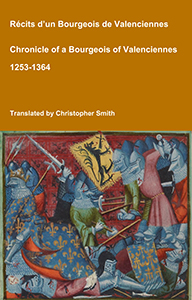
Chronicle of a Bourgeois of Valenciennes
Récits d’un bourgeois de Valenciennes aka The Chronicle of a Bourgeois of Valenciennes is a vivid 14th-century vernacular chronicle written by an anonymous urban chronicler from Valenciennes in the County of Hainaut. It survives in a manuscript that describes local and regional history from about 1253 to 1366, blending chronology, narrative episodes, and eyewitness-style accounts of political, military, and social events in medieval France, Flanders, and the Low Countries. The work begins with a chronological framework of events affecting Valenciennes and its region under rulers such as King Philip VI of France and the shifting allegiances of local nobility. It includes accounts of conflicts, sieges, diplomatic manoeuvres, and the impact of broader struggles like the Hundred Years’ War on urban life in Hainaut. Written from the perspective of a burgher (bourgeois) rather than a monastery or royal court, the chronicle offers a rare lay viewpoint on high politics and warfare, reflecting how merchants, townspeople, and civic institutions experienced the turbulence of the 13th and 14th centuries. Its narrative style combines straightforward reporting of events with moral and civic observations, making it a valuable source for readers interested in medieval urban society, regional politics, and the lived experience of war and governance in pre-modern Europe.
Available at Amazon in eBook and Paperback format.
On 10th January 1645 Archbishop William Laud [aged 71] was beheaded at Tower Hill [Map]. He was buried at St John's College, Oxford University.
Diary of Isabella Twysden 1645. 10th January 1645. The 10 of Janu: my lo: of canterbury [aged 71] was beheaded on tower hill [Map] and was buried at barking church [Map].
On 2nd February 1645 a Royalist force of Highlanders and Confederate Irish troops under the overall command of James Graham 1st Marquess Montrose [aged 32] defeated the forces of Archibald Campbell 1st Marquess Argyll [aged 37] who had been camped at Inverlochy Castle.
On 2nd February 1645 Duncan Campbell 2nd Baronet [aged 48] was captured and killed at the 1645 Battle of Inverlochy possibly in retaliation for his killing of members of the MacDonald clan at Rathlin Island three years before. His son Dugald [aged 20] succeeded 3rd Baronet Campbell of Auchinbreck.
In 1645 Bulstrode Whitelocke [aged 39] was appointed Commissioner at Uxbridge during the Treaty of Uxbridge.


In 1645 Henry Constable 1st Viscount Dunbar [aged 56] was killed at the Siege of Scarborough Castle. His son John [aged 30] succeeded 2nd Viscount Dunbar. Mary Brudenell Viscountess Dunbar by marriage Viscountess Dunbar.
In 1645 Michael Wharton [aged 51] was killed during the Siege of Scarborough Castle.
On 14th June 1645 Maurice Palatinate Simmern [aged 24] fought at Naseby, Northamptonshire [Map] during the Battle of Naseby for the Royalist army.
John Lucas 1st Baron Lucas Shenfield [aged 38] fought for the King.
Colonel John Russell [aged 25] was wounded.


Diary of Isabella Twysden 1645. 14th June 1645. the 14 of June Sr Tho: farfax had a great victory at nasby where he took 12 peces of ornance 4000 foote sholders, and the Sc. letters.
Diary of Isabella Twysden 1645. 28th June 1645. the 28 June there was brought in to Lambeth hous [Map] from the atillirer yard 680 pore prisoners, part of those which were taken at nasby.
Henrici Quinti, Angliæ Regis, Gesta, is a first-hand account of the Agincourt Campaign, and subsequent events to his death in 1422. The author of the first part was a Chaplain in King Henry's retinue who was present from King Henry's departure at Southampton in 1415, at the siege of Harfleur, the battle of Agincourt, and the celebrations on King Henry's return to London. The second part, by another writer, relates the events that took place including the negotiations at Troye, Henry's marriage and his death in 1422.
Available at Amazon in eBook and Paperback format.
On 10th July 1645 the Battle of Lanport was fought at Langport, Somerset [Map].
Charles Goring 2nd Earl Norwich [aged 30] was Colonel of a Regiment of Horse.
On 24th September 1645 the Battle of Rowton Heath aka Moor was a significant defeat for the Royalists, commanded in person by King Charles [aged 44] with heavy losses and prevented Charles from relieving the siege of Chester.
Archaeologia Cambrensis 1820 Page 464. Sept. 24. "Being Wednesday, the King's forces were routed by the Parlm army in a place called Rowton Moor.
"From Chester the King retreated to Denbigh Castle, and, having layed there two or three nights, retourned to Chirk Castle [Map]. The next morning, viz. 29th, he advanced from thence with his army through Llan-Silin, and quartered that night in Halchdyn1 and so passed through Mountgomeryshyre towards Ludlow.
Note 1. Halchdyn is in Deuddwr, between the rivers Havren and Vyrnwy, aad near Llandrinio. The name of the place has been anglicised into Haughton.
On 16th February 1646 the Royalist Army commanded by Ralph Hopton 1st Baron Hopton [aged 49] was defeated at Great Torrington, Devon bringing to an end Royalist resistance in the West Counntry. The battle was brought to an end when eighty barrels of gunpowder stored in St Michael and All Angels Church exploded killing the prisoners held there and nearly killing Thomas Fairfax 3rd Lord Fairfax [aged 34].
A True Relation of the Fight at Torrington. A true relation concerning the late fight at Torrington [on 16th February 1646] between the forces under the command of Sir Thomas Fairfax, and the forces under the command of Lord Hopton and others : sent in a letter to the Honorable William Lenthal Esq., speaker of the Honorable House of Commons, and by him appointed to be forthwith printed and published.
A True Relation of the Fight at Torrington. [16th February 1646] Our Forlorn hope seeing the Dragooners engaged, they gave fire; whereupon the Enemy gave fire all along the hedges and works, thereupon the Reserve to the Forlorn came on to Relieve them, and so being engaged, the whole army advanced; and about eight at night the Battel begun some six fields from the town, and so we fought from hedge to hedge, until we beat them into their Barracadoes, which they maintained for an hour after very manfully, our men being often repulsed, yet at last got over the Barracadoes, and forced the Enemy into the town; whereupon the the Horse were let in, who scowring the streets, were received by the Enemy, and a hot charge given by both parties; yet it pleased God at last we drave them out of the Barracadoes at the furthest end of the town, and by this time many prisoners were taken, and put into the Church: but far more escaped, being dark, over the hedges and by-wayes, which was not possible for us to prevent, throwing down their Arms, and every man flying several wayes for life: our forces were no sooner possest of the town, but the enemies Magazine which they left in the Church was fired; whether on purpose by the enemy, or by accident, we cannot yet learn: but it proved a terrible blow, not onely blowing up the Church with all the Wood and Lead that was upon it, deforming many houses in the Town, but killed some of the prisoners in the Church, and some of our men that were in the Church yard; two great Webbs of Lead fell within twice a horse length of the General; but it pleased God he escaped, though in imminent danger; many others being hurt, both with the Timber, Stones and Lead, most of the Town was shaken by this blow, being the terriblest that hath been seen in the memory of man, there being neer eighty Barrels, of Powder blown up together, and one whole Barrel which were blown out of the Church into the street, which took not fire: The Enemy perceiving their Magazine to be thus fired, gave one Charge more with their horse up to our Barracadoes, commanded by Sir Iohn Digby, Brother to the Lord Digby, but our Muskettiers gave fire; whereupon they took their farewel. Our horse instantly advanced through the Town after them, and begun the pursuite about eleven at night; and I hope will give a good accompt of the businesse.
In April 1646 Exeter, Devon [Map] was besieged by Parliamentary forces. Elizabeth Villiers Countess Morton [aged 37] with the infant Princess Henrietta Stewart Duchess Orléans [aged 1] escaped incognito to France.
Daubigny Turberville [aged 34] fought for the King. He and a friend ran in debt £100 each, "in chalk behind the door; he told me that his landlord came into their chamber, leading his daughter by the hand, and courteously proffered to cancel the debts of either of us who should marry her." Turberville "valiantly resisted this temptation and chose rather to pay his debts in ready money, which he did shortly after; the other accepted the terms, and had his wife's portion presently paid him, viz., his scores wiped out with a wet dishclout." Source. THE BRITISH JOURNAL OF OPHTHALMOLOGY SEPTEMBER, 1926.
Three Oxfordshire Parishes. 1645. In May of this year Colonel Fairfax appeared before the town and took up his quarters at Marston: Godstow House was abandoned by the Royalist troops and burnt; Gaunt House, near Standlake, surrendered to the Parliament, and Cromwell gained some advantage at Islip and settled himself at Wytham and Colonel Brown at Wolvercote. Thus surrounded by a girdle of the Parliamentary troops, Kidlington lay at their mercy until June, when the King from Daintree sent a detachment of his own men and relieved Oxford, following himself and remaining in Oxford, at Christ Church, for a few days1. The bridge at Islip was destroyed by Fairfax after his withdrawal, but the garrison at Gaunt House remained, and in October the following circumstance is recorded, which we may well call the second battle of Kidlington:
1645. 'From our Garrison of Gaunt House, 8 miles from Oxford, it was certified that the Governor, Colonel Moore, being abroad with about 200 Horse on Friday last, met with about 500 of the Enemie at Kidlington, three miles from Oxford, and skirmished with them three hours, and at last put them to the rout and pursued them to the Gates of Oxford. Took prisoners, Master Sackville, the Earl of Dorset’s second son, Lieutenant Colonel Smith, one of the King’s pages, Prince Rupert’s chaplain, one gunner, one trumpeter, and 20 common soldiers2.'
The Master Sackville mentioned here was husband to the Baroness Norreys. He was taken to Chawley, near Abingdon, and there treacherously stabbed by a soldier; his body was carried to Wytham for burial3.
In November the King was again in Oxford 'during pleasure.' In a Commonwealth paper we read:
'That it is reported that his Majesty came on Tuesday night to Daintree with 300 horse, where the Earl ot Northampton came to him with 300 more, which conducted him to Banbury on Wednesday night, whence they report he went to Oxford.'
The expression used in the King’s Itinerary upon each return to Oxford 'at pleasure' reads like a mournful irony when it is remembered of what nature were his pleasures during this sad time. Harassed and vacillating between his wish for the good of the people and his wayward advisers, Charles at length took the unfortunate resolution of casting himself upon the chivalry of the Scotch. With only two companions, Dr. Hudson being one, he left Oxford privately upon the night of 27th April, 1646.
Note 1. The King’s marches, according to date, are from 'Iter Carolinum,' in Bodleian Library.
Note 2. Perfect Diurnall, Wednesday, Oct. I, 1645.
Note 3. Dunkin’s Billindoon and Ploughley, vol. 1, p. 113.
On 11th April 1646 Edward Sackville was murdered by Parliamentary forces at Chawley Cumnor, Oxfordshire after his capture at the Second Battle of Kidlington. He was buried at Wytham, Berskhire on 18th May 1646.
On 10th November 1647 King Charles I of England, Scotland and Ireland [aged 46] escaped from Hampton Court Palace, Richmond [Map] with John Berkeley 1st Baron Berkeley [aged 45].
The December 1647 Plum Pudding Riots was a response to Puritan attempts to cease the celebration of Holy Days. The attempt to cancel Christmas in particular, with its twelve days of festivities, caused riots to break out in Canterbury, Kent [Map].
Anne Boleyn. Her Life as told by Lancelot de Carle's 1536 Letter.
In 1536, two weeks after the execution of Anne Boleyn, her brother George and four others, Lancelot du Carle, wrote an extraordinary letter that described Anne's life, and her trial and execution, to which he was a witness. This book presents a new translation of that letter, with additional material from other contemporary sources such as Letters, Hall's and Wriothesley's Chronicles, the pamphlets of Wynkyn the Worde, the Memorial of George Constantyne, the Portuguese Letter and the Baga de Secrets, all of which are provided in Appendices.
Available at Amazon in eBook and Paperback format.
On 4th January 1649 King Charles I of England, Scotland and Ireland [aged 48] was committed for trial by the Rump Parliament.
Samuel Pepys' Diary. 1st January 1660. The condition of the State was thus; viz. the Rump, after being disturbed by my Lord Lambert [aged 40], was lately returned to sit again. The officers of the Army all forced to yield. Lawson [aged 45] lies still in the river, and Monk [aged 51] is with his army in Scotland. Only my Lord Lambert is not yet come into the Parliament, nor is it expected that he will without being forced to it.


John Evelyn's Diary. 11th February 1660. A signal day. Monk [aged 51], perceiving how infamous and wretched a pack of knaves would have still usurped the supreme power, and having intelligence that they intended to take away his commission, repenting of what he had done to the city, and where he and his forces were quartered, marches to Whitehall [Map], dissipates that nest of robbers, and convenes the old Parliament, the Rump Parliament (so called as retaining some few rotten members of the other) being dissolved; and for joy whereof were many thousands of rumps roasted publicly in the streets at the bonfires this night, with ringing of bells, and universal jubilee. This was the first good omen.

On 29th January 1649 King Charles I of England, Scotland and Ireland [aged 48] fifty-seven commissioners signed King Charles' Death Warrant at Westminster Hall [Map]. Two further names were added subsequently.
10 Thomas Maulever 1st Baronet
14 Major-General William Goffe
21 Admiral Richard Deane
42 John Jones
45 Major General Charles Fleetwood
55 John Downes
57 Thomas Scot
58 John Carew
The commissioners who sat at the trial but did not sign the Death Warrant included:
William Monson 1st Viscount Monson [aged 50]
James Harington 3rd Baronet [aged 41]
The Captain of the Guard was Daniel Axtell [aged 27]. The guards included Francis Hacker, Matthew Tomlinson [aged 31].
The Solicitor-General was John Cook [aged 41].
On 29th January 1649. In Echard's England (vol. ii, p. 639, edit. 1718) it is stated that early in the rebellion King Charles I of England, Scotland and Ireland [aged 48] confided to Elizabeth Cole Lady Wheler, his former laundres, a casket, which she restored to him the night before his execution.

On 30th January 1649 Charles I [aged 48] was beheaded with one clean stroke outside the Banqueting House, Whitehall Palace [Map]. He put his head on the block and, after saying a prayer, he signalled the executioner when he was ready by stretching out his hands.
In 1649 William Heveningham [aged 45] refused to sign the death warrant of King Charles I of England, Scotland and Ireland [aged 48].
John Evelyn's Diary. 22nd January 1649. The villany of the rebels proceeding now so far as to try, condemn, and murder our excellent King [aged 48] on the 30th of this month, struck me with such horror, that I kept the day of his martyrdom a fast, and would not be present at that execrable wickedness; receiving the sad account of it from my brother George [aged 31], and Mr. Owen, who came to visit me this afternoon, and recounted all the circumstances.
Diary of Philip Henry. On the day of his [King Charles I [aged 48]] execution, which was Tuesday, Jan. 30 [1649], I stood amongst the crowd in the street before Whitehal gate, where the scaffold was erected, and saw what was done, but was not so near as to hear any thing. The Blow I saw given, & can truly say with a sad heart; at the instant whereof, I remember wel, there was such a Grone by the Thousands then present, as I never heard before & desire I may never hear again. There was according to Order one Troop immediately marching from-wards Charing-cross to Westm' & another from-wards Westm' to charing-cross purposely to masker the people, & to disperse & scatter them, so that I had much adoe amongst the jrest to escape home without hurt.
Journal of Robert Leicester. The King [aged 48] lay at Whytehall on Sunday night, on Monday night he lay at St. Jameses, and on Tuesday 30th January [1649] about 10 o'clock in the morning the King was brought from St. Jameses walking on foote through the Parke, with a regiment of foote, part before and part behinde him, with coulers flying, drums beating, his private guard of partisans with some of his gentlemen before and some behinde, bareheaded, — Doctor Juxon [aged 67] next behinde him, and Collonell Tomlinson (who had the charge of him) talking with the King bareheaded, from the Parke up the staires into the Gallerye, and so into the chamber where he used to lye, where, he continued at his devotion, refusing to dine, (having before taken the sacrament) about an hour before he came forth only, he dranke a glass of claret wine, and eat a piece of bread, about twelve at noone. From thence he was accompanyed by Bishop Juxon, Coll. Tomlinson, and other officers formerly appointed to attend him, and the private guard of partisans, with musqueteers on each syde, through the Banquetting house [Map], adjoining to which the scaffold was erected, between Whitehall gate and the gallery leading to St. Jameses, &c. The King being come upon the scaffold, looked very earnestly upon the block, and asked Collonell Hacker if there were no higher, and then spake thus (directing his speech chiefly to Collonell Tomlinson, &c.)
"I declare before you all, that I dye a Christian according to the profession of the Church of England, as I found it left me by my father; and this honest man, pointing to Dr. Juxon, I thinke will witness it," &c. Many other things being sayd, the King layd his head down, and the executioner at one blow severed it from his body, which the second executioner held up, and shewed it to the spectators.
The executioners were two, and disguised in saylors clothes, with visards and peruques unknown; yet some have a conceit that he that gave the stroke, was one Collonell Foxe, and the other Captain Joyce, who took the King from Holmby, but that is not beleeved. This I heard for certain, that Gregory Brandon, the common hangman of London, refused absolutely to do it, and professed that he would be shott or otherways killed rather than do it.
The body was putt in a coffin, covered with black velvet, and layed in his lodging chamber in Whitehall.
Chronicle of a Bourgeois of Valenciennes
Récits d’un bourgeois de Valenciennes aka The Chronicle of a Bourgeois of Valenciennes is a vivid 14th-century vernacular chronicle written by an anonymous urban chronicler from Valenciennes in the County of Hainaut. It survives in a manuscript that describes local and regional history from about 1253 to 1366, blending chronology, narrative episodes, and eyewitness-style accounts of political, military, and social events in medieval France, Flanders, and the Low Countries. The work begins with a chronological framework of events affecting Valenciennes and its region under rulers such as King Philip VI of France and the shifting allegiances of local nobility. It includes accounts of conflicts, sieges, diplomatic manoeuvres, and the impact of broader struggles like the Hundred Years’ War on urban life in Hainaut. Written from the perspective of a burgher (bourgeois) rather than a monastery or royal court, the chronicle offers a rare lay viewpoint on high politics and warfare, reflecting how merchants, townspeople, and civic institutions experienced the turbulence of the 13th and 14th centuries. Its narrative style combines straightforward reporting of events with moral and civic observations, making it a valuable source for readers interested in medieval urban society, regional politics, and the lived experience of war and governance in pre-modern Europe.
Available at Amazon in eBook and Paperback format.
Proceedings against King Charles I: Speech. The Speech of King Charls upon the Scaffold at the gate of White Hall; immediately before the execution. January 30 [1649].
On 9th March 1649 at the Old Palace Yard, Westminster Palace three Royalist Lords were beheaded ...
Arthur Capell 1st Baron Capell Hadham [aged 41] was beheaded. His son Arthur [aged 17] succeeded 2nd Baron Capell Hadham.
Henry Rich 1st Earl Holland [aged 58] was beheaded. His son Robert [aged 30] succeeded 2nd Earl Holland. Elizabeth Ingram Countess Holland [aged 26] by marriage Countess Holland.
James Hamilton 1st Duke Hamilton [aged 42] was beheaded. His brother William [aged 32] succeeded 2nd Duke Hamilton, 3rd Earl Cambridge, 3rd Baron Innerdale by special remainder.
John Owen [aged 49] had been sentenced to death but was subsequently pardoned.


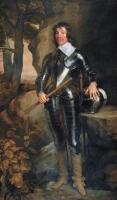
John Evelyn's Diary. 1st February 1649. Now were Duke Hamilton [aged 42], the Earl of Norwich [aged 63], Lord Capell [aged 40], etc., at their trial before the rebels' New Court of Injustice.
John Evelyn's Diary. 9th March 1649. Now were the Lords murdered in the Palace Yard. [Note. The original entry was dated 05 Mar 1649 whereas most sources agree on the date of their execution being 09 Mar 1649?]
Between 3rd September 1649 and 11th September 1649, Drogheda [Map], under the command of the Royalist Arthur Aston [aged 59], was besieged by the Parliamentary army commanded by Oliver Cromwell [aged 50].
On 11th September 1649 Oliver Cromwell had a letter delivered to Sir Arthur Aston, which proposed his Aston's surrender; Aston refused.
At 5:00 PM Cromwell ordered simultaneous assaults on the southern and eastern breaches in the walls of Drogheda.
At the southern breach, the defenders counterattacked. The death of their commander, Colonel Wall, caused them to fall back, allowing further Parliamentary reinforcements to be funnelled into the breach. In the fighting at the walls some 150 Parliamentarian troops, including Colonel Castle, were killed.
After the death of Colonel Wall with more and more Parliamentary soldiers streaming into the breaches, the Royalist resistance at the walls collapsed.
In Cromwell's words, "In the heat of the action, I forbade them [his soldiers] to spare any that were in arms in the town...and, that night they put to the sword about two thousand men".
The execution of Royalists constinued as and when they were discovered.
Around one hundred Royalists were discovered in St Peter's Church - Cromwell ordered the church and those inside to be burned.
Arthur Aston was killed.
Letters of Oliver Cromwell 106. Oliver Cromwell [aged 50]. For the Honourable William Lenthall [aged 58], Esquire, Speaker of the Parliament of England: These.
Dublin, 17th September, 1649.
Sir,
Your Army being safely arrived at Dublin: and the Enemy endeavouring to draw all his forces together about Trim and Tecroghan, as my intelligence gave me,-from whence endeavours were made by the Marquis of Ormond to draw Owen Roe O'Neil with his forces to his assistance, but with what success I cannot yet learn,-I resolved, after some refreshment taken for our weather-beaten men and horses, and accommodation for a march, to take the field. And accordingly, upon Friday, the 30th of August last, rendezvoused with eight regiments of foot, six of horse and some troops of dragoons, three miles on the north side of Dublin. The design was, To endeavour the regaining of Tredah; or tempting the Enemy, upon his hazard of the loss of that place, to fight.
John Evelyn's Diary. 15th October 1649. Came news of Drogheda being taken by the rebels, and all put to the sword, which made us very sad, forerunning the loss of all Ireland.