

Anne Boleyn. Her Life as told by Lancelot de Carle's 1536 Letter.
In 1536, two weeks after the execution of Anne Boleyn, her brother George and four others, Lancelot du Carle, wrote an extraordinary letter that described Anne's life, and her trial and execution, to which he was a witness. This book presents a new translation of that letter, with additional material from other contemporary sources such as Letters, Hall's and Wriothesley's Chronicles, the pamphlets of Wynkyn the Worde, the Memorial of George Constantyne, the Portuguese Letter and the Baga de Secrets, all of which are provided in Appendices.
Available at Amazon in eBook and Paperback format.
1800-1850 Act of Union, Trafalgar and Waterloo is in 19th Century Events.
In December 1800 King George III of Great Britain and Ireland [aged 62] created a number of peers who supported the Act of Union...
On 21st December 1800 Charles Stanley Monck 1st Viscount Monck [aged 46] was created 1st Viscount Monck.
On 29th December 1800....
Murrough O'Brien 1st Marquess Thomond [aged 74] was created 1st Marquess Thomond. Mary Palmer Marchioness Thomond [aged 50] by marriage Marchioness Thomond.
Charles Tottenham aka Loftus 1st Marquess Ely [aged 62] was created 1st Marquess Ely in County Wexford. Jane Myhill Marchioness Ely by marriage Marchioness Ely in County Wexford.
James Alexander 1st Earl Caledon [aged 70] was created 1st Earl Caledon in County Tyrone.
The London Gazette 15317. Whitehall, December 9, 1800.
The King has been pleased to grant the Dignities of Viscount and Earl of the Kingdom of Great Britain to the Right Honorable Charles Sloane Lord Cadogan [aged 72], and the Heirs Male of his Body lawfully begotten, by the Name, Style, and Title of Viscount Chelsea, in the County of Middlesex, and Earl Cadogan. [Mary Churchill Countess Cadogan [aged 42] by marriage Countess Cadogan.]
The King has also been pleased to grant the Dignities of Viscount and Earl of the Kingdom of Great Britain to the Right Honorable James Lord Malmesbury [aged 54], Baron of Malmesbury, in the County of Wilts, Knight of the Most Honorable Order of the Bath, and the Heirs Male of his Body lawfully begotten, by the Name, Style, and Title of Viscount Fitz-Harris, of Hurn Court, in the County of Southampton, and Earl of Malmesbury. [Harriet Maria Amyand Countess Malmesbury [aged 39] by marriage Countess Malmesbury.]
In December 1800 King George III of Great Britain and Ireland [aged 62] created a number of peers who supported the Act of Union...
On 21st December 1800 Charles Stanley Monck 1st Viscount Monck [aged 46] was created 1st Viscount Monck.
On 29th December 1800....
Murrough O'Brien 1st Marquess Thomond [aged 74] was created 1st Marquess Thomond. Mary Palmer Marchioness Thomond [aged 50] by marriage Marchioness Thomond.
Charles Tottenham aka Loftus 1st Marquess Ely [aged 62] was created 1st Marquess Ely in County Wexford. Jane Myhill Marchioness Ely by marriage Marchioness Ely in County Wexford.
James Alexander 1st Earl Caledon [aged 70] was created 1st Earl Caledon in County Tyrone.
On 1st January 1801 the Act of Union came into force by which Great Britain and Ireland were united creating the United Kingdom. Actually two Acts of Union with the same title: one for the Parliament of Great Britain and one for the Parliament of Ireland.
On 10th March 1801 had its first population census since King William I's Domesday book of 1086. The returns gave a population of 10.9 million people living in 1.8 million houses including 324,630 in the army and 1,410 Convicts on board prison hulks. It also recorded population numbers, occupations, and baptisms/marriages/burials and to aid with military conscription. establishing a decennial tradition that has occurred every ten years, except in 1941 due to World War II.
The Battle of Copenhagen was fought on 2nd April 1801 was a naval battle in which a British fleet fought and defeated a smaller force of the Dano–Norwegian Navy anchored near Copenhagen.
Graham Hamond 2nd Baronet [aged 21] commanded the fifth-rate HMS Blanche.
On 25th March 1802 the United Kingdom and the French Repulic signed the Treaty of Amiens bringing to an end the War of the Second Coalition. The peace laster for fifteen months only.
The Treaty was signed by:
Charles Cornwallis 1st Marquess Cornwallis [aged 63], United Kingdom
Joseph Bonaparte [aged 34], French Republic
José Nicolás de Azara, Spain
Rutger Jan Schimmelpenninck, Batavian Republic


In 1803 King George III of Great Britain and Ireland [aged 64] created new Garter Knights as follows:
624th John Henry Manners 5th Duke Rutland [aged 25].
625th Philip Yorke 3rd Earl of Hardwicke [aged 45]. His brother Admiral Joseph Sydney Yorke [aged 34] stood in for the Earl at the investiture since the Earl was Lord Lieutenant of Ireland at the time and unable to be present.


In January 1804 HMS York was sunk having struck Bell Rock with the loss of all 491 on-board. The tragedy resulted in the construction of Bell Rock Lighthouse.
In January 1804 Captain Henry Reveley Mitford [aged 35] drowned during the 1804 Sinking of York.
In 1805 King George III of Great Britain and Ireland [aged 66] created new Garter Knights as follows:
628th George Augustus Herbert 11th Earl Pembroke 8th Earl Montgomery [aged 45],
629th George Finch 9th Earl Winchilsea 4th Earl Nottingham [aged 52],
630th Philip Stanhope 5th Earl Chesterfield [aged 49],
631st George Legge 3rd Earl Dartmouth [aged 49].


Chronicle of Abbot Ralph of Coggeshall
The Chronicle of Abbot Ralph of Coggeshall (Chronicon Anglicanum) is an indispensable medieval history that brings to life centuries of English and European affairs through the eyes of a learned Cistercian monk. Ralph of Coggeshall, abbot of the Abbey of Coggeshall in Essex in the early 13th century, continued and expanded his community’s chronicle, documenting events from the Norman Conquest of 1066 into the tumultuous reign of King Henry III. Blending eyewitness testimony, careful compilation, and the monastic commitment to record-keeping, this chronicle offers a rare narrative of political intrigue, royal power struggles, and social upheaval in England and beyond. Ralph’s work captures the reigns of pivotal figures such as Richard I and King John, providing invaluable insights into their characters, decisions, and the forces that shaped medieval rule. More than a simple annal, Chronicon Anglicanum conveys the texture of medieval life and governance, making it a rich source for scholars and readers fascinated by English history, monastic authorship, and the shaping of the medieval world.
Available at Amazon in eBook and Paperback format.
On 21st October 1805 Admiral Henry Digby [aged 35] commanded Africa at Cape Trafalgar during the Battle of Trafalgar.
Richard King 2nd Baronet [aged 30] captained HMS Achille, the seventh ship in Collingwood's division. Achille was heavily engaged, chasing off the Spanish Montanez and the battling alongside HMS Belleisle with the Argonauta. Whilst chasing this ship through the melee, Achille was cut off by her namesake, the French Achille, with whom she began a savage cannonade until joined by the French ship Berwick, whom Achille turned her attention on.
George Alexander Barker [aged 20] served on The Swiftsure.
On 21st October 1805 Frank Abney-Hastings [aged 11] fought aboard HMS Neptune at the Battle of Trafalgar.
On 21st October 1805 Horatio Nelson 1st Viscount Nelson [aged 47] was killed in action at the Battle of Trafalgar. Viscount Nelson of the Nile and Burnham Thorpe in Norfolk extinct. His brother William [aged 48] succeeded 2nd Baron Nelson of the Nile and Hillborough in Norfolk.


On 9th January 1806 the funeral of Horatio Nelson 1st Viscount Nelson was held at St Paul's Cathedral [Map].
The London Gazette 15881. 9th January 1806. Early in the Morning of Thursday the 9th Instant, His Royal Highness the Prince of Wales [aged 43], Their Royal Highnesses the Dukes of the Blood Royal, with several of the Great Officers, and the Nobility and Gentry, in their Carriages; the Relations of the Deceased, with the Officers and others of his Household, the Officers of Armss, and a Number of Naval Officers, in Mourning Coaches, assembled in Hyde Park; having been admitted at Cumberland and Grosvenor Gates upon producing Tickets issued from the College of Arms.; and, having there been marshalled within the Rails, proceeded, One by One, across Piccadilly, into St. James's Park, by the Gate at the top of Constitution Hill, and onwards, through the Horse Guards, to the Admiralty, in the Order in which they were to move in the Procession.
The Chief Mourner, with his Supporters and Train-Bearer, and the several Naval Officers to whom Duties were assigned in the Solemnity, assembled at the Admiralty: the Seamen and Marines of the Victory, the Pensioners from Greenwich Hospital, the Watermen of the Deceased, the Six Conductors, the Messenger of the College of Arms, and the Marshal's-Men, with the Trumpets and Drums, were stationed in the Admiralty Yard.


9th January 1806. Augustus Charles Pugin [aged 44]. Funeral of Horatio Nelson.

9th January 1806. Augustus Charles Pugin [aged 44]. Funeral of Horatio Nelson.
On 25th March 1807 the Slave Trade Act received Royal Assent. The Act prohibited the slave trade in the British Empire. The Bill was first introduced to Parliament in January 1807. It went to the House of Commons on 10th February 1807. After a debate lasting ten hours, the House agreed to the second reading of the bill to abolish the Atlantic slave trade by an overwhelming 283 votes for to 16. The Act took effect on 1st May 1807.
The last legal slave voyage was that of Kitty's Amelia which sailed on 27th July 1807 having received permission to sail on 27th April 1807 before the Act came into force. Kitty's Amelia arrived with 233 slaves at Jamaica 25th January 1808.
Memoirs of Captain Hugh Crow. The sickness that afflicted many of the whites and blacks on board began to abate as we approached the West Indies, but though our destination was to Trinidad to receive orders, my instructions empowered me to use my own discretion, and I thought it prudent, as the convalescence was not yet general, to run on with all speed for my old favourite port, Kingston, Jamaica. We arrived there after a toilsome passage from St. Thomas of about eight weeks. Never, in the course of my life, did I suffer so much through fatigue and anxiety of mind as on this voyage, during which we lost no fewer than thirty whites and fifty blacks: amongst the former were our two doctors, who died immediately after our arrival at Kingston. The thoughts of the sickness (which originated from the damaged goods, as before stated) and the frequent deaths weighed heavily upon my spirits, and I have many a night lain down to rest so oppressed with grief and fatigue that I declare I had no wish ever again to see the light of day.
[25th January 1808] On our arrival at Kingston I found, to my surprise, about sixteen sail of African ships, some of which had been there five or six months, with the greater part of their cargoes unsold, and most of them losing daily both whites and blacks. This was a melancholy prospect for me, but my old friends did not lose sight of me, and the first thing I saw on landing was an advertisement in both the Kingston newspapers stating that Captain Crow had arrived with the finest cargo of negroes ever brought.
On 25th March 1807 the Oystermouth Railway Company, aka Swansea and Mumbles Railway, commenced the first Passenger Railway Service between Swansea and Oystermouth. The service was horse-drawn.
On 17th August 1808 the Battle of Roliça an Anglo-Portuguese army under Sir Arthur Wellesley defeated an outnumbered Imperial French division under General of Division Henri François Delaborde, near the village of Roliça in Portugal.
General Henry Fane [aged 29] commanded.
Chronicle of Geoffrey le Baker of Swinbroke
Baker was a secular clerk from Swinbroke, now Swinbrook, an Oxfordshire village two miles east of Burford. His Chronicle describes the events of the period 1303-1356: Gaveston, Bannockburn, Boroughbridge, the murder of King Edward II, the Scottish Wars, Sluys, Crécy, the Black Death, Winchelsea and Poitiers. To quote Herbert Bruce 'it possesses a vigorous and characteristic style, and its value for particular events between 1303 and 1356 has been recognised by its editor and by subsequent writers'. The book provides remarkable detail about the events it describes. Baker's text has been augmented with hundreds of notes, including extracts from other contemporary chronicles, such as the Annales Londonienses, Annales Paulini, Murimuth, Lanercost, Avesbury, Guisborough and Froissart to enrich the reader's understanding. The translation takes as its source the 'Chronicon Galfridi le Baker de Swynebroke' published in 1889, edited by Edward Maunde Thompson.
Available at Amazon in eBook and Paperback format.
On 21st August 1808 the Battle of Vimeiro was fought at which Earl of Wellington [aged 39] defeated the French under Major-General Jean-Andoche Junot near the village of Vimeiro.
General Thomas Bradford [aged 30] fought.


On 21st December 1808 Henry William Paget 1st Marquess Anglesey [aged 40] defeated two regiments of French cavalry.


On 29th December 1808 Henry William Paget 1st Marquess Anglesey [aged 40] commanded the cavalry at the Battle of Benavente whe defeated the elite Chasseurs à cheval of the French Imperial Guard.
On 16th January 1809 the Battle of Corunna was fought when a French corps under Marshal of the Empire Jean de Dieu Soult attacked a British army under Lieutenant-General Sir John Moore.
Brothers General Thomas Bradford [aged 31] and Lieutenant-Colonel Henry Hollis Bradford [aged 27] fought.
On 16th January 1809 Charles Banks Stanhope [aged 23] was killed at Battle of Corunna.
In the north west tower chapel in the nave of Westminster Abbey is a marble monument in the shape of a shield, with a background of a sword, carbine and two military flags. The fee for the monument was paid in 1814 by Westmacott. The inscription reads:
To the memory of the Honble. Charles Banks Stanhope, second son of Charles [aged 55], Earl Stanhope, and nephew of the Right Honble. William Pitt; Major of the 50th regiment of Foot, who, in the act of gallantly encouraging his men, fell by a musquet shot in the battle of Corunna. This tablet is affectionately inscribed by his afflicted sister, who can neither do justice to his virtues nor sufficiently deplore his loss. Born 3 June 1785. Died 16 Jan. 1809.

Around 1814. Attributed to Martin Archer Shee [aged 44]. Portrait of General Edward Paget [aged 38]. A three-quarter-length portrait in military uniform, against a background of sky. The painting shows him without his right arm which he lost at the First Battle of Oporto. Probably painted shortly after his release from the French, 1814.
General Edward Paget: On 3rd November 1775 he was born to Henry Bayly-Paget 1st Earl Uxbridge and Jane Champagné Countess Uxbridge. On 22nd May 1805 General Edward Paget and Frances Bagot were married at St George's Church, Hanover Square. He the son of Henry Bayly-Paget 1st Earl Uxbridge and Jane Champagné Countess Uxbridge. On 22nd February 1815 General Edward Paget and Harriet Legge were married. She the daughter of George Legge 3rd Earl Dartmouth and Frances Finch Countess Dartmouth. He the son of Henry Bayly-Paget 1st Earl Uxbridge and Jane Champagné Countess Uxbridge. On 13th May 1849 General Edward Paget died.
Between 27th July 1809 and 28th July 1809 the Battle of Talavera, part of the Peninsular War, was fought between an Anglo Spanish army commanded by Arthur Wellesley 1st Duke Wellington [aged 40] against the French. The French army withdrew at night after several of its attacks had been repulsed. Following the battle Arthur Wellesley 1st Duke Wellington was created 1st Viscount Wellington of Talavera.
Hugh Gough 1st Viscount Gough [aged 29] commanded the 2nd Battalion of the 87th (Royal Irish Fusiliers) Regiment of Foot.
General Henry Fane [aged 30] commanded the 3rd Prince of Wales Dragoon Guards, 4th Queen's Own Dragoons.
Charles Henry Farrington 2nd Baronet [aged 14] fought.
On 27th July 1809 Edward Methuen Irby [aged 21] was killed at the Battle of Talavera.
On 28th July 1809 Captain Richard Beckett [aged 27] was killed in action at the Battle of Talavera. He has a monument by John Flaxman [aged 54] at the Minster and Parish Church of Saint Peter-at-Leeds [Map].
On 5th March 1811 the Battle of Barrosa aka Chichlana was fought. During the battle, a single British division commanded by Thomas Graham 1st Baron Lynedoch [aged 64] defeated two French divisions and captured a regimental eagle.
Hugh Gough 1st Viscount Gough [aged 31] fought.
On 8th July 1810 the Bow Street police raided the White Swan on Vere Street in London that had been established as a molly-house in early 1810 by two men, James Cook and Yardley. Twenty-seven men were arrested, but the majority of them were released (perhaps as a result of bribe); eight were tried and convicted. On 27th September 1810 six men were pilloried at the Haymarket. On 7th March 1811 John Hepburn (46) and Thomas White (16), a drummer boy, were hanged at Newgate Prison, London [Map] for 'for the perpetration of an unnatural crime' against the 1533 Buggery Act despite not being present on the night of the raid.
Anne Boleyn. Her Life as told by Lancelot de Carle's 1536 Letter.
In 1536, two weeks after the execution of Anne Boleyn, her brother George and four others, Lancelot du Carle, wrote an extraordinary letter that described Anne's life, and her trial and execution, to which he was a witness. This book presents a new translation of that letter, with additional material from other contemporary sources such as Letters, Hall's and Wriothesley's Chronicles, the pamphlets of Wynkyn the Worde, the Memorial of George Constantyne, the Portuguese Letter and the Baga de Secrets, all of which are provided in Appendices.
Available at Amazon in eBook and Paperback format.
The Times, Issue 8098, 26th September 1810: "An exhibition on the pillory of one of the wretches recently convicted at Clerkenwell took place yesterday, at 12 o’clock, opposite the Mansion-house when this human monster suffered all that could be inflicted by mud, rotten eggs, and potatoes. The concourse of people collected upon this occasion was immense. Amongst other places particularly crowded was the ballustrade surrounding the Mansion-house, which, notwithstanding the exertions of constables placed there to keep off the crowd, was filled with spectators, some of whom had melancholy reason to regret their too eager curiosity as several of the rails and a great part of the coping stone gave way from the great weight of those clinging to it, and falling on some of the persons beneath, severely injured three, one of whom is not expected to recover; they were all taken to the Hospital."
Hampshire Telegraph and Sussex Chronicle, Portsmouth, Issue 596 7th March 1811: "White came out first; he seemed perfectly indifferent at his awful fate, and continued adjusting the frill of his shirt while he was viewing the surrounding popoulace. About two minutes after Hepburn made his appearance, but was immediately surrounded by the Clergyman, Jack Ketch [i.e. the hangman], his man, and others in attendance. The Executioner at the same time put the cap over Hepburn’s face, which of course prevented the people from having a view of him. White seemed to fix his eyes repeatedly on Hepburn. After a few minutes prayer, the miserable wretches were launched into eternity. Hepburn spoke to the Shieriff in a very firm and impressive manner, stating that the person who had sworn against him had perjured himself, and that every inta[?] that he (Hepburn) had said, to prove the perjury, was perfectly correct…"
Morning Chronicle, Issue 13051, 8th March 1811?: "Yesterday morning, about five minutes before 8 o’clock, Ensign Hepburn, and — White, the drummer, a lad, only 16 years of age, for the perpetration of an unnatural crime, were brought on the scaffold, in front of the Debtors’ door, Newgate, and executed pursuant to their sentence. Their conduct since condemnation has been such as to evince a sincere contrition, and a just sense of the heinousness of their offence. They behaved in a manner becoming their unhappy situation; and after spending a few minutes in fervent prayer and devotion, with the Rev. Dr. Ford the Ordinary of Newgate, were launched into eternity, amidst a vast concourse of spectators."
Morning Chronicle, Issue 13055, 9th March 1811?: "The mother of White, the Drummer, who was executed on Thursday, with Hepburn, the Ensign, died of a broken heart on the day subsequent to her son’s untimely end. She never left her bed after having taken farewell of the culprit on the evening previous to his execution."

On 11th May 1812 Spencer Perceval [aged 49] was assassinated at House of Commons. Robert Jenkinson 2nd Earl Liverpool [aged 41] was appointed Prime Minister.
At 5:15 pm, on the evening of 11 May 1812, Perceval was on his way to attend the inquiry into the Orders in Council. As he entered the lobby of the House of Commons, a man stepped forward, drew a pistol and shot him in the chest. The assassin, John Bellingham, was a merchant who believed he had been unjustly imprisoned in Russia and was entitled to compensation from the government, but all his petitions had been rejected.
Perceval left a widow and twelve children aged between three and twenty. Parliament voted to settle £50,000 on Perceval's children, with additional annuities for his widow and eldest son.
On 18th May 1812 John Bellingham was hanged at Newgate Prison, London [Map]. René Martin Pillet says...
This unfortunate man had presented several memorials, and had repeatedly demanded audience, but they had given him no answer. Driven to despair, he presented himself at the door of the house of commons, waited for the prime minister, Mr. Percival, and shot him. He was seized, confessed the crime, was tried, condemned to be hung, and executed a few days after. At the time of execution an immense crowd filled the public square, and these expressions were heard on every side: Farewell poor man, you owe satisfaction to the offended laws of your country, but God bless you! you have rendered an important service to your country, you have tdugllt ministers that they should do justice, and grant audience when it is asked of them.
A subscription was opened for the widow and children, and a handsome sum was raised. Their fortune was ten times greater than they could ever have expected in any other situation.
On 22nd July 1812 the Battle of Salamanca was fought at which an Anglo-Portuguese army under the Earl of Wellington [aged 43] defeated Marshal Auguste Marmont's French forces at Arapiles [Map].
Brother General Thomas Bradford [aged 34] and Lieutenant-Colonel Henry Hollis Bradford [aged 31] fought.
Major-General John Le Marchant [aged 46] was killed in action. Wellington is reported as saying to Le Marchant that he must take the first favourable opportunity to engage the enemy's infantry, "You must then charge at all hazards" was his final instruction. Following up the attack of the 5th Infantry Division Le Marchant led the 3rd and 4th Dragoons and the 5th Dragoon Guards in what was probably the most destructive charge made by a single brigade of cavalry in the whole Napoleonic period. The left wing of the French army were on the point of being defeated by the 3rd and 5th divisions of Anglo-Portuguese infantry when Le Marchant's dragoons charged in and destroyed battalion after battalion. Many of the French infantrymen sought the protection of the British infantry to escape the sabres of the dragoons. Le Marchant, knowing he had achieved a magnificent success, was leading a squadron against the last of the formed French infantry when he was shot and his spine broken. See Fletcher's "Galloping at Everything: The British Cavalry in the Peninsula and at Waterloo 1808-15". Spellmount, Staplehurst. ISBN 1-86227-016-3. 1999, pp. 185–188.
On 28th January 1813 Jane Austen's [aged 37] novel Pride and Prejudice was first published by Thomas Egerton Publisher of Whitehall.
On 21st June 1813 the Battle of Vitoria was fought between a British, Portuguese and Spanish army under the Marquess of Wellington [aged 44] and the French army under King Joseph Bonaparte and Marshal Jean-Baptiste Jourdan.
Brothers General Thomas Bradford [aged 35] and Lieutenant-Colonel Henry Hollis Bradford [aged 31] fought.
Hugh Gough 1st Viscount Gough [aged 33] fought.
General Henry Fane [aged 34] commanded.
General Mildmay Fane [aged 18] fought.
On 21st June 1813 Lieutenant-Colonel Charles Fane [aged 32] was killed in action at the Battle of Vitoria.
On 14th April 1814 was a sortie by the French garrison of Bayonne led by General of Division Pierre Thouvenot against a besieging force of British, Portuguese, and Spanish troops commanded by Lieutenant General John Hope. The fighting marked the last major battle of the Peninsular War.
The London Beer Flood was an accident at Meux & Co's Horse Shoe Brewery, London, on 17th October 1814 when one of the 6.7m wooden vats of fermenting porter burst. The escaping liquid dislodged the valve of another vessel and destroyed several large barrels: between 128,000 and 323,000 imperial gallons of beer were released in total. The resulting wave of porter destroyed the back wall of the brewery and swept into an area of slum dwellings known as the St Giles rookery. Eight people were killed, five of them mourners at the wake being held by an Irish family for a two-year-old boy.
The Gentleman's Magazine Volume 84. Monday, Oct. 17 [1814]. About six o'clock one of the vats, in the extensive premises of Messrs. Henry Meux and Co. in Banbury-street, St. Giles's, burst, and in a moment New-street, George-street, and several others in the vicinity, were deluged with the contents, amounting to 3,555 barrels of strong beer. The fluid, in its course, swept every thing before it. Two houses in New-street, adjoining the brew-house, were totally demolished. The ihbhabitants, who were of the poorer class, were all at home. In the first floor of one of them, a mother and daughter were at tea; the mother was washed out of the window, and the daughter was swept away by the current through a partition, and dashed to pieces. The back parts of the houses of Mr. Goodwin, poulterer, of Mr. Hawse, Tavistock Arms, and Nos. 24 and 25, in Great Russell-street, were nearly destroyed. The female servant of the Tavistock Arms was suffocated. Three of Mr. Meux's men, employed in the brewery, were rescued with great difficulty. The site of the place is low and flat; and there being no declivity to carry off the fluid, in its fall it spread and sunk into the neighbouring cellars, all of whieh were inhabited. Even the cellars in Russell-street, were inundated; and breaches made through the houses. The inhabitants, to save themselves from drowning, had to mount their highest pieces of furniture. The bursting of the brew-house walls and the fall of heavy timber, materially contributed to aggravate the mischief, by forcing the roofs and walls of the adjoining houses. By this sudden calamity, eight persons lost their lives; and five were dreadlully bruised, but are expected to recover. Collections have been made for the famiies of the sufferers. Messrs, Meux's loss is estimated at about £15,000.
On 8th January 1815 Edward "Ned" Pakenham [aged 36] was killed at New Orléans during the Battle of New Orléans.
Henrici Quinti, Angliæ Regis, Gesta, is a first-hand account of the Agincourt Campaign, and subsequent events to his death in 1422. The author of the first part was a Chaplain in King Henry's retinue who was present from King Henry's departure at Southampton in 1415, at the siege of Harfleur, the battle of Agincourt, and the celebrations on King Henry's return to London. The second part, by another writer, relates the events that took place including the negotiations at Troye, Henry's marriage and his death in 1422.
Available at Amazon in eBook and Paperback format.
On 16th June 1815 Henry William Paget 1st Marquess Anglesey [aged 47] fought and Algernon Frederick Greville [aged 16] fought.
James Hay [aged 18] was killed.
Fletcher Norton 3rd Baron Grantley [aged 16] fought.
General Mildmay Fane [aged 20] and Thomas Elmsley Croft 7th Baronet [aged 16] were wounded.
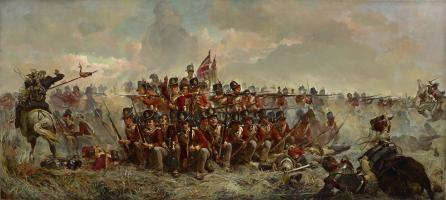
1875. Elizabeth Thompson Lady Butler [aged 28]. "The 28th Regiment at Quatre Bras". Based the painting on the account of the battle in a book written by Captain William Siborne, the History of the War in France and Belgium in 1815, first published in 1844. The painting portrays the 28th (North Gloucestershire) Regiment of Foot, of the British Army, on 16 June 1815, at the Battle of Quatre Bras.
On 18th June 1815 the Battle of Waterloo was fought.
Beaumont Hotham 3rd Baron Hotham [aged 20] was present.
Charles Augustus Fitzroy [aged 19] was wounded.
Lieutenant-Colonel Henry Edward Irby [aged 31] fought.
Henry William Paget 1st Marquess Anglesey [aged 47] led the charge of the British heavy cavalry against Comte d'Erlon's column which checked and in part routed the French Army. He was hit by one of the last cannon shots of the day necessitating the amputation of this leg during the Battle of Quatre Bras.
Fletcher Norton 3rd Baron Grantley [aged 16] fought and was wounded.
Charles Francis Rowley Lascelles fought.
Edward Kerrison 1st Baronet [aged 38] commanded his Regiment.
George Orlando Gunning [aged 18] was killed whilst serving as a Lieutenant in the 10th Hussars.
On 19th June 1815 Lieutenant Colonel Alexander Gordon [aged 29] died having had his leg amputated the previous day.
Charles Henry Farrington 2nd Baronet [aged 20] fought.
On 23rd December 1815 the book "Emma" by Jane Austen [aged 40] was first published (Note. the title page stated 1816).
On 22nd January 1816 two new Irish Eardom's were created...
Richard White 1st Earl Bantry [aged 48] was created 1st Earl Bantry. Margaret Anne Hare Countess Bantry by marriage Countess Bantry.
Richard Butler 1st Earl Glengall [aged 40] was created 1st Earl Glengall.
On 6th November 1817 Princess Charlotte Augusta Hanover [aged 21] died in childbirth at Claremont House Esher, Surrey. She buried at St George's Chapel, Windsor Castle [Map].
On 13th February 1818 Richard Croft 6th Baronet [aged 56] shot himself as a consequence of the death of Princess Charlotte Augusta Hanover to whom he had been physician during her labour. A copy of Shakespeare's Love's Labour's Lost was found open with the passage (Act V, Scene II): "Fair Sir, God save you! Where is the Princess?". He was buried at St James' Church, Piccadilly.His son Thomas [aged 19] succeeded 7th Baronet Croft of Croft Castle in Herefordshire.
Adeline Horsey Recollections. After my dear mother's [aged 43] death I visited a great deal with my father [aged 53], and one year we went for the shooting to Lord Huntingfield's place, Heveningham Hall, Suffolk. I slept in the bedroom once occupied by the famous Chevalier d'Éon, who had been a frequent guest at Heveningham, and about whom there were many stories told. It was said that the Chevalier was the one and only lover of cross-grained Queen Charlotte, and that her son, George IV, was the result of their intimacy, although his paternity was of course admitted by King George III. The animosity always displayed by the old Queen to her grand-daughter, Princess Charlotte, was supposed to arise from the fact that as heiress to the throne she innocently dispossessed the other Royal Dukes from the succession. It is certainly a fact that the Princess's untimely death in childbirth was attributed to foul play at the time, and when later the accoucheur [obstetrician] Sir Richard Croft, committed suicide, all classes of society were loud in condemnation of the Queen and the Prince Regent. I do not vouch for the accuracy of Queen Charlotte's love affair. I only give the Heveningham gossip as I heard it.
Note A. D'Eon was undoubtedly one of the most picturesque and mysterious personages of the eighteenth century I was naturally interested in these somewhat scandalous stories.
The Chevalier died when he was eighty-three years of age, after a most extraordinary career. He was at one time aide-de-camp to the Comte de Broglie, and fought in the French army; but later on for some mysterious reason he discarded man's attire and passed as a woman for thirty-four years. Often when I went into my room I half expected to see a ghostly figure seated at the escritoire where the Chevalier wrote his secret cipher communications, and I wondered whether the brocade crowns and frills and furbelows that he wore as a woman had ever hung in the old wardrobe which I used.
My father and I also stayed with the Westmorlands at Apethorpe Hall; we visited the Earl [aged 38] and Countess of Chichester [aged 36] at Stanmer Park, and we were welcome guests at Cadlands, Silverlands, Chiswick House, West Park, and my uncle Lord Stradbroke's place, Henham Hall, which was afterwards burnt down.
I had visited Deene Park, Northamptonshire [Map] with my mother in 1842, but I must deal with my future home in the chapter devoted to Deene and its associations.


In 1818 Peregrine Cust [aged 26] was elected MP Honiton during the 1818 General Election.

On 5th February 1818 Charles XIII King Sweden [aged 69] died.
The Peterloo Massacre took place at St Peter's Field, Manchester, England, on Monday 16th August 1819. Eighteen people were killed and between 400 and 700 injured when the cavalry of the Yeomen charged into a crowd of around 60,000 people who had gathered to demand the reform of parliamentary representation.
The cavalrymen of the Manchester and Salford Yeomanry, led by Captain Hugh Hornby Birley.
The History of William Marshal was commissioned by his son shortly after William’s death in 1219 to celebrate the Marshal’s remarkable life; it is an authentic, contemporary voice. The manuscript was discovered in 1861 by French historian Paul Meyer. Meyer published the manuscript in its original Anglo-French in 1891 in two books. This book is a line by line translation of the first of Meyer’s books; lines 1-10152. Book 1 of the History begins in 1139 and ends in 1194. It describes the events of the Anarchy, the role of William’s father John, John’s marriages, William’s childhood, his role as a hostage at the siege of Newbury, his injury and imprisonment in Poitou where he met Eleanor of Aquitaine and his life as a knight errant. It continues with the accusation against him of an improper relationship with Margaret, wife of Henry the Young King, his exile, and return, the death of Henry the Young King, the rebellion of Richard, the future King Richard I, war with France, the death of King Henry II, and the capture of King Richard, and the rebellion of John, the future King John. It ends with the release of King Richard and the death of John Marshal.
Available at Amazon in eBook and Paperback format.
On 29th January 1820 King George III of Great Britain and Ireland [aged 81] died at Windsor Castle [Map]. His reign the third longest after Victoria and Elizabeth II. His son George [aged 57] succeeded IV King Great Britain and Ireland. Caroline of Brunswick Queen Consort England [aged 51] by marriage Queen Consort England.


On 16th February 1820 King George III of Great Britain and Ireland [deceased] was buried at St George's Chapel, Windsor Castle [Map].
On 8th April 1820 the Port Glasgow Volunteers were attacked whilst escorting five prisoners to Greenock jail. A hostile crowd gathered, and shots fired in the air failed to calm the situation. The Volunteers suffered bruising, and as they approached Rue-end Street opened sporadic fire, killing and wounding several of the crowd. The mob pursued the Volunteers into Crawfurdsdyke, then returned to break open the jail. A magistrate urged the crowd to desist, but with no forces to resist them, agreed to release the prisoners who then escaped. Six people were killed, three more died of wounds later.

On 19th July 1821 King George IV of Great Britain and Ireland [aged 58] was crowned IV King Great Britain and Ireland.
King George IV of Great Britain and Ireland barred Caroline of Brunswick Queen Consort England [aged 53] from attending the Coronation. She attempted to attend but was turned away at the doors of Westminster Abbey. Refused entry at both the doors to the East Cloister and the doors to the West Cloister, Caroline attempted to enter via Westminster Hall, where many guests were gathered before the service began. A witness described how the Queen stood at the door fuming as bayonets were held under her chin until the deputy lord chamberlain had the doors slammed in her face. Henry Brougham recorded his distaste.1. She died three weeks later.
William Cavendish 6th Duke Devonshire [aged 31] carried the Orb at Westminster Abbey [Map].
Kenneth Alexander Howard 1st Earl of Effingham [aged 53] attended as Deputy Earl Marshal as a result of Henry Howard-Molyneux-Howard [aged 54].
See Creevy Papers.
The London Gazette 17724. 9th July 1821. Whitehall. .
The King has been pleased to direct letters patent to be passed under the Great Seal, granting the dignities of Viscount, Earl, and Marquess of the United Kingdom of Great Britain and Ireland to Charles Earl of Ailesbury [aged 48], Knight of the Most Ancient aud Most Noble Order of the Thistle, and the heirs male of his body lawfully begotten, by the names, stiles, and titles of Viscount Savernake, of Savernake-Forest, in the county of Wilts, Earl Bruce, of Whorlton, in the county of York, and Marquess of Ailesbury, in the county of BucKingham
The King has also been pleased to direct letters patent to be passed under the Great Seal, granting the dignity of an Earl of the United Kingdom of Great Britain and Ireland to Edward Viscount Falmouth [aged 34], and the heirs male of his body lawfully begotten, by the name, stile, and title of Earl of Falmouth, in the county of Cornwall. [Anne Frances Bankes Countess Falmouth [aged 31] by marriage Countess Falmouth.]
The King has also been pleased to direct letters patent to be passed under the Great Seal, granting the dignity of an Earl of the United Kingdom of Great Britain and Ireland, to Richard William Penn Viscount Curzon [aged 24], and the heirs male of his body lawfully begotten, by the name, stile, and title of Earl Howe. [Note. Harriet Georgiana Brudenell Countess Howe [aged 22] by marriage Countess Howe.]
The King has also been pleased to direct letters patent to be passed under the Great Seal, granting the dignities of Viscount and Earl of the United Kingdom of Great Britain and Ireland, to John Sommers Baron Sommers [aged 61], and the heirs male of his body lawfully begotten, by the names, stiles, and titles of Viscount Eastnor, of Eastnor Castle, in the county of Hereford, and Earl Sommers.
The King has also been pleased to direct letters patent to be passed under the Great Seal, granting the dignities of Viscount and Earl of the United Kingdom of Great Britain and Ireland, to John Baron Rous [aged 71], and the heirs male of his body lawfully begotten, by the names, stiles, and titles of Viscount Dunwich and Earl of Stradbroke, in the county of Suffolk. [Charlotte Maria Whittaker Countess of Stradbroke [aged 52] by marriage Countess Stradbroke.]
The King has also been pleased to direct letters patent to be passed under the Great Seal, granting the dignity of Viscount of the United Kingdom of Great Britain and Ireland, to Richard Earl of Donoughmore [aged 65], and the heirs male of his body lawfully begotten, by the name, stile, and title of Viscount Hutchinson, of Knocklofty, in the county of Tipperary; with remainder, in default of such issue male, to the heirs male of the body of Christian Baroness Donoughmore, deceased (mother of the said Richard Earl of Donoughmore), by John Hely Hutchinson, Esq. also deceased.
The King has also been pleased to direct letters patent to be passed under the Great Seal, granting: the dignity ot a Baron of the United Kingdom of Great Britain and Ireland to William Marquess of Lothian [aged 57], Knight of the Most Ancient and Most Noble Order of the Thistle, and the heirs male of his body lawfully begotton, by the name, stile, and title of Baron Ker, of Kersheugh, in the county of Roxburgh.
The King has also been pleased to direct letters patent to be passed under the Great Seal, granting the dignity of a Baron of the United Kingdom of Great Britain and Ireland to Henry Marquess Conyngham [aged 54], Knight of the Most Illustrious Order of St Patrick, and the heirs male of his body lawfully begotten, by the name, stile, and title of Baron Minster, of Minster-Abbey, in the county of Kent.
The King has also been pleased to direct letters patent to be passed under the Great Seal, granting the dignity of a Baron of the United Kingdom of Great Britain and Ireland to James Earl of Ormonde and Ossory [aged 43], and the heirs male of his body lawfully begotton, by the name, stile, and title of Baron Ormonde, of Llanthony, in the county of Monmouth; with remainder, in default of such issue male, to his brother the Honourable Charles Howard Butler Clarke [aged 40], and the heirs male of his body lawfully begotten. [Note. Grace Louisa Staples Marchioness Ormonde by marriage Baroness Ormonde of Llanthony in Monmouthshire.]
The King has also been pleased to direct letters patent to be passed under the Great Seal, granting the dignity of a Baron of the United Kingdom of Great Britain and Ireland to Francis Earl of Wemyss and March [aged 49], and the heirs male of his body lawfully begotten, by the name, stile, and title of Baron Wemyss, of Wemyss, in the county of Fife.
The King has also been pleased to direct letters patent to be passed under the Great Seal, granting the dignity of a Baron of the United Kingdom of Great Britain and Ireland to Robert Earl of Roden [aged 32], Knight of the Most Illustrious Order of St Patrick, and the heirs male of his body lawfully begotten, by the name, stile, and title of Baron Clanbrassill, of Hyde-Hall, in the county of Hertford, and Dundalk, in the county of Louth.
The King has also been pleased to direct letters patent to be passed under the Great Seal, granting, the dignity of a Baron of the United Kingdom of Great Britain and Ireland, to George Earl of Kingston [aged 50], and the heirs male of his body lawfully begotten, by the name, stile, and title of Baron Kingston, of Mitchelstown, in the county of Cork.
The King has also been pleased to direct letters patent to be passed under the Great Seal, granting the dignity of a Baron of the United Kingdom of Great Britain and Ireland, to Thomas Earl of Longford [aged 47], Knight of the Most Illustrious Order of St Patrick, and the heirs male of his body lawfully begotten, by the name, stile and title of Baron Silchester, of Silchester, in the county of Southampton.
The King has also been pleased to direct letters patent to be passed under the Great Seal, granting the dignity of a Baron of the United Kingdom ef Great Britain and Ireland, to James Murray [aged 39], Esq. (commonly called Lord James Murray), and the heirs male of his body lawfully begotten by the name, stile, and title of Baron Glenlyon of Glenlyon, in the county of Perth. [Note. Emily Frances Percy Baroness Goldolphin Helston [aged 33] by marriage Baroness Glenlyon of Glenlyon in Perthshire.]
The King has also been pleased to direct letters:patent to be passed under the Great Seal, granting1 the dignity of a Baron of the United Kingdom of Great Britain and Ireland, to the Right Honourable William Wellesley Pole [aged 58], and the heirs male of his body lawfully begotten, by the name, stile, and title of Baron Maryborough, of Maryborough, in the Queen's-County.
The King has also been pleased to direct letters patent to be passed under the Great Seal, granting the dignity of a Baron of the United Kingdom of Great Britain and Ireland, to the Right Honourable John Foster [aged 81], and the heirs male of his body lawfully begotton, by the name, stile, and title of Baron Oriel, of Ferrard, in the county of Louth.
The King has also been pleased to direct letters;patent to be passed under the Great Seal, granting the dignity of a Baron of the United Kingdom of Great Britain and Ireland, to the Right Honourtable Sir William Scott [aged 75], Knt and the heirs male of his body lawfully begotten, by the name, stile, and title of Baron Stowell, of Stowell Park, in the county of Gloucester
The King has also been pleased to direct letters matent to be passed under the Great Seal, granting the dignity of a Baron of the United Kingdom of Great Britain and Ireland to Sir Thomas Henry Liddell [aged 46], Bart, and the heirs male of his body lawfully begotten, by the name, stile, and title of Baron Ravensworth, of Ravenswortb-Castle, in the county-palatine of Durham, and of Eslington, in the county of Northumberland. [Note. Maria Susannah Simpson Baroness Calthorpe [aged 48] by marriage Baroness Ravensworth of Ravensworth Castle in County Durham.]
The King has also been pleased to direct letters patent to be passed under the Great Seal, granting the dignity to a Baron of the United Kingdom of Great Britain and Ireland to Thomas Cholmondeley [aged 53], Esq. of Vale-Royal, in the county-palatine of Chester, and to the heirs male of his body lawfully begotten, by the name, stile, and title of Baron Delamere, of Vale-Royal, in the said county. [Note. Henrietta Elizabeth Williams-Wynn Baroness Delamere [aged 50] by marriage Baroness Delamere of Vale Royal in Cheshire.]
The King has also been pleased to direct letters patent to be passed under the Great Seal, granting the dignity of a Baron of the United Kingdom of Great Britain and Ireland to Cecil Weld Forester [aged 54], Esq. of Willey-Park, in the county of Salop, and the heirs male of his body lawfully begotten, by the name, stile, and title of Baron Forester, of Willey-Park, in the said county. [Note. Katherine Mary Manners Baroness Forester by marriage Baroness Forester of Willey Park in Shropshire.]
The King has also been pleased to direct letters patent to be passed under the Great Seal, granting the dignity of a Baroness of the United Kingdom of Great Britain and Ireland to Charlotte Mary Gertrude Strutt [aged 63] (commonly called Lady Charlotte Mary Gertrude Strutt), and the heirs male of her body lawfully begotten, by the name, stile, and title of Baroness Rayleigh, of Terling-place in the county of Essex.



Creevey Papers. Henry Brougham, M.P., to Mr. Creevey (at Cantley1) 26th July [1821].
Dear C,
The Queen [aged 53] certainly goes to Scotland. . I should not wonder if she were to go thro' the manufacturing districts. Possibly Birmingham (where the K. refused to go) may be in her way. It is on the cards that she should be found in the W. Riding and in Lancashire. For aught I know H. M. may then pass across towards Durham and Newcastle. Indeed the great towns are peculiarly interesting to a person of her contemplative cast. One whose mind is improved by foreign travel naturally loves tracts of country where the population is much crowded, and it is worthy of H. M.'s enlightened mind to patronise the ingenuous artizan. The coal trade, too, is highly interesting. I only hope she may not call at Howick on her way .... The time of her setting out is not fixed, depending naturally upon her beloved husband's motions .... The Chamberlain's place is not yet given away. The Ministers are believed to have resolved to bear this no longer, and to have agreed on a remonstrance to the K. about the Green Ribbons2. He will, of course, say something civil that means little — make some promise that means less — let them name to one place, name to the other himself— and so settle matters as to enable him to go over to Ireland .... The Queen has lost incalculably by getting out of her carnage and tramping about; going and being refused, and damaging the Coronation, was all very well, but the way of doing it was very bad ...."
Note 1. Michael Angelo Taylor's place in Yorkshire,
Note 2. The King had been creating Knights of the Thistle without taking the advice of his Ministers.
On Wednesday 12th January 1825 twenty five men and boys, the youngest being 7 years old, lost their lives in an underground explosion at the Gosforth Pit, Leeds.
Annals of Yorkshire Volume 1. 1825. On the 12th of January, twenty-five men and boys were killed by an explosion of fire damp, in the Gosforth coal mine, at Middleton, near Leeds.
Leeds Mercury. DREADFUL CATASTROPHE AT MIDDLETON.
It is our painful duty to record one of the most fatally destructive calamities that has ever occurred in this neighbourhood, arising out of an explosion in Gosforth Coal Pit, the property of Charles John Brandling, Esq. at Middleton, three miles from this town. The following particulars are collected from the best sources of information on the subject. In Gosforth Pitt, which is eighty yards in depth and of considerable extent, upwards of forty men were working at the time of the accident,-between six and seven o’clock on Wednesday evening [12th January 1825]. About ten of these men worked on the west side of the shaft, and at a distance from the part where the explosion took place: the remainder worked on the east side, about two hundred yards from the shaft. The workings of this pit had been begun at the extremity of the bed of coal, and about three hundred yards eastward of the shaft, and the miners were gradually digging their way westward, having proceeded about one-third of the distance to the shaft. That part of the pit which they had exhausted was allowed to fall in, the props of the roof being removed as the men advanced, and an open space of about twelve yards left behind them. Twelve or fourteen colliers were employed in digging, and filling the corves, which were drawn to the shaft of the pit by several other men called hurriers, and a number of boys called thrusters. The part of the pit where the digging was carried on communicated with the shaft by two parallel passages, one of them (the principal one) running through the centre of the bed direct to the shaft, the other running at the north side of the bed, and reaching the shaft by a right angle. In that part of the workings between these two passages seven or eight colliers were employed, and five more worked on the south side of the bed, in a part separated from the rest by a wall of coal, but having communications with the principal passage. In the rear of the first of these divisions, many of the props that supported the roof had been removed on the preceding Friday, and the workmen occasionally heard the superlucumbent earth falling in behind them. This was heard several times on Wednesday, and it was doubtless In consequence of this that the carburetted hydrogen gas. commonly called fire-damp, so plentifully generated in coal mines, was forced forwards to the place where the men were working. This would have been attended with no danger, if none of the lights in the pit had been exposed, as the safety-lamp, invented by Sir Humphry Davy, shows the presence of this gas without setting fire to it. In these lamps, the flame is enclosed in a small cylinder of wire gauze, which permits the gas to enter, and of course to take fire within the lamp, but does not allow the flame to pass out; so that the whole lamp may be full of flame, and, though plunged in an atmosphere of inflammable gas, no explosion will take place. All the men were provided with the safety lamp, but, unfortunately, the incessant vigilance required in colliers was not practised, one of the men working in the north side of the principal passage being seen to take off the top of his lamp, which was red-hot, with a view to letting it cool. Almost instantly an explosion took place, producing effects as diastrous as if a mine of gunpowder had been sprung. Several of the colliers who were nearest were scorched and destroyed on the spot: most of the hurriers and thrusters, who ran for refuge into the principal passage, were killed by the storm of splinters which were torn from the sides and roof, or by being dashed to the earth by the tremendous blast that issued from the cavern. The five colliers who were working in the southern division of the pit were suffocated. One collier, named Fox, who was working within a few yards of the place where the explosion occurred, miraculously escaped, by running into the northern passage; and another, named Caley, who was at work in the very furthest part of the pit, at the extremity of that passage, escaped by the same means, though he was twice thrown down by the violent expulsion and reaction of the air. So great was the shock, that four men standing at the pit’s mouth, on the surface of the ground, were thrown down by the blast of air that issued from the shaft. The men who were at work on the western side of the shaft all escaped without injury. The "bottom-steward," Mr. Moses Roberts, was immediately sent for, and he descended into the pit, which he found full of smoke. He took measures, with all possible despatch, to produce such a current of air as would clear away the smoke, and allow them to explore the passages; after which, at great hazard of suffocation, as well as of another explosion, several persons entered the passages, and by five o’clock the following morning, had found and taken out twenty-one dead bodies, besides several men who were bruised and maimed. As soon as Mr. Blenkinsop heard of the accident, he hastened to the spot, descended into the pit, and remained there, directing all the operations, till he and the men were compelled to consult their safety by leaving the pit. At 5 on Thursday morning, the smoke gathered in such quantities-the coal having taken fire-that it was found impossible, without the most imminent risk of fresh casualties, to continue the search; and there was only too much reason to be assured, that the two men, whose bodies were not yet found, had been killed. The search was therefore abandoned, and the entrance to the pit stopped up, in order to put out the fire by depriving it of the support of air. It will probably be some days, before the pit can be re-opened. Twenty-three men and boys have lost their lives by this melancholy disaster; and seven more have been severely hurt, four of whom were removed to the Infirmary; we understand that they are all likely to recover. The bodies of the five colliers who were suffocated were found without external injury; those of nearly all the rest were shockingly mangled. It will be perceived, by the list which we subjoin, that many of the sufferers have left families; several of them were nearly related to each other. The names of the men whose bodies have not been found are Joseph Haigh and John Ramsden. It is unnecessary to say, that the neighbourhood of Middleton is thrown into the utmost consternation and affliction, and that many families are left altogether destitute. A Coroner’s Jury has been summoned, but the evidence will not be taken till to-day.
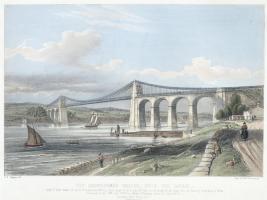
On 30th January 1826 the Menai Suspension Bridge [Map], the world's first major suspension bridge, was opened. The bridge was designed by Thomas Telford. Construction had begun in 1819.
1840 lithograph of the bridge.
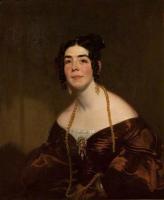
On 7th March 1827 Ellen Turner [aged 16] was abducted from Margaret Daulby's elite boarding school for girls in Liverpool by, Edward Thevenot, a servant of Edward Gibbon Wakefield [aged 30]. Edward Gibbon Wakefield and Ellen Turner were married at Gretna Green, Dumfrieshire, she believing she was marrying to protect her father from financial ruin. After the marriage they set out for France, another jurisdiction, where he intended they settle as man and wife. He was subsequently arrested, tried and imprisoned.
On 26th June 1830 King George IV of Great Britain and Ireland [aged 67] died. His brother William [aged 64] succeeded IV King Great Britain and Ireland. Duke Clarence and St Andrews merged with the Crown. Queen Adelaide of England [aged 37] by marriage Queen Consort England.
He was attended by Jonathan Wathen Phipps aka Waller 1st Baronet [aged 60].


Jean de Waurin's Chronicle of England Volume 6 Books 3-6: The Wars of the Roses
Jean de Waurin was a French Chronicler, from the Artois region, who was born around 1400, and died around 1474. Waurin’s Chronicle of England, Volume 6, covering the period 1450 to 1471, from which we have selected and translated Chapters relating to the Wars of the Roses, provides a vivid, original, contemporary description of key events some of which he witnessed first-hand, some of which he was told by the key people involved with whom Waurin had a personal relationship.
Available at Amazon in eBook and Paperback format.
On the 15th September 1830 the Liverpool-Manchester Railway was opened by the Duke of Wellington. Several trains travelled between Liverpool and Manchester. The line had a number of stations: Liverpool Crown Street, Roby, Parkside, Eccles and Manchester Liverpool Road.
A collision took place at Parr. Blackwood's Edinburgh Magazine, who was travelling in the lead train on the northern track, hauled by Phoenix: "One of our engine wheels, how I know not, contrived to bolt from the course—in plain words, it escaped from the rail, and ploughed along upon the clay, with no other inconvenience than an increase of friction, which damped our speed, and with the additional application of the break, soon brought us to an anchor. The engine, however, behind us, not being aware of our mishap, came pelting on at a smart pace, without receiving its signal for checking motion in time. Accordingly, those on the look-out hastily called on their fellow-passengers to be on their guard, and prepare for a jolt, which took place with a crash upon our rear, sufficiently loud and forcible to give an idea of what would happen, if by any strange chance it had charged us with the unrestrained impetuosity of its powers."
At Parr the Duke of Wellington's train stopped for water. Despite a request from the railway engineers for passengers to remain on the trains, around fifty men disembarked from the Duke's train to stretch their legs. The group consisted of many of the most influential figures of the day, including the Marquess of Stafford [aged 72], Charles Arbuthnot [aged 63], Prince Esterházy, and the Earl of Wilton [aged 30].
At Parkside William Huskisson [aged 60] went to shake the hand of the Duke of Wellington. As they exchanged greetings, some of the crowd saw Rocket, hauling the third of the seven trains on the northern track, approaching in the distance. They shouted "An engine is approaching, take care gentlemen" to those people—including Huskisson—standing on the tracks. Huskisson tried to clamber into the carriage, but those inside failed to reach him to pull him in. Holmes, still pressed against the carriage, shouted "For God's sake, Mr Huskisson, be firm", but Huskisson grabbed the door of the carriage. With Holmes still pressed against the side of the carriage, the door, with Huskisson hanging on to it, swung out directly into the path of Rocket. Rocket collided with the door and Huskisson fell onto the track in front of the locomotive. In the words of Harriet Arbuthnot [aged 37], who was in the Duke's carriage, "[Huskisson] was caught by it, thrown down & the engine passed over his leg & thigh, crushing it in a most frightful way. It is impossible to give an idea of the scene that followed, of the horror of everyone present or of the piercing shrieks of his unfortunate wife, who was in the car. He said scarcely more than, 'It's all over with me. Bring me my wife and let me die.'"
1831 colour engraving of Parkside station:
Charles Arbuthnot: On 14th March 1767 he was born. On 28th February 1799 he and Marcia Clapcote Lisle were married at Cholmondeley House. On 31st January 1814 he and Harriet Fane were married at St Nicholas' Church, Fulbeck. The difference in their ages was 26 years. On 18th August 1850 he died at Apsley House, Hyde Park Corner.
Harriet Fane: On 10th September 1793 she was born to Henry Fane of Fulbeck and Anne Buckley Batson. In August 1834 Harriet Fane died.
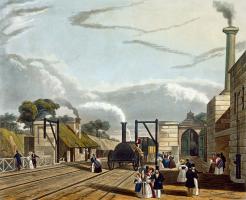

On 24th September 1830 the funeral of William Huskisson [deceased] was held in Liverpool. Almost every business was closed. It was estimated that 69,000 people, roughly half the city's population, attended. The procession left the town hall and slowly went the 1,800m via Hope Street to an iron-lined grave in St James Cemetery, accompanied by muffled church bells. His wife Emily did not attend. Despite her objection to gun salutes a 32-pounder cannon was fired to mark the departure of the coffin from the town hall and a 6-pounder was fired to mark the body's arrival at the cemetery, and smaller guns were fired as the procession passed.
The Times: "There was a moral sublimity in the spectacle, which all who were present felt; but which I am afraid is not communicable to those who were absent. I have seen more than one public funeral, and I know something of the gorgeous pageantry so lavishly displayed in the burials of our Monarchs; but though I saw the ashes of Grattan and Canning deposited in one of the most august of Christian temples amid the vain regrets of men the most distinguished for rank, talent, and genius, and though the interment of Royalty takes hold upon the imagination from its necessary connexion with the most sumptuous display of human pomp and greatness, I never witnessed any spectacle so impressive as the appearance of this vast multitude, standing erect under the open canopy of heaven, and joining in one spontaneous tribute of respect to the memory of their late representative."

On 8th September 1831 King William IV of the United Kingdom [aged 66] was crowned IV King Great Britain and Ireland at Westminster Abbey [Map].
Kenneth Alexander Howard 1st Earl of Effingham [aged 63] attended as Deputy Earl Marshal as a result of Henry Howard-Molyneux-Howard being ill.
Thomas William Anson 1st Earl Lichfield [aged 35] was created 1st Earl Lichfield. Louisa Barbara Catherine Phillips Countess Lichfield [aged 31] by marriage Countess Lichfield.
On 19th July 1821 Kenneth Alexander Howard 1st Earl of Effingham [aged 53] attended as Deputy Earl Marshal as a result of Henry Howard-Molyneux-Howard [aged 54] being ill at Westminster Abbey [Map] during the Coronation of William IV.
On 8th September 1831 Arthur Chichester 1st Baron Templemore [aged 34] was created 1st Baron Templemore of Templemore in Donegal during the Coronation of William IV. Augusta Paget Baroness Templemore [aged 29] by marriage Baroness Templemore of Templemore in Donegal.

On 8th September 1831 William Henry Vane 1st Duke Cleveland [aged 65] bore the Third Sword at the Coronation of William IV.
In August 1835 the 1835 Marriage Act made marriage between those of certain degrees of affinity (in-laws) and consanguinity (blood) as defined in the Anglican Book of Common Prayer illegal including marrying the spouse of one's deceased relative. Those with sufficient funds could overcome the prohibition by marrying abroad. Gretna Green, Dumfrieshire also appears to have been outside the jurisdiction of the Act.
On 28th September 1840 George Edward Waldegrave 7th Earl Waldegrave [aged 24] and Frances Braham Countess Waldegrave [aged 19] were married at Gretna Green, Dumfrieshire thereby avoiding the constraint of the 1835 Marriage Act. He being the legitimate younger brother of her first husband John James Waldegrave; an example of Married to Two Siblings. He the son of John James Waldegrave 6th Earl Waldegrave.
In November 1875 William Holman Hunt [aged 48] and Marion Edith Waugh [aged 28] were married at Neuchâtel, Switzerland since marrying your late wife's sister was illegal in England - see 1835 Marriage Act. She his first wife's younger sister contrary to English Law; an example of Married to Two Siblings. His brother-in-law Thomas Woolner [aged 49] considered the marriage immoral; they never spoke again.


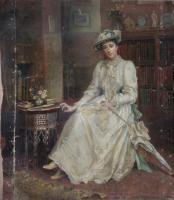


On 20th June 1837 King William IV of the United Kingdom [aged 71] died at Windsor Castle [Map]. His niece Victoria [aged 18] succeeded I Queen Great Britain and Ireland. His brother Ernest [aged 66] succeeded King Hanover. Frederica Mecklenburg Strelitz Queen Consort Hanover [aged 59] by marriage Queen Consort Hanover.
At 5am Francis Nathaniel Conyngham 2nd Marquess Conyngham [aged 40] and Archbishop William Howley [aged 71] went to Kensington Palace to inform the Princess she was now Queen. Francis Nathaniel Conyngham 2nd Marquess Conyngham was the first to address her as 'Your Majesty'.
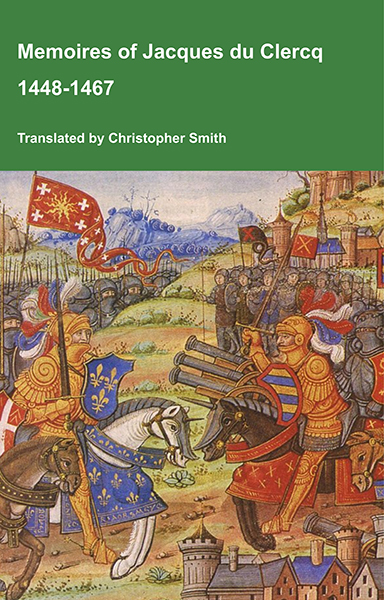
This is a translation of the 'Memoires of Jacques du Clercq', published in 1823 in two volumes, edited by Frederic, Baron de Reissenberg. In his introduction Reissenberg writes: 'Jacques du Clercq tells us that he was born in 1424, and that he was a licentiate in law and a counsellor to Philip the Good, Duke of Burgundy, in the castellany of Douai, Lille, and Orchies. It appears that he established his residence at Arras. In 1446, he married the daughter of Baldwin de la Lacherie, a gentleman who lived in Lille. We read in the fifth book of his Memoirs that his father, also named Jacques du Clercq, had married a lady of the Le Camelin family, from Compiègne. His ancestors, always attached to the counts of Flanders, had constantly served them, whether in their councils or in their armies.' The Memoires cover a period of nineteen years beginning in in 1448, ending in in 1467. It appears that the author had intended to extend the Memoirs beyond that date; no doubt illness or death prevented him from carrying out this plan. As Reissenberg writes the 'merit of this work lies in the simplicity of its narrative, in its tone of good faith, and in a certain air of frankness which naturally wins the reader’s confidence.' Du Clercq ranges from events of national and international importance, including events of the Wars of the Roses in England, to simple, everyday local events such as marriages, robberies, murders, trials and deaths, including that of his own father in Book 5; one of his last entries.
Available at Amazon in eBook and Paperback format.

1880. Henry Tanworth Wells [aged 51]. Portrait of Queen Victoria of the United Kingdom [aged 60] being informed she was Queen by Francis Nathaniel Conyngham 2nd Marquess Conyngham and Archbishop William Howley.Death of King William IV Succession of Queen Victoria