

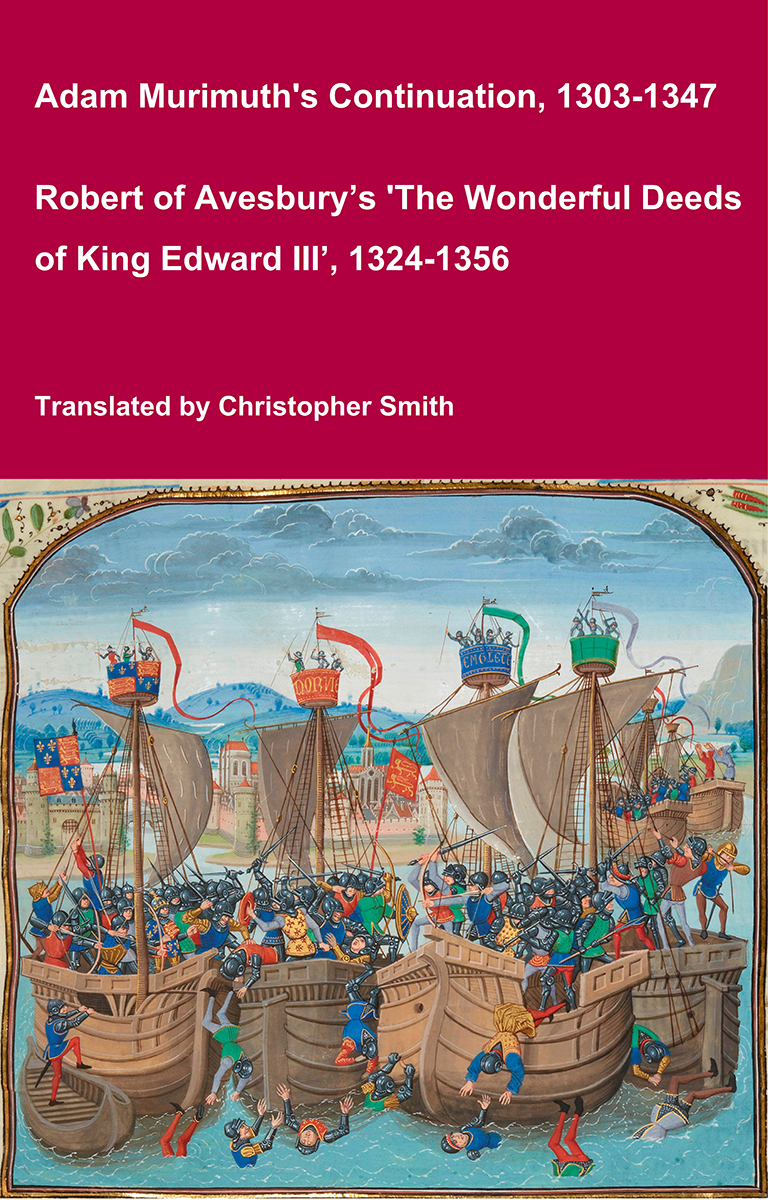
Adam Murimuth's Continuation and Robert of Avesbury’s 'The Wonderful Deeds of King Edward III'
This volume brings together two of the most important contemporary chronicles for the reign of Edward III and the opening phases of the Hundred Years’ War. Written in Latin by English clerical observers, these texts provide a vivid and authoritative window into the political, diplomatic, and military history of fourteenth-century England and its continental ambitions. Adam Murimuth Continuatio's Chronicarum continues an earlier chronicle into the mid-fourteenth century, offering concise but valuable notices on royal policy, foreign relations, and ecclesiastical affairs. Its annalistic structure makes it especially useful for establishing chronology and tracing the development of events year by year. Complementing it, Robert of Avesbury’s De gestis mirabilibus regis Edwardi tertii is a rich documentary chronicle preserving letters, treaties, and official records alongside narrative passages. It is an indispensable source for understanding Edward III’s claim to the French crown, the conduct of war, and the mechanisms of medieval diplomacy. Together, these works offer scholars, students, and enthusiasts a reliable and unembellished account of a transformative period in English and European history. Essential for anyone interested in medieval chronicles, the Hundred Years’ War, or the reign of Edward III.
Available at Amazon in eBook and Paperback format.
Burned at the stake is in Executions.
1414 Suppression of the Lollards
1441 Trial and Punishment of Eleanor Cobham
1535 Burning of the Anabaptists
1536 Trial of Anne and George Boleyn
1540 Execution of Protestants and Catholics
1550 Execution of Joan Bourchier
1555 Protestant Executions of Cardmaker and Warne

On 10th December 304 Saint Eulalia of Mérida [aged 12] burned at the stake at Augusta Emerita for refusing to adopt Roman Gods. She challenged the authorities to martyr her. The judge's attempts at flattery and bribery failed. She was stripped by the soldiers, tortured with hooks and torches, and burnt at the stake. When she died a dove flew out of her mouth. Snow covered her nakedness.
Chronicle of Gregory. Ande that yere a quarter of whete was worthe xvj s. The secunde yere. And thenne that yere Syr [2nd March 1401] Wylliam Sawtre, preste, was brente ynne Smethefylde for eresy.
On 2nd March 1401 William Sawtry aka Salter was burned at the stake for heresy at Smithfield [Map]. He was the first follower of Lollardy to die for his beliefs.
Chronicle of Gregory. 1410. And that year ther was an heretyke, that was callyd John of Badby, that be-levyd nought in the Sacrament of the Auter, and he was brought unt[o] Smethefylde for to be brent, and bownde unto a stake; and Syr Harry Percy of Walys [aged 23]1 conselyd him to holde the very ryght beleve of Hooly Chyrche, and he shulde faylle nothyr lacke noo goode. Al so the Chaunceler of Oxynford, on Mayster Corteney, informyd him in the faythe of Holy Chyrche, and the Pryour of Syn Bartholomewys brought the hooly sacrament with xij torchys and brought it before hym. And it was askyd howe that he be-levyde. Ande he answeryd and said that he wyste welle that hit was hooly brede, and nought Goodys oune blessyde body. And thenne was the tonne putt ovyr him ande fyre put unto hym; and whenne he felde fyre he cryde marcy. And a-non the prynce commaundyd to take a wey the fyre, and hit was don soo anon. And then the prynce askyd him yf that he wolde for-sake his heresy and be-leve on the faythe of alle Hooly Chyrche, and he wolde gyffe him his lyffe and goode i-nowe whyle he levyd; but he wolde nought, but contynuyde forthe in his heresye. And thenne the prynce commaundyd him up to be brende at onys, and soo he was. And John Gylott, vynter, he made ij wevers to be take, the whyche folowyd the same waye of heresy.
And the same tyme was the hurlynge in Estechepe by the lord Thomas and the lord John, the kyngys sone, &c.
Note 3. Percy. A clerical error. "Harry Prince of Wales" is the reading in other Chronicles.
Chronicle of Gregory. 10th January 1414. And they hadde ordaynyde to have hadde the fylde be-syde Syn Gylys. But, thonkyd be God Almighty, owre kyng [aged 27] hadde warnyng thereof, and he come unto London and toke the felde be syde Syn Jonys in Clerkynwelle [Map]; and as they come the kyng toke them, and many othyr. And there was a knyght take that was namy[d] Syr Roger of Acton, and he was drawe and hanggyd be syde Syn Gyly [Map], for the King let to be made iiij payre of galowys, the whiche that were i-callyd the Lollers galowys. Al so a preste that hyght Syr John Bevyrlay, and a squyer that hyght John Browne of Oldecastellys, they were hanggyd; and many moo were hanggyd and brent, to the nomber of xxxviij personys and moo.
Chronicle of Gregory. 1416. Ande that same year was brent in Smethefild [Map] John Claydon, schynner, and Rychard Turmyn, baker, for heresye that they were convycte a-pon.
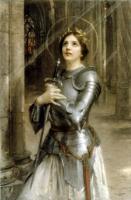
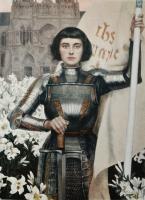
On 30th May 1431 Joan of Arc [aged 19] was burned at the stake witnessed by Cardinal Henry Beaufort [aged 56] at the Old Market Place, Rouen [Map].


Chronicle of Gregory. 14th May 1438. And the same year on Estyr day there was on John Gardyner take at Synt Mary at the Axe in London, for he was an herytyke; for whenne shulde have benne houselyd he wypyd his mouthe whithe a foule clothe and layde the oste there yn; and so he was takyn by the person of the chyrche, and the xiiij day of May he was i-breht in Smethefylde [Map].
Chronicle of Gregory. 1440. And that same year there was a preste i-callyd Syr Rycharde Wyche and his servand brent atte the Tourehylle [Map], for the whyche there was moche trobil a-monge the pepylle, in soo moche that alle the wardys in London were assygnyd to wake there day and nyght that the pepylle might nought have her ylle purpose as at that tyme.
On 27th October 1441 Margery Jourdemayne "The Witch of Eye" [aged 26] was burned at the stake at Smithfield [Map].
Chronicle of Gregory. 27th October 1441. And on Syn Symon and Jude is eve was the wycche [aged 26] be syde Westemyster brent in Smethefylde [Map], and on the day of Symon and Jude [28th October 1441] the person [parson] of Syn Stevynnys in Walbroke, whyche that was one of the same fore said traytours [Thomas Southwell], deyde in the Toure [Map] for sorowe.
Chronicle of Gregory. 1443 [possibly 1442]. And that same year was a woman of Westemyster brentt at Toure-hylle [Map] for kyllynge of her hosbond.
On 29th February 1528 Patrick Hamilton was burned at the stake for being Protestant
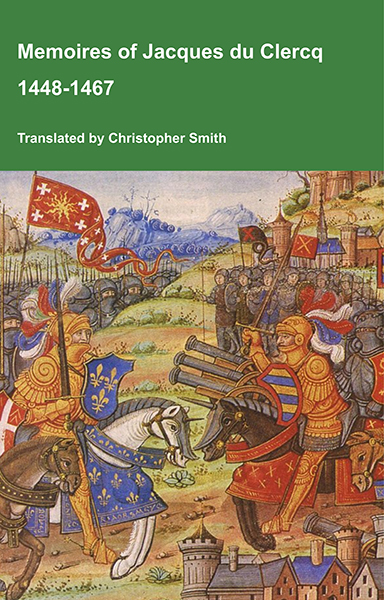
This is a translation of the 'Memoires of Jacques du Clercq', published in 1823 in two volumes, edited by Frederic, Baron de Reissenberg. In his introduction Reissenberg writes: 'Jacques du Clercq tells us that he was born in 1424, and that he was a licentiate in law and a counsellor to Philip the Good, Duke of Burgundy, in the castellany of Douai, Lille, and Orchies. It appears that he established his residence at Arras. In 1446, he married the daughter of Baldwin de la Lacherie, a gentleman who lived in Lille. We read in the fifth book of his Memoirs that his father, also named Jacques du Clercq, had married a lady of the Le Camelin family, from Compiègne. His ancestors, always attached to the counts of Flanders, had constantly served them, whether in their councils or in their armies.' The Memoires cover a period of nineteen years beginning in in 1448, ending in in 1467. It appears that the author had intended to extend the Memoirs beyond that date; no doubt illness or death prevented him from carrying out this plan. As Reissenberg writes the 'merit of this work lies in the simplicity of its narrative, in its tone of good faith, and in a certain air of frankness which naturally wins the reader’s confidence.' Du Clercq ranges from events of national and international importance, including events of the Wars of the Roses in England, to simple, everyday local events such as marriages, robberies, murders, trials and deaths, including that of his own father in Book 5; one of his last entries.
Available at Amazon in eBook and Paperback format.
On 15 or 19th August 1531 Thomas Bilney [aged 36] was burned at the stake at Norwich, Norfolk [Map] as described in Wriothesley's Chronicle.
Wriothesley's Chronicle [1508-1562]. 16th August 1531. This yeare was one burnt at Maidestone [Map] for heresie, and one Bylney [aged 36],g a priest, disgraded and burnt at Norwich, Norfolk [Map] for heresie.
Note g. Thomas Bilney, Bachelor of both Laws, was burnt on the 16th August, 1531.
Wriothesley's Chronicle [1508-1562]. 20th November 1531. This yeare, in November, on St. Edmonds day,a there was oneb convict of heresie which was some tyme a moncke in St. Edmondsburie, and was disgraded in Powles by the Bishop of London [aged 56] of the orders of priesthoode, and so delivered to the Sherifies of London; and the 4th day of December followinge he was burnt in Smythfeilde [Map].
Note a. 20th November.
Note b. Bayfield.
Wriothesley's Chronicle [1508-1562]. December 1531. This yeare was a purser of London burnt in Smythfeilde [Map] for heresie, who bare a fagott at Powles Crosse [Map] the yeare afore.
Wriothesley's Chronicle [1508-1562]. April 1532. The last day of Aprill, 1532, one Baynam, a gentleman, was burnt in Smythfeild [Map] for heresie.
Wriothesley's Chronicle [1508-1562]. 4th July 1533. This yeare, in Julie, on a Fridaie, one Frith [aged 30], a servingman, a great clearke in the Greeke and Latten tonge, was brent in Smithfielde [Map], and a tailor of London with him, for heresie.b
Note b. John Frith and Andrew Hewit, both Protestants; the former, a yonng man of learning and piety, was condemned for his book against the doctrine of Purgatory and his opinions on Transubstantiation.
Wriothesley's Chronicle [1508-1562]. 4th June 1535. This yeare, the 4th day of June, were diverse Dutch men and weomen convicted for heresie to the number of 22,a of the which 14 were condemned, and two of them, that is to say a man and a woman, were brent in Smythfeild [Map] this day at three of the clocke in the aftemoone, and the other 12 were sent to diverse good townes in England, there to be brent; and the residue were converted and commaunded to departe out of this realme within 14 dayes into their countries, on payne of death at the Kings pleasure.
Note a. On the 25th May, in St. Paul's church at London, 19 men and 6 women, born in Holland, were examined, of whom 14 were convicted as Anabaptists.—Stow.
Wriothesley's Chronicle [1508-1562]. 15th May 1536. And first the Kinges commission was redd, and then the Constable of the Tower [aged 60]e and the Lieutenant [aged 56] brought forthe the Queene [aged 35] to the barre, where was made a chaire for her to sitt downe in, and then her indictment was redd afore her,g whereunto she made so wise and discreet aunsweres to all thinges layde against her, excusinge herselfe with her wordes so clearlie, as thoughe she had never bene faultie to the same,a and at length putt her to the triall of the Peeres of the Realme, and then were 26 of the greatest peeres there present chosen to passe on her, the Duke of Suffolke beinge highest, and, after they had communed together, the yongest lorde of the saide inquest was called first to give verdict, who sayde guiltie, and so everie lorde and earle after their degrees sayde guiltie to the last and so condemned her. And then the Duke of Northfolke [aged 63] gave this sentence on her, sayinge: Because thou haste offended our Sovereigne the Kinges grace, in committinge treason against his person, and here attaynted of the same,' the lawe of the realme is this, that thou haste deserved death, and thy judgment is this: That thow shalt be brent here within the Tower of London on the Greene [Map], els to have thy head smitten of as the Kinges pleasure shal be further knowne of the same; and so she was brought to warde agayne, and two ladies wayted on her, which came in with her at the first, and wayted still on her, whose names were the Ladie Kingstone [aged 60] and the Ladie Boleyn [aged 56], her aunte.
Note e. Sir William Kingston.
Note f. Sir Edmond Walsingham.
Note g. Her indictment, which comprised six several charges, is preserved in the Public Record Office, with the subsequent proceedings thereon.
Note a. Upon her examination she positively denied she had ever been false to the King; but, being told that Norris, Weston, Brereton, and Smeton had accused her, she said she ought not to conceal certain things which had passed between her and them. See Burnet, tom, i. pp. 191, 280, &c.


Around 6th October 1536 William Tyndale [aged 42] was strangled to death after which his body was burned at the stake.
Chronicle of Greyfriars. 25th May 1537. And the 25th day of the same month was drawn from the Tower of London [Map] unto Tyburn [Map] Sir John Bulmer knyght, Sir Stephen Hamertone knight, master Nicolas Tempest [aged 57] squire, William Thurston Abbot of Fountains [Map] and Bachelor of Divinity, Doctor John Pekerynge Prior of the Blackfriars in York, Sir James Pekerelle Canon and Doctor of Divinity. And after Sir John Bowmer [and] Sir Stephen Hamertone ware but hanged and headed, and all the residue ware both hangyd, headed and quarted. And at that time was drawn from the Tower after, the Lady Margaret Bowmer [aged 26] wife unto Sir John Bulmer, and he made her his wife, but she was the wife of one Cheney, for he sold her unto Sir Bowmer; and she was drawn when she came to Newgate into Smythfelde, and there burned the same fore-none. And that same day at Tyburn was a young Friar of the Blackfriars brought up, and for because he desired the heart of him that brought him up, to have it and to burn it, the Sheriff sent him to Newgate and there was a seneyt [?] or more.
On 17th July 1537 Janet Douglas Lady Glamis [aged 39] was burned at the stake at Edinburgh Castle [Map] for conspiring against the king's [aged 25] life. Her son, John 7th Lord Glamis Lyon [aged 16], was supposedly a witness to the burning.


In 1538 Friar John Forest [aged 67] was burned at the stake at Smithfield [Map] for heresy ie he refused to acknowledge the King as head of the church.
In 1540 Robert Barnes [aged 45] was burned at the stake.
Chronicle of Edward Hall [1496-1548]. 30th July 1540. The thirtieth day of July, were drawn on hurdles out of the Tower to Smithfield, Robert Barnes Doctor in Divinity, Thomas Garard, and William Jerome Bachelors in Divinity, Powell, Fetherston, and Abell. The first three were drawn to the stake, there before set up, and were burned: and the latter three drawn to the gallows, likewise there set up, and were hanged, beheaded, and quartered. Here you must note, that the first three, were men that professed the Gospel of Jesus Christ, and were preachers thereof. But wherefore they were now thus cruelly executed, I know not, although I have searched to know the truth. But this I find in their attainder, for you must understand, that after they had Preached at Saint Mary Spittle, as before I have declared, Barnes for learning his lesson no better was committed to the schoolhouse before prepared, which was the Tower, where he was kept, and never called to examination, till his rod that he should be beaten withall, was made, which was a sharp and great fire in Smithfield and for company sake, was sent to the schoolhouse with him, the afore named Caret, and Jerome, which drunk all of one cup. And as I said before, thus much I find in their attainder, that they were detestable and abominable heretics, and that they had taught many heresies, the number whereof was to great in the attainder to be recited, so that there is not one alleged, which I have often wondered at, that their heresies were so many, and not one there alleged, as special cause of their death. And indeed at their death, they asked the Sheriffs, wherefore they were condemned, who answered, they could not tell. But if I may say the truth, most men said it was for preaching against the Doctrine of Stephen Gardiner [aged 57] Bishop of Winchester, who chiefly procured this their death, God and he knows, but great pity it was, that such learned men should so be cast away, without examination, neither knowing what was laid to their charge, nor never called to answer.
The last three which were Powell, Fetherston, and Abell, were put to death for treason, and in their attainder, is special mention made of their offences, which was for the denying of the King's Supremacy, and affirming that his marriage with the Lady Katherine was good. These with other were the treasons, that they were attainted of, and suffered death for.
Wriothesley's Chronicle [1508-1562]. 30th July 1540. This yeare, the thirtith daie of Julie, 1540,g were drawen from the Tower of London into Smythfield theise persons follwinge, that is to saie: Doctor Barnes,h Richard Fetherston, William Jerome, Vicar of Stepney, Doctor Edward Powell, Thomas Jerrard, Parson of Honi Lane, and Thomas Abell,a priestes, of which three of them, that is to say, Barnes, Jherome, and Garrarde, were brent for heresie,b condemned by the whole bodie of the Perliament,c and Fetherston, Powell, and Abell were hanged, their bowells brenned, headed and quartered, in the said place of Smythfield, for treason against the Kinges Majestie,d and condemned of the same by the whole Perliament.
Note g. The King's councils being at this time directed by Norfolk and Gardiner, the law of the Six Articles was enforced with rigour against the Protestants.
Note h. Robert Barnes, D.D. who had been the cause of Lambert's execution. He had drawn upon himself the resentment of Bishop Gardiner by his sermon at Paul's Cross, in which he had bitterlj inreighed against that prelate as a bigoted Roman Catholic.
Note a. Thomas Abley in Fuller's Church History.
Note b. A stranger, standing by, did wonder, as well he might, of what religion the King was, his sword cutting on both sides, Protestants being burnt for heretics, and Papists hanged for traitors.— Fuller's Church History, p. 285.
Note c. They were condemned by a bill of attainder in parliament, without trial.
Note d. For denying the King's supremacy, and affirming his marriage with Queen Katharine to be good, of the which argument Dr. Powell wrote a book, printed in quarto, and I'have seen it. — Stow.
Chronicle of Greyfriars. 30th July 1540. And the 30th day of the same monyth was Doctor Barnes, Jerome and Garrard drawn from the Tower into Smithfield, and there burned for their herisies. And that same day also was drawn from the Tower with them Doctor Powell with two other priests1, and there was a gallows set up at St Bartholemews Gate, and there were hanged, headed, and quartered that same day, and their quarters set about the city.
Note 1. Abell, Powell, and Featherstone. Their religious tenets were directly opposed to those of the victims of the preceding day; but they were equally offensive to king Henry in denying his supremacy.
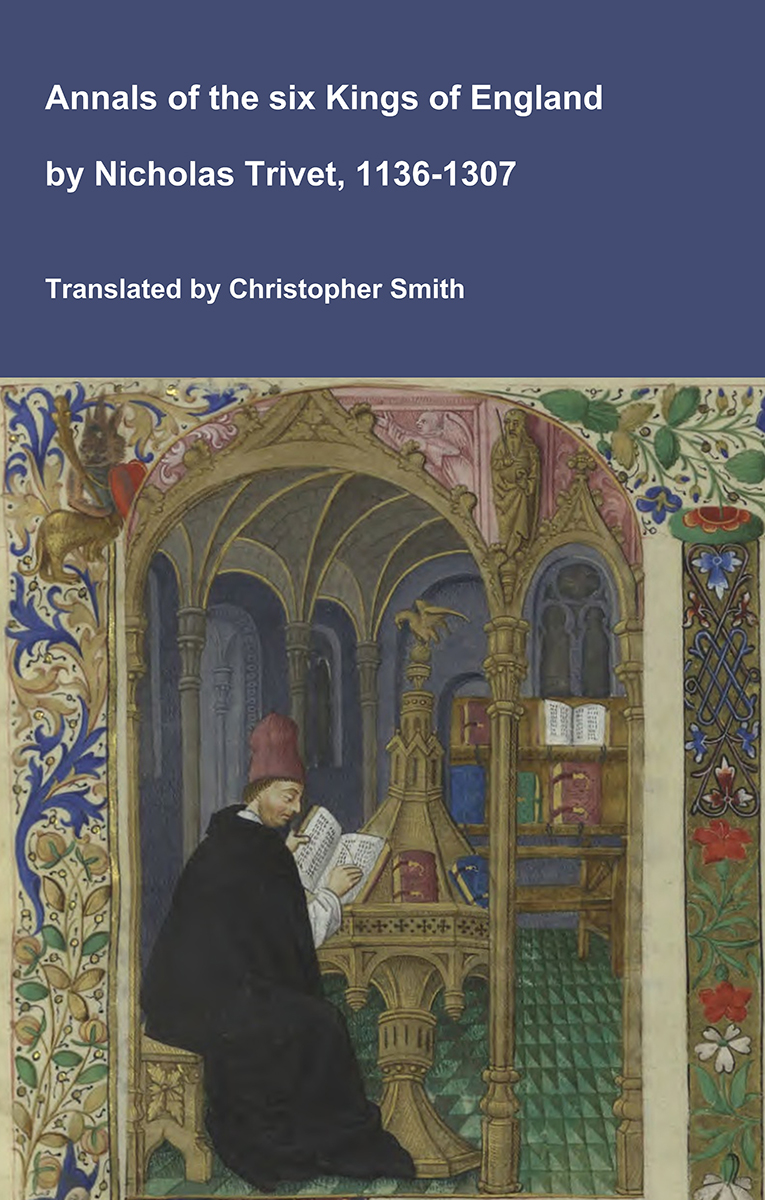
Annals of the six Kings of England by Nicholas Trivet
Translation of the Annals of the Six Kings of England by that traces the rise and rule of the Angevin aka Plantagenet dynasty from the mid-12th to early 14th century. Written by the Dominican scholar Nicholas Trivet, the work offers a vivid account of English history from the reign of King Stephen through to the death of King Edward I, blending political narrative with moral reflection. Covering the reigns of six monarchs—from Stephen to Edward I—the chronicle explores royal authority, rebellion, war, and the shifting balance between crown, church, and nobility. Trivet provides detailed insight into defining moments such as baronial conflicts, Anglo-French rivalry, and the consolidation of royal power under Edward I, whose reign he describes with particular immediacy. The Annals combines careful year-by-year reporting with thoughtful interpretation, presenting history not merely as a sequence of events but as a moral and political lesson. Ideal for readers interested in medieval history, kingship, and the origins of the English state, this chronicle remains a valuable and accessible window into the turbulent world of the Plantagenet kings.
Available at Amazon in eBook and Paperback format.
Chronicle of Edward Hall [1496-1548]. December 1540. In this yere was burned in Smithfeld [Map], a child named Richard Mekins, this child passed not the age of fifteen years, and somewhat as he had heard some other folks talk, chanced to speak against the Sacrament of the Altar. This boy was accused to Edmond Boner [aged 40] Bishop of London, who so diligently followed the accusation, that he first found the means to indite him, and then arraigned him, and after burned him. And at the time he was brought to the stake, he was taught to speak much good, of the Bishop of London, and of the great charity, that he showed him and that he defied all heresies, and cursed the time that ever he knew Doctor Barnes, for of him had he learned that heresy, which he died for. The poor boy would for the safeguard of his life have gladly said that the twelve Apostles taught it him, for he had not cared of whom he had named it, such was his childish innocence and fear. But for this deed many spoke and said, that it was great shame for the Bishop, who they said ought rather to have laboured to have saved his life, then to procure that terrible execution, seeing that he was such an ignorant soul, as knew not what the affirming of an heresy was.
On 16th July 1546 Anne Askew [aged 25] was burned at the stake at Smithfield [Map] with John Lascelles, Nicholas Belenian and John Adams.

Diary of Edward VI. 2nd May 1550. Jhon (Joan) Bocher, otherwis Jhon (Joan) of Kent1, was burnt for holding that Christ was not incarnat of the Virgin Mary, being condemned the yere befor, but kept in hope of conversion; and the 30 of April the bishop of London [aged 50] and the bishop of Elie2 were to perswad her. But she withstode them, and reviled the preacher [aged 40] that preached at her death.3
The first paiment was paied at Cales [Map], and received by sir Thomas (Maurice) Dennis [aged 42] and mr. Sharington [aged 55].
Note 1. Joan Bocher, alias Knell, was a martyr for religious opinions, whose story is not related by John Foxe: but that historian mentions her incidentally in his account of the King's character, illustrating his meek nature by the following anecdote: "Hee alwaies spared and favoured the life of man: as in a certain dissertation of his once appeared, had with master Cheeke in favoring the life of heretickes: in so much that when Joane Butcher should have been burned, all the counsel could not moove him to put-to his hand, but were faine to get doctour Cranmer to perswade with him, and yet neither coulde hee with much labour induce the King so to doe, saying, What, my lord, will yee have me send her quick to the devill in her error? So that doctour Cranmer himselfe confessed that hee had never so much to doe in all his life, as to cause the King to put-to his hand, saying that he would laie aU the charge thereof upon Cranmer before God." This story, apocryphal at the best, has been considered so far to the discredit of Cranmer [aged 60] that his friends have been anxious to vindicate him. Mr. Bruce, in the Works of Roger Hutchinson, edited for the Parker Society, 1842, Preface, p. iv., has shewn that the King would not be required to sign any document on the occasion, the warrant of the council being sufficient. For the particulars of Joan Bocher and her heresy see Wilkins, Concilia, iv. 43; the General Index to the Works of the Parker Society, 1855, p. 124; also the General Index to the Works of Strype, Oxford edition. The religious insurrection in Kent, which the King has just mentioned under the date of the 26th April, was perhaps the proximate cause of her suffering; for it was on the 27th that the council issued their warrant to the lord chancellor [aged 53] to make out a writ to the sheriffs of London for her execution. (Council Book.)
Note 3. "There preached before her, or she dyed, Scory; and she said to hym he lyed lyke a knave, &c." Chronicle of the Grey Friars of London, p. 66. The preacher was John Scory, afterwards bishop of Hereford in the reign of Elizabeth.


Henry Machyn's Diary. 14th March 1551. The xiiij day of Marche was hangyd, in Smyth-feld [Map], on John Mosbe and ys syster, for the death of a gentyll man of Feyversham, one M. Arden the custemer, and ys owne wyff was decaul.... and she was burnyd at Canturbery [Map] and her sarvand hangyd ther, and ij at Feyversham and on at Hospryng, and nodur in the he way to Canturbery, for the death of M. Arden of Feyversham. [and at Flusshyng was bernyd Blake Tome for the sam deth of M. Arden. [Note. This last line was added to the entry some time after it was written.]
Note. The murder of master Arden of Feversham. The particulars of this memorable domestic tragedy will be found very fully narrated in Holinshed's Chronicle; and from the Wardmote Book of Feversham in Jacob's History of that town, 8vo. 1774, p. 197. See also a long narrative among Stowe's transcripts, MS. Harl. 542, ff. 34-37. It created so great a public interest that it became the subject not only of a Ballad which will be found in Evans's collection, 1810, vol. iii. pp. 217-225; but also of a Play published in 4to. 1592, again in 1599 and 1633, and lastly in 1770, when the editor, Edward Jacob, esq. who afterwards published the History of Feversham above mentioned, in his preface offered "some reasons in favour of its being the earliest dramatic work of Shakspeare now remaining." Mr. Collier's remarks on this subject will be found in his History of the Stage and of Dramatic Poetry, iii. 52. Lillo also began a tragedy founded on the same story, which was finished by Dr. John Hoadly, and printed in 12mo. 1762.
The concern taken by the government in the prosecution of the parties guilty of this murder, is shown by the following extracts from the Privy Council book:-
"1551, 5th Marche. A Lettere to the Justyces of Peace in Kente, advertesinge them the order taken for the punishmente of those that murdered Mr. Ardeyrn; Videliset, Sicely Pounder, widowe, and Thomas Mosbye, to be hanged in Smithfield, in London; Alice Ardeyrn, to be burned at Canterburye, and Bradshawe, to be hanged there in cheanes; Michaell Saunderson, to be hanged, drawne, and quartered, at Feversham, and Elizabeth Stafford to be burned there." (MS. Harl. 352, fol. 156.) On the same day, "A Letter to the Sherifes of London, to receave of the Sherife of Kent, Cicelye Poundere, widowe, and Thomas Mosbye, to be hanged in Smithfield, for the Murder of Thomas Ardeine of Fevershame; and a Letter to the Maiore of Canterburye, to receave of the Sherife of Kente Alice Ardeine, to be burned at Canterburye, and Bradshawe, to be hanged there, for the Murder of Mr. Ardeine." (lb. fol. 157.)
The actual murderer, and also one Greene, a confederate, had escaped. The following entries will be found to correct and explain Holinshed's account of their capture.
"1551, 28th May. A Lettere to Mr. North, to enlarge one Bate out of thecountere, who convayed away one Greene, of Fevershame, after the Murdere of Mr. Ardeine was ther don, and undertaketh to brynge forthe Greene again, yf he may have libertie; providinge that he take sufficient sureties, either to become prisonere againe, or else to bringe forthe the said Greene." (lb. fol. 174.)
"1551, 15th June. A Letter to Sr. William Godolphine knighte, of thankes for his dilligence in the apprehencione of Blacke Will, that killed Mr. Arderne of Feversham, and to send him in saufe garde, with promise of paymente for the charges of the bringeres "It appears from Holinshed and from our Diary (in which this person is called Black Tom,) that he was not sent home, according to this request, but was "burnt on a scaffold, at Flushing, in Zealand."
Henry Machyn's Diary. 26th April 1552. The sam day was bornyd at the Towre-hylle [Map] at after[noon] vij mon and viij maymed and lyke to dee, and alle was by takyng [ill] heyde and by beytyng of gunpowder in a morter, and by stryk[ing] of fyre, that a sparke of fyre fell in-tho the powder, and so alle f[ired] ...
Henry Machyn's Diary. 22nd January 1555. The xxij day of January whent in-to Smythfeld [Map] to berne betwyn vij and viij in the mornyng v men and ij women; on of the men was a gentyllman of the ender tempull, ys nam master Gren; and they wer all bornyd by ix at iij postes; and ther wher a commonment thrughe London over nyght that no yong folke shuld come ther, for ther the grettest [number] was as has byne sene at shyche a tyme.
Henry Machyn's Diary. 29th January 1555. The xxix day of January wher raynyd at sant Mare Overes [Map] for herese Hoper [aged 60] and Rogers [aged 50], and cast to be brentt, and from thens cared to Nugatt [Map].
Henry Machyn's Diary. 30th January 1555. The xxx day of January was raynyd in the sam plasse [Map] Bradford [aged 45], Tayller, and Sandur, and cast to be brentt in dyvers places.
Henry Machyn's Diary. 4th February 1555. The sam day was Rogers [aged 50] cared be-twyn x and xj of the cloke in-to Smyth-feld [Map], and bornyd, for aronyus [erroneous] apinions, with a grett compene of the gard.
On 9th February 1555 Bishop Rowland Taylor [aged 45] was burned at the stake. A local butcher was ordered to set a torch to the wood but resisted. A couple of bystanders finally threw a lighted torch onto the wood. A perhaps sympathetic guard, named Warwick, struck Taylor's head with a halberd, which apparently killed him instantly.
Henry Machyn's Diary. 16th March 1555. The xvj day of Marche was a veyver [weaver] bornyd in Smyth-feld [Map], dwellyng in Sordyche [Map], for herese, by viij of the cloke in the mornyng, ys nam was (Tomkins).
Jean de Waurin's Chronicle of England Volume 6 Books 3-6: The Wars of the Roses
Jean de Waurin was a French Chronicler, from the Artois region, who was born around 1400, and died around 1474. Waurin’s Chronicle of England, Volume 6, covering the period 1450 to 1471, from which we have selected and translated Chapters relating to the Wars of the Roses, provides a vivid, original, contemporary description of key events some of which he witnessed first-hand, some of which he was told by the key people involved with whom Waurin had a personal relationship.
Available at Amazon in eBook and Paperback format.
On 30th March 1555 Bishop Robert Ferrar was burned at the stake at the Market Square, Carmarthen.
On 30th May 1555 two Protestants were burned at the stake at Smithfield [Map]:
John Warne [aged 29]
On 1st July 1555 John Bradford [aged 45] was burned at the stake.
Henry Machyn's Diary. 2nd August 1555. The ij day of August was a shumaker bornyd at sant Edmundebere in Suffoke [Map] for herese.
Henry Machyn's Diary. 23rd August 1555. The xxiij day of August was bornyd at [Stratford]-of-bowe, in the conte of Mydyllsex, a woman, [wife] of John Waren, clothworker, a huphulster [over] agaynst sant Johns in Walbroke; the wyche .... John her hosband was bornyd with on Cardmaker in Smythfeld, for herese boyth; and the sam woman had a sune taken at her bornyng and cared to Nuwgatt [Map] [to his] syster, for they will borne [burn] boyth.
26th August 1555. George Tankerfield was burned at the stake. See Foxe's Book of Martyrs Volume 11 306 George Tankerfield.
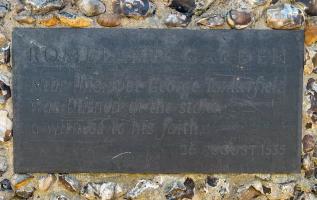
Henry Machyn's Diary. 9th October 1555. The ix day of October was a servyngman, [the] penter('s) broder that war bornyd at Staynes, was bered in Morefeld be-syd the doge-howsse, be-caus he was not resseff the ryctes of the chyrche, and thys lawe.
Note. P. 95. Burial of hereticks in Morefields. This was the usual practice with those who by a natural death (if such a term can be applied to the result of imprisonment and privations) escaped the stake and the faggots. See in Foxe, vol. iii. p. 537, a graphic cut of such a burial, with archers from the neighbouring butts as spectators.

On 16th October 1555 Bishop Hugh Latimer [aged 68] and Bishop Nicholas Ridley [aged 55] were burned at the stake at Oxford, Oxfordshire [Map]. Archbishop Thomas Cranmer [aged 66], who would be executed in March the following year, was forced to watch.
Henry Machyn's Diary. 18th December 1555. The xviij day of Dessember be-twyn [8 and 9] of the cloke in the mornyng, was cared in-to Smythfeld [Map] to be bornyd on master (Philpot, archdeacon of Winchester ) gentyllman, for herese.
Foxe's Book of Martyrs. John Lomas, Agnes Snoth, Anne Wright, Joan Sole, and Joan Catmer. These five martyrs suffered together, January 31, 15561.
John Lomas was a young man of Tenterden. He was cited to appear at Canterbury, and was examined January 17. His answers being adverse to the idolatrous doctrine of the papacy, he was condemned on the following day, and suffered January 31.
Agnes Snoth, widow, of Smarden Parish, was several times summoned before the Catholic Pharisees, and rejecting absolution, indulgences, transubstantiation, and auricular confession, she was adjudged worthy to suffer death, and endured martyrdom, January 31, with Anne Wright and Joan Sole, who were placed in similar circumstances, and perished at the same time, with equal resignation. Joan Catmer, the last of this heavenly company, of the parish Hithe, was the wife of the martyr George Catmer.
Seldom in any country, for political controversy, have four women been led to execution, whose lives were irreproachable, and whom the pity of savages would have spared. We cannot but remark here that, when the Protestant power first gained the ascendency over the Catholic superstition, and some degree of force in the laws was necessary to enforce uniformity, whence some bigoted people suffered privation in their person or goods, we read of few burnings, savage cruelties, or poor women brought to the stake, but it is the nature of error to resort to force instead of argument, and to silence truth by taking away existence, of which the Redeemer himself is an instance.
The above five persons were burnt at two stakes in one fire, singing hosannahs to the glorified Savior, until the breath of life was extinct. Sir John Norton, who was present, wept bitterly at their unmerited sufferings.
Note. At Martyr's Field, Canterbury.
On 21st March 1556 Archbishop Thomas Cranmer [aged 66] was burned at the stake at Oxford, Oxfordshire [Map].

Foxe's Book of Martyrs. 24th March 1556. Those articles thus answered, (for their articles were one, and their answers in manner like,) the chancellor read their condemnation, and so delivered them to the sheriff: Then spake John Spicer, saying; "O Master Sheriff, now must you be their butcher, that you may be guilty also with them of innocent blood before the Lord." This was the twenty-third day of March, anno 1556; and the twenty-fourth day of the same month they were carried out of the common gaol [Map] to a place betwixt Salisbury and Wilton, where were two posts set for them to be burnt at: which men coming to the place, kneeled down, and made their prayers secretly together; and then, being disclothed to their shirts, John Maundrel spake with a loud voice, "Not for all Salisbury;" which words men judged to be an answer to the sheriff, which offered him the queen's pardon if he would recant. And after that in like manner spake John Spicer, saying, "This is the joyfullest day that ever I saw." Thus were they three burnt at two stakes; where most constantly they gave their bodies to the fire, and their souls to the Lord, for testimony of his truth.
Note. Tradition suggests they were burned at the location of the Spike, indicating a stake or, subsequently, a gallows, indicated 'S' bottom left on John Speed's map of 1611.
Henry Machyn's Diary. 24th April 1556. The xxiiij day of Aprell, in the mornyng be-tyme, was cared to Smyth-ffeld to be bornyd vj men, [and] more was cared in-to the contrey to be bornyd.
Henry Machyn's Diary. 15th May 1556. The xv day of May was cared in a care from Nuwgatt thrug London unto Strettford-a-bow to borne ij men; the on blyne [one blind], the thodur lame; and ij tall men, the (one) was a penter, the thodur a clothworker; the penter ys nam was Huw Loveroke, dwellyng in Seythin lane; the blynd man dwellyng in sant Thomas apostylles.
Abbot John Whethamstede’s Chronicle of the Abbey of St Albans
Abbot John Whethamstede's Register aka Chronicle of his second term at the Abbey of St Albans, 1451-1461, is a remarkable text that describes his first-hand experience of the beginning of the Wars of the Roses including the First and Second Battles of St Albans, 1455 and 1461, respectively, their cause, and their consequences, not least on the Abbey itself. His text also includes Loveday, Blore Heath, Northampton, the Act of Accord, Wakefield, and Towton, and ends with the Coronation of King Edward IV. In addition to the events of the Wars of the Roses, Abbot John, or his scribes who wrote the Chronicle, include details in the life of the Abbey such as charters, letters, land exchanges, visits by legates, and disputes, which provide a rich insight into the day-to-day life of the Abbey, and the challenges faced by its Abbot.
Available at Amazon in eBook and Paperback format.
Henry Machyn's Diary. 6th April 1557. The vj day of Aprell was bornyd in Smythfeld [Map] v, iij men and ij women, for herese; on was a barber dwellyng in Lym-strett; and on woman was the wyff of the Crane at the Crussyd-frers be-syd the Towre-hylle, kepyng of a in [inn] ther.
Henry Machyn's Diary. 28th May 1557. The sam mornyng was bornyd be-yond sant George's parryche iij men for heresee, a dyssyd [at this side] Nuwhyngtun.
Henry Machyn's Diary. 18th June 1557. The xviij day of Junj was ij cared to be bornyd beyonde sant Gorgeus, almost at Nuwhyngtun, for herese and odur matters.
Henry Machyn's Diary. 12th November 1557. The xij day of November ther was a post sett up in Smythfeld [Map] for iij that shuld have beyn bornyd, butt boyth wod and colles; and my lord abbott of Westminster [aged 42] cam to Newgatt [Map] and talked with them, and so they wher stayd for that day of bornyng.
Henry Machyn's Diary. 13th November 1557. The xiij day of November was sant Erkenwald eve, the iiij and v yere of king and quen, whent owt of Newgatt [Map] unto Smyth-feld [Map] to be bornyd iij men; on was [blank] Gybsun, the sun of sergantt Gybsun, sergantt of armes, and of the reywelles [revels], and of the kynges tenstes [tents]; and ij more, the whyche here be ther names-Gybsun, Hali[day,] and Sparow, thes iij men.
On 18th December 1557 Archdeacon John Philpot [aged 41] was burned at the stake for being a heretic i.e. being a Protestant.
Henry Machyn's Diary. 20th December 1557. The xx day of Desember was condemnyd for herese ser John Ruffe prest, a Skotte, and a woman, for to be bornyd in Smythfeld [Map] for (unfinished)
Henry Machyn's Diary. 22nd December 1557. [The xxij day of December were burned in] Smyth feld [Map] ij, one ser John Ruffe [the] frere and a Skott, and a woman, for herese.
Annales of England by John Stow. 14th April 1594. The 14 of April, a woman was burned in Smithfield for murdering of her husband.
On 19th March 1609 Maud Babington [aged 38] was murdered. A servant, Honora ny Caffry, was burned at the stake for the petty treason of the murder of a mistress. Another, a man, later confessed to the murder.