

William of Worcester's Chronicle of England
William of Worcester, born around 1415, and died around 1482 was secretary to John Fastolf, the renowned soldier of the Hundred Years War, during which time he collected documents, letters, and wrote a record of events. Following their return to England in 1440 William was witness to major events. Twice in his chronicle he uses the first person: 1. when writing about the murder of Thomas, 7th Baron Scales, in 1460, he writes '… and I saw him lying naked in the cemetery near the porch of the church of St. Mary Overie in Southwark …' and 2. describing King Edward IV's entry into London in 1461 he writes '… proclaimed that all the people themselves were to recognize and acknowledge Edward as king. I was present and heard this, and immediately went down with them into the city'. William’s Chronicle is rich in detail. It is the source of much information about the Wars of the Roses, including the term 'Diabolical Marriage' to describe the marriage of Queen Elizabeth Woodville’s brother John’s marriage to Katherine, Dowager Duchess of Norfolk, he aged twenty, she sixty-five or more, and the story about a paper crown being placed in mockery on the severed head of Richard, 3rd Duke of York.
Available at Amazon in eBook and Paperback format.
Gules is in Field.
 Hanover Arms. Gules, a horse courant argent.
 Bacon Arms. Gules, on a chief argent two mullets pierced sable. Source.
 Beauchamp Arms. Gules a fess or between six cross crosslets or.
 Beke Arms. Gules, a cross recerclée argent. Sometimes a cross moline. Source.
 Berkeley Arms. Gules a chevron between ten crosses pattee six in chief and four in base argent.
 Blennerhassett Arms. Gules, a chevron ermine, between three dolphins naiant embowed argent. Source.
 Brabazon Arms. Gules on a bend or three martlets sable. Source.
 Brooke Arms. Gules, on a chevron argent a lion rampant sable crowned or. Source.
 Burghesh Arms. Gules, a lion rampant or, double queued or.
 Cadogan Arms. Gules, a lion rampant reguardant or. Source.
 Caerleon Arms. Gules three castles argent. Source.
 Carr Arms. Gules, on a chevron argent, three mullets, of the field.
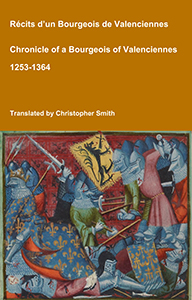
Chronicle of a Bourgeois of Valenciennes
Récits d’un bourgeois de Valenciennes aka The Chronicle of a Bourgeois of Valenciennes is a vivid 14th-century vernacular chronicle written by an anonymous urban chronicler from Valenciennes in the County of Hainaut. It survives in a manuscript that describes local and regional history from about 1253 to 1366, blending chronology, narrative episodes, and eyewitness-style accounts of political, military, and social events in medieval France, Flanders, and the Low Countries. The work begins with a chronological framework of events affecting Valenciennes and its region under rulers such as King Philip VI of France and the shifting allegiances of local nobility. It includes accounts of conflicts, sieges, diplomatic manoeuvres, and the impact of broader struggles like the Hundred Years’ War on urban life in Hainaut. Written from the perspective of a burgher (bourgeois) rather than a monastery or royal court, the chronicle offers a rare lay viewpoint on high politics and warfare, reflecting how merchants, townspeople, and civic institutions experienced the turbulence of the 13th and 14th centuries. Its narrative style combines straightforward reporting of events with moral and civic observations, making it a valuable source for readers interested in medieval urban society, regional politics, and the lived experience of war and governance in pre-modern Europe.
Available at Amazon in eBook and Paperback format.
 Carteret Arms. Gules four fusils in fess argent.
 Cholmondeley Arms. Gules, in chief two esquire's helmets argent in base a garb or. Source.
 Cobham Arms. Gules a chevron or three lions rampant sable. Source.
 Dacre Arms. Gules three escallops argent. Source.
 Dampierre Arms. Gules, two lions passant or, armed and langued azure. Source.
 Danvers Arms. Gules a chevron or three estoiles. Source.
 Daubigny Arms. Gules, four fusils conjoined in fess argent. Source.
 De Quincy Arms. Gules, seven mascles or 3,3,1. Source.
 Denny Arms. Gules, a saltire argent between twelve crosses pattee or. Source.
 Despencer Arms. Quarterly 1&4: Argent, 2&3: Gules, a fret or, over all a bend sable. Source.
 Dunbar Arms. Gules a lion rampant argent on a bordure of the same eight roses of the field. Source.
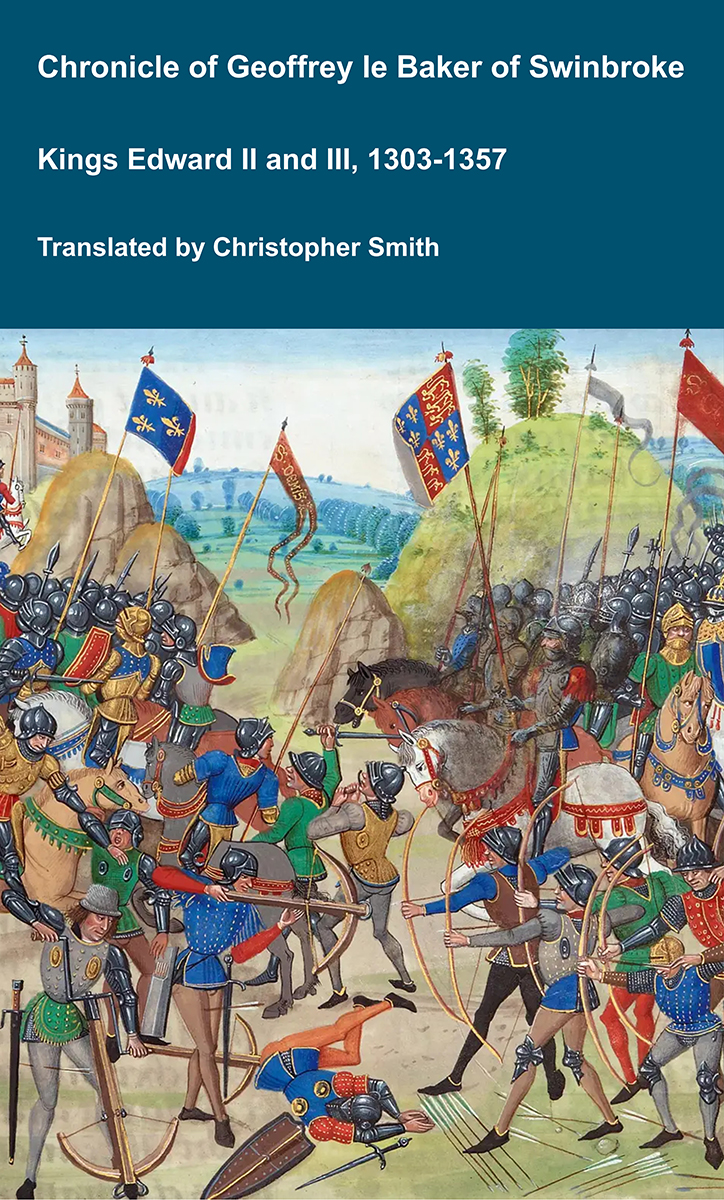
Chronicle of Geoffrey le Baker of Swinbroke
Baker was a secular clerk from Swinbroke, now Swinbrook, an Oxfordshire village two miles east of Burford. His Chronicle describes the events of the period 1303-1356: Gaveston, Bannockburn, Boroughbridge, the murder of King Edward II, the Scottish Wars, Sluys, Crécy, the Black Death, Winchelsea and Poitiers. To quote Herbert Bruce 'it possesses a vigorous and characteristic style, and its value for particular events between 1303 and 1356 has been recognised by its editor and by subsequent writers'. The book provides remarkable detail about the events it describes. Baker's text has been augmented with hundreds of notes, including extracts from other contemporary chronicles, such as the Annales Londonienses, Annales Paulini, Murimuth, Lanercost, Avesbury, Guisborough and Froissart to enrich the reader's understanding. The translation takes as its source the 'Chronicon Galfridi le Baker de Swynebroke' published in 1889, edited by Edward Maunde Thompson.
Available at Amazon in eBook and Paperback format.
 Plantagenet Arms. Gules, three lions passant guardant in pale or armed and langued azure. Source.
 Verney Arms. Gules, three crosses recerclée voided throughout or a chief vair ermine and ermines. Source.
 Umfraville Arms. Gules crusilly of crosses crosslet a cinquefoil or. Source.
 Ughtred Arms. Gules, a cross moline or. Source.
 Giffard Arms. Gules Three lions passant guardant or in pale or.
 Godolphin Arms. Gules, an eagle with two heads, displayed between three fleur de lys, two and one, argent.
 Granville Arms. Gules three clarions or. Source.
 Throckmorton Arms. Gules, on a chevron argent three bars gemelles sable. Source.
 Walmesley Arms. Gules a chief ermine two hurts.
 Hamlyn Arms. Gules, a lion rampant ermine crowned or. Source.
 Harcourt Arms. Gules two bars or. Source.
 Hayward Arms. Gules, a lion rampant argent crowned or. Source.
 Hervey Arms. Gules, on a bend argent three trefoils slipped vert, Source.
 Howard Arms. Gules bend argent six crosslets fitchy. Source.
 Howard Augmented Arms. Gules bend argent six crosslets fitchy augmented after the Battle of Flodden with an inescutcheon bearing the lion of Scotland pierced through the mouth with an arrow. Source.
Chronicle of a Bourgeois of Valenciennes
Récits d’un bourgeois de Valenciennes aka The Chronicle of a Bourgeois of Valenciennes is a vivid 14th-century vernacular chronicle written by an anonymous urban chronicler from Valenciennes in the County of Hainaut. It survives in a manuscript that describes local and regional history from about 1253 to 1366, blending chronology, narrative episodes, and eyewitness-style accounts of political, military, and social events in medieval France, Flanders, and the Low Countries. The work begins with a chronological framework of events affecting Valenciennes and its region under rulers such as King Philip VI of France and the shifting allegiances of local nobility. It includes accounts of conflicts, sieges, diplomatic manoeuvres, and the impact of broader struggles like the Hundred Years’ War on urban life in Hainaut. Written from the perspective of a burgher (bourgeois) rather than a monastery or royal court, the chronicle offers a rare lay viewpoint on high politics and warfare, reflecting how merchants, townspeople, and civic institutions experienced the turbulence of the 13th and 14th centuries. Its narrative style combines straightforward reporting of events with moral and civic observations, making it a valuable source for readers interested in medieval urban society, regional politics, and the lived experience of war and governance in pre-modern Europe.
Available at Amazon in eBook and Paperback format.
 Isle of Man Arms. Gules, a Triskelion argent. Sources.
 Joigny Arms. Gules, an eagle argent. Source.
 Keppel Arms. Gules, three escallops argent. Source.
 Knollys Arms. Gules, on a chevron argent, three roses gules, barbed and seeded proper. Source.
 Liddell Arms. Gules, on a bend argent, three mullets sable. Source.
 Louvain Arms. Gules billety or a fess of the last. Source.
 Monck Arms. Gules, a chevron between three lion's heads erased argent. Source.
 Mowbray Arms. Gules, a lion rampant argent. Source.
 Narborough Arms. Gules, a chief ermine. Source.
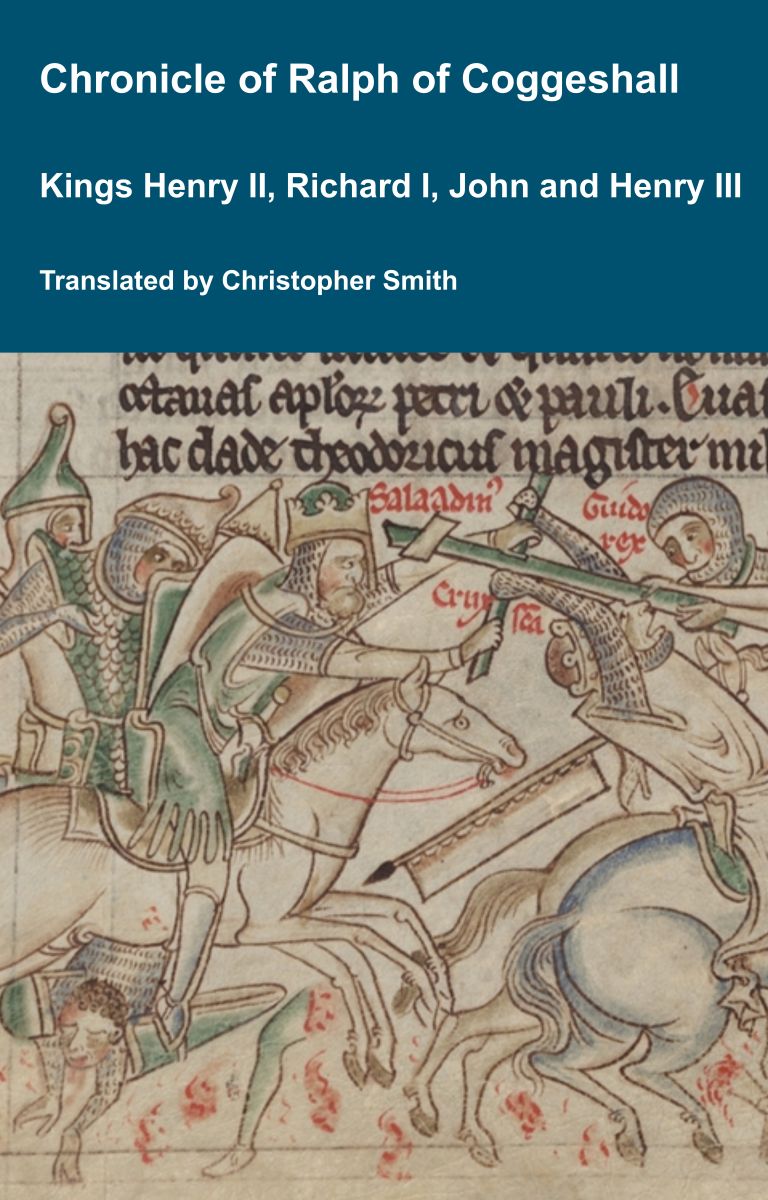
Chronicle of Abbot Ralph of Coggeshall
The Chronicle of Abbot Ralph of Coggeshall (Chronicon Anglicanum) is an indispensable medieval history that brings to life centuries of English and European affairs through the eyes of a learned Cistercian monk. Ralph of Coggeshall, abbot of the Abbey of Coggeshall in Essex in the early 13th century, continued and expanded his community’s chronicle, documenting events from the Norman Conquest of 1066 into the tumultuous reign of King Henry III. Blending eyewitness testimony, careful compilation, and the monastic commitment to record-keeping, this chronicle offers a rare narrative of political intrigue, royal power struggles, and social upheaval in England and beyond. Ralph’s work captures the reigns of pivotal figures such as Richard I and King John, providing invaluable insights into their characters, decisions, and the forces that shaped medieval rule. More than a simple annal, Chronicon Anglicanum conveys the texture of medieval life and governance, making it a rich source for scholars and readers fascinated by English history, monastic authorship, and the shaping of the medieval world.
Available at Amazon in eBook and Paperback format.
 Neville Arms. Gules, a saltire argent.
 Normandy Arms. Gules, two lions passant guardant in pale or armed and langued azure. Source.
 Ponsonby Arms. Gules, a chevron between three combs argent. Source.
 Rich Arms. Gules, a chevron between three crosses botonée or. Source.
 Ros Arms. Gules, three water bougets argent.
 Salusbury Arms. Gules a lion rampant argent three crescents argent.
 Seymour Arms. Gules two wings conjoined in lure.
 Castile Arms. Gules a castle or.
 Spencer Arms. Quarterly 1&4: Argent, 2&3: Gules, a fret or, over all a bend sable.
 Talbot Arms. Gules, a lion rampant within a bordure engrailed or. Source.
 Fitzpayn Arms. Gules, three lions passant guardant argent, overall a bend azure. Source.
 Fitzherbert Arms. Gules, three lions rampant or. Source.
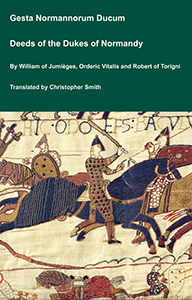
The Deeds of the Dukes of Normandy
The Gesta Normannorum Ducum [The Deeds of the Dukes of Normandy] is a landmark medieval chronicle tracing the rise and fall of the Norman dynasty from its early roots through the pivotal events surrounding the Norman Conquest of England. Originally penned in Latin by the monk William of Jumièges shortly before 1060 and later expanded at the behest of William the Conqueror, the work chronicles the deeds, politics, battles, and leadership of the Norman dukes, especially William’s own claim to the English throne. The narrative combines earlier historical sources with firsthand information and oral testimony to present an authoritative account of Normandy’s transformation from a Viking settlement into one of medieval Europe’s most powerful realms. William’s history emphasizes the legitimacy, military prowess, and governance of the Norman line, framing their expansion, including the conquest of England, as both divinely sanctioned and noble in purpose. Later chroniclers such as Orderic Vitalis and Robert of Torigni continued the history, extending the coverage into the 12th century, providing broader context on ducal rule and its impact. Today this classic work remains a foundational source for understanding Norman identity, medieval statesmanship, and the historical forces that reshaped England and Western Europe between 800AD and 1100AD.
Available at Amazon in eBook and Paperback format.
 Fitzalan Arms. Gules, a lion rampant or. Source.
 Audley Arms. Gules, fretty. Source.


#/media/File:BaconArms.svg)


.svg)


.svg)


.svg)
.svg)
#/media/File:Blason_Thomas_Le_Despencer.svg)


.svg)
.svg)


_Arms.svg)

.svg)

.svg)

.svg)

.svg)


.svg)


