

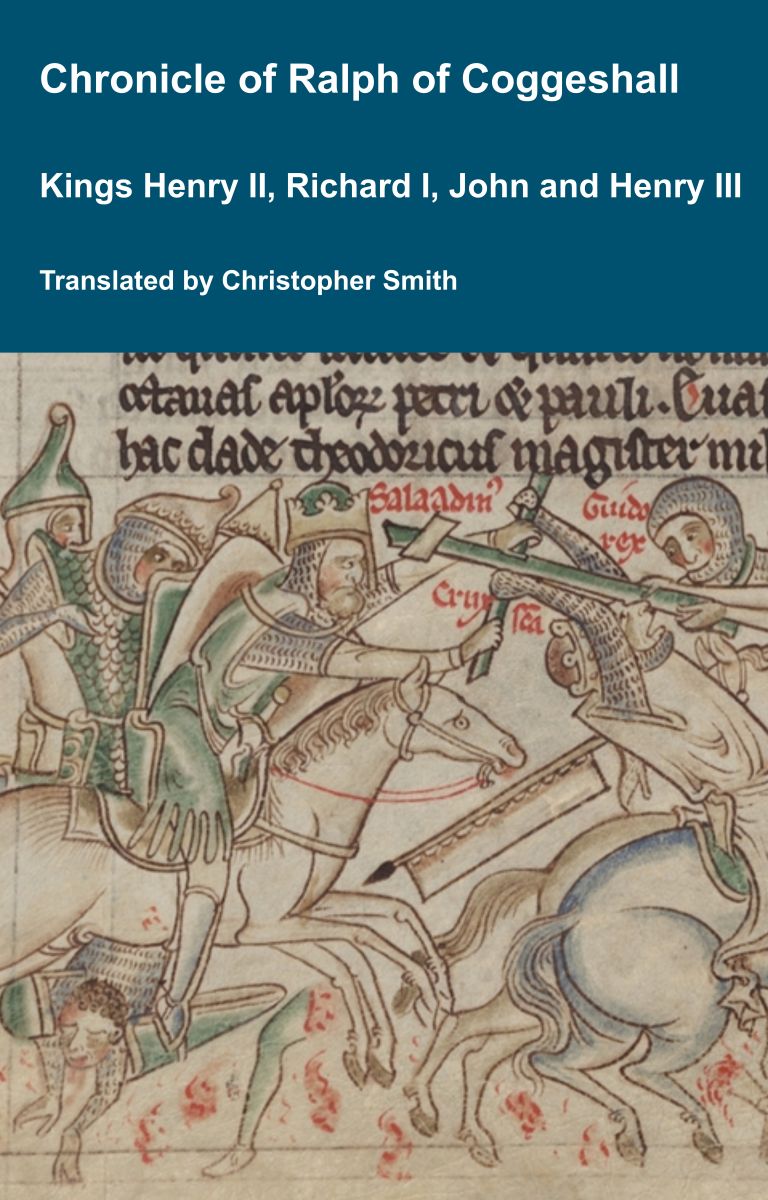
Chronicle of Abbot Ralph of Coggeshall
The Chronicle of Abbot Ralph of Coggeshall (Chronicon Anglicanum) is an indispensable medieval history that brings to life centuries of English and European affairs through the eyes of a learned Cistercian monk. Ralph of Coggeshall, abbot of the Abbey of Coggeshall in Essex in the early 13th century, continued and expanded his community’s chronicle, documenting events from the Norman Conquest of 1066 into the tumultuous reign of King Henry III. Blending eyewitness testimony, careful compilation, and the monastic commitment to record-keeping, this chronicle offers a rare narrative of political intrigue, royal power struggles, and social upheaval in England and beyond. Ralph’s work captures the reigns of pivotal figures such as Richard I and King John, providing invaluable insights into their characters, decisions, and the forces that shaped medieval rule. More than a simple annal, Chronicon Anglicanum conveys the texture of medieval life and governance, making it a rich source for scholars and readers fascinated by English history, monastic authorship, and the shaping of the medieval world.
Available at Amazon in eBook and Paperback format.
Herefordshire School of Carving is in Carvers.
The Herefordshire School of Carving is the name given to a carvings of a particular style found in Herefordshire, and elsewhere, that were created during the 12th Century. Their work draws on a variety of cultural sources for its religious and mystical images; Norman military figures, Anglo-Saxon animals, and patterns. The carvers may have originated from Northern Spain, on the Santiago de Compostela pilgrim route. Subjects include arches, tympanums colums, fonts and corbels.
Examples of the Herefordshire School of Carving may be found at:
Herefordshire:
St Andrew's Church, Bredwardine [Map]
Church of St Mary Magdalene, Eardisley [Map]
Church of St Mary and St David, Kilpeck [Map]
St John the Baptist's Church, Letton [Map]
St Giles' Church, Pipe Aston [Map]
St Peter's Church, Rowlestone [Map]
St James the Great Church, Colwall [Map]
Derbyshire:
Church of St Michael and St Mary, Melbourne [Map]
Worcestershire:
St Leonard's Church, Ribbesford [Map]
St Peter and St Paul's Church, Rock [Map]
Dorset:
1100. St Peter and St Paul's Church, Rock [Map]. Herefordshire School of Carving. It was commissioned around 1150 by Roger Tosny. The nave and chancel are Norman but the south aisle and tower date from 1510. Restorations were carried out in 1861, 1881 and early in 20th Century.
Roger Tosny: Roger Tosny and Ida aka Gertrude Hainault were married. Around 1104 he was born to Raoul Tosny and Adelise Northumbria at Flamstead, Hertfordshire. On 29th September 1157 Roger Tosny died at Flamstead, Hertfordshire.
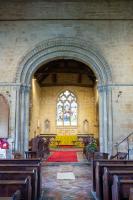
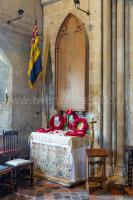
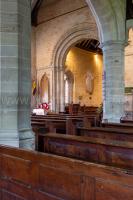
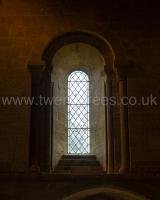
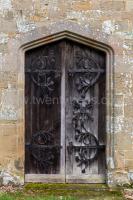
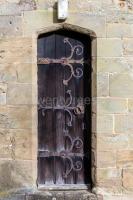
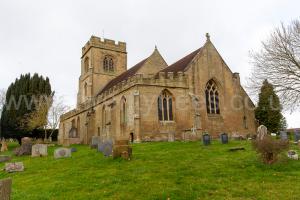
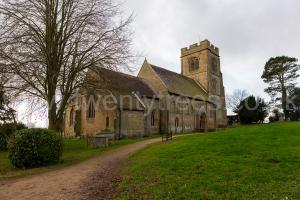
St Leonard's Church, Ribbesford [Map]. Herefordshire School of Carving tympanum. Archer aiming at what appears to be a bird with dog beneath. The description 'bird' somewhat difficult. Others call it a 'fishlike monster'. The capitals are carved with large bird pecking small bird, intertwined knots, and snakes.
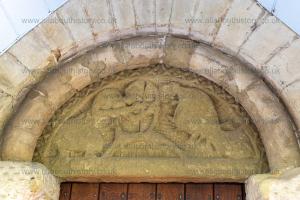
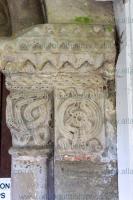
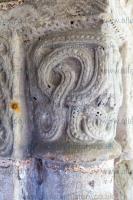
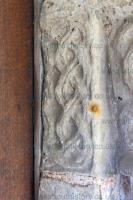
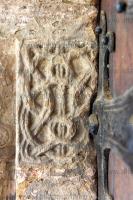
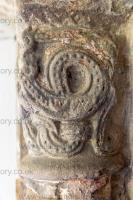
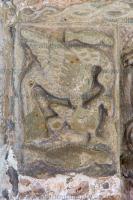
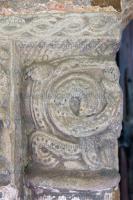
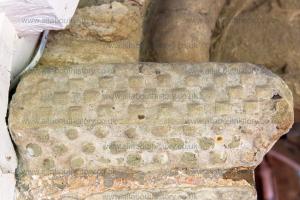
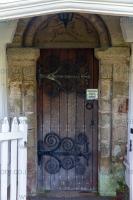
Around 1120 the Church of St Michael and St Mary, Melbourne [Map] was constructed in the Norman, or Romanesque Style. It has numerous carvings of the Herefordshire School of Carving.
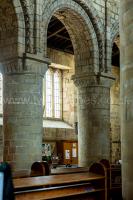
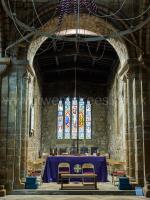
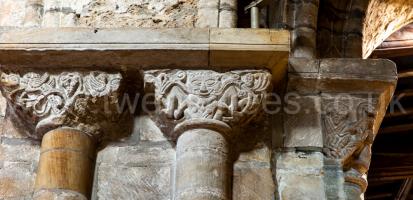
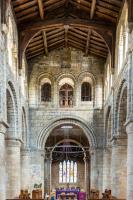
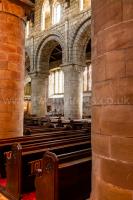
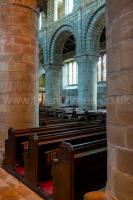
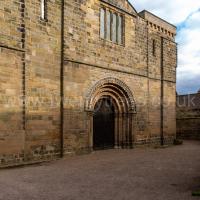
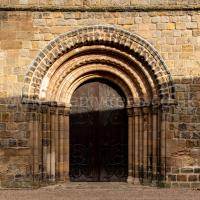
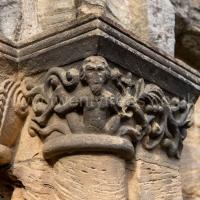
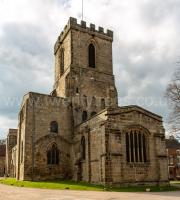
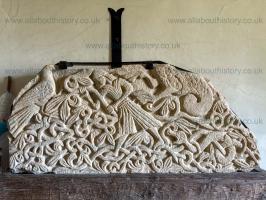
All Saints Church, Billesley [Map]. In the transept are two pieces of carved stone. One is a tympanum dating from about 1140 that depicts a man being attacked by a snake and a dragon, and being defended by a dove. The man is similarly dressed to those on the font at the Church of St Mary Magdalene, Eardisley [Map]. Herefordshire School of Carving.
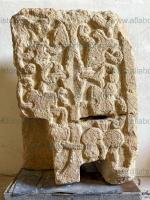
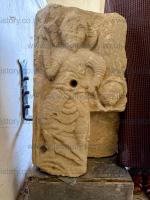
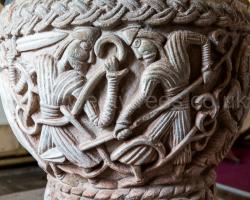
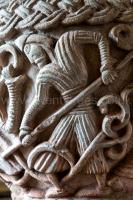
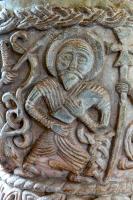
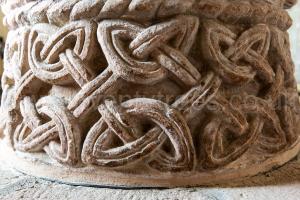
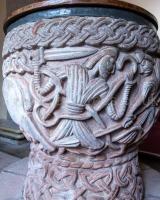
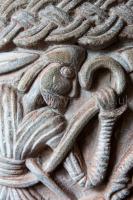
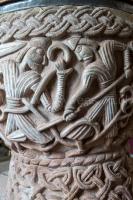
Around 1150. The Eardisley [Map] Font. A fine example of the Herefordshire School of Carving. Several scenes ... Two knights in combat, either with each other or the tendrils of evil. To the right of the knights is the Harrowing of Hell where Christ, holding the Cross, is pulling Adam by his forearm out of hell. There is another figure holding a book; unclear as to who he represents. A particularly well carved lion; possibly the Lion of Judah. The two knights prossibly represent the duel between Sir Ralph de Baskerville with his father-in-law Lord Drogo of Clifford Castle whom Baskerville alleged to have stolen some of his land. Baskerville killed Drogo then bought a pardon from the Pope.
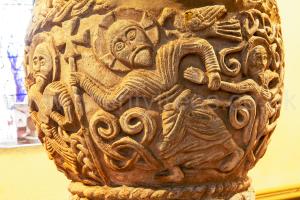
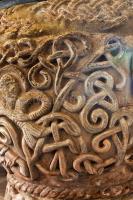
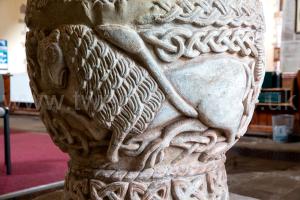
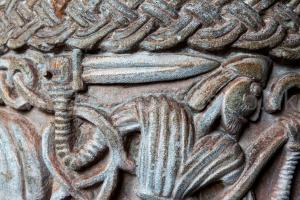
1150. St Mary's Church, Halford [Map]. Norman tympanum of the Herefordshire School of Carving over the north door.
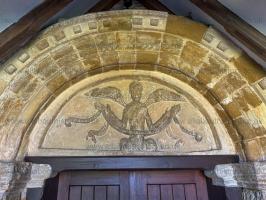
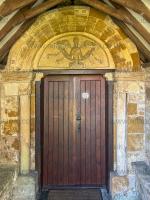
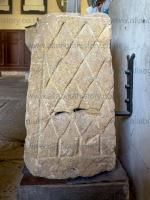
The South Door at St John the Baptist's Church, Letton [Map] has a red sandstone lintel with geometric pattern to centre and two zig-zags to each end. Jambs are mostly of tufa and continue the zig-zag to round super-arch where the motif changes to semi-circles. Label with nailhead design. Appears to be Herefordshire School of Carving.
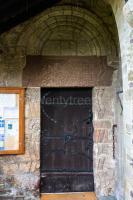
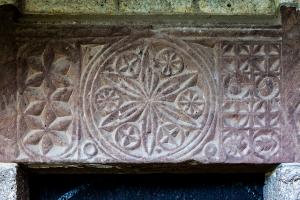
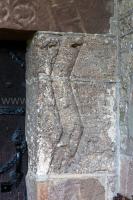
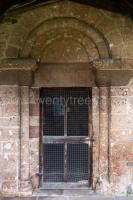
1200. St Andrew's Church, Bredwardine [Map]. Carving of lintel above the south door. Herefordshire School of Carving.
Annals of the six Kings of England by Nicholas Trivet
Translation of the Annals of the Six Kings of England by that traces the rise and rule of the Angevin aka Plantagenet dynasty from the mid-12th to early 14th century. Written by the Dominican scholar Nicholas Trivet, the work offers a vivid account of English history from the reign of King Stephen through to the death of King Edward I, blending political narrative with moral reflection. Covering the reigns of six monarchs—from Stephen to Edward I—the chronicle explores royal authority, rebellion, war, and the shifting balance between crown, church, and nobility. Trivet provides detailed insight into defining moments such as baronial conflicts, Anglo-French rivalry, and the consolidation of royal power under Edward I, whose reign he describes with particular immediacy. The Annals combines careful year-by-year reporting with thoughtful interpretation, presenting history not merely as a sequence of events but as a moral and political lesson. Ideal for readers interested in medieval history, kingship, and the origins of the English state, this chronicle remains a valuable and accessible window into the turbulent world of the Plantagenet kings.
Available at Amazon in eBook and Paperback format.
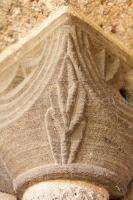
1200. St Peter and St Paul's Church, Rock [Map]. Carvings of the Herefordshire School of Carving.
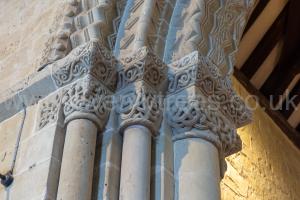
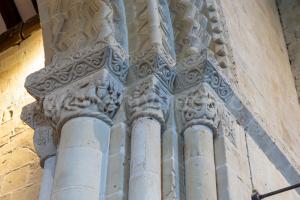
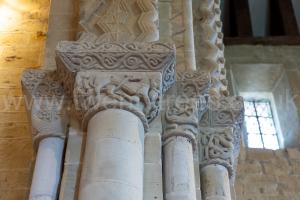
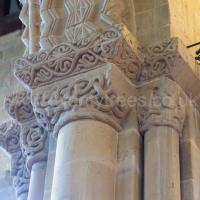
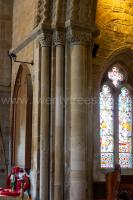
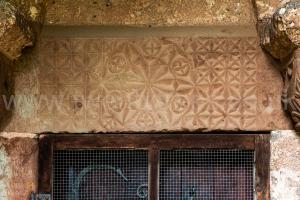
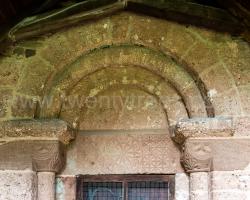
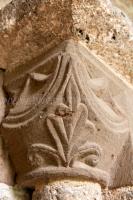
1200. St Andrew's Church, Bredwardine [Map]. Carving of lintel above north door. Possibly missing a Tympanum. From the Herefordshire School of Carving.
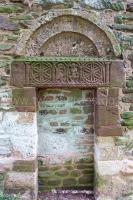
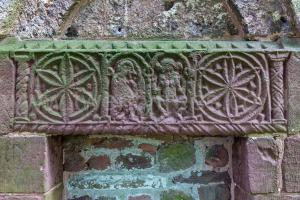
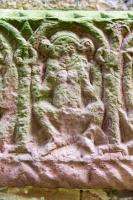
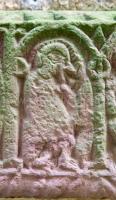
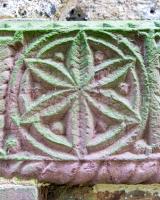
The Herefordshire School of Carving at St Giles' Church, Pipe Aston [Map]. Tympanum over the North doorway. An "agnus dei" - Lamb of God - flanked by a winged eagle and a winged bull surrounded byan archivolt of animals and foliage enclosed within a chevroned arch. The church guide describes the eagle as the emblem of St John complementing the winged bull emblem of St Luke which has at the end of one of its forelegs a block that is assumed to be St Luke's Gospel. Malcolm Thurlby, in this excellent book "The Herefordshire School of Romanesque Sculpture" suggest the carving is of a griffin. The imposts at the end of the arches have, on the left, dragons entwined, and, on the right, foliage. See Herefordshire School of Carving.


St Peter's Church, Rowlestone [Map]. Tympanum of the Herefordshire School of Carving.


Church of St Nicholas, Studland [Map] with carvings of the Herefordshire School of Carving.
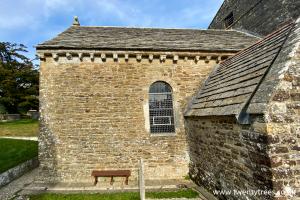
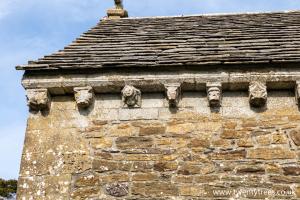
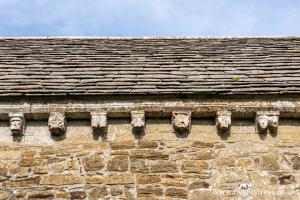
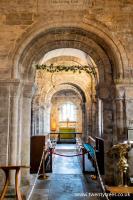
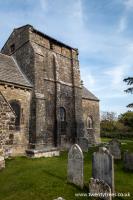
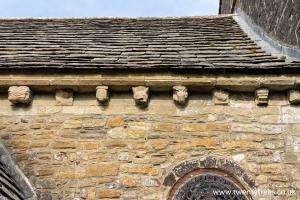
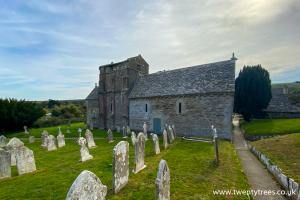
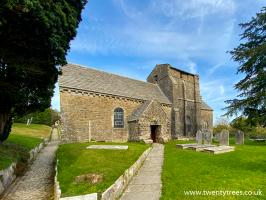
St Mary's Church, Fownhope [Map]. Fine tympanum of the Herefordshire School of Carving.
St Nicholas' Church, Little Langford [Map]. Fine tympanum from the Herefordshire School of Carving.
Church of St Mary and St David, Kilpeck [Map]. South door with tympanum. Fine example of the Herefordshire School of Carving.
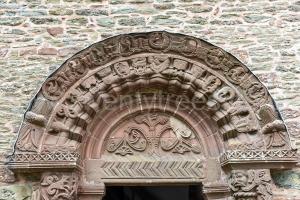
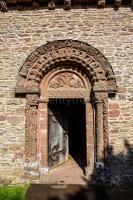
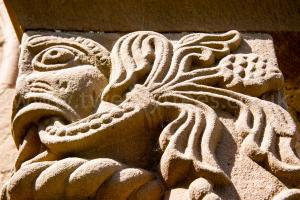
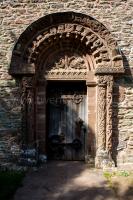
St James the Great Church, Colwall [Map]. Herefordshire School of Carving. The Norman church was started in the 12th century as evidenced by the main south doorway with its scalloped capitals and a round headed arch on the west front of the nave. The south aisle was added in the middle of the 13th century. The south west tower is unusually situated and houses ten bells with six dating from 1778. In 1865 the chancel was replaced and widened and in 1880 the north aisle was added. In 2010 the chancel was reordered.
St John the Baptist Church, Beckford [Map]. Fine Tympanum showing Harrowing of Hell. Possibly Herefordshire School of Carving.
St Mary's Church, Stottesdon [Map]. Fine tympanum and font of the Herefordshire School of Carving.
St Michael and All Angels Church, Castle Frome [Map]. Fine Herefordshire School of Carving font..
All Saints Church, Pitsford [Map]Parts of the church date to the Norman Conquest, with the tympanum over the main church door dating to that period. See Herefordshire School of Carving.To Do List.
St George's Church, Orleton [Map]. Font from the Herefordshire School of Carving.
Annals of the six Kings of England by Nicholas Trivet
Translation of the Annals of the Six Kings of England by that traces the rise and rule of the Angevin aka Plantagenet dynasty from the mid-12th to early 14th century. Written by the Dominican scholar Nicholas Trivet, the work offers a vivid account of English history from the reign of King Stephen through to the death of King Edward I, blending political narrative with moral reflection. Covering the reigns of six monarchs—from Stephen to Edward I—the chronicle explores royal authority, rebellion, war, and the shifting balance between crown, church, and nobility. Trivet provides detailed insight into defining moments such as baronial conflicts, Anglo-French rivalry, and the consolidation of royal power under Edward I, whose reign he describes with particular immediacy. The Annals combines careful year-by-year reporting with thoughtful interpretation, presenting history not merely as a sequence of events but as a moral and political lesson. Ideal for readers interested in medieval history, kingship, and the origins of the English state, this chronicle remains a valuable and accessible window into the turbulent world of the Plantagenet kings.
Available at Amazon in eBook and Paperback format.
St Michael's Church, Houghton le Spring [Map]. The church dates from the 12C but during recent renovations the foundations of an earlier Anglo-Saxon church were discovered. Many Saxon post holders were found. Below the Saxon church were found some Roman foundations, possibly from a temple and boulders from an early prehistoric burial cairn or ritual site. A carved tympanum (which probably predates the church) features intertwined beasts. It is known as 'The Houghton Beasts or Dragons'. See Herefordshire School of Carving.
St Cassian's Church, Chaddesley Corbet [Map]. Monument in St Cassian's Church, Chaddesley Corbett, Worcestershire, to Elizabeth Holt, unmarried daughter of Sir Thomas Holte 1st Baronet. Font possibly of the Herefordshire School of Carving.
