

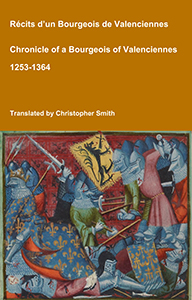
Chronicle of a Bourgeois of Valenciennes
Récits d’un bourgeois de Valenciennes aka The Chronicle of a Bourgeois of Valenciennes is a vivid 14th-century vernacular chronicle written by an anonymous urban chronicler from Valenciennes in the County of Hainaut. It survives in a manuscript that describes local and regional history from about 1253 to 1366, blending chronology, narrative episodes, and eyewitness-style accounts of political, military, and social events in medieval France, Flanders, and the Low Countries. The work begins with a chronological framework of events affecting Valenciennes and its region under rulers such as King Philip VI of France and the shifting allegiances of local nobility. It includes accounts of conflicts, sieges, diplomatic manoeuvres, and the impact of broader struggles like the Hundred Years’ War on urban life in Hainaut. Written from the perspective of a burgher (bourgeois) rather than a monastery or royal court, the chronicle offers a rare lay viewpoint on high politics and warfare, reflecting how merchants, townspeople, and civic institutions experienced the turbulence of the 13th and 14th centuries. Its narrative style combines straightforward reporting of events with moral and civic observations, making it a valuable source for readers interested in medieval urban society, regional politics, and the lived experience of war and governance in pre-modern Europe.
Available at Amazon in eBook and Paperback format.
Lion Rampant is in Lions.
See: Lion Rampant Argent, Lion Rampant Azure, Lion Rampant Gules, Lion Rampant Or, Lion Rampant Purpure, Lion Rampant Sable, Lion Rampant Vert.
Lion Rampant. In profile standing erect with forepaws raised.
On 20th May 1561 John Eyre died. On 15th December 1558 Margaret Blennerhasset died. They were buried in All Saints Church, Narborough [Map]. Brass. The inscription on the brass says "Here do lye John Eyer Esquire late Receyvor Generale to Elizabeth the Quenes Majestie, in the counties of Norf., Suff., Cantabridge, and Huntyngton, and one of the Masters of her High Court of Chancerye and Margaret his wyfe, one of the daughters of Sir Thomas Blenerhaiset of Frens Knight late Wyfe of John, Spelman Esquire, son and heyre apparent of Sir John Spelman, Knyght." Armorials top left and middle Quartered  Eyre Arms and
  Townshend Arms with a crescent difference, top right Quartered Eyre Arms and Townshend Arms impaled with 1&6
  Blennerhassett Arms, 2, Argent, three Escutcheons Sable: LOWDHAM 3 Gules a Pall reversed Ermine: KELVEDON or KELDON 4 Azure a Lion rampant Argent crowned Or: ORTON: 5 Azure a Fess between three Fleurs-de-lis Or: SKELTON.
John Eyre: After 27th December 1545 he and Margaret Blennerhasset were married. Her second husband.
Margaret Blennerhasset: she was born to Thomas Blennerhassett of Frens. Before 27th December 1545 John Spelman of and she were married.


 Holand Arms. Azure, semée-de-lys argent, a lion rampant. Source.
 Bohun Arms. Azure, a bend argent cotised or between six lions rampant or. Source.
 Earl Roseberry Arms. Quarterly, 1&4 vert, three primroses within a double tressure flory counter-flory or (for Primrose); 2&3 argent, a lion rampant double queued sable (for Cressy). Source.
 Rolle Arms. Or, a fess dancetté between three billets azure each charged with a lion rampant of the first three bezants. Source.
 Browne Arms. Sable a bend sable cotised three lions rampant argent. Source.
 Chaucer Modern Arms. Argent, a chief gules overall a lion rampant double queued or.
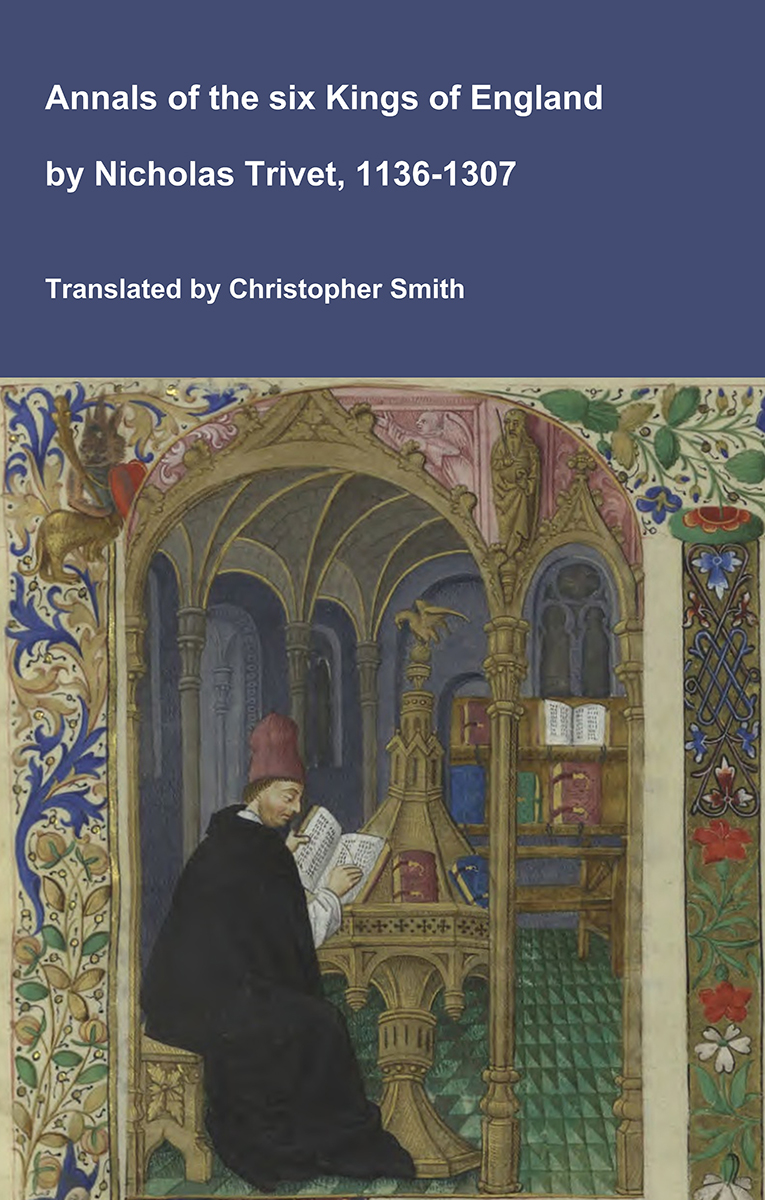
Annals of the six Kings of England by Nicholas Trivet
Translation of the Annals of the Six Kings of England by that traces the rise and rule of the Angevin aka Plantagenet dynasty from the mid-12th to early 14th century. Written by the Dominican scholar Nicholas Trivet, the work offers a vivid account of English history from the reign of King Stephen through to the death of King Edward I, blending political narrative with moral reflection. Covering the reigns of six monarchs—from Stephen to Edward I—the chronicle explores royal authority, rebellion, war, and the shifting balance between crown, church, and nobility. Trivet provides detailed insight into defining moments such as baronial conflicts, Anglo-French rivalry, and the consolidation of royal power under Edward I, whose reign he describes with particular immediacy. The Annals combines careful year-by-year reporting with thoughtful interpretation, presenting history not merely as a sequence of events but as a moral and political lesson. Ideal for readers interested in medieval history, kingship, and the origins of the English state, this chronicle remains a valuable and accessible window into the turbulent world of the Plantagenet kings.
Available at Amazon in eBook and Paperback format.
 Salusbury Arms. Gules a lion rampant argent three crescents argent.
 Talbot Arms. Gules, a lion rampant within a bordure engrailed or. Source.
 Bowes Lyon Arms. Quarterly 1&4 Argent a lion rampant azure, armed and langued gules within a double tressure flory counter-flory of the second (for Lyon); 2&3 ermine three bows stringed palewise in fess proper (for Bowes).
 Hamlyn Arms. Gules, a lion rampant ermine crowned or. Source.
 Mildmay Arms. Argent, three lions rampant azure. Source.
 Percy Arms. Or, a lion rampant azure. Source.
 St John Mildmay Arms. Argent, three lions rampant azure. Source.
 Burghesh Arms. Gules, a lion rampant or, double queued or.
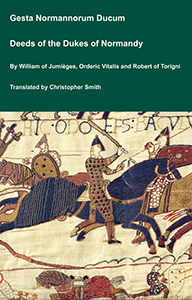
The Deeds of the Dukes of Normandy
The Gesta Normannorum Ducum [The Deeds of the Dukes of Normandy] is a landmark medieval chronicle tracing the rise and fall of the Norman dynasty from its early roots through the pivotal events surrounding the Norman Conquest of England. Originally penned in Latin by the monk William of Jumièges shortly before 1060 and later expanded at the behest of William the Conqueror, the work chronicles the deeds, politics, battles, and leadership of the Norman dukes, especially William’s own claim to the English throne. The narrative combines earlier historical sources with firsthand information and oral testimony to present an authoritative account of Normandy’s transformation from a Viking settlement into one of medieval Europe’s most powerful realms. William’s history emphasizes the legitimacy, military prowess, and governance of the Norman line, framing their expansion, including the conquest of England, as both divinely sanctioned and noble in purpose. Later chroniclers such as Orderic Vitalis and Robert of Torigni continued the history, extending the coverage into the 12th century, providing broader context on ducal rule and its impact. Today this classic work remains a foundational source for understanding Norman identity, medieval statesmanship, and the historical forces that reshaped England and Western Europe between 800AD and 1100AD.
Available at Amazon in eBook and Paperback format.
 Fitzalan Arms. Gules, a lion rampant or. Source.
 Hohenstaufen Arms. Sable a lion rampant or.
 Ivrea Arms. Azure, a lion rampant or, armed and langued gules. Source.
 Earl Shaftesbury Arms. Quarterly: 1&4
  Ashley Arms; 2&3: gules, a bend engrailed between six lions rampant or (Cooper). Source.
 Fiennes Arms. Azure three lions rampant or. Source.
 Brooke Arms. Gules, on a chevron argent a lion rampant sable crowned or. Source.
 Burnell Arms. Argent, a lion rampant sable, a bordure azure. Source.
 Cobham Arms. Gules a chevron or three lions rampant sable. Source.
 Dormer Arms. Azure, ten billets or 4,3,2,1 issuant from a chief of the second a demi lion rampant sable langued gules.
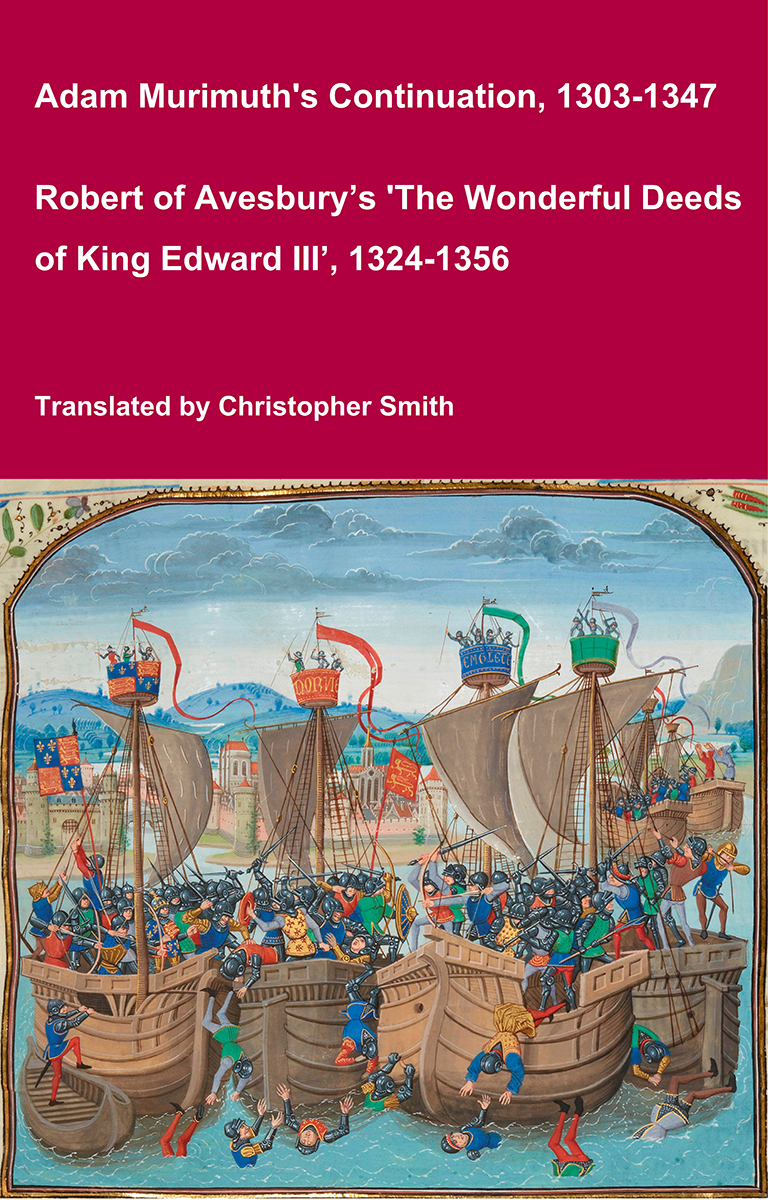
Adam Murimuth's Continuation and Robert of Avesbury’s 'The Wonderful Deeds of King Edward III'
This volume brings together two of the most important contemporary chronicles for the reign of Edward III and the opening phases of the Hundred Years’ War. Written in Latin by English clerical observers, these texts provide a vivid and authoritative window into the political, diplomatic, and military history of fourteenth-century England and its continental ambitions. Adam Murimuth Continuatio's Chronicarum continues an earlier chronicle into the mid-fourteenth century, offering concise but valuable notices on royal policy, foreign relations, and ecclesiastical affairs. Its annalistic structure makes it especially useful for establishing chronology and tracing the development of events year by year. Complementing it, Robert of Avesbury’s De gestis mirabilibus regis Edwardi tertii is a rich documentary chronicle preserving letters, treaties, and official records alongside narrative passages. It is an indispensable source for understanding Edward III’s claim to the French crown, the conduct of war, and the mechanisms of medieval diplomacy. Together, these works offer scholars, students, and enthusiasts a reliable and unembellished account of a transformative period in English and European history. Essential for anyone interested in medieval chronicles, the Hundred Years’ War, or the reign of Edward III.
Available at Amazon in eBook and Paperback format.
 Pierrepoint Arms. Argent, semée of cinquefoils gules, a lion rampant sable. Source.
 Savage Arms. Argent, six lions rampant sable. Source.
 Stapleton Arms. Argent, a lion rampant sable. Source.
 Welles Arms. Or a lion rampant sable armed and langued gules. Source.
 Dudley Arms. Or a lion rampant vert queue fourchy armed and langued gules. Source.
 Sutton Arms. Or a lion rampant vert queue fourchy armed and langued gules. Source.


.svg)


.svg)


#/media/File:BrandonArms.png)


.svg)


