

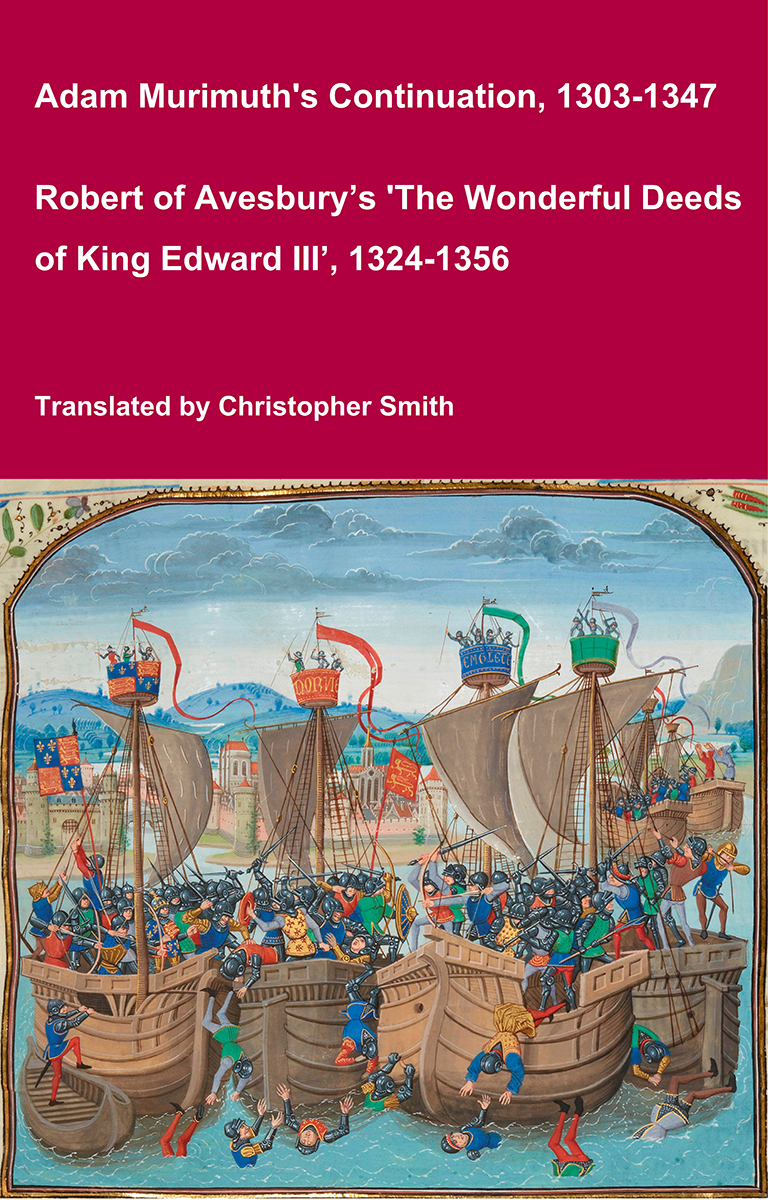
Adam Murimuth's Continuation and Robert of Avesbury’s 'The Wonderful Deeds of King Edward III'
This volume brings together two of the most important contemporary chronicles for the reign of Edward III and the opening phases of the Hundred Years’ War. Written in Latin by English clerical observers, these texts provide a vivid and authoritative window into the political, diplomatic, and military history of fourteenth-century England and its continental ambitions. Adam Murimuth Continuatio's Chronicarum continues an earlier chronicle into the mid-fourteenth century, offering concise but valuable notices on royal policy, foreign relations, and ecclesiastical affairs. Its annalistic structure makes it especially useful for establishing chronology and tracing the development of events year by year. Complementing it, Robert of Avesbury’s De gestis mirabilibus regis Edwardi tertii is a rich documentary chronicle preserving letters, treaties, and official records alongside narrative passages. It is an indispensable source for understanding Edward III’s claim to the French crown, the conduct of war, and the mechanisms of medieval diplomacy. Together, these works offer scholars, students, and enthusiasts a reliable and unembellished account of a transformative period in English and European history. Essential for anyone interested in medieval chronicles, the Hundred Years’ War, or the reign of Edward III.
Available at Amazon in eBook and Paperback format.
Manticore is in Feet Resting On.

Around 1450. The nave at St Mary the Virgin Church, Bottesford, Leicestershire [Map] was constructed. Above each column there is a carving. This one a Manticore which may indicated an association with the Hastings family.
After 20th June 1560. Hasting's Chapel, St Helen's Church, Ashby-de-la-Zouch [Map]. Monument to Francis Hastings 2nd Earl Huntingdon (deceased) and Catherine Pole Countess Huntingdon (age 49) by Richard Parker of Burton on Trent. Chest tomb with five sons on one side, five daughters on the other side, and eldest son on the end. Elizabethan Period. Leg Garter. Garter Robes. Widow's Barbe. Lancastrian Esses and Inter-twined Knots Collar. Feet resting on the Manticore badge of the Hasting's family.
Inscription: "Here lyeth ye corps of Francys late Erle of Hutyngdun, Lord Hastyngs, Hungerford, Botreaux, Molyns, and Moyles, Knight of ye honorable order of ye Garter, which deceased ye XXth daye of June ao Dni 1561: and ye ladie Katheryn, Countisse of Hutyngdon his wife, which deceased ye XXIIId daye of Sepbr anno dni 1576". Moved at least twice. Some restoration.


