

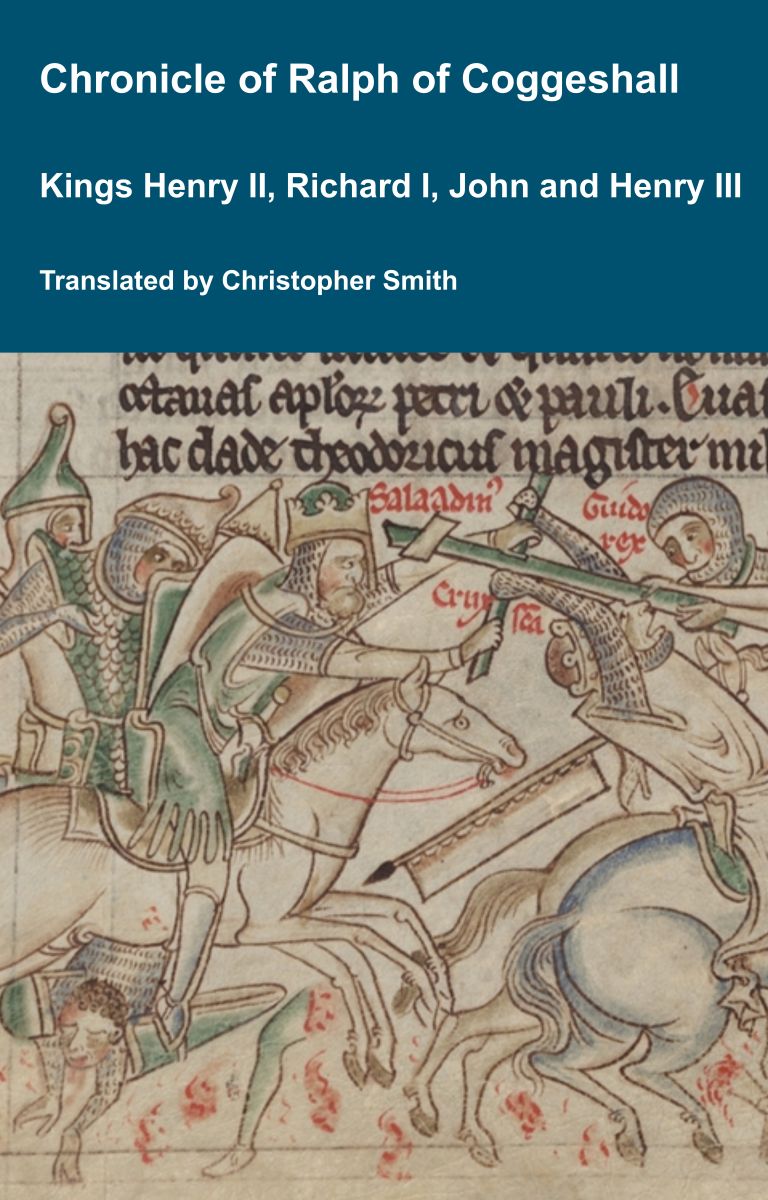
Chronicle of Abbot Ralph of Coggeshall
The Chronicle of Abbot Ralph of Coggeshall (Chronicon Anglicanum) is an indispensable medieval history that brings to life centuries of English and European affairs through the eyes of a learned Cistercian monk. Ralph of Coggeshall, abbot of the Abbey of Coggeshall in Essex in the early 13th century, continued and expanded his community’s chronicle, documenting events from the Norman Conquest of 1066 into the tumultuous reign of King Henry III. Blending eyewitness testimony, careful compilation, and the monastic commitment to record-keeping, this chronicle offers a rare narrative of political intrigue, royal power struggles, and social upheaval in England and beyond. Ralph’s work captures the reigns of pivotal figures such as Richard I and King John, providing invaluable insights into their characters, decisions, and the forces that shaped medieval rule. More than a simple annal, Chronicon Anglicanum conveys the texture of medieval life and governance, making it a rich source for scholars and readers fascinated by English history, monastic authorship, and the shaping of the medieval world.
Available at Amazon in eBook and Paperback format.
Or is in Field.
 Wrottesley Arms. Or, three piles sable, a canton ermine. Source.
 Lisle Arms. Or a fess between two chevrons sable. Source.
 Aragon Arms. Or, four pallets gules. Source.
 Lowther Arms. Or, six annulets sable, three, two, one. Source.
 Bigod Arms. Or a cross gules. Source.
 Manners Arms. Or, two fess azure a chief gules.
 Bugge Arms. Or fretty azure. Source.
 Mohun Arms. Or a cross engrailed sable.
 Butler Arms. Or, a chief indented azure. Source.
Henrici Quinti, Angliæ Regis, Gesta, is a first-hand account of the Agincourt Campaign, and subsequent events to his death in 1422. The author of the first part was a Chaplain in King Henry's retinue who was present from King Henry's departure at Southampton in 1415, at the siege of Harfleur, the battle of Agincourt, and the celebrations on King Henry's return to London. The second part, by another writer, relates the events that took place including the negotiations at Troye, Henry's marriage and his death in 1422.
Available at Amazon in eBook and Paperback format.
 Monson Arms. Or two chevronels gules. Source.
 Camden Arms. Or, a fess engrailed between six crosses crosslet fitchy sable. Source.
 Monthermer Arms. Or, an eagle displayed vert beaked and membered gules. Source.
 Chicheley Arms. Or, a chevron between three cinquefoils gules. Source.
 Morrison Arms. Or, on a chief gules three chaplets of the first. Source.
 Constable Arms. Or three bars. Source.
 Nelson Arms. Or, a cross flory sable a bendlet gules. Source.
 Daubeney Arms. Or, two chevrons gules three griffin's heads. Source.
The Deeds of the Dukes of Normandy
The Gesta Normannorum Ducum [The Deeds of the Dukes of Normandy] is a landmark medieval chronicle tracing the rise and fall of the Norman dynasty from its early roots through the pivotal events surrounding the Norman Conquest of England. Originally penned in Latin by the monk William of Jumièges shortly before 1060 and later expanded at the behest of William the Conqueror, the work chronicles the deeds, politics, battles, and leadership of the Norman dukes, especially William’s own claim to the English throne. The narrative combines earlier historical sources with firsthand information and oral testimony to present an authoritative account of Normandy’s transformation from a Viking settlement into one of medieval Europe’s most powerful realms. William’s history emphasizes the legitimacy, military prowess, and governance of the Norman line, framing their expansion, including the conquest of England, as both divinely sanctioned and noble in purpose. Later chroniclers such as Orderic Vitalis and Robert of Torigni continued the history, extending the coverage into the 12th century, providing broader context on ducal rule and its impact. Today this classic work remains a foundational source for understanding Norman identity, medieval statesmanship, and the historical forces that reshaped England and Western Europe between 800AD and 1100AD.
Available at Amazon in eBook and Paperback format.
 Fanshawe Arms. Or a chevron between three fleur de lys sable. Source.
 Percy Arms. Or, a lion rampant azure. Source.
 Fitzwalter Arms. Or, a fess gules between two chevrons of the last. Source.
 Portman Arms. Or, a fleur-de-lis azure. Source.
 Graham Arms. Or an a chief sable three escallops argent. Source.
 Powys Arms. Or, a lion gules armed and langued azure. Source.
 Harding Arms. Or, a bend azure three martlets argent.
 Preston Arms. Or, a chief sable three crescents or.
 Hornby Arms. Or, two chevronels between three bugle-horns sable stringed gules on a chief of the second as many eagle's legs erased of the first. Source.
 Redvers Arms. Or, a lion rampant azure. Source.
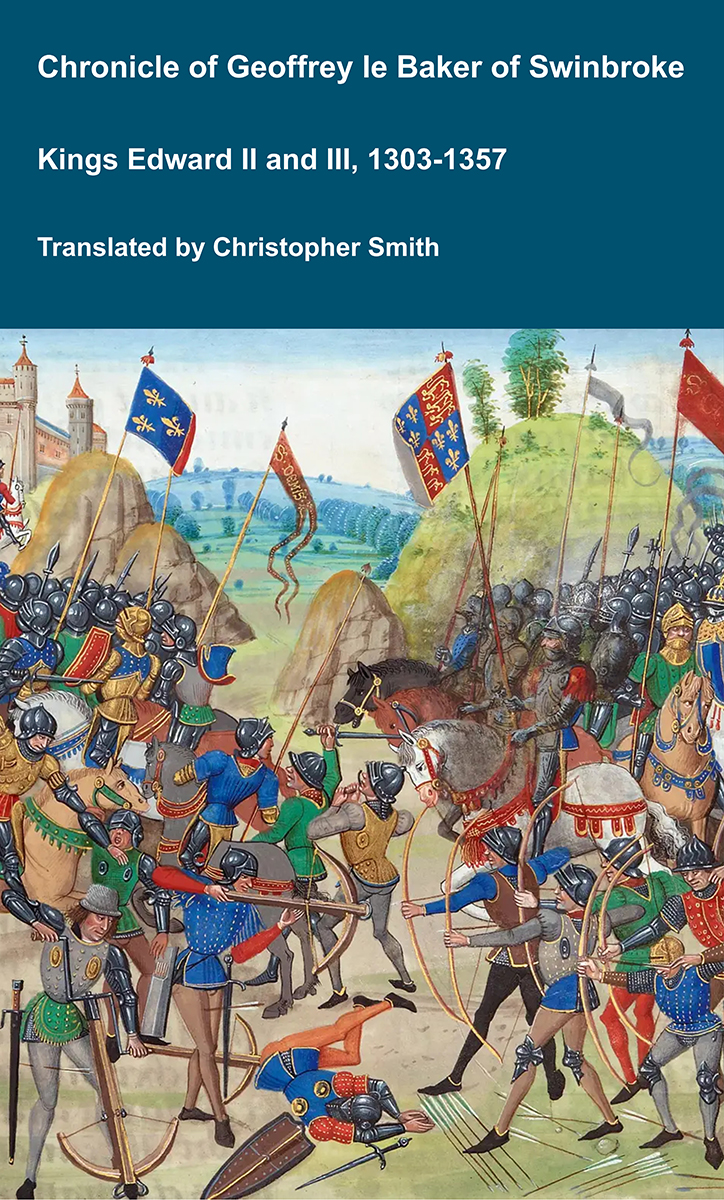
Chronicle of Geoffrey le Baker of Swinbroke
Baker was a secular clerk from Swinbroke, now Swinbrook, an Oxfordshire village two miles east of Burford. His Chronicle describes the events of the period 1303-1356: Gaveston, Bannockburn, Boroughbridge, the murder of King Edward II, the Scottish Wars, Sluys, Crécy, the Black Death, Winchelsea and Poitiers. To quote Herbert Bruce 'it possesses a vigorous and characteristic style, and its value for particular events between 1303 and 1356 has been recognised by its editor and by subsequent writers'. The book provides remarkable detail about the events it describes. Baker's text has been augmented with hundreds of notes, including extracts from other contemporary chronicles, such as the Annales Londonienses, Annales Paulini, Murimuth, Lanercost, Avesbury, Guisborough and Froissart to enrich the reader's understanding. The translation takes as its source the 'Chronicon Galfridi le Baker de Swynebroke' published in 1889, edited by Edward Maunde Thompson.
Available at Amazon in eBook and Paperback format.
 Lacy Arms. Or, a lion rampant purpure. Source.
 Rolle Arms. Or, a fess dancetté between three billets azure each charged with a lion rampant of the first three bezants. Source.
 Bayning Arms. Or two bars sable on each as many escallops of the first. Source.
 Scott Arms. Or, on a bend azure a mullet of six points between two crescents of the field. Source.
 Burgh Arms. Or a cross gules. Source.
NO IMAGE. Or, on a pile gules between six fleur de lys azure three lions of England. Augmentation of honour granted to Edward Seymour 1st Duke of Somerset when his sister Queen Jane Seymour married King Henry VIII of England and Ireland. Source.


 Carew Arms. Or, three lions passant in pale sable. Source.
 Sidney Arms. Or, a pheon azure.
 Courtenay Arms. Or, three torteaux. Source.
 Stafford Arms. Or, a chevron gules.
 Dunkeld Arms. Or a lion rampant gules armed and langued azure a double tressure flory counter-flory gules.

Anne Boleyn. Her Life as told by Lancelot de Carle's 1536 Letter.
In 1536, two weeks after the execution of Anne Boleyn, her brother George and four others, Lancelot du Carle, wrote an extraordinary letter that described Anne's life, and her trial and execution, to which he was a witness. This book presents a new translation of that letter, with additional material from other contemporary sources such as Letters, Hall's and Wriothesley's Chronicles, the pamphlets of Wynkyn the Worde, the Memorial of George Constantyne, the Portuguese Letter and the Baga de Secrets, all of which are provided in Appendices.
Available at Amazon in eBook and Paperback format.
 Stewart Arms. Or a fess chequy. Source.
 Stewart Royal Arms. Or a lion rampant gules armed and langued azure within a double tressure flory counter-flory of the second.
 Harsick Arms. Or, a chief indented sable.
 Lathom Arms. Or, on a chief indented azure three plates. Source.
 Vavasour Arms. Or, a fess dancetté sable. Source.
NO IMAGE. Or, a chief indented azure, a crescent for difference. Source.
 Verdun Arms. Or, a fret gules.
Chronicle of Geoffrey le Baker of Swinbroke
Baker was a secular clerk from Swinbroke, now Swinbrook, an Oxfordshire village two miles east of Burford. His Chronicle describes the events of the period 1303-1356: Gaveston, Bannockburn, Boroughbridge, the murder of King Edward II, the Scottish Wars, Sluys, Crécy, the Black Death, Winchelsea and Poitiers. To quote Herbert Bruce 'it possesses a vigorous and characteristic style, and its value for particular events between 1303 and 1356 has been recognised by its editor and by subsequent writers'. The book provides remarkable detail about the events it describes. Baker's text has been augmented with hundreds of notes, including extracts from other contemporary chronicles, such as the Annales Londonienses, Annales Paulini, Murimuth, Lanercost, Avesbury, Guisborough and Froissart to enrich the reader's understanding. The translation takes as its source the 'Chronicon Galfridi le Baker de Swynebroke' published in 1889, edited by Edward Maunde Thompson.
Available at Amazon in eBook and Paperback format.
 Vesci Arms. Or, a Cross sable. Source.
 Hainault Arms. Or, three chevrons sable. Source.
 Wake Arms. Or, two bars gules in chief three torteaux. Source.
 Ferneley Arms. Or, on a bend vert three buck's heads caboshed argent.
 La Marck Arms. Or, a fess chequered argent and gules. Source.
 Clare Arms. Or three chevrons gules. Source.
 Walpole Arms. Or a fess between two chevrons sable three cross crosslets of the field. Source.
 Willoughby Arms. Or fretty azure. Source.
 Brownlow Arms. Or an escutcheon within an orle of martlets sable. Source


.svg)


_arms#/media/File:Butler_arms.svg)


#/media/File:MorrisonArms.PNG)

#/media/File:Arms_Nelson_(of_Mawdesley,_Lancs).svg)
.svg)


.svg)


.svg)


#/media/File:Butler_arms_(Earl_of_Carrick).svg)


.svg)


