

Chronicle of Walter of Guisborough
A canon regular of the Augustinian Guisborough Priory, Yorkshire, formerly known as The Chronicle of Walter of Hemingburgh, describes the period from 1066 to 1346. Before 1274 the Chronicle is based on other works. Thereafter, the Chronicle is original, and a remarkable source for the events of the time. This book provides a translation of the Chronicle from that date. The Latin source for our translation is the 1849 work edited by Hans Claude Hamilton. Hamilton, in his preface, says: 'In the present work we behold perhaps one of the finest samples of our early chronicles, both as regards the value of the events recorded, and the correctness with which they are detailed; Nor will the pleasing style of composition be lightly passed over by those capable of seeing reflected from it the tokens of a vigorous and cultivated mind, and a favourable specimen of the learning and taste of the age in which it was framed.'
Available at Amazon in eBook and Paperback format.
Windsor Beauties is in Paintings.
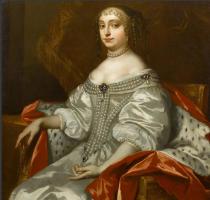
The Windsor Beauties are a set of portraits of the ladies of the court of King Charles II painted by Peter Lely.


Around 1662 Peter Lely (age 43). Portrait of Anne Hyde Duchess of York (age 24). One of the Windsor Beauties.

Around 1662 Peter Lely (age 43). Portrait of Frances Teresa Stewart Duchess Lennox and Richmond (age 14). One of the Windsor Beauties.

Around 1662 Peter Lely (age 43). Portrait of Princess Henrietta Stewart Duchess Orléans (age 17). One of the Windsor Beauties.

Around 1664 Peter Lely (age 45). Portrait of Jane Needham (age 19). One of the Windsor Beauties.

Around 1664 Peter Lely (age 45). Portrait of Margaret Brooke Lady Denham (age 24). One of the Windsor Beauties.

Around 1665 Peter Lely (age 46). Portrait of Frances Brooke Lady Whitmore (age 25). One of the Windsor Beauties.
Frances Brooke Lady Whitmore: Around 1640 she was born to William Brooke and Pembroke Lennard. Before May 1665 Thomas Whitmore and she were married. In 1690 Frances Brooke Lady Whitmore died.

Around 1665 Peter Lely (age 46). Portrait of Elizabeth Wriothesley Countess Gainsborough (age 19). One of the Windsor Beauties.

Around 1665 Peter Lely (age 46). Portrait of Mary Bagot Countess Falmouth. One of the Windsor Beauties.

Around 1665 Peter Lely (age 46). Portrait of Henrietta Boyle Countess Rochester (age 19). One of the Windsor Beauties.

Before 1666 Peter Lely (age 47). Portrait of Anne Digby Countess Sunderland (age 19). One of the Windsor Beauties.

Around 1666 Peter Lely (age 47). Portrait of Barbara Villiers 1st Duchess of Cleveland (age 25). One of the Windsor Beauties.
Samuel Pepys' Diary. 21st August 1668. After dinner I by coach to my bookseller's in Duck Lane [Map], and there did spend a little time and regarder su moher, and so to St. James's, where did a little ordinary business; and by and by comes Monsieur Colbert (age 43), the French Embassador, to make his first visit to the Duke of York (age 34), and then to the Duchess (age 31): and I saw it: a silly piece of ceremony, he saying only a few formal words. A comely man, and in a black suit and cloak of silk, which is a strange fashion, now it hath been so long left off: This day I did first see the Duke of York's room of pictures of some Maids of Honour, done by Lilly (age 49): good, but not like1.
Note 1. The set of portraits known as "King Charles's Beauties", formerly in Windsor Castle, but now at Hampton Court [Map]. B.


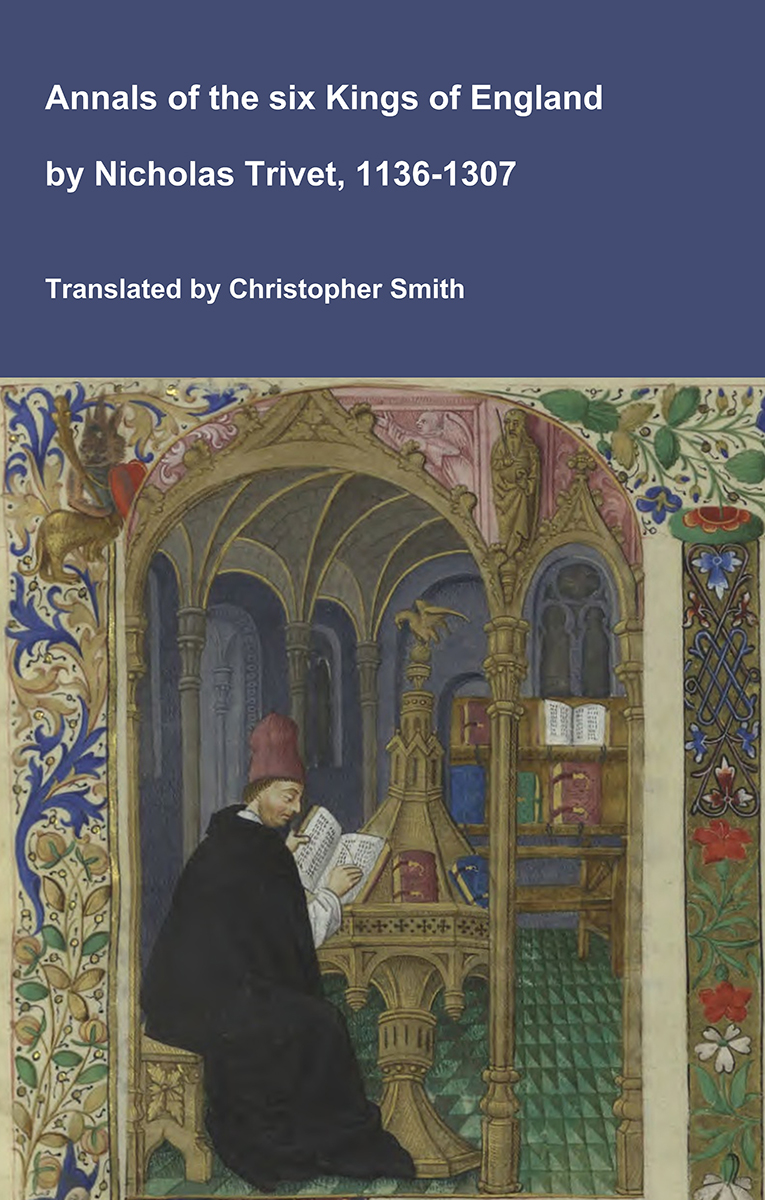
Annals of the six Kings of England by Nicholas Trivet
Translation of the Annals of the Six Kings of England by that traces the rise and rule of the Angevin aka Plantagenet dynasty from the mid-12th to early 14th century. Written by the Dominican scholar Nicholas Trivet, the work offers a vivid account of English history from the reign of King Stephen through to the death of King Edward I, blending political narrative with moral reflection. Covering the reigns of six monarchs—from Stephen to Edward I—the chronicle explores royal authority, rebellion, war, and the shifting balance between crown, church, and nobility. Trivet provides detailed insight into defining moments such as baronial conflicts, Anglo-French rivalry, and the consolidation of royal power under Edward I, whose reign he describes with particular immediacy. The Annals combines careful year-by-year reporting with thoughtful interpretation, presenting history not merely as a sequence of events but as a moral and political lesson. Ideal for readers interested in medieval history, kingship, and the origins of the English state, this chronicle remains a valuable and accessible window into the turbulent world of the Plantagenet kings.
Available at Amazon in eBook and Paperback format.
Diary of the Times of George IV Volume 1 Section 1. There is nothing new here under the sun, since you left the metropolis, and. I lead literally the life of a recluse, for still public amusements are prohibited for the present. Thanks to heaven, no Lord Chamberlain has. been appointed yet, otherwise the dear operas would have begun by this time, and I should have felt myself obliged to renounce this great amusement. The parties in, Hanover Square, are not more lively than they were last.winter in Spring Gardens, except we miss the galanti show., which was exhibited, of all the 'old fograms, since the reign of George the First,' which, I suppose, was intended to show the difference that existed between them and the beauties [Windsor Beauties] of Charles the Second, painted by Sir Peter Lely; but I am afraid his pencil, as that of Titian, or of Marc Angelo1, would never have succeeded in making them rivals of that happy century;— their beauty was much more valued and praised, except there is one precedent, which will remain on record in the Argyle family2. Your letter arrived most welcomely, as, there had, been various reports about a suspension d'armes, an armistice, or a reireat; resembling that of Massena; but all this puff must have been merely raised by envy, love of gossip, and newsmongers.
Note 1. It would appear, her Royal Highness was not very learned in vertù, or very correct in nomenclature.
Note 2. I suppose Her Royal Highness alluded to Lady Charlotte Campbell, the beauty of the Argyle family of that day.