

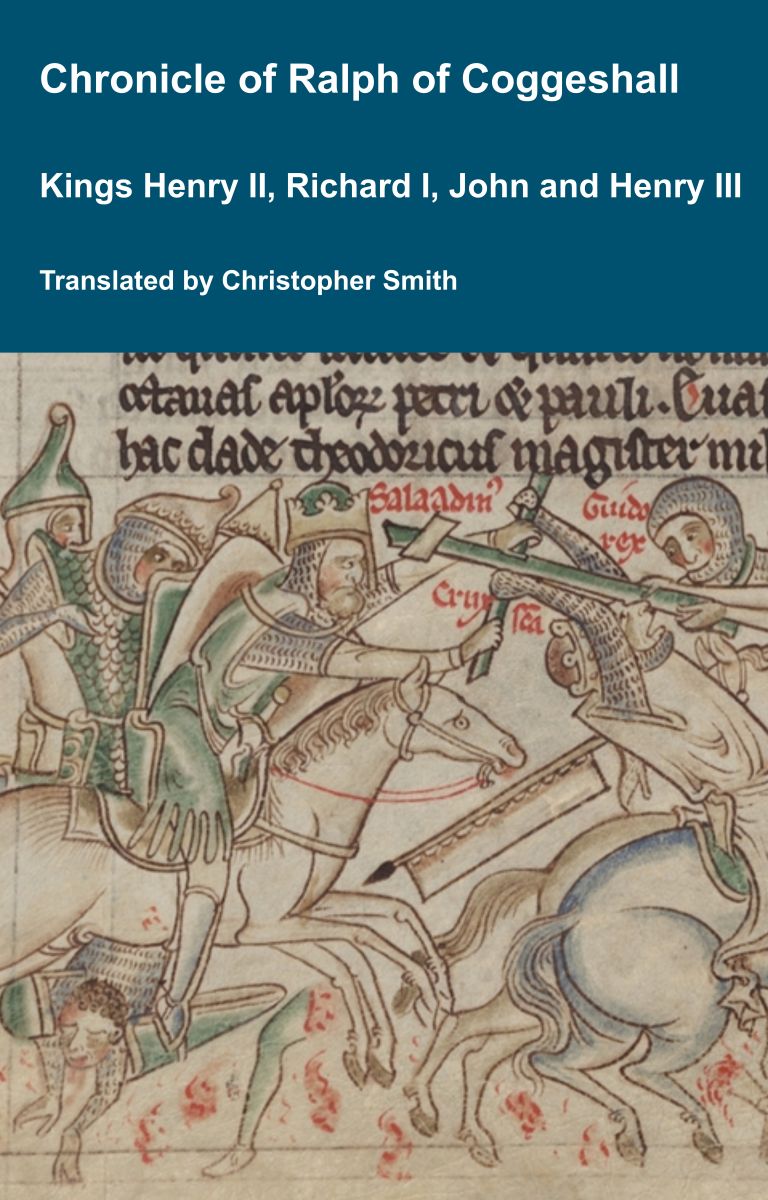
Chronicle of Abbot Ralph of Coggeshall
The Chronicle of Abbot Ralph of Coggeshall (Chronicon Anglicanum) is an indispensable medieval history that brings to life centuries of English and European affairs through the eyes of a learned Cistercian monk. Ralph of Coggeshall, abbot of the Abbey of Coggeshall in Essex in the early 13th century, continued and expanded his community’s chronicle, documenting events from the Norman Conquest of 1066 into the tumultuous reign of King Henry III. Blending eyewitness testimony, careful compilation, and the monastic commitment to record-keeping, this chronicle offers a rare narrative of political intrigue, royal power struggles, and social upheaval in England and beyond. Ralph’s work captures the reigns of pivotal figures such as Richard I and King John, providing invaluable insights into their characters, decisions, and the forces that shaped medieval rule. More than a simple annal, Chronicon Anglicanum conveys the texture of medieval life and governance, making it a rich source for scholars and readers fascinated by English history, monastic authorship, and the shaping of the medieval world.
Available at Amazon in eBook and Paperback format.
In or before 1766 [her father] Heinrich Christian Wilhelm von Schlotheim and [her step-mother] Friederike Most von Wilhelmsthal were married.
In 1766 Caroline Countess of Schlotheim was born to [her father] Heinrich Christian Wilhelm von Schlotheim.

1788. Wilhelm Bottner (age 35). Portrait of Caroline Countess of Schlotheim (age 22).
In 1788 Caroline Countess of Schlotheim (age 22) was created 1st Countess of Schlotheim.

1788. Wilhelm Bottner (age 35). Portrait of Caroline Countess of Schlotheim (age 22).
In 1788 William Elector of Hesse (age 44) abducted Caroline Countess of Schlotheim (age 22) and made her his mistress.


In 1811 Caroline Countess of Schlotheim (age 45) was created 1st Countess of Hessenstien.
In 1847 Caroline Countess of Schlotheim (age 81) died.