

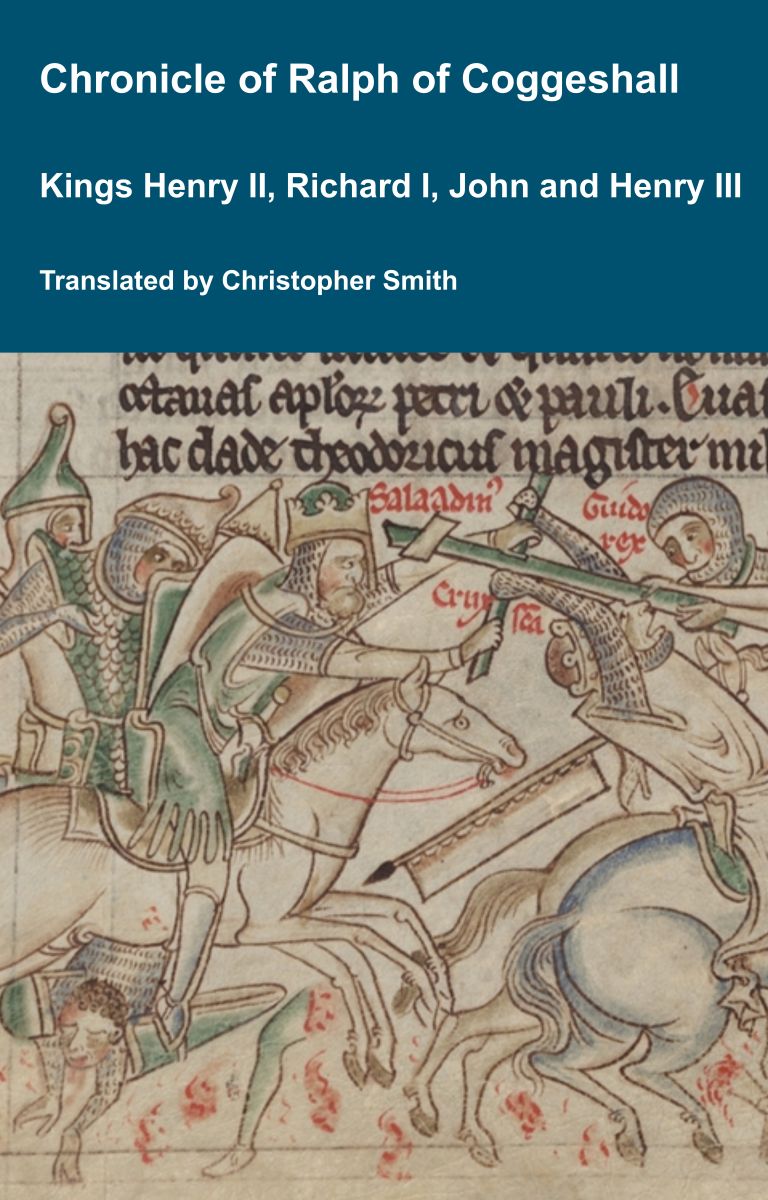
Chronicle of Abbot Ralph of Coggeshall
The Chronicle of Abbot Ralph of Coggeshall (Chronicon Anglicanum) is an indispensable medieval history that brings to life centuries of English and European affairs through the eyes of a learned Cistercian monk. Ralph of Coggeshall, abbot of the Abbey of Coggeshall in Essex in the early 13th century, continued and expanded his community’s chronicle, documenting events from the Norman Conquest of 1066 into the tumultuous reign of King Henry III. Blending eyewitness testimony, careful compilation, and the monastic commitment to record-keeping, this chronicle offers a rare narrative of political intrigue, royal power struggles, and social upheaval in England and beyond. Ralph’s work captures the reigns of pivotal figures such as Richard I and King John, providing invaluable insights into their characters, decisions, and the forces that shaped medieval rule. More than a simple annal, Chronicon Anglicanum conveys the texture of medieval life and governance, making it a rich source for scholars and readers fascinated by English history, monastic authorship, and the shaping of the medieval world.
Available at Amazon in eBook and Paperback format.
Paternal Family Tree: Hohenstauffen
In 1186 [his father] Henry Hohenstaufen VI Holy Roman Emperor [aged 20] and [his step-mother] Constance Queen Sicily [aged 31] were married. He the son of [his grandfather] Frederick "Barbarossa" Hohenstaufen I Holy Roman Emperor [aged 64] and [his grandmother] Beatrice of Burgundy Holy Roman Empress. They were fourth cousins.
On 26th December 1194 Frederick I King Jerusalem II Holy Roman Emperor was born to [his father] Henry Hohenstaufen VI Holy Roman Emperor [aged 29].
On 28th September 1197 [his father] Henry Hohenstaufen VI Holy Roman Emperor [aged 31] died.
In February 1209 Alfonso Barcelona II Count Provence [aged 35] died at Palermo [Map] whilst accompanying his sister [his future wife] Constance [aged 30] to her wedding. His son Raymond [aged 11] succeeded IV Count Provence.
On 15th August 1209 Frederick I King Jerusalem II Holy Roman Emperor [aged 14] and Constance Barcelona [aged 30] were married at Messina, Sicily [Map]. She the daughter of Alfonso II King Aragon and Sancha Ivrea Queen Consort Aragon. He the son of Henry Hohenstaufen VI Holy Roman Emperor. They were third cousin once removed.
In 1211 [his son] Henry VII King Germany was born to Frederick I King Jerusalem II Holy Roman Emperor [aged 16] and [his wife] Constance Barcelona [aged 32].
In 1212 [his son] Frederick Hohenstaufen was born to Frederick I King Jerusalem II Holy Roman Emperor [aged 17].
The Battle of Muret, the last major battle of the Albigensian Crusade, was fought on 12th September 1213 between the armies of [his brother-in-law] Peter II King Aragon [aged 35] and Simon "Elder" Montfort 5th Earl of Leicester [aged 38]. The Argonese forces were heavily defeated. Peter II King Aragon was killed. His son James [aged 5] succeeded I King Aragon.
On 14th September 1213 [his wife] Constance Barcelona [aged 34] died.
In 1215 [his son] Enzo Hohenstaufen was born to Frederick I King Jerusalem II Holy Roman Emperor [aged 20].
In 1216 [his daughter] Caterina da Marano Hohenstaufen was born to Frederick I King Jerusalem II Holy Roman Emperor [aged 21].
On 22nd November 1220 Frederick I King Jerusalem II Holy Roman Emperor [aged 25] was crowned II Holy Roman Emperor. [his future wife] Isabella Plantagenet Holy Roman Empress [aged 6] by marriage Holy Roman Empress.
Abbot John Whethamstede’s Chronicle of the Abbey of St Albans
Abbot John Whethamstede's Register aka Chronicle of his second term at the Abbey of St Albans, 1451-1461, is a remarkable text that describes his first-hand experience of the beginning of the Wars of the Roses including the First and Second Battles of St Albans, 1455 and 1461, respectively, their cause, and their consequences, not least on the Abbey itself. His text also includes Loveday, Blore Heath, Northampton, the Act of Accord, Wakefield, and Towton, and ends with the Coronation of King Edward IV. In addition to the events of the Wars of the Roses, Abbot John, or his scribes who wrote the Chronicle, include details in the life of the Abbey such as charters, letters, land exchanges, visits by legates, and disputes, which provide a rich insight into the day-to-day life of the Abbey, and the challenges faced by its Abbot.
Available at Amazon in eBook and Paperback format.
In 1221 [his son] Frederick Hohenstaufen was born to Frederick I King Jerusalem II Holy Roman Emperor [aged 26].
In 1221 [his son] Selvaggia Hohenstaufen was born to Frederick I King Jerusalem II Holy Roman Emperor [aged 26].
In 1224 [his son] Richard Hohenstaufen was born to Frederick I King Jerusalem II Holy Roman Emperor [aged 29].
On 9th November 1225 Frederick I King Jerusalem II Holy Roman Emperor [aged 30] and Isabella Brienne II Queen Jerusalem [aged 13] were married. He by marriage John I King Jerusalem. She the daughter of John de Brienne I King Jerusalem [aged 55] and Maria the Marquise Unknown. He the son of Henry Hohenstaufen VI Holy Roman Emperor.
In 1226 [his daughter] Blanchefleur Hohenstaufen was born to Frederick I King Jerusalem II Holy Roman Emperor [aged 31].
In November 1226 [his daughter] Margareta Hohenstaufen was born to Frederick I King Jerusalem II Holy Roman Emperor [aged 31] and [his wife] Isabella Brienne II Queen Jerusalem [aged 14]. She died aged less than one years old.
In August 1227 [his daughter] Margareta Hohenstaufen died.
On 25th April 1228 [his son] Conrad Hohenstaufen King Germany was born to Frederick I King Jerusalem II Holy Roman Emperor [aged 33] and [his wife] Isabella Brienne II Queen Jerusalem [aged 16].
In 1230 [his illegitimate daughter] Constance or Anna Hohenstaufen was born illegitimately to Frederick I King Jerusalem II Holy Roman Emperor [aged 35] and Bianca Lancia.
In 1230 [his daughter] Margaret Hohenstaufen was born to Frederick I King Jerusalem II Holy Roman Emperor [aged 35].
William of Worcester's Chronicle of England
William of Worcester, born around 1415, and died around 1482 was secretary to John Fastolf, the renowned soldier of the Hundred Years War, during which time he collected documents, letters, and wrote a record of events. Following their return to England in 1440 William was witness to major events. Twice in his chronicle he uses the first person: 1. when writing about the murder of Thomas, 7th Baron Scales, in 1460, he writes '… and I saw him lying naked in the cemetery near the porch of the church of St. Mary Overie in Southwark …' and 2. describing King Edward IV's entry into London in 1461 he writes '… proclaimed that all the people themselves were to recognize and acknowledge Edward as king. I was present and heard this, and immediately went down with them into the city'. William’s Chronicle is rich in detail. It is the source of much information about the Wars of the Roses, including the term 'Diabolical Marriage' to describe the marriage of Queen Elizabeth Woodville’s brother John’s marriage to Katherine, Dowager Duchess of Norfolk, he aged twenty, she sixty-five or more, and the story about a paper crown being placed in mockery on the severed head of Richard, 3rd Duke of York.
Available at Amazon in eBook and Paperback format.
In 1232 [his illegitimate son] Manfred King Sicily was born illegitimately to Frederick I King Jerusalem II Holy Roman Emperor [aged 37] and Bianca Lancia.
In 1233 [his illegitimate son] Manfred King Sicily [aged 1] and [his daughter-in-law] Beatrice Savoy Marchioness of Saluzzo [aged 9] were married. She the daughter of Amedeo Savoy IV Count Savoy [aged 36] and Margaret Burgundy Countess Savoy [aged 41]. He the illegitmate son of Frederick I King Jerusalem II Holy Roman Emperor [aged 38] and Bianca Lancia. They were fifth cousins. She a great x 4 granddaughter of King William "Conqueror" I of England.
In 1233 [his illegitimate daughter] Violante Hohenstaufen was born illegitimately to Frederick I King Jerusalem II Holy Roman Emperor [aged 38] and Bianca Lancia.
On 20th July 1235 Frederick I King Jerusalem II Holy Roman Emperor [aged 40] and Isabella Plantagenet Holy Roman Empress [aged 21] were married at Worms Cathedral [Map]. She the daughter of King John of England and Isabella of Angoulême Queen Consort England [aged 47]. He the son of Henry Hohenstaufen VI Holy Roman Emperor. They were fourth cousin once removed.
Chronica Majora by Matthew Paris. 19th December 1235. In the same year, at the advent of our Lord, Robert Fitz-Walter, a baron of illustrious race, and renowned in feats of arms, went the way of all flesh; and in the same year, too, in the flower of his youth, Roger de Sumeric was taken away from amongst men, a man of singular elegance, respectable race, and of remarkable prowess. In this year, too, as a token of the continuation of his regard, the emperor [aged 40] sent a camel to the king.
On 14th January 1236 [his brother-in-law] King Henry III of England [aged 28] and Eleanor of Provence Queen Consort England [aged 13] were married at Canterbury Cathedral [Map] by Archbishop Edmund Rich [aged 61]. She the daughter of Raymond IV Count Provence [aged 38] and Beatrice Savoy Countess Provence [aged 38]. He the son of King John of England and [his mother-in-law] Isabella of Angoulême Queen Consort England [aged 48]. They were fourth cousins.
Chronica Majora by Matthew Paris. 11th February 1236. When the nuptial rejoicings were concluded, the [his brother-in-law] king [aged 28] left London and went to Merton [Map], where he summoned the nobles to hear a message lately brought from the emperor [aged 41], and to discuss the business of the kingdom. For messengers had come direct from the emperor to the king with letters, asking him without delay to send his brother Richard, earl of Cornwall [aged 27], whose circumspect skill report had spread far and wide, to make war on the king of the French. He also promised, by way of assistance, to send all the Imperial forces, especially in order to enable the English king not only to recover his continental possessions, but also, when they were regained, to extend his former possessions. To this, the king and the nobles there assembled, after due deliberation, replied that it would not be safe or prudent to send one so young out of the kingdom and to expose him to the doubtful chances and dangers of war, since he was the only apparent heir of the king and kingdom, and the hopes of all were centred in him next to the king. For the king, although he was married, had no children, and the queen his wife [aged 13] was still young, and did not know whether she was fruitful or barren. But if it was agreeable to his excellency the emperor to summon any other brave man he chose, from amongst the nobles of the kingdom, for the purpose, they, the king, and all his friends and subjects, in accordance with his request, would at once render him all the assistance in their power. The messengers, on receiving this reply, returned to inform their lord.
In April 1236 [his son] Jordan Hohenstaufen was born to Frederick I King Jerusalem II Holy Roman Emperor [aged 41] and [his wife] Isabella Plantagenet Holy Roman Empress [aged 22]. He a grandson of King John of England. He died aged less than one years old.
Chronica Majora by Matthew Paris. Around 11th July 1236. In this year, about the feast of St. Benedict, the emperor [aged 41] sent a handsome present to the [his brother-in-law] king of England [aged 28], consisting of eighteen valuable horses, and three mules laden with silks and other costly presents. He also sent some valuable horses and other desirable things to Earl Richard [aged 27], the king's brother.
Around September 1236 [his son] Jordan Hohenstaufen died.
Chronica Majora by Matthew Paris. September 1236. About the same time, the pope, by mandatory letters, strictly forbade the emperor [aged 41] to invade Italy; for the latter had, in the summer, called together all the Imperial forces he could muster, to attack the insolent Italians, and especially the inhabitants of Milan, for that city was a receptacle for all heretics, Paterines, Luciferians, Publicans, Albigenses, and usurers; and it seemed to the emperor to be an ill-advised plan for him to assist the Holy Land by the presence of himself and such a large army of God, and to leave behind him false Christians, worse than any Saracen. He moreover wondered beyond measure that the pope should be in any way favourable to the Milanese, or shoiild seem in any manner to afford them protection, since it became him to be a father to the pious, and a hammer to the wicked. In reverence, however, for such a great father as his holiness the pope, the emperor modestly and prudently replied to him as follows.
In 1237 [his daughter] Agnes Hohenstaufen died.
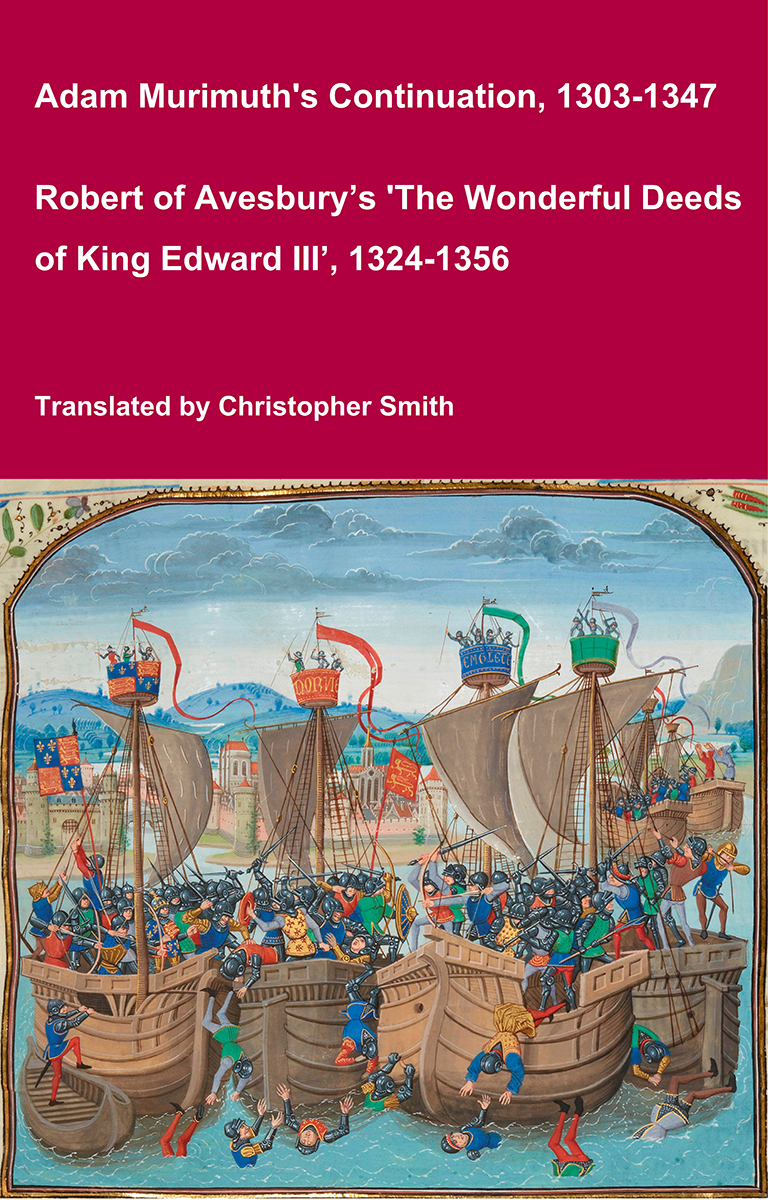
Adam Murimuth's Continuation and Robert of Avesbury’s 'The Wonderful Deeds of King Edward III'
This volume brings together two of the most important contemporary chronicles for the reign of Edward III and the opening phases of the Hundred Years’ War. Written in Latin by English clerical observers, these texts provide a vivid and authoritative window into the political, diplomatic, and military history of fourteenth-century England and its continental ambitions. Adam Murimuth Continuatio's Chronicarum continues an earlier chronicle into the mid-fourteenth century, offering concise but valuable notices on royal policy, foreign relations, and ecclesiastical affairs. Its annalistic structure makes it especially useful for establishing chronology and tracing the development of events year by year. Complementing it, Robert of Avesbury’s De gestis mirabilibus regis Edwardi tertii is a rich documentary chronicle preserving letters, treaties, and official records alongside narrative passages. It is an indispensable source for understanding Edward III’s claim to the French crown, the conduct of war, and the mechanisms of medieval diplomacy. Together, these works offer scholars, students, and enthusiasts a reliable and unembellished account of a transformative period in English and European history. Essential for anyone interested in medieval chronicles, the Hundred Years’ War, or the reign of Edward III.
Available at Amazon in eBook and Paperback format.
In 1237 [his daughter] Agnes Hohenstaufen was born to Frederick I King Jerusalem II Holy Roman Emperor [aged 42] and [his wife] Isabella Plantagenet Holy Roman Empress [aged 23]. She a granddaughter of King John of England. She died aged less than one years old.
Chronica Majora by Matthew Paris. 5th January 1237. In the year of our Lord 1237 which was the twentieth of the reign of King Henry the Third, he held his court at Christmas, at Winchester, whence he forthwith sent royal warrants throughout all the English territories, ordering all nobles belonging to the kingdom of England, namely, archbishops, bishops, abbats, installed priors, earls, and barons, all to assemble without fail in the octaves of the Epiphany at London, to arrange the royal business and matters concerning the whole kingdom. The nobles on hearing this immediately obeyed the king's summons, and accordingly on the day of St. Hilary [13th January 1237], a countless multitude of nobles, namely, the whole community of the kingdom, came to London, and proceeded to the royal palace at Westminster to hear the king's pleasure. When they had all taken their seats, there stood up in the midst of them, one William de Kaele, a clerk and familiar of the king's, a discreet man and well skilled in the laws of the land, who, acting as a sort of mediator between the king and the nobles, disclosed to them the king's pleasure and intentions. "My lord the king," he said, "informs you that, whatever he may have done heretofore, he now and henceforth will, without hesitation, submit himself to the advice of all of you, as his faithful and natural subjects. But those men who have till now, in the management of his affairs, been in charge of his treasury, have rendered him an incorrect account of the moneys received by them, and owing to this the king is now destitute of money, without which any king is indeed destitute; he therefore humbly demands assistance from you in money, on the understanding that the money which may be raised by your good will shall be kept to be expended for the necessary uses of the kingdom, at the discretion of any of you elected for the purpose. "When the assembled nobles heard this speech, they each and all, not expecting anything of this sort, murmured greatly, and "Alter in alterius jactantes lumina vultus". [Each hearer lost in dire amaze, Turned on his neighbour's face his gaze.]
And they said to one another, Fuderunt partum montes: en ridiculus mus. [The labouring mountains shook the earth, And to a paltry mouse gave birth. This is a quote from Aesop's Fable "The Mountain in Labour". It refers to speech acts which promise much but deliver little].
They then replied with indignation that they were oppressed on all sides, so often promising and paying now the twentieth, now the thirtieth, and now the fiftieth part of their property, and they declared that it would be unworthy of them, and injurious to them, to allow a king so easily led awav, who had never repelled or even frightened one of the enemies of the kingdom, even the least of them, and who had never increased his territories but rather lessened them, and placed them under foreign yoke, to extort so much money, so often, and by so many arguments, from his natural subjects, as if they were slaves of the lowest condition, to their injury and for the benefit of foreigners. "When the king heard this, he wished to calm the general discontent, and promised on oath that he would never again provoke or annoy the nobles of the kingdom by injuring them in that way, provided that the thirtieth part of all moveable property in England was granted and paid to him for his present use; because the large sum of money which he had a little while before sent to the emperor [aged 42] (as he stated) for the marriage of his [his wife] sister [aged 23], and also what he had spent at his own marriage, had in a great degree exhausted his money. To this they openly replied that he, the king, had done all this without the advice of his liege subjects, and they ought not to share the punishment as they were innocent of the crime. They however withdrew to a private place to consult about obeying the king's demand, and supplying his necessities, and to discuss the kind and quantity of assistance which was demanded. As they were withdrawing for this purpose, Gilbert Bassett [aged 49] said to the king in the hearing of all. and with less circimispection of speech than he ought, - "My lord king, send some one of your friends to be present at the conference of your barons." He was, when he said this, sitting on one side of the king, with only a few persons between them, and in reply to his speech, Richard Percy [aged 67], who had been at the conference of the nobles, and was, not without cause, angry at it, said, "What is it, friend Gilbert, that you said? are we too foreigners, and are we not amongst the number of the king's friends? "And Gilbert felt himself rebuked by this unpleasant and sudden speech. And thus by a multipHcity of arguments the conference was protracted for four days.
Chronica Majora by Matthew Paris. March 1237. About the same time, the king's anger was again kindled against the earl of Kent, Hubert de Burgh [aged 67], because Richard, earl of Gloucester [aged 14], still a boy, under the king's care, secretly married Earl Hubert's daughter Margaret [aged 15], without his, the king's, permission or connivance. For he had determined (as it was stated) to unite the said youth, the earl of Gloucester, together with his county and all his honours, to a young lady, a near relative of William, bishop elect of Valentia, a native of Provence. The king's anger was, however, at length set at rest by the intercession of a great many people, and on Hubert's declaring that he had not been aware of it, and that it had not been done by him, and on his promising a sum of money to the king. In the same year, by the management of the emperor Frederick [aged 42], another senator was created at Rome, in order that, by the united skill and power of two senators, the insolence of the Romans might be checked, and the city be pacified, and governed more safely, and easily ruled by their counsels.
Chronica Majora by Matthew Paris. Around 15th April 1237. About the same time, the emperor Frederick [aged 42], finding that the malice of his enemies had recalled him to Germany from his intended expedition, and that, to his disgrace, he was obliged to raise the siege and retire from Milan instituted an inquiry as to who had caused him this obstruction, and finding that the duke of Austria had stirred up internal discord in Germany, and that he was the cause of his being hindered in his purpose, attacked him and deprived him of his lands, honours, and wealth.
Chronica Majora by Matthew Paris. Before 24th June 1237. In the same year, the emperor Frederick [aged 42], by special messengers and imperial letters, summoned all the great Christian princes of the world to assemble on the day of St. John the Baptist's nativity, at Vaucouleurs, which is on the confines, or near the confines, of the empire and the French kingdom, there to discuss some difficult matters concerning the empire as well as the kingdom. The king of France, as if entertaining suspicion of this conference, proceeded at the time fixed to the place appointed, attended by a large army, which he had assembled for the purpose, and thus set dreadful and pernicious example to others, inasmuch as he went to discuss matters of peace in the same way as he would to attack his enemies. The [his brother-in-law] king of England [aged 29] made reasonable excuses for not coming in person; but sent a peaceful embassy, consisting of some of the chief men of the kingdom; namely, Richard earl of Cornwall [aged 28], his brother, with some other nobles, fit to manage a conference, under the guidance of the venerable archbishop of York [aged 57] and the bishop of Ely, and other trustworthy persons selected for the purpose. The bishop of Winchester, although selected before all others, absolutely refused to go, and, not without reason, gave the following as the cause for excusing himself: "My lord king," said he "you lately laid a heavy complaint against me before the emperor, telling him that I, with some other nobles, disturbed your kingdom: whether you did this with justice, or unjustly, God knows; but I trust that I have saved my conscience in every respect. But if your words were now placed with confidence in my mouth and in your letters, and should declare that I was a familar and faithful friend of yours; all this would appear as contrary, and he would accuse both you and me of instability; and this would blacken your fame in a great degree. Therefore, because it would be manifestly to your dishonour, I will not go on any account." And in the opinion of many, this reply gave sufficient excuse for him. When all preparations had been made, and they were all ready to set sail on this journey, they were met by letters from the emperor, to say that he could not go to the conference then, as he had purposed; but that what he could not do then, should, by God's favour, be carried into effect on the Nativity of St. John the Baptist in the following year; and thus each and all of them returned without effecting anything. In this year, on the day of the Supper, the bishop of Hereford consecrated the holy unction in the church of St. Albans [Map]. About this time, too, John Scott [deceased], earl of Chester, closed his life about Whitsuntide, having been poisoned by the agency of his wife [aged 19], the daughter of Llewellyn [aged 65]. The life of the bishop of Lincoln [aged 69], too, was also attempted by the same means, and he was with difficulty recalled from the gates of death. In the same year, in the week before Whitsuntide, there fell storms of hail which exceeded the size of apples, killing the sheep; and they were followed by continued rain.
In 1238 Simon de Montfort 6th Earl of Leicester 1st Earl Chester [aged 30] and [his sister-in-law] Eleanor Plantagenet Countess Pembroke and Leicester [aged 23] were married at Westminster Palace [Map]. She by marriage Countess of Leicester. She the daughter of King John of England and [his mother-in-law] Isabella of Angoulême Queen Consort England [aged 50]. He the son of Simon "Elder" Montfort 5th Earl of Leicester and Alix Montmorency. They were half third cousins. He a great x 2 grandson of King Henry I "Beauclerc" England.
On 18th February 1238 [his son] Henry Otto Hohenstaufen was born to Frederick I King Jerusalem II Holy Roman Emperor [aged 43] and [his wife] Isabella Plantagenet Holy Roman Empress [aged 24]. He a grandson of King John of England.
On 4th March 1238 [his sister-in-law] Joan Plantagenet Queen of Scotland [aged 27] died at Havering atte Bower, Essex [Map]. She was buried at Tarrant Abbey, Dorset [Map].
In 1240 [his brother-in-law] Bishop Aymer de Valence [aged 18] was appointed Bishop of Winchester.
After 1240 [his son] Frederick Hohenstaufen [deceased] died.
Henrici Quinti, Angliæ Regis, Gesta, is a first-hand account of the Agincourt Campaign, and subsequent events to his death in 1422. The author of the first part was a Chaplain in King Henry's retinue who was present from King Henry's departure at Southampton in 1415, at the siege of Harfleur, the battle of Agincourt, and the celebrations on King Henry's return to London. The second part, by another writer, relates the events that took place including the negotiations at Troye, Henry's marriage and his death in 1422.
Available at Amazon in eBook and Paperback format.
On 27th June 1241 Gilbert Marshal 4th Earl Pembroke [aged 44] was killed in a tournament at Ware, Hertfordshire [Map]. He was buried at Temple Church, London [Map] next to his father. His brother Walter [aged 42] succeeded 5th Earl Pembroke; he had also attended the tournament. The King [his brother-in-law] King Henry III of England [aged 33] had expressly forbidden the tournament leading to anger at his disobeying the King's orders.
On 1st December 1241 [his daughter] Margaret Hohenstaufen was born to Frederick I King Jerusalem II Holy Roman Emperor [aged 46] and [his wife] Isabella Plantagenet Holy Roman Empress [aged 27]. Her mother died in childbirth at Foggia [Map]. She was buried at Andria Cathedral. She a granddaughter of King John of England. She married 1255 Albert II Margrave of Meissen.
On 12th February 1242 [his son] Henry VII King Germany [aged 31] died. His half brother Conrad [aged 13] succeeded King Germany.
In 1244 [his son] Selvaggia Hohenstaufen [aged 23] died.
On 26th May 1249 [his son] Richard Hohenstaufen [aged 25] died.
On 13th December 1250 Frederick I King Jerusalem II Holy Roman Emperor [aged 55] died. [his son] Henry VII King Germany was appointed VII King Germany.
[his son] Gerhard Hohenstaufen was born to Frederick I King Jerusalem II Holy Roman Emperor.
Kings Wessex: Great x 9 Grand Son of King Alfred "The Great" of Wessex
Kings Franks: Great x 12 Grand Son of Charles "Charlemagne aka Great" King of the Franks King Lombardy Holy Roman Emperor
Great x 1 Grandfather: Frederick "One Eyed" Hohenstaufen I Holy Roman Emperor 
GrandFather: Frederick "Barbarossa" Hohenstaufen I Holy Roman Emperor
Great x 4 Grandfather: Albert Azzo II Margrave of Milan
Great x 3 Grandfather: Welf I Duke Bavaria
Great x 4 Grandmother: Kunigunde
Great x 2 Grandfather: Henry "Black" Welf IX Duke Bavaria
Great x 4 Grandfather: Baldwin "Bearded" IV Count Flanders
Great x 3 Grandmother: Judith Flanders Duchess Bavaria
Great x 4 Grandmother: Matilda Normandy Countess Flanders 
Great x 1 Grandmother: Judith Welf Holy Roman Empress
Great x 4 Grandfather: Ordulf Duke of Saxony
Great x 3 Grandfather: Magnus Billung Duke Saxony
Great x 4 Grandmother: Wulfhild of Norway
Great x 2 Grandmother: Wulfhilde of Saxony Duchess Bavaria
Father: Henry Hohenstaufen VI Holy Roman Emperor
Great x 4 Grandfather: Reginald Ivrea I Count Burgundy 
Great x 3 Grandfather: William I Count Burgundy
Great x 4 Grandmother: Alice Normandy Countess Burgundy
Great x 2 Grandfather: Stephen Ivrea I Count Burgundy
Great x 3 Grandmother: Ettiennette Countess Burgundy
Great x 1 Grandfather: Reginald Ivrea III Count Burgundy
Great x 3 Grandfather: Gerard Metz I Duke Lorraine
Great x 2 Grandmother: Beatrice Metz Countess Burgundy
Great x 4 Grandfather: Albert Namur II Count Namur
Great x 3 Grandmother: Hedwige Namur Duchess Lorraine
Great x 4 Grandmother: Regilinda Ardennes Countess Namur
GrandMother: Beatrice of Burgundy Holy Roman Empress