

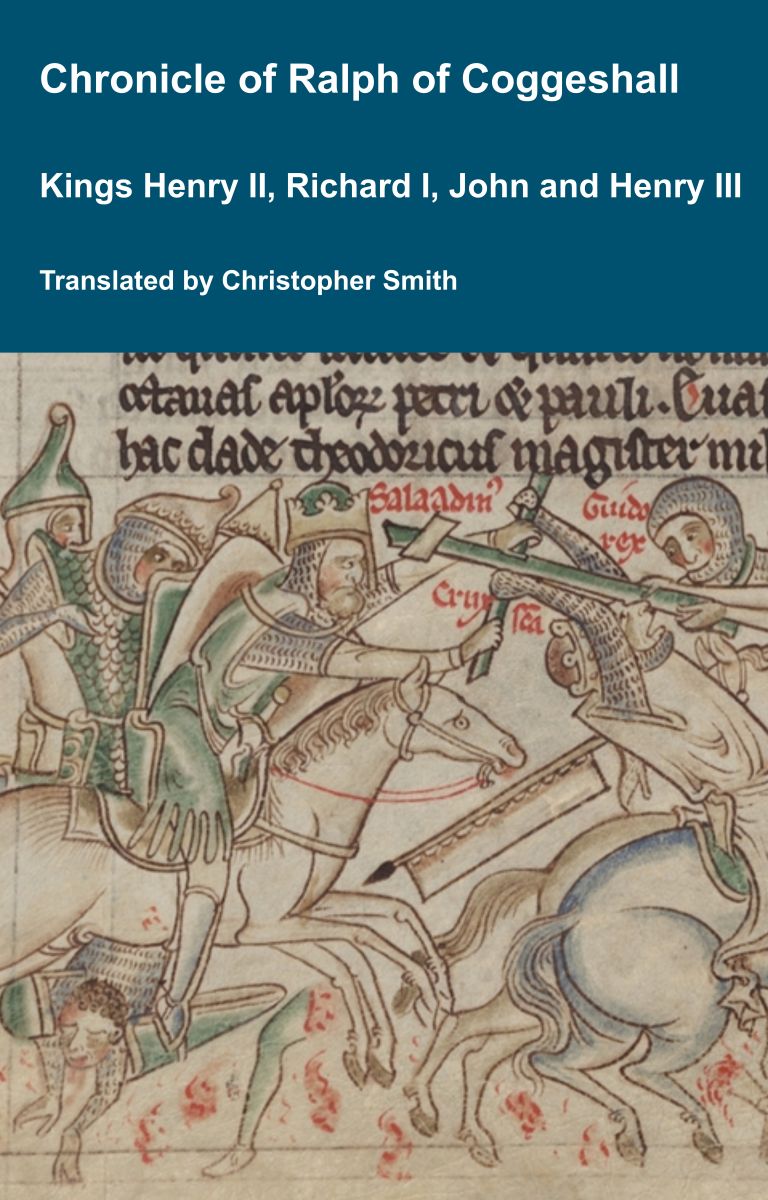
Chronicle of Abbot Ralph of Coggeshall
The Chronicle of Abbot Ralph of Coggeshall (Chronicon Anglicanum) is an indispensable medieval history that brings to life centuries of English and European affairs through the eyes of a learned Cistercian monk. Ralph of Coggeshall, abbot of the Abbey of Coggeshall in Essex in the early 13th century, continued and expanded his community’s chronicle, documenting events from the Norman Conquest of 1066 into the tumultuous reign of King Henry III. Blending eyewitness testimony, careful compilation, and the monastic commitment to record-keeping, this chronicle offers a rare narrative of political intrigue, royal power struggles, and social upheaval in England and beyond. Ralph’s work captures the reigns of pivotal figures such as Richard I and King John, providing invaluable insights into their characters, decisions, and the forces that shaped medieval rule. More than a simple annal, Chronicon Anglicanum conveys the texture of medieval life and governance, making it a rich source for scholars and readers fascinated by English history, monastic authorship, and the shaping of the medieval world.
Available at Amazon in eBook and Paperback format.
Earl Munster is in Earl Ireland.
The London Gazette 18803. Whitehall, May 12, 1831. The King has been pleased to direct letters patent to be passed under the Great Seal, granting the dignities of Baron, Viscount, and Earl of the United Kingdom of Great Britain and Ireland unto George FitzClarence [aged 37], Esq. Colonel in the Army, and the heirs male of his body lawfully begotten, by the names, stiles, and titles of Baron Tewkesbury, Viscount Fitzclarence, and Earl of Munster. [Note. Mary Wyndham Countess Munster [aged 38] by marriage Countess Munster.]
On 20th March 1842 George Fitz-Clarence 1st Earl Munster [aged 48] committed suicide. His son William [aged 17] succeeded 2nd Earl Munster, 2nd Viscount Fitzclarence, 2nd Baron Tewkesbury.
On 30th April 1901 William Fitz-Clarence 2nd Earl Munster [aged 76] died. His son Geoffrey [aged 41] succeeded 3rd Earl Munster, 3rd Viscount Fitzclarence, 3rd Baron Tewkesbury.
On 2nd February 1902 Geoffrey George Gordon Fitz-Clarence 3rd Earl Munster [aged 42] died. His brother Aubrey [aged 39] succeeded 4th Earl Munster, 4th Viscount Fitzclarence, 4th Baron Tewkesbury.
On 1st January 1928 Aubrey Fitz-Clarence 4th Earl Munster [aged 65] died. His nephew George [aged 21] succeeded 5th Earl Munster, 5th Viscount Fitzclarence, 5th Baron Tewkesbury.
On 26th August 1975 George Fitz-Clarence 5th Earl Munster [aged 69] died. His second cousin Edward [aged 75] succeeded 6th Earl Munster, 6th Viscount Fitzclarence, 6th Baron Tewkesbury.
On 15th November 1983 Edward Fitz-Clarence 6th Earl of Munster [aged 84] died. His son Anthony [aged 57] succeeded 7th Earl Munster, 7th Viscount Fitzclarence, 7th Baron Tewkesbury.
On 30th December 2000 Anthony Fitz-Clarence 7th Earl of Munster [aged 74] died. Earl Munster, Viscount Fitzclarence and Baron Tewkesbury extinct.