

Henrici Quinti, Angliæ Regis, Gesta, is a first-hand account of the Agincourt Campaign, and subsequent events to his death in 1422. The author of the first part was a Chaplain in King Henry's retinue who was present from King Henry's departure at Southampton in 1415, at the siege of Harfleur, the battle of Agincourt, and the celebrations on King Henry's return to London. The second part, by another writer, relates the events that took place including the negotiations at Troye, Henry's marriage and his death in 1422.
Available at Amazon in eBook and Paperback format.
Rome, Italy is in Italy.
See: Canelli, Civitavecchia, Protestant aka English Cemetery, Rome, Saints Blaise and Charles in Catinari Church, Vatican, via del Corso.
Around 540 Pope Gregory I was born to Gordianus Patrician and Saint Silvia [aged 25] at Rome, Italy [Map].
On 26th March 668 Archbishop Theodore of Tarsus [aged 66] was appointed Archbishop of Canterbury in Rome, Italy [Map].
Bede. 688. How Caedwalla king of the West Saxons went to Rome to be baptized; and his successor Ini also devoutly journeyed to the same threshold of the holy Apostles. [688 a.d.]
In the third year of the reign of Aldfrid, Caedwalla [aged 29], king of the West Saxons, having most vigorously governed his nation for two years, quitted his crown for the sake of the Lord and an everlasting kingdom, and went to Rome, Italy [Map], being desirous to obtain the peculiar honour of being cleansed in the baptismal font at the threshold of the blessed Apostles, for he had learned that in Baptism alone the entrance into the heavenly life is opened to mankind; and he hoped at the same time, that being made clean by Baptism, he should soon be freed from the bonds of the flesh and pass to the eternal joys of Heaven; both which things, by the help of the Lord, came to pass according as he had conceived in his mind. For coming to Rome, at the time that Sergius was pope, he was baptized on the Holy Saturday before Easter Day, in the year of our Lord 689, and being still in his white garments, he fell sick, and was set free from the bonds of the flesh on the 20th of April [689], and obtained an entrance into the kingdom of the blessed in Heaven. At his baptism, the aforesaid pope had given him the name of Peter, to the end, that he might be also united in name to the most blessed chief of the Apostles, to whose most holy body his pious love had led him from the utmost bounds of the earth. He was likewise buried in his church, and by the pope's command an epitaph was written on his tomb, wherein the memory of his devotion might be preserved for ever, and the readers or hearers thereof might be stirred up to give themselves to religion by the example of what he had done.
Bede. 689. How when Archbishop Theodore died Bertwald succeeded him as archbishop and among many others whom he ordained he made the learned Tobias bishop of the church of Rochester. [690 a.d.]
The year after that in which Caedwalla [aged 30] died at Rome, Italy [Map], that is, 690 after the Incarnation of our Lord, Archbishop Theodore [aged 87], of blessed memory, departed this life, being old and full of days, for he was eighty-eight years of age; which number of years he had been wont long before to foretell to his friends that he should live, the same having been revealed to him in a dream. He held the bishopric twenty-two years, and was buried in St. Peter's church [Map], where all the bodies of the bishops of Canterbury are buried. Of whom, as well as of his fellows of the same degree, it may rightly and truly be said, that their bodies are buried in peace, and their names shall live to all generations. For to say all in few words, the English Churches gained more spiritual increase while he was archbishop, than ever before. His character, life, age, and death, are plainly and manifestly described to all that resort thither, by the epitaph on his tomb, in thirty-four heroic verses. The first whereof are these:
"Here in the tomb rests the body of the holy prelate, called now in the Greek tongue Theodore. Chief pontiff, blest high priest, pure doctrine he set forth to his disciples.".
The last are as follow:
"For September had reached its nineteenth day, when his spirit went forth from the prison-bars of the flesh. Mounting in bliss to the gracious fellowship of the new life, he was united to the angelic citizens in the heights of Heaven.".
Bede. When they who had gone thither had spent some years teaching in Frisland, Pippin [aged 60], with the consent of them all, sent the venerable Wilbrord [aged 37] to Rome, Italy [Map], where Sergius was still pope, desiring that he might be consecrated archbishop over the nation of the Frisians; which was accordingly done, as he had made request, in the year of our Lord 696. He was consecrated in the church of the Holy Martyr Cecilia, on her festival; and the said pope gave him the name of Clement, and forthwith sent him back to his bishopric, to wit, fourteen days after his arrival in the city.
Bede. In the fourth year of the reign of Osred [aged 12], Coenred, who had for some time nobly governed the kingdom of the Mercians, much more nobly quitted the sceptre of his kingdom. For he went to Rome, Italy [Map], and there receiving the tonsure and becoming a monk, when Constantine [aged 45] was pope, he continued to his last hour in prayer and fasting and alms-deeds at the threshold of the Apostles. He was succeeded in the throne by Ceolred, the son of Ethelred, who had governed the kingdom before Coenred. With him went the son of Sighere, the king of the East Saxons whom we mentioned before, by name Offa, a youth of a most pleasing age and comeliness, and greatly desired by all his nation to have and to hold the sceptre of the kingdom. He, with like devotion, quitted wife, and lands, and kindred and country, for Christ and for the Gospel, that he might "receive an hundred-fold in this life, and in the world to come life everlasting." He also, when they came to the holy places at Rome, received the tonsure, and ending his life in the monastic habit, attained to the vision of the blessed Apostles in Heaven, as he had long desired.
The same year that they departed from Britain, the great bishop, Wilfrid, ended his days in the province called Inundalum [Map], after he had been bishop forty-five years. His body, being laid in a coffin, was carried to his monastery, which is called Inhrypum, and buried in the church of the blessed Apostle Peter, with the honour due to so great a prelate. Concerning whose manner of life, let us now turn back, and briefly make mention of the things which were done. Being a boy of a good disposition, and virtuous beyond his years, he conducted himself so modestly and discreetly in all points, that he was deservedly beloved, respected, and cherished by his elders as one of themselves. At fourteen years of age he chose rather the monastic than the secular life; which, when he had signified to his father, for his mother was dead, he readily consented to his godly wishes and desires, and advised him to persist in that wholesome purpose. Wherefore he came to the isle of Lindisfarne [Map], and there giving himself to the service of the monks, he strove diligently to learn and to practise those things which belong to monastic purity and piety; and being of a ready wit, he speedily learned the psalms and some other books, having not yet received the tonsure, but being in no small measure marked by those virtues of humility and obedience which are more important than the tonsure; for which reason he was justly loved by his elders and his equals. Having served God some years in that monastery, and being a youth of a good understanding, he perceived that the way of virtue delivered by the Scots was in no wise perfect, and he resolved to go to Rome, to see what ecclesiastical or monastic rites were in use at the Apostolic see. When he told the brethren, they commended his design, and advised him to carry out that which he purposed. He forthwith went to Queen Eanfled, for he was known to her, and it was by her counsel and support that he had been admitted into the aforesaid monastery, and he told her of his desire to visit the threshold of the blessed Apostles. She, being pleased with the youth's good purpose, sent him into Kent, to King Earconbert,8 who was her uncle's son, requesting that he would send him to Rome, Italy [Map] in an honourable manner. At that time, Honorius, one of the disciples of the blessed Pope Gregory [aged 41], a man very highly instructed in ecclesiastical learning, was archbishop there. When he had tarried there for a space, and, being a youth of an active spirit, was diligently applying himself to learn those things which came under his notice, another youth, called Biscop, surnamed Benedict, of the English nobility, arrived there, being likewise desirous to go to Rome, of whom we have before made mention.
In 853 King Alfred "The Great" of Wessex [aged 4] was confirmed by Pope Leo IV at Rome, Italy [Map].
In 855 Cyngen ap Cadell King Powys died at Rome, Italy [Map].
In 928 Hywel "Dda aka Good" King Seisyllwg King Deheubarth [aged 48] went on pilgrimage to Rome, Italy [Map].
In 1061 Archbishop Ealdred travelled to Rome, Italy [Map].
William of Worcester's Chronicle of England
William of Worcester, born around 1415, and died around 1482 was secretary to John Fastolf, the renowned soldier of the Hundred Years War, during which time he collected documents, letters, and wrote a record of events. Following their return to England in 1440 William was witness to major events. Twice in his chronicle he uses the first person: 1. when writing about the murder of Thomas, 7th Baron Scales, in 1460, he writes '… and I saw him lying naked in the cemetery near the porch of the church of St. Mary Overie in Southwark …' and 2. describing King Edward IV's entry into London in 1461 he writes '… proclaimed that all the people themselves were to recognize and acknowledge Edward as king. I was present and heard this, and immediately went down with them into the city'. William’s Chronicle is rich in detail. It is the source of much information about the Wars of the Roses, including the term 'Diabolical Marriage' to describe the marriage of Queen Elizabeth Woodville’s brother John’s marriage to Katherine, Dowager Duchess of Norfolk, he aged twenty, she sixty-five or more, and the story about a paper crown being placed in mockery on the severed head of Richard, 3rd Duke of York.
Available at Amazon in eBook and Paperback format.
In 1153 Cadell ap Gruffydd of Dinefwr went on pilgrimage at Rome, Italy [Map].
On 10th February 1286 Archbishop John le Romeyn [aged 56] was consecrated Archbishop of York by Latino Malabranca Orsini Cardinal in Rome, Italy [Map].
In 1290 Bishop Thomas Cantilupe was excommunicated by Archbishop John Peckham [aged 60]. Thomas proceeded to Rome, Italy [Map] to resolve the issue.
On 31st May 1433 Holy Roman Emperor Sigismund [aged 65] was crowned Holy Roman Emperor Luxemburg at Rome, Italy [Map].
On 25th August 1498 Giovanni de Gigli died in Rome, Italy [Map].
On 16th October 1594 William Allen [aged 62] died in Rome, Italy [Map].
On 24th March 1602 Thomas Fitzherbert [aged 50] was ordained at Rome, Italy [Map].
On 17th August 1640 Thomas Fitzherbert [aged 88] died at Rome, Italy [Map].
John Evelyn's Diary. 1st January 1645. We saw pass the new officers of the people of Rome, Italy [Map]; especially, for their noble habits were most conspicuous, the three Consuls, now called Conservators, who take their places in the Capitol, having been sworn the day before between the hands of the Pope. We ended the day with the rare music at the Chiesa Nova.
John Evelyn's Diary. 6th May 1645. It is reported that Rome, Italy [Map] has been once no less than fifty miles in compass, now not thirteen, containing in it 3,000 churches and chapels, monasteries, etc. It is divided into fourteen regions or wards; has seven mountains, and as many campi or valleys; in these are fair parks, or gardens, called villas, being only places of recess and pleasure, at some distance from the streets, yet within the walls.
John Evelyn's Diary. 6th May 1645. And now we returned to Rome, Italy [Map]. By the way, we were showed, at some distance, the city Præneste, and the Hadrian villa, now only a heap of ruins; and so came late to our lodging.
The History of William Marshal was commissioned by his son shortly after William’s death in 1219 to celebrate the Marshal’s remarkable life; it is an authentic, contemporary voice. The manuscript was discovered in 1861 by French historian Paul Meyer. Meyer published the manuscript in its original Anglo-French in 1891 in two books. This book is a line by line translation of the first of Meyer’s books; lines 1-10152. Book 1 of the History begins in 1139 and ends in 1194. It describes the events of the Anarchy, the role of William’s father John, John’s marriages, William’s childhood, his role as a hostage at the siege of Newbury, his injury and imprisonment in Poitou where he met Eleanor of Aquitaine and his life as a knight errant. It continues with the accusation against him of an improper relationship with Margaret, wife of Henry the Young King, his exile, and return, the death of Henry the Young King, the rebellion of Richard, the future King Richard I, war with France, the death of King Henry II, and the capture of King Richard, and the rebellion of John, the future King John. It ends with the release of King Richard and the death of John Marshal.
Available at Amazon in eBook and Paperback format.
Before 1683 George Hamilton 3rd Earl Abercorn [aged 46] died in Padua on his way to Rome, Italy [Map]. His first cousin once removed Claud [aged 23] succeeded 4th Earl Abercorn.

John Evelyn's Diary. 11th June 1699. After a long drought, we had a refreshing shower. The day before, there was a dreadful fire at Rotherhithe [Map], near the Thames side, which burned divers ships, and consumed nearly three hundred houses. Now died the famous Duchess of Mazarin [aged 53]; she had been the richest lady in Europe. She was niece of Cardinal Mazarin, and was married to the richest subject in Europe [aged 67], as is said. She was born at Rome, Italy [Map], educated in France, and was an extraordinary beauty and wit but dissolute and impatient of matrimonial restraint, so as to be abandoned by her husband, and banished, when she came into England for shelter, lived on a pension given her here, and is reported to have hastened her death by intemperate drinking strong spirits. She has written her own story and adventures, and so has her other extravagant sister [aged 59], wife to the noble family of Colonna.
John Evelyn's Diary. 1st February 1703. A famous cause at the King's Bench [Map] between Mr. Fenwick and his wife, which went for him with a great estate. The Duke of Marlborough [aged 52] lost his only son [aged 16] at Cambridge by the smallpox. A great earthquake at Rome, Italy [Map], etc. A famous young woman [aged 23], an Italian, was hired by our comedians to sing on the stage, during so many plays, for which they gave her £500; which part by her voice alone at the end of three scenes she performed with such modesty and grace, and above all with such skill, that there was never any who did anything comparable with their voices. She was to go home to the Court of the King of Prussia, and I believe carried with her out of this vain nation above £1,000, everybody coveting to hear her at their private houses.


After 1705 Arthur Pond stayed for a time in Rome, Italy [Map] with Louis Francois Roubiliac 1702-1762.
On 30th October 1735 Edmund Sheffield 2nd Duke of Buckingham and Normanby [aged 19] died of consumption at Rome, Italy [Map] unmarried and without issue. Duke of Buckingham and Normanby, Earl Mulgrave and Baron Sheffield of Butterwick in Lincolnshire extinct.
After January 1752 Joseph Wilton [aged 29] and his friend Louis Francois Roubiliac [aged 49] travelled to Rome, Italy [Map] together.
From 1760 Joseph Nollekens [aged 22] studied under Peter Scheemakers [aged 69] in Rome, Italy [Map].

In 1787 John Flaxman [aged 31] and Anne Denman [aged 27] moved to Rome, Italy [Map] where they lived until 1794 when they re-settled at 7 Buckingham Street Fitzroy Square.
In March 1791 Henry Howard [aged 22] travelled to Rome, Italy [Map] where he met and studied scuplture with John Flaxman [aged 35].
In 1793 Richard Westmacott [aged 17] travelled to Rome, Italy [Map] to study under Antonio Canova [aged 35]. Within a year of his arrival in Rome he won the first prize for sculpture offered by the Florentine academy of arts, and in the following year (1795) he gained the papal gold medal awarded by the Roman Academy of St Luke with his bas-relief of Joseph and his brethren.
On 4th April 1793 Prince Augustus Frederick Hanover 1st Duke Sussex [aged 20] and Augusta Murray Duchess Sussex [aged 25] were married at Rome, Italy [Map] in secret contrary to the Royal Marriages Act which required him to seek permission before marrying. She the daughter of John Murray 4th Earl Dunmore [aged 63] and Charlotte Stewart Countess Dunmore [aged 63]. He the son of King George III of Great Britain and Ireland [aged 54] and Charlotte Mecklenburg Strelitz Queen Consort England [aged 48].


William of Worcester's Chronicle of England
William of Worcester, born around 1415, and died around 1482 was secretary to John Fastolf, the renowned soldier of the Hundred Years War, during which time he collected documents, letters, and wrote a record of events. Following their return to England in 1440 William was witness to major events. Twice in his chronicle he uses the first person: 1. when writing about the murder of Thomas, 7th Baron Scales, in 1460, he writes '… and I saw him lying naked in the cemetery near the porch of the church of St. Mary Overie in Southwark …' and 2. describing King Edward IV's entry into London in 1461 he writes '… proclaimed that all the people themselves were to recognize and acknowledge Edward as king. I was present and heard this, and immediately went down with them into the city'. William’s Chronicle is rich in detail. It is the source of much information about the Wars of the Roses, including the term 'Diabolical Marriage' to describe the marriage of Queen Elizabeth Woodville’s brother John’s marriage to Katherine, Dowager Duchess of Norfolk, he aged twenty, she sixty-five or more, and the story about a paper crown being placed in mockery on the severed head of Richard, 3rd Duke of York.
Available at Amazon in eBook and Paperback format.
On 4th January 1798 Gavin Hamilton [aged 75] died in Rome, Italy [Map].
In 1803 Valentine Lawless 2nd Baron Cloncurry [aged 29] and Elizabeth Georgiana Morgan were married at Rome, Italy [Map].

On 5th November 1807 Angelica Kauffmann [aged 66] died in Rome, Italy [Map].
In October 1817 John Gibson [aged 27] travelled to Rome, Italy [Map] where he studied under Antonio Canova [aged 59].
On 27th November 1817 John Williamson aka Winn [aged 24] died at Rome, Italy [Map].
In 1819 Brownlow Charles Colyear [aged 25] died in Rome, Italy [Map] of injuries sustained in a fight with bandits.
In 1819 Francis Leggatt Chantrey [aged 37] and John Jackson [aged 40] travelled together to Italy. In Rome, Italy [Map] Chantrey met Antonio Canova [aged 61].
On 10th February 1821 Roberto Bompiani was born in Rome, Italy [Map].
On 19th January 1823 Edward Berkeley Portman [aged 51] died in Rome, Italy [Map].
On 22nd December 1827 George Errington [aged 23] was ordained at Rome, Italy [Map].
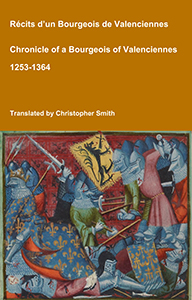
Chronicle of a Bourgeois of Valenciennes
Récits d’un bourgeois de Valenciennes aka The Chronicle of a Bourgeois of Valenciennes is a vivid 14th-century vernacular chronicle written by an anonymous urban chronicler from Valenciennes in the County of Hainaut. It survives in a manuscript that describes local and regional history from about 1253 to 1366, blending chronology, narrative episodes, and eyewitness-style accounts of political, military, and social events in medieval France, Flanders, and the Low Countries. The work begins with a chronological framework of events affecting Valenciennes and its region under rulers such as King Philip VI of France and the shifting allegiances of local nobility. It includes accounts of conflicts, sieges, diplomatic manoeuvres, and the impact of broader struggles like the Hundred Years’ War on urban life in Hainaut. Written from the perspective of a burgher (bourgeois) rather than a monastery or royal court, the chronicle offers a rare lay viewpoint on high politics and warfare, reflecting how merchants, townspeople, and civic institutions experienced the turbulence of the 13th and 14th centuries. Its narrative style combines straightforward reporting of events with moral and civic observations, making it a valuable source for readers interested in medieval urban society, regional politics, and the lived experience of war and governance in pre-modern Europe.
Available at Amazon in eBook and Paperback format.
In 1830 Walter Clifford was born to Charles Clifford 7th Baron Clifford Chudleigh [aged 39] at Rome, Italy [Map]. He a great x 4 grandson of King Charles II of England Scotland and Ireland.
On 14th March 1830 Margaret Compton was born to Spencer Compton 2nd Marquess Northampton [aged 40] and Margaret Douglas-Maclean-Clephane Marchioness Northampton [aged 38] in Rome, Italy [Map]. She married 1st June 1851 her half fifth cousin once removed Edward Frederick Leveson-Gower, son of Granville Leveson-Gower 1st Earl Granville and Harriet Cavendish Countess Granville, and had issue.

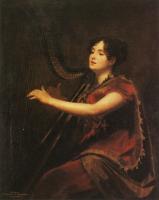
On 2nd March 1834 Charles Hepburn-Stuart-Forbes-Trefusis 20th Baron Clinton was born to Charles Rudolph Trefusis 19th Baron Clinton [aged 42] and Elizabeth Georgiana Kerr Baroness Clinton [aged 27] at Rome, Italy [Map]. He married (1) 1858 his first cousin Harriet Williamina Hepburn-Forbes Baroness Clinton and had issue (2) 1875 Margaret Walrond Baroness Clinton and had issue.
On 21st June 1834 James Everard Arundell 10th Baron Arundel [aged 48] died in Rome, Italy [Map]. His brother Henry [aged 29] succeeded 11th Baron Arundel of Wardour in Wiltshire. Frances Catherine Tichborne Baroness Arundel by marriage Baroness Arundel of Wardour in Wiltshire.
In 1836 William Calder Marshall [aged 22] travelled to Rome, Italy [Map] where he studied for two years.
On 5th January 1838 Colonel Walter Rodolph Trefusis was born to Charles Rudolph Trefusis 19th Baron Clinton [aged 46] and Elizabeth Georgiana Kerr Baroness Clinton [aged 31] at Rome, Italy [Map]. He married 24th July 1877 his second cousin Mary Charlotte Montagu-Douglas-Scott, daughter of Walter Scott 5th Duke Buccleuch 7th Duke Queensberry and Charlotte Anne Thynne Duchess Buccleuch Duchess Queensbury, and had issue.
On 27th October 1840 Gwendoline Catherine Talbot [aged 22] died at Rome, Italy [Map].
On or before 6th April 1849 John William Waterhouse was born at Rome, Italy [Map]. He was baptised on 6th April 1949.
On 8th January 1860 Joseph Gott [aged 74] died at Rome, Italy [Map].
On 7th January 1866 or 27th January 1866 John Gibson [aged 75] died at Rome, Italy [Map]. He bequeathed the contents of his studio, a large selection of his works and a large sum of money to the Royal Academy.
On 13th May 1877 Cecil Chetwynd-Talbot Marchioness Lothian [aged 69] died at Rome, Italy [Map]. She was buried at the Church of St David's Dalkeith.
On 30th March 1913 Sidney Herbert 14th Earl Pembroke 11th Earl Montgomery [aged 60] died in Rome, Italy [Map]. His son Reginald [aged 32] succeeded 15th Earl Pembroke, 12th Earl Montgomery, 4th Baron Herbert Lea. Beatrice Eleanor Paget Countess Pembroke and Montgomery [aged 29] by marriage Countess Pembroke, Countess Montgomery.
Henrici Quinti, Angliæ Regis, Gesta, is a first-hand account of the Agincourt Campaign, and subsequent events to his death in 1422. The author of the first part was a Chaplain in King Henry's retinue who was present from King Henry's departure at Southampton in 1415, at the siege of Harfleur, the battle of Agincourt, and the celebrations on King Henry's return to London. The second part, by another writer, relates the events that took place including the negotiations at Troye, Henry's marriage and his death in 1422.
Available at Amazon in eBook and Paperback format.
In 1965 Ernesto Gazzeri [aged 99] died at Rome, Italy [Map].
Adeline Horsey Recollections. From Leghorn we went to Elba, when I saw the place Napoleon embarked from after the "hundred days". We left the Airedale at Civiti Vecchia and started for Rome, Italy [Map] in our travelling-carriage with six horses, escorted by some of the Papal Guard sent by the Pope to protect us. I met many of my friends in the Eternal City; I saw everything worth seeing during my delightful sojourn there, and before we left Lord Cardigan and I were blessed by the Pope at an audience we had with his Holiness. As I wished to go to Genoa by sea, we returned to Civita Vecchia and set out in the yacht for Genoa, where we landed; we went from there to Turin, and on by rail by the Mont Cenis route to Paris [Map].
Bede. When Caedwalla went to Rome, Italy [Map], Ini succeeded to the kingdom, being of the blood royal; and having reigned thirty-seven years over that nation, he in like manner left his kingdom and committed it to younger men, and went away to the threshold of the blessed Apostles, at the time when Gregory was pope, being desirous to spend some part of his pilgrimage upon earth in the neighbourhood of the holy places, that he might obtain to be more readily received into the fellowship of the saints in heaven. This same thing, about that time, was wont to be done most zealously by many of the English nation, nobles and commons, laity and clergy, men and women.
On 7th May 1243 Hugh D'Aubigny 5th Earl Lincoln 5th Earl of Arundel died at Canelli. He was buried at Wymondham Abbey, Norfolk [Map]. Earl Lincoln extinct. His nephew John [aged 20] succeeded 6th Earl Arundel. Cicely D'Aubigny [aged 35] and her husband Roger de Montalt inherited Castle Rising Castle [Map].
On 14th September 1803 Henry Fitzgerald drowned at sea at Civitavecchia.
The Protestant aka English Cemetery, Rome is a non-Catholic cemetery in Rome. It is sometimes known as the Cimitero dei protestanti aka Protestant Cemetery, and Cimitero Inglese aka English Cemetery.
On 23rd February 1821 John Keats [aged 25] died. He was buried at the Protestant aka English Cemetery, Rome. His last request was to be placed under a tombstone bearing no name or date, only the words, "Here lies One whose Name was writ in Water." His gravestone is inscribed with "This Grave contains all that was Mortal, of a YOUNG ENGLISH POET, Who, on his Death Bed, in the Bitterness of his Heart, at the Malicious Power of his Enemies, Desired these Words to be engraven on his Tomb Stone Here lies One Whose Name was writ in Water Feb 24th 1821.
Attribution: Howardhudson at English Wikipedia, CC BY 2.5


On 18th July 1822 the body of Percy Bysshe Shelley [deceased] was discovered washed ashore at Viareggio. He was cremated on the beach and his remains buried at the Protestant aka English Cemetery, Rome.


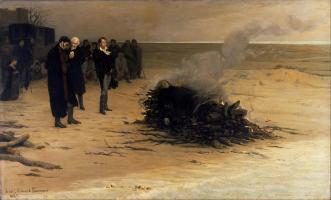
On 3rd May 1850 Devereux Plantagenet Cockburn [aged 21] died unmarried. He was buried at the Protestant aka English Cemetery, Rome.
On 28th June 1863 Alfred Gatley [aged 47] died. He was buried in the Protestant aka English Cemetery, Rome. His grave carries the Latin inscription: "... great in his works, a loyal citizen, beloved by many and respected by all. He had a kindness of heart, and a hatred of all that was false."
On 3rd August 1879 Joseph Severn [aged 85] died. He was buried at the Protestant aka English Cemetery, Rome next to the grave of John Keats.
Attribution: Howardhudson at English Wikipedia, CC BY 2.5
On 4th October 1472 Bishop James Goldwell was consecrated Bishop of Norwich at Saints Blaise and Charles in Catinari Church.
On 25th October 625 Boniface V Pope was buried in St Peter's Basilica.
Jean de Waurin's Chronicle of England Volume 6 Books 3-6: The Wars of the Roses
Jean de Waurin was a French Chronicler, from the Artois region, who was born around 1400, and died around 1474. Waurin’s Chronicle of England, Volume 6, covering the period 1450 to 1471, from which we have selected and translated Chapters relating to the Wars of the Roses, provides a vivid, original, contemporary description of key events some of which he witnessed first-hand, some of which he was told by the key people involved with whom Waurin had a personal relationship.
Available at Amazon in eBook and Paperback format.
On 20th April 689 King Cædwalla of Wessex [aged 30] died. He was buried at St Peter's Basilica.
On 25th December 800 Charles "Charlemagne aka Great" King of the Franks King Lombardy Holy Roman Emperor [aged 58] was crowned Holy Roman Emperor at St Peter's Basilica by Pope Leo III.