

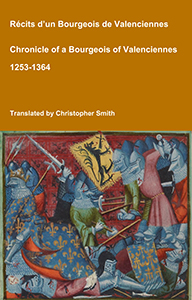
Chronicle of a Bourgeois of Valenciennes
Récits d’un bourgeois de Valenciennes aka The Chronicle of a Bourgeois of Valenciennes is a vivid 14th-century vernacular chronicle written by an anonymous urban chronicler from Valenciennes in the County of Hainaut. It survives in a manuscript that describes local and regional history from about 1253 to 1366, blending chronology, narrative episodes, and eyewitness-style accounts of political, military, and social events in medieval France, Flanders, and the Low Countries. The work begins with a chronological framework of events affecting Valenciennes and its region under rulers such as King Philip VI of France and the shifting allegiances of local nobility. It includes accounts of conflicts, sieges, diplomatic manoeuvres, and the impact of broader struggles like the Hundred Years’ War on urban life in Hainaut. Written from the perspective of a burgher (bourgeois) rather than a monastery or royal court, the chronicle offers a rare lay viewpoint on high politics and warfare, reflecting how merchants, townspeople, and civic institutions experienced the turbulence of the 13th and 14th centuries. Its narrative style combines straightforward reporting of events with moral and civic observations, making it a valuable source for readers interested in medieval urban society, regional politics, and the lived experience of war and governance in pre-modern Europe.
Available at Amazon in eBook and Paperback format.
Sappho is in Romans People.
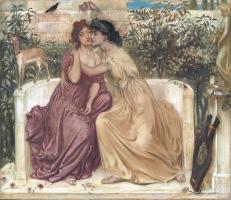
1857. Simeon Solomon (age 16). "Sappho and Erinna in a garden at Mytilene ".
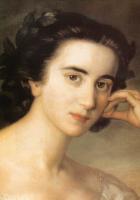
Around 1860. Soma Orlai Petrich (age 37). "Sappho".
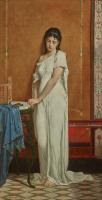
1875. Jean-Baptiste Bertrand (age 51). "Lesbie and the sparrow". The subject of our painting is both a praise of the favorite animal and a lamentation over its death, a common theme in antiquity. It can also bear an erotic significance, with the death of the sparrow, an animal whose melodious voice endowed it with a reputation for sensuality, symbolizing the end of a passionate love. Lesbia was the mistress of the poet Catullus (87-54 BC) to whom he dedicated many poems (half of the 118 that have survived). The wife of a consul, she was famous for her libertine ways and inspired the artists of her time. Catullus is said to have given her the nickname Lesbia in reference to the Greek poet Sappho, who lived on the island of Lesbos. Sappho ran a school for women there, where eroticism and poetry were taught.
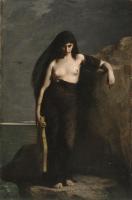
1877. Charles Mengin (age 23). "Sappho".
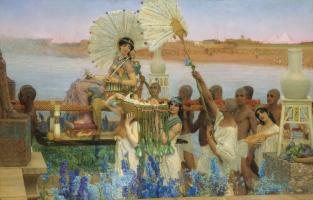
1881. Lawrence Alma-Tadema (age 44). "Sappho and Alcaeus". It depicts a concert in the late 7th century BC, with the poet Alcaeus of Mytilene playing the kithara. In the audience is fellow Lesbos poet Sappho, accompanied by several of her female friends. Sappho is paying close attention to the performance, resting her arm on a cushion which bears a laurel wreath, presumably intended for the performer. The painting is based on Athenaeus' "The Deipnosophists" Book 13 Chapter 7:
With the fond love of Lesbian Alcæus,
Who sang the praises of the amorous Sappho,
And grieved his Teian rival, breathing songs
Such as the nightingale would gladly imitate;
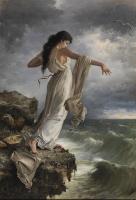
1881. Miquel Carbonell Selva (age 26). "The Death of Sappho". The painting depicts a myth about Sappho's death, that she fell off of a cliff and drowned to death after having her heart broken by a young sailor named Phaon.
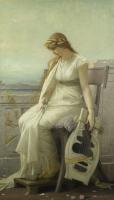
1884. Jules Joseph Lefebvre (age 47). "Sappho".
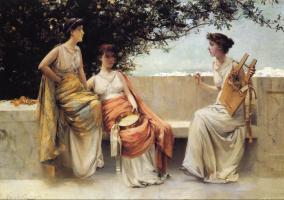
1895. Francis Coates Jones (age 37). "Sappho".
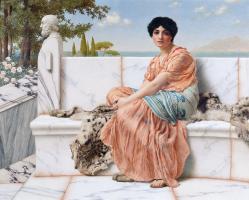
1904. John William Godward (age 42). "Sappho of Lesbos".
Before 1911. Jules Joseph Lefebvre (age 74). "Sappho".
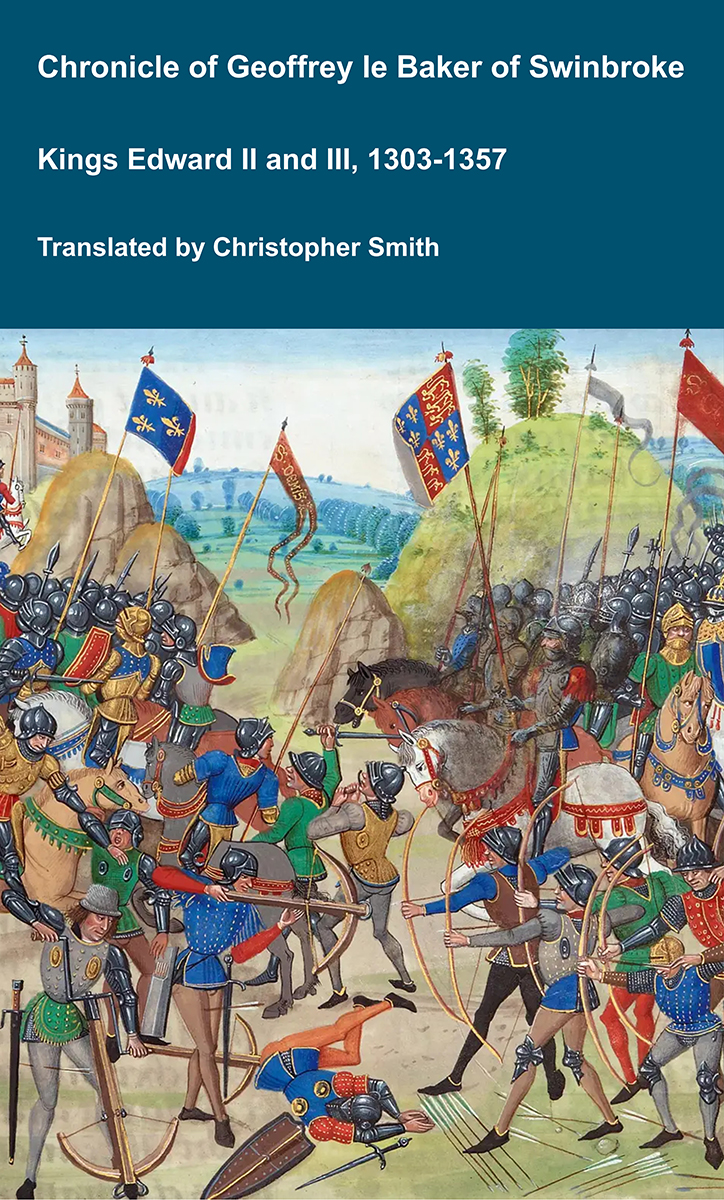
Chronicle of Geoffrey le Baker of Swinbroke
Baker was a secular clerk from Swinbroke, now Swinbrook, an Oxfordshire village two miles east of Burford. His Chronicle describes the events of the period 1303-1356: Gaveston, Bannockburn, Boroughbridge, the murder of King Edward II, the Scottish Wars, Sluys, Crécy, the Black Death, Winchelsea and Poitiers. To quote Herbert Bruce 'it possesses a vigorous and characteristic style, and its value for particular events between 1303 and 1356 has been recognised by its editor and by subsequent writers'. The book provides remarkable detail about the events it describes. Baker's text has been augmented with hundreds of notes, including extracts from other contemporary chronicles, such as the Annales Londonienses, Annales Paulini, Murimuth, Lanercost, Avesbury, Guisborough and Froissart to enrich the reader's understanding. The translation takes as its source the 'Chronicon Galfridi le Baker de Swynebroke' published in 1889, edited by Edward Maunde Thompson.
Available at Amazon in eBook and Paperback format.
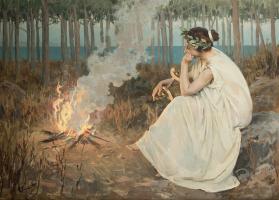
Before 1927. Enrique Simonet Lombardo (age 60). "Sappho".