

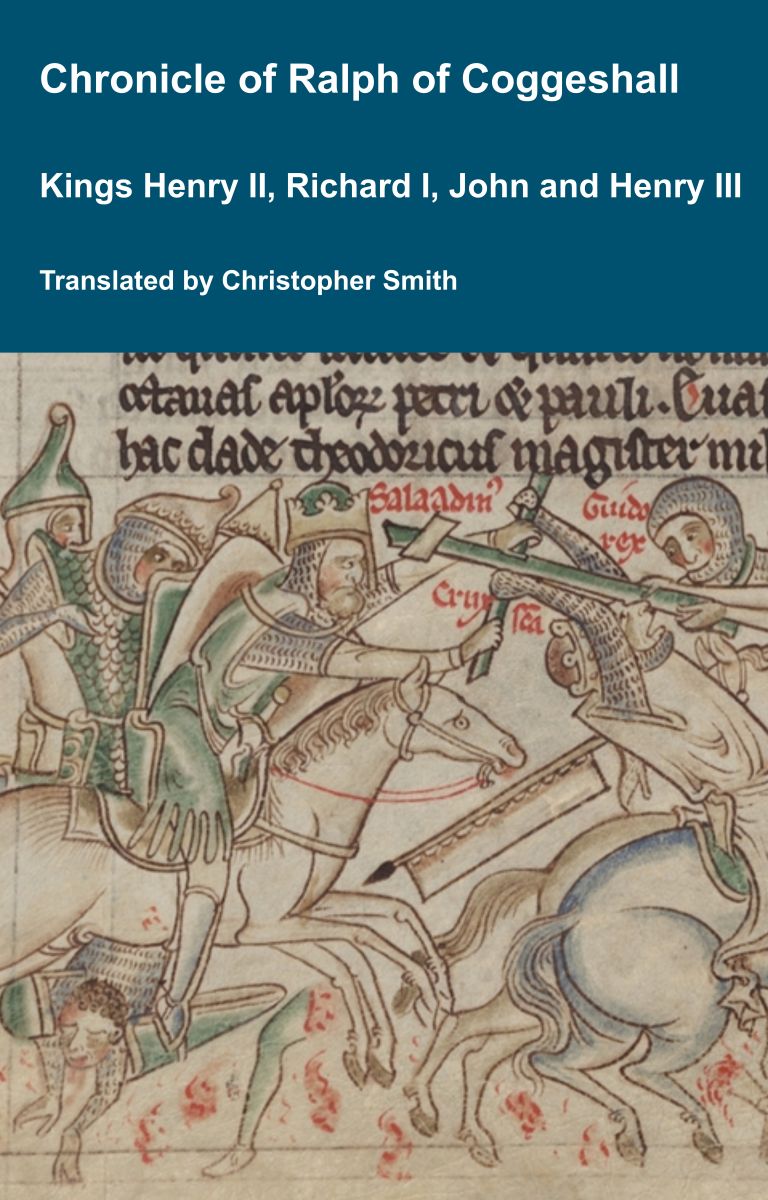
Chronicle of Abbot Ralph of Coggeshall
The Chronicle of Abbot Ralph of Coggeshall (Chronicon Anglicanum) is an indispensable medieval history that brings to life centuries of English and European affairs through the eyes of a learned Cistercian monk. Ralph of Coggeshall, abbot of the Abbey of Coggeshall in Essex in the early 13th century, continued and expanded his community’s chronicle, documenting events from the Norman Conquest of 1066 into the tumultuous reign of King Henry III. Blending eyewitness testimony, careful compilation, and the monastic commitment to record-keeping, this chronicle offers a rare narrative of political intrigue, royal power struggles, and social upheaval in England and beyond. Ralph’s work captures the reigns of pivotal figures such as Richard I and King John, providing invaluable insights into their characters, decisions, and the forces that shaped medieval rule. More than a simple annal, Chronicon Anglicanum conveys the texture of medieval life and governance, making it a rich source for scholars and readers fascinated by English history, monastic authorship, and the shaping of the medieval world.
Available at Amazon in eBook and Paperback format.
Assers Life of Alfred 875. 875. 47. The Danes in Northumbria and Cambridge.103 In the year of our Lord's incarnation 875, being the twenty-seventh of King Alfred's life, the above-mentioned army, leaving Repton, Derbyshire [Map], separated into two bodies, one of which went with Halfdene into Northumbria, and having wintered there near the Tyne, and reduced all Northumbria to subjection, also ravaged the Picts and the people of Strathclyde.104 The other division, with Guthrum105, Oscytel, and Anwind, three kings of the heathen, went to Cambridge [Map], and there wintered.
Note 103. From the Chronicle.
Note 104. The valley of the Clyde.
Note 105. Here spelled Gothrum.
Anglo-Saxon Chronicle. 875. This year went the army from Repton [Map]; and Healfden advanced with some of the army against the Northumbrians, and fixed his winter-quarters by the river Tine. The army then subdued that land, and oft invaded the Picts and the Strathclydwallians. Meanwhile the three kings, Guthrum, Oskytel, and Anwind, went from Repton [Map] to Cambridge with a vast army, and sat there one year. This summer King Alfred [aged 26] went out to sea with an armed fleet, and fought with seven ship-rovers, one of whom he took, and dispersed the others.
Around 12th May 878 King Alfred "The Great" of Wessex [aged 29] defeated the Viking army led by Guthrum Viking at the Battle of Edington at Edington, Wiltshire (the location is subject to dispute; possibly Heddington, Wiltshire).
Assers Life of Alfred 878. 878. 56. Battle of Edington, and Treaty with Guthrum.127 The next morning at dawn he moved his standards to Edington128, and there fought bravely and perseveringly by means of a close shield-wall against the whole army of the heathen, whom at length, with the divine help, he defeated with great slaughter, and pursued them flying to their stronghold. Immediately he slew all the men and carried off all the horses and cattle that he could find without the fortress, and thereupon pitched his camp, with all his army, before the gates of the heathen stronghold. And when he had remained there fourteen days, the heathen, terrified by hunger, cold, fear, and last of all by despair, begged for peace, engaging to give the king as many designated hostages as he pleased, and to receive none from him in return - in which manner they had never before made peace with any one. The king, hearing this embassage, of his own motion took pity upon them, and received from them the designated hostages, as many as he would. Thereupon the heathen swore, besides, that they would straightway leave his kingdom; and their king, Guthrum, promised to embrace Christianity, and receive baptism at King Alfred's [aged 29] hands - all of which articles he and his men fulfilled as they had promised. For after [three]129 weeks Guthrum, king of the heathen, with thirty130 men chosen from his army, came to Alfred at a place called Aller, near Athelney, and there King Alfred, receiving him as a son by adoption, raised him up from the holy font of baptism. On the eighth day, at a royal vill named Wedmore [Map], his chrism-loosing131 took place. After his baptism he remained twelve days with the king, who, together with all his companions, gave him many rich gifts.132
Note 127. Based upon the Chronicle.
Note 128. In Wiltshire.
Note 129. Supplied by Stevenson from the Chronicle.
Note 130. Properly, as one of thirty, according to the Chronicle.
Note 131. Chrism is the term employed for the mixture of oil and balsam employed in the rite of confirmation, and sometimes for the ceremony of confirmation itself. In the early church, this ceremony immediately followed baptism, and was performed by the laying on of hands. In the Roman church it is obligatory on all Catholics, and no baptism is theoretically complete without it. It is performed by a bishop (only exceptionally by a priest). The ceremony begins with the bishop's rising and facing the person or persons to be confirmed, his pastoral staff in his hand, and saying: 'May the Holy Ghost come upon you, and the power of the Holy Ghost keep you from sins' (Handbook to Christian and Ecclesiastical Rome: Liturgy in Rome, London, 1897, pp. 169–171). The rite is described in Egbert's Pontifical, which may be taken as representing the custom in the church of Alfred's time. Lingard says (Anglo-Saxon Church, London, 1858, 1. 297): 'According to that pontifical, the bishop prayed thus: "Almighty and Everlasting God, who hast granted to this thy servant to be born again of water and the Holy Ghost, and hast given to him remission of his sins, send down upon him thy sevenfold Holy Spirit, the Paraclete from heaven, Amen. Give to him the spirit of wisdom and understanding, Amen - the spirit of counsel and fortitude, Amen - the spirit of knowledge and piety, Amen. Fill him with the spirit of the fear of God and our Lord Jesus Christ, and mercifully sign him with the sign of the holy cross for life eternal." The bishop then marked his forehead with chrism, and proceeded thus: "Receive this sign of the holy cross with the chrism of salvation in Christ Jesus unto life eternal." The head was then bound with a fillet of new linen to be worn seven days, and the bishop resumed: "O God, who didst give thy Holy Spirit to thine apostles, that by them and their successors he might be given to the rest of the faithful, look down on the ministry of our lowliness, and grant that into the heart of him whose forehead we have this day anointed, and confirmed with the sign of the cross, thy Holy Spirit may descend; and that, dwelling therein, he may make it the temple of his glory, through Christ our Lord." The confirmed then received the episcopal blessing, and communicated during the mass.'
The chrism-loosing was the ceremony of unbinding the fillet, apparently.
Note 132. MS. ædificia; Stevenson, beneficia.
Anglo-Saxon Chronicle. Around 12th May 878. Then, in the seventh week after Easter, he rode to Brixton by the eastern side of Selwood; and there came out to meet him all the people of Somersersetshire, and Wiltshire, and that part of Hampshire which is on this side of the sea; and they rejoiced to see him. Then within one night he went from this retreat to Hey; and within one night after he proceeded to Heddington; and there fought with all the army, and put them to flight, riding after them as far as the fortress, where he remained a fortnight. Then the army gave him hostages with many oaths, that they would go out of his kingdom. They told him also, that their king would receive baptism. And they acted accordingly; for in the course of three weeks after, King Guthrum, attended by some thirty of the worthiest men that were in the army, came to him at Aller, which is near Athelney [Map], and there the king became his sponsor in baptism; and his crisom-leasing was at Wedmor. He was there twelve nights with the king [aged 29], who honoured him and his attendants with many presents.
Around August 878 Guthrum Viking agreed to leave Wessex, to be baptised and to accept King Alfred "The Great" of Wessex [aged 29] as his adoptive father. Known as Treaty of Wedmore.
Anglo-Saxon Chronicle. 890. This year Abbot Bernhelm conducted the alms of the West-Saxons and of King Alfred to Rome; and Guthrum, king of the Northern men, departed this life, whose baptismal name was Athelstan. He was the godson of King Alfred; and he abode among the East-Angles, where he first established a settlement. The same year also went the army from the Seine to Saint Lo, which is between the Bretons and the Franks; where the Bretons fought with them, obtained the victory, and drove them out into a river, in which many of them were drowned. This year also was Plegmund chosen by God and all his saints to the archbishopric in Canterbury.
Around 890 Guthrum Viking died. He was, according to the 12th Century Annals of St Neots, buried in Hadleigh, Suffolk.
Time Team Series 1 Episode 1: The Guerrilla Base of the King was filmed between 16th April 1993 and 18th April 1993. It was originally shown on 16th January 1994.
Location: Athelney Abbey [Map].
Category: Time Team Early Medieval.
Time Team:
Tony Robinson [aged 47], Presenter
Mick Aston [aged 47], Bristol University Landscape Archaeologist
Gerry Barber, Bristol University Environmental Archaeologist
Phil Harding [aged 43], Wessex Archaeological Trust Field Archaeologist
Carenza Lewis [aged 30], Royal Commission on Historic Monuments
Robin Bush [aged 50], Archivist
Victor Ambrus [aged 58], Historical Illustrator
John Gator, Chris Gaffney, Geophysics
Gerry McDonnell, Archeaological Scientist.
Base: George Hotel [Map] in Wedmore.
Techniques: Field Walking, Excavations, Magnetometry, Resistivity, Soil Coring
Sources: Life of Alfred by Asser, Assers Life of Alfred 878.
Historical Figures: King Alfred "The Great" of Wessex, Guthrum Viking.
Events: Battle of Edington.
Outcomes: Plan of Athelney Abbey [Map], possible site of original Saxon church, Anglo-Saxon iron slag indicating iron working; the furthest west found at the time.
History of the Dukes of Normandy by William of Jumieges. While these things were taking place, envoys from King Guthrum of the English arrived, bringing words of entreaty to Rollo, that he should come to his aid as quickly as possible. For certain rebels had risen up against the king and had taken up arms. Rollo, sympathizing with the king's distress, and despairing of capturing the city of Paris because of the difficulty of access and the abundant supply of provisions within it, abandoned the siege and set out against the English. When he came there, he overpowered the rebels and restrained them with severity, and having received hostages, he made them obedient and submissive to their king. From there, having once more chosen a great company of young warriors, and having received from the king rich gifts, he returned to Francia. Immediately he divided the leaders of his army: some he sent up the river Seine, others up the Loire, and others up the Garonne1, to plunder the provinces that lay between, sending them swiftly by ship. But Rollo himself returned again to Paris, and began once more to assault the city and to lay waste the land of his enemies.
Dum hæc geruntur, regis Anglorum Elstanni legati adveniunt, deprecatoria verba Rolloni deferentes, ut illi quantocius auxilium ferat. Conspiraverant enim adversus eum quidam rebelles, arma moventes. Cujus anxietati compatiens, de urbis Parisiaca expugnatione diffidens, ob videlicet aditus difficultatem et nimiam alimoniæ intra eam copiam, dimissa obsidione, Anglos aggreditur. Quo cum venisset, rebelles expugnans, cum austeritate coercuit, acceptisque obsidibus regi suo pronos effecit. Exhinc iterato electa juvenum multitudine, cum magnis muneribus a rege sibi collatis, in Franciam remeat, statim comites exercitus sui dividens, alios alveo Sequanæ, alios Ligeris fluento, alios amne Gerundæ interjacentes provincias prædaturos celeri navigatione misit. Ipse autem Parisius iterum veniens, cœpit urbem oppugnare et terram super inimicos suos devastare.
Note 1. The Garonne, mentioned only in this Chapter, flows through Aquitaine i.e. south-west France, from Toulouse through Bordeaux where it reaches the sea. The name Aquitaine i.e. Land of Water, or Rivers, or similar, may be derived from its many tributaries.
History of the Dukes of Normandy by William of Jumieges. When the Walgrenses heard that a barbarian people, fiercely battered by a sea storm, had been driven onto their shores, they gathered a multitude of country folk and rushed upon Duke Rollo, who had scarcely escaped from the raging sea. But Rollo, quick to battle as usual, marched against them, fought, and struck down many of them in death, sending them to the world of the dead; the rest he either put to flight or captured. And when, staying there for a long time, he was laying waste to Walcheren, the most Christian King Guthrum of the English, most excellent among kings in virtue, remembering the friendship in which he and Rollo had bound themselves in a perpetual covenant, sent across to Walcheren twelve ships loaded with grain, wine, and bacon, and indeed just as many more filled with armed soldiers to the distinguished commander. Rollo, pleased with these gifts, sent the envoys back to the king [Guthrum], with very great presents enriching them, and through them informed him that he would comply with the king.
Audientes autem Walgrenses quod gens barbara tempestate maris ferociter quassata suis littoribus esset advecta, congregata multitudine pagensium, Rollonem ducem tempestuoso mari vix ereptum assilierunt. Qui solito more concitus, contra illos debellando perrexit, atque plures illorum nece prostratos orco transmisit; residuosque illorum aut fugavit, aut cepit. Cumque diutissime morulans Walgras [forte Walcherem, inter Zelandiæ insulas, in qua Flushinga] depopularet, reminiscens Alstemus rex Anglorum christianissimus, omnium regum probitate præcellentissimus, amicitiæ qua se et Rollonem colligarat in fœdera sempiterna, xii naves frumento, vino atque lardo oneratas, quin etiam totidem armato milite repletas, duci præcelso transmisit in Walgras. His Rollo donis lætus, legatos muneribus præmaximis ditatos cum gratiarum actione ad regem remisit, seque per eos femulaturum regi mandavit.
Chronicle of Abbot Ralph of Coggeshall
The Chronicle of Abbot Ralph of Coggeshall (Chronicon Anglicanum) is an indispensable medieval history that brings to life centuries of English and European affairs through the eyes of a learned Cistercian monk. Ralph of Coggeshall, abbot of the Abbey of Coggeshall in Essex in the early 13th century, continued and expanded his community’s chronicle, documenting events from the Norman Conquest of 1066 into the tumultuous reign of King Henry III. Blending eyewitness testimony, careful compilation, and the monastic commitment to record-keeping, this chronicle offers a rare narrative of political intrigue, royal power struggles, and social upheaval in England and beyond. Ralph’s work captures the reigns of pivotal figures such as Richard I and King John, providing invaluable insights into their characters, decisions, and the forces that shaped medieval rule. More than a simple annal, Chronicon Anglicanum conveys the texture of medieval life and governance, making it a rich source for scholars and readers fascinated by English history, monastic authorship, and the shaping of the medieval world.
Available at Amazon in eBook and Paperback format.
History of the Dukes of Normandy by William of Jumieges. At once Rollo set out boldly and without delay to meet the king. When they met, they embraced one another and exchanged kisses. Their armies having withdrawn, they, seated apart, King Guthrum was the first to speak:
Mighty in lineage, shining with the brilliance of your deeds,
Exalted above all others in character and in worth, and therefore,
Let us be joined together in a pleasing bond of faithful union.
Be, I ask, as part of my soul, and ever my companion,
I ask that you remain within our lands,
And thus be cleansed from all stain by the saving baptismal water.
Behold what I have accomplished throughout the realm under my rule.
Be mindful of me, as I shall ever be mindful of you in all things.
And if you should now wish to journey to other shores,
If some grim and savage people should soon make war upon me,
Wickedly keeping no faith and not holding to its pledged word,
Then, as you are able, bring aid with steadfast effort to save,
And I will come to your help in like manner by giving aid.
Your shield shall defend me, and mine shall defend you in shared battle.
Extemplo Rollo audaciter et incunctanter perrexit ad regem contra se venientem. Qui mutuo amplexati et oscula libati, cedentibus utriusque exercitus turmis sederunt sepositi. Tunc rex Alstemus prior est allocutus:
Prosapia pollens, gestorum lumine fulgens,
Moribus et meritis præcelsior omnibus, atque,
Fœdere complacito fidei nectamur in uno.
Sis, peto, pars animæ semperque meæ comes, atque
Finibus in nostris temet deposco morari,
Sicque salutifero baptismate sorde piari.
En quid gestis habe nostræ ditionis in orbe.
Sis memor ipse mei, fuero ceu semper in omni.
Et si velle alias est nunc proficiscier oras,
Si gens torva, ferox, jamjam feritaverit, in me,
Improba non servans fidei retinensque tenorem
Ut potis es fer opem stabili conamine salvans
Et tibi succurram simili ratione juvando.
Te teget atque meum mutuo certamine scutum.
History of the Dukes of Normandy by William of Jumieges. At that time, the most Christian king of the English, named Guthrum1, adorned with every title of virtue and a most worthy protector of the Holy Church, governed the reins of the English kingdom with great piety. To him Rollo immediately sent his envoys and instructed them what they should say. When they came before the king, they spoke in a humble tone with bowed heads: "The most powerful patrician of all, and most excellent leader of the Danes, Rollo, our lord and protector, offers you loyal service, and the gift of unbroken friendship. Great misfortune has befallen the kingdom of Denmark, and alas! we have been unjustly driven out from it. The stormy East Wind being exposed to us, and the swelling force of raging tempests, have cast us upon your shores, deprived of all hope and safeguard of life. When we attempted to return to Denmark and take vengeance upon our enemies, the icy winter hindered and blocked our way. The ground was frozen hard, the frost weighed down the tender grasses and the branches of the trees; the rivers, congealed into solid walls of ice, denied us passage, and the sea offered us no favourable course. Meanwhile, certain soldiers who dwell near our borders raised a great army against us and attacked us. Since we could sail neither beneath the ice nor above it, we resisted their assault and captured many of them in battle. But we have not plundered your kingdom, nor have we carried off spoils to our ships. We ask only a truce for buying and selling, for when spring approaches, we intend to sail on to Francia." When the king heard this, he replied with a gracious expression: "No land produces men more noble or more skilled in arms than Denmark. Many have told us of your lord's widely famed nobility, of your hardships and labours, and also of the treacherous deceit of the king of Denmark. None is more righteous in action than your lord; none greater in arms. Set aside all anxiety over this matter. Be free from fear of war or danger, and from every harm. You may buy and sell wherever you wish within our realm. And we beg you, persuade your lord to come to us in the fullness of trust, for I long to see him and to comfort him in his misfortunes." The envoys departed and reported all these things to Rollo.
Eo namque tempore, rex Anglorum christianissimus, nomine Alstemus, omnium bonorum titulis exornatus, sacrosanctæ Ecclesiæ prædignus advocatus, habenas regni Anglorum moderabat piissimus. Cui continuo Rollo legatos suos misit et quid dicerent auribus illorum intimavit. Qui venientes ad eum, pio vocis affectu submissis vultibus dixerunt: "Omnium præpotentissimus patricius, duxque Dacorum præcellentissimus Rollo, noster senior et advocatus, tibi fidele servitium, tuisque amicitiæ munus inconvulsum. Magnum, domine rex, Daciæ regno infortunium perpessos et ab eo, heu dolor! fraudulenter exterminatos, Eurus obnoxius nobis penitus intumescentiumque procellarum elationibus afflictos vestris finibus appulit omni spei et salutis præsidio privatos. Cum autem conaremur Daciam repetere et nos de inimicis nostris vindicare, obstitit et interclusit nos glacialis hiems, geluque crustante terram et affligente flexiles herbarum et arborum, comas, densa glaciali: m mole refrenata crustarum, struxerunt nobis murum flumina, nec præbuit nobis prosperum iter unda. Audientes quidam milites in confinio nostri ad ventus commorantes præmaximam aciem contra no: struxerunt, nosque lacessentes invaserunt. Nos vero, nec sub glacie nec supra navigare valentes, illorum audacia restitimus, multosque illorum prælio exarmatos cepimus. Non autem regnum tuum depopulabimus, nec prædas usquam raptas ad naves vertemus. Vendendi atque emendi sequestram pacem petimus, quia imminentis veris tempore ad Franciam proficiscemur." Rex autem hilarem vultum summissus his auditis profatur: "Nulla tellus effert viros magis quam Dacia præcipuos, armisque strenue edoctos; parentelam diffusæ generositatis vestri senioris, casusque et labores. vestros, quinetiam fraudulentam perfidiam Dacia regis nobis retulerunt plurimi. Nemo seniore in factis justior vestro, nemo major in armis. Hujus negotii curas secludite, armorum securi, præliorum impaD tientes, atque omnium malorum immunes estote. Liceat vobis ubicunque terrarum nostræ ditionis vendere et emere. Vestrum seniorem, precamur, cogite ut nostræ fidei integritate dignetur ad nos venire; quia cum desidero intueri, superque malis suis solari." Abeuntes autem missi, quæcunque audierant renuntiaverunt Rolloni.
Note 1. The Latin text refers to 'Alstemo' i.e. 'Æthelstan'. A source of confusion for many years 'Æthelstan' is now recognised as Guthrum, King of East Anglia in the late 9th century, who was given the name Æthelstan at his baptism following his surrender to Alfred the Great at the Battle of Edington. To avoid confusion we have adopted the name Guthrum in place of Æthelstan in this translation.