

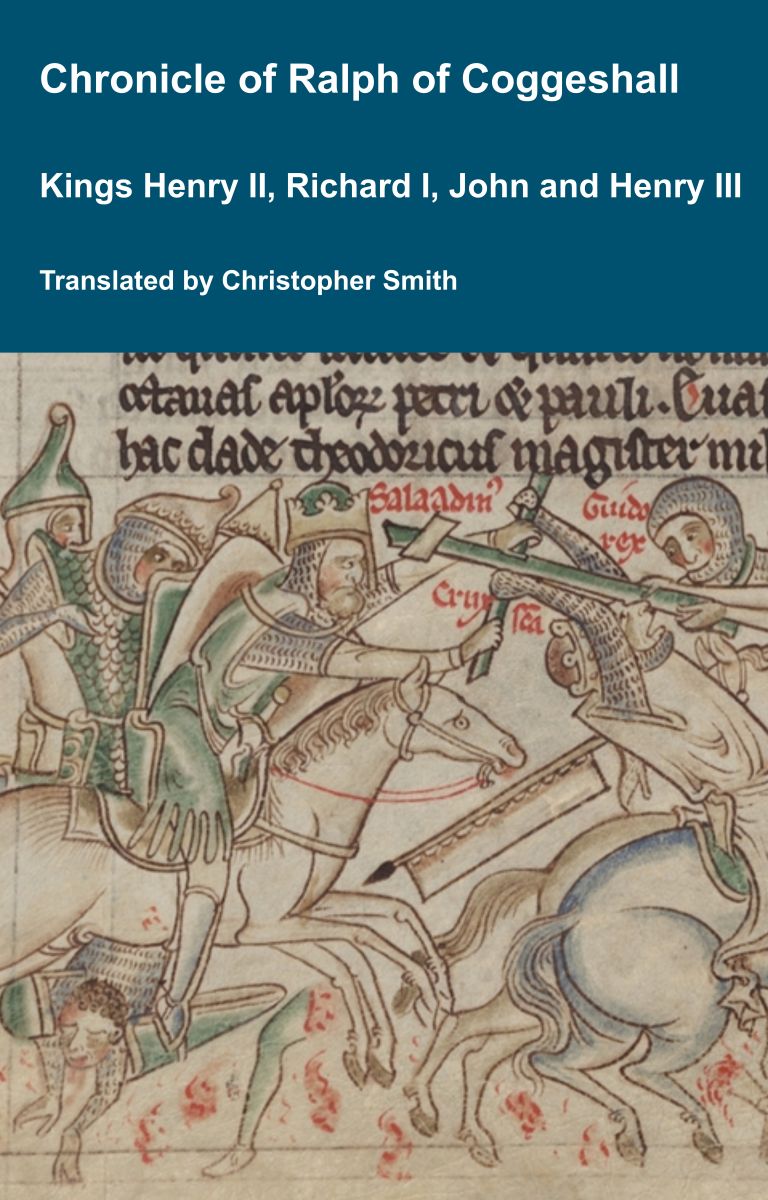
Chronicle of Abbot Ralph of Coggeshall
The Chronicle of Abbot Ralph of Coggeshall (Chronicon Anglicanum) is an indispensable medieval history that brings to life centuries of English and European affairs through the eyes of a learned Cistercian monk. Ralph of Coggeshall, abbot of the Abbey of Coggeshall in Essex in the early 13th century, continued and expanded his community’s chronicle, documenting events from the Norman Conquest of 1066 into the tumultuous reign of King Henry III. Blending eyewitness testimony, careful compilation, and the monastic commitment to record-keeping, this chronicle offers a rare narrative of political intrigue, royal power struggles, and social upheaval in England and beyond. Ralph’s work captures the reigns of pivotal figures such as Richard I and King John, providing invaluable insights into their characters, decisions, and the forces that shaped medieval rule. More than a simple annal, Chronicon Anglicanum conveys the texture of medieval life and governance, making it a rich source for scholars and readers fascinated by English history, monastic authorship, and the shaping of the medieval world.
Available at Amazon in eBook and Paperback format.
Before 994 [his father] King Harald Grenske of Vestfold and Agder and [his mother] Åsta Gudbrandsdatter (age 18) were married.
Around 995 [his father] King Harald Grenske of Vestfold and Agder was killed by the sons of Sigrid "The Haughty" who had him burnt to death inside a great hall following a feast to discourage other suitors.
Around 995 King Olaf II of Norway was born to [his father] King Harald Grenske of Vestfold and Agder and [his mother] Åsta Gudbrandsdatter (age 20).
In 1015 King Olaf II of Norway (age 20) was appointed King Norway.
Around 1020 to 1030 [his mother] Åsta Gudbrandsdatter (age 45) died.
Around 1024 [his son] King Magnus "The Good" of Norway was born to King Olaf II of Norway (age 29).
Chronicon ex Chronicis by Florence and John of Worcester. 1027. Canute (age 32), king of England and Denmark, received intelligence that the Norwegians held their king Olaf (age 32) in contempt on account of his meekness and simplicity, his justice and piety. In consequence, he sent large sums of gold and silver to certain of them, earnestly entreating them to reject and depose Olaf, and submitting to him, accept him for their king. They greedily accepted his bribes, and caused a message to be returned to Canute that they were prepared to receive him whenever he chose to come.
Anglo-Saxon Chronicle. 1028. This year went King Knute (age 33) from England to Norway with fifty ships manned with English thanes, and drove King Olave (age 33) from the land, which he entirely secured to himself.
Chronicon ex Chronicis by Florence and John of Worcester. 1028. Canute (age 33), king of England and Denmark, went over to Norway with fifty stout ships, and expelled king Olaf (age 33) from the kingdom, which he subjugated to himself.
The same year was born Marianus, of Ireland, the celebrated Scot, by whose study and pains this excellent Chronicle was compiled from various books.
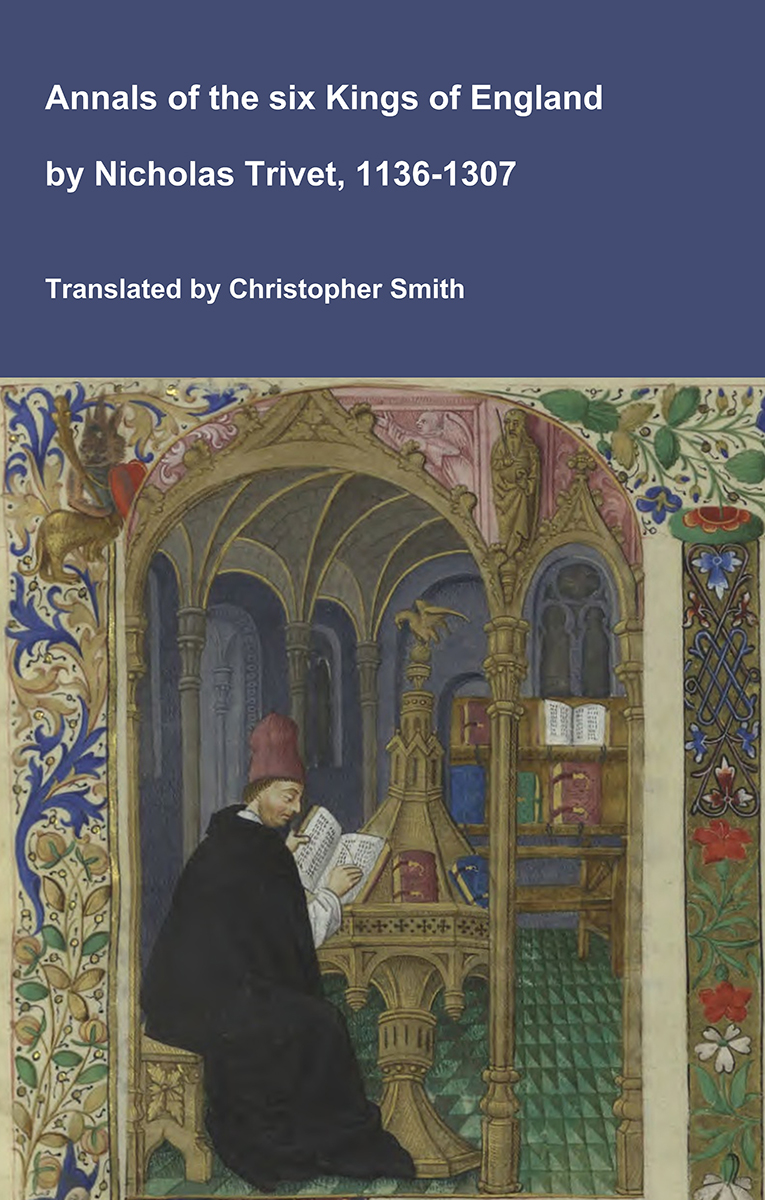
Annals of the six Kings of England by Nicholas Trivet
Translation of the Annals of the Six Kings of England by that traces the rise and rule of the Angevin aka Plantagenet dynasty from the mid-12th to early 14th century. Written by the Dominican scholar Nicholas Trivet, the work offers a vivid account of English history from the reign of King Stephen through to the death of King Edward I, blending political narrative with moral reflection. Covering the reigns of six monarchs—from Stephen to Edward I—the chronicle explores royal authority, rebellion, war, and the shifting balance between crown, church, and nobility. Trivet provides detailed insight into defining moments such as baronial conflicts, Anglo-French rivalry, and the consolidation of royal power under Edward I, whose reign he describes with particular immediacy. The Annals combines careful year-by-year reporting with thoughtful interpretation, presenting history not merely as a sequence of events but as a moral and political lesson. Ideal for readers interested in medieval history, kingship, and the origins of the English state, this chronicle remains a valuable and accessible window into the turbulent world of the Plantagenet kings.
Available at Amazon in eBook and Paperback format.
Anglo-Saxon Chronicle. 1030. This year returned King Olave (age 35) into Norway; but the people gathered together against him, and fought against him; and he was there slain, in Norway, by his own people, and was afterwards canonised. Before this, in the same year, died Hacon the doughty earl, at sea.
Chronicon ex Chronicis by Florence and John of Worcester. 1030. The before-mentioned earl Haco perished at sea: some, however, say that he was killed in the islands of Orkney. Olaf (age 35), king and martyr, son of [his father] Harold, king of Norway, was wickedly slain by the Norwegians.
On 29th July 1030 King Olaf II of Norway (age 35) was killed by his own people.
GrandFather: Gudrød Bjørnsson
Father: King Harald Grenske of Vestfold and Agder
Mother: Åsta Gudbrandsdatter