

Chronicle of Abbot Ralph of Coggeshall
The Chronicle of Abbot Ralph of Coggeshall (Chronicon Anglicanum) is an indispensable medieval history that brings to life centuries of English and European affairs through the eyes of a learned Cistercian monk. Ralph of Coggeshall, abbot of the Abbey of Coggeshall in Essex in the early 13th century, continued and expanded his community’s chronicle, documenting events from the Norman Conquest of 1066 into the tumultuous reign of King Henry III. Blending eyewitness testimony, careful compilation, and the monastic commitment to record-keeping, this chronicle offers a rare narrative of political intrigue, royal power struggles, and social upheaval in England and beyond. Ralph’s work captures the reigns of pivotal figures such as Richard I and King John, providing invaluable insights into their characters, decisions, and the forces that shaped medieval rule. More than a simple annal, Chronicon Anglicanum conveys the texture of medieval life and governance, making it a rich source for scholars and readers fascinated by English history, monastic authorship, and the shaping of the medieval world.
Available at Amazon in eBook and Paperback format.
Paternal Family Tree: Stewart
Maternal Family Tree: Anne Denman 1581-1661
Mary Stewart II Queen England Scotland and Ireland was christened at Chapel Royal, St James's Palace.
On 3rd September 1660 [her father] James, Duke of York [aged 26] and [her mother] Anne Hyde [aged 23] were married in secret. She by marriage Duchess York. She gave birth to their son [her brother] Charles Stewart seven weeks later. She the daughter of [her grandfather] Edward Hyde 1st Earl Clarendon [aged 51] and [her grandmother] Frances Aylesbury Countess Clarendon [aged 43]. He the son of King Charles I of England, Scotland and Ireland and Henrietta Maria Bourbon Queen Consort England [aged 50].


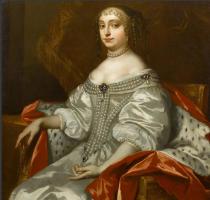

On 30th April 1662 Mary Stewart II Queen England Scotland and Ireland was born to [her father] James, Duke of York [aged 28] and [her mother] Anne Hyde Duchess of York [aged 25] at St James's Palace [Map].
Samuel Pepys' Diary. 1st May 1662. Sir G. Carteret [aged 52], Sir W. Pen [aged 41], and myself, with our clerks, set out this morning from Portsmouth, Hampshire [Map] very early, and got by noon to Petersfield, Hampshire; several officers of the Yard accompanying us so far. Here we dined and were merry. At dinner comes my Lord Carlingford [aged 59] from London, going to Portsmouth, Hampshire [Map]: tells us that the [her mother] Duchess of York [aged 25] is brought to bed of a girl, [Mary, afterwards Queen of England.] at which I find nobody pleased; and that Prince Rupert [aged 42] and the Duke of Buckingham [aged 34] are sworn of the Privy Councell. He himself made a dish with eggs of the butter of the sparagus, which is very fine meat, which I will practise hereafter.


John Evelyn's Diary. 1st September 1662. Being invited by Lord Berkeley [aged 34], I went to Durdans, where dined his [her uncle] Majesty [aged 32], the Queen [aged 23], Duke, [her mother] Duchess [aged 25], Prince Rupert [aged 42], Prince Edward, and abundance of noblemen. I went, after dinner, to visit my brother [aged 45] of Woodcot, my sister having been delivered of a son a little before, but who had now been two days dead.


In 1665 John Denham [aged 50] and Margaret Brooke Lady Denham [aged 25] were married. She, thereafter, conducted a very public affair with the future [her father] King James II [aged 31]. To her husband's mortification, she insisted on being acknowledged publicly as a Royal mistress, saying that she would not, unlike her predecessor Goditha Price "go up and down the back stairs". The difference in their ages was 25 years.
On 6th February 1665 Queen Anne of England Scotland and Ireland was born to James, Duke of York [aged 31] and Anne Hyde Duchess of York [aged 27] at St James's Palace [Map] at 11:39pm being their fourth child and second daughter. She was baptised Anglican in the Chapel Royal with her elder sister Mary Stewart II Queen England Scotland and Ireland [aged 2] being Godparent as well as Anne Scott Duchess Monmouth and Buccleuch [aged 13] and Archbishop Gilbert Sheldon [aged 66]. She married 28th July 1683 her second cousin once removed Prince George of Denmark 1st Duke Cumberland, son of Frederick III King of Denmark and Sophie Amalie Hanover Queen Consort Denmark, and had issue.


On 3rd June 1665 at the Battle of Lowestoft an English fleet commanded by King James II of England Scotland and Ireland [aged 31], Prince Rupert Palatinate Simmern 1st Duke Cumberland [aged 45] and Edward Montagu 1st Earl Sandwich [aged 39] defeated a Dutch Fleet.
Richard Boyle was killed.
Charles Maccarthy Viscount Muskerry was killed.
Charles Berkeley 1st Earl Falmouth [aged 35] was killed by a cannonball aboard the Royal Charles. Earl Falmouth extinct, Baron Botetourt Langport in Somerset extinct. His father Charles [aged 65] succeeded 2nd Viscount Fitzhardinge of Berehaven in Kerry. Penelope Godolphin Viscountess Fitzhardinge by marriage Viscountess Fitzhardinge of Berehaven in Kerry. Possibly the only occasion when a father has succeeded his son.
Charles Weston 3rd Earl of Portland [deceased] was killed by a cannon shot. On 13th June 1665 His uncle Thomas [aged 55] succeeded 4th Earl of Portland, 4th Baron Weston of Nayland in Suffolk.
Thomas Allin 1st Baronet [aged 53] was present.
Admiral Jeremy Smith commanded the Mary.
Captain George Batts fought. He was assigned to Sir George Ayscue's [aged 49] division in the Blue Squadron.
James Ley 3rd Earl Marlborough [aged 47] was killed at the Battle of Lowestoft commanding Old James attempting to recover a captured ship. His half brother William [aged 53] succeeded 4th Earl Marlborough.


In 1666 [her brother] Charles Stewart 1st Duke Kendal was created 1st Duke Kendal by [her grandfather] King Charles I of England, Scotland and Ireland. No patent was ever enrolled


On 3rd December 1666 [her brother] James Stewart 1st Duke Cambridge [aged 3] was created 1st Duke Cambridge by [her father] James, Duke of York [aged 33]. See Samuel Pepys' Diary 1666 December 06.
Those present included [her uncle] King Charles II of England Scotland and Ireland [aged 36], James, Duke of York, Prince Rupert Palatinate Simmern 1st Duke Cumberland [aged 46], William Cecil 2nd Earl Salisbury [aged 75], George Monck 1st Duke Albemarle [aged 57], Thomas Howard 1st Earl Berkshire [aged 79], Charles Stewart 6th Duke Lennox 3rd Duke Richmond [aged 27], Edward Montagu 2nd Earl Manchester [aged 64], James Scott 1st Duke Monmouth 1st Duke Buccleuch [aged 17].
Chronicle of Walter of Guisborough
A canon regular of the Augustinian Guisborough Priory, Yorkshire, formerly known as The Chronicle of Walter of Hemingburgh, describes the period from 1066 to 1346. Before 1274 the Chronicle is based on other works. Thereafter, the Chronicle is original, and a remarkable source for the events of the time. This book provides a translation of the Chronicle from that date. The Latin source for our translation is the 1849 work edited by Hans Claude Hamilton. Hamilton, in his preface, says: 'In the present work we behold perhaps one of the finest samples of our early chronicles, both as regards the value of the events recorded, and the correctness with which they are detailed; Nor will the pleasing style of composition be lightly passed over by those capable of seeing reflected from it the tokens of a vigorous and cultivated mind, and a favourable specimen of the learning and taste of the age in which it was framed.'
Available at Amazon in eBook and Paperback format.

On 6th January 1667 Margaret Brooke Lady Denham [aged 27] died. She was rumoured to have been poisoned by her husband John Denham [aged 52] by giving her a poisoned cup of chocolate. In any case rumour named several other possible poisoners, including her former lover [her father] James [aged 33], his wife [her mother] Anne Hyde [aged 29] and his sister-in-law, Lady Rochester [aged 21].
On 22nd May 1667 [her brother] Charles Stewart 1st Duke Kendal died. Duke Kendal extinct.
On 20th June 1667 [her brother] James Stewart 1st Duke Cambridge [aged 3] died at Richmond Palace [Map]. He was buried at Westminster Abbey [Map]. Duke Cambridge extinct.
On 7th October 1667 [her brother] Edgar Stewart 1st Duke Cambridge was created 1st Duke Cambridge by [her uncle] King Charles II of England Scotland and Ireland [aged 37].


Samuel Pepys' Diary. 2nd April 1669. Up, and by water to White Hall, and there with the Office attended the [her father] Duke of York [aged 35], and staid in White Hall till about noon, and so with W. Hewer [aged 27] to the Cocke [aged 52], and there he and I dined alone with great content, he reading to me, for my memory's sake, my late collections of the history of the Navy, that I might represent the same by and by to the Duke of York; and so, after dinner, he and I to White Hall, and there to the Duke of York's lodgings, whither he, by and by, by his appointment come: and alone with him an hour in his closet, telling him mine and W. Coventry's [aged 41] advice touching the present posture of the Navy, as the Duke of Buckingham [aged 41] and the rest do now labour to make changes therein; and that it were best for him to suffer the [her uncle] King [aged 38] to be satisfied with the bringing in of a man or two which they desire. I did also give the Duke of York a short account of the history of the Navy, as to our Office, wherewith he was very well satisfied: but I do find that he is pretty stiff against their bringing in of men against his mind, as the Treasures were, and particularly against Child's' coming in, because he is a merchant. After much discourse with him, we parted; and [he to] the Council, while I staid waiting for his telling me when I should be ready to give him a written account of the administration of the Navy. This caused me to wait the whole afternoon, till night. In the mean time, stepping to the [her mother] Duchess of York's [aged 32] side to speak with Lady Peterborough [aged 47]; I did see the young Duchess [aged 6]1, a little child in hanging sleeves; dance most finely, so as almost to ravish me, her ears were so good: taught by a Frenchman that did heretofore teach the King, and all the King's children, and the [her grandmother] Queen-Mother [aged 59] herself, who do still dance well.
Note 1. The Princess Mary, afterwards Queen of England.


Around 1670 Edward Lake [aged 28] was appointed Chaplain to Mary Stewart II Queen England Scotland and Ireland [aged 7] and [her sister] Queen Anne of England Scotland and Ireland [aged 4].
On 31st March 1671 [her mother] Anne Hyde Duchess of York [aged 34] died.
On 8th June 1671 [her brother] Edgar Stewart 1st Duke Cambridge [aged 3] died. Duke Cambridge extinct.
On 20th September 1673 [her father] James, Duke of York [aged 39] and [her step-mother] Mary of Modena Queen Consort England Scotland and Ireland [aged 14] were married. The difference in their ages was 24 years. He the son of [her grandfather] King Charles I of England, Scotland and Ireland and [her grandmother] Henrietta Maria Bourbon Queen Consort England.


Around 1676 Peter Lely [aged 57]. Portrait of Mary Stewart II Queen England Scotland and Ireland [aged 13].
John Evelyn's Diary. 1st August 1676. In the afternoon, after prayers at St. James's Chapel, was christened a daughter of Dr. Leake's [aged 34], the [her father] Duke's [aged 42] Chaplain: godmothers were Lady Mary [aged 14], daughter of the Duke of York, and the Duchess of Monmouth [aged 25]: godfather, the Earl of Bath [aged 47].

Before 1677 Barbara Villiers Viscountess Fitzhardinge [aged 22] became a Maid of Honour to the daughters of [her father] King James II of England Scotland and Ireland [aged 43]: Princess Mary [aged 14] and [her sister] Princess Anne [aged 11] and possibly others.
Chronicle of a Bourgeois of Valenciennes
Récits d’un bourgeois de Valenciennes aka The Chronicle of a Bourgeois of Valenciennes is a vivid 14th-century vernacular chronicle written by an anonymous urban chronicler from Valenciennes in the County of Hainaut. It survives in a manuscript that describes local and regional history from about 1253 to 1366, blending chronology, narrative episodes, and eyewitness-style accounts of political, military, and social events in medieval France, Flanders, and the Low Countries. The work begins with a chronological framework of events affecting Valenciennes and its region under rulers such as King Philip VI of France and the shifting allegiances of local nobility. It includes accounts of conflicts, sieges, diplomatic manoeuvres, and the impact of broader struggles like the Hundred Years’ War on urban life in Hainaut. Written from the perspective of a burgher (bourgeois) rather than a monastery or royal court, the chronicle offers a rare lay viewpoint on high politics and warfare, reflecting how merchants, townspeople, and civic institutions experienced the turbulence of the 13th and 14th centuries. Its narrative style combines straightforward reporting of events with moral and civic observations, making it a valuable source for readers interested in medieval urban society, regional politics, and the lived experience of war and governance in pre-modern Europe.
Available at Amazon in eBook and Paperback format.
John Evelyn's Diary. 23rd October 1677. Saw again the [her future husband] Prince of Orange [aged 26]; his marriage with the Lady Mary [aged 15], eldest daughter to the [her father] Duke of York [aged 44], by [her mother] Mrs. Hyde, the late Duchess, was now declared.


On 4th November 1677 King William III of England, Scotland and Ireland [aged 27] and Mary Stewart II Queen England Scotland and Ireland [aged 15] were married. She by marriage Princess Orange. She the daughter of King James II of England Scotland and Ireland [aged 44] and Anne Hyde Duchess of York. They were first cousins. He a grandson of King Charles I of England, Scotland and Ireland.
John Evelyn's Diary. 15th November 1677. The Queen's [aged 38] birthday, a great ball at Court, where the [her husband] Prince of Orange [aged 27] and his new Princess [aged 15] danced.
In 1679 Bishop Thomas Ken [aged 41] was appointed Chaplain to Mary Stewart II Queen England Scotland and Ireland [aged 16].
On 28th July 1683 [her brother-in-law] Prince George of Denmark 1st Duke Cumberland [aged 30] and [her sister] Queen Anne of England Scotland and Ireland [aged 18] were married at Chapel Royal, St James's Palace. She the daughter of [her father] King James II of England Scotland and Ireland [aged 49] and [her mother] Anne Hyde Duchess of York. He the son of Frederick III King of Denmark and Sophie Amalie Hanover Queen Consort Denmark [aged 55]. They were second cousin once removed.


On 29th November 1683 [her brother-in-law] Henry Waldegrave 1st Baron Waldegrave [aged 22] and [her sister] Henrietta Fitzjames Countess Newcastle [aged 16] were married. She the daughter of [her father] King James II of England Scotland and Ireland [aged 50] and [her mother] Anne Hyde Duchess of York.
Around 1684 Charles Waldegrave 3rd Baronet [aged 58] died. Around 1684 His son [her brother-in-law] Henry [aged 23] succeeded 4th Baronet Waldegrave of Hever Castle. [her sister] Henrietta Fitzjames Countess Newcastle [aged 17] by marriage Lady Waldegrave of Hever Castle.
On 6th February 1685 [her uncle] King Charles II of England Scotland and Ireland [aged 54] died around midday the morning at Whitehall Palace [Map] attended by Charles Scarburgh [aged 69]. His brother [her father] James [aged 51] succeeded II King England Scotland and Ireland. Duke York merged with the Crown. [her step-mother] Mary of Modena Queen Consort England Scotland and Ireland [aged 26] by marriage Queen Consort England Scotland and Ireland. His brother King James II of England Scotland and Ireland, William Chiffinch [aged 83], Richard Mason [aged 52] and Archbishop William Sancroft [aged 68] were present.
The time of his death reported differtently by different contemporary sources: John Evelyn's Diary 'at halfe an houre after eleven in the morning', the Anonymous Letter to Reverend Roper: 'Yesterday noon', Ambassador Barillon's Account: 'and at noon, he died without any struggle or convulsion.' and Charl;es Scarburgh's Manuscript: 'He expired on February the Sixth soon after noon'.
According to Mark Bryant's book "Private Lives: Curious Facts about the Famous and Infamous' King Charles is supposed to have said the much repested phrase: "I am sorry, gentlemen, for being such a time a-dying." This doesn't appear to come from a contemporary source. Macaulay in his 'History of England', writing much later has "He apologised to those who had stood round him all night for the trouble which he had caused. He had been, he said, a most unconscionable time dying; but he hoped that they would excuse it." Perhaps the nearest we can find in a contemporary source is the Anonymous Letter to Reverend Roper: 'and beg the pardon of the standers by, and those that were employed about him, that he gave them so much trouble: that he hoped the work was almost over...'


John Evelyn's Diary. 4th June 1685. Then the [her father] King [aged 51] rose, the Lords accompanying him to his bed-chamber, where, whilst he repos'd himselfe, tired indeede as he was with griefe and watching, they return'd againe Into the Council-chamber to take order for the proclaiming his Ma*, which (after some debate) they consented should be in the very forme his grandfather K. James I. was, after ye death of Queene Elizabeth; as likewise that the Lords, &c. should proceede in their coaches thro' the Citty for the more solemnity of it. Upon this was I, and severall other Gentlemen waiting in the Privy-gallerie, admitted into ye Council-chamber to be witnesse of what was resolv'd on. Thence with the Lords, the Lord Marshall and Heraulds, and other Crowne Officers being ready, we first went to White-hall gate, where the Lords stood on foote bare-headed, whilst the Herauld proclaim'd his [her uncle] Majesty's title to the Imperial Crowne and Succession according to ye forme, the trumpets and kettle-drums having first sounded 3 times, which ended with the people's acclamations. Then a Herauld call'd the Lords' coaches according to rank, myselfe accompanying the solemnity in my Lord Cornwallis's [aged 29] coach, first to Temple Barr, where the Lord Maior and his brethren met us on horseback, in all theire formalities, and proclaim'd the King; hence to the Exchange in Cornhill, and so we return'd in the order we set forth. Being come to Whitehall, we all went and kiss'd the King and [her step-mother] Queenes [aged 26] hands. He had ben on ye bed, but was now risen and in his undresse. The Queene [aged 23] was in bed in her appartment, but put forth her hand, seeming to be much afflicted, as I believe she was, having deported herselfe so decently upon all occasions since she came into England, which made her universally belov'd. Thus concluded this sad and not joyfull day.
In 1686 [her brother-in-law] Henry Waldegrave 1st Baron Waldegrave [aged 25] was created 1st Baron Waldegrave Chewton Somerset by [her father] King James II of England Scotland and Ireland [aged 52] three years after Henry Waldegrave 1st Baron Waldegrave married the King's illegitimate daughter [her sister] Henrietta Fitzjames Countess Newcastle [aged 19]. Henrietta Fitzjames Countess Newcastle by marriage Baroness Waldegrave Chewton Somerset.
In 1686 Catherine Sedley Countess Dorchester and Portmore [aged 28] was created 1st Countess Dorchester for life by King James II of England Scotland and Ireland [aged 52] for services as his mistress. Her father Charles Sedley 5th Baronet [aged 46] quipped "As the king has made my daughter a countess, the least I can do, in common gratitude, is to assist in making his Majesty's daughter [aged 23] a queen".


Around 1686 Willem Wissing [aged 30]. Portrait of Mary Stewart II Queen England Scotland and Ireland [aged 23].

In 1686 Bishop Thomas Cartwright [aged 52] was appointed Bishop of Chester by [her father] King James II of England Scotland and Ireland [aged 52].
Anne Boleyn. Her Life as told by Lancelot de Carle's 1536 Letter.
In 1536, two weeks after the execution of Anne Boleyn, her brother George and four others, Lancelot du Carle, wrote an extraordinary letter that described Anne's life, and her trial and execution, to which he was a witness. This book presents a new translation of that letter, with additional material from other contemporary sources such as Letters, Hall's and Wriothesley's Chronicles, the pamphlets of Wynkyn the Worde, the Memorial of George Constantyne, the Portuguese Letter and the Baga de Secrets, all of which are provided in Appendices.
Available at Amazon in eBook and Paperback format.
In 1687 [her illegitimate half-brother] James Fitzjames 1st Duke Berwick [aged 16] was created 1st Duke Berwick by [her father] King James II of England Scotland and Ireland [aged 53].
John Evelyn's Diary. 8th July 1688. One of the [her father] King's [aged 54] chaplains preached before the Princess [aged 26] on Exodus xiv. 13, "Stand still, and behold the salvation of the Lord", which he applied so boldly to the present conjuncture of the Church of England, that more could scarce be said to encourage desponders. The Popish priests were not able to carry their cause against their learned adversaries, who confounded them both by their disputes and writings.
John Evelyn's Diary. 2nd November 1688. It was now certainly reported by some who saw the fleet, and the Prince [aged 37] embark, that they sailed from the Brill on Wednesday morning, and that the Princess of Orange [aged 26] was there to take leave of her husband.
On 13th December 1688 Elizabeth Waller 1st Baroness Shelburne [aged 52] was created 1st Baroness Shelburne for life only by [her father] King James II of England Scotland and Ireland [aged 55]. Her son Charles Petty 1st Baron Shelburne [aged 15] was created 1st Baron Shelburne.
On 23rd December 1688 [her father] King James II of England Scotland and Ireland [aged 55] left England for France effectively abdicating as King England Scotland and Ireland. In April 1689 Parliament made William and Mary joint monarchs; His daughter Mary [aged 26] succeeded II Queen England Scotland and Ireland. His nephew [her husband] William [aged 38] succeeded III King England Scotland and Ireland.
In 1689 [her brother-in-law] Prince George of Denmark 1st Duke Cumberland [aged 35] was created 1st Duke Cumberland by his father-in-law King James II of England Scotland and Ireland [aged 55]. Queen Anne of England Scotland and Ireland [aged 23] by marriage Duchess Cumberland.
In 1689 Frederick Schomberg 1st Duke Schomberg [aged 73] was appointed 497th Knight of the Garter by [her husband] King William III of England, Scotland and Ireland [aged 38] and Mary Stewart II Queen England Scotland and Ireland [aged 26].
In 1689 William Cavendish 1st Duke Devonshire [aged 48] was appointed 498th Knight of the Garter by [her husband] King William III of England, Scotland and Ireland [aged 38] and Mary Stewart II Queen England Scotland and Ireland [aged 26].


After 1689 Dr Henry Dove was appointed Chaplain to [her husband] King William III of England, Scotland and Ireland [aged 38] and Mary Stewart II Queen England Scotland and Ireland [aged 26].
John Evelyn's Diary. 15th January 1689. The great convention being assembled the day before, falling upon the question about the government, resolved that [her father] King James [aged 55] having by the advice of the Jesuits and other wicked persons endeavored to subvert the laws of the Church and State, and deserted the Kingdom, carrying away the seals, etc., without any care for the management of the government, had by demise abdicated himself and wholly vacated his right; they did therefore desire the Lords' concurrence to their vote, to place the crown on the next heir, the [her husband] Prince of Orange [aged 38], for his life, then to the Princess [aged 26], his wife, and if she died without issue, to the [her sister] Princess of Denmark [aged 23], and she failing, to the heirs of the Prince, excluding forever all possibility of admitting a Roman Catholic.
Note. The reference to Prince is somewhat abiguous. It may refer to King William III of England, Scotland and Ireland.
John Evelyn's Diary. 15th January 1689. I visited the Archbishop of Canterbury [aged 71], where I found the Bishops of St. Asaph [aged 61], Ely [aged 51], Bath and Wells [aged 51], Peterborough [aged 61], and Chichester [aged 65], the Earls of Aylesbury [aged 33] and [her uncle] Clarendon, Sir George Mackenzie [aged 53], Lord-Advocate of Scotland, and then came in a Scotch Archbishop, etc. After prayers and dinner, divers serious matters were discoursed, concerning the present state of the Public, and sorry I was to find there was as yet no accord in the judgments of those of the Lords and Commons who were to convene; some would have the Princess [aged 26] made Queen without any more dispute, others were for a Regency; there was a Tory party (then so called), who were for inviting his [her father] Majesty [aged 55] again upon conditions; and there were Republicans who would make the [her husband] Prince of Orange [aged 38] like a Stadtholder. The Romanists were busy among these several parties to bring them into confusion: most for ambition or other interest, few for conscience and moderate resolutions. I found nothing of all this in this assembly of Bishops, who were pleased to admit me into their discourses; they were all for a Regency, thereby to salve their oaths, and so all public matters to proceed in his Majesty's name, by that to facilitate the calling of Parliament, according to the laws in being. Such was the result of this meeting.


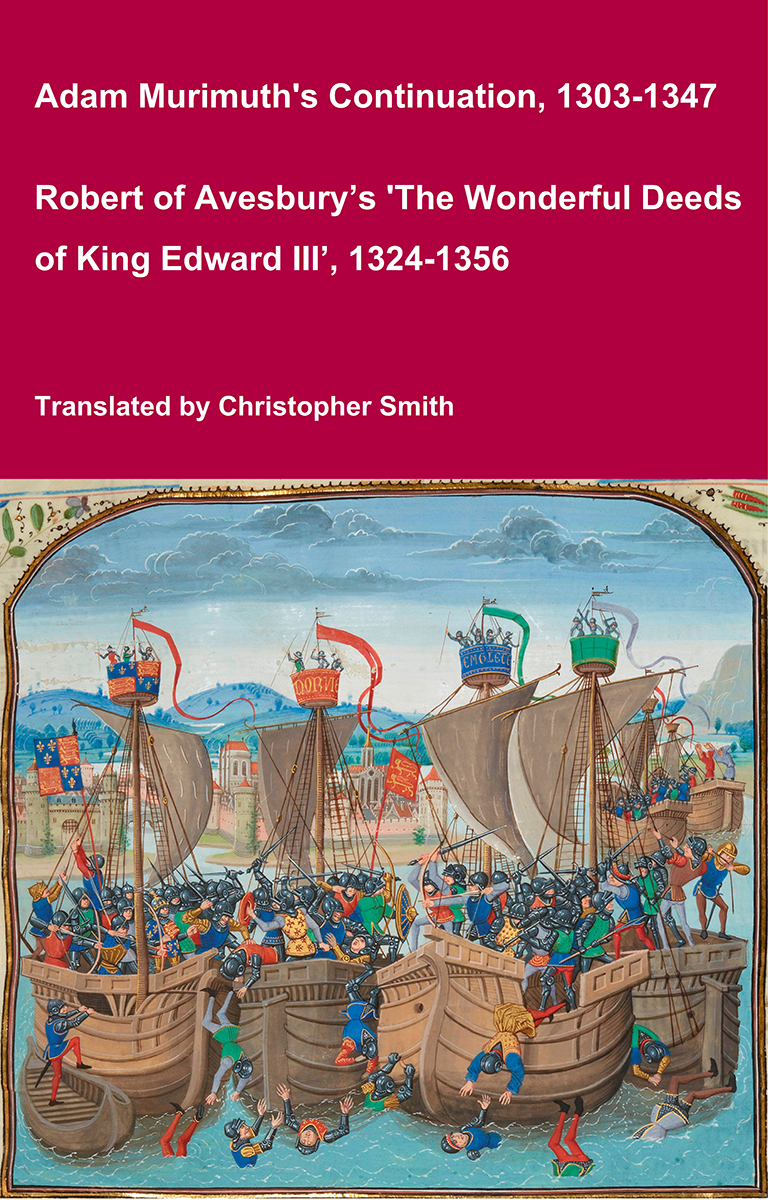
Adam Murimuth's Continuation and Robert of Avesbury’s 'The Wonderful Deeds of King Edward III'
This volume brings together two of the most important contemporary chronicles for the reign of Edward III and the opening phases of the Hundred Years’ War. Written in Latin by English clerical observers, these texts provide a vivid and authoritative window into the political, diplomatic, and military history of fourteenth-century England and its continental ambitions. Adam Murimuth Continuatio's Chronicarum continues an earlier chronicle into the mid-fourteenth century, offering concise but valuable notices on royal policy, foreign relations, and ecclesiastical affairs. Its annalistic structure makes it especially useful for establishing chronology and tracing the development of events year by year. Complementing it, Robert of Avesbury’s De gestis mirabilibus regis Edwardi tertii is a rich documentary chronicle preserving letters, treaties, and official records alongside narrative passages. It is an indispensable source for understanding Edward III’s claim to the French crown, the conduct of war, and the mechanisms of medieval diplomacy. Together, these works offer scholars, students, and enthusiasts a reliable and unembellished account of a transformative period in English and European history. Essential for anyone interested in medieval chronicles, the Hundred Years’ War, or the reign of Edward III.
Available at Amazon in eBook and Paperback format.
John Evelyn's Diary. 6th February 1689. The Princess [aged 26] hourly expected. Forces sending to Ireland, that kingdom being in great danger by the Earl of Tyrconnel's [aged 59] army, and expectations from France coming to assist them, but that King was busy in invading Flanders, and encountering the German Princes. It is likely that this will be the most remarkable summer for action, which has happened in many years.
John Evelyn's Diary. 6th February 1689. The Convention of the Lords and Commons now declare the [her husband] Prince [aged 38] and Princess [aged 26] of Orange King and Queen of England, France, and Ireland (Scotland being an independent kingdom), the Prince and Princess being to enjoy it jointly during their lives; but the executive authority to be vested in the Prince during life, though all proceedings to run in both names, and that it should descend to their issue, and for want of such, to the [her sister] Princess Anne of Denmark [aged 24] and her issue, and in want of such, to the heirs of the body of the Prince, if he survive, and that failing, to devolve to the Parliament, as they should think fit. These produced a conference with the Lords, when also there was presented heads of such new laws as were to be enacted. It is thought on these conditions they will be proclaimed.
John Evelyn's Diary. 21st February 1689. I saw the new Queen [aged 26] and King [aged 38], with great acclamation and general good reception. Bonfires, bells, guns, etc. It was believed that both, especially the Princess, would have shown some (seeming) reluctance at least, of assuming her father's [aged 55] crown, and made some apology, testifying by her regret that he should by his mismanagement necessitate the nation to so extraordinary a proceeding, which would have shown very handsomely to the world, and according to the character given of her piety; consonant also to her husband's first declaration, that there was no intention of deposing the King, but of succoring the nation; but nothing of all this appeared; she came into Whitehall laughing and jolly, as to a wedding, so as to seem quite transported. She rose early the next morning, and in her undress, as it was reported, before her women were up, went about from room to room to see the convenience of Whitehall; lay in the same bed and apartment where the late Queen [aged 30] lay, and within a night or two sat down to play at basset, as the Queen, her predecessor used to do. She smiled upon and talked to everybody, so that no change seemed to have taken place at Court since her last going away, save that infinite crowds of people thronged to see her, and that she went to our prayers. This carriage was censured by many. She seems to be of a good nature, and that she takes nothing to heart: while the Prince, her husband, has a thoughtful countenance, is wonderfully serious and silent, and seems to treat all persons alike gravely, and to be very intent on affairs: Holland, Ireland, and France calling for his care.

On 11th April 1689 [her husband] King William III of England, Scotland and Ireland [aged 38] and Mary Stewart II Queen England Scotland and Ireland [aged 26] were crowned II King England Scotland and Ireland at Westminster Abbey [Map].
John Ashburnham 1st Baron Ashburnham [aged 33] carried the canopy being one of the Barons of the Cinque Ports.
George Compton 4th Earl of Northampton [aged 24] bore the King's sceptre and cross at Westminster Abbey [Map].
On 22nd April 1689 Elizabeth Butler Countess Derby [aged 29] was appointed Principal Lady in Waiting to Mary Stewart II Queen England Scotland and Ireland [aged 26] as well as Groom of the Stool and Mistress of the Robes attracting a salary of £1200 per annum (£800 and £400 respectively).
John Evelyn's Diary. 11th April 1689. I saw the procession to and from the Abbey Church of Westminster [Map], with the great feast in Westminster Hall [Map], at the coronation of King William and Queen Mary. What was different from former coronations, was some alteration in the coronation oath. Dr. Burnet [aged 45], now made Bishop of Sarum, preached with great applause. The Parliament men had scaffolds and places which took up the one whole side of the Hall [Map]. When the [her husband] King [aged 38] and Queen [aged 26] had dined, the ceremony of the Champion, and other services by tenure were performed. The Parliament men were feasted in the Exchequer chamber, and had each of them a gold medal given them, worth five-and-forty shillings. On the one side were the effigies of the [her uncle] King and Queen inclining one to the other; on the reverse was Jupiter throwing a bolt at Phäeton the words, "Ne totus absumatur": which was but dull, seeing they might have had out of the poet something as apposite. The sculpture was very mean.


John Evelyn's Diary. 12th April 1689. Scotland declares for [her husband] King William [aged 38] and Queen Mary [aged 26], with the reasons of their setting aside [her father] King James [aged 55], not as abdicating, but forfeiting his right by maladministration; they proceeded with much more caution and prudence than we did, who precipitated all things to the great reproach of the nation, all which had been managed by some crafty, ill-principled men. The new Privy Council have a Republican spirit, manifestly undermining all future succession of the Crown and prosperity of the Church of England, which yet I hope they will not be able to accomplish so soon as they expect, though they get into all places of trust and profit.
John Evelyn's Diary. 26th April 1689. A fight by Admiral Herbert [aged 41] with the French, he imprudently setting on them in a creek as they were landing men in Ireland, by which we came off with great slaughter and little honor-so strangely negligent and remiss were we in preparing a timely and sufficient fleet. The Scots Commissioners offer the crown to the new King and Queen on conditions. Act of Poll money came forth, sparing none. Now appeared the Act of Indulgence for the Dissenters, but not exempting them from paying dues to the Church of England clergy, or serving in office according to law, with several other clauses. A most splendid embassy from Holland to congratulate the [her husband] King [aged 38] and Queen [aged 26] on their accession to the crown.

John Evelyn's Diary. 19th July 1689. The Convention (or Parliament as some called it) sitting, exempt the Duke of Hanover [aged 29] from the succession to the crown, which they seem to confine to the present new [her husband] King [aged 38], his wife [aged 27], and [her sister] Princess Anne of Denmark [aged 24], who is so monstrously swollen, that it is doubted whether her being thought with child may prove a TYMPANY only, so that the unhappy family of the Stuarts seems to be extinguishing; and then what government is likely to be next set up is unknown, whether regal and by election, or otherwise, the Republicans and Dissenters from the Church of England evidently looking that way.

On 2nd November 1689 Richard Coote 1st Earl Bellomont [aged 53] was created 1st Earl Bellomont by [her husband] King William III of England, Scotland and Ireland [aged 38] and was granted over 300 km2 of forfeited Irish lands. The land grant was highly controversial in Parliament, and was eventually rescinded by William.
John Evelyn's Diary. 5th November 1689. The Bishop of St. Asaph [aged 62], Lord Almoner, preached before the [her husband] King [aged 39] and Queen [aged 27], the whole discourse being an historical narrative of the Church of England's several deliverances, especially that of this anniversary, signalized by being also the birthday of the Prince of Orange, his marriage (which was on the 4th), and his landing at Torbay this day. There was a splendid ball and other rejoicings.
In 1690 Frederick I King Prussia [aged 32] was appointed 499th Knight of the Garter by [her husband] King William III of England, Scotland and Ireland [aged 39] and Mary Stewart II Queen England Scotland and Ireland [aged 27].
The History of William Marshal was commissioned by his son shortly after William’s death in 1219 to celebrate the Marshal’s remarkable life; it is an authentic, contemporary voice. The manuscript was discovered in 1861 by French historian Paul Meyer. Meyer published the manuscript in its original Anglo-French in 1891 in two books. This book is a line by line translation of the first of Meyer’s books; lines 1-10152. Book 1 of the History begins in 1139 and ends in 1194. It describes the events of the Anarchy, the role of William’s father John, John’s marriages, William’s childhood, his role as a hostage at the siege of Newbury, his injury and imprisonment in Poitou where he met Eleanor of Aquitaine and his life as a knight errant. It continues with the accusation against him of an improper relationship with Margaret, wife of Henry the Young King, his exile, and return, the death of Henry the Young King, the rebellion of Richard, the future King Richard I, war with France, the death of King Henry II, and the capture of King Richard, and the rebellion of John, the future King John. It ends with the release of King Richard and the death of John Marshal.
Available at Amazon in eBook and Paperback format.
In 1690 George Wilhelm Hanover Duke Brunswick-Lüneburg [aged 65] was appointed 500th Knight of the Garter by [her husband] King William III of England, Scotland and Ireland [aged 39] and Mary Stewart II Queen England Scotland and Ireland [aged 27].
John Evelyn's Diary. 9th March 1690. I dined at the Bishop of St. Asaph's [aged 62], Almoner to the new Queen [aged 27], with the famous lawyer Sir George Mackenzie [aged 54] (late Lord Advocate of Scotland), against whom both the Bishop and myself had written and published books, but now most friendly reconciled. He related to us many particulars of Scotland, the present sad condition of it, the inveterate hatred which the Presbyterians show to the family of the Stuarts, and the exceeding tyranny of those bigots who acknowledge no superior on earth, in civil or divine matters, maintaining that the people only have the right of government; their implacable hatred to the Episcopal Order and Church of England. He observed that the first Presbyterian dissents from our discipline were introduced by the Jesuits' order, about the 20 of Queen Elizabeth, a famous Jesuit among them feigning himself a Protestant, and who was the first who began to pray extempore, and brought in that which they since called, and are still so fond of, praying by the Spirit. This Jesuit remained many years before he was discovered, afterward died in Scotland, where he was buried at ... having yet on his. Monument, "Rosa inter spinas"..
On 15th April 1690 Richard Lumley [aged 40] was created Earl of Scarborough by [her husband] King William III of England, Scotland and Ireland [aged 39] in recognition of his support of the Glorious Revolution he having been one of the signatories of the Invitation to William of Orange from the Immortal Seven. Frances Jones [aged 23] by marriage Countess of Scarborough.

In 1694 Henry Sidney 1st Earl Romney [aged 52] was created 1st Earl Romney by [her husband] King William III of England, Scotland and Ireland [aged 43] in recognition of Henry Sidney 1st Earl Romney 1641-1704's support of the Glorious Revolution he having been one of the signatories of the Invitation to William of Orange from the Immortal Seven.
In 1694 William Cavendish 1st Duke Devonshire [aged 53] was created 1st Duke Devonshire by [her husband] King William III of England, Scotland and Ireland [aged 43] in recognition of William Cavendish 1st Duke Devonshire 1640-1707's support of the Glorious Revolution he having been one of the signatories of the Invitation to William of Orange from the Immortal Seven. Mary Butler Duchess Devonshire [aged 48] by marriage Duchess Devonshire.
In 1694 Thomas Osborne 1st Duke Leeds [aged 61] was created 1st Duke Leeds by [her husband] King William III of England, Scotland and Ireland [aged 43] in recognition of Thomas Osborne 1st Duke Leeds 1632-1712's support of the Glorious Revolution he having been one of the signatories of the Invitation to William of Orange from the Immortal Seven. Bridget Bertie Duchess Leeds [aged 65] by marriage Duchess Leeds.

On 30th April 1694 Charles Talbot 1st Duke Shrewsbury [aged 33] was created 1st Duke Shrewsbury, 1st Marquess Alton by [her husband] King William III of England, Scotland and Ireland [aged 43] in recognition of Charles Talbot 1st Duke Shrewsbury 1660-1718's support of the Glorious Revolution he having been one of the signatories of the Invitation to William of Orange from the Immortal Seven.
John Evelyn's Diary. 4th June 1690. [her husband] King William [aged 39] set forth on his Irish expedition, leaving the Queen [aged 28] Regent.
John Evelyn's Diary. 24th June 1690. Dined with Mr. Pepys [aged 57], who the next day was sent to the Gatehouse, and several great persons to the Tower [Map], on suspicion of being affected to [her father] King James [aged 56]; among them was the Earl of Clarendon, the Queen's [aged 28] uncle. King William [aged 39] having vanquished King James in Ireland, there was much public rejoicing. It seems the Irish in King James's army would not stand, but the English-Irish and French made great resistance. Schomberg [aged 74] was slain, and Dr. Walker, who so bravely defended Londonderry. King William received a slight wound by the grazing of a cannon bullet on his shoulder, which he endured with very little interruption of his pursuit. Hamilton [aged 55], who broke his word about Tyrconnel [aged 60], was taken. It is reported that King James is gone back to France. Drogheda [Map] and Dublin [Map] surrendered, and if King William be returning, we may say of him as Cæsar said, "Veni, vidi, vici". But to alloy much of this, the French fleet rides in our channel, ours not daring to interpose, and the enemy threatening to land.


In 1691 Bishop Thomas Ken [aged 53] was deprived of his See by [her husband] King William III of England, Scotland and Ireland [aged 40] and Mary Stewart II Queen England Scotland and Ireland [aged 28]. He was given lodgings at Longleat House by Thomas Thynne 1st Viscount Weymouth [aged 51] with whom he was at Oxford. He resided at Longleat for some twenty years.

In 1691 Edward Villiers 1st Earl Jersey [aged 35] was created 1st Viscount Villiers, 1st Baron Villiers probably as a consequence of his sister Barbara Villiers Viscountess Fitzhardinge [aged 37] being a mistress of [her husband] King William III of England, Scotland and Ireland [aged 40]. Barbara Chiffinch Countess Jersey [aged 28] by marriage Viscountess Villiers.
John Ashton Edmund Elliot Richard Graham 1691. On Fryday, the 2d day of this Sessions, my Lord Preston [aged 41], John Ashton and Edmund Elliot, were all Arrained for High Treason, my Lord Preston was Tryed on Saturday by the name of Sir Richard Graham, Mr. Ashton on Monday. The Indictments against them consisted of Two Parts, the First of which set forth, That they had a Treasonable Design carrying on to Depose the King and Queen, and to Subvert and Alter the Government of the Kingdom of England, and to raise War and Rebellion in the same; which said Traiterous and Wicked Designs and Purposes to bring to pass, they did, on the 29th of December last, Meet and Conspire together, with several other Traitors not yet discovered, and did Compose several Treasonable Letters, Notes and Memorandums in writing, which set forth the most effectual way and means how they might Dethrone and Depose our Most Gracious Sovereign Lord and Lady the [her husband] King [aged 40] and Queen [aged 28], and further describing therein how the Affairs of this Kingdom stood, and of what Strength and Force our Shipping was; as also the Fortifications of several Sea-Port-Towns within this Kingdom. The Second Part was their adhering to the Kings's Enemies: And to that end, that they might Acquaint Lewis the French King of the same, they did hire a Boat and Embarque themselves in order to Transport themselves and Pacquet of Treasonable Letters into France, agreeing to pay for their said Passages the Sum of One hundred Pound; and, in order to their Treasonable Voyage, they had made their Passage as far as below Gravesend [Map], but were then Taken by Captain Billop, who Cruised abroad to search for them.
After this the Evidence for the King being called, gave an Account particularly from Step to Step, how cunningly and subtilly they managed this horrid Conspiracy, by hiring the Smack called the Thomas and Elizabeth, to convey them secretly into France; in order to which they took Water in a Skuller at Surrey-Stairs, and went on Board the aforesaid Vessel, which lay in the River of Thames over against the Tower [Map]: From thence they set Sail down the River, till coming within the View of the George Frigate, lying in Long-reach, they desired the Master of the Smack to hide them under the Quarter-Hatches; which was done, they having some Fear of being discovered: There they remained till past that Danger, and then came up; but when they were within Sight of Gravesend [Map] they hid again, and a little below it Captain Billop came aboard them, under Pretence of Pressing the Masters two Men, who were assistants to him; but indeed his Design and real Intention was to find out those Traytors, which, upon Search, he found lying along under the Hatches; and after their being haled up he search'd them, and found a Pacquet of Treasonable Papers in Mr. Ashton's Bosom: which he with the Prisoners carried before my Lord Nottingham; who examined the Papers, and after being examined by the Cabinet Council they were committed to the Tower. The Evidence was very full and plain against them both, much to the same effect and purport: The Letters being also Read against them in Court, were adjudged to be of no less Import than High-Treason. Upon the whole they had nothing material to offer in their Defence; so after a very long hearing, they were both found Guilty of High Treason. Edmond Elliot was ordered to remain till further order.
John Evelyn's Diary. 11th July 1691. I dined with Mr. Pepys [aged 58], where was Dr. Cumberland [aged 59], the new Bishop of Norwich [Note. Should be John Moore Bishop], Dr. Lloyd [aged 54] having been put out for not acknowledging the Government. Cumberland [Note. John Moore Bishop 1646-1707] is a very learned, excellent man. Possession was now given to Dr. Tillotson [aged 60], at Lambeth, by the Sheriff; Archbishop Sancroft was gone [aged 74], but had left his nephew to keep possession; and he refusing to deliver it up on the Queen's message [aged 29], was dispossessed by the Sheriff, and imprisoned. This stout demeanor of the few Bishops who refused to take the oaths to [her husband] King William [aged 40], animated a great party to forsake the churches, so as to threaten a schism; though those who looked further into the ancient practice, found that when (as formerly) there were Bishops displaced on secular accounts, the people never refused to acknowledge the new Bishops, provided they were not heretics. The truth is, the whole clergy had till now stretched the duty of passive obedience, so that the proceedings against these Bishops gave no little occasion of exceptions; but this not amounting to heresy, there was a necessity of receiving the new Bishops, to prevent a failure of that order in the Church. I went to visit [her uncle] Lord Clarendon in the Tower, but he was gone into the country for air by the Queen's permission, under the care of his warden.

In 1692 John George Wettin IV Elector Saxony [aged 23] was appointed 501st Knight of the Garter by [her husband] King William III of England, Scotland and Ireland [aged 41] and Mary Stewart II Queen England Scotland and Ireland [aged 29].

On 11th April 1692 Henry Capell 1st Baron Capell Tewkesbury [aged 54] was created 1st Baron Capell Tewkesbury by [her husband] King William III of England, Scotland and Ireland [aged 41].
Adam Murimuth's Continuation and Robert of Avesbury’s 'The Wonderful Deeds of King Edward III'
This volume brings together two of the most important contemporary chronicles for the reign of Edward III and the opening phases of the Hundred Years’ War. Written in Latin by English clerical observers, these texts provide a vivid and authoritative window into the political, diplomatic, and military history of fourteenth-century England and its continental ambitions. Adam Murimuth Continuatio's Chronicarum continues an earlier chronicle into the mid-fourteenth century, offering concise but valuable notices on royal policy, foreign relations, and ecclesiastical affairs. Its annalistic structure makes it especially useful for establishing chronology and tracing the development of events year by year. Complementing it, Robert of Avesbury’s De gestis mirabilibus regis Edwardi tertii is a rich documentary chronicle preserving letters, treaties, and official records alongside narrative passages. It is an indispensable source for understanding Edward III’s claim to the French crown, the conduct of war, and the mechanisms of medieval diplomacy. Together, these works offer scholars, students, and enthusiasts a reliable and unembellished account of a transformative period in English and European history. Essential for anyone interested in medieval chronicles, the Hundred Years’ War, or the reign of Edward III.
Available at Amazon in eBook and Paperback format.
On 12th April 1692 William Fermor 1st Baron Leominster [aged 43] was created 1st Baron Leominster by [her husband] King William III of England, Scotland and Ireland [aged 41]. Catherine Paulett Baroness Leominster by marriage Baroness Leominster.
John Evelyn's Diary. 28th February 1692. Lord Marlborough [aged 41] having used words against the [her husband] King [aged 41], and been discharged from all his great places, his wife [aged 31] was forbidden the Court, and the [her sister] Princess of Denmark [aged 27] was desired by the Queen [aged 29] to dismiss her from her service; but she refusing to do so, goes away from Court to Sion house [Map]. Divers new Lords made: Sir Henry Capel [aged 53], Sir William Fermor [aged 43], etc. Change of Commissioners in the Treasury. The Parliament adjourned, not well satisfied with affairs. The business of the East India Company, which they would have reformed, let fall. The Duke of Norfolk [aged 37] does not succeed in his endeavor to be divorced.


John Evelyn's Diary. 6th April 1692. A fast. [her father] King James [aged 58] sends a letter written and directed by his own hand to several of the Privy Council, and one to his daughter [aged 29], the Queen Regent, informing them of the [her step-mother] Queen [aged 33] being ready to be brought to bed, and summoning them to be at the birth by the middle of May, promising as from the French King [aged 53], permission to come and return in safety.
John Evelyn's Diary. 24th April 1692. Much apprehension of a French invasion, and of an universal rising. Our fleet begins to join with the Dutch. Unkindness between the Queen [aged 29] and her sister [aged 27]. Very cold and unseasonable weather, scarce a leaf on the trees.
John Evelyn's Diary. 15th September 1692. There happened an earthquake, which, though not so great as to do any harm in England, was universal in all these parts of Europe. It shook the house at Wotton, but was not perceived by any save a servant or two, who were making my bed, and another in a garret. I and the rest being at dinner below in the parlor, were not sensible of it. The dreadful one in Jamaica this summer was profanely and ludicrously represented in a puppet play, or some such lewd pastime, in the fair of Southwark [Map], which caused the Queen [aged 30] to put down that idle and vicious mock show.
John Evelyn's Diary. 13th July 1693. I saw the Queen's [aged 31] rare cabinets and collection of china; which was wonderfully rich and plentiful, but especially a large cabinet, looking-glass frame and stands, all of amber, much of it white, with historical bas-reliefs and statues, with medals carved in them, esteemed worth £4,000, sent by the Duke of Brandenburgh, whose country, Prussia, abounds with amber, cast up by the sea; divers other China and Indian cabinets, screens, and hangings. In her library were many books in English, French, and Dutch, of all sorts; a cupboard of gold plate; a cabinet of silver filagree, which I think was our Queen Mary's, and which, in my opinion, should have been generously sent to her.
In 1694 Charles Talbot 1st Duke Shrewsbury [aged 33] was appointed 503rd Knight of the Garter by [her husband] King William III of England, Scotland and Ireland [aged 43] and Mary Stewart II Queen England Scotland and Ireland [aged 31].

John Evelyn's Diary. 10th March 1694. Mr. Stringfellow preached at Trinity parish, being restored to that place, after the contest between the Queen [aged 31] and the Bishop of London [aged 62] who had displaced him.
John Evelyn's Diary. 25th March 1694. Mr. Goode, minister of St. Martin's [Map], preached; he was likewise put in by the Queen [aged 31], on the issue of her process with the Bishop of London [aged 62].
On 28th December 1694 Mary Stewart II Queen England Scotland and Ireland [aged 32] died of smallpox shortly after midnight at Kensington Palace. Her body lay in state at the Banqueting House, Whitehall Palace [Map].
On 5th March 1695 she was buried in Westminster Abbey [Map]. Archbishop Thomas Tenison [aged 58] preached the sermon.
She had reigned for five years. Her husband King William III of England, Scotland and Ireland [aged 44] continued to reign for a further eight years.
John Evelyn's Diary. 29th December 1694. The smallpox increased exceedingly, and was very mortal. The Queen [deceased] died of it on the 28th.
John Evelyn's Diary. 8th March 1695. I supped at the Bishop of Lichfield and Coventry's [aged 67], who related to me the pious behavior of the Queen in all her sickness, which was admirable. She never inquired of what opinion persons were, who were objects of charity; that, on opening a cabinet, a paper was found wherein she had desired that her body might not be opened, or any extraordinary expense at her funeral, whenever she should die. This paper was not found in time to be observed. There were other excellent things under her own hand, to the very least of her debts, which were very small, and everything in that exact method, as seldom is found in any private person. In sum, she was such an admirable woman, abating for taking the Crown without a more due apology, as does, if possible, outdo the renowned Queen Elizabeth.
Anne Boleyn. Her Life as told by Lancelot de Carle's 1536 Letter.
In 1536, two weeks after the execution of Anne Boleyn, her brother George and four others, Lancelot du Carle, wrote an extraordinary letter that described Anne's life, and her trial and execution, to which he was a witness. This book presents a new translation of that letter, with additional material from other contemporary sources such as Letters, Hall's and Wriothesley's Chronicles, the pamphlets of Wynkyn the Worde, the Memorial of George Constantyne, the Portuguese Letter and the Baga de Secrets, all of which are provided in Appendices.
Available at Amazon in eBook and Paperback format.
John Evelyn's Diary. 13th January 1695. The Thames was frozen over. The deaths by smallpox increased to five hundred more than in the preceding week. The [her former husband] King [aged 44] and [her sister] Princess Anne [aged 29] reconciled, and she was invited to keep her Court at Whitehall, having hitherto lived privately at Berkeley House [Map]; she was desired to take into her family divers servants of the late Queen; to maintain them the King has assigned her £5,000 a quarter.
John Evelyn's Diary. 24th February 1695. I saw the Queen lie in state.
John Evelyn's Diary. 10th March 1695. I dined at the Earl of Sunderland's [aged 53] with Lord Spencer [aged 19]. My Lord showed me his library, now again improved by many books bought at the sale of Sir Charles Scarborough, an eminent physician, which was the very best collection, especially of mathematical books, that was I believe in Europe, once designed for the [her uncle] King's Library at St. James's; but the Queen dying, who was the great patroness of that design, it was let fall, and the books were miserably dissipated.
John Evelyn's Diary. 28th April 1696. The Venetian Ambassador made a stately entry with fifty footmen, many on horseback, four rich coaches, and a numerous train of gallants. More executions this week of the assassins. Oates [aged 46] dedicated a most villainous, reviling book against King James [aged 62], which he presumed to present to King William [aged 45], who could not but abhor it, speaking so infamously and untruly of his late beloved Queen's own father.
On 8th March 1702 [her former husband] King William III of England, Scotland and Ireland [aged 51] died of Pneumonia at Kensington Palace. His demise was the direct result of a fall from his horse, named Sorrel, which stumbled on a molehill causing King William to fall and break his collarbone. For many years afterwards, Jacobites would raise their glasses and toast "the little gentleman in the black velvet waistcoat". His first cousin Anne [aged 37] succeeded I Queen England Scotland and Ireland. She, Anne, being the sister of his wife Mary Stewart II Queen England Scotland and Ireland.
Kings Wessex: Great x 18 Grand Daughter of King Edmund "Ironside" I of England
Kings Gwynedd: Great x 15 Grand Daughter of Owain "Great" King Gwynedd
Kings Seisyllwg: Great x 21 Grand Daughter of Hywel "Dda aka Good" King Seisyllwg King Deheubarth
Kings Powys: Great x 16 Grand Daughter of Maredudd ap Bleddyn King Powys
Kings Godwinson: Great x 17 Grand Daughter of King Harold II of England
Kings England: Daughter of King James II of England Scotland and Ireland
Kings Scotland: Great x 17 Grand Daughter of King Duncan I of Scotland
Kings Franks: Great x 24 Grand Daughter of Charles "Charlemagne aka Great" King of the Franks King Lombardy Holy Roman Emperor
Kings France: Great Grand Daughter of Henry IV King France
Kings Duke Aquitaine: Great x 22 Grand Daughter of Ranulf I Duke Aquitaine
Great x 4 Grandfather: John Stewart 3rd Earl Lennox  5 x Great Grand Son of King Edward III of England
Great x 3 Grandfather: Matthew Stewart 4th Earl Lennox 4 x Great Grand Son of King Edward III of England
Great x 4 Grandmother: Isabel or Elizabeth Stewart Countess Lennox 3 x Great Grand Daughter of King Edward III of England
Great x 2 Grandfather: Henry "Lord Darnley" Stewart Great Grand Son of King Henry VII of England and Ireland
Great x 4 Grandfather: Archibald Douglas 6th Earl Angus  10 x Great Grand Son of King John of England
Great x 3 Grandmother: Margaret Douglas Countess Lennox Grand Daughter of King Henry VII of England and Ireland
Great x 4 Grandmother: Margaret Tudor Queen Scotland  Daughter of King Henry VII of England and Ireland
Great x 1 Grandfather: King James I of England and Ireland and VI of Scotland 2 x Great Grand Son of King Henry VII of England and Ireland
Great x 4 Grandfather: King James IV of Scotland  4 x Great Grand Son of King Edward III of England
Great x 3 Grandfather: King James V of Scotland Grand Son of King Henry VII of England and Ireland
Great x 4 Grandmother: Margaret Tudor Queen Scotland Daughter of King Henry VII of England and Ireland
Great x 2 Grandmother: Mary Queen of Scots Great Grand Daughter of King Henry VII of England and Ireland
Great x 4 Grandfather: Claude Lorraine 1st Duke Guise 7 x Great Grand Son of King Edward I of England
Great x 3 Grandmother: Mary of Guise Queen Consort Scotland 6 x Great Grand Daughter of King Edward III of England
Great x 4 Grandmother: Antoinette Bourbon Duchess of Guise  5 x Great Grand Daughter of King Edward III of England
GrandFather: King Charles I of England, Scotland and Ireland  Son of King James I of England and Ireland and VI of Scotland
Great x 4 Grandfather: King Frederick I of Denmark 
Great x 3 Grandfather: Christian III King of Denmark 10 x Great Grand Son of King Henry "Curtmantle" II of England
Great x 4 Grandmother: Anna of Brandenburg 9 x Great Grand Daughter of King Henry "Curtmantle" II of England
Great x 2 Grandfather: Frederick II King of Denmark 11 x Great Grand Son of King Henry "Curtmantle" II of England
Great x 3 Grandmother: Dorothea of Saxe Lauenburg Queen Consort Denmark and Norway
Great x 1 Grandmother: Anne of Denmark Queen Consort Scotland England and Ireland 12 x Great Grand Daughter of King Henry "Curtmantle" II of England
Great x 4 Grandfather: Albrecht VII Duke Mecklenburg
Great x 3 Grandfather: Ulrich Mecklenburg-Schwerin 11 x Great Grand Son of King Henry "Curtmantle" II of England
Great x 4 Grandmother: Anna Hohenzollern Duchess Mecklenburg 10 x Great Grand Daughter of King Henry "Curtmantle" II of England
Great x 2 Grandmother: Sophie Mecklenburg-Schwerin Queen Consort Denmark 12 x Great Grand Daughter of King Henry "Curtmantle" II of England
Father: King James II of England Scotland and Ireland Son of King Charles I of England, Scotland and Ireland
Great x 4 Grandfather: Francis Bourbon Count Vendôme and Soissons 6 x Great Grand Son of King Henry III of England
Great x 3 Grandfather: Charles Bourbon Duke Vendôme 5 x Great Grand Son of King Edward III of England
Great x 4 Grandmother: Marie Luxemburg Countess Vendôme and Soissons  4 x Great Grand Daughter of King Edward III of England
Great x 2 Grandfather: Antoine King Navarre 6 x Great Grand Son of King Edward III of England
Great x 4 Grandfather: Rene Valois Duke Alençon 5 x Great Grand Son of King Henry III of England
Great x 3 Grandmother: Françoise Valois Countess Vendôme 6 x Great Grand Daughter of King Henry III of England
Great x 4 Grandmother: Margaret Lorraine Duchess Alençon 7 x Great Grand Daughter of King Henry III of England
Great x 1 Grandfather: Henry IV King France 7 x Great Grand Son of King Edward III of England
Great x 4 Grandfather: Jean III King Navarre 6 x Great Grand Son of King Henry III of England
Great x 3 Grandfather: King Henry II of Navarre 7 x Great Grand Son of King Henry III of England
Great x 4 Grandmother: Catherine Grailly I Queen Navarre 7 x Great Grand Daughter of King Henry III of England
Great x 2 Grandmother: Jeanne Albret III Queen Navarre 8 x Great Grand Daughter of King Henry III of England
Great x 4 Grandfather: Charles Valois Orléans Count Angoulême 6 x Great Grand Son of King Henry III of England
Great x 3 Grandmother: Marguerite Valois Orléans Queen Consort Navarre 7 x Great Grand Daughter of King Henry III of England
Great x 4 Grandmother: Louise of Savoy Countess Angoulême 6 x Great Grand Daughter of King Edward I of England
GrandMother: Henrietta Maria Bourbon Queen Consort England 7 x Great Grand Daughter of King Edward III of England
Great x 4 Grandfather: Lodovico de Medici aka Giovanni delle Bande Nere
Great x 3 Grandfather: Cosimo I de Medici Grand Duke of Tuscany
Great x 2 Grandfather: Francesco I de Medici Grand Duke of Tuscany
Great x 1 Grandmother: Marie de Medici Queen Consort France 6 x Great Grand Daughter of King Edward III of England
Great x 4 Grandfather: Philip "Handsome Fair" King Castile 4 x Great Grand Son of King Edward III of England
Great x 3 Grandfather: Ferdinand I Holy Roman Emperor 4 x Great Grand Son of King Edward III of England
Great x 4 Grandmother: Joanna "The Mad" Trastámara Queen Castile  3 x Great Grand Daughter of King Edward III of England
Great x 2 Grandmother: Joanna of Austria Grand Duchess Tuscany 5 x Great Grand Daughter of King Edward III of England
Great x 4 Grandfather: Vladislaus II King Hungary 8 x Great Grand Son of King Henry "Curtmantle" II of England
Great x 3 Grandmother: Anne Jagiellon 8 x Great Grand Daughter of King Edward I of England
Great x 4 Grandmother: Anna Foix Queen Consort of Hungary and Bohemia 7 x Great Grand Daughter of King Edward I of England
Mary Stewart II Queen England Scotland and Ireland Daughter of King James II of England Scotland and Ireland
Great x 2 Grandfather: Lawrence Hyde 
Great x 1 Grandfather: Henry Hyde
Great x 3 Grandfather: Nicholas Sibell
Great x 2 Grandmother: Anne Sibell
GrandFather: Edward Hyde 1st Earl Clarendon
Great x 2 Grandfather: Edward Langford
Great x 1 Grandmother: Mary Langford
Mother: Anne Hyde Duchess of York
Great x 2 Grandfather: William Aylesbury 
Great x 1 Grandfather: Thomas Aylesbury 1st Baronet
GrandMother: Frances Aylesbury Countess Clarendon
Great x 1 Grandmother: Anne Denman