

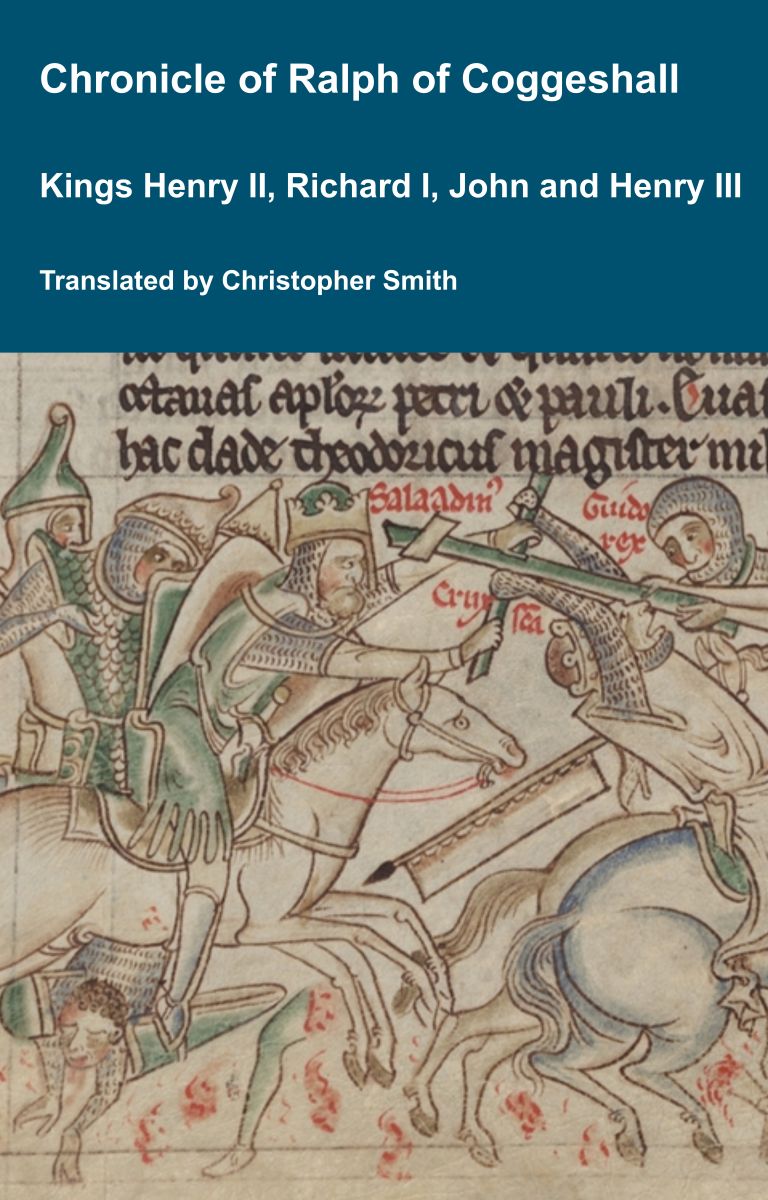
Chronicle of Abbot Ralph of Coggeshall
The Chronicle of Abbot Ralph of Coggeshall (Chronicon Anglicanum) is an indispensable medieval history that brings to life centuries of English and European affairs through the eyes of a learned Cistercian monk. Ralph of Coggeshall, abbot of the Abbey of Coggeshall in Essex in the early 13th century, continued and expanded his community’s chronicle, documenting events from the Norman Conquest of 1066 into the tumultuous reign of King Henry III. Blending eyewitness testimony, careful compilation, and the monastic commitment to record-keeping, this chronicle offers a rare narrative of political intrigue, royal power struggles, and social upheaval in England and beyond. Ralph’s work captures the reigns of pivotal figures such as Richard I and King John, providing invaluable insights into their characters, decisions, and the forces that shaped medieval rule. More than a simple annal, Chronicon Anglicanum conveys the texture of medieval life and governance, making it a rich source for scholars and readers fascinated by English history, monastic authorship, and the shaping of the medieval world.
Available at Amazon in eBook and Paperback format.
Paternal Family Tree: Carnegie
Maternal Family Tree: Margaret Ogilvy Countess Buchan
Before 1649 Robert Carnegie 3rd Earl Southesk was born to [his father] James Carnegie 2nd Earl Southesk [aged 34] and [his mother] Mary Kerr Countess Southesk [aged 52]
Before January 1649 [his father] James Carnegie 2nd Earl Southesk [aged 35] and [his mother] Mary Kerr Countess Southesk [aged 53] were married. She the daughter of [his grandfather] Robert Ker 1st Earl Roxburghe [aged 79] and [his grandmother] Margaret Maitland. He the son of David Carnegie 1st Earl Southesk [aged 74].
In April 1650 [his mother] Mary Kerr Countess Southesk [aged 54] died.
In February 1658 [his grandfather] David Carnegie 1st Earl Southesk [aged 83] died. His son [his father] James [aged 44] succeeded 2nd Earl Southesk.
In or before 1661 Robert Carnegie 3rd Earl Southesk [aged 12] and Anne Hamilton Countess Southesk [aged 21] were married. She the daughter of William Hamilton 2nd Duke Hamilton. He the son of James Carnegie 2nd Earl Southesk [aged 46] and Mary Kerr Countess Southesk. They were fourth cousin once removed.
On 7th April 1661 [his son] Charles Carnegie 4th Earl Southesk was born to Robert Carnegie 3rd Earl Southesk [aged 12] and [his wife] Anne Hamilton Countess Southesk [aged 22] He married 15th July 1691 his third cousin once removed Mary Maitland, daughter of Charles Maitland 3rd Earl Lauderdale, and had issue.
In 1662 [his son] William Carnegie was born to Robert Carnegie 3rd Earl Southesk [aged 13] and [his wife] Anne Hamilton Countess Southesk [aged 23]
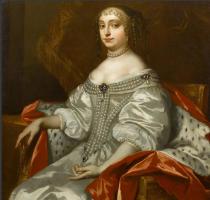
Samuel Pepys' Diary. 19th March 1665. Being very glad of this news Mr. Povy [aged 51] and I in his coach to Hyde Parke, being the first day of the tour there. Where many brave ladies; among others, Castlemayne [aged 24] lay impudently upon her back in her coach asleep, with her mouth open. There was also my Lady Kerneguy [aged 26]1, once my Lady Anne Hambleton, that is said to have given the Duke a clap upon his first coming over. Here I saw Sir J. Lawson's [aged 50] daughter and husband, a fine couple, and also Mr. Southwell [aged 29] and his new lady [aged 17], very pretty.
Note 1. Daughter of William, Duke of Hamilton, wife of Lord Carnegy [aged 16], who became Earl of Southesk on his father's death. She is frequently mentioned in the "Memoires de Grammont", and in the letters of the second Earl of Chesterfield. B.
In 1666 Robert Carnegie 3rd Earl Southesk [aged 17] was imprisoned for wounding George Livingston 3rd Earl Linlithgow [aged 49] in a duel.
In January 1669 [his father] James Carnegie 2nd Earl Southesk [aged 55] died. His son Robert [aged 20] succeeded 2nd Earl Southesk.
William of Worcester's Chronicle of England
William of Worcester, born around 1415, and died around 1482 was secretary to John Fastolf, the renowned soldier of the Hundred Years War, during which time he collected documents, letters, and wrote a record of events. Following their return to England in 1440 William was witness to major events. Twice in his chronicle he uses the first person: 1. when writing about the murder of Thomas, 7th Baron Scales, in 1460, he writes '… and I saw him lying naked in the cemetery near the porch of the church of St. Mary Overie in Southwark …' and 2. describing King Edward IV's entry into London in 1461 he writes '… proclaimed that all the people themselves were to recognize and acknowledge Edward as king. I was present and heard this, and immediately went down with them into the city'. William’s Chronicle is rich in detail. It is the source of much information about the Wars of the Roses, including the term 'Diabolical Marriage' to describe the marriage of Queen Elizabeth Woodville’s brother John’s marriage to Katherine, Dowager Duchess of Norfolk, he aged twenty, she sixty-five or more, and the story about a paper crown being placed in mockery on the severed head of Richard, 3rd Duke of York.
Available at Amazon in eBook and Paperback format.
In 1681 [his son] William Carnegie [aged 19] was killed in a duel with William Tollemache [aged 32] at Paris [Map].
In 1688 Robert Carnegie 3rd Earl Southesk [aged 39] died. His son Charles [aged 26] succeeded 4th Earl Southesk.
In October 1695 [his former wife] Anne Hamilton Countess Southesk [aged 56] died.
Grammont. About this time Talbot returned from Portugal: this connection had taken place during his absence; and without knowing who Lady Southesk was, he had been informed that his master was in love with her. A few days after his arrival, he was carried, merely to keep up appearances, to her house by the duke; and after being introduced, and some compliments having been paid on both sides, he thought it his duty to give his royal highness an opportunity to pay his compliments, and accordingly retired into the ante-chamber, which looked into the street, and placed himself at the window to view the people as they passed.
He was one of the best-meaning men in the world on such occasions; but was so subject to forgetfulness and absence of mind, that he once forgot, and left behind him at London, a complimentary letter which the duke had given him for the Infanta of Portugal, and never recollected it till he was going to his audience.
He stood sentry, as we have before said, very attentive to his instructions, when he saw a coach stop at the door, without being in the least concerned at it, and still less, at a man whom he saw get out of it, and whom he immediately heard coming up stairs.
The devil, who ought to be civil upon such occasions, forgot himself in the present instance, and brought up Lord Southesk in propriâ personâ: his royal highness's equipage had been sent home, because my lady had assured him that her husband was gone to see a bear and a bull baiting, an entertainment in which he took great delight, and from whence he seldom returned until it was very late; so that Southesk, not seeing any equipage at the door, little imagined that he had such good company in his house; but if he was surprised to see Talbot carelessly lolling in his wife's ante-chamber, his surprise was soon over. Talbot, who had not seen him since they were in Flanders, and never supposing that he had changed his name: "Welcome, Carnegy, welcome, my good fellow," said he, giving him his hand, "where the devil have you been, that I have never been able to set eyes on you since we were at Brussels? What business brought you here? Do you likewise wish to see Lady Southesk? If this is your intention, my poor friend, you may go away again; for I must inform you, the Duke of York is in love with her, and I will tell you in confidence, that, at this very time, he is in her chamber."
Southesk, confounded as one may suppose, had no time to answer all these fine questions: Talbot, therefore, attended him down stairs as his friend; and, as his humble servant, advised him to seek for a mistress elsewhere. Southesk, not knowing what else to do at that time, returned to his coach; and Talbot, overjoyed at the adventure, impatiently waited for the duke's return, that he might acquaint him with it; but he was very much surprised to find that the story afforded no pleasure to those who had the principal share in it; and his greatest concern was, that Carnegy had changed his name, as if only to draw him into such a confidence.
This accident broke off a commerce which the Duke of York did not much regret; and indeed it was happy for him that he became indifferent; for the traitor Southesk meditated a revenge, whereby, without using either assassination or poison, he would have obtained some satisfaction upon those who had injured him, if the connection had continued any longer.
He went to the most infamous places, to seek for the most infamous disease, which he met with; but his revenge was only half completed; for after he had gone through every remedy to get quit of his disease, his lady did but return him his present, having no more connection with the person for whom it was so industriously prepared.


 Become a Member via our Buy Me a Coffee page to read more.
Grammont. The next day the news was made public, and the whole court was eager to pay her that respect, from a sense of duty, which in the end became very sincere.
The petits-maîtres who had spoken against her, seeing their intentions disappointed, were not a little embarrassed. Women are seldom accustomed to forgive injuries of this nature; and, if they promise themselves the pleasure of revenge, when they gain the power, they seldom forget it: in the present case, however, the fears of these petits-maîtres were their only punishment.
The Duchess of York, being fully informed of all that was said in the cabinet concerning her, instead of shewing the least resentment, studied to distinguish, by all manner of kindness and good offices, those who had attacked her in so sensible a part; nor did she ever mention it to them, but in order to praise their zeal, and to tell them, "that nothing was a greater proof of the attachment of a man of honour, than his being more solicitous for the interest of his friend, or master, than for his own reputation:" a remarkable example of prudence and moderation, not only for the fair sex, but even for those who value themselves most upon their philosophy among the men.
The Duke of York, having quieted his conscience by the declaration of his marriage, thought that he was entitled, by this generous effort, to give way a little to his inconstancy: he therefore immediately seized upon whatever he could first lay his hands upon: this was Lady Carnegy, had been in several other hands. She was still tolerably handsome, and her disposition, naturally inclined to tenderness, did not oblige her new lover long to languish. Every thing coincided with their wishes for some time: Lord Carnegy, her husband, was in Scotland; but his father dying suddenly, he as suddenly returned with the title of Southesk, which his wife detested; but which she took more patiently than she received the news of his return. Some private intimation had been given him of the honour that was done him in his absence; nevertheless, he did not shew his jealousy at first; but, as he was desirous to be satisfied of the reality of the fact, he kept a strict watch over his wife's actions. The Duke of York and her ladyship had, for some time, been upon such terms of intimacy, as not to pass their time in frivolous amusements; however, the husband's return obliged them to maintain some decorum: he therefore never went to her house, but in form, that is to say, always accompanied by some friend or other, to give his amours at least the appearance of a visit.



Become a Member via our Buy Me a Coffee page to read more.
Kings Wessex: Great x 17 Grand Son of King Edmund "Ironside" I of England
Kings Gwynedd: Great x 14 Grand Son of Owain "Great" King Gwynedd
Kings Seisyllwg: Great x 20 Grand Son of Hywel "Dda aka Good" King Seisyllwg King Deheubarth
Kings Powys: Great x 15 Grand Son of Maredudd ap Bleddyn King Powys
Kings Godwinson: Great x 18 Grand Son of King Harold II of England
Kings England: Great x 8 Grand Son of King Edward III of England
Kings Scotland: Great x 16 Grand Son of King Duncan I of Scotland
Kings Franks: Great x 24 Grand Son of Charles "Charlemagne aka Great" King of the Franks King Lombardy Holy Roman Emperor
Kings France: Great x 12 Grand Son of Philip V King France I King Navarre
Kings Duke Aquitaine: Great x 22 Grand Son of Ranulf I Duke Aquitaine
Great x 1 Grandfather: David Carnegie of Colluthie
GrandFather: David Carnegie 1st Earl Southesk
Father: James Carnegie 2nd Earl Southesk
Robert Carnegie 3rd Earl Southesk 8 x Great Grand Son of King Edward III of England
Great x 4 Grandfather: Robert Kerr of Calverton 9 x Great Grand Son of King John of England
Great x 3 Grandfather: Andrew Kerr of Cessford 10 x Great Grand Son of King John of England
Great x 2 Grandfather: Walter Kerr of Cessford 11 x Great Grand Son of King John of England
Great x 4 Grandfather: Robert Crichton 2nd Lord Crichton of Sanquhar 9 x Great Grand Son of King John of England
Great x 3 Grandmother: Agnes Crichton 10 x Great Grand Daughter of King John of England
Great x 4 Grandmother: Marion Margaret Maxwell  12 x Great Grand Daughter of King John of England
Great x 1 Grandfather: William Kerr of Cessford 12 x Great Grand Son of King John of England
GrandFather: Robert Ker 1st Earl Roxburghe 13 x Great Grand Son of King John of England
Mother: Mary Kerr Countess Southesk 7 x Great Grand Daughter of King Edward III of England
Great x 2 Grandfather: Richard Maitland of Lethington
Great x 1 Grandfather: William Maitland of Lethington
GrandMother: Margaret Maitland 6 x Great Grand Daughter of King Edward III of England
Great x 4 Grandfather: Malcolm Fleming 7 x Great Grand Son of King John of England
Great x 3 Grandfather: John Fleming 2nd Lord Fleming 8 x Great Grand Son of King John of England
Great x 2 Grandfather: Malcolm Fleming 3rd Lord Fleming 9 x Great Grand Son of King John of England
Great x 4 Grandfather: John Drummond 1st Lord Drummond
Great x 3 Grandmother: Eupheme Drummond
Great x 1 Grandmother: Mary Fleming 5 x Great Grand Daughter of King Edward III of England
Great x 4 Grandfather: King James III of Scotland  3 x Great Grand Son of King Edward III of England
Great x 3 Grandfather: King James IV of Scotland 4 x Great Grand Son of King Edward III of England
Great x 4 Grandmother: Margaret Oldenburg Queen Consort Scotland 
Great x 2 Grandmother: Janet Stewart Lady Fleming 4 x Great Grand Daughter of King Edward III of England
Great x 4 Grandfather: James Stewart 1st Earl Buchan  2 x Great Grand Son of King Edward III of England
Great x 3 Grandmother: Isobel Stewart 3 x Great Grand Daughter of King Edward III of England
Great x 4 Grandmother: Margaret Ogilvy Countess Buchan