

Abbot John Whethamstede’s Chronicle of the Abbey of St Albans
Abbot John Whethamstede's Register aka Chronicle of his second term at the Abbey of St Albans, 1451-1461, is a remarkable text that describes his first-hand experience of the beginning of the Wars of the Roses including the First and Second Battles of St Albans, 1455 and 1461, respectively, their cause, and their consequences, not least on the Abbey itself. His text also includes Loveday, Blore Heath, Northampton, the Act of Accord, Wakefield, and Towton, and ends with the Coronation of King Edward IV. In addition to the events of the Wars of the Roses, Abbot John, or his scribes who wrote the Chronicle, include details in the life of the Abbey such as charters, letters, land exchanges, visits by legates, and disputes, which provide a rich insight into the day-to-day life of the Abbey, and the challenges faced by its Abbot.
Available at Amazon in eBook and Paperback format.
Paternal Family Tree: Douglas
Around 1300 William "Flower of Chivalry and Knight Liddesdale" Douglas 1st Earl Atholl was born to James Douglas of Hermiston and Lothian and Joan at Liddlesdale.
Before 20th April 1323 [his father] James Douglas of Hermiston and Lothian died.
On 25th March 1333 the Battle of Dornock was fought between the supporters of the seven year old King David II of Scotland [aged 9], son of King Robert the Bruce I of Scotland, and the supporters of King Edward I of Scotland [aged 50], supported by the English, commanded by Ralph Dacre 1st Baron Dacre Gilsland [aged 43]. The English army quickly overwhelmed the Scottish force. William "Flower of Chivalry and Knight Liddesdale" Douglas 1st Earl Atholl [aged 33] was captured and spent two years in prison.
In 1337 William "Flower of Chivalry and Knight Liddesdale" Douglas 1st Earl Atholl [aged 37] was captured at Hermitage Castle, Newcastleton.
In 1339 William "Flower of Chivalry and Knight Liddesdale" Douglas 1st Earl Atholl [aged 39] visited King Edward I of England at Château Gaillard [Map].
Before 1340 William "Flower of Chivalry and Knight Liddesdale" Douglas 1st Earl Atholl [aged 39] and Elizabeth Maxwell Countess Atholl [aged 4] were married. The difference in their ages was 35 years.
Around 1340 [his daughter] Mary Douglas Countess Mar was born to William "Flower of Chivalry and Knight Liddesdale" Douglas 1st Earl Atholl [aged 40] and [his wife] Elizabeth Maxwell Countess Atholl [aged 5] at Liddlesdale. She married before 1366 Thomas Erskine 13th Earl of Mar.
In 1341 William "Flower of Chivalry and Knight Liddesdale" Douglas 1st Earl Atholl [aged 41] was captured at Edinburgh Castle [Map].
In July 1342 William "Flower of Chivalry and Knight Liddesdale" Douglas 1st Earl Atholl [aged 42] was created 1st Earl Atholl. [his wife] Elizabeth Maxwell Countess Atholl [aged 7] by marriage Countess Atholl.
On 17th October 1346 at the Battle of Neville's Cross at [Map] the English inflicted a heavy defeat on the Scottish army that had invaded England in compliance with their treaty with the French for mutual support against England.
The English army included: William Deincourt 2nd Baron Deincourt [aged 45], Henry Scrope 1st Baron Scrope of Masham [aged 34], Ralph Hastings [aged 55], Ralph Neville 2nd Baron Neville of Raby [aged 55], Archbishop William Zouche, Henry Percy 10th and 2nd Baron Percy [aged 45] and John Mowbray 3rd Baron Mowbray [aged 35].
Of the Scottish army King David II of Scotland [aged 22], John Graham Earl Menteith [aged 56] and William "Flower of Chivalry and Knight Liddesdale" Douglas 1st Earl Atholl [aged 46] were captured and imprisoned in the Tower of London [Map].
Neil Bruce, John Randolph 3rd Earl of Moray [aged 40], David Hay 6th Baron Erroll [aged 28] and Edward Keith of Sinton [aged 66] were killed.


After 17th October 1346 William "Flower of Chivalry and Knight Liddesdale" Douglas 1st Earl Atholl [aged 46] was imprisoned at Tower of London [Map].
In 1351 William "Flower of Chivalry and Knight Liddesdale" Douglas 1st Earl Atholl [aged 51] was released.
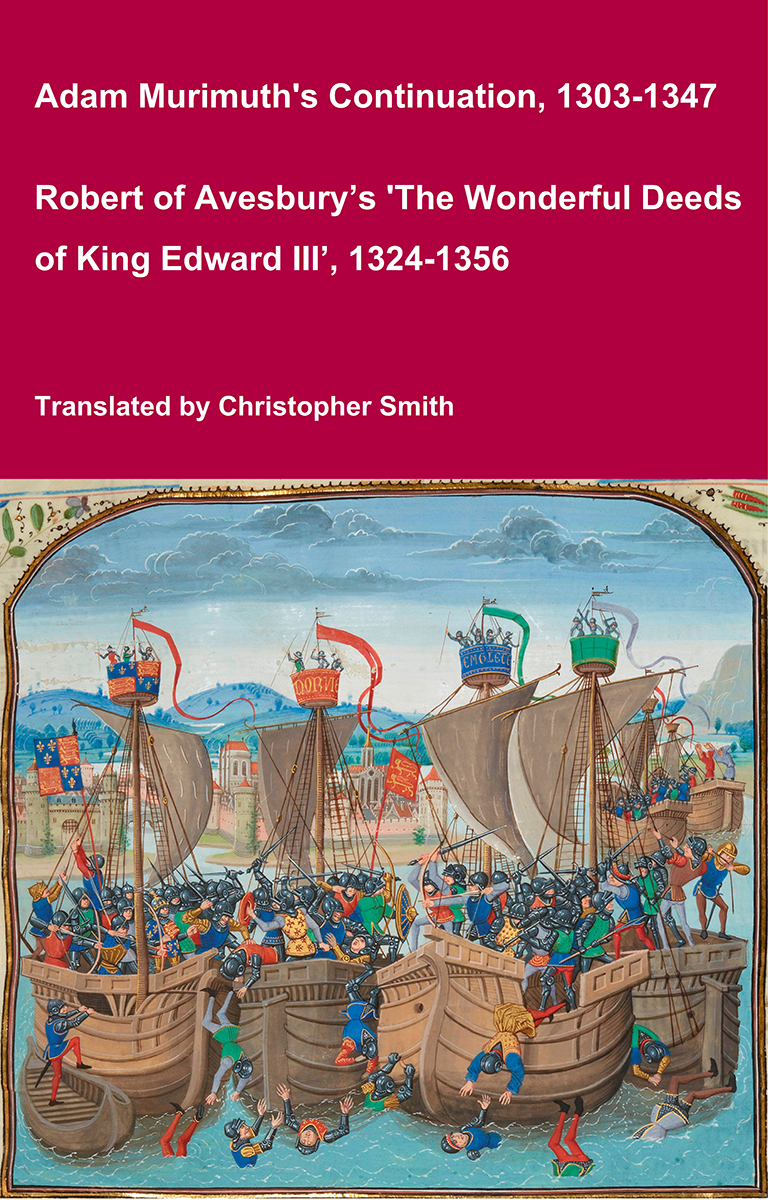
Adam Murimuth's Continuation and Robert of Avesbury’s 'The Wonderful Deeds of King Edward III'
This volume brings together two of the most important contemporary chronicles for the reign of Edward III and the opening phases of the Hundred Years’ War. Written in Latin by English clerical observers, these texts provide a vivid and authoritative window into the political, diplomatic, and military history of fourteenth-century England and its continental ambitions. Adam Murimuth Continuatio's Chronicarum continues an earlier chronicle into the mid-fourteenth century, offering concise but valuable notices on royal policy, foreign relations, and ecclesiastical affairs. Its annalistic structure makes it especially useful for establishing chronology and tracing the development of events year by year. Complementing it, Robert of Avesbury’s De gestis mirabilibus regis Edwardi tertii is a rich documentary chronicle preserving letters, treaties, and official records alongside narrative passages. It is an indispensable source for understanding Edward III’s claim to the French crown, the conduct of war, and the mechanisms of medieval diplomacy. Together, these works offer scholars, students, and enthusiasts a reliable and unembellished account of a transformative period in English and European history. Essential for anyone interested in medieval chronicles, the Hundred Years’ War, or the reign of Edward III.
Available at Amazon in eBook and Paperback format.
In August 1353 William "Flower of Chivalry and Knight Liddesdale" Douglas 1st Earl Atholl [aged 53] was killed by William Douglas 1st Earl Douglas [aged 30] at Ettrick Forest, Ettrick.
Before 1357 Hugh Dacre 4th Baron Dacre of Gilsland, Baron Multon of Gilsand [aged 21] and [his former wife] Elizabeth Maxwell Countess Atholl [aged 21] were married. She by marriage Baroness Dacre Gilsland.
On 1st January 1370 [his former wife] Elizabeth Maxwell Countess Atholl [aged 35] died at Naworth Castle [Map].
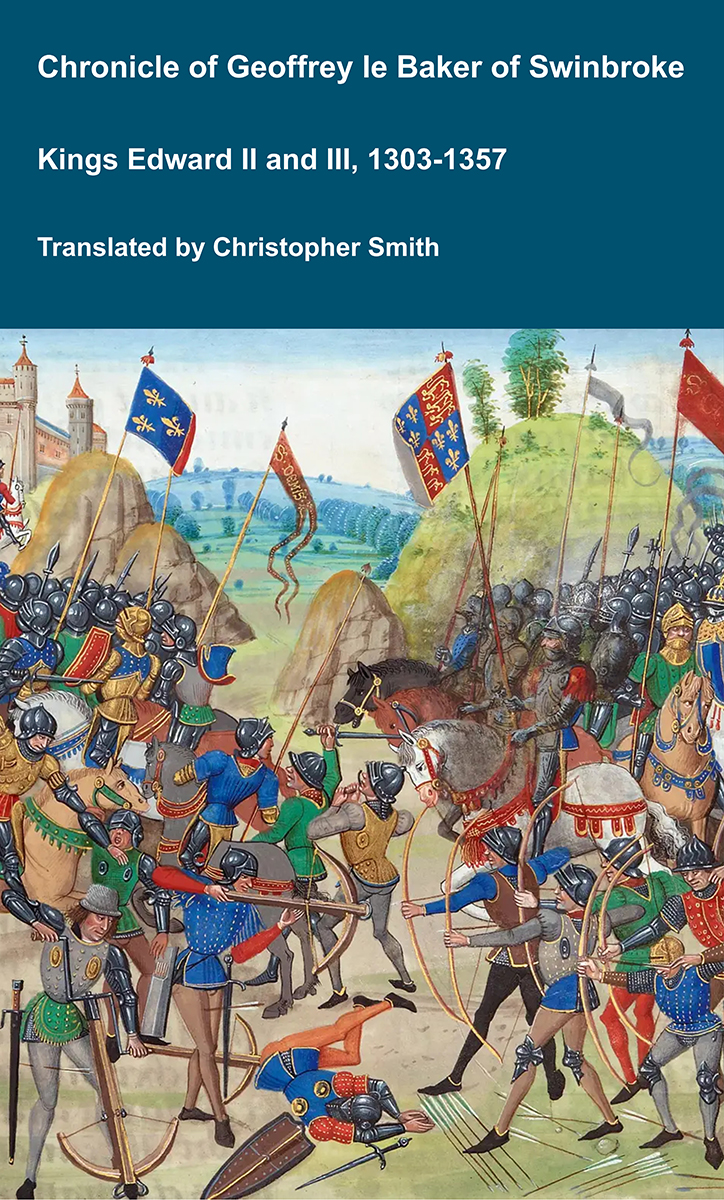 Chronicle of Geoffrey le Baker of Swinbroke. In the year of Christ 1348, the 22nd year of the king's reign, after the lord king had returned to England, David, King of the Scots, and Lord Charles of Blois were brought to the Tower of London,1 Charles having recently been captured in Brittany at Easter after great and perilous battles by Lord Thomas Dagworth. They both remained in England for many years awaiting ransom. Likewise, Lord James [William] Douglas,2 captured at the Battle of Durham and brought to London with the King of Scots, returned to the king's peace, having sworn him loyalty. But afterward, while peacefully returning to the border, William Douglas treacherously rode up behind him while he was out hunting and murdered him.
Anno Christi MCCCXLVIII, regis anno XXII, domino rege in Angliam reverse, adducti sunt ad turrim Londoniarum David rex Scotorum et dominus Karolus de Bloys, ad Pascha nuper in Britannia post magnos et periculosos conflictus per dominum Thomam Dagworthe captus; qui postea per multos annos manserunt in Anglia redimendi. Item, dominus lacobus Douglas, in bello Dunelmie captus, Londonias cum rege Scotorum adductus, rediit ad pacem regis, iurata sibi fidelitate; quem postea in marchiam pacifice reversum Willelmus Dowglas venacioni invitatum prodiciose equitans a tergo interfecit.
Note 1. David Bruce had been a prisoner in the Tower since the 1st January 1347. Rymer's Fœdera 3.99. Charles of Blois was captured at the battle of Roche-Derien, 20th June 1347.
Note 2. William Douglas, here wrongly called James, the knight of Liddesdale, made his peace with, and engaged to serve, Edward; and was set free on the 17th July 1352. Rymer's Fœdera 3.246. The next year he was murdered, when hunting in Ettrick Forest, by his kinsman William, afterwards earl Douglas.
[his father] James Douglas of Hermiston and Lothian and [his mother] Joan were married.
Great x 2 Grandfather: William Douglas 1st Lord Douglas
Great x 1 Grandfather: Archibald Douglas
Great x 2 Grandmother: Margaret Kerdal
GrandFather: Andrew Douglas
Great x 2 Grandfather: John Crawford
Great x 1 Grandmother: Margaret Crawford
William "Flower of Chivalry and Knight Liddesdale" Douglas 1st Earl Atholl
Mother: Joan