

The History of William Marshal was commissioned by his son shortly after William’s death in 1219 to celebrate the Marshal’s remarkable life; it is an authentic, contemporary voice. The manuscript was discovered in 1861 by French historian Paul Meyer. Meyer published the manuscript in its original Anglo-French in 1891 in two books. This book is a line by line translation of the first of Meyer’s books; lines 1-10152. Book 1 of the History begins in 1139 and ends in 1194. It describes the events of the Anarchy, the role of William’s father John, John’s marriages, William’s childhood, his role as a hostage at the siege of Newbury, his injury and imprisonment in Poitou where he met Eleanor of Aquitaine and his life as a knight errant. It continues with the accusation against him of an improper relationship with Margaret, wife of Henry the Young King, his exile, and return, the death of Henry the Young King, the rebellion of Richard, the future King Richard I, war with France, the death of King Henry II, and the capture of King Richard, and the rebellion of John, the future King John. It ends with the release of King Richard and the death of John Marshal.
Available at Amazon in eBook and Paperback format.
Paternal Family Tree: Douglas
William "Hardy" Douglas 2nd Lord Douglas and Elizabeth Stewart Baroness Douglas were married. She by marriage Lord Douglas.
In 1240 William "Hardy" Douglas 2nd Lord Douglas was born to [his father] William "Longleg" Douglas [aged 20] and [his mother] Constance Battail Battail.
Around 1274 [his father] William "Longleg" Douglas [aged 54] died. His son William [aged 34] succeeded 2nd Lord Douglas.
Around 1286 [his son] James "Black" Douglas was born to William "Hardy" Douglas 2nd Lord Douglas [aged 46] and Elizabeth Stewart Baroness Douglas [aged 38] at Douglas Castle, Douglas. He married Joan Lovel and had issue.
Before 1290 William "Hardy" Douglas 2nd Lord Douglas [aged 49] and Eleanor Louvain Baroness Douglas were married. She by marriage Lord Douglas.
In 1290 William "Hardy" Douglas 2nd Lord Douglas [aged 50] was imprisoned at Knaresborough Castle [Map].
In 1294 [his son] Hugh "Dull" Douglas was born to William "Hardy" Douglas 2nd Lord Douglas [aged 54] and [his wife] Eleanor Louvain Baroness Douglas.
On 30th March 1296 the army of King Edward I captured Berwick-upon-Tweed, Northumberland [Map] from William "Hardy" Douglas 2nd Lord Douglas [aged 56]. Richard Cornwall [aged 44] was killed during the course of the siege. Robert Clifford 1st Baron Clifford [aged 21] fought.
See 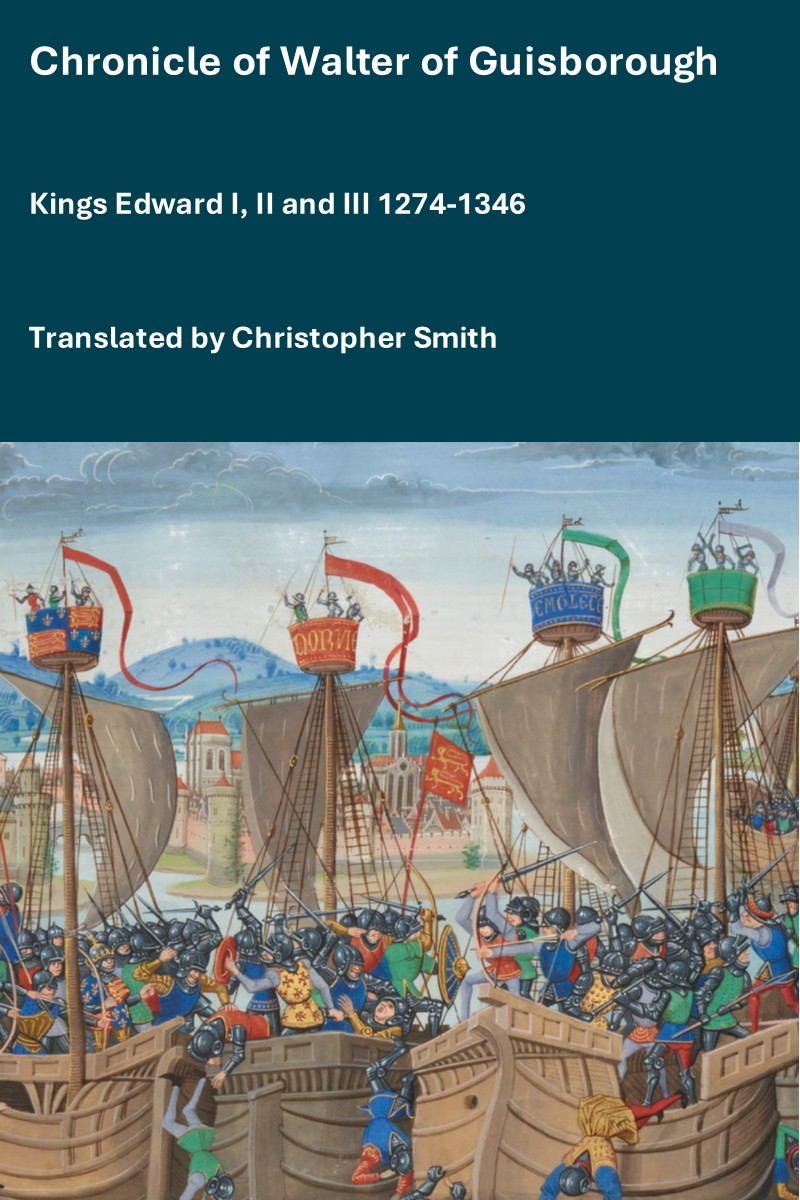 Walter of Guisborough, Scotichronicon, Chronicle of William Rishanger and the Annals of Worcester.
Chronicle of Walter of Guisborough. On Wednesday in the same Easter week, after the Easter solemnity was reverently celebrated as was fitting, our king with his army entered the land of his enemies, crossing the river called the Tweed below the monastery of the holy nuns of Coldstream. And though the water was severely flooding, it happened almost miraculously that not one person perished, except for a single boy, who was separated from his horse and swept away by the surging waves. Meanwhile, the Bishop of Durham with his troops crossed the Tweed near Norham, not far from his castle. When the king had waited that whole day and the next for the burgesses of Berwick to accept peace, and they refused the peace he offered, on Friday [30th March 1296] he moved camp and pitched his tents at the nunnery opposite Berwick, about half a league away. As the sun grew hot and the army stood ready on the plain, the king knighted new men there, Henry de Percy among many others. When our sailors, who were waiting at sea with twenty-four warships before the port, saw the king's army armed and many banners unfurled, they believed the king was about to launch an immediate assault on the town. With the sea rising, they entered the port. One ship, raising her sail higher than the rest and driven toward the shore, ran aground. Surrounded by the Scots, the mariners defended themselves bravely for a long time, killing many with missiles and sword, but at last the Scots brought up scaling ladders and set fire to the ship, storming aboard and killing twenty-eight men, though many died on both sides. Another ship that also ran aground was soon consumed by devouring flames, though the sailors escaped in their boat. A third vessel, which carried men from the house and household of the Prior of Durham, held out powerfully from the first hour until the eleventh. But eventually she too grounded and, once set aflame, was destroyed. Many escaped in the boat, and the rest, staying until the end, leapt into the sea, trusting themselves more to the water than to the enemy. Miraculously, not one of them perished, but were saved with the boats of the other ships. The remaining thirty ships, as the tide receded, withdrew, occasionally launching missiles at the enemy when the opportunity arose. When such reports were brought to our king, still encamped in the field, and all beheld the smoke rising high from the ships, the king commanded the trumpets to sound and that the city be forcefully entered. At once, as the trumpets blared, they crossed a ditch the Scots had made, planked over with wooden boards, as though it were nothing, and entered upon the enemy, cutting down men on every side all the way to the sea. At their entrance, the Scots were struck dumb, there was not one among them who raised a sword or loosed a missile; instead, they stood stunned, like men beside themselves. Thirty Flemings, who had taken possession of a house called the Red Hall on the condition that they would defend it against the King of England at all times, held out bravely until evening. But when fire was finally set to it, they too perished in the flames along with the building. There fell also the brother [Richard [aged 44]] of the Earl of Cornwall [Edmund, 2nd Earl of Cornwall [aged 46]], a most valiant knight, who, as he raised his head boldly toward the enemy, was struck by a missile through the eye-slit of his helmet, and instantly fell and died. With the city thus taken, more than eight thousand of the enemy were slain. That same day, the strong men who were in the garrison of the castle surrendered, with their lives and limbs, lands, and goods preserved. Their captain, Sir William Douglas1, the king kept under custody until the end of that war. As for the 200 men who had been with him, after swearing an oath never to raise arms against the king or the kingdom of England, they were allowed to depart freely, bearing arms. The women of the city were, after a few days, sent out to their people and went away in peace. The king remained in that city for fifteen days and caused a new ditch to be constructed, eighty feet wide and forty feet deep.
Die Mercurii in eadem ebdomada Paschæ, peracta solemnitate Paschali reverentia qua deceret, rex noster cum exercitu suo terram inimicorum suorum ingressus est, aquam quæ Tweda dicitur transeundo subtus monasterium sanctarum monialium de Caldestrem, et aqua nimium inundante quasi miraculose contigit quod non periit nisi puer unus pro omni populo, qui separatus ab equo ab inundantibus fluctibus interceptus est. Episcopus autem Dunolmensis cum turma sua Twedam transiit juxta Norham non longe a castro suo. Cumque toto die illo et and lays sequente ipse rex noster burgenses de Berewyk Berwick, expectasset ad pacem, nec voluerunt amplecti pacem quam tetendit, ipso die Veneris castra movens fixit tentoria sua in domo monialium ex opposito de Berewyk per dimidiam leucam. Incalescenteque sole, et exercitu præparato in planitie, fecit ibidem rex novos milites Henricum scilicet de Percy cum aliis multis. Quod cum vidissent marinarii nostri, quicum XXIIII navibus bellicis expectabant in mari coram portu, credebant regem velle confestim insultum facere urbi, eo quod videbant armatum exercitum et multa vexilla explicata, moxque cum fluctibus maris redundantibus et ipsi portum ingressi sunt. Quarum una præ cæteris velum elevans in alto terræ affixa est, quam circumdantes Scoti, cum se marinarii diutissime defendissent multosque peremissent telis et gladio, tandem allatis scalis et igne apposito eam ingressi sunt, XXVIII personas mutua tamen cæde perimentes. Alteram etiam navem cito postea solo inhærentem vorax flamma consumpsit, fugientibus tamen nautis cum scapha sua. Tertia vero navis, in qua fuerant viri de domo et familia prioris Dunolmensis, cum ab hora prima usque horam undecimam potenter tueretur, tandem innixa solo et igne allato combusta est, fugientibus cum scapha plurimis, et cæteris qui usque in finem permanserant in aquas maris salientibus, potius se credentes aquæ quam hosti; et quasi miraculose contigit quod non periit eorum aliquis, sed cum batellis aliarum navium salvati sunt. Cæteræ vero triginta naves cum aqua retrahente et se retraxerunt, telas emittentes ad hostes cum se facultas offerret. Cumque regi nostro, adhuc in campo existenti, talia dicerentur, videntibusque cunctis fumum a navibus extendi in altum, præcepit rex ut tubæ canerent urbemque potenter ingrederentur. Moxque clangentibus tubis, fossatum quoddam quod Scoti fecerant, cum lignis tabulatis quasi pro nihilo transeuntes, super hostes ingressi sunt, cædentes hinc et inde usque ad mare. Ad quorum introitum attoniti Scoti, non erat ex eis qui gladium erigeret vel telum emitteret, immo stabant stupefacti velut homines extra se. Triginta vero Flandrenses, qui Aulam Rubeam sic nominatam tali conditione receperant ut eam contra regem Anglorum omni tempore tuerentur, domum eandem usque ad vesperum viriliter defenderunt; sed apposito tandem igne, et ipsi cum domo combusti sunt. Ibi corruit frater comitis Cornubiæ miles strenuissimus, qui cum ad hostes caput in altum erigeret, in ipsa oculari apertura galeæ percussus telo, confestim cecidit et expiravit. Capta itaque urbe, ceciderunt ex hostibus plusquam octo millia. Eodem etiam die viri fortes qui erant in præsidio castri dederunt se, salvis eis vita et membris, terris et catallis; quorum capitaneum, scilicet dominum Willelmum Duglas, retinuit ibidem rex usque in finem ejusdem guerræ suæ, ducentos vero viros qui cum eo fuerant, accepto prius juramento quod nunquam contra se vel regnum Angliæ manum erigerent, portantes arma libere abire permisit. Mulieres etiam ejusdem urbis post dies aliquot mittebantur ad populum suum, et abierunt in pace. Mansit autem rex in eadem urbe diebus XV et novum fecit construi fossatum latitudinis LXXX pedum et profunditatis XL.
Note 1. William Douglas [aged 56], 2nd Lord Douglas, died 1298, in the Tower of London.
After 9th July 1297 William "Hardy" Douglas 2nd Lord Douglas [aged 57] was imprisoned at Douglas Tower ar Stirling Castle [Map].
On 12th October 1297 William "Hardy" Douglas 2nd Lord Douglas [aged 57] was imprisoned at Tower of London [Map].
Before 1298 [his son] Archibald Douglas was born to William "Hardy" Douglas 2nd Lord Douglas [aged 57] and [his wife] Eleanor Louvain Baroness Douglas. He married Beatrice Crawford and had issue.
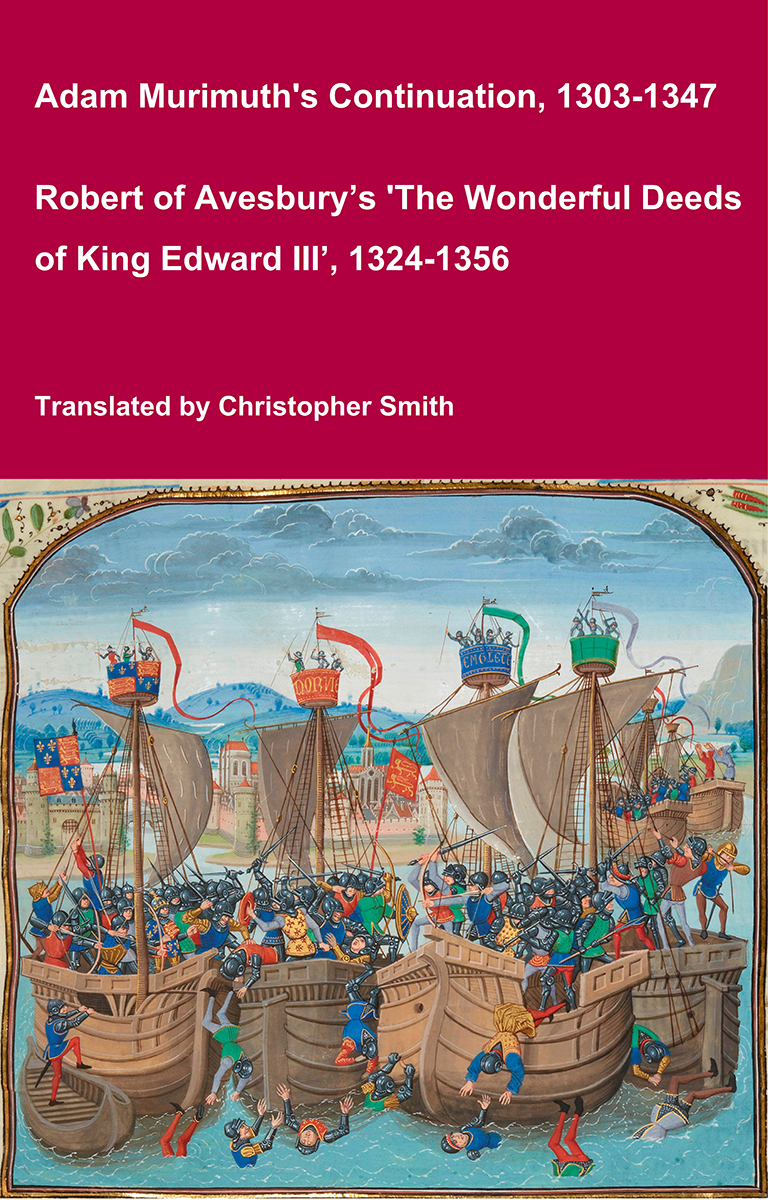
Adam Murimuth's Continuation and Robert of Avesbury’s 'The Wonderful Deeds of King Edward III'
This volume brings together two of the most important contemporary chronicles for the reign of Edward III and the opening phases of the Hundred Years’ War. Written in Latin by English clerical observers, these texts provide a vivid and authoritative window into the political, diplomatic, and military history of fourteenth-century England and its continental ambitions. Adam Murimuth Continuatio's Chronicarum continues an earlier chronicle into the mid-fourteenth century, offering concise but valuable notices on royal policy, foreign relations, and ecclesiastical affairs. Its annalistic structure makes it especially useful for establishing chronology and tracing the development of events year by year. Complementing it, Robert of Avesbury’s De gestis mirabilibus regis Edwardi tertii is a rich documentary chronicle preserving letters, treaties, and official records alongside narrative passages. It is an indispensable source for understanding Edward III’s claim to the French crown, the conduct of war, and the mechanisms of medieval diplomacy. Together, these works offer scholars, students, and enthusiasts a reliable and unembellished account of a transformative period in English and European history. Essential for anyone interested in medieval chronicles, the Hundred Years’ War, or the reign of Edward III.
Available at Amazon in eBook and Paperback format.
In 1298 William "Hardy" Douglas 2nd Lord Douglas [aged 58] died at Tower of London [Map].
[his father] William "Longleg" Douglas and [his mother] Constance Battail Battail were married.
Great x 1 Grandfather: William Douglas 1st Lord Douglas
GrandFather: Archibald Douglas
Great x 1 Grandmother: Margaret Kerdal
Father: William "Longleg" Douglas
Great x 1 Grandfather: John Crawford
GrandMother: Margaret Crawford
William "Hardy" Douglas 2nd Lord Douglas
Mother: Constance Battail Battail