

Abbot John Whethamstede’s Chronicle of the Abbey of St Albans
Abbot John Whethamstede's Register aka Chronicle of his second term at the Abbey of St Albans, 1451-1461, is a remarkable text that describes his first-hand experience of the beginning of the Wars of the Roses including the First and Second Battles of St Albans, 1455 and 1461, respectively, their cause, and their consequences, not least on the Abbey itself. His text also includes Loveday, Blore Heath, Northampton, the Act of Accord, Wakefield, and Towton, and ends with the Coronation of King Edward IV. In addition to the events of the Wars of the Roses, Abbot John, or his scribes who wrote the Chronicle, include details in the life of the Abbey such as charters, letters, land exchanges, visits by legates, and disputes, which provide a rich insight into the day-to-day life of the Abbey, and the challenges faced by its Abbot.
Available at Amazon in eBook and Paperback format.
Flint Castle is in Flint [Map], Castles in Flintshire.
The Welsh Castles and Towns of Edward I comprise a number of castles, some with associated planned towns, commissioned as a means of containing the Welsh. They included, from east to west, Flint Castle [Map], Rhuddlan [Map], Conwy Castle [Map], Beaumaris Castle [Map], Caernarfon Castle [Map], Harlech Castle [Map] and Aberystwyth Castle [Map]. Those not on the coast include Chirk Castle [Map], Denbigh Castle and Town Walls [Map] and Builth Castle [Map]. Arguably, Holt Castle [Map] and Criccieth Castle [Map] should be included.
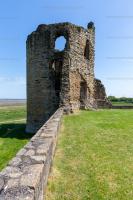
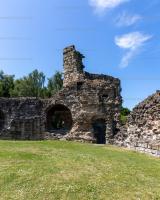
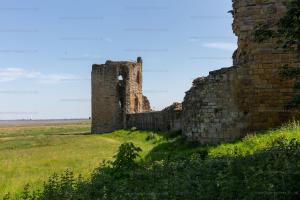
Flint Castle [Map] is located on the River Dee where the river is crossed by a ford. Building work began in 1277 initially under Richard L'engenour. The castle, like a number of Edward I's castles in Wales, was designed to be supplied by water.
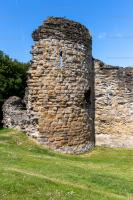
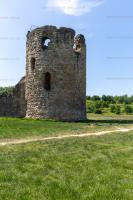
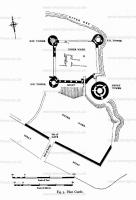
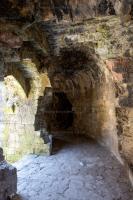
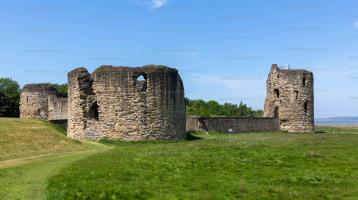
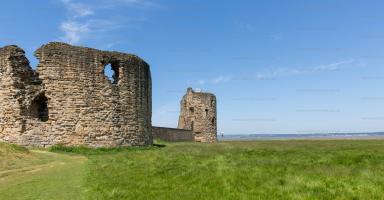
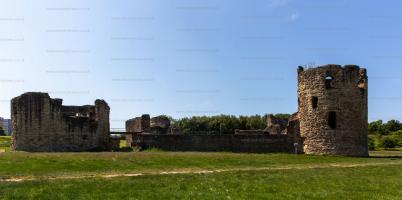
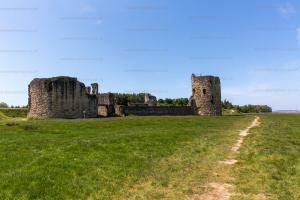
The castle design is unusual insofar as its largest tower is separated from the inner bailey by a tidal moat crossed by a drawbridge. The Great Tower has stone walls seven metres thick at the base and five metres above. A timber gallery was built on top of the keep for the visit of Edward, Prince of Wales, in 1301. On the ground floor is a vaulted passage that runs all the way around the inside of the keep.
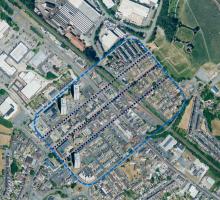
In addition to the castle Edward I commissioned the building of a town protected by a wall. The present layout of Flint is consistent with its design.
 Chronicle of Walter of Guisborough. In the year of our Lord 1282, David [aged 43], brother of Llywelyn, Prince of Wales, who in the first two Welsh wars had fought bravely for the King of England against his own brother Llywelyn, and whom the king had rewarded with various gifts and many possessions in England, even giving him a beloved kinswoman in marriage1, was reconciled with his brother Llywelyn. However, Llywelyn told him that he would never fully trust him or offer true friendship unless he became as much an enemy to the King of England as he had once been his faithful friend. They then, like Herod and Pilate, entered into a pact and formed a strong conspiracy. Together they rose up against the anointed of the Lord, the innocent English. They captured Lord Roger de Clifford at Flint Castle [Map], whom the King of England had placed in command there, and imprisoned him in harsh conditions. Then they laid waste with fire and sword, destroying whatever they could of the kings or the English peoples possessions. These acts began during the holy season of the Passion of the Lord. When the king heard of this, as a devout Christian, he sent word to the spiritual fathers, the archbishops and bishops within the faith of Christ. He earnestly requested that those evildoers, along with their accomplices and supporters, who, out of hatred for the peace and tranquillity of Holy Church and the realm of Wales, had committed plunder, murder, arson, and many grave offenses, be declared excommunicated2 publicly and solemnly in every diocese throughout his realm. The king believed and added that their rebellion and wickedness could be more effectively suppressed by the secular arm, with the aid of the spiritual sword, which is known to assist in such cases.
Anno Domini MCCLXXXII David, frater Leulini principis Walliæ, qui in duabus primis guerris Walliæ regi Angliæ contra Leulinum fratrem suum strenue militaverat, utpote quem donis variis et possessionibus multis rex ipse ditaverat in Anglia, et caram consanguineam suam eidem copulaverat in uxorem, cum fratre suo Leulino concordatus est. Cui tamen intulit ipse Leulinus quod nunquam ipsius veram consequeretur amicitiam nisi regi Angliæ in tantum efficeretur inimicus in quantum dudum fuerat verus amicus: et sic Herodis et Pilati inita concordia et facta conjuratione valida insurrexerunt in christos Domini Anglos innocentes, ceperuntque ad castrum de Flynt dominum Rogerum de Clyfford, quem rex Angliæ ibidem præfecerat, et taken pritetro carceri tradiderunt; deinde vastantes igne et gladio quicquid ipsius regis vel Anglorum contingere potuerunt. Et hæc quidem incepta sunt in tempore sancto infra passionem Domini sanctam. Quod cum audisset rex, misit, tanquam filius catholicus, ad patres spirituales archiepiscopos et episcopos in fide Christiana, rogans ut ipsos malefactores et eorum complices et fautores qui, tranquillitati et paci ecclesiæ sanctæ et Wales laid regni sui invidentes, deprædationes, homicidia, interdict. incendia, et multa enormia perpetrarunt, propter quæ in canonem latæ sententiæ ipso facto dinoscuntur incidisse, ab universis et singulis subditis suis per universas dioeceses publice et solemniter denunciari facerent excommunicatos: credidit enim, et adjecit, quod eorum rebellio et malitia mediante juvamine gladii spiritualis, qui in hujusmodi casu juvare dinoscitur, per brachium seculare facilius reprimerentur.
Note 1. David married Elizabeth Ferrers [aged 42] sometime after 1265. 4 x Great Grand Daughter of King Henry I "Beauclerc" England; she and King Edward I were fourth cousins once-removed.
Note 2. The King's letter to the Archbishop of Canterbury, desiring a sentence of excommunication against the Welsh rebels, is dated at Devizes on the 28th of March, 1282. Rot. Wall. 1 Edward I m. 10, d. in Turr. Lond.; Rymer, Fœdera, 1.603.
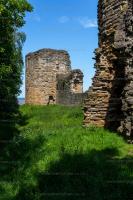
The Great Tower of Flint Castle [Map]. The tower would have been considerably higher when built. It has central rooms at each level, with a walkway around the central room at gounrd level. The Great Tower probably had a conical roof with timber roundwork at its top.
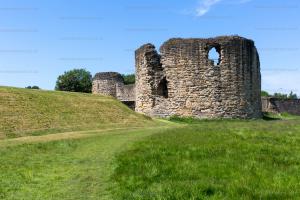
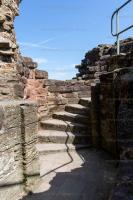
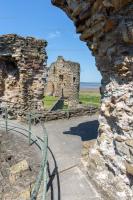
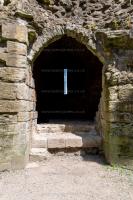
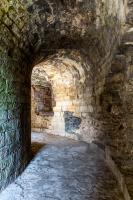
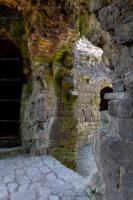
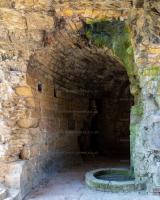
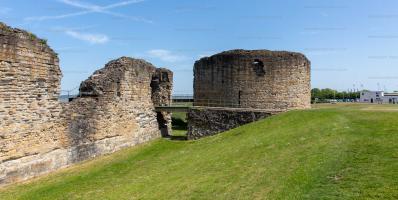
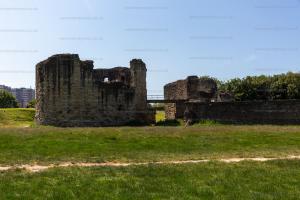
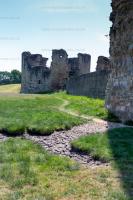
Flint Castle [Map] showing the water-dock where ships would access the castle from the River Dee estuary.
The Deposition of King Richard II. August 1399. So the earl [Henry Percy 1st Earl of Northumberland [aged 57]] set out without delay; he took his road as straight as he could for Conway, pondering, and full of care how he might take the king; thus he and his men travelled stoutly till he reached a very strong castle that they called Flint [Map]. He sent in an order on the part of Duke Henry to give up the fort to him, or all of them, without favour or respite, should be delivered over to death. So King Richard's people opened the gate to him through fear: he turned them out, and committed the keeping of it to a great party of his own men. In this castle that you have heard me call Flint [Map] was the king taken, as shall be related hereafter.


On 19th August 1399 King Richard II of England [aged 32] surrendered to Henry Bolingbroke Earl of Derby [aged 32] at Flint Castle [Map]. William Ros 6th Baron Ros Helmsley [aged 29] was present [Note. Wikipedia states Berkeley Castle?]


Thomas Walsingham [~1422]. [19th August 1399] These terms being agreed upon and confirmed, he [King Richard II [aged 32]] came to Flint Castle [Map], where, after a brief conversation with the Duke of Lancaster [Henry Bolingbroke], they mounted their horses and came to Chester Castle that night with the army that had followed the Duke, which was exceedingly numerous. The King, however, surrendered himself to the Duke on the twentieth day of August, on the forty-seventh day after the Duke's entry into England. The King's treasury, along with his horses, other ornaments, and all the furnishings of his household, fell into the hands of the Duke. However, the King's household members, both magnates, lords, and lesser men, were despoiled by the Welsh and the Northumbrians. The King himself was led to London, to be kept in the Tower until the next Parliament.
Quibus concessis et firmatis venit ad castrum de Flynt; ubi habito brevi collogquio cum Duce Lancastrize, mox ascensis equis venerunt ad castellum Cestriæ ea nocte, cum exercitu, qui Ducem secutus fuerat, Inumeroso valde. Reddidit autem se Rex Dueci vicesimo die mensis Augusti, et quadragesimo septimo die ab ingressu Ducis in Angliam: thesaurus Regis, cum equis et aliis ornamentis, et universa domus supellectili, venit ad manus Ducis; sed familiares Regis, magnates, domini, et mediocres, per Wallicos et Northumbrenses despoliati sunt. Rex vero perductus est Londonias, conservandus in Turri usque ad Parliamentum proximo celebrandum.
The Deposition of King Richard II. This reply was a most joyful hearing for us. After this the duke entered the castle, armed at all points, except his basinet, as you may see in this history. Then they made the king, who had dined in the donjon, come down to meet Duke Henry, who, as soon as he perceived him at a distance, bowed very low to the ground; and as they approached each other he bowed a second time, with his cap in his hand; and then the king took off his bonnet, and spake first in this manner: "Fair cousin of Lancaster, you be right welcome." Then Duke Henry replied, bowing very low to the ground, "My Lord, I am come sooner than you sent for me: the reason wherefore I will tell you. The common report of your people is such, that you have, for the space of twenty or two and twenty years, governed them very badly and very rigorously, and in so much that they are not well contented therewith. But if it please our Lord, I will help you to govern them better than they have been governed in time past."y
Note y. Language of the same kind Richard was made to employ in two orders speedily issued for the purpose of keeping the peace and repressing any attempt of his own friends; one dated at Chester August 20th; and another at Lichfield August 24th. They both speak of the duke in these words; "qui jam idem regnum nostrum pro regimine et gubernatione ejusdem, ac diversis defectibus, in eodem regno existentibus, emendandis, aliisque de causis est ingressus."
Ilustration 14. King Richard II of England [aged 32] (standing in black and red) surrendering to King Henry IV of England [aged 32] (holding the white staff) at Flint Castle [Map].
If the date laid down by our historian in page 151 be correct, and those of the writs given in Rymer equally so, it would follow that the former of these instruments would seem to have been framed by anticipation upon Henry's authority, and set forth in the king's name before his arrival; since, according to the text, Richard was not brought into the city of Chester till Tuesday, the twenty-second of August. But there appears strong reason to suspect that the writer may not have been accurate as to the day of the month on which the king was taken from Flint castle, though there may be no doubt that he is right as to the day of the week. I am inclined, with Carte, to place this event on August 19 [1399]; which I find by calculation to have fallen on Tuesday in that year, and then the dates of the documents in Rymer will follow in their right course. The king would be on Wednesday, August 20, at Chester, where the first writ was issued; and after remaining there three days, and setting out on the fourth from his leaving Flint, inclusive, might be at Lichfield on his way to London, on Sunday, the twenty-fourth of the same month; where the second writ was issued. Indeed the Monk of Evesham asserts that they halted at Lichfield the whole of Sunday, being the festival of Saint Bartholomew the apostle, which by the calendar corresponds to August 21, and accords with the indisputable authority in Rymer.
In 1407 Roger Leche of Chatsworth [aged 46] was appointed Constable of Flint Castle [Map].
In 1664 Ralph Whitley was appointed Constable of Flint Castle.
In 1689 Thomas Whitley of Peel Hall [aged 38] was appointed joint Constable of Flint Castle for life.
In March 1750 Other Lewis Windsor 4th Earl Plymouth [aged 18] was appointed Constable of Flint Castle.
Chronicle of Abbot Ralph of Coggeshall
The Chronicle of Abbot Ralph of Coggeshall (Chronicon Anglicanum) is an indispensable medieval history that brings to life centuries of English and European affairs through the eyes of a learned Cistercian monk. Ralph of Coggeshall, abbot of the Abbey of Coggeshall in Essex in the early 13th century, continued and expanded his community’s chronicle, documenting events from the Norman Conquest of 1066 into the tumultuous reign of King Henry III. Blending eyewitness testimony, careful compilation, and the monastic commitment to record-keeping, this chronicle offers a rare narrative of political intrigue, royal power struggles, and social upheaval in England and beyond. Ralph’s work captures the reigns of pivotal figures such as Richard I and King John, providing invaluable insights into their characters, decisions, and the forces that shaped medieval rule. More than a simple annal, Chronicon Anglicanum conveys the texture of medieval life and governance, making it a rich source for scholars and readers fascinated by English history, monastic authorship, and the shaping of the medieval world.
Available at Amazon in eBook and Paperback format.
Flintshire Historical Society Volume 12. The Building of Flint [Map]. An Address to the Society given in the County Council Chamber, Mold, on 17th February 1751 by J Goronwy Edwards, M.A., D.Litt., F.B.A. Professor of History and Director of the Institute of Historical Research in the University of London.
In 1775 Owen Brereton aka Salusbury-Brereton [aged 60] was appointed Constable of Flint Castle.
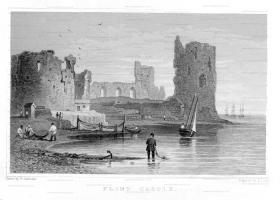
Wales Illustrated North Wales. Flint Castle [Map].
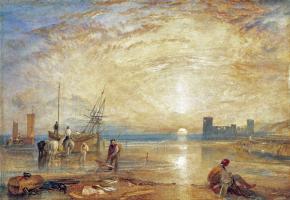
Around 1834. Joseph Mallord William Turner [aged 58]. Flint Castle [Map]