All About History Books on Amazon

Chronicle of Abbot Ralph of Coggeshall

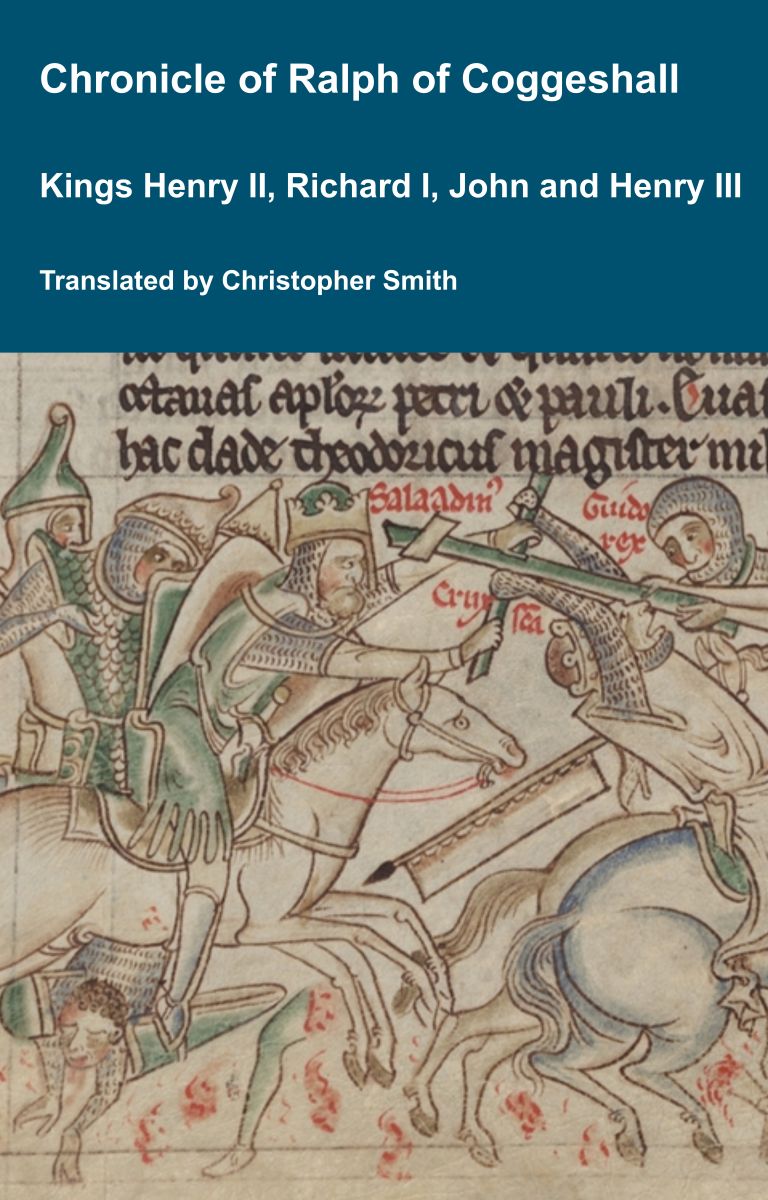
The Chronicle of Abbot Ralph of Coggeshall (Chronicon Anglicanum) is an indispensable medieval history that brings to life centuries of English and European affairs through the eyes of a learned Cistercian monk. Ralph of Coggeshall, abbot of the Abbey of Coggeshall in Essex in the early 13th century, continued and expanded his community’s chronicle, documenting events from the Norman Conquest of 1066 into the tumultuous reign of King Henry III. Blending eyewitness testimony, careful compilation, and the monastic commitment to record-keeping, this chronicle offers a rare narrative of political intrigue, royal power struggles, and social upheaval in England and beyond. Ralph’s work captures the reigns of pivotal figures such as Richard I and King John, providing invaluable insights into their characters, decisions, and the forces that shaped medieval rule. More than a simple annal, Chronicon Anglicanum conveys the texture of medieval life and governance, making it a rich source for scholars and readers fascinated by English history, monastic authorship, and the shaping of the medieval world.

Available at Amazon in eBook and Paperback format.

Bishop Ralph de Ireton -1292

Before 1257 Bishop Ralph de Ireton became a Canon at Guisborough Priory [Map].

In 1261 Bishop Ralph de Ireton was elected Prior of Guisborough Priory [Map].

On 14th December 1278 Bishop Ralph de Ireton was elected Bishop of Carlisle.

On 9th April 1280 Bishop Ralph de Ireton was consecrated Bishop of Carlisle by the Bishop of Tusculum [now Frescati].

On 29th February 1292 Bishop Ralph de Ireton died while attending a parliament at London, from a burst vein. He was buried at Carlisle Cathedral [Map]. His tomb was destroyed ten weeks after in a fire at the Cathedral.

Chronicle of Walter of Guisborough. In the same year, namely 1292, on the last day of February, the bishop of Carlisle, Ralph1 of good memory, formerly our prior at Guisborough, died and was buried in the same church at Carlisle. Then, on the following feast of Saint Dunstan the Archbishop [19th May 1292], the entire city of Carlisle was horribly consumed and burned in a great fire, including the whole abbey and all the houses of the Friars Minor and the churches. Only the Dominican Friars were saved, and even then with great difficulty. For the fire broke out at night, and because a strong wind was blowing, there was nothing that could resist it. Now the cause of that wicked disaster was this: one of the townsmen had a depraved son, and because he hated him, he sold the houses he owned to a stranger. The son, angered by this, publicly threatened that the buyer would never peacefully enjoy his inheritance. And because the fire began almost suddenly in those very houses at dusk, the son was seized, drawn, and hanged.

Eodem anno scilicet MCCXCII ultimo die Februarii obiit bonæ memoriæ Radulphus Carleolensis episcopus, quondam prior noster Gisburniæ, et in eadem Carleolensi ecclesia sepultus. In sequenti vero festo Sancti Dunstani archiepiscopi tota civitas Carleolensis horribili incendio concremata est et combusta, cum tota abbatia et universis domibus Fratrum Minorum et ecclesiis, solique Prædicatores salvati sunt, sed cum difficultate maxima; nocte enim evenit ignis, et irruente vento maximo non erat quod resistere posset. Contigit autem sic casus ille nefandus: erat unus ex civibus habens filium sceleratum, et quia habebat eum exosum vendidit extraneo domos quas habebat: indignatusque filius minabatur publice dicens quod emptor ille nunquam gauderet pacifice hæreditate sua: et quia in crepusculo noctis in eisdem domibus ignis quasi subito initium assumpsit, captus est ille filius, tractus, et suspensus.

Note 1. Ralph de Ireton, Prior of Gisborough, elected Bishop of Carlisle December, 1278, on the refusal of William de Rotherfeld, Dean of York, to accept that dignity, and consecrated by the Bishop of Tusculum, now Frescati, 1280.

Click to read more ...