All About History Books on Amazon

Chronicle of the Abbey of Evesham

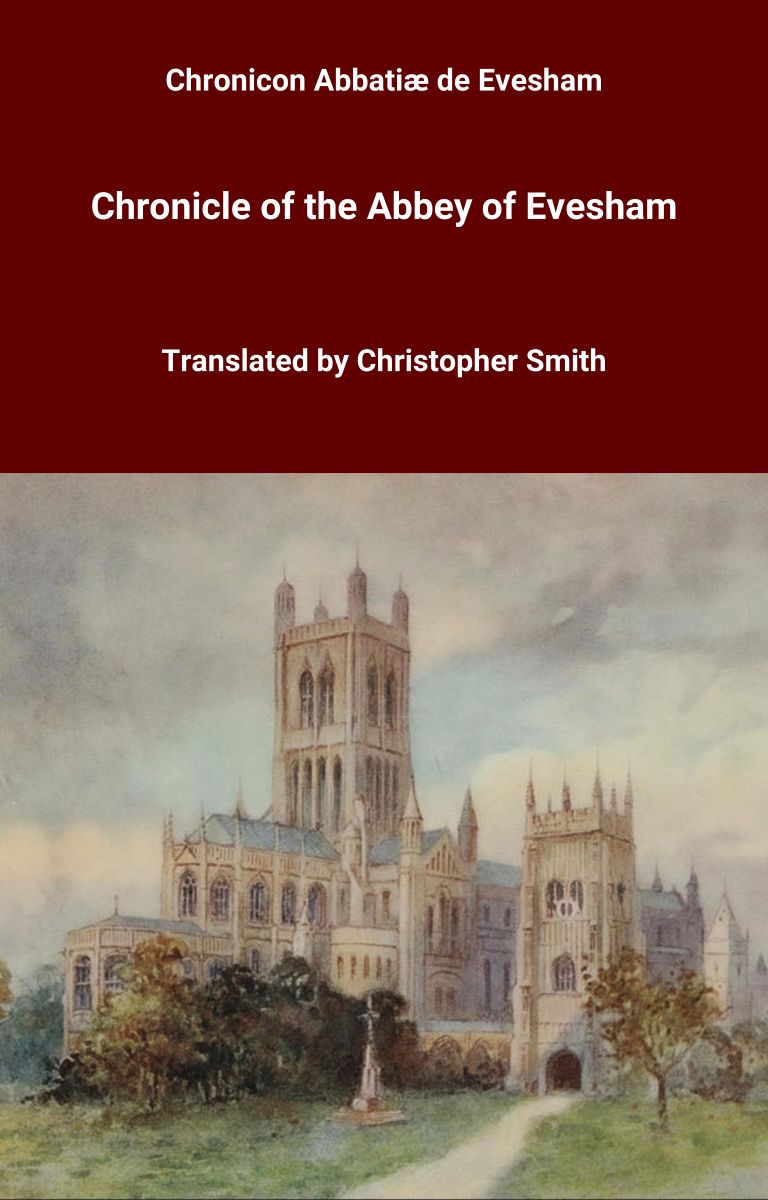
The Chronicle of the Abbey of Evesham is a remarkable medieval history of one of England’s great Benedictine monasteries. Beginning with the abbey’s legendary and royal foundations, it traces the fortunes of Evesham through centuries of religious devotion, political conflict, legal struggle, rebuilding, reform, and royal patronage. At the heart of the chronicle is the abbey’s determination to defend its ancient liberties. Its monks record disputes with bishops, appeals to popes and papal legates, contested elections of abbots, lawsuits over lands and privileges, and the long struggle to preserve Evesham’s exemption from episcopal control. Alongside these institutional battles are vivid accounts of saints and miracles, including St Ecgwine, St Odulf and the royal martyr St Wistan, whose relics and cult formed an important part of the abbey’s identity. The chronicle also preserves a wealth of detail about everyday monastic life. It describes the building and repair of churches, cloisters, chapels, halls, mills, granges and fishponds; the acquisition of estates and revenues; the making of vestments, shrines, bells and liturgical books; and the provision of food, clothing, recreation and medical care for the monks. Successive abbots emerge not merely as religious superiors but as administrators, builders, patrons, diplomats and defenders of the community. Extending into the later Middle Ages, the narrative reflects the changing political world around Evesham, from the Norman Conquest and the Angevin kings to the Wars of the Roses and the reign of Henry VIII. The result is both a history of a single monastery and a richly detailed record of medieval English religious, legal, economic and political life. This edition offers modern readers direct access to one of the most important monastic chronicles of medieval England, revealing how the monks of Evesham understood their saints, their privileges, their rulers and their place in history.

Available at Amazon in eBook and Paperback format.

Sutton Scarsdale Hall, Derbyshire, North East Derbyshire, North-Central England, British Isles [Map]

Sutton Scarsdale Hall, Derbyshire is in Sutton Scarsdale, Derbyshire [Map].

The manor of Sutton Scarsdale [Map] was owned by Wulfric Spott, who died in 1002 and left the estate to Burton-on-Trent Abbey.

In the Domesday Book of 1088 the manor of Sutton Scarsdale [Map] was owned by Roger "The Poitevin" Montgomery Viscount Hiemois [aged 23].

In 1225 the manor of Sutton Scarsdale [Map] had been given by King Henry III to Peter de Hareston, but by 1401 it had been purchased by John Leeke of Gotham.

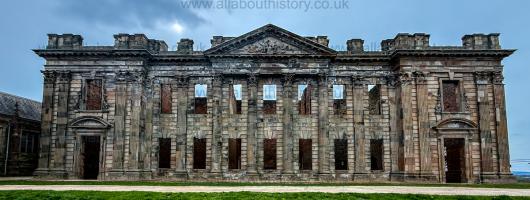
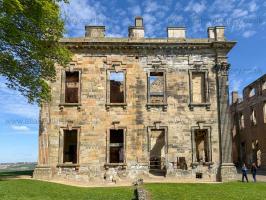
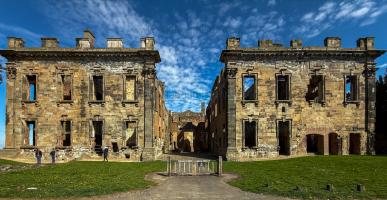
In 1724 Nicholas Leke 4th Earl Scarsdale [aged 42] commissioned Warwick based architect Francis Smith (1672-1738) to re-build Sutton Scarsdale Hall, Derbyshire [Map]. He encased a much older house to create one of the most handsome buildings of the period in England. The facade is decorated with four giant classical Corinthian columns, topped by a pediment, either side of which are a series of pilasters (flat columns) reaching almost to the full height of the building, similar in style to nearby Chatsworth House, Derbyshire [Map].

In 1740, following the death of Nicholas Leke 4th Earl Scarsdale, the last of his line, Sutton Scarsdale Hall, Derbyshire [Map] was sold to Godfrey Clarke

On 30th March 1774 Godfrey Clarke died. His son, Godfrey Bagnall Clarke [aged 32] inherited his estates including Sutton Scarsdale [Map].

On 27th June 1805 Captain Robert Arkwright [aged 22] and Frances Crawford [aged 19] were married. The marriage against the wishes of his father who disapproved of her being an actress. He received a wedding gift of £30,000 from his father and later an allowance of £500 a year. He leased Stoke Hall (Derbys) from 1816-32, but after the death of his elder brother he occupied Sutton Scarsdale Hall, Derbyshire [Map], which he subsequently inherited on his father's death in 1843.

On 19th December 1817 Anna Maria Catherine Price-Clarke Marchioness Ormonde [aged 28] died. It isn't clear who inherited Sutton Scarsdale Hall, Derbyshire [Map] after her death, and who sold it to Richard Arkwright [aged 62] in 1827.

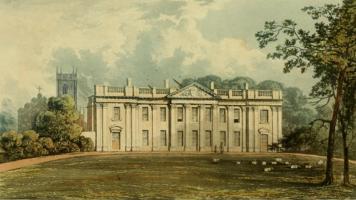
1827. Sutton Scarsdale Hall, Derbyshire [Map], shortly after it had been purchased by Richard Arkwright [aged 71].

Richard Arkwright: On 19th December 1755 he was born to Richard Arkwright. On 19th December 1817 Anna Maria Catherine Price-Clarke Marchioness Ormonde died. It isn't clear who inherited Sutton Scarsdale Hall, Derbyshire [Map] after her death, and who sold it to Richard Arkwright in 1827. On 23rd April 1843 he died. His son Captain Robert Arkwright inherited Sutton Scarsdale Hall, Derbyshire [Map].

On 23rd April 1843 Richard Arkwright [aged 87] died. His son Captain Robert Arkwright [aged 60] inherited Sutton Scarsdale Hall, Derbyshire [Map].

On 6th August 1859 Captain Robert Arkwright [aged 76] died. His son Reverend Godfrey Harry Arkwright [aged 44] inherited Sutton Scarsdale Hall, Derbyshire [Map].

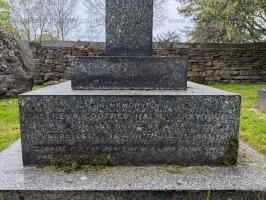
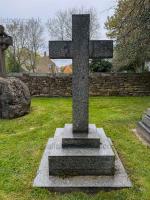
On 17th December 1866 Reverend Godfrey Harry Arkwright [aged 52] died. His son Francis Arkwright [aged 20] inherited Sutton Scarsdale Hall, Derbyshire [Map]. He was buried at St Mary's Church, Sutton Scarsdale [Map].

Francis Arkwright: On 17th March 1846 he was born to Reverend Godfrey Harry Arkwright and Frances Rafella FitzHerbert. On 15th September 1875 he and Evelyn Addington were married. On 1st March 1915 he died. Sutton Scarsdale Hall, Derbyshire [Map] was inherited by his cousin William Arkwright who

On 1st March 1915 Francis Arkwright [aged 68] died. Sutton Scarsdale Hall, Derbyshire [Map] was inherited by his cousin William Arkwright [aged 57] who

All About History Books on Amazon

Annals of the six Kings of England by Nicholas Trivet

Translation of the Annals of the Six Kings of England by that traces the rise and rule of the Angevin aka Plantagenet dynasty from the mid-12th to early 14th century. Written by the Dominican scholar Nicholas Trivet, the work offers a vivid account of English history from the reign of King Stephen through to the death of King Edward I, blending political narrative with moral reflection. Covering the reigns of six monarchs—from Stephen to Edward I—the chronicle explores royal authority, rebellion, war, and the shifting balance between crown, church, and nobility. Trivet provides detailed insight into defining moments such as baronial conflicts, Anglo-French rivalry, and the consolidation of royal power under Edward I, whose reign he describes with particular immediacy. The Annals combines careful year-by-year reporting with thoughtful interpretation, presenting history not merely as a sequence of events but as a moral and political lesson. Ideal for readers interested in medieval history, kingship, and the origins of the English state, this chronicle remains a valuable and accessible window into the turbulent world of the Plantagenet kings.

Available at Amazon in eBook and Paperback format.

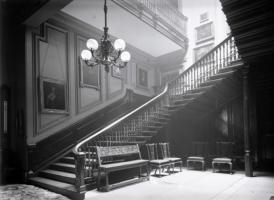
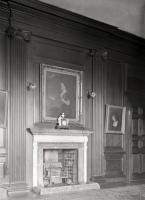
1919. The entrance hall, hallway and stairs and Oak Room of Sutton Scarsdale Hall, Derbyshire [Map].

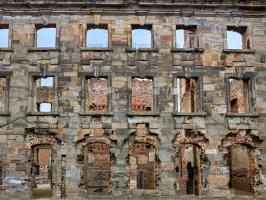
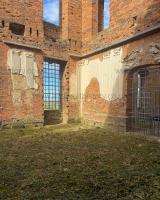
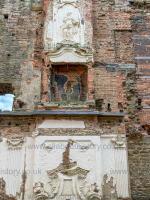
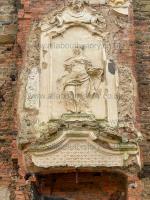
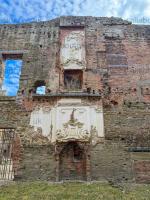
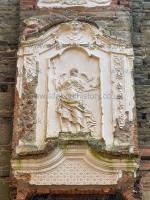
In 1919 the building firm of Haslam Ltd. bought Sutton Scarsdale Hall, Derbyshire [Map] from William Arkwright [aged 61] and asset-stripped the house; this went as far as removing the roof in 1920. The Adams fireplaces which were inlaid with Blue John were stripped from the house and sent to America to a Philadelphia museum along with the ornate staircases, where they still are today. The roof was stripped of lead, the ornate ceilings which were designed by some of the finest Italian craftsmen were removed to take out the wooden joists and some of the stone was used to build houses in the Somersall and Brampton area, leaving only the shell.

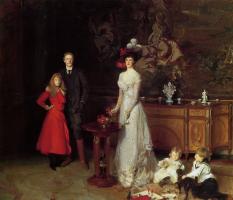
In 1946 Osbert Sitwell [aged 53] purchased Sutton Scarsdale Hall, Derbyshire [Map] just three days before demolition was planned to take place. The hall was later given over to the Department of the environment in the late 1960's. In 1971 emergency repairs were started to secure the building from further decay. The cost of this work was estimated at around £30,000, the money was secured for the work to begin. (£5,000 was forthcoming from the Derbyshire County Council) and later during 1992 the building was finally secured and the plaster mouldings left after the removal of the ceilings and fireplaces were sealed and preserved and secure ornate iron bars were placed in all the window mullions.