All About History Books on Amazon
This is a translation of the 'Memoires of Jacques du Clercq', published in 1823 in two volumes, edited by Frederic, Baron de Reissenberg. In his introduction Reissenberg writes: 'Jacques du Clercq tells us that he was born in 1424, and that he was a licentiate in law and a counsellor to Philip the Good, Duke of Burgundy, in the castellany of Douai, Lille, and Orchies. It appears that he established his residence at Arras. In 1446, he married the daughter of Baldwin de la Lacherie, a gentleman who lived in Lille. We read in the fifth book of his Memoirs that his father, also named Jacques du Clercq, had married a lady of the Le Camelin family, from Compiègne. His ancestors, always attached to the counts of Flanders, had constantly served them, whether in their councils or in their armies.' The Memoires cover a period of nineteen years beginning in in 1448, ending in in 1467. It appears that the author had intended to extend the Memoirs beyond that date; no doubt illness or death prevented him from carrying out this plan. As Reissenberg writes the 'merit of this work lies in the simplicity of its narrative, in its tone of good faith, and in a certain air of frankness which naturally wins the reader’s confidence.' Du Clercq ranges from events of national and international importance, including events of the Wars of the Roses in England, to simple, everyday local events such as marriages, robberies, murders, trials and deaths, including that of his own father in Book 5; one of his last entries.
Available at Amazon in eBook and Paperback format.
St Mary & All Saints Church, Willoughby-on-the-Wolds is in Willoughby-on-the-Wolds, Nottinghamshire [Map], Churches in Nottinghamshire.
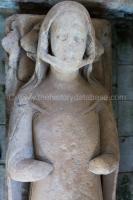
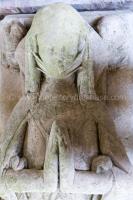
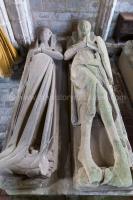
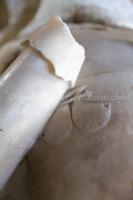
Monument to two unknown ladies in St Mary & All Saints Church, Willoughby-on-the-Wolds [Map].

After 1325. St Mary & All Saints Church, Willoughby-on-the-Wolds [Map]. Monument to Richard Bugge aka Willoughby [deceased].
Richard Bugge aka Willoughby: Around 1233 he was born to Robert Bugge de Bingham at Willoughby-on-the-Wolds, Nottinghamshire [Map]. In 1325 he died at Willoughby-on-the-Wolds, Nottinghamshire [Map].
On 14th March 1362 Richard Willoughby [aged 72] died. He was buried at St Mary & All Saints Church, Willoughby-on-the-Wolds [Map].


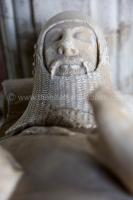
In 1369 Richard Willoughby died. Monument in St Mary & All Saints Church, Willoughby-on-the-Wolds [Map]. Camail and Jupon Period.
Richard Willoughby: he was born to Richard Willoughby.


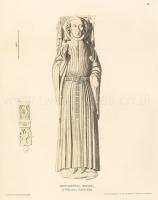
Effigy in Willoughby Church. Willoughby Church [Map]
THIS is supposed to be one of the Lords of Willoughby, in Nottinghamshire. Perhaps Sir Richard de Willoughby, who was Chief Justice of the King's Bench 11th Edward IIIa Chaucer says of his Serjeant-at-law,
"Justice he was full oftin in Assise,
By patent, and by pleine commissione;"
and that he was
"Girt with a ceint of silk with barris smale."
The tunic of the figure is confined by a richly-embossed girdle.
Details. Ornament of the girdle.
In 1417 Isabel Foljambe [aged 22] was buried at St Mary & All Saints Church, Willoughby-on-the-Wolds [Map].
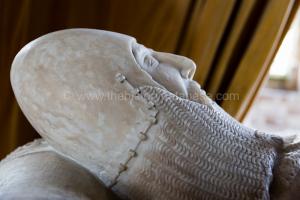
On or before 15th November 1448, the date he was buried at St Mary & All Saints Church, Willoughby-on-the-Wolds [Map], Hugh Willoughby died. Monument to Hugh Willoughby and Margaret Freville [aged 47]. Early Plate Bascinet and Gorget Period. Hip Belt. Horned Headdress. Chest with Weepers holding Shields. Dogs chewing at her dress with Studded Collar. Angels Supporting Pillow. Possibly Sutton and Prentys.
Hugh Willoughby: he was born to Edmund Willoughby and Isabel Annesley. Around 1395 he and Isabel Foljambe were married. Before 1419 he and Margaret Freville were married.
Margaret Freville: In 1401 she was born to Baldwin Freville. In 1493 she died.


Introduction. Of the usual Civil Costume of the fourteenth and fifteenth centuries, excellent examples will be found in the tombs of William of Hatfield, William of Windsor, Blanch dela Tour, and the mourners on the monument of Sir Roger de Kerdeston. One of these mourners, a female, and the figure of the Lady of Sir Miles Stapleton, have long pendant lappets to their sleeves. That of the Judge in Willoughby church [Map], Nottinghamshire, has a tunic to which very full sleeves are attached, and he is girt with a rich ceint, or girdle; an appendage of knights, civilians, and ecclesiastics (when unattired in the sacred vestments), in the fourteenth century.
"Change of clothing every day.
With golden girdles, great an small.'
Plowman's Tale.