All About History Books on Amazon

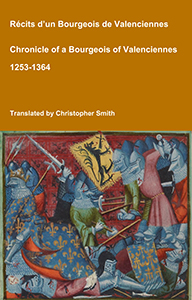
Chronicle of a Bourgeois of Valenciennes

Récits d’un bourgeois de Valenciennes aka The Chronicle of a Bourgeois of Valenciennes is a vivid 14th-century vernacular chronicle written by an anonymous urban chronicler from Valenciennes in the County of Hainaut. It survives in a manuscript that describes local and regional history from about 1253 to 1366, blending chronology, narrative episodes, and eyewitness-style accounts of political, military, and social events in medieval France, Flanders, and the Low Countries. The work begins with a chronological framework of events affecting Valenciennes and its region under rulers such as King Philip VI of France and the shifting allegiances of local nobility. It includes accounts of conflicts, sieges, diplomatic manoeuvres, and the impact of broader struggles like the Hundred Years’ War on urban life in Hainaut. Written from the perspective of a burgher (bourgeois) rather than a monastery or royal court, the chronicle offers a rare lay viewpoint on high politics and warfare, reflecting how merchants, townspeople, and civic institutions experienced the turbulence of the 13th and 14th centuries. Its narrative style combines straightforward reporting of events with moral and civic observations, making it a valuable source for readers interested in medieval urban society, regional politics, and the lived experience of war and governance in pre-modern Europe.

Available at Amazon in eBook and Paperback format.

Earl Egmont

Summary

6th November 1733. 1st. John Perceval 1st Earl Egmont [aged 50] created.

1st May 1748. 2nd. Son John Perceval 2nd Earl Egmont [aged 37] succeeded.

4th December 1770. 3rd. Son John Perceval 3rd Earl Egmont [aged 32] succeeded.

25th February 1822. 4th. Son John Perceval 4th Earl Egmont [aged 54] succeeded.

31st December 1835. 5th. Son Henry Perceval 5th Earl Egmont [aged 39] succeeded.

23rd January 1841. 6th. Half First Cousin Once Removed George Perceval 6th Earl Egmont [aged 46] succeeded.

2nd August 1874. 7th. Nephew Charles George Perceval 7th Earl Egmont [aged 29] succeeded.

5th September 1897. 8th. First Cousin Once Removed Augustus Perceval 8th Earl Egmont [aged 41] succeeded.

1910. 9th. Brother Charles Perceval 9th Earl Egmont [aged 52] succeeded.

10th January 1929. 10th. Third Cousin Frederick Joseph Trevelyan Perceval 10th Earl Egmont [aged 55] succeeded.

16th May 1932. 11th. Son Frederick George Moore Perceval 11th Earl Egmont [aged 18] succeeded.

10th December 2001. 12th. Son Thomas Perceval 12th Earl of Egmont [aged 67] succeeded.

6th November 2011. 12th. Thomas Perceval 12th Earl of Egmont extinct.

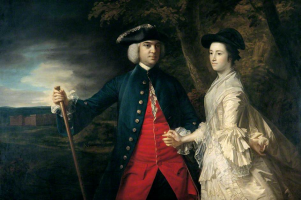
On 6th November 1733 John Perceval 1st Earl Egmont [aged 50] was created 1st Earl Egmont. Catherine Parker Countess Egmont [aged 43] by marriage Countess Egmont.

On 1st May 1748 John Perceval 1st Earl Egmont [aged 64] died. His son John [aged 37] succeeded 2nd Earl Egmont, 2nd Viscount Perceval of Kanturk in County Cork, 2nd Baron Perceval of Burton in County Cork, 6th Baronet Perceval of Kanturk in County Cork. Catherine Cecil Countess Egmont [aged 26] by marriage Countess Egmont.

After 16th August 1752 John Perceval 2nd Earl Egmont [aged 41] and Catherine Compton Countess Egmont [aged 21] were married. She by marriage Countess Egmont. The difference in their ages was 20 years. He the son of John Perceval 1st Earl Egmont and Catherine Parker Countess Egmont.

All About History Books on Amazon

Chronicles of the Reigns of Edward I and II Volume 2

The Chronicles of the Reigns of Edward I and Edward II, Volume 2, comprising A Sorrowful Commendation on King Edward, the Life of Edward II by a Monk of Bridlington, Life of Edward II by a Monk of Malmesbury and Life of Edward by Thomas de la More, presents a rich collection of medieval English chronicles illuminating the political, military, ecclesiastical and social upheavals of the late thirteenth and early fourteenth centuries. The volume offers contemporary and near-contemporary accounts of the reigns of Edward I and Edward II, a period marked by war with Scotland, conflict between Crown and nobility, disputes over royal government, ecclesiastical tensions, rebellion, deposition and civil violence. Particular attention is given to the struggle surrounding Piers Gaveston, Thomas of Lancaster and the Despensers, as well as the turbulent final years of Edward II and the political circumstances that shaped the early reign of Edward III. These chronicles are especially valuable for their vivid narrative detail. They preserve speeches, political arguments, descriptions of battles and executions, accounts of parliaments and royal councils, reports of diplomatic missions, ecclesiastical controversies, prodigies and natural events, and contemporary judgements on the conduct of kings, magnates and churchmen. Written from differing institutional and regional perspectives, the texts reveal not only what happened but how medieval observers interpreted events, often through ideas of divine judgement, legitimate kingship, loyalty, treason and moral retribution. An important primary-source collection for readers interested in Edward I, Edward II, medieval politics, the Scottish wars, the baronial opposition, the fall of Edward II, church history and fourteenth-century England, Volume 2 provides an indispensable window into one of the most turbulent periods of the English Middle Ages.

Available at Amazon in eBook and Paperback format.