

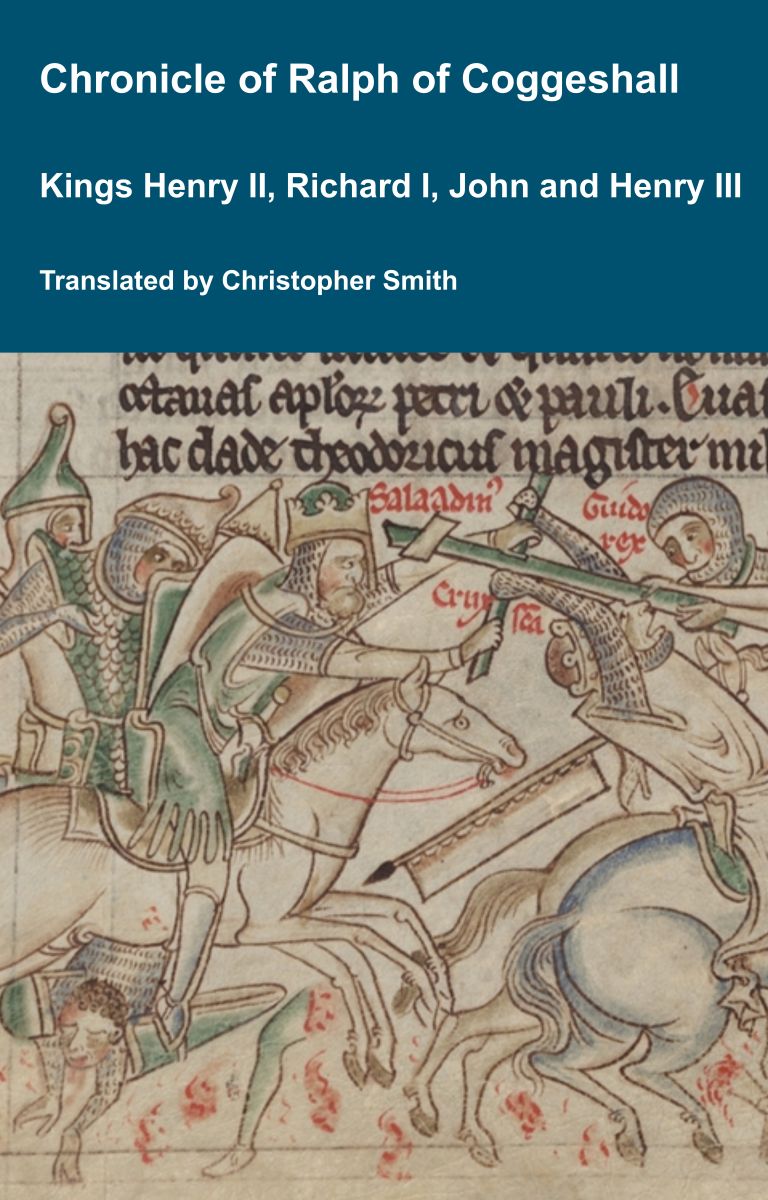
Chronicle of Abbot Ralph of Coggeshall
The Chronicle of Abbot Ralph of Coggeshall (Chronicon Anglicanum) is an indispensable medieval history that brings to life centuries of English and European affairs through the eyes of a learned Cistercian monk. Ralph of Coggeshall, abbot of the Abbey of Coggeshall in Essex in the early 13th century, continued and expanded his community’s chronicle, documenting events from the Norman Conquest of 1066 into the tumultuous reign of King Henry III. Blending eyewitness testimony, careful compilation, and the monastic commitment to record-keeping, this chronicle offers a rare narrative of political intrigue, royal power struggles, and social upheaval in England and beyond. Ralph’s work captures the reigns of pivotal figures such as Richard I and King John, providing invaluable insights into their characters, decisions, and the forces that shaped medieval rule. More than a simple annal, Chronicon Anglicanum conveys the texture of medieval life and governance, making it a rich source for scholars and readers fascinated by English history, monastic authorship, and the shaping of the medieval world.
Available at Amazon in eBook and Paperback format.
Vetusta Monumenta Volume 1 is in Vetusta Monumenta.
Vetusta Monumenta Volume 1 was published in 1747.

Plate 1. Engraving of a Bronze Lamp found at St. Leonard's Hill, Windsor
Plate 1 of Vetusta Monumenta depicts a medieval bronze lamp, likely dating from the thirteenth or fourteenth century, with circular base added in the eighteenth century. The lamp was originally thought to be Roman when it was discovered c. 1705. Engraving by George Vertue after John Talman. 236 x 184 mm. Published by the Society of Antiquaries of London in 1718. Current location: Society of Antiquaries of London (LDSAL 59), London, UK.
Minutes of the Society of Antiquaries. 14th January 1719. It was proposed by Mr President [aged 57] wheather every subscriber to the Plate of Richard II have each five prints, and by Ballot carried in the Affirmation, for their 7s:6d.
It was ordered that the Right Reverend Father in God the Bishop of Rochester & Dean of Westminster [aged 55], for giving leave to take the Drawing be presented with two of the said prints, and that Mr Director [aged 41] and Mr Treasurer [aged 36] be desired to wait upon him on that Amount.
Mr Director brought in a proof of an Etched Plate of a Roman Lamp, to be used as a Symbol or Ticket of the Society which he was pleased to make a present of to the Society for which their unanimous thanks were ordered to be given to him.


Minutes of the Society of Antiquaries. 18th February 1819. Mr Kirk Patrick brought the seals of all of the Bishops of Norwich curiously drawn by himself from the originals which he designs for the Press.
Mr Vertue was ordered to print off 100 more of Rich: II, and 100 more of the Lamp; and he is desired to add the Inscription according to the Copy delivered to him if Mr Director approves of it.

Plate 2. Engraving of The Horn of Ulf.
Plate 1.2 of Vetusta Monumenta depicts an early eleventh-century Viking charter horn made from elephant tusk (possibly by Islamic craftsmen) in Salerno, Italy, with new silver mounts added in 1675. The horn was given to York Minster [Map] c. 1036 to symbolize a gift of land from Ulphus or Ulf Toraldsson. Engraving by George Vertue after B. M. 281 x 389 mm. Published by the Society of Antiquaries of London in 1718. Current location: York Minster, York, UK [Map].
Above the Horn: Cornu antiquum Icone hac duplò undique ad amussim majus, in Templo D. Petri. Ebor. asservatur A.D. MDCCXVIII. Ecclesiӕ, uti creditur, sub initio Sӕculi XI oblatum. [An ancient horn in all respects exactly twice the size of this image, in the Church of St Peter, York. Recorded in the year 1718. It is believed to have been bestowed on the minster at the beginning of the 11th century.]
Center, Left: A / CORNV HOC VLPHVS IN OCCIDENTALI PARTE DEIRӔ PRINCEPS VNA CVM OMNIBVS TERRIS ET REDDITIBVS SVIS OLIM DONAVIT AMISSVM VEL ABREPTVM. [Ulf, ruler of the western region of Deira, gave [the Church] this horn—which for a time was lost or stolen—together with all his lands and incomes.]
Center, Right: B / HENRICVS D.SFAIRFAX DEMVM RESTITVIT DEC & CAP. DE NOVO ORNAVIT AN.o DOM. 1675. [Henry, Lord Fairfax, eventually restored it. The dean and chapter decorated it anew in the year 1675.]
Bottom: Ex Collectione Samuelis Gale. / Sumptibus Societatis Antiquariӕ Lond [From the collection of Samuel Gale. / At the expense of the Antiquarian Society Lond[on]

Plate 1.3: Engraving of the Baptismal Font at St. James's, Piccadilly.
Plate 1.3 of Vetusta Monumenta depicts a marble baptismal font at St. James's Church, Piccadilly, presumed to be carved by Grinling Gibbons [aged 69] in 1685. Engraving by George Vertue [aged 34] after Charles Woodfield. 457 x 283 mm. Published by the Society of Antiquaries of London in 1718. Current location: St. James's Church, Piccadilly, London, UK.
Minutes of the Society of Antiquaries. 21st January 1719. The Society by Balloting ordered that two prints of King Richard II should be delivered to the Monthly Contributors paying their Arrears the said Monthly Contribution having been applyed by the Society to the Expense of that Plate.
At the same time it was ordered that three Prints more of the Font should be delivered to each of the Subscribers thereto.
Minutes of the Society of Antiquaries. 28th January 1719. Ordered by the Society that Mr George Vertue [aged 35] Print off 100 Exemplar of the Font for a further Dividend to the Subscribers.
Minutes of the Society of Antiquaries. 4th February 1719. Mr Director [aged 41] was ordered to deliver out prints of Richard II to be sold after the rate of 2s:6d a peice [sic], allowing to the sellers 6d a peice [sic], and one over in a dozen. The Prints of the Font of St James after the rate of 1s:6d a peice allowing to the seller 4d a piece. The prints of Ulphus's Horn at 1s allowing Seller 3d a peice [sic].

Plate 1.4: Engraving of a Portrait of Richard II in Westminster Abbey
Plate 1.4 of Vetusta Monumenta reproduces a portrait (c. 1395) of Richard II in Westminster Abbey, the earliest known portrait of an English monarch. The engraving preserves design elements lost when the painting was restored in 1866, but also gives a more idealized representation of the monarch's features than does the portrait itself. Engraving by George Vertue [aged 34] after Giuseppe Grisoni [aged 19]. 537 x 265 mm. Published by the Society of Antiquaries of London in 1718. Current location: Westminster Abbey, London, UK.
Giuseppe Grisoni: On or before 24th October 1699 he was born. He was baptised on 24th October 1699. In 1715 Giuseppe Grisoni travelled to London with John Talman and tried to establish himself as a portrait painter. He did not achieve enough success to stay, however, and returned to Florence in 1728. In 1769 he died.

Minutes of the Society of Antiquaries. 5th February 1718. It was proposed for the first time by Mr President Norroy [aged 57] to engrave a drawing of Richard II's picture in Westminster Abbey taken by Mr Talmans [aged 40] direction agreed to.
Mr George Holmes [aged 56] is to do [?] to keep the books belonging to the Society till further order.
Abbot John Whethamstede’s Chronicle of the Abbey of St Albans
Abbot John Whethamstede's Register aka Chronicle of his second term at the Abbey of St Albans, 1451-1461, is a remarkable text that describes his first-hand experience of the beginning of the Wars of the Roses including the First and Second Battles of St Albans, 1455 and 1461, respectively, their cause, and their consequences, not least on the Abbey itself. His text also includes Loveday, Blore Heath, Northampton, the Act of Accord, Wakefield, and Towton, and ends with the Coronation of King Edward IV. In addition to the events of the Wars of the Roses, Abbot John, or his scribes who wrote the Chronicle, include details in the life of the Abbey such as charters, letters, land exchanges, visits by legates, and disputes, which provide a rich insight into the day-to-day life of the Abbey, and the challenges faced by its Abbot.
Available at Amazon in eBook and Paperback format.
Minutes of the Society of Antiquaries. 12th February 1718. Mr Samuel Gale [aged 35] Treasurer is authorized to pay Mr Vertue [aged 34] two guineas toward engraving the font of St James church. It is proposed for the second time to engrave RII'd's picture and agreed.
Minutes of the Society of Antiquaries. 19th February 1718. It is proposed and agreed the 3rd time to engrave RII picture in Westminster Abbey and Mr Director Talman [aged 40] is desired and authorised to have a drawing tken of it with all convenient speed, in order thereto.

Plate 1.5: Engravings of Three Medieval Seals
Plate 1.5 of Vetusta Monumenta depicts three medieval seals: the Seal of Clare College, Cambridge (1359), the seal of the Cathedral Priory of St. Etheldreda, Ely [Map] (c. 1280), and seal of the Priory of Cottingham [Map] (1322) [Note. The date here somewhat confusing since the Priory was founded in 1325?]. Engraving by George Vertue after his own drawings. 173 x 233 mm [upper portion] and 172 x 228 mm [lower portion]. Published by the Society of Antiquaries of London in 1720. Current locations: The top seal is in Clare College, Cambridge University, Cambridge, UK; an impression of the center seal is in Westminster Abbey (WAM 7933), London, UK; the bottom seal is in the British Museum (1913,1105.2), London, UK.

Plate 1.6: Engraving of the Ruins of Walsingham Abbey [Map].
Plate 1.6 of Vetusta Monumenta depicts the ruins of Walsingham Abbey in Norfolk, including some remains which are no longer standing. This topographical print is the earliest example of a more popular approach in Vetusta Monumenta, reflecting a taste for landscapes with ruins. Engraving by Gerard Vandergucht after J. Badslade. 135 x 257 mm. Published by the Society of Antiquaries of London in 1720. Current location: Little Walsingham, Norfolk, UK.

Plate 1.7: Engraving of Waltham Cross [Map]
Plate 1.7 of Vetusta Monumenta depicts the Waltham Cross, one of the twelve monuments that Edward I ordered to be built between 1291 and 1294 to commemorate the funeral procession of Queen Eleanor. The print documents the early preservation efforts of the Society of Antiquaries of London. The cross was re-engraved by James Basire Sr. after Jacob Schnebbelie for the third volume of Vetusta Monumenta (Plate 3.16), where it appears with two more of the Eleanor Crosses. Engraving by George Vertue [aged 37] after William Stukeley [aged 33]. 490 x 301 mm. Published by the Society of Antiquaries of London in 1721. Current location: Waltham Cross, Hertfordshire, UK.

Plate 1.8: Engraving of a Plan of Ancient Verulamium [Map]
Plate 1.8 of Vetusta Monumenta features an extensively labeled map of the Roman remains of Verulamium with inset images of two ancient British coins and a section of Roman wall. Engraving by George Vertue after William Stukeley. Published by the Society of Antiquaries of London in 1721. Current location: Stukeley's original map is preserved at the Society of Antiquaries of London; the Roman ruins today are encompassed by the modern city of St. Alban's in Hertfordshire, UK.
Plates 1.9 - 1.12: Engravings of the Ruins of Fountains Abbey [Map]
Plates 1.9-1.12 of Vetusta Monumenta depict the ruins of the twelfth-century abbey church of Fountains, Yorkshire, with extant monastic structures. The images offer significant visual evidence of the site as it stood in 1722, recording subsequently lost fabric, including the late twelfth-century cloister arcades, the tracery of the main windows of the abbey, the presbytery arcades and high altar enclosure. Engravings by George Vertue [aged 39] after Samuel Buck. Published by the Society of Antiquaries of London in 1723. 190 x 367 mm, 189 x 364 mm, 192 x 370 mm, and 194 x 371 mm. Current location: Fountains, Ripon, North Yorkshire, UK.


1724.Plates 1.13 and 1.14: Engravings of St. Benet's Abbey Gatehouse [Map] (1 of 2) by George Vertue [aged 40] after John Kirkpatrick and Edmund Prideaux [aged 30]. 205 x 389 mm and 206 x 318 mm. Published by the Society of Antiquaries of London in 1724.


1724. Plate 1.15: Engraving of the Tomb of Robart Colles. Late fifteenth or early sixteenth-century chest tomb of Robart Colles in the Holy Innocents Church, Foulsham [Map]. Paneled sides around which runs the inscription "Robart Colles Cecili his vif." Engraving by George Vertue [aged 40] after Edmund Prideaux [aged 30]. 204 x 328 mm.

1724. Plate 1.16. Engraving of the Shrine of Edward the Confessor at Westminster Abbey [Map]. Thirteenth-century shrine base and feretory canopy of St Edward at Westminster Abbey. Engraving by George Vertue [aged 40] after John Talman [aged 46]. 445 x 336 mm (bifolium).
1725. Plate 1.17: Engravings of Whitehall and King Street Gates. The "Holbein Gate [Map]" (completed in 1532), and the King Street Gate (completed c. 1548). Engravings by George Vertue [aged 41] after his own drawings.


1731. Plate 1.20: Engravings of: A silver crown of Henry VIII around 1545, a Coronation 1547 Medal of Edward VI, a 1589 "Dangers Averted" or "Armada Medal" of Elizabeth I, the Phoenix Jewel (c. 1570-1580) of Elizabeth I from around 1570-1580 along with the motto from a 1574 silver medal of the same, and a struck gold medal of James I commemorating the 1604 Peace with Spain. Engraving by George Vertue [aged 47] after his own drawings
1726. A nearly sixty-foot vellum roll that illustrates the jousting tournament held by Henry VIII on 12 and 13 February 1510/11, along with the "articles of the tilt". Engravings by George Vertue [aged 42] after the original manuscript.
A description of the Solemn Jousts held at Westminster the 13th day of February in the first year of King Henry VIII in honour of his Queen Katherin upon the birth of their eldest son Prince Henry AD 1510 taken from the original roll now in the College of Arms, London.


The History of William Marshal was commissioned by his son shortly after William’s death in 1219 to celebrate the Marshal’s remarkable life; it is an authentic, contemporary voice. The manuscript was discovered in 1861 by French historian Paul Meyer. Meyer published the manuscript in its original Anglo-French in 1891 in two books. This book is a line by line translation of the first of Meyer’s books; lines 1-10152. Book 1 of the History begins in 1139 and ends in 1194. It describes the events of the Anarchy, the role of William’s father John, John’s marriages, William’s childhood, his role as a hostage at the siege of Newbury, his injury and imprisonment in Poitou where he met Eleanor of Aquitaine and his life as a knight errant. It continues with the accusation against him of an improper relationship with Margaret, wife of Henry the Young King, his exile, and return, the death of Henry the Young King, the rebellion of Richard, the future King Richard I, war with France, the death of King Henry II, and the capture of King Richard, and the rebellion of John, the future King John. It ends with the release of King Richard and the death of John Marshal.
Available at Amazon in eBook and Paperback format.

1727. The ruins of Furness Abbey [Map] in Lancashire. Engraving by George Vertue [aged 43] after an untraced drawing originally commissioned by John Montagu, 2nd Duke of Montague [aged 37].
1729. Copy of the Baron's Letter of 1301, including trickings of the Barons' seals. The letter, addressed to Pope Boniface VIII, asserted Edward I's right to rule over Scotland. Engravings by George Vertue [aged 45] after John Bradshaw's [Possibly John Bradshaw] 1629 copy of the herald Augustine Vincent's 1624 copy.


1730. Plate 1.34: Engraving of a gilded Bronze Head of Sulis Minerva Found at Bath in 1727. Engraving by George Vertue [aged 46] after Alexander Gordon [aged 38]. 402 x 282 mm.
Alexander Gordon: Around 1692 he was born at Aberdeen. In August 1741 Alexander Gordon sailed for South Carolina as secretary to James Glen, F.S.A., the newly appointed governor of that province. In 1755 he died.
1732. Plate 1.35. The ruins of Colchester Castle and architectural plans of the site. Engravings by George Vertue [aged 48] after "Boul" (probably Cornelis Boel) and Isaac Whood.


1731. Corrected versions of the tables of gold and silver English coins first created by John Sharp, Archbishop of York, in 1697. Engravings by George Vertue [aged 47] after Sharp's original tables.


1733. Plate 1.39 depicts Tutbury Castle. Engraving by George Vertue [aged 49] after a drawing originally produced for a survey of the properties of the Duchy of Lancaster conducted by the Chancellor of the Duchy, Ambrose Cave, in 1561.

1733. Plate 1.40 depicts Melbourne Castle [Map]. Engraving by George [aged 49] Vertue after a drawing originally produced for a survey of the properties of the Duchy of Lancaster conducted by the Chancellor of the Duchy, Ambrose Cave, in 1561.

1734. Plate 1.41. Lancaster Castle [Map] and Priory Church [Map]. Engraving by George [aged 50] Vertue after a drawing originally produced for a survey of the properties of the Duchy of Lancaster conducted by the Chancellor of the Duchy, Ambrose Cave, in 1561.

1734. Plate 1.42. Pontefract Castle [Map]. Engraving by George [aged 50] Vertue after a drawing originally produced for a survey of the properties of the Duchy of Lancaster conducted by the Chancellor of the Duchy, Ambrose Cave, in 1561.

1734. Plate 1.43. The golden seal of Edmund, King of Sicily, between 1254 and 1261, a royal of Edward the Black Prince around 1364, a chaise of Edward the Black Prince around 1363), a salute of Henry VI around 1423), an angelot of Henry VI around 1427), a rose noble of Henry VII between 1485 and 1489, a silver jeton of Perkin Warbeck, Pretender around 1494), and a Tournay groat of Henry VIII around 1514. Engraving by George Vertue [aged 50] after his own drawings. 459 x 273 mm.

1734. Plate 1.44. Knaresborough Castle [Map]. Engraving by George [aged 50] Vertue after a drawing originally produced for a survey of the properties of the Duchy of Lancaster conducted by the Chancellor of the Duchy, Ambrose Cave, in 1561.

1736. Plate 1.45. Portrait of Thomas Tanner, Bishop of Asaph. Engraving by George Vertue [aged 52] after a portrait of Tanner painted by an unknown artist
The Deeds of the Dukes of Normandy
The Gesta Normannorum Ducum [The Deeds of the Dukes of Normandy] is a landmark medieval chronicle tracing the rise and fall of the Norman dynasty from its early roots through the pivotal events surrounding the Norman Conquest of England. Originally penned in Latin by the monk William of Jumièges shortly before 1060 and later expanded at the behest of William the Conqueror, the work chronicles the deeds, politics, battles, and leadership of the Norman dukes, especially William’s own claim to the English throne. The narrative combines earlier historical sources with firsthand information and oral testimony to present an authoritative account of Normandy’s transformation from a Viking settlement into one of medieval Europe’s most powerful realms. William’s history emphasizes the legitimacy, military prowess, and governance of the Norman line, framing their expansion, including the conquest of England, as both divinely sanctioned and noble in purpose. Later chroniclers such as Orderic Vitalis and Robert of Torigni continued the history, extending the coverage into the 12th century, providing broader context on ducal rule and its impact. Today this classic work remains a foundational source for understanding Norman identity, medieval statesmanship, and the historical forces that reshaped England and Western Europe between 800AD and 1100AD.
Available at Amazon in eBook and Paperback format.

1737. Plate 1.46. Tickhill Castle [Map]. Engraving by George [aged 53] Vertue after a drawing originally produced for a survey of the properties of the Duchy of Lancaster conducted by the Chancellor of the Duchy, Ambrose Cave, in 1561.

1737. Plate 1.47. Roman roads in Yorkshire and immediately adjacent areas originally published by Francis Drake in his Eboracum. Unsigned engraving, likely by George Vertue [aged 53], after Drake's original map.

1737. Plate 1.48. Cotterstock Roman Mosaic. Engraving by George Vertue [aged 53] after William Bogdani, George Lynn Sr [aged 61], and George Lynn Jr [aged 30].

1738. Plate 1.49. Bishop's Palace, Hereford. Drawn by William Stukeley [aged 50] in 1721. Engraved by George Vertue [aged 54]. The chapel was demolished by 1746 except for the north wall, which is adjacent to the cloister.
1738. Plates 50 to 52. Three mid fourth-century CE Roman mosaic pavements at Wellow, Somerset [Map] the first of which was found by John Aubrey c. 1685. Further investigations of the site were carried out in 1737 by Edmund Prideaux [aged 44] and James West, who found the second and third pavements, respectively. Engravings by George Vertue [aged 54] after James Vertue [aged 78] and James West.
James Vertue: In 1660 he was born.


1738. Plates 1.53 and 1.54. Sixteen seals dating from the twelfth to the sixteenth centuries, most from the Office of the Duchy of Lancaster, some from the Augmentation Office at Westminster. Engravings by George Vertue [aged 54] after his own drawings.


1739. Plate 1.55. Eight numismatic objects associated with the Stuarts: a gold coin of Mary, Queen of Scots 1555; a silver medal commemorating Mary's marriage to Lord Darnely, featuring Darnley's name before Mary's from 1565; a silver coronation medal around 1604 for Queen Anne; a silver medal for Prince Henry from 1612; two milled gold proof pieces minted for Charles I, around 1630 and 1631-32, and two gold medals based on the same (1639 and unknown). Engraving by George Vertue [aged 55] after his own drawings in at least four states between 1723 and 1739.

1739. Plate 1.56. Thirteen coins minted by English monarchs between the fourteenth and the early-seventeenth centuries: a gold quarter florin of King Edward III, around 1344, a gold escu of King Edward III (after 1337), a half groat of Edward III, before 1369, a half groat of Edward the Black Prince, around 1368-1372, a groat of Edward the Black Prince (c. 1362-72), a gold angel of Henry VI (c. 1470), a quadruple noble of Henry VII, Type 4 (c. 1503-04), a Tournay groat of Henry VIII (c. 1514), a George noble of Henry VIII (c. 1526-29), a sovereign in crown gold of Elizabeth I (c. 1565), a pattern piece for a gold crown of Edward VI (c. 1547), a pattern sixpence of Elizabeth I (1575), and a Portcullis crown of Elizabeth I (c. 1601). Engraving by George Vertue [aged 55] after his own drawings.

1740. Plate 1.57. Roman hypocaust found beneath the subdeanery near the west side of Lincoln Cathedral and first identified by Thomas Sympson on 10 February 1740. The print incorporates material from Sympson's original letter and plan documenting the discovery. Engraving by George Vertue [aged 56] after his own drawings.
1741. Plates 1.58 to 1.60. Twenty-seven seals dating from the twelfth to the sixteenth centuries. The seals were held in the Duchy Office of Lancaster and in the Augmentation Office at Westminster. Engravings by George Vertue after his own drawings.


1741. Plate 1.61. Winchester Cross. Popularly called the "High," "Market," or "Butter" Cross.

1741. Plate 1.62. Oxford Decree against Papal Juristiction with engravings of the shields of the twelve Oxford colleges extant in 1534, the university's thirteenth-century common seal, and Henry VIII's portrait medal as Fidei Defensor (1545). Engraving by George Vertue [aged 57] after his own drawings and a copy of the decree then in the Harleian Library.
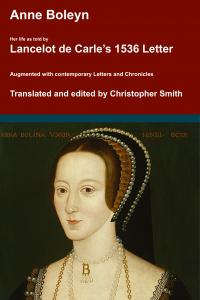
Anne Boleyn. Her Life as told by Lancelot de Carle's 1536 Letter.
In 1536, two weeks after the execution of Anne Boleyn, her brother George and four others, Lancelot du Carle, wrote an extraordinary letter that described Anne's life, and her trial and execution, to which he was a witness. This book presents a new translation of that letter, with additional material from other contemporary sources such as Letters, Hall's and Wriothesley's Chronicles, the pamphlets of Wynkyn the Worde, the Memorial of George Constantyne, the Portuguese Letter and the Baga de Secrets, all of which are provided in Appendices.
Available at Amazon in eBook and Paperback format.

1741. Plate 1.63. Plan of the Liberties of the Tower of London [Map].

1741. Plate 1.64. The Cross at Chichester [Map]. One of the so-called "market-" or "butter crosses," as it appeared (or might have appeared) at several times in the previous half-century, including the west front of the Cross, a plan view of the Cross, and an elevation view of the "highest part" of the Cross. Engraving by George Vertue [aged 57] after Augustin Ménageot.

1743. Plate 1.65. Two works of art in different media that depict the type of Roman gladiator known as a retiarius or net-fighter. The upper half reproduces a seventeenth-century drawing by Pietro Santi Bartoli of a late-third or early-fourth-century CE Roman mosaic uncovered in Rome in 1670. The lower half depicts the sculptured fragment of a second-century Romano-British stone frieze, possibly from a tomb, that was found during construction work in Chester, UK in 1738. Engraving by George Vertue [aged 59] after Pietro Santi Bartoli (upper half) and his own drawing (lower half).
1744. Plates 1.66 to 1.68. Robert Cotton with Genesis Fragments. Reproduction of a portrait from around 1626 of Robert Cotton and fragments of the Cotton Genesis manuscript by Cornelius Janssens aka Johnson. Plates 1.67-1.68 depict twenty-one fragments from eighteen folio pages of the Cotton Genesis collated with transcriptions from the Codex Vaticanus. Engravings by George Vertue [aged 60] after the original portrait and his own watercolors of the Cotton Genesis fragments.


1746. Plate 1.69. Engraving of King Henry VII's 1497 Standard for Weights and Measures based on an original parchment that was pasted on an oak table formerly in the Treasury of the King's Exchequer at Westminster and in the collection of Edward Harley, 2nd Earl of Oxford and Mortimer. Engraving by George Vertue [aged 62] after his own drawing.

1741. Plate 1.70. A painting of a session of the Court of Wards and Liveries at a point in time during the many years that William Cecil, Lord Burghley, held its mastership. Those included in the picture are: George Goring died 1594 and Thomas Seckford died 1587. The engraving indicates the painting was commissioned by Charles Lennox 2nd Duke Richmond [aged 39].