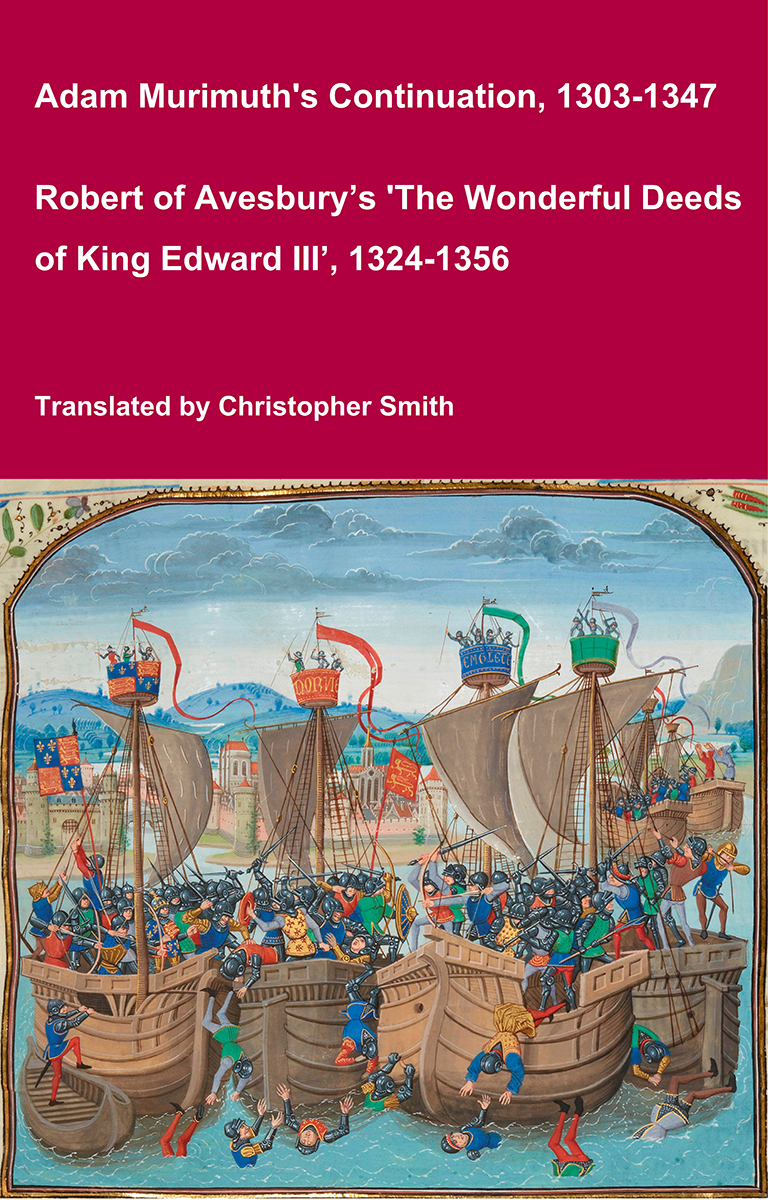
William of Worcester's Chronicle of England
William of Worcester, born around 1415, and died around 1482 was secretary to John Fastolf, the renowned soldier of the Hundred Years War, during which time he collected documents, letters, and wrote a record of events. Following their return to England in 1440 William was witness to major events. Twice in his chronicle he uses the first person: 1. when writing about the murder of Thomas, 7th Baron Scales, in 1460, he writes '… and I saw him lying naked in the cemetery near the porch of the church of St. Mary Overie in Southwark …' and 2. describing King Edward IV's entry into London in 1461 he writes '… proclaimed that all the people themselves were to recognize and acknowledge Edward as king. I was present and heard this, and immediately went down with them into the city'. William’s Chronicle is rich in detail. It is the source of much information about the Wars of the Roses, including the term 'Diabolical Marriage' to describe the marriage of Queen Elizabeth Woodville’s brother John’s marriage to Katherine, Dowager Duchess of Norfolk, he aged twenty, she sixty-five or more, and the story about a paper crown being placed in mockery on the severed head of Richard, 3rd Duke of York.
Available at Amazon in eBook and Paperback format.
Paternal Family Tree: Stafford
Before 1298 [his father] Edmund Stafford 1st Baron Stafford [aged 25] and [his mother] Margaret Basset [aged 17] were married.
On 24th September 1301 Ralph Stafford 1st Earl Stafford was born to Edmund Stafford 1st Baron Stafford [aged 29] and Margaret Basset [aged 21].
On 26th August 1308 [his father] Edmund Stafford 1st Baron Stafford [aged 36] died. His son Ralph [aged 6] succeeded 2nd Baron Stafford.
Around 1326 Ralph Stafford 1st Earl Stafford [aged 24] and Katherine Hastings Baroness Stafford [aged 22] were married. She by marriage Baroness Stafford. She the daughter of John Hastings 2nd Baron Hastings 14th Baron Abergavenny and Juliana Leybourne Countess Huntingdon [aged 23]. They were fifth cousins.
In 1331 [his daughter] Margaret Stafford was born to Ralph Stafford 1st Earl Stafford [aged 29] and [his wife] Katherine Hastings Baroness Stafford [aged 27] at Sandon Stone, Staffordshire. She married before 1343 her second cousin once removed John Stafford and had issue.
On 12th August 1332 Battle of Dupplin Moor was fought between the supporters of the infant King David II of Scotland [aged 8], son of King Robert the Bruce I of Scotland, and the supporters of King Edward I of Scotland [aged 49], supported by the English. The Bruce army included Robert Bruce Lord of Liddesdale and Domhnall Mar II Earl of Mar [aged 39]. The Balliol army included David III Strathbogie 11th Earl Atholl [aged 23], Ralph Stafford 1st Earl Stafford [aged 30], Thomas Ughtred 1st Baron Ughtred [aged 40] and Walter Manny 1st Baron Manny [aged 22]. The battle is notable for being the first to use dismounted men-at-arms supported by archers; a formation that would bring repeated success to the English both in Scotland and France.
Robert Bruce Lord of Liddesdale was killed leading a charge.
Nicholas Hay [aged 47] was killed.
Thomas Randolph 2nd Earl Moray was killed. His brother John [aged 26] succeeded 3rd Earl Moray.
Domhnall Mar II Earl of Mar was killed.
Around 1336 [his son] Hugh Stafford 2nd Earl Stafford was born to Ralph Stafford 1st Earl Stafford [aged 34] and [his future wife] Margaret Audley Countess Stafford [aged 18] at Staffordshire. He a great x 2 grandson of King Edward I of England. He married before 1st March 1350 his second cousin once removed Philippa Beauchamp Countess Stafford, daughter of Thomas Beauchamp 11th Earl Warwick and Katherine Mortimer Countess Warwick, and had issue.
Before 6th July 1336 Ralph Stafford 1st Earl Stafford [aged 34] abducted [his wife] Margaret Audley Countess Stafford [aged 18]. She being the heir of the very wealthy [his father-in-law] Hugh Audley 1st Earl Gloucester [aged 45]; considerably more wealthy than Ralph. King Edward III of England [aged 23] was sympathetic despite the complaint of her father since Ralph had been one of King Edward III's key supporters during the plot to arrest Roger Mortimer 1st Earl March. Margaret's father was subsequently created Earl as a quid pro quo.
Before 6th July 1336 Ralph Stafford 1st Earl Stafford [aged 34] and Margaret Audley Countess Stafford [aged 18] were married. She by marriage Baroness Stafford. She the daughter of Hugh Audley 1st Earl Gloucester [aged 45] and Margaret Clare Countess Gloucester. They were fifth cousins. She a great granddaughter of King Edward I of England.
On 6th July 1336 [his wife] Katherine Hastings Baroness Stafford [aged 32] died at Stafford, Staffordshire [Map].
In January 1337 King Edward III of England [aged 24] created a number of new Earldom's probably in preparation for his forthcoming war against France...
William Montagu 1st Earl Salisbury [aged 36] was created 1st Earl Salisbury. Catherine Grandison Countess of Salisbury [aged 33] by marriage Countess Salisbury.
William Bohun 1st Earl of Northampton [aged 27] was created 1st Earl of Northampton. Elizabeth Badlesmere Countess Northampton [aged 24] by marriage Countess of Northampton.
[his father-in-law] Hugh Audley 1st Earl Gloucester [aged 46] was created 1st Earl Gloucester probably as compensation for his daughter [his wife] Margaret Audley Countess Stafford [aged 19] having been abducted by Ralph Stafford 1st Earl Stafford [aged 35].
Robert Ufford 1st Earl Suffolk [aged 38] was created 1st Earl Suffolk. Margaret Norwich Countess Suffolk [aged 51] by marriage Countess Suffolk.
The Deeds of the Dukes of Normandy
The Gesta Normannorum Ducum [The Deeds of the Dukes of Normandy] is a landmark medieval chronicle tracing the rise and fall of the Norman dynasty from its early roots through the pivotal events surrounding the Norman Conquest of England. Originally penned in Latin by the monk William of Jumièges shortly before 1060 and later expanded at the behest of William the Conqueror, the work chronicles the deeds, politics, battles, and leadership of the Norman dukes, especially William’s own claim to the English throne. The narrative combines earlier historical sources with firsthand information and oral testimony to present an authoritative account of Normandy’s transformation from a Viking settlement into one of medieval Europe’s most powerful realms. William’s history emphasizes the legitimacy, military prowess, and governance of the Norman line, framing their expansion, including the conquest of England, as both divinely sanctioned and noble in purpose. Later chroniclers such as Orderic Vitalis and Robert of Torigni continued the history, extending the coverage into the 12th century, providing broader context on ducal rule and its impact. Today this classic work remains a foundational source for understanding Norman identity, medieval statesmanship, and the historical forces that reshaped England and Western Europe between 800AD and 1100AD.
Available at Amazon in eBook and Paperback format.
On 17th March 1337 [his mother] Margaret Basset [aged 57] died at Drayton Bassett, Staffordshire [Map].
Around 1340 [his daughter] Elizabeth Stafford Baroness Cobham, Ferrers and Strange was born to Ralph Stafford 1st Earl Stafford [aged 38] and [his wife] Margaret Audley Countess Stafford [aged 22] at Staffordshire. She a great x 2 granddaughter of King Edward I of England. She married (1) before 30th August 1349 her fourth cousin Fulk Strange 3rd Baron Strange Blackmere, son of John Strange 2nd Baron Strange Blackmere and Ankaret Boteler Baroness Strange Blackmere (2) before 1358 her fourth cousin once removed John Ferrers 4th Baron Ferrers of Chartley, son of Robert Ferrers 3rd Baron Ferrers of Chartley and Margaret Unknown Baroness Ferrers Chartley, and had issue (3) 1368 her third cousin Reginald Cobham 2nd Baron Cobham, son of Reginald Cobham 1st Baron Cobham and Joan Berkeley Baroness Cobham Sternborough.
On 24th June 1340 King Edward III of England [aged 27] attacked the French fleet at anchor during the Battle of Sluys capturing more than 200 ships, killing around 18000 French. The English force included John Beauchamp 1st Baron Beauchamp Warwick [aged 24], William Bohun 1st Earl of Northampton [aged 30], Henry Scrope 1st Baron Scrope of Masham [aged 27], William Latimer 4th Baron Latimer of Corby [aged 10], John Lisle 2nd Baron Lisle [aged 22], Ralph Stafford 1st Earl Stafford [aged 38], Henry of Grosmont 1st Duke Lancaster [aged 30], Walter Manny 1st Baron Manny [aged 30], Hugh Despencer 1st Baron Despencer [aged 32] and Richard Pembridge [aged 20].
Thomas Monthermer 2nd Baron Monthermer [aged 38] died from wounds. His daughter Margaret succeeded 3rd Baroness Monthermer.
In 1341 [his daughter] Beatrice Stafford Countess Desmond was born to Ralph Stafford 1st Earl Stafford [aged 39] and [his wife] Margaret Audley Countess Stafford [aged 23] at Staffordshire. She a great x 2 granddaughter of King Edward I of England. She married (1) her sixth cousin Maurice Fitzgerald 2nd Earl Desmond, son of Maurice Fitzgerald 1st Earl Desmond and Catherine Burgh (2) 12th April 1363 her third cousin Thomas Ros 4th Baron Ros Helmsley, son of William Ros 2nd Baron Ros Helmsley and Margery Badlesmere Baroness Ros of Helmsley, and had issue.
Before 1343 [his son-in-law] John Stafford [aged 40] and Margaret Stafford [aged 11] were married. The difference in their ages was 29 years. She the daughter of Ralph Stafford 1st Earl Stafford [aged 41] and Katherine Hastings Baroness Stafford. They were second cousin once removed.
In 1344 [his daughter] Joan Stafford Baroness Cherleton and Talbot was born to Ralph Stafford 1st Earl Stafford [aged 42] and [his wife] Margaret Audley Countess Stafford [aged 26] at Staffordshire. She a great x 2 granddaughter of King Edward I of England. She married (1) her fourth cousin Gilbert Talbot 3rd Baron Talbot, son of Richard Talbot 2nd Baron Talbot and Elizabeth Comyn Baroness Talbot (2) her second cousin once removed John Charleton 3rd Baron Cherleton, son of John Charleton 2nd Baron Cherleton and Maud Mortimer, and had issue.
In 1344 Ralph Stafford and Maud Plantagenet Duchess Lower Bavaria [aged 3] were married. She the daughter of Henry of Grosmont 1st Duke Lancaster [aged 34] and Isabel Beaumont Duchess Lancaster [aged 24]. He the son of Ralph Stafford 1st Earl Stafford [aged 42] and Margaret Audley Countess Stafford [aged 26]. They were third cousin once removed. He a great x 2 grandson of King Edward I of England. She a great x 2 granddaughter of King Henry III of England.
On 23rd April 1344 King Edward III of England [aged 31] created the Order of the Garter. The date nominal as there are different accounts; some sources say 1348.
2 Henry of Grosmont 1st Duke Lancaster.
3 Thomas Beauchamp 11th Earl Warwick.
4 Jean Grailly.
5 Ralph Stafford 1st Earl Stafford.
6 William Montagu 2nd Earl Salisbury.
7 Roger Mortimer 2nd Earl March.
9 Bartholomew "The Younger" Burghesh 2nd Baron Burghesh.
10 John Beauchamp 1st Baron Beauchamp Warwick.
11 John Mohun 2nd Baron Mohun of Dunster.
12 Hugh Courtenay.
13 Thomas Holland 1st Earl Kent.
15 Richard Fitzsimon.
16 Miles Stapleton.
17 Thomas Wale.
18 Hugh Wrottesley.
19 Neil Loring.
20 John Chandos.
21 James Audley.
22 Otho Holland.
23 Henry Eam.
24 Sanchet Abrichecourt.
In 1347 [his son] Ralph Stafford died.
Around 1348 [his daughter] Katherine Stafford Baroness Sutton Dudley was born to Ralph Stafford 1st Earl Stafford [aged 46] and [his wife] Margaret Audley Countess Stafford [aged 30] at Staffordshire. She a great x 2 granddaughter of King Edward I of England. She married 25th December 1357 her half third cousin once removed John Sutton 2nd Baron Sutton, son of John Sutton 1st Baron Sutton and Isabella Charleton Baroness Sutton Dudley.
Around 1349 [his wife] Margaret Audley Countess Stafford [aged 31] died.
Before 30th August 1349 [his son-in-law] Fulk Strange 3rd Baron Strange Blackmere [aged 17] and Elizabeth Stafford Baroness Cobham, Ferrers and Strange [aged 9] were married. She by marriage Baroness Strange Blackmere. She the daughter of Ralph Stafford 1st Earl Stafford [aged 47] and Margaret Audley Countess Stafford. They were fourth cousins. He a great x 4 grandson of King John of England. She a great x 2 granddaughter of King Edward I of England.
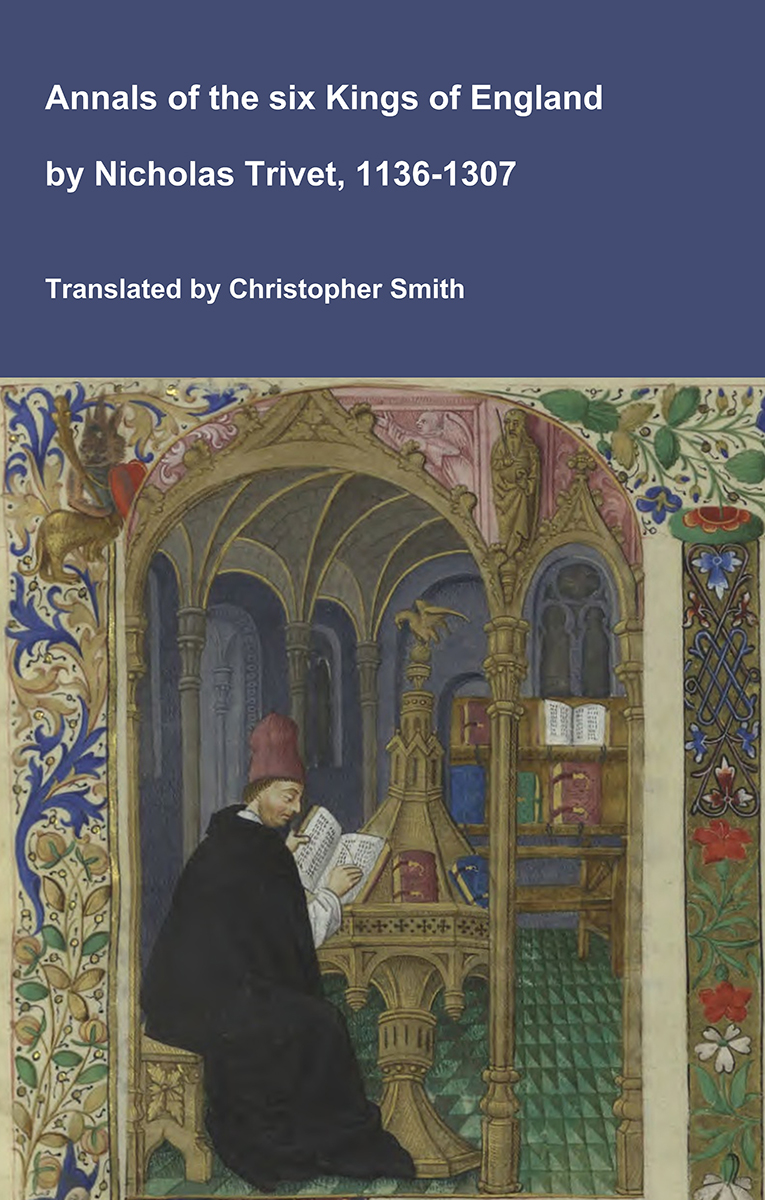
Annals of the six Kings of England by Nicholas Trivet
Translation of the Annals of the Six Kings of England by that traces the rise and rule of the Angevin aka Plantagenet dynasty from the mid-12th to early 14th century. Written by the Dominican scholar Nicholas Trivet, the work offers a vivid account of English history from the reign of King Stephen through to the death of King Edward I, blending political narrative with moral reflection. Covering the reigns of six monarchs—from Stephen to Edward I—the chronicle explores royal authority, rebellion, war, and the shifting balance between crown, church, and nobility. Trivet provides detailed insight into defining moments such as baronial conflicts, Anglo-French rivalry, and the consolidation of royal power under Edward I, whose reign he describes with particular immediacy. The Annals combines careful year-by-year reporting with thoughtful interpretation, presenting history not merely as a sequence of events but as a moral and political lesson. Ideal for readers interested in medieval history, kingship, and the origins of the English state, this chronicle remains a valuable and accessible window into the turbulent world of the Plantagenet kings.
Available at Amazon in eBook and Paperback format.
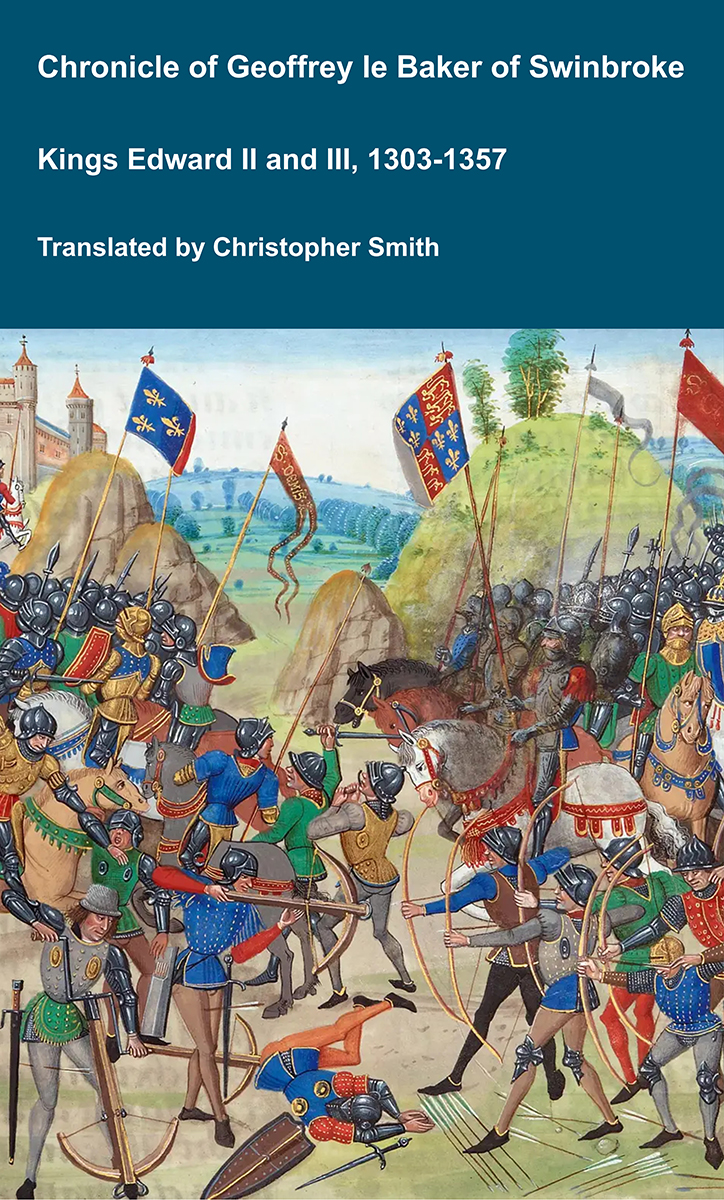 Chronicle of Geoffrey le Baker of Swinbroke. In the same year, the Earl of Lancaster,1 the Barons of Stafford [aged 48] and Greystoke [aged 28], along with the heirs of the Lords Percy [aged 28] and Neville [aged 12], as well as Lord Furnival and Bartholomew de Burghersh [aged 62], together with many others, crossed over to Gascony around the Feast of All Saints [1st November 1349], to oppose the ravaging campaigns of John of Valois, son of the tyrant of the French, who was heavily harassing that duchy.
Eodem anno comes Lancastrie et barones Staffordie et de Greistoke, item heredes dominorum de Percy et de Neville atque dominus de Fornival et Bartholomeus de Burghasshe, cum multis aliis, circa festum Omnium Sanctorum transfretaverant in Vasconiam, posituri resistenciam debacacioni Iohannis de Valesio, filii tiranni Francorum, qui ducatum illum nimis infestavit.
Note 1. The earl of Lancaster was appointed lieutenant of Poitou on the 18th October 1349. Rymer's Fœdera 3.190. Knighton. William, lord Greystock, succeeded in 1323 and died in 1358. The heirs of Percy and Nevill were Henry, afterwards 3rd lord Percy, 1352-1368, who had fought at Crécy, and was brother-in-law of Lancaster; and John Nevill, who had been present with his father at Nevile's Cross, married Percy's sister, and became 3rd lord Nevill, 1367-1388. Thomas, lord Furnival, had also fought at Crécy, and died about 1364. Both Bartholomew, lord Burghersh, and his son [aged 21], of the same name, served in this campaign.
Before 1st March 1350 Hugh Stafford 2nd Earl Stafford [aged 14] and Philippa Beauchamp Countess Stafford [aged 16] were married. She the daughter of Thomas Beauchamp 11th Earl Warwick [aged 37] and Katherine Mortimer Countess Warwick [aged 36]. He the son of Ralph Stafford 1st Earl Stafford [aged 48] and Margaret Audley Countess Stafford. They were second cousin once removed. He a great x 2 grandson of King Edward I of England. She a great x 5 granddaughter of King John of England.
Chronicle of Geoffrey le Baker of Swinbroke. In this year,1 on the feast day of Saint George [23rd April 1350], the king held a great banquet at Windsor Castle [Map], where he established a chantry of twelve priests, and founded a hospital, in which impoverished knights, whose means were insufficient, could, in the service of the Lord, receive suitable support from the perpetual alms of the founders of that college. Besides the king, other nobles contributed to the foundation of this hospital, namely: the king's eldest son, the Earl of Northampton [aged 40], the Earl of Warwick [aged 37], the Earl of Suffolk [aged 51], the Earl of Salisbury [aged 21], and other barons. Also included were simple knights, such as: Roger de Mortimer [aged 21], now Earl of March, Lord Walter de Mauny [aged 40], Lord William FitzWarin [aged 34], John de Lisle [aged 14], John de Mohun [aged 30], John de Beauchamp [aged 31], Walter de Pavely [aged 31], Thomas Wale [aged 47] and Hugh de Wrottesley [aged 16]. Men whose proven virtue ranked them among the wealthiest earls. Together with the king, all these men were clothed in robes of powdered russet, with garters of Indian colour, also wearing garters on their right legs, and mantles of blue, adorned with the shield of Saint George. In such attire, bareheaded, they devoutly attended a solemn Mass, sung by the bishops of Canterbury, Winchester, and Exeter. They then sat together at a common table, in honour of the holy martyr, to whom they dedicated this noble brotherhood, calling their company "The Knights of Saint George of the Garter."
Isto anno, in die sancti Georgii, rex celebravit grande convivium apud Wyndesore in castro, ubi instituit cantariam xij. sacerdotum, et fundavit zenodochium, in quo milites depauperati, quibus sua non sufficerent, possent in Domini servitute de perpetuis elemosinis fundatorum illius collegii sustentacionem competentem habere. Preter regem fuerunt alii compromittentes in fundacionem istius zenodochii, scilicet regis primogenitus, comes Norhamptonie, comes Warewici, comes Suthfolchie, comes Salisbiriensis, et alii barones; simplices quoque milites, scilicet Rogerus de Mortuo mari, nunc comes Marchie, dominus Walterus de Magne, dominus Willelmus filius Garini, Iohannes de Insula, Iohannes de Mohun, Iohannes de Bealchampe, Walterus de Pavely, Thomas Wale, et Hughe de Wrotesley, quos probitas experta ditissimis comitibus associavit. Una cum rege fuerunt omnes isti vestiti togis de russeto pulverizato cum garteriis Indie coloris, habentes eciam tales garterias in tibiis dextris, et mantella de blueto cum scutulis armorum sancti Georgii. Tali apparatu nudi capita audierunt devote missam celebrem per antistites Cantuariensem, Wintoniensem, et Exoniensem decantatam, et conformiter sederunt in mensa communi ob honourem sancti martiris, cui tam nobilem fraternitatem specialiter intitularunt, appellantes istorum comitivam sancti Georgii de la gartiere.
Note 1. Stow Annales 390: "This yeere, on Saint Georges day [23rd April 1350], the king held a great and solemne feast at his castle of Windsor, where he had augmented the chappel which Henry the first and other his progenitors, kings of England, had before erected, of eight chanons. He added to those eight chanons a deane and fifteene chanons more, and 24 poore and impotent knights, with other ministers and servants, as appeareth in his charter dated the two and twentieth of his reigne. Besides the king, there were other also that were contributors to the foundation of this colledge, as followeth: i. The sovereigne king Edward the third, 2. Edward, his eldest sonne, prince of Wales, 3. Henry, duke of Lancaster, 4. the earle of Warwicke, 5. Captaine de Bouch [aged 19], 6. Ralph, earle of Stafford [aged 48], 7. William Montacute, earle of Salisburie, 8. Roger, lorde Mortimer, earle of March, 9. sir John de Lisle [aged 31], 10. sir .
It will be seen that Stow here alters the names to tally with the list of the original knights or First Founders of the order of the Garter. Baker seems to be anticipating. William Bohun, 1st earl of Northampton, and Robert Ufford, 1st earl of Suffolk, and sir William Fitz-Warine became knights of the order at an early date; but Roger Mortimer, here styled 'now Earl of March,' did not have that title before 1352, and sir Walter Manny did not receive the garter till the end of 1359.
The date of the foundation of the order of the Garter has never been exactly determined. Froissart 203.
The Brute chronicle (Egerton MS. 650) has this description, although under a wrong year: "And in the XIX yere of his regne, anone aftre, in Jannuere, before Lenten, the same kyng Edward lete make fulle noble iustice and grete festes in the place of hys byrth, at Wyndsore, that ther were never none suche seyne before that tyme, ne I trowe sythene. At whech iustice, festis and ryalte weryn II kinges, II quenys, and the prince of Wales and the duke of Cornewale, ten erles, nine countesse, many barons, knyghttes, and worthy burgesse, the whech myght not lyghtly be nombrede; and also of dyverse londes as byyonde the see were many strangers. And at that tyme, whene the iustes had done, the kyng Edward made a grete souper, in the wheche he begone fyrst hys round table, and ordayned stedfastly the day of the forsayd table to be holde ther at Wyndessore in the Whytesonwyke evermore yerely."
Relying on the date given in the statutes of the order and on this passage in Baker, writers on the subject have adopted 1349 or 1350 as the year of foundation. But an entry in the household-book of the Black Prince affords a reason for dating the event a year earlier, payment having been made on the 18th November 1348, for twenty-four garters which were given by the prince "militibus de societate garterias" i.e. "garters [were given] to the knights of the society"; Beltz, Memorials of the Order of the Garter, pp. XXXII, 385. Proof however is not conclusive, as the ministers' accounts in the household-book were rendered between 1352 and 1365, and there is therefore room for error; moreover, the garters in question may have been prepared in anticipation. The date of 1349, which is given in the preamble to the earliest copies of the statutes, although it is true that those copies are not contemporary, is not to be lightly set aside. It is, indeed, most probable that the order was never solemnly instituted at an early period, but that it was gradually taking shape during the years following the foundation of the Round Table. Edward's patent, bearing date of 22nd August 1348, whereby he instituted a chapel at Windsor, with a fraternity of eight secular canons and a warden, fifteen other canons, and four-and-twenty poor knights, appears to be the first formal document which can be quoted as a foundation-deed of the order. After this there is no direct reference to it until 1350, when robes were issued for the King against the coming Feast of St. George, together with a Garter containing the King's motto, "Hony soyt qui mal y pense!" Nicolas, History of Orders of Knighthood, 1.24.
Annales of England by John Stow. This yeere, on Saint Georges day [23rd April 1350], the king held a great and solemne feast at his castle of Windsor, where he had augmented the chappel which Henry the first and other his progenitors, kings of England, had before erected, of eight chanons. He added to those eight chanons a deane and fifteene chanons more, and 24 poore and impotent knights, with other ministers and servants, as appeareth in his charter dated the two and twentieth of his reigne. Besides the king, there were other also that were contributors to the foundation of this colledge, as followeth: i. The sovereigne king Edward the third, 2. Edward, his eldest sonne, prince of Wales, 3. Henry, duke of Lancaster, 4. the earle of Warwicke [aged 37], 5. Captaine de Bouch [aged 19], 6. Ralph, earle of Stafford [aged 48], 7. William Montacute [aged 21], earle of Salisburie, 8. Roger, lorde Mortimer [aged 21], earle of March, 9. sir John de Lisle [aged 31], 10. sir Bartholomew Burwash [aged 22], 11. sir John Beauchampe [aged 34], 12. sir John Mahune [aged 30], 13. sir Hugh Courtney, 14. sir Thomas Holland [aged 36], 15. sir John Grey [aged 49], 16. sir Richard Fitz Simon, 17. sir Miles Stapleton [aged 30], 18. sir Thomas Walle [aged 47], 19. sir Hugh Wrothesley [aged 16], 20. sir Nele Loring [aged 30], 21. sir John Chandos [aged 30], 22. sir James de Audley [aged 32], 23. sir Othes Holland [aged 34], 24. sir Henry Eme, 25. sir Sechet Dabridgecourt [aged 20], 26. sir Wiliam Panell [aged 31]. All these, together with the king, were clothed in gownes of russet, poudered with garters blew, wearing the like garters also on their right legges, and mantels of blew with scutcheons of S. George. In this sort of apparell they, being bare-headed, heard masse, which was celebrated by Simon Islip, archbishop of Canterbury, and the bishops of Winchester and Excester, and afterwards they went to the feast, setting themselves orderly at the table, for the honor of the feast, which they named to be of S. George the martyr and the choosing of the knights of the Garter.
In 1351 Henry of Grosmont 1st Duke Lancaster [aged 41] was created 1st Duke Lancaster by King Edward III of England [aged 38]. Isabel Beaumont Duchess Lancaster [aged 31] by marriage Duchess Lancaster.
Lionel of Antwerp 1st Duke of Clarence [aged 12] was created 1st Earl of Ulster.
John of Gaunt 1st Duke Lancaster [aged 10] was created 1st Earl Richmond.
Ralph Stafford 1st Earl Stafford [aged 49] was created 1st Earl Stafford.
Chronicle of Geoffrey le Baker of Swinbroke. In the year of Christ 1351, and the 25th year of the king's reign, after the octave of the Purification of the Glorious Virgin [2nd February 1351], at the parliament held in London at Westminster, Lord Henry [aged 41], son of Henry, Earl of Lancaster, himself Earl of Lincoln, Leicester, Derby, Grismond, and Ferrers, was made Duke of Lancaster, receiving liberties and privileges from the royal bounty such as no other earl had ever held. Also Lord Lionel of Antwerp [aged 12], the king's son, was made Earl of Ulster in Ireland, Lord John of Gaunt [aged 10], his brother, was made Earl of Richmond and Lord Ralph of Stafford [aged 49], formerly a baron, was created Earl of the same name.
Anno Christi MCCCLJ et regis XXV post octabas Purificacionis Virginis gloriose, in parliamento Londoniis apud Westmonasterium celebrato, dominus Henricus filius Henrici comitis Lancastrie, ipse comes Lincolnie, Leicestrie, Derbie et Grossimontis atque de Ferrariis, factus est dux Lancastrie, datis sibi libertatibus atque privilegiis munificencia regali qualia nullus comitum habebat. Item, dominus Leunecius de Andewerpe, regis filius, fit comes de Holvestria in Hybernia, et dominus Tohannes de Gandavo, germanus eius, fit comes Richemundie, et dominus Radulfus de Staffordia, pridem baro, comes eiusdem tituli creabatur.
Issue of the Exchequer. 22nd May [1353]. To Ralph, Earl of Stafford [aged 51], by a tally raised this day from the fifteenths granted to the clergy in the twenty-fifth year, containing £1000, granted to the said Earl of the King's gift for lately capturing Burseald [aged 43], a French knight, in the war in Gascony. By writ of privy seal amongst the mandates of this term, £1000.
On 25th December 1357 [his son-in-law] John Sutton 2nd Baron Sutton [aged 18] and Katherine Stafford Baroness Sutton Dudley [aged 9] were married. She by marriage Baroness Sutton of Dudley. She the daughter of Ralph Stafford 1st Earl Stafford [aged 56] and Margaret Audley Countess Stafford. They were half third cousin once removed. She a great x 2 granddaughter of King Edward I of England.
Before 1358 [his son-in-law] John Ferrers 4th Baron Ferrers of Chartley [aged 26] and Elizabeth Stafford Baroness Cobham, Ferrers and Strange [aged 17] were married. She by marriage Baroness Ferrers of Chartley. She the daughter of Ralph Stafford 1st Earl Stafford [aged 56] and Margaret Audley Countess Stafford. They were fourth cousin once removed. She a great x 2 granddaughter of King Edward I of England.
In December 1361 [his daughter] Katherine Stafford Baroness Sutton Dudley [aged 13] died.
On 12th April 1363 [his son-in-law] Thomas Ros 4th Baron Ros Helmsley [aged 28] and Beatrice Stafford Countess Desmond [aged 22] were married. She the daughter of Ralph Stafford 1st Earl Stafford [aged 61] and Margaret Audley Countess Stafford. They were third cousins. He a great x 5 grandson of King Henry "Curtmantle" II of England. She a great x 2 granddaughter of King Edward I of England.
In 1368 [his son-in-law] Reginald Cobham 2nd Baron Cobham [aged 19] and Elizabeth Stafford Baroness Cobham, Ferrers and Strange [aged 28] were married at Lingfield, Surrey. She by marriage Baroness Cobham. She the daughter of Ralph Stafford 1st Earl Stafford [aged 66] and Margaret Audley Countess Stafford. They were third cousins. He a great x 5 grandson of King John of England. She a great x 2 granddaughter of King Edward I of England.
On 31st August 1372 Ralph Stafford 1st Earl Stafford [aged 70] died. His son Hugh [aged 36] succeeded 2nd Earl Stafford, 3rd Baron Stafford. Philippa Beauchamp Countess Stafford [aged 38] by marriage Countess Stafford.
Chronicle of Geoffrey le Baker of Swinbroke. Likewise, the Earl of Stafford1 entered Gascony, where he encountered a large French army, which had come out from the fortress of Dax. He defeated, captured, and put them to flight, around the time of the Nativity of the Glorious Virgin [8th September 1352] Among those captured was the famous knight, a wise commander and a man of great arrogance, called Brusegaudus, along with seven knights of the Company of the Star. Not long afterward, by natural death, there died in the same place John d'Odingsells2 and Thomas Wale, knights of great valour.
Item, comes Staffordie Vasconiam intravit, ubi obvius Gallicorum magno exercitui, qui a municione Dagent fuerant egressi, hostes fudit, cepit et fugavit, circa Nativitatem Virginis gloriose. Ibi fuerunt capti famosus ille miles, ductor providus atque vir magne presumpcionis, vocatus Brusegaudus, et VIJ milites comitive de Stella. Nec multum postea communi morte obierunt ibidem Iohannes Dodianseles et Thomas Wale, milites magne probitatis.
Note 1. Stafford was appointed lieutenant of Aquitaine on the 6th March 1352. Rymer's Fœdera 3.239. Nothing is known of the battle here mentioned as fought early in September with French forces from Agen. 'Brusegaudus' is Jean le Meingre, called Boucicaut, whom Froissart includes among the prisoners taken at the battle of Saintes in the previous year. Froissart 4.106 and Froissart 332.
The earl of Stafford received on the 22nd May 1353, the sum of £1000 for his capture. Issues of the Exchequer, 159.
Note 2. Sir John de Odingsells, of Odingsells or Pirton Doddingsells, Hertforshire, had been outlawed in the previous year. He died seised of a moiety of the manor of Pirton, and of lands in Staffordshire, Suffolk, Warwickshire, and Oxfordshire. Clutterbuck, Hist. Herts, 3.122; Calendar Inquisitions Post Mortem, 2.182. Sir Thomas Wale, one of the Founders of the Garter, died 26th October 1352. Beltz, Memorials of the Order of the Garter, 63.
Abbot John Whethamstede’s Chronicle of the Abbey of St Albans
Abbot John Whethamstede's Register aka Chronicle of his second term at the Abbey of St Albans, 1451-1461, is a remarkable text that describes his first-hand experience of the beginning of the Wars of the Roses including the First and Second Battles of St Albans, 1455 and 1461, respectively, their cause, and their consequences, not least on the Abbey itself. His text also includes Loveday, Blore Heath, Northampton, the Act of Accord, Wakefield, and Towton, and ends with the Coronation of King Edward IV. In addition to the events of the Wars of the Roses, Abbot John, or his scribes who wrote the Chronicle, include details in the life of the Abbey such as charters, letters, land exchanges, visits by legates, and disputes, which provide a rich insight into the day-to-day life of the Abbey, and the challenges faced by its Abbot.
Available at Amazon in eBook and Paperback format.
[his son] Ralph Stafford was born to Ralph Stafford 1st Earl Stafford and Margaret Audley Countess Stafford. He a great x 2 grandson of King Edward I of England. He married 1344 his third cousin once removed Maud Plantagenet Duchess Lower Bavaria, daughter of Henry of Grosmont 1st Duke Lancaster and Isabel Beaumont Duchess Lancaster.
[his daughter] Joan Stafford was born to Ralph Stafford 1st Earl Stafford and Katherine Hastings Baroness Stafford.
Chronicle of Geoffrey le Baker of Swinbroke. In the nineteenth year of the king's reign, Henry, Earl of Derby,1 later created Duke of Lancaster, and the Earls of Devon and Pembroke, as well as Lord Ralph Stafford; not yet Earl of Stafford but still a baron, and Lord Walter de Mauny, were sent to Gascony. There, having conquered walled towns and castles, they won many glorious battles with great bravery. The town of Aiguillon,2 which they captured by assault, was placed under the guardianship of Ralph of Stafford. Afterward, they moved against other towns, such as Bergerac, which due to its strength was called "the chamber of the French," and also Saint-Jean, La Réole, and many other large, strong, and well-fortified places, which they captured through great effort and perilous assaults. In these campaigns, the Duke of Lancaster fought in underground tunnels, which were being dug to undermine the towers and walls, and suffered fierce attacks from the valiant defenders, fighting hand-to-hand against the besieged. And, something unheard of before, he knighted both Gascon and English soldiers in those very tunnels. Indeed, by conquering towns, cities, castles, and fortresses numbering two hundred and fifty, he marched across a large part of Gascony and advanced as far as Toulouse. There, he invited the ladies of Toulouse and noble maidens, through letters, to dine with him, his fellow nobles, and Lord Bernard de Libreto,3 a loyal Gascon. But, with God's protection, he did no harm to the city or its inhabitants, except for instilling in them unbearable terror, as those who had been besieged later told me. The terror was such that even mendicant friars took up arms, and the Prior of the Carmelite order of the Blessed Virgin Mary in Toulouse, bearing a silver banner with a golden image of the Virgin, led the citizens of his quarter from the walls. He raised his banner in defence,4 and by this display, he stirred pious devotion in the duke and many in the army, though some mocked him as well.
Anno Domini MCCCXLV, regis XIX, Henricus comes Derbie, postea dux Lancastrie creatus, et comes Devonie et comes Pembrochie et dominus Radulfus, nondum comes Staffordie set baro, et dominus Walterus de Magne Vasconiam destinantur; ubi, conquisitis villis muratis et castris, multa gloriosa certamina fortiter vicerunt. Villam Daguiloun per insultum adquisitam deputabant custodie Radulphi Staffordie. Postea diverterunt se ad alias villas, ut Brigerak, vocatam pre sua fortitudine 'cameram Francorum,' et ad villam sancti Iohannis et de la Ruele et alias multas grandes et fortes et bene munitas, quas magnis laboribus et insultibus periculosis adquisierunt. Ibi dux Lancastrie, militans in fossatis subterraneis que pro diruendis turribus et muris effodiebantur, graves a virilibus defensoribus insultus paciebatur, et manualiter contra obsessos dimicavit, et, quod antea fuit inauditum, in eiisdem fossatis milites tam Vascones quam Anglicos effecit. Quippe villas, civitates, castra et fortalicia ducentas l. conquirendo, magnam partem Vasconie et usque Tolosam transequitavit, ubi dominas Tolosanas et virgines nobiles per suas literas ad convivandum secum et suis comitibus et domino Bernardo de Libreto, Aquitannico fideli, invitavit. Set, civitatem Deo conservante, nihil eius incolis malefecit, nisi quod terrorem intollerabilem, ut obsessi mihi retulerunt, eiis intulit; ita quod, religiosis mendicis ad arma compulsis, prior Carmelitarum beate Marie Tolose, sub vexillo argenteo ymaginem auream beate Virginis habente, de quarterio sui incolatus civibus prefectus, ostendens suum vexillum ad muros, per armorum errancias descriptum ducem ad devocionem piam et quam plures de exercitu, atque nonnullos ad derisionem, provocavit.
Note 1. Henry of Grosmont succeeded as earl of Lancaster, 22nd September 1345, and was created duke on the 6th March 1352. Hugh Courtenay succeeded as earl of Devon in 1341; died in 1377. Laurence de Hastings was created earl of Pembroke, 12th October 1339; died in 1348. Ralph de Stafford succeeded as baron Stafford in 1308, and was created earl on the 5th March 1351; died in 1372.
Baker is very confused as to the capture of the different places. Bergerac was first taken on the 24th August 1345, Aiguillon, early in December, La Réole, in January 1346. The Saint-Jean-d'Angely was not taken till September 1346. Derby did not go near Toulouse, although it is not impossible that some incursion was made thither. Baker says that he had his information from persons who were besieged there; but he was quite capable of confusing events, and he is most probably referring to the expedition of 1349.
Note 2. Aiguillon, is located at the confluence of Rivers Lot and Garonne. Bergerac is on the River Dordogne. La Réole and Saint-Jean-d'Angely are both on the Garonne downstream of Aiguillon.
Note 3. Bernard, sire d'Albret; died 1358.
Note 4. This seems to mean: by the procession of his banner, on which the picture of the Virgin stood for his armorial device.
Kings Wessex: Great x 13 Grand Son of King Edward "Elder" of the Anglo Saxons
Kings Gwynedd: Great x 10 Grand Son of Maredudd ab Owain King Deheubarth King Powys King Gwynedd
Kings Seisyllwg: Great x 12 Grand Son of Hywel "Dda aka Good" King Seisyllwg King Deheubarth
Kings Powys: Great x 10 Grand Son of Maredudd ab Owain King Deheubarth King Powys King Gwynedd
Kings England: Great x 7 Grand Son of King Henry I "Beauclerc" England
Kings Franks: Great x 16 Grand Son of Charles "Charlemagne aka Great" King of the Franks King Lombardy Holy Roman Emperor
Kings France: Great x 11 Grand Son of Hugh I King of the Franks
Kings Duke Aquitaine: Great x 15 Grand Son of Ranulf I Duke Aquitaine
Catherine Parr Queen Consort England [1]
Maximilian Habsburg Spain II Holy Roman Emperor [1]
Jane Grey I Queen England and Ireland [1]
Maximilian "The Great" Wittelsbach I Duke Bavaria I Elector Bavaria [1]
Maria Anna Wittelsbach Holy Roman Empress [1]
Marie de Medici Queen Consort France [1]
Ferdinand of Spain II Holy Roman Emperor [2]
George Wharton [7]
Margaret of Austria Queen Consort Spain [2]
Anna of Austria Holy Roman Empress [2]
John George Wettin Elector Saxony [1]
Frederick William "Great Elector" Hohenzollern Elector Brandenburg [1]
Eleonora Gonzaga Queen Consort Bohemia [2]
Maria Leopoldine Habsburg Spain Queen Consort Bohemia [2]
Hedwig Eleonora Queen Consort Sweden [1]
Charlotte Amalie Hesse-Kassel Queen Consort Denmark and Norway [1]
Louise of Mecklenburg Güstrow Queen Consort Denmark and Norway [1]
Maria Anna Neuburg Queen Consort Spain [2]
Joseph I Holy Roman Emperor [2]
Charles Habsburg Spain VI Holy Roman Emperor [2]
Adolph Frederick King Sweden [1]
King George III of Great Britain and Ireland [2]
Charlotte Mecklenburg Strelitz Queen Consort England [1]
Caroline Matilda Hanover Queen Consort Denmark and Norway [2]
Marie Sophie Hesse-Kassel Queen Consort Denmark and Norway [3]
Caroline of Brunswick Queen Consort England [2]
Frederick William III King Prussia [1]
Frederica Mecklenburg Strelitz Queen Consort Hanover [2]
Queen Fredrika Dorotea Vilhelmina [2]
King Christian I of Norway and VIII of Denmark [3]
Frederick William IV King Prussia [2]
Frederick VII King of Denmark [5]
Queen Louise Hesse-Kassel of Denmark [6]
King Christian IX of Denmark [3]
Queen Victoria of the United Kingdom [4]
Queen Sophia of Sweden and Norway [5]
Victoria Empress Germany Queen Consort Prussia [11]
King Edward VII of the United Kingdom [11]
Maria Christina of Austria Queen Consort Spain [3]
Brigadier-General Charles Fitz-Clarence [31]
Victoria Mary Teck Queen Consort England [6]
Frederick Charles I King Finland [6]
Alexandrine Mecklenburg-Schwerin Queen Consort Denmark [8]
Victoria Eugénie Mountbatten Queen Consort Spain [14]
Louise Mountbatten Queen Consort Sweden [17]
Ingrid Bernadotte Queen Consort Denmark [13]
Philip Mountbatten Duke Edinburgh [20]
Queen Elizabeth II of the United Kingdom [119]
Carl XVI King Sweden [27]
Queen Consort Camilla Shand [47]
Great x 3 Grandfather: Hervey Bagot 
Great x 2 Grandfather: Hervey Stafford
Great x 4 Grandfather: Robert II Stafford
Great x 3 Grandmother: Millicent Stafford
Great x 4 Grandmother: Avice Anastasia Unknown
Great x 1 Grandfather: Robert Stafford
Great x 4 Grandfather: Robert Ferrers 2nd Earl of Derby 
Great x 3 Grandfather: William Ferrers 3rd Earl of Derby
Great x 4 Grandmother: Margaret Peverell Countess Derby
Great x 2 Grandmother: Petronill Ferrers Stafford
Great x 4 Grandfather: William de Braose 3rd Baron Bramber 
Great x 3 Grandmother: Sybil de Braose Countess Derby
Great x 4 Grandmother: Bertha Gloucester Baroness Bramber
GrandFather: Nicholas Stafford
Great x 4 Grandfather: Simon Corbet 3rd Baron Caus
Great x 3 Grandfather: Robert Corbet 4th Baron Caus
Great x 2 Grandfather: Thomas Corbet 5th Baron Caus
Great x 1 Grandmother: Alice Corbet
Father: Edmund Stafford 1st Baron Stafford
Great x 2 Grandfather: Thomas Clinton of Coleshill 
Great x 1 Grandfather: Thomas Clinton
GrandMother: Eleanor Clinton
Ralph Stafford 1st Earl Stafford 7 x Great Grand Son of King Henry I "Beauclerc" England
Great x 4 Grandfather: Ralph Basset 
Great x 3 Grandfather: Ralph Basset
Great x 2 Grandfather: Ralph Basset
Great x 1 Grandfather: Ralph Basset
GrandFather: Ralph Basset 1st Baron Basset Drayton 5 x Great Grand Son of King Henry I "Beauclerc" England
Great x 3 Grandfather: Ralph Somery 1st Baron Dudley
Great x 2 Grandfather: Roger Somery 2nd Baron Dudley
Great x 3 Grandmother: Margaret Gras Baroness Dudley
Great x 1 Grandmother: Margaret Somery Baroness Basset Drayton 4 x Great Grand Daughter of King Henry I "Beauclerc" England
Great x 4 Grandfather: William D'Aubigny 2nd Earl Lincoln 2nd Earl of Arundel 
Great x 3 Grandfather: William D'Aubigny 3rd Earl Lincoln 3rd Earl of Arundel
Great x 2 Grandmother: Nicole D'Aubigny Baroness Dudley 3 x Great Grand Daughter of King Henry I "Beauclerc" England
Great x 4 Grandfather: Hugh de Kevelioc Gernon 5th Earl Chester Great Grand Son of King Henry I "Beauclerc" England
Great x 3 Grandmother: Mabel Gernon Countess Lincoln and Arundel 2 x Great Grand Daughter of King Henry I "Beauclerc" England
Great x 4 Grandmother: Bertrade Montfort Countess Chester
Mother: Margaret Basset 6 x Great Grand Daughter of King Henry I "Beauclerc" England