


Text this colour links to Pages. Text this colour links to Family Trees. Text this colour are links that disabled for Guests.
Place the mouse over images to see a larger image. Click on paintings to see the painter's Biography Page.
Mouse over links for a preview. Move the mouse off the painting or link to close the popup.
The History of William Marshal was commissioned by his son shortly after William’s death in 1219 to celebrate the Marshal’s remarkable life; it is an authentic, contemporary voice. The manuscript was discovered in 1861 by French historian Paul Meyer. Meyer published the manuscript in its original Anglo-French in 1891 in two books. This book is a line by line translation of the first of Meyer’s books; lines 1-10152. Book 1 of the History begins in 1139 and ends in 1194. It describes the events of the Anarchy, the role of William’s father John, John’s marriages, William’s childhood, his role as a hostage at the siege of Newbury, his injury and imprisonment in Poitou where he met Eleanor of Aquitaine and his life as a knight errant. It continues with the accusation against him of an improper relationship with Margaret, wife of Henry the Young King, his exile, and return, the death of Henry the Young King, the rebellion of Richard, the future King Richard I, war with France, the death of King Henry II, and the capture of King Richard, and the rebellion of John, the future King John. It ends with the release of King Richard and the death of John Marshal.
Available at Amazon in eBook and Paperback format.
In 1396 Thomas Kyriell was born.
After 1440 [his son-in-law] John Fogge (age 23) and [his daughter] Alice de Kyriell were married. She brought Westenhanger Castle to the marriage.
On 15th April 1450 the Battle of Formigny was a decisive victory for the French that destroyed the England's last army in France bringing to end English control of Normandy.
Charles Bourbon I Duke Bourbon (age 49) and Arthur Montfort III Duke Brittany (age 56) commanded the French. The English commander Thomas Kyriell (age 54) was captured.
The battle is considered to be one of the first where cannon played a decisive role.
Patent Rolls. 10th December 1459. Coventry, Warwickshire [Map]. Commission to Richard Wydevyle of Ryvers (age 54), knight, Thomas Broun, knight, and the mayor of Sandwich to take near Sandwich, Kent [Map] the muster of the men at arms and archers ordered to go on the safe keeping of the sea in the company of Gervase Clyfton (age 54), knight, and to certify the king thereof in Chancery. By K.
Commission to Thomas Kyryell (age 63), knight, John Cheyne, knight, Thomas Broun, knight, John Seyncler, esquire, and Richard Dalafeld, esquire, to take near Sandwich, Kent [Map] the muster of the men at arms and archers ordered to go on the safe-keeping of the sea in the company of Richard Wydevyle of Ryvers, knight, as above. By K.
Patent Rolls. Membrane 17d. 8th May 1460. Commission to Thomas Kiriell (age 64), knight, John Cheyne, knight, Thomas Westminster. Broun, knight, John Fogge, Robert Home and William Hexstall, to take near Sandwich, Kent [Map] the muster of all men at arms and archers ordered to go with Henry, duke of Exeter (age 29), on the safe-keeping of the sea to resist the king's rebels and enemies, and to certify the king thereof in Chancery.
Patent Rolls. Membrane 13d. 23rd May 1460. Commission to Osbert Mountford and John Baker, esquires, ordered, Coventry, by advice of the council, to bring 200 men at arms and archers to Henry, duke of Somerset (age 24), for the safe keeping and defence of the castle and town of Guysnes and to resist the king's rebels and enemies, appointing them to arrest ships and vessels necessary herein and masters and mariners therefor.
Commission to Thomas Thorp, Thomas Kiriell (age 64), knight, John Cheyne, knight, Thomas Broun, knight, Henry Lowes, esquire, John Scot and Robert Home, to take the muster of the said Osbert Mountfort and John Baker and the said men at arms, and to certify the king thereof in Chancery.
On 8th February 1461 King Edward IV of England (age 18) created four Garter Knights two of whom, Bonville and Kyriell, would be executed nine days later after their capture at the Second Battle of St Albans:
181st Richard "Kingmaker" Neville Earl Warwick, 6th Earl Salisbury (age 32).
182nd William Bonville 1st Baron Bonville (age 68).
183rd Thomas Kyriell (age 65).
184th John Wenlock 1st Baron Wenlock (age 61).
Before 17th February 1461 Thomas Kyriell (age 65) and Cicely Stourton were married.
On 17th February 1461 the Lancastrian army defeated the Yorkist army at Second Battle of St Albans and rescued King Henry VI of England and II of France (age 39). The Lancastrian army was commanded by Henry Holland 3rd Duke Exeter (age 30) and included Henry Percy 3rd Earl of Northumberland (age 39), John Mowbray 3rd Duke of Norfolk (age 45), Henry Grey 4th or 7th Baron Grey of Codnor (age 26), Henry Roos and Richard Welles 7th Baron Welles, Baron Willoughby (age 33).
Thomas Ros 9th Baron Ros Helmsley (age 33), William Tailboys 7th Baron Kyme (age 46), John Talbot 3rd Earl of Shrewsbury (age 12) and Thomas Tresham (age 41) were knighted.
The Yorkist army included Richard "Kingmaker" Neville Earl Warwick, 6th Earl Salisbury (age 32), William Fitzalan 9th or 16th Earl of Arundel (age 43), John Wenlock 1st Baron Wenlock (age 61) and Henry Bourchier 2nd Count of Eu 1st Earl Essex (age 57). John Neville 1st Marquess Montagu (age 30) was captured. Robert Poynings (age 42) and James Luttrell (age 34) were killed.
John Grey (age 29) was killed fighting for Lancaster. A death that was to have far reaching consequences; his widow Elizabeth Woodville Queen Consort England (age 24) subsequently married King Edward IV of England (age 18).
During the battle William Bonville 1st Baron Bonville (age 68) and Thomas Kyriell (age 65) were assigned to the protection of the King Henry VI. After the battle both were beheaded against all decent laws of battle.
William Bonville 1st Baron Bonville was beheaded. His great granddaughter Cecily succeeded 2nd Baroness Bonville.
Thomas Kyriell was beheaded.
William Cotton (age 21) was killed.
 Become a Member via our Buy Me a Coffee page to read more.
Chronicle of Gregory. Ande the xvij day nexte folowynge Kyng Harry (age 39) roode to Synt Albonys [Map], and the Duke of Northefolke (age 45) with hym, the Erle of Warwycke (age 32), the Erle of Arundelle (age 43), the Lord Bouser (age 30), the Lord Bonvyle (age 68), with many grete lordys, knyghtys, and squyers, and commyns of an C [Hundred] Ml men. And there they hadde a grete batayle whythe the Quene (age 30), for she come ever on fro the jornaye of Wackefylde tylle sche come to Synt Albonys, with alle the lordys a fore said; and her mayny and every lord is men bare her lordys leverey, that every man mighte knowe his owne feleschippe by his lyverey. And be-syde alle that, every man and lord bare the Pryncys (age 7) levery, that was a bende of crymesyn and blacke with esteryge is fetherys. The substance that gate that fylde were howseholde men and feyd men. I wene there were not v Mlmen that fought in the Quenys party, for [t]emoste parte of Northeryn men fledde a-way, and some were take and spoylyd out of her harnysse by the way as they fledde. And some of them robbyd evyr as they yede, a petyffulle thynge hit is to hyre hit. But the day before that batayle there was a jornay at Dunstapyl [Map]; but the kyngys mayny lackyd good gydyng, for some were but newe men of warre, for the chevyste captayne was a boucher of the same towne; and there were the kyngys mayny ovyr throughe only by the Northeryn men. And son aftyr the bocher, for schame of his sympylle gydynge and loste of the men, the nombyr of viij C, for very sorowe as it is said, hynge him selfe; and some men said that it was for loste of his goode, but dede he ys-God knowythe the trought.
And in the myddys of the batayle King Harry wente unto his Quene and for-soke alle his lordys, ande truste better to her party thenne unto his owne lordys. And then thoroughe grete labur the Duke of Northefolke and the Erle of Warwycke a schapyd a-waye; the Byschoppe of Exceter (age 29), that tyme Chaunceler of Ingelond, and brother unto the Erle of Warwycke, the Lord Bouser, whythe many othyr knyghtys, squyers, and comyns fledde, and many men slayne in bothe partys. And the Lord Bonevyle was be-heddyd, the common sayynge that his longage causyd him to dye. The Prynce was jugge is owne sylfe. Ande ther was slayne that manly knyght Syr Thomas Keryel (age 65). The nomber of ded men was xxxv C an moo [t]at were slayne. The lordys in Kyng Harrys party pycchyd a fylde and fortefyd it full stronge, and lyke unwyse men brake her raye and fyld and toke a-nothyr, and or that they were alle sette a buskyd to batayle, the Quenys parte was at hond whythe them in towne of Synt Albonys [Map], and then alle [t]yng was to seke and out of ordyr, for her pryckyers come not home to bryng no tydyng howe ny that the Quene was, save one come and sayd that she was ix myle of. And ar the goners and borgeners couthe levylle her gonnys they were besely fyghtyng, and many a gynne of wer was ordaynyd that stode in lytylle a-vayle or nought; for the burgeners hadde suche instrumentys that wolde schute bothe pellettys of ledde and arowys of an elle of lenghthe with vj fetherys, iij in myddys and iij at the othyr ende, with a grete mighty hedde of yryn at the othyr ende, and wylde fyre with alle. Alle thes iij thyngys they might schute welle and esely at onys, but in tyme of nede they couthe not schut not one of thes, but the fyre turnyd backe a-pon them that wold schute this iij thyngys. Also they hadde nettys made of grete cordys of iiij fethem of lengthe and of iiij fote brode, lyke unto an haye, and at every ij knott there was an nayl stondyng uppe ryght, that there couthe no man passe ovyr it by lyckely hode but he shulde be hurte. Alle so they hadde pavysse bore as a dore i-made with a staffe foldynge uppe and downe to sette the pavys where the lykyd, and loupys with schyttyng wyndowys to schute out at, they stondyng by hynde [t]e pavys, and the pavys as full of iijdnayle aftyr ordyr as they might stonde. And whenn her schotte was spende and done they caste the pavysse by-fore hem, then there might noo man come unto them ovyr the pavysse for the naylys that stode up-ryghte, but yf he wolde myschyffe him sylfe. Alle so they hadde a thynge made lyke unto a latysse full of naylys as the net was, but hit wolde be mevyd as a man wolde; a man might bryse it to-gedyr that the lengythe wolde be more then ij yerdys long, and yf he wolde he might hale it a brode, then hit wolde be iiij square. And that servyd to lye at gappys there at horsemen wolde entyr yn, and many a caltrappe. And as the substaunce of men of worschyppe that wylle not glose nor cory favyl for no parcyallyte, they cowthe not undyrstond that alle this ordenaunce dyd any goode or harme but yf it were a mong us in owre parte with Kyng Harry. There fore it is moche lefte, and men take them to mallys of ledde, bowys, swyrdys, gleyvys, and axys. As for speremen they ben good to ryde be-fore the foote men and ete and drynke uppe her vetayle, and many moo suche prety thyngys they doo, holde me excusyd thoughe I say the beste, for in the fote men is alle the tryste.
Become a Member via our Buy Me a Coffee page to read more.
Chronicle of William of Worcester. 17th February 1461. On Shrove Tuesday, namely [17th], February, a battle took place at St. Albans, where the Duke of Norfolk, the Earl of Warwick and Arundel, and many others fled from the field. And the same King Henry was captured on the battlefield, with the Lord Montagu, his chamberlain, also captured there. And the prince187 came to the King on the battlefield, where the same king, his father, knighted him. And then the same prince made the Earl of Shrewsbury, and many other knights, whose names follow, namely, Thomas Roos ....
And in the said battle, around two thousand people were killed, not only in one field but in various fields, as the countryside there was very wooded; and at that time, James Lutterell from the county of Somerset and Arnold Hungerford were killed on the Queen's side. And on Ash Wednesday, William Bonville (age 68) and Thomas Kyriell (age 65)190, knight, were captured, and in the presence of the prince, they were beheaded at St. Albans. With the end of the said battle, the aldermen of London sent two duchesses, Bedford and Buckingham, to the Queen for the sake of the city's grace and peace, and other ambassadors were sent to the King and queen at Barnet to meet the other aldermen for the said city ….188
In die Carnibrevii, viz. [....] die Februarii, factum est bellum apud Sanctum Albanum, ubi fugerunt de campo dux Norfolchiæ, comes Warrwici et Arundeliæ, ac multi alii. Et idem rex Henricus captus in campo, cum domino de Monte Acuto, camerario suo, ibidem capto. Et princeps venit ad regem in campo, ubi idem rex, pater suus, insignivit eum militem. Et tunc idem princeps fecit comitem Salop, et multos alios milites, quorum nomina sequuntur, viz., Thomas Roos ….
Et in dicto bello occiduntur ad numerum duorum millium gentium, non tantum in uno campo sed in diversis croftis, quia patria ibidem multum lignosa extitit; ac ad tunc ibidem ex parte reginæ occiditur Jacobus Lutterell de comitatu Somersetiæ et Arnaldus Hungyrforde. Ac in die Cinerum capti sunt Wyllelmus Bonevyle et Thomas Kyriele, miles, et in præsentia principis decollatur apud Sanctum Albanum. Dicto bello finito, miserunt aldermanni Londoniæ duas ducissas Bedforde et Bukyngham ad reginam pro gratia et pace civitatis habenda, missique sunt alii ambassiatores regi et reginæ ad Barnet, ad obviandum cæteris aldermannys pro dicta civitate, etc ….
Note 187. Edward of Westminster, 1453-1471. Prince of Wales, son of King Henry VI and Margaret of Anjou.
Note 188. A blank here occurs in the MS.
Note 190. William Bonville and Thomas Kyriell, both knights of senior years, had guarded King Henry during the battle. Their execution following the battle was considered contrary to the rules of warfare.
Note 191. The MS. has here lost several leaves.
Become a Member via our Buy Me a Coffee page to read more.
An English Chronicle. And whanne the kyng herde that they were so nyghe hym, he went oute and took hys felde besyde a lytelle towne called Sandryge, nat fer fro Seynt Albonys, in a place called No-mannes land, and there he stoode and sawe his peple slayne on bothe sydes [on 17th February 1461]. And at the laste, thorow the withdrawyng of the Kentisshmen with thayre capteyne, called Lovelace, that was in the vaunt-warde,—the whych Lovelace fauored the Northe party, for as moche as he was take by the Northurnmen at Wakefeld whan the duk of York was slayne, and made to theym an othe for to saue his lyfe, that he wold neuer be agayns theym,—and also be vndysposycion of the peple of the kynges syde, that wold nat be guyded ne gouerned by theyre capteyns, kyng Harryes part loste the feeld. The lordes that were wyth [folio 213a] the kyng seyng thus, withdrowe theym, and went theyre wey.
Whan the kyng sawe his peple dysparbeled and the feeld broke, he went to his quene Margarete that came wyth the Northurmen, and hyr sone Edward; for thay of the North sayde that thay came for to restore the kyng to the quene his wyfe, and for to delyuer hym owte of pryson; forasmeche as seth the batayle of Northampton he had be vnder the rewle and gouernaunce of the erles of Warrewyk and Salesbury, and of other.
The sayde erle of Warrewyk dressed hym toward the erle of Marche, commyng toward London owte of Wales, fro the dyscomfyture of the erles of Penbroke and Wylshyre [the Battle of Mortimer's Cross]. The lorde Bonevyle (age 68) that came wyth kyng Harry wolde haue withdrawe hym, as other lordes ded, and saued hymself fro his enemyes, but the kyng assured hym that he shuld haue no bodyly harme; natheles natwythstandyng that sewrte, at instaunce of the quene, the duk of Exetre, and therlle of Deuonshyre, by iugement of hym that was called the Prince, a chylde, he was beheded at Seynt Albons, and with hym a worthy knyghte of Kent called ser Thomas Kyryelle (age 65). Ser Johan Nevyle, kyng Harryes chamburlayne, brother to the erle of Warrewyk, was take; but sone after he was delyuered. This bataylle was done on Shroftwysday, the yere aboue sayde, the xvij. day of Feuerer, in the whiche were slayne M1.IX.C.xvj. [1916] persones.
Become a Member via our Buy Me a Coffee page to read more.
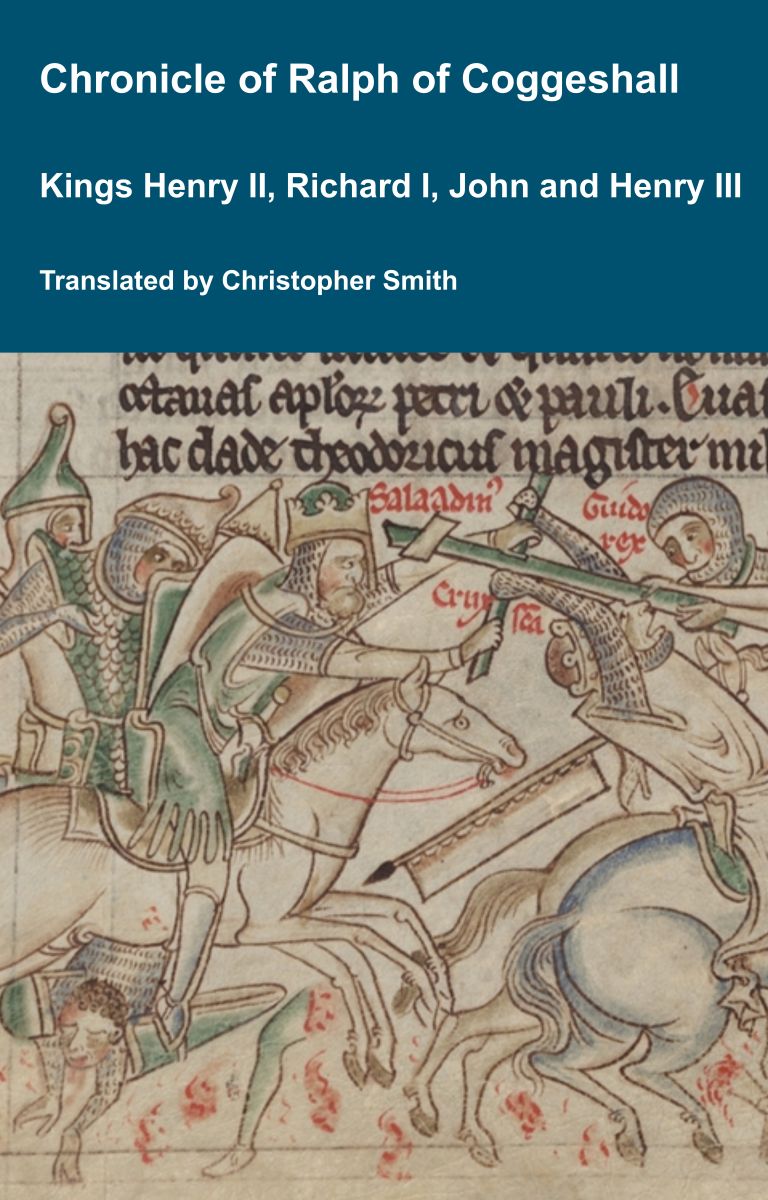
Chronicle of Abbot Ralph of Coggeshall
The Chronicle of Abbot Ralph of Coggeshall (Chronicon Anglicanum) is an indispensable medieval history that brings to life centuries of English and European affairs through the eyes of a learned Cistercian monk. Ralph of Coggeshall, abbot of the Abbey of Coggeshall in Essex in the early 13th century, continued and expanded his community’s chronicle, documenting events from the Norman Conquest of 1066 into the tumultuous reign of King Henry III. Blending eyewitness testimony, careful compilation, and the monastic commitment to record-keeping, this chronicle offers a rare narrative of political intrigue, royal power struggles, and social upheaval in England and beyond. Ralph’s work captures the reigns of pivotal figures such as Richard I and King John, providing invaluable insights into their characters, decisions, and the forces that shaped medieval rule. More than a simple annal, Chronicon Anglicanum conveys the texture of medieval life and governance, making it a rich source for scholars and readers fascinated by English history, monastic authorship, and the shaping of the medieval world.
Available at Amazon in eBook and Paperback format.
Patent Rolls. 29th April 1461. Durham, County Durham [Map]. Grant to [his wife] Cecilia, late wife of Thomas Kyriell, knight, and executrix of his will, during the minority of Giles (age 9) the son and heir of William Daubeney late of Southpederton, co Somerset, esquire, deceased, of all the possessions of the latter, with the custody and marriage of the heir, saving to [his sister-in-law] Alice (age 29) the late wife of the said William her reaonsable dower. If the heir dire during the minority she hsall have the same during the minority of the next heir, and so on. By p.s.
Paston Letters V1 120 William Lomner to John Paston. Sir Thomas Keriel1 is take prisoner, and alle the legge harneyse, and abowte iij ml [3000] Englishe men slayn.
Mathew Gooth3 with xvc [1500] fledde, and savyd hym selffe and hem; and Peris Brusy was cheffe capteyn, and hadde x. m L Frenshe men and more, &c.
Note 1. Sent to France to carry succours to the Duke of Somerset, but defeated and taken prisoner at the battle of Fourmigni, 15th April 1450.
Chronicle of Robert Fabyan [-1512]. Thus passyng the tyme, the tydynges whiche before were secrete, nowe were blowen abrode, and openly was tolde that the erlys of Marche and of Warwyke were mette at Cottyswolde, and had gatheryd unto them great strength of Marchemen, and were well spedde upon theyr waye towarde London. For knowlege whereof, the kynge and the quene with theyr hoste, were retournyd northwarde. But or they departyd from Seynt Albonys, there was behedyd the lorde Bonuyle, & syr Thomas Teryell1, knyght, whiche were taken in the forenamed felde
Note 1. Kerell. MS. Teryll. cd.t 1533.
[his daughter] Alice de Kyriell was born to Thomas Kyriell and Cicely Stourton. She married after 1440 John Fogge and had issue.