

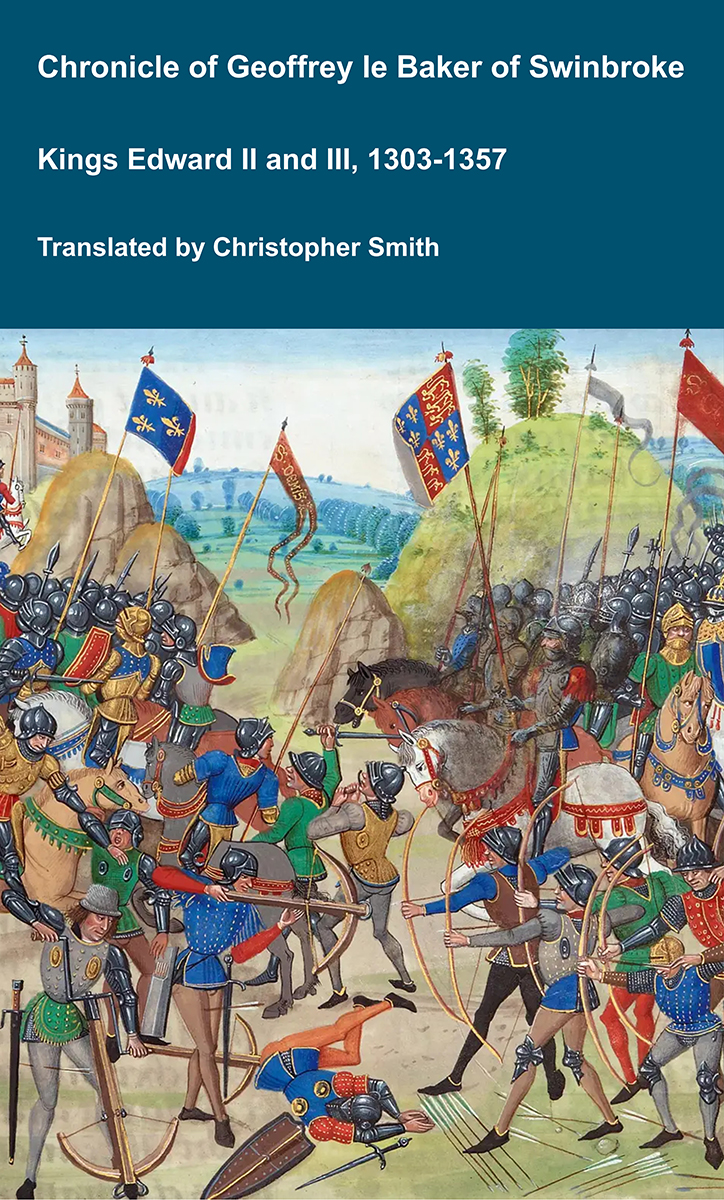
Chronicle of Geoffrey le Baker of Swinbroke
Baker was a secular clerk from Swinbroke, now Swinbrook, an Oxfordshire village two miles east of Burford. His Chronicle describes the events of the period 1303-1356: Gaveston, Bannockburn, Boroughbridge, the murder of King Edward II, the Scottish Wars, Sluys, Crécy, the Black Death, Winchelsea and Poitiers. To quote Herbert Bruce 'it possesses a vigorous and characteristic style, and its value for particular events between 1303 and 1356 has been recognised by its editor and by subsequent writers'. The book provides remarkable detail about the events it describes. Baker's text has been augmented with hundreds of notes, including extracts from other contemporary chronicles, such as the Annales Londonienses, Annales Paulini, Murimuth, Lanercost, Avesbury, Guisborough and Froissart to enrich the reader's understanding. The translation takes as its source the 'Chronicon Galfridi le Baker de Swynebroke' published in 1889, edited by Edward Maunde Thompson.
Available at Amazon in eBook and Paperback format.
East Yorkshire is in Yorkshire.
25th September 1066 Battle of Stamford Bridge
1306 Imprisonment and Execution of Scottish Prisoners
1399 Henry IV lands at Ravenspur
1454 Battle of Stamford Bridge
The River Aire rises around Malham Tarn, North Yorkshire [Map] after which it travels broadley south-west past Skipton Castle [Map], Keighley, West Yorkshire [Map], Bingley [Map], Shipley, West Yorkshire [Map], Apperley Bridge, West Yorkshire [Map], Kirkstall Abbey, West Yorkshire [Map], Leeds [Map], Methley [Map], Castleford [Map], where it is joined by the River Calder, within 2km of All Saints Church, Ledsham [Map] then Brotherton [Map], Ferrybridge, where there was an historical crossing, Beal, North Yorkshire [Map], West Haddlesey, North Yorkshire [Map], Chapel Haddlesey, North Yorkshire [Map], Temple Hirst, North Yorkshire [Map], Snaith, East Yorkshire [Map], Rawcliffe, East Yorkshire [Map] before joining the River Ouse 800m north of Airmyn [Map].
Ermine Street 2e Brough to York. Having crossed the Humber Estuary to Petuaria [Map] Ermine Street continues north past South Newbald [Map], Shiptonthorpe [Map], Barmby [Map]. Ermine Street then follows either, or both of two routes. The first, Kexby Bridge [Map] to Eboracum [Map]. The second route suggests Ermine Street may have continued to Durham via Wilberfoss [Map], Stamford Bridge [Map] after whic it turned left for Eboracum [Map].
The River Hull rises near Driffield [Map] being formed from a number of streams and becks after which it flows past Wansford, East Yorkshire [Map], Brigham, East Yorkshire [Map], under Bethell's Bridge [Map] then Weel, East Yorkshire [Map] on the outskirts of Beverley [Map] after which it flows to Kingston upon Hull [Map] where it joins the Humber Estuary.
On 11th March 1296 Archbishop John le Romeyn [aged 66] died at Bishop Burton.
On 24th September 1592 Christopher Wandesford was born to George Wandesford of Kirklington [aged 19] and Catherine Hansby at Bishop Burton. He married in or before 1628 Alice Osborne and had issue.
Bede. How he healed a thegn's wife that was sick with holy water.
The same abbot related another miracle, not unlike the former, of the aforesaid bishop. "Not very far from our monastery," he said, "to wit, about two miles off, was the township of one Puch, a thegn, whose wife had lain sick of a very grievous disease for nearly forty days, insomuch that for three weeks she could not be carried out of the chamber where she lay." It happened that the man of God was, at that time, called thither by the thegn to consecrate a church; and when that was done, the thegn desired him to come into his house and dine. The bishop declined, saying that he must return to the monastery, which was very near. The thegn, entreating him more earnestly, vowed he would also give alms to the poor, if so be that the bishop would vouchsafe to enter his house that day and break his fast. I joined my entreaties to his, promising in like manner to give alms for the relief of the poor, if he would but go and dine at the thegn's house, and give his blessing. Having at length, with much difficulty, prevailed, we went in to refresh ourselves. The bishop had sent to the woman that lay sick some of the holy water, which he had blessed for the consecration of the church, by one of the brothers who had come with me, ordering him to give her some to drink, and wash that part of her where he found that her pain was greatest, with some of the same water. This being done, the woman immediately got up whole and sound, and perceiving that she had not only been delivered from her long sickness, but at the same time had recovered the strength which she had lost for so great a time, she presented the cup to the bishop and to us, and continued serving us with meat and drink as she had begun, till dinner was over; following the example of the blessed Peter's wife's mother, who, having been sick of a fever, arose at the touch of our Lord's hand, and having forthwith received health and strength, ministered to them.
St Andrew's Church, Boynton is also in Churches in East Yorkshire.
Reverend Richard Tennant was appointed Rector of St Andrew's Church, Boynton [Map].
In 1670 Thomas Lamplugh of Ribton in Cumberland [aged 83] died. He was buried at St Mary's Church, Brandesburton.
Around 1134 Robert Scrope was born to Hugh Scrope [aged 31] at Bridlington.
Around 1267 William Constable [aged 62] died at Bridlington.
Henry Machyn's Diary. 5th July 1557. At Byrlyngton, John Wallys.
Around February 1643, John Hotham [aged 33] was ready to switch to the Royalist side. He considered himself a better commander than Thomas Fairfax 3rd Lord Fairfax [aged 31] and resented being under his command. In February or March 1643, Hotham started negotiating with the William Cavendish 1st Duke Newcastle upon Tyne [aged 50], the Royalist commander in Yorkshire at Bridlington, supposedly about a prisoner exchange. In exchange for surrendering Hull and changing sides, Hotham demanded 20,000 pounds cash, the rank of viscount for his father and the rank of baron for himself.
Abbot John Whethamstede’s Chronicle of the Abbey of St Albans
Abbot John Whethamstede's Register aka Chronicle of his second term at the Abbey of St Albans, 1451-1461, is a remarkable text that describes his first-hand experience of the beginning of the Wars of the Roses including the First and Second Battles of St Albans, 1455 and 1461, respectively, their cause, and their consequences, not least on the Abbey itself. His text also includes Loveday, Blore Heath, Northampton, the Act of Accord, Wakefield, and Towton, and ends with the Coronation of King Edward IV. In addition to the events of the Wars of the Roses, Abbot John, or his scribes who wrote the Chronicle, include details in the life of the Abbey such as charters, letters, land exchanges, visits by legates, and disputes, which provide a rich insight into the day-to-day life of the Abbey, and the challenges faced by its Abbot.
Available at Amazon in eBook and Paperback format.
In 1678 John Reresby 2nd Baronet [aged 43] was appointed Governor of Bridlington.
On 17th May 1698 John Major 1st Baronet was born to John Major and Elizabeth Tennant at Bridlington. He married 1724 Elizabeth Dale and had issue.
On 13th October 1832 Godfrey Bosville Macdonald [aged 56] died at Bridlington.
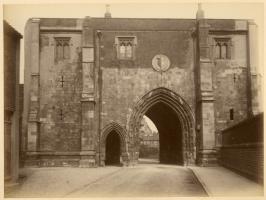
Around 1855. Benjamin Brecknell Turner [aged 40]. Bayle Gatehouse, Bridlington [Map].
Ermine Street 2e Brough to York. Having crossed the Humber Estuary to Petuaria [Map] Ermine Street continues north past South Newbald [Map], Shiptonthorpe [Map], Barmby [Map]. Ermine Street then follows either, or both of two routes. The first, Kexby Bridge [Map] to Eboracum [Map]. The second route suggests Ermine Street may have continued to Durham via Wilberfoss [Map], Stamford Bridge [Map] after whic it turned left for Eboracum [Map].
Ermine Street 2d Lincoln to Winterton. Ermine Street left Lincoln through Bailgate, Lincoln [Map] and travelled north past Fox Owmby [Map], Caenby Corner [Map], Hibaldstow Roman Fort [Map], Appeby [Map] to Winteringham [Map] where a ferry across the Humber Estuary to Petuaria [Map].
In 1510 John Constable was born to Marmaduke Constable at Burnby.
Around 1116 Osmond Stuteville was born to Robert Stuteville at Burton Agnes.
Around 1189 William Stuteville was born to Osmond Stuteville [aged 73] at Burton Agnes. He married 23rd November 1219 Margaret Say 6th Baroness Burford, daughter of Hugh Say 5th Baron Burford and Mabel Marmion Baroness Burford, and had issue.
Before 28th May 1365 Thomas Ughtred 1st Baron Ughtred [aged 73] died. He was buried at Catton Church Catton. His son Thomas [aged 40] succeeded 2nd Baron Ughtred although it appears he was never summoned to Parliament. Catherine Mauley Countess Suffolk [aged 35] by marriage Baroness Ughtred.
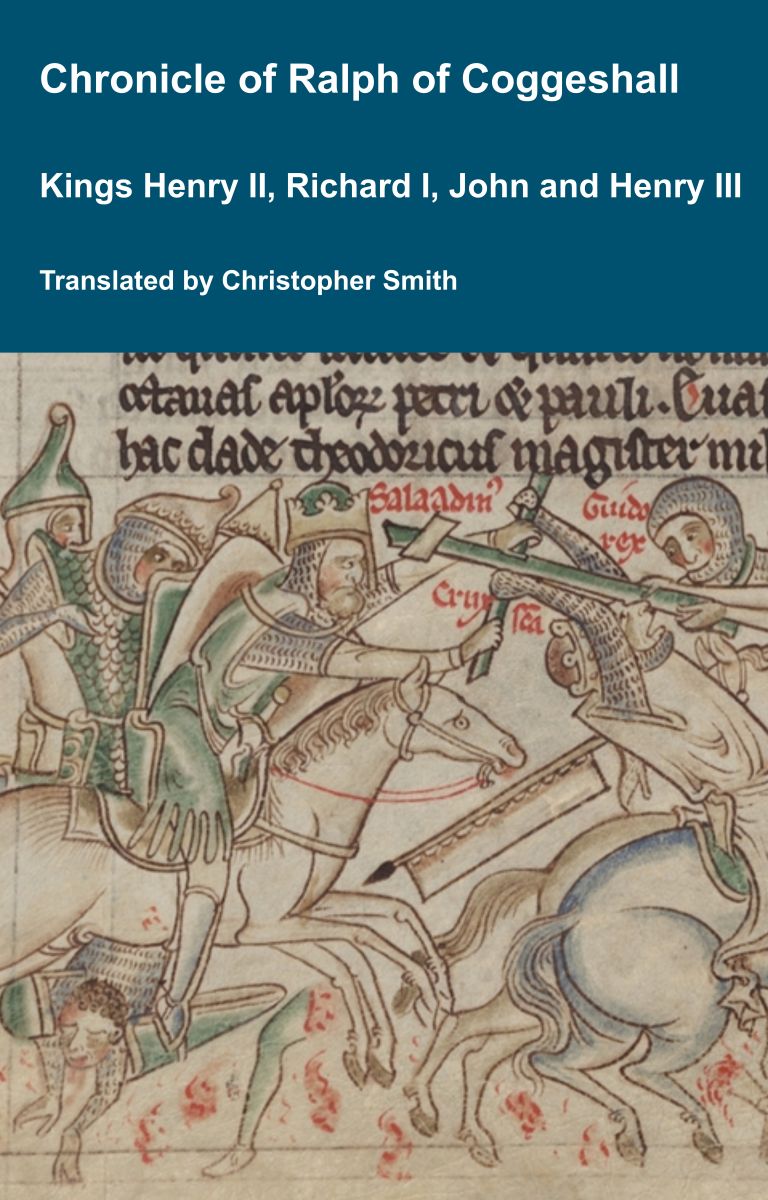
Chronicle of Abbot Ralph of Coggeshall
The Chronicle of Abbot Ralph of Coggeshall (Chronicon Anglicanum) is an indispensable medieval history that brings to life centuries of English and European affairs through the eyes of a learned Cistercian monk. Ralph of Coggeshall, abbot of the Abbey of Coggeshall in Essex in the early 13th century, continued and expanded his community’s chronicle, documenting events from the Norman Conquest of 1066 into the tumultuous reign of King Henry III. Blending eyewitness testimony, careful compilation, and the monastic commitment to record-keeping, this chronicle offers a rare narrative of political intrigue, royal power struggles, and social upheaval in England and beyond. Ralph’s work captures the reigns of pivotal figures such as Richard I and King John, providing invaluable insights into their characters, decisions, and the forces that shaped medieval rule. More than a simple annal, Chronicon Anglicanum conveys the texture of medieval life and governance, making it a rich source for scholars and readers fascinated by English history, monastic authorship, and the shaping of the medieval world.
Available at Amazon in eBook and Paperback format.

On 28th November 1753 John Thornton of Clapham [aged 33] and Lucy Watson [aged 31] were married at Cottingham, East Riding of Yorkshire.
Haltemprice Priory is also in Priories in England.
In 1320 Pope John XXII licensed Thomas Wake 2nd Baron Wake of Liddell [aged 23] to found an Augustinian Priory at Cottingham [Map] in the East Riding of Yorkshire. Thomas bestowed the manors of Newton, Willerby and Wolfreton on the Priory. The name Haltemprice originally Alta Prisa from the medieval French Haulte Emprise or "High Endeavour". Its first Prior was Thomas de Overton.
On 31st May 1349 Thomas Wake 2nd Baron Wake of Liddell [aged 52] died. He was buried at Haltemprice Priory [Map]. His sister Margaret [aged 52] succeeded 3rd Baroness Wake of Liddell.
From 1415 to 1458 Haltemprice Priory [Map] was exempted from royal taxation on grounds of 'notorious poverty'.
On 12th August 1536 Haltemprice Priory [Map] was disolved.

Vesta Monumenta. Plate 1.5: Engravings of Three Medieval Seals
Plate 1.5 of Vetusta Monumenta depicts three medieval seals: the Seal of Clare College, Cambridge (1359), the seal of the Cathedral Priory of St. Etheldreda, Ely [Map] (c. 1280), and seal of the Priory of Cottingham [Map] (1322) [Note. The date here somewhat confusing since the Priory was founded in 1325?]. Engraving by George Vertue after his own drawings. 173 x 233 mm [upper portion] and 172 x 228 mm [lower portion]. Published by the Society of Antiquaries of London in 1720. Current locations: The top seal is in Clare College, Cambridge University, Cambridge, UK; an impression of the center seal is in Westminster Abbey (WAM 7933), London, UK; the bottom seal is in the British Museum (1913,1105.2), London, UK.
On 21st July 1992 Letitia Sibell Winifred Brownlow-Cecil Baroness Hotham [aged 88] died at Dalton Holme.
Anglo-Saxon Chronicle. 14th December 704. This year died Ealdferth, king of the Northumbrians, on the nineteenth day before the calends of January [14th December 704], at Driffield [Map]; and was succeeded by his son Osred [aged 7]. Bishop Saxulf also died the same year.
In 1529 Robert Fairfax of Pockthorpe in Yorkshire was born to Nicholas Fairfax of Gilling Castle [aged 31] and Jane Palmes at Driffield [Map].
Nicholas Fairfax was born to Nicholas Fairfax of Gilling Castle and Jane Palmes at Driffield [Map].
Chronicle of Abbot Ralph of Coggeshall
The Chronicle of Abbot Ralph of Coggeshall (Chronicon Anglicanum) is an indispensable medieval history that brings to life centuries of English and European affairs through the eyes of a learned Cistercian monk. Ralph of Coggeshall, abbot of the Abbey of Coggeshall in Essex in the early 13th century, continued and expanded his community’s chronicle, documenting events from the Norman Conquest of 1066 into the tumultuous reign of King Henry III. Blending eyewitness testimony, careful compilation, and the monastic commitment to record-keeping, this chronicle offers a rare narrative of political intrigue, royal power struggles, and social upheaval in England and beyond. Ralph’s work captures the reigns of pivotal figures such as Richard I and King John, providing invaluable insights into their characters, decisions, and the forces that shaped medieval rule. More than a simple annal, Chronicon Anglicanum conveys the texture of medieval life and governance, making it a rich source for scholars and readers fascinated by English history, monastic authorship, and the shaping of the medieval world.
Available at Amazon in eBook and Paperback format.
The River Hull rises near Driffield [Map] being formed from a number of streams and becks after which it flows past Wansford, East Yorkshire [Map], Brigham, East Yorkshire [Map], under Bethell's Bridge [Map] then Weel, East Yorkshire [Map] on the outskirts of Beverley [Map] after which it flows to Kingston upon Hull [Map] where it joins the Humber Estuary.
The River Hull rises near Driffield [Map] being formed from a number of streams and becks after which it flows past Wansford, East Yorkshire [Map], Brigham, East Yorkshire [Map], under Bethell's Bridge [Map] then Weel, East Yorkshire [Map] on the outskirts of Beverley [Map] after which it flows to Kingston upon Hull [Map] where it joins the Humber Estuary.
The River Hull rises near Driffield [Map] being formed from a number of streams and becks after which it flows past Wansford, East Yorkshire [Map], Brigham, East Yorkshire [Map], under Bethell's Bridge [Map] then Weel, East Yorkshire [Map] on the outskirts of Beverley [Map] after which it flows to Kingston upon Hull [Map] where it joins the Humber Estuary.
Around 1460 Alice Southill was born to Henry Southill [aged 12] at Everingham. She married 1500 John Harrington.
On 4th October 1540 Barbara Sothill [aged 66] died. She was buried at Church of St Everild Everingham.
On 14th September 1545 Marmaduke Constable [aged 65] died. He was buried at Church of St Everild Everingham.

The Times. 24th December 1959. From Our Correspondent STAMFORD BRIDGE [Map], Dec. 23. The Earl of Halifax [deceased] died to-night at his home at Garrowby, near York. He was 78 and had been suffering from a chest complaint. Lord [aged 53] and Baroness Feversham [aged 49], Lord [aged 47] and Lady Irwin [aged 43], Lady Clarissa Duncombe [aged 21], and Baroness Bingley were at Garrowby when he died. Baroness Feversham said he had suffered from poor breathing for some time and that had been aggravated by a chest infection. Last July Lord Halifax broke his hip when walking in his garden and was flown to London for an operation at University College Hospital. He made a remarkable recovery from the accident. In September he and Lady Halifax celebrated their golden wedding anniversary. The funeral will be in private. A memorial service and requiem will be held in York Minster [Map] next Monday at 11 a.m. The date of a service in London is to be announced later. Obituary on page 8. MR. SELWYN LLOYD'S TRIBUTE Mr. Selwyn Lloyd, Foreign Secretary, in a tribute to Lord Halifax last night, said: "He held high office, as Viceroy of India, Foreign Secretary, and finally as Ambassador to Washington. He adorned each of these offices with his integrity, his idealism, and his ability. He was a great public servant. He will be deeply mourned." WASHINGTON, Dec. 23. Mr. Douglas Dillon, the acting Secretary of State, to-night issued this statement: "The many Americans who knew Lord Halifax deeply regret his passing. He was ever a staunch friend of this country and during his years of public life contributed greatly to the strengthening of Anglo-American relations. He is particularly remembered for his dedicated service to the cause of humanity during the crucial war years as British Ambassador in Washington." Reuter.
In 1226 Joan Bruce was born to Peter Bruce [aged 41] and Hawise Lancaster at Goole [Map]. She married 1241 Piers Mauley and had issue.
The River Ouse is formed by the confluence of the River Ure and River Swale around 900m south-west of Myton-on-Swale [Map]; there are other theories as to where it starts. Thereafter it flows broadly south-east through York [Map], past Cawood, North Yorkshire [Map], Selby, North Yorkshire [Map], Goole [Map] and the location of the former Whitgift Ferry, East Yorkshire [Map] before joining the Humber Estuary at Trent Falls [Map].
The River Don rises at Dunford Bridge [Map] after which it flows broadly east through Penistone [Map] then south through Oughtibridge [Map], Sheffield [Map] then east through Rotherham [Map], past Conisbrough Castle [Map], Doncaster [Map] and Stainforth [Map] before joining the River Ouse at Goole [Map]. Originally the River Don was a tributary of the River Trent forming the northern boundary of the Isle of Axholme [Map] but was re-engineered by Cornelius Vermuyden as the Dutch River in the 1620s.
Chronicle of a Bourgeois of Valenciennes
Récits d’un bourgeois de Valenciennes aka The Chronicle of a Bourgeois of Valenciennes is a vivid 14th-century vernacular chronicle written by an anonymous urban chronicler from Valenciennes in the County of Hainaut. It survives in a manuscript that describes local and regional history from about 1253 to 1366, blending chronology, narrative episodes, and eyewitness-style accounts of political, military, and social events in medieval France, Flanders, and the Low Countries. The work begins with a chronological framework of events affecting Valenciennes and its region under rulers such as King Philip VI of France and the shifting allegiances of local nobility. It includes accounts of conflicts, sieges, diplomatic manoeuvres, and the impact of broader struggles like the Hundred Years’ War on urban life in Hainaut. Written from the perspective of a burgher (bourgeois) rather than a monastery or royal court, the chronicle offers a rare lay viewpoint on high politics and warfare, reflecting how merchants, townspeople, and civic institutions experienced the turbulence of the 13th and 14th centuries. Its narrative style combines straightforward reporting of events with moral and civic observations, making it a valuable source for readers interested in medieval urban society, regional politics, and the lived experience of war and governance in pre-modern Europe.
Available at Amazon in eBook and Paperback format.
The River Aire rises around Malham Tarn, North Yorkshire [Map] after which it travels broadley south-west past Skipton Castle [Map], Keighley, West Yorkshire [Map], Bingley [Map], Shipley, West Yorkshire [Map], Apperley Bridge, West Yorkshire [Map], Kirkstall Abbey, West Yorkshire [Map], Leeds [Map], Methley [Map], Castleford [Map], where it is joined by the River Calder, within 2km of All Saints Church, Ledsham [Map] then Brotherton [Map], Ferrybridge, where there was an historical crossing, Beal, North Yorkshire [Map], West Haddlesey, North Yorkshire [Map], Chapel Haddlesey, North Yorkshire [Map], Temple Hirst, North Yorkshire [Map], Snaith, East Yorkshire [Map], Rawcliffe, East Yorkshire [Map] before joining the River Ouse 800m north of Airmyn [Map].
On or before 8th October 1667 Henrietta Maria Yarburgh was born to Thomas Yarburgh of Snaith and Henrietta-Maria Blague. She was baptised on 8th October 1667 at Snaith, East Yorkshire [Map]. She married in or before 1692 Marmaduke Wyvill 5th Baronet, son of William Wyvill 4th Baronet and Anne Brookes, and had issue.
The River Aire rises around Malham Tarn, North Yorkshire [Map] after which it travels broadley south-west past Skipton Castle [Map], Keighley, West Yorkshire [Map], Bingley [Map], Shipley, West Yorkshire [Map], Apperley Bridge, West Yorkshire [Map], Kirkstall Abbey, West Yorkshire [Map], Leeds [Map], Methley [Map], Castleford [Map], where it is joined by the River Calder, within 2km of All Saints Church, Ledsham [Map] then Brotherton [Map], Ferrybridge, where there was an historical crossing, Beal, North Yorkshire [Map], West Haddlesey, North Yorkshire [Map], Chapel Haddlesey, North Yorkshire [Map], Temple Hirst, North Yorkshire [Map], Snaith, East Yorkshire [Map], Rawcliffe, East Yorkshire [Map] before joining the River Ouse 800m north of Airmyn [Map].
Around 1243 Simon Constable was born to William Constable [aged 38] at Halsham.
In 1550 John Constable [aged 40] died at Halsham.
In 1376 Joan Zouche [aged 63] died at Holme upon Spalding Moor.
On 10th August 1349 John Fitzwilliam [aged 51] died at Howden.
On 22nd February 1385 John Fitzwilliam [aged 57] died at Howden.
On 13th November 1440 Joan Beaufort Countess of Westmoreland [aged 61] died at Howden. She was buried at Lincoln Cathedral [Map] next to her mother Katherine Swynford aka Roet Duchess Lancaster.


In 1456 Joane Greystoke Baroness Darcy Knayth [aged 48] died at Howden.
Henry Machyn's Diary. 5th July 1557. At Howden, John Grey, skotte.
Chronicle of Geoffrey le Baker of Swinbroke
Baker was a secular clerk from Swinbroke, now Swinbrook, an Oxfordshire village two miles east of Burford. His Chronicle describes the events of the period 1303-1356: Gaveston, Bannockburn, Boroughbridge, the murder of King Edward II, the Scottish Wars, Sluys, Crécy, the Black Death, Winchelsea and Poitiers. To quote Herbert Bruce 'it possesses a vigorous and characteristic style, and its value for particular events between 1303 and 1356 has been recognised by its editor and by subsequent writers'. The book provides remarkable detail about the events it describes. Baker's text has been augmented with hundreds of notes, including extracts from other contemporary chronicles, such as the Annales Londonienses, Annales Paulini, Murimuth, Lanercost, Avesbury, Guisborough and Froissart to enrich the reader's understanding. The translation takes as its source the 'Chronicon Galfridi le Baker de Swynebroke' published in 1889, edited by Edward Maunde Thompson.
Available at Amazon in eBook and Paperback format.
Ermine Street 2e Brough to York. Having crossed the Humber Estuary to Petuaria [Map] Ermine Street continues north past South Newbald [Map], Shiptonthorpe [Map], Barmby [Map]. Ermine Street then follows either, or both of two routes. The first, Kexby Bridge [Map] to Eboracum [Map]. The second route suggests Ermine Street may have continued to Durham via Wilberfoss [Map], Stamford Bridge [Map] after whic it turned left for Eboracum [Map].
On 29th November 1422 Thomas Percy 1st Baron Egremont was born to Henry Percy 2nd Earl of Northumberland [aged 29] and Eleanor Neville Countess Northumberland [aged 25] at Leconfield. He a great x 2 grandson of King Edward III of England. Coefficient of inbreeding 3.49%.
In 1365 Margaret St John was born to Edward St John [aged 35] and Eustace Anastasia Aton at Londesborough. She married Thomas Bromflete and had issue.
In or before 1389 Henry Bromflete 1st Baron Vesci was born to Thomas Bromflete and Margaret St John [aged 23] at Londesborough. His date of birth sometimes stated as around 1412. His mother, however, died in 1407 so his birth must have been in or before 1407. He married (1) before 27th April 1416 his half fifth cousin once removed Joan Holland Duchess York, daughter of Thomas Holland 2nd Earl Kent and Alice Fitzalan Countess Kent (2) 1434 his half fifth cousin once removed Eleanor Fitzhugh Baroness Darcy Knayth and Fitzhugh, daughter of Henry Fitzhugh 3rd Baron Fitzhugh and Elizabeth Grey Baroness Fitzhugh, and had issue.
Around 1434 Margaret Bromflete Baroness Clifford was born to Henry Bromflete 1st Baron Vesci [aged 45] and Eleanor Fitzhugh Baroness Darcy Knayth and Fitzhugh at Londesborough. She married (1) 1454 John "Butcher" Clifford 9th Baron Clifford, son of Thomas Clifford 8th Baron Clifford and Joan Dacre Baroness Clifford, and had issue (2) after 28th March 1461 Lancelot Threlkeld and had issue.
On 16th January 1469 Henry Bromflete 1st Baron Vesci [aged 80] died at Londesborough without male issue. Baron Vesci extinct.
On 12th April 1493 Margaret Bromflete Baroness Clifford [aged 59] died at Londesborough.
Henry Machyn's Diary. 5th July 1557. Att Malton [Note. Assumed to be Melton since in the East Riding like the other places mentioned rather than Mlaton in the North Riding.], Wyllyam Palmer, John Mortfurth, scott.
Around 1243 William Latimer 1st Baron Latimer of Corby was born to William Latimer of Corby [aged 23] at Danby Manor Melton. He married before 1269 Alicia Ledet Baroness Latimer Corby and had issue.
Nunkeeling Priory, East Yorkshire is also in Priories in England.
Nunkeeling Priory, East Yorkshire [Map] was a priory of Benedictine nuns in the East Riding of Yorkshire, England founded by Agnes de Arches or de Catfoss in 1152.
Around 1274 William Pole was born at Ravenser Odd.
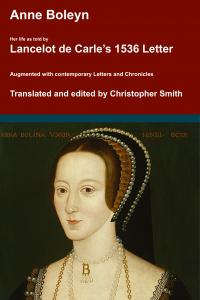
Anne Boleyn. Her Life as told by Lancelot de Carle's 1536 Letter.
In 1536, two weeks after the execution of Anne Boleyn, her brother George and four others, Lancelot du Carle, wrote an extraordinary letter that described Anne's life, and her trial and execution, to which he was a witness. This book presents a new translation of that letter, with additional material from other contemporary sources such as Letters, Hall's and Wriothesley's Chronicles, the pamphlets of Wynkyn the Worde, the Memorial of George Constantyne, the Portuguese Letter and the Baga de Secrets, all of which are provided in Appendices.
Available at Amazon in eBook and Paperback format.
Around 1302 William Pole was born to William Pole [aged 28] at Ravenser Odd. He married (1) Margaret Peverell (2) Katherine Norwich and had issue.

After 7th July 1399 Henry Bolingbroke Earl of Derby [aged 32] landed at Ravenspur [Map] with Thomas Rempston.
William Ros 6th Baron Ros Helmsley [aged 29] joined Henry Bolingbroke Earl of Derby with a large retinue.
On 14th March 1471 King Edward IV of England [aged 28] landed at Ravenspur [Map] with William Hastings 1st Baron Hastings [aged 40].
Warkworth's Chronicle [1461-1474]. 14th March 1471. And in the secunde weke of Marche, the xlix. yere of the regne of Kynge Herry the vjte, and in the x. yere of the regne of Kynge Edwarde the iiijte, the same Kynge Edwarde toke his schippynge in Flaunders, and hade withe hym the Lorde Hastynges and the Lorde Say, and ix. c. of Englismenne and three hundred of Flemmynges with hande-gonnes, and sailed toward England, and hade grete troble uppon the see with stormys, and lost a schyppe withe horse; and purpost to have londede in Northfolke, and one of the Earl [of] Oxenfordes brother withe the comons of the cuntre arose up togedere, and put hym abake to the see ageyne. And after that, at he was so trobled in the see, that he was fayne to londe in Yorkeschyre at Ravenys-spore [Map]1; and there rose ageyns hym alle the cuntre of Holdernes, whose capteyne was a preste, and a persone in the same cuntre called Sere Jhon Westerdale, whiche aftyrwarde for his abused disposycion was casten in presone in the Marchalse at Londone by the same Kynge Edwarde: for the same preste mett Kynge Edwarde and askede the cause of his landynge; and he answeryde that he came thedere by the Earl of Northumberlondes avyse, and schewede the Earls lettere y-send to hym, &c. undere his seale; and also he came for to clayme the Duchery of Yorke, the whiche was his inherytaunce of ryght, and so passed forthe to the cite of Yorke, where Thomas Clyfford lete hym inne, and ther he was examynede ayenne; and he seyde to the mayre and aldermenne and to alle the comons of the cite, in likewyse as he was afore in Holdernes at his landyng: that was to sey, that [he] never wulde clayme no title2, ne take uppone honde to be Kynge of England, nor wulde have do afore that tyme, but be excitynge and sturing of the Earl of Warwick [aged 42]; and therto afore alle peple, he cryed "A! Kynge Herry! A! Kynge and Prynce Edwarde! " and wered ane estryche feder, Prynce Edwardes lyvery. And after this he was sufferd to passe the cite, and so helde his wey southwarde, and no man lettyd hym ne hurtyde hym.
Note 1. At Ravenyspore. See Mr. Jones's Essay on the Rival Roses, p. xxv.
Note 2. Nevere wulde clayme no title. He took a solemn oath to that effect; Cf. MS. Sloan. 3479, and MS. Harl. 2408.
Archaeologia Volume 21 Section III Chapter I. [14th March 1471] From the time our Sovereign Lord Edward [aged 28], by the Grace of God, King of England and Lord of Ireland, departed from the Province of Zealand, and embarked, the 10th day of March, on the seas, he experienced exceeding bad weather and heavy tempests, so that he reached his kingdom of England, with his followers, in great peril and danger, on the 14th day of the said month; and landing on the northern coasta, they took from thence the road leading to the city of York, where they arrived on the 18th, and then proceeded by such forced marches, that they got to the river Trent, which is about the centre of the kingdom, on the 21st. Here they received intelligence that the Earl of Oxford [aged 28] was posted at a ford, and was assembling men, in order to guard the passage; but our sovereign lord advanced within so short a distance of the earl, that the latter presently took to flight; whereupon the king marched straight forward towards his grand rebel and traitor the Earl of Warwick [aged 42], who by this time had taken the field with a powerful force, but he also being informed of the approach of our sovereign lord, retired with his men on the 27th day of the same month, within a strong closed city called Coventry; before which city, our sovereign lord, on the 29th of the said month, drew up his whole army in battle array.
Note a. At Ravenspurgh [Map], on the Holderness side of the Humber.
All Saints Church, Rudston is also in Churches in East Yorkshire.
Rudston Monolith is also in North England Standing Stones.
Rudston Monolith [Map]. Is the tallest megalith (standing stone) in the United Kingdom at 7.6m tall.

Archaeologia Volume 5 Section 5. Mr. Pegge, on the Rudston Pyramidal Stone [Rudston Monolith [Map]]. Read May 9, 1776.
Transactions of the Woolhope Club 1900 Arthur's Stone. Our President, Mr. Blashill, had recently visited the locality, and he exhibited some photographs of some of the stupendous masses near Carnac. One photograph represented a prostrate broken stone, most probably a fallen menhir [Map], 78 feet in length, 13 feet at the base, and weighing at least 240 tons.
For the sake of comparison as to size and weight:— Cleopatra's Needle on the Thames Embankment, London, imported from Egypt in 1878 by the late Sir Erasmus Wilson, is 68 feet 52 inches high. Its weight is 186 tons 7 cwt. 2 stones II lbs. One of the largest monoliths [Rudston Monolith [Map]] in our kingdom is to be seen in the churchyard at Rudstone, a little village in Yorkshire. It is a gritstone over 25 feet high: it has been traced into the ground to a depth of 16 feet without its base being reached. It is computed to weigh 46 tons. It is nearly twenty miles distant from the nearest quarry. An illustration is given in "The Sphere" of September 13th, 1902, on page 294.
The dolmens, no doubt, like the pyramids of Egypt, were constructed for tombs. The Menhirs, or standing stones, may have been monumental, sometimes religious emblems, sometimes memorials of other significance, like the pillar-stones of the Bible.
On 12th May 1615 Charles Hotham was born to John Hotham 1st Baronet [aged 25] in Scorborough and Anne Rokeby.
Ermine Street 2e Brough to York. Having crossed the Humber Estuary to Petuaria [Map] Ermine Street continues north past South Newbald [Map], Shiptonthorpe [Map], Barmby [Map]. Ermine Street then follows either, or both of two routes. The first, Kexby Bridge [Map] to Eboracum [Map]. The second route suggests Ermine Street may have continued to Durham via Wilberfoss [Map], Stamford Bridge [Map] after whic it turned left for Eboracum [Map].
Before 1714 Mark Kirkby died. He left his Sledmere estates to his sister Mary Kirkby [aged 32] and her husband Richard Sykes [aged 7].
Before 1714 Mark Kirkby acquired his Sledmere estates through twelve separate transactions.
Chronicle of Abbot Ralph of Coggeshall
The Chronicle of Abbot Ralph of Coggeshall (Chronicon Anglicanum) is an indispensable medieval history that brings to life centuries of English and European affairs through the eyes of a learned Cistercian monk. Ralph of Coggeshall, abbot of the Abbey of Coggeshall in Essex in the early 13th century, continued and expanded his community’s chronicle, documenting events from the Norman Conquest of 1066 into the tumultuous reign of King Henry III. Blending eyewitness testimony, careful compilation, and the monastic commitment to record-keeping, this chronicle offers a rare narrative of political intrigue, royal power struggles, and social upheaval in England and beyond. Ralph’s work captures the reigns of pivotal figures such as Richard I and King John, providing invaluable insights into their characters, decisions, and the forces that shaped medieval rule. More than a simple annal, Chronicon Anglicanum conveys the texture of medieval life and governance, making it a rich source for scholars and readers fascinated by English history, monastic authorship, and the shaping of the medieval world.
Available at Amazon in eBook and Paperback format.
In 1761 Richard Sykes [aged 55] died without issue. He left his Sledmere estates to his brother Mark Sykes 1st Baronet [aged 49].

Henry Chaplin A Memoir: 2 Family and Social Life Part I. His grandfather, another Charles Chaplin of Blankney, had married Elizabeth, daughter and heiress of Robert Taylor of Newark on Trent and Pocklington, and it was through this lady that the land in Nottinghamshire had been brought into the family. The property in Yorkshire, part of the Manor of Snape, is of some historical interest. Snape originally belonged to the Nevills, and on the death of John, last Lord of Latimer of the Nevills in 1577, himself a son of John Nevill, Lord Latimer, and of Catherine Parr, afterwards King Henry VIII.'s queen, it passed as her portion to his second daughter, Dorothy, who had married Thomas Cecil, first Earl of Exeter. When John Chaplin, nearly 200 years later, married Elizabeth Cecil, daughter of the 8th Earl of Exeter, the Snape property no doubt formed part of her dowry, perhaps as compensation on the birth of her brother for the loss of the Burleigh estate.
On 9th May 1514 John Dawnay of Cowick [aged 23] and Dorothy Neville [aged 18] were married at Snape Hall.
On 29th September 1689 John Hotham 2nd Baronet [aged 57] died. He was buried in St Mary's Church, South Dalton. His son John [aged 34] succeeded 3rd Baronet Hotham of Scorborough in Yorkshire.
On 3rd November 1795 Bishop John Hotham 9th Baronet [aged 59] died at Bath, Somerset [Map]. He was buried at St Mary's Church, South Dalton. His son Charles [aged 29] succeeded 10th Baronet Hotham of Scorborough in Yorkshire.
Ermine Street 2e Brough to York. Having crossed the Humber Estuary to Petuaria [Map] Ermine Street continues north past South Newbald [Map], Shiptonthorpe [Map], Barmby [Map]. Ermine Street then follows either, or both of two routes. The first, Kexby Bridge [Map] to Eboracum [Map]. The second route suggests Ermine Street may have continued to Durham via Wilberfoss [Map], Stamford Bridge [Map] after whic it turned left for Eboracum [Map].
Ermine Street 2e Brough to York. Having crossed the Humber Estuary to Petuaria [Map] Ermine Street continues north past South Newbald [Map], Shiptonthorpe [Map], Barmby [Map]. Ermine Street then follows either, or both of two routes. The first, Kexby Bridge [Map] to Eboracum [Map]. The second route suggests Ermine Street may have continued to Durham via Wilberfoss [Map], Stamford Bridge [Map] after whic it turned left for Eboracum [Map].
On 25th September 1066 King Harold II of England [aged 44], supported by the brothers Edwin Earl of Mercia and Morcar Earl Northumbria, defeated the Viking army at the Battle of Stamford Bridge at Stamford Bridge [Map].
King Harald Hardrada III of Norway [aged 51] was killed. His son Magnus [aged 18] succeeded King Norway.
Harold's brother, fighting against Harold, Tostig Godwinson Earl Northumbria [aged 40] was killed.
On 31st October 1454 or 1st November 1454 John Neville 1st Marquess Montagu [aged 23] and Thomas Neville [aged 24] captured Thomas Percy 1st Baron Egremont [aged 31] and Richard Percy [aged 28] in a skirmish known as the Battle of Stamford Bridge. [Note. The second battle at Stamford Bridge [Map] with the first being in 1066]. The brothers were taken to Middleham Castle [Map]. Thomas Percy 1st Baron Egremont was subsequently fined £11,200 in damages which, with an income of £100, he was unlikely to ever pay. He was, therefore, taken to Newgate Prison, London [Map] in which he stayed until he escaped in 1456.
The Times. 24th December 1959. From Our Correspondent STAMFORD BRIDGE [Map], Dec. 23. The Earl of Halifax [deceased] died to-night at his home at Garrowby, near York. He was 78 and had been suffering from a chest complaint. Lord [aged 53] and Baroness Feversham [aged 49], Lord [aged 47] and Lady Irwin [aged 43], Lady Clarissa Duncombe [aged 21], and Baroness Bingley were at Garrowby when he died. Baroness Feversham said he had suffered from poor breathing for some time and that had been aggravated by a chest infection. Last July Lord Halifax broke his hip when walking in his garden and was flown to London for an operation at University College Hospital. He made a remarkable recovery from the accident. In September he and Lady Halifax celebrated their golden wedding anniversary. The funeral will be in private. A memorial service and requiem will be held in York Minster [Map] next Monday at 11 a.m. The date of a service in London is to be announced later. Obituary on page 8. MR. SELWYN LLOYD'S TRIBUTE Mr. Selwyn Lloyd, Foreign Secretary, in a tribute to Lord Halifax last night, said: "He held high office, as Viceroy of India, Foreign Secretary, and finally as Ambassador to Washington. He adorned each of these offices with his integrity, his idealism, and his ability. He was a great public servant. He will be deeply mourned." WASHINGTON, Dec. 23. Mr. Douglas Dillon, the acting Secretary of State, to-night issued this statement: "The many Americans who knew Lord Halifax deeply regret his passing. He was ever a staunch friend of this country and during his years of public life contributed greatly to the strengthening of Anglo-American relations. He is particularly remembered for his dedicated service to the cause of humanity during the crucial war years as British Ambassador in Washington." Reuter.
The Priory Church of St Mary the Virgin, Swine is also in Churches in East Yorkshire, Priories in England.
The Priory Church of St Mary the Virgin, Swine [Map]. Sir Robert Hilton c.1370/80 died 1372 and his wife Maud of Campaigne.
Warter Hall aka Priory is also in Priories in England.
Around 1680 Warter Hall aka Priory [Map] was commissioned by the Pennington family. Originally named Warter Hall, it was renamed Warter Priory following extensive Victorian redevelopment.
On 3rd August 1905 Eric Chaplin 2nd Viscount Chaplin [aged 27] and Gwladys Alice Wilson Viscountess Chaplin [aged 24] were married at Warter Hall aka Priory [Map].
Chronicle of Abbot Ralph of Coggeshall
The Chronicle of Abbot Ralph of Coggeshall (Chronicon Anglicanum) is an indispensable medieval history that brings to life centuries of English and European affairs through the eyes of a learned Cistercian monk. Ralph of Coggeshall, abbot of the Abbey of Coggeshall in Essex in the early 13th century, continued and expanded his community’s chronicle, documenting events from the Norman Conquest of 1066 into the tumultuous reign of King Henry III. Blending eyewitness testimony, careful compilation, and the monastic commitment to record-keeping, this chronicle offers a rare narrative of political intrigue, royal power struggles, and social upheaval in England and beyond. Ralph’s work captures the reigns of pivotal figures such as Richard I and King John, providing invaluable insights into their characters, decisions, and the forces that shaped medieval rule. More than a simple annal, Chronicon Anglicanum conveys the texture of medieval life and governance, making it a rich source for scholars and readers fascinated by English history, monastic authorship, and the shaping of the medieval world.
Available at Amazon in eBook and Paperback format.
In 1972 Warter Hall aka Priory [Map] was demolished with the rubble being used to fill the lake in the extensive gardens.
Bede. The same bishop John by his prayers healed a sick maiden.
The same Berthun told another miracle concerning the said bishop. When the most reverend Wilfrid, after a long banishment, was admitted to the bishopric of the church of Hagustald [Map], and the aforesaid John, upon the death of Bosa, a man of great sanctity and humility, was, in his place, appointed bishop of York, he himself came, once upon a time, to the monastery [Map] of nuns, at the place called Wetadun, where the Abbess Heriburg then presided. "When we were come thither," said he, "and had been received with great and universal joy, the abbess told us, that one of the nuns, who was her own daughter after the flesh, laboured under a grievous sickness, for she had been lately let blood in the arm, and whilst she was under treatment, was seized with an attack of sudden pain, which speedily increased, while the wounded arm became worse, and so much swollen, that it could scarce be compassed with both hands; and she lay in bed like to die through excess of pain. Wherefore the abbess entreated the bishop that he would vouchsafe to go in and give her his blessing; for she believed that she would soon be better if he blessed her or laid his hands upon her. He asked when the maiden had been let blood, and being told that it was on the fourth day of the moon, said, 'You did very indiscreetly and unskilfully to let blood on the fourth day of the moon; for I remember that Archbishop Theodore, of blessed memory, said, that blood-letting at that time was very dangerous, when the light of the moon is waxing and the tide of the ocean is rising. And what can I do for the maiden if she is like to die? ".
But the abbess still earnestly entreated for her daughter, whom she dearly loved, and designed to make abbess in her stead, and at last prevailed with him to go in and visit the sick maiden. Wherefore he went in, taking me with him to the maid, who lay, as I said, in sore anguish, and her arm swelling so greatly that it could not be bent at all at the elbow; and he stood and said a prayer over her, and having given his blessing, went out. Afterwards, as we were sitting at table, at the usual hour, some one came in and called me out, saying, 'Quoenburg' (that was the maid's name) 'desires that you should immediately go back to her.' This I did, and entering the chamber, I found her of more cheerful countenance, and like one in good health. And while I was sitting beside her, she said, 'Shall we call for something to drink?'-'Yes,' said I, 'and right glad am I, if you can.' When the cup was brought, and we had both drunk, she said, 'As soon as the bishop had said the prayer for me and given me his blessing and had gone out, I immediately began to mend; and though I have not yet recovered my former strength, yet all the pain is quite gone both from my arm, where it was most burning, and from all my body, as if the bishop had carried it away with him; notwithstanding the swelling of the arm still seems to remain.' But when we departed thence, the cure of the pain in her limbs was followed by the assuaging of the grievous swelling; and the maiden being thus delivered from pains and death, returned praise to our Lord and Saviour, in company with His other servants who were there.
Watton Priory is also in Priories in England.
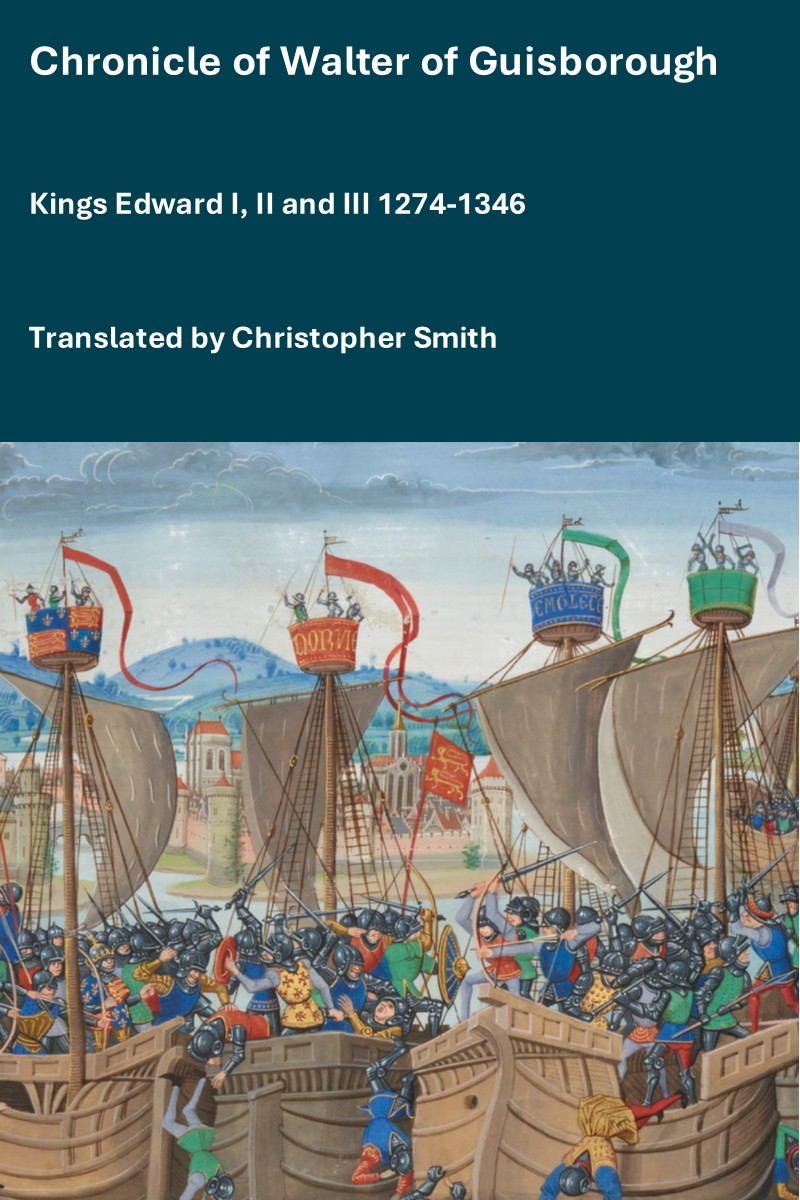 Chronicle of Walter of Guisborough. [November 1306] The wife [Christina Bruce [aged 33]] of Christopher , the king placed in the monastery of Sixhills [Map] in Lindsey, and the daughter [Marjorie Bruce [aged 10]] of the new king he placed in the monastery of Watton [Map]. The lord king gave to Lord Edmund de Mauley [aged 25] the manor of Seaton in Whitby Strand, which had belonged to Christopher, and other lands he had held in Northumberland the king gave to Lord William le Latimer [aged 30]. The lands of the new king the lord king divided among his magnates in this way: he gave the Valley of Annandale to the Earl of Hereford, who had married the daughter of the king of England; Ayr and Ayrshire he gave to Lord Robert de Clifford (saving, however, the right of the church of Durham); Tothenham, Tothenhamschire, and the manor of Wrothell in the southern parts he gave to other magnates. The earldom of Carrick, which the new king had held by maternal inheritance, the king of England gave to Lord Henry de Percy; and the earldom of Atholl he gave to the Earl of Gloucester [aged 36], who had married the king's daughter after the death of Gilbert de Clare, the former earl of Gloucester. Thus he bore the title of earl by right of his wife, not by inheritance, for he had been a mere and unremarkable knight when he married her, by the name of Ralph Monthermer.
Uxorem vero Christofori posuit rex in monasterio de Thyxsel in Lindesay, et filiam novi regis posuit in monasterio de Watton. Deditque dominus rex domino Eadmundo de Malo-lacu manerium de Seton in Wytebystrand, quod erat Christofori, et alias suas terras quas habuit in Northumberland dedit rex domino Willelmo le Latymer. Terras vero novi regis dispersit dominus rex inter magnates suos hoc modo; dedit enim Vallem Anandiæ comiti de Herford, qui filiam regis Angliæ duxerat in uxorem; Hert vero et Herternes dedit domino Roberto de Clifforde, salvo tamen jure ecclesiæ Dunolmensis; Thotenham et Thotenhamschyre et manerium de Wrothell in partibus australibus dedit aliis magnatibus suis; comitatum vero de Karrik, quem ex hæreditate materna habuerat ipse novus rex, dedit rex Angliæ domino Henrico de Percy; comitatum autem de Asechel dedit rex comiti Gloucestriæ, qui filiam regis post mortem Gilberti de Clare quondam comitis Gloucestriæ, duxerat; sicque nomen comitis habebat ab uxore, non ab hæreditate, fuerat enim miles simplex et segnis quando eam duxerat, nomine Radulphus Monhermer.
In 1337 Margaret Despencer [aged 18] died at Watton Priory [Map].
Bede. The same bishop John by his prayers healed a sick maiden.
The same Berthun told another miracle concerning the said bishop. When the most reverend Wilfrid, after a long banishment, was admitted to the bishopric of the church of Hagustald [Map], and the aforesaid John, upon the death of Bosa, a man of great sanctity and humility, was, in his place, appointed bishop of York, he himself came, once upon a time, to the monastery [Map] of nuns, at the place called Wetadun, where the Abbess Heriburg then presided. "When we were come thither," said he, "and had been received with great and universal joy, the abbess told us, that one of the nuns, who was her own daughter after the flesh, laboured under a grievous sickness, for she had been lately let blood in the arm, and whilst she was under treatment, was seized with an attack of sudden pain, which speedily increased, while the wounded arm became worse, and so much swollen, that it could scarce be compassed with both hands; and she lay in bed like to die through excess of pain. Wherefore the abbess entreated the bishop that he would vouchsafe to go in and give her his blessing; for she believed that she would soon be better if he blessed her or laid his hands upon her. He asked when the maiden had been let blood, and being told that it was on the fourth day of the moon, said, 'You did very indiscreetly and unskilfully to let blood on the fourth day of the moon; for I remember that Archbishop Theodore, of blessed memory, said, that blood-letting at that time was very dangerous, when the light of the moon is waxing and the tide of the ocean is rising. And what can I do for the maiden if she is like to die? ".
But the abbess still earnestly entreated for her daughter, whom she dearly loved, and designed to make abbess in her stead, and at last prevailed with him to go in and visit the sick maiden. Wherefore he went in, taking me with him to the maid, who lay, as I said, in sore anguish, and her arm swelling so greatly that it could not be bent at all at the elbow; and he stood and said a prayer over her, and having given his blessing, went out. Afterwards, as we were sitting at table, at the usual hour, some one came in and called me out, saying, 'Quoenburg' (that was the maid's name) 'desires that you should immediately go back to her.' This I did, and entering the chamber, I found her of more cheerful countenance, and like one in good health. And while I was sitting beside her, she said, 'Shall we call for something to drink?'-'Yes,' said I, 'and right glad am I, if you can.' When the cup was brought, and we had both drunk, she said, 'As soon as the bishop had said the prayer for me and given me his blessing and had gone out, I immediately began to mend; and though I have not yet recovered my former strength, yet all the pain is quite gone both from my arm, where it was most burning, and from all my body, as if the bishop had carried it away with him; notwithstanding the swelling of the arm still seems to remain.' But when we departed thence, the cure of the pain in her limbs was followed by the assuaging of the grievous swelling; and the maiden being thus delivered from pains and death, returned praise to our Lord and Saviour, in company with His other servants who were there.
Around 1275 Archbishop William Melton was born to Nicholas Melton [aged 25] in Melton Welton.
On 3rd December 1614 brothers John Sheffield, Edmund Sheffield [aged 25] and Philip Sheffield [aged 21] were drowned whilst attempting to cross the flooded River Ouse at the Whitgift Ferry, East Yorkshire [Map].
The River Ouse is formed by the confluence of the River Ure and River Swale around 900m south-west of Myton-on-Swale [Map]; there are other theories as to where it starts. Thereafter it flows broadly south-east through York [Map], past Cawood, North Yorkshire [Map], Selby, North Yorkshire [Map], Goole [Map] and the location of the former Whitgift Ferry, East Yorkshire [Map] before joining the Humber Estuary at Trent Falls [Map].
Ermine Street 2e Brough to York. Having crossed the Humber Estuary to Petuaria [Map] Ermine Street continues north past South Newbald [Map], Shiptonthorpe [Map], Barmby [Map]. Ermine Street then follows either, or both of two routes. The first, Kexby Bridge [Map] to Eboracum [Map]. The second route suggests Ermine Street may have continued to Durham via Wilberfoss [Map], Stamford Bridge [Map] after whic it turned left for Eboracum [Map].
Wressle Castle is also in Castles in East Yorkshire.
In 1513 William Babthorpe [aged 24] was appointed Constable of Wressle Castle.