

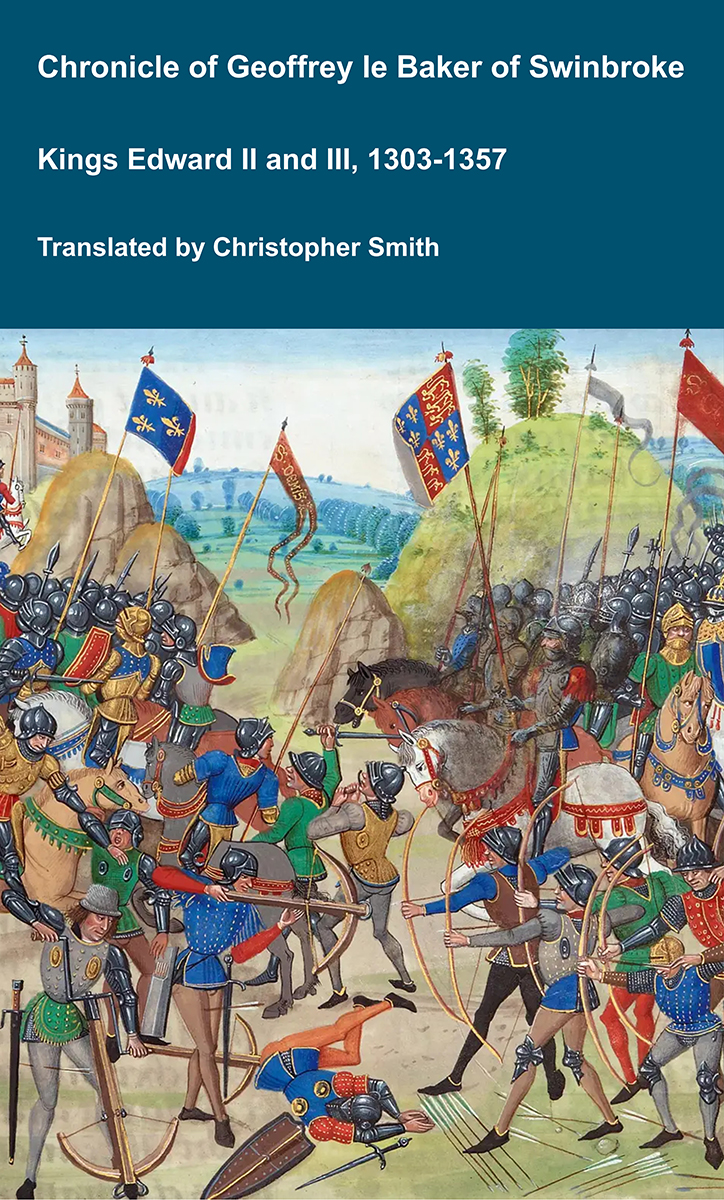
Chronicle of Geoffrey le Baker of Swinbroke
Baker was a secular clerk from Swinbroke, now Swinbrook, an Oxfordshire village two miles east of Burford. His Chronicle describes the events of the period 1303-1356: Gaveston, Bannockburn, Boroughbridge, the murder of King Edward II, the Scottish Wars, Sluys, Crécy, the Black Death, Winchelsea and Poitiers. To quote Herbert Bruce 'it possesses a vigorous and characteristic style, and its value for particular events between 1303 and 1356 has been recognised by its editor and by subsequent writers'. The book provides remarkable detail about the events it describes. Baker's text has been augmented with hundreds of notes, including extracts from other contemporary chronicles, such as the Annales Londonienses, Annales Paulini, Murimuth, Lanercost, Avesbury, Guisborough and Froissart to enrich the reader's understanding. The translation takes as its source the 'Chronicon Galfridi le Baker de Swynebroke' published in 1889, edited by Edward Maunde Thompson.
Available at Amazon in eBook and Paperback format.
Hertfordshire is in Home Counties.
1290 Death of Queen Eleanor of Castile
1472 Arrest of Archbishop George Neville
Around 1500 William Carey was born to Thomas Carey [aged 45] and Margaret Spencer [aged 28] at Aldenham, Hertfordshire. He a great x 4 grandson of King Edward III of England. He married 4th February 1520 his fifth cousin Mary Boleyn, daughter of Thomas Boleyn 1st Earl Wiltshire and Ormonde and Elizabeth Howard Countess of Wiltshire and Ormonde, and had issue.
On 13th June 1631 Philip Carey [aged 51] died in Aldenham, Hertfordshire.
Before September 1633 Henry Carey 1st Viscount Falkland [aged 58] broke his leg which subsequently had to be amputated; he died as a consequence. He was buried on 25th September 1633 at Aldenham, Hertfordshire. His son Lucius [aged 23] succeeded 2nd Viscount Falkland.


Archaeologia Volume 29 Section XIII. The King [aged 50] remained at Westminster for a week after the entombment. He then removed to Ashridge [Map], a house of Bons Hommes, lately founded by his near relative Edmund Earl of Cornwall [aged 40], in honour of the precious blood of Jesus, a small quantity of which was there preserved as a most precious relic, which had been given to his father the King of the Romans when abroad. We first find the King at Ashridge on the eve of Christmas, and he continued there till the 26th of January, and possibly for a few days longer. He then visited the inmates of two other religious houses, Evesham or Eynsham and Ambresbury. At the latter of these houses he would find his mother Eleanor of Provence [aged 66], a very aged princess, who died in the month of June following; and also one of his daughters, Mary [aged 10], who was professed in that house at a very early period of her life. He left Ambresbury on the 20th, and was at Andover, Uffington, and Burford, to the end of the month. Early in March he was at Tedington and Ichinton. He then advanced northward to attend to the affairs on the Scottish border, reaching York on the 3rd of April, Newcastle on the 20th, and on May the 5th we find him at Norham [Map]. From that time he devoted himself with all the vigour of his mind to affairs of state; but there is reason to believe what the old chroniclers relate of him, that he never ceased to lament the loss of his amiable and affectionate consort. It was not till nine years after that he took his second wife, Margaret of France [aged 10].
The solemnities of a most magnificent funeral were far from being the only honours which he paid to the memory of Queen Eleanor.
Archaeologia Volume 29 Section XIII. On the 4th of January, being then at Ashridge [Map], the King addressed a very earnest, pious, and pathetic letter to the Abbot of Clugni, announcing the event, and entreating the prayers of himself and his order:— "Deus omnium Conditor et Creator, qui celestis profunditate consilii ordinat, vocat, disponit et revocat subjectas suze providentie creaturas, serenissimam consortem nostram Alianoram quondam Reginam Angliz, ex regali ortam progenie, quarto kalend, Decembris, de presenti seeculo, quod vobis non sine multa mentis amaritudine nunciamus, sicut sibi placuit, evocavit, [God, the Founder and Creator of all things, who orders the depth of the heavenly plan, he calls, arranges and recalls the subjects of?? providential creatures, our most serene consort Alianora, formerly Queen of England, sprung from royal descent, fourth kalend, December, of the present century, which we do not tell you without much bitterness of mind, as it pleased him, he summoned] &c. It is probable that similar letters were addressed to the heads of other religious houses, and to the Bishops.
On 25th September 1300 Edmund "Almain" 2nd Earl Cornwall [aged 50] died. Earl Cornwall extinct. He was buried, heart and flesh, at Ashridge, Hertfordshire [Map]. His bones were interred at Hailes Abbey [Map] during a service attended by King Edward I of England [aged 61].
Ashridge Priory is also in Priories in England.
Annals of Dunstable. In the same year Edmund, earl of Cornwall, the king's cousin, at his manor of Ashridge, which he had nobly built, established a suitable dwelling1 for the reception of religious, and placed certain chaplains there, giving each of them a uniform habit; ordaining that each of them and their successors there should receive annually six marks from his Exchequer for their expenses. But there was little hope that this foundation could long endure, because of its weak beginning, and because some of the chaplains from the first behaved less than well.
Eodem anno Edmundus, comes Cornubiæ, domini regis consobrinus, in manerio suo apud Esserugge, quod ipse nobiliter construxerat, religiosorum receptui competentem condidit mansionem, et in ipso quosdam posuit capellanos, dans singulis habitum uniformem; statuens quod quilibet eorum et eorum ibidem successorum perciperet annuatim sex marcas de suo scaccario pro expensis. Sed non fuit spes, quod posset illa ordinatio diu stare, propter debile fundamentum; et eo quod quidam ex ipsis capellanis se habebant in principio minus bene.
Note 1. The building of Ashridge Priory commenced in 1283 and completed in 1285. The first Rector was Richard of Watford, who was installed with twenty brethren, of whom thirteen were priests according to Charter, all of the Order of Bonhommes whose rule was founded of that of St. Augustine.
Annals of Dunstable. In the same year the church of Ashridge [Priory] was dedicated by Oliver1, bishop of Lincoln, at the request of the earl of Cornwall, who had founded it.
Eodem anno dedicata est ecclesia de Esserugge per O[liverum] Lincolniensem episcopum, ad instantiam comitis Cornubiæ, qui eam fundavit.
Note 1. Bishop Oliver Sutton.
The River Cam rises at Ashwell, Hertfordshire [Map] from where it flows past Guilden Morden [Map], Wendy [Map], Barrington [Map] and Harston [Map] after which it is joined by the River Granta aka Cam.
Thereafter it flows past Grantchester [Map], through Cambridge [Map], past Fen Ditton [Map], Horningsea [Map], Clayhithe [Map], Upware [Map] after which it joins the River Great Ouse.
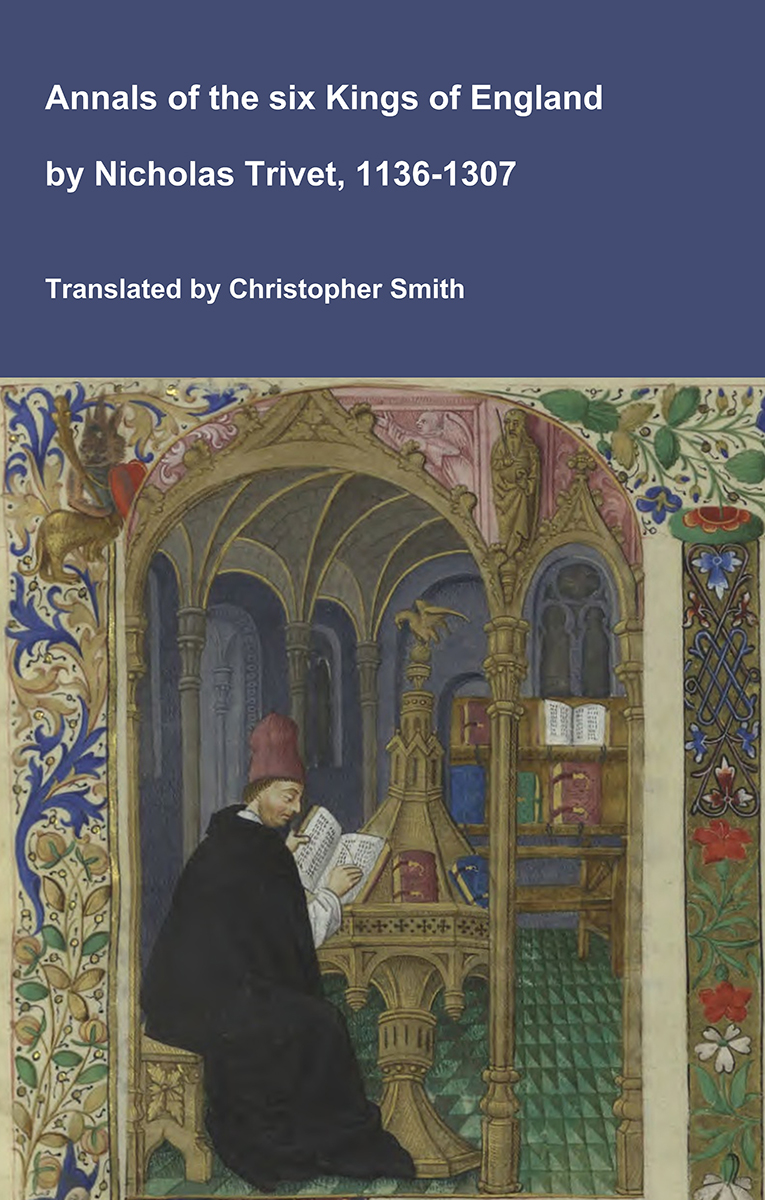
Annals of the six Kings of England by Nicholas Trivet
Translation of the Annals of the Six Kings of England by that traces the rise and rule of the Angevin aka Plantagenet dynasty from the mid-12th to early 14th century. Written by the Dominican scholar Nicholas Trivet, the work offers a vivid account of English history from the reign of King Stephen through to the death of King Edward I, blending political narrative with moral reflection. Covering the reigns of six monarchs—from Stephen to Edward I—the chronicle explores royal authority, rebellion, war, and the shifting balance between crown, church, and nobility. Trivet provides detailed insight into defining moments such as baronial conflicts, Anglo-French rivalry, and the consolidation of royal power under Edward I, whose reign he describes with particular immediacy. The Annals combines careful year-by-year reporting with thoughtful interpretation, presenting history not merely as a sequence of events but as a moral and political lesson. Ideal for readers interested in medieval history, kingship, and the origins of the English state, this chronicle remains a valuable and accessible window into the turbulent world of the Plantagenet kings.
Available at Amazon in eBook and Paperback format.
Around 1496 Edward Capell was born to Giles Capell of Rayne Hall [aged 16] at Aspenden, Hertfordshire and Isabel Newton [aged 11].
In 1760 Mary Grave of Baldock purchased The Manor House, Baldock and expanded the grounds by buying land through to Clothall Road.
On 19th June 1858 Major Sutherland George Gordon Orr [aged 42] died. The Newspapers reported On Saturday, the 19th inst., at midnight, at the residence of his brother-in-law, Greenhill, near Barnet, Herts, Major Sutherland G. G. Orr, late commanding the 3rd Regiment of Hyderabad Cavalry, aged 42. This gallant and distinguished officer succumbed, after several months of severe suffering, to the results of anxiety, fatigue, and exposure of the last Mhow and Central India Campaign.
On 4th May 1634 Catherine Ferrers was born to Knighton Ferrers [aged 27] in Bayford, Hertfordshire some two-weeks after he had died. Her grandfather died soon after leaving Catherine, less than one years old, as one of the greatest landholders in Herfordshire. She married 1648 Thomas Fanshawe 2nd Viscount Fanshawe, son of Thomas Fanshawe 1st Viscount Fanshawe and Elizabeth Cockayne Viscountess Fanshawe.
On 28th January 1571 Anne Bourchier 7th Baroness Bourchier [aged 54] died from a fall from a horse at Benington, Hertfordshire. Her first cousin twice removed Walter [aged 29] succeeded 8th Baron Bourchier. Lettice Knollys Countess Essex and Leicester [aged 27] by marriage Baroness Bourchier.


Braughing, Hertfordshire [Map] was a small Roman Town at the junction of Ermine Street and Stane Street to Colchester. There was a planned street grid where thatched timber buildings, which lasted until about AD 60, were constructed. Not long afterwards substantial masonry structures were also constructed, including an L-shaped building with bath suite which was still in use in the 4th century. Coins of Tasciovanus (c. 20BC - AD10) are known from the site identifying an associated with the Catuvellauni. The final Roman coin evidence from the site is associated with Arcadius (AD383 - 408).
Stane Street to Colchester is a Roman Road between Braughing, Hertfordshire [Map] and Colchester, Essex [Map]. It travelled through Little Hadham, Hertfordshire [Map], Bishop's Stortford, Hertfordshire [Map], Takeley, Essex [Map], Great Dunmow, Essex [Map], Braintree, Essex [Map], Coggeshall, Essex [Map] and Marks Tey, Essex [Map].
Ermine Street 2b Braughing to Durobrivae. From Braughing, Hertfordshire [Map] Ermine Street continues north through Buntingford, Hertfordshire [Map]. 1.6km north of Buntingford, Hertfordshire [Map] the road make a change of alignment before heading to Royston, Hertfordshire [Map] where it again changes aligment before passing through Caxton Gibbet [Map], Durovigutum [Map], Huntingdon [Map], Great Stukeley [Map], Alconbury [Map] and Sawtry [Map], Chesterton [Map] before reaching Durobrivae [Map].
Ermine Street 2a London to Braughing leaves the city of London at Bishopsgate Gate [Map] and thereafter travelled north through Shoreditch [Map], Stoke Newington [Map], Stamford Hill [Map], Tottenham [Map], Edmonton [Map], Waltham Cross, Hertfordshire [Map], Broxbourne, Hertfordshire [Map], Puckeridge, Hertfordshire [Map] to Braughing, Hertfordshire [Map].
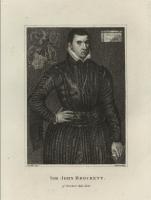
On 2nd October 1598 John Brocket [aged 58] died. He was buried at St Etheldreda's Church, Hatfield [Map]. His daughter Mary Brocket and her husband Thomas Reade [aged 23] inherited Brocket Hall, Hertfordshire [Map].
Mary Brocket: she was born to John Brocket and Helen Lytton. In March 1598 Thomas Reade and she were married.
Jean de Waurin's Chronicle of England Volume 6 Books 3-6: The Wars of the Roses
Jean de Waurin was a French Chronicler, from the Artois region, who was born around 1400, and died around 1474. Waurin’s Chronicle of England, Volume 6, covering the period 1450 to 1471, from which we have selected and translated Chapters relating to the Wars of the Roses, provides a vivid, original, contemporary description of key events some of which he witnessed first-hand, some of which he was told by the key people involved with whom Waurin had a personal relationship.
Available at Amazon in eBook and Paperback format.
In 1746 Matthew Lamb 1st Baronet [aged 41] purchased Brocket Hall, Hertfordshire [Map] commissioned a new hall to the designs of the architect Sir James Paine in around 1760.
On 8th November 1787 John Eliot 1st Baronet [aged 51] died at Brocket Hall, Hertfordshire [Map], the seat of his friend Penistone Lamb 1st Viscount Melbourne [aged 42]. He was buried at St Etheldreda's Church, Hatfield [Map]. Baronet Eliot of Pebbles extinct.

Watling Street 1d Marble Arch to St Albans. From Marble Arch [Map] Watling Street continues north-west along the Edgeware Road, Maida Vale [Map], Cricklewood [Map], Sulloniacis [Map], Radlett, Hertfordshire [Map], Park Street, Hertfordshire [Map] to Verulamium, Hertfordshire [Map] aka St Albans.
Ermine Street 2a London to Braughing leaves the city of London at Bishopsgate Gate [Map] and thereafter travelled north through Shoreditch [Map], Stoke Newington [Map], Stamford Hill [Map], Tottenham [Map], Edmonton [Map], Waltham Cross, Hertfordshire [Map], Broxbourne, Hertfordshire [Map], Puckeridge, Hertfordshire [Map] to Braughing, Hertfordshire [Map].
On 25th September 1473 Elizabeth Cheney [aged 51] died and was buried in Broxbourne, Hertfordshire [Map].
On 4th December 1529 William Saye [aged 77] died at Broxbourne, Hertfordshire [Map].
The River Lea rises near Leagrave, Bedfordshire [Map] after which it travels through Wheathampstead, Hertfordshire [Map], Hertford, Hertfordshire [Map], Ware, Hertfordshire [Map], Broxbourne, Hertfordshire [Map], Waltham Cross, Hertfordshire [Map], Tottenham [Map] before joining the River Thames at Leamouth, Essex [Map].
Around 1430 John Saye was born to John Saye [aged 50] at Sawbridge, Broxbourne. He married (1) before 1445 Agnes Wenlock (2) after 1445 his fourth cousin Elizabeth Cheney and had issue (3) before 12th April 1478 Agnes Danvers Baroness Wenlock.
On 12th April 1478 John Saye [aged 48] died at Sawbridge, Broxbourne.
William of Worcester's Chronicle of England
William of Worcester, born around 1415, and died around 1482 was secretary to John Fastolf, the renowned soldier of the Hundred Years War, during which time he collected documents, letters, and wrote a record of events. Following their return to England in 1440 William was witness to major events. Twice in his chronicle he uses the first person: 1. when writing about the murder of Thomas, 7th Baron Scales, in 1460, he writes '… and I saw him lying naked in the cemetery near the porch of the church of St. Mary Overie in Southwark …' and 2. describing King Edward IV's entry into London in 1461 he writes '… proclaimed that all the people themselves were to recognize and acknowledge Edward as king. I was present and heard this, and immediately went down with them into the city'. William’s Chronicle is rich in detail. It is the source of much information about the Wars of the Roses, including the term 'Diabolical Marriage' to describe the marriage of Queen Elizabeth Woodville’s brother John’s marriage to Katherine, Dowager Duchess of Norfolk, he aged twenty, she sixty-five or more, and the story about a paper crown being placed in mockery on the severed head of Richard, 3rd Duke of York.
Available at Amazon in eBook and Paperback format.
On 22nd October 1560 Thomas Becon [aged 48] was admitted to the rectory of Buckland, Hertfordshire.
Ermine Street 2b Braughing to Durobrivae. From Braughing, Hertfordshire [Map] Ermine Street continues north through Buntingford, Hertfordshire [Map]. 1.6km north of Buntingford, Hertfordshire [Map] the road make a change of alignment before heading to Royston, Hertfordshire [Map] where it again changes aligment before passing through Caxton Gibbet [Map], Durovigutum [Map], Huntingdon [Map], Great Stukeley [Map], Alconbury [Map] and Sawtry [Map], Chesterton [Map] before reaching Durobrivae [Map].
Samuel Pepys' Diary. 14th September 1663. Up betimes, and my wife's mind and mine holding for her going, so she to get her ready, and I abroad to do the like for myself, and so home, and after setting every thing at my office and at home in order, by coach to Bishop's Gate [Map], it being a very promising fair day. There at the Dolphin we met my uncle Thomas and his son-in-law, which seems a very sober man, and Mr. Moore. So Mr. Moore and my wife set out before, and my uncle and I staid for his son Thomas, who, by a sudden resolution, is preparing to go with us, which makes me fear something of mischief which they design to do us. He staying a great while, the old man and I before, and about eight miles off, his son comes after us, and about six miles further we overtake Mr. Moore and my wife, which makes me mightily consider what a great deal of ground is lost in a little time, when it is to be got up again by another, that is to go his own ground and the other's too; and so after a little bayte (I paying all the reckonings the whole journey) at Ware, Hertfordshire [Map], to Buntingford, Hertfordshire [Map], where my wife, by drinking some cold beer, being hot herself, presently after 'lighting, begins to be sick, and became so pale, and I alone with her in a great chamber there, that I thought she would have died, and so in great horror, and having a great tryall of my true love and passion for her, called the mayds and mistresse of the house, and so with some strong water, and after a little vomit, she came to be pretty well again; and so to bed, and I having put her to bed with great content, I called in my company, and supped in the chamber by her, and being very merry in talk, supped and then parted, and I to bed and lay very well. This day my cozen Thomas dropped his hanger, and it was lost.
Around 1750 James Cecil 6th Earl of Salisbury [aged 36] separated from his wife Elizabeth Keet Countess of Salisbury [aged 29] and lived with Mary Grave of Baldock for the remaining thirty years of his life at his house Quickswood, Clothall. Some unknown person gave him the eponym "The Wicked Earl" in consequence.
Around 1790 James Cecil 1st Marquess Salisbury [aged 41] commissioned the demolition of Quickswood, Clothall following th death of Mary Grave of Baldock.
In 1479 Elizabeth Saye Baroness Mountjoy was born to William Saye [aged 27] and Elizabeth Fray [aged 38] at Essendon, Hertfordshire. She married 1497 William Blount 4th Baron Mountjoy, son of John Blount 3rd Baron Mountjoy and Lora Berkeley Countess Ormonde, and had issue.
On 21st July 1506 Elizabeth Saye Baroness Mountjoy [aged 27] died at Essendon, Hertfordshire.
Watling Street 1e St Albans to Towcester. From Verulamium, Hertfordshire [Map] aka St Albans Watling Street continues north-west through Redbourn, Hertfordshire [Map], Friars Wash, Hertfordshire [Map], Durocobrivis [Map], Hockcliffe, Bedfordshire [Map], Little Brick Hill, Buckinghamshire [Map], Kelly's Kitchen Roundabout [Map], Magiovinium [Map] aka Dropshort, Stony Stratford, Buckinghamshire [Map] and Lactodorum [Map].

From 1563 Nicholas Bacon [aged 52] had Gorhambury House, Hertfordshire [Map] built in the Prodigy House style.
On 8th December 1822 Francis Sylvester Grimston was born to James Walter Grimston 1st Earl Verulam [aged 47] and Charlotte Jenkinson Countess Verulam at Gorhambury House, Hertfordshire [Map].
The History of William Marshal was commissioned by his son shortly after William’s death in 1219 to celebrate the Marshal’s remarkable life; it is an authentic, contemporary voice. The manuscript was discovered in 1861 by French historian Paul Meyer. Meyer published the manuscript in its original Anglo-French in 1891 in two books. This book is a line by line translation of the first of Meyer’s books; lines 1-10152. Book 1 of the History begins in 1139 and ends in 1194. It describes the events of the Anarchy, the role of William’s father John, John’s marriages, William’s childhood, his role as a hostage at the siege of Newbury, his injury and imprisonment in Poitou where he met Eleanor of Aquitaine and his life as a knight errant. It continues with the accusation against him of an improper relationship with Margaret, wife of Henry the Young King, his exile, and return, the death of Henry the Young King, the rebellion of Richard, the future King Richard I, war with France, the death of King Henry II, and the capture of King Richard, and the rebellion of John, the future King John. It ends with the release of King Richard and the death of John Marshal.
Available at Amazon in eBook and Paperback format.
Greville Memoirs. 5th September 1831. At Gorhambury [Map] since Saturday; the Harrowbys, Bathursts, Frankland Lewes's, Lady Jersey, Mahon, Lushington, Wortleys; rather agreeable and lively; all anti-Reformers, so no quarrelling about that, though Lord Harrowby is ready to squabble with anybody either way, but furiously against the Bill.
Greville Memoirs. 7th January 1832. Gorhambury [Map]. Came here to-day. Berkeley Paget and Lushington; nobody else. Had a conversation with Lady C. before I came away; between Palmerston, Frederick Lamb [aged 49], and Melbourne she knows everything, and is a furious anti-Reformer. The upshot of the matter is this: the question about the Peers is still under discussion; Lord Grey and the ultra party want to make a dozen, now, the others want only to yield five or six. Lord Grey wrote to Palmerston saying the King had received his proposition (about the Peers) very well, but desired to have his reasons in writing, and to-day at twelve there was to be another Cabinet on the subject, in order probably that the 'reasons' might go down by the post. The moderate party in the Cabinet consists of Lansdowne, Richmond, Palmerston, Melbourne, and Stanley. Palmerston and Melbourne, particularly the latter, are now heartily ashamed of the part they have taken about Reform. They detest and abhor the whole thing, and they find themselves unable to cope with the violent party, and consequently implicated in a continued series of measures which they disapprove; and they do not know what to do, whether to stay in and fight this unequal battle or resign. I told her that nothing could justify their conduct, and their excuses were good for nothing; but that there was no use in resigning now. They might still do some good in the Cabinet; they could do none out of it. In fact, Durham and the most violent members of the Cabinet would gladly drive Palmerston and Melbourne to resign if they could keep Stanley, who is alone of importance of that squad; but he is of such weight, from his position in the House of Commons, that if he can be prevailed upon to be staunch, and to hold out with the moderates against the ultras, the former will probably prevail. Durham wants to be Minister for Foreign Affairs, and would plague Lord Grey till he gave him the seals, unless his other colleagues put a veto upon the appointment. But the anxiety of the Reformers to make Peers has not reference to the Reform Bill alone; they undoubtedly look further, and knowing their own weakness in the House of Lords, they want to secure a permanent force, which may make them stronger than their antagonists in that House. Otherwise they would not be so averse to all questions of conciliation, express their disbelief in conversions, and trumpet forth their conviction that any individual of the late majority will vote just the same way again. The earnest desire of the moderate party in the Cabinet is that those who will vote for the second reading shall make haste to declare their intention, and I have written to Lady Harrowby [aged 59] to endeavour to get Lord Harrowby to take some such step. I had already written to De Ros, urging him to speak to Wharncliffe [aged 55], and get him to take an opportunity of giving the King to understand that the necessity for a creation of Peers is by no means so urgent as his Ministers would have him believe.
Greville Memoirs. 13th January 1832. Panshanger [Map]. Returned here yesterday; found Melbourne, Lamb, the Lievens, the Haddingtons, Luttrell, the Ashleys, John Ashley, and Irby. While I was at Gorhambury [Map] I determined to write to Wharncliffe [aged 55] and urge him to speak to the King, and accordingly I did so. I received a letter from him saying that De Ros had already spoken to him, that he had had a conversation with Sir Herbert Taylor, which he had desired him to repeat to the King and to Lord Grey, that he had intended to leave the matter there, but in consequence of my letter he should ask for an audience. This morning I have heard again from him. He saw the King, and was with him an hour; put his Majesty in possession of his sentiments, and told him there would be no necessity for creating Peers if the Government would be conciliatory and moderate in the Committee of the House of Commons; he promised to tell me the particulars of this interview when we meet.
Around 1580 Philip Carey was born to Edward Carey [aged 40] and Catherine Knyvet Baroness Geneville Beaudasert [aged 37] at Great Gaddeston, Hertfordshire.
On 6th October 1871 Charlotte Elizabeth Myddleton-Biddulph [aged 63] died. She was buried at St Nicholas Church, Great Munden.
Reverend Charles William Maude was appointed Rector of St Nicholas Church, Great Munden.
On 29th November 1895 Caroline Fountaine [aged 77] died. She was buried at St Nicholas Church, Harpenden.
On 31st December 1900 John Bennet Lawes 1st Baronet [aged 86] died. He was buried at St Nicholas Church, Harpenden. His son Charles [aged 57] succeeded 2nd Baronet Lawes of Rothamsted in Hertfordshire. Marie Amelie Rose Fountaine Lady Lawes [aged 51] by marriage Lady Lawes of Rothamsted in Hertfordshire.

In 1825 Bishop Robert Eden 3rd Baron Auckland [aged 25] was appointed Rector of St Mary's Church, Hertingfordbury.
On 23rd September 1900 Elizabeth Bowes-Lyon Queen Consort England was christened at All Saints Church, Hitchin. Her godmothers included Maud Bowes-Lyon [aged 30] and Mary Venetia Cavendish-Bentinck [aged 39].



On 18th September 1380 Thomas Hoo [aged 61] died at Offley, Hitchin.
Before 21st March 1683 the Rye House Plot was an attempt to assassinate King Charles II of England Scotland and Ireland [aged 52] and his brother King James II of England Scotland and Ireland [aged 49] as they passed Rye House, Hoddesdon when were returning from the races at Newmarket, Suffolk on 1st April 1683. In the event a fire at Newmarket, Suffolk on the 22nd March 1683 the races were cancelled.


In 1677 Bernard Hale was born to William Hale at King's Walden, Hertfordshire.
Chronicle of Walter of Guisborough
A canon regular of the Augustinian Guisborough Priory, Yorkshire, formerly known as The Chronicle of Walter of Hemingburgh, describes the period from 1066 to 1346. Before 1274 the Chronicle is based on other works. Thereafter, the Chronicle is original, and a remarkable source for the events of the time. This book provides a translation of the Chronicle from that date. The Latin source for our translation is the 1849 work edited by Hans Claude Hamilton. Hamilton, in his preface, says: 'In the present work we behold perhaps one of the finest samples of our early chronicles, both as regards the value of the events recorded, and the correctness with which they are detailed; Nor will the pleasing style of composition be lightly passed over by those capable of seeing reflected from it the tokens of a vigorous and cultivated mind, and a favourable specimen of the learning and taste of the age in which it was framed.'
Available at Amazon in eBook and Paperback format.
In April 1687 Thomas Egerton [aged 7] burned to death in the fire which destroyed Bridgewater House. He was buried at Little Gaddesden, Hertfordshire.
In April 1687 Charles Egerton [aged 11] burned to death in the fire which destroyed Bridgewater House at Bridgwater House Barbican. He was buried at Little Gaddesden, Hertfordshire.
On 20th October 1758 Rebecca Herbert Baroness Abergavenny died at Little Gaddesden, Hertfordshire.
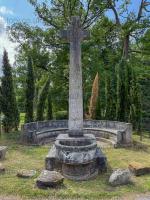
Lady Marian Alford Memorial, Little Gaddesden [Map]. Lady Marian, mother of the 2nd and 3rd Earls Brownlow, died in 1888 and a collection was taken for a memorial. The donors ranged from Victorian nobility to her estate workers. The cross and seat at the entrance to Ashridge Park were erected in her memory and were unveiled three years later in 1891 on her birthday, Sunday 21st June. Inscription on larger trough 'Whosoever drinketh of the water that I shall give him shall never thirst: but the water that I shall give him shall be in him a well of water springing up into Everlasting Life'.


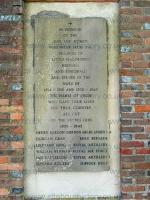
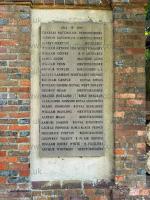
Little Gaddesden War Memorial [Map]. On 24th April 1921, the Little Gaddesden War Memorial [Map] was unveiled by Adelbert, 5th Baron Brownlow [aged 53] during a service conducted by The Reverend Thomas Sidney Goudge (Rector) and accompanied by the Berkhamsted Town Band "in the presence of practically the whole of the inhabitants of the villages Little Gaddesden, Hudnall and Ringshall, whose heroes the memorial serves to commemorate", as the Hertfordshire, Hemel Hempstead Gazette and West Herts Advertiser put it.
Adelbert Salusbury Cockayne-Cust 5th Baron Brownlow: On 14th September 1867 he was born to Henry Cockayne-Cust and Sara Jane Cookson. His mother Sara Jane Cookson died in childbirth. Before 27th April 1899 Adelbert Salusbury Cockayne-Cust 5th Baron Brownlow and Maud Buckle Baroness Brownlow were married at St Helier, Jersey [Map]. On 17th March 1921 Adelbert Wellington Brownlow Cust 3rd Earl Brownlow died. Earl Brownlow, Viscount Alford extinct. His second cousin Adelbert succeeded 5th Baron Brownlow of Belton in Lincolnshire, 8th Baronet Cust of Stamford in Lincolnshire, and inherited Belton House [Map]. Maud Buckle Baroness Brownlow by marriage Baroness Brownlow of Belton in Lincolnshire. In 1927 Adelbert Salusbury Cockayne-Cust 5th Baron Brownlow died. His son Peregrine succeeded 6th Baron Brownlow of Belton in Lincolnshire, 9th Baronet Cust of Stamford in Lincolnshire, and inherited Belton House [Map].

Stane Street to Colchester is a Roman Road between Braughing, Hertfordshire [Map] and Colchester, Essex [Map]. It travelled through Little Hadham, Hertfordshire [Map], Bishop's Stortford, Hertfordshire [Map], Takeley, Essex [Map], Great Dunmow, Essex [Map], Braintree, Essex [Map], Coggeshall, Essex [Map] and Marks Tey, Essex [Map].
On 29th May 1556 Giles Capell of Rayne Hall [aged 76] died at Little Hadham, Hertfordshire [Map].
In 1557 Arthur Capell was born to Henry Capell [aged 31] and Catherine Manners [aged 17] at Little Hadham, Hertfordshire [Map]. He married his fifth cousin Margaret Grey and had issue.
On 14th August 1604 Margaret Grey [aged 45] died at Little Hadham, Hertfordshire [Map].

On or before 16th September 1630 Mary Capell Duchess Beaufort was born to Arthur Capell 1st Baron Capell Hadham [aged 22] and Elizabeth Morrison Baroness Capell Hadham [aged 19] at Little Hadham, Hertfordshire [Map]. She married (1) 28th June 1648 her fourth cousin Henry Seymour, son of William Seymour 2nd Duke of Somerset and Frances Devereux Duchess of Somerset, and had issue (2) before 25th December 1660 her fourth cousin Henry Somerset 1st Duke Beaufort, son of Edward Somerset 2nd Marquess Worcester and Elizabeth Dormer, and had issue.
Chronicle of Walter of Guisborough
A canon regular of the Augustinian Guisborough Priory, Yorkshire, formerly known as The Chronicle of Walter of Hemingburgh, describes the period from 1066 to 1346. Before 1274 the Chronicle is based on other works. Thereafter, the Chronicle is original, and a remarkable source for the events of the time. This book provides a translation of the Chronicle from that date. The Latin source for our translation is the 1849 work edited by Hans Claude Hamilton. Hamilton, in his preface, says: 'In the present work we behold perhaps one of the finest samples of our early chronicles, both as regards the value of the events recorded, and the correctness with which they are detailed; Nor will the pleasing style of composition be lightly passed over by those capable of seeing reflected from it the tokens of a vigorous and cultivated mind, and a favourable specimen of the learning and taste of the age in which it was framed.'
Available at Amazon in eBook and Paperback format.
On 11th April 1632 Arthur Capell [aged 75] died at Little Hadham, Hertfordshire [Map].

Before 6th March 1638 Henry Capell 1st Baron Capell Tewkesbury was born to Arthur Capell 1st Baron Capell Hadham [aged 30] and Elizabeth Morrison Baroness Capell Hadham [aged 27] at Little Hadham, Hertfordshire [Map].
On 28th June 1648 Henry Seymour [aged 22] and Mary Capell Duchess Beaufort [aged 17] were married at Little Hadham, Hertfordshire [Map]. He the son of William Seymour 2nd Duke of Somerset [aged 60] and Frances Devereux Duchess of Somerset [aged 48]. They were fourth cousins. He a great x 4 grandson of King Henry VII of England and Ireland.
On 20th February 1608 Arthur Capell 1st Baron Capell Hadham was born to Henry Capell [aged 29] and Theodosia Montagu at Hadham Hall, Hertfordshire. He married 28th November 1627 Elizabeth Morrison Baroness Capell Hadham, daughter of Charles Morrison 1st Baronet and Mary Hicks Lady Cooper and Morrison, and had issue.
Warkworth's Chronicle [1461-1474]. 25th April 1472. Also this yere, or a lytelle before, George the ArcheBishop of Yorke [aged 40], and brother to the Earl of Warwick, was withe Kynge Edwarde at Wynsoure, and huntede, and hade there ryghte good chere, and supposid he hade stonde in grete favour with the Kynge: for the Kynge seid to the sayde Archebyschope that he wuld come for to hunte and disporte withe him in his manere at Moore; whereof he was ryghte glade, and toke his leve and went home to make purvyaunce therfore; and fett oute of Londone, and dyverse other places, alle his plate and othere stuffe that he hade hyde after Barnet felde and Teukysbury feld; and also borowede more stuff of other menne, and purveyde for the Kynge for two or iij. dayes for mete and drynke and logynge, and arayed as rychely and as plesauntly as he coude. And the day afore the Kynge schulde have comyne to the ArcheBishop, to the seid manere of Moore, whiche the saide Archebisshoppe hade purchasshed and byllede1 it ryghte comodiusly and plesauntly, the Kynge send a gentylman to the seide Archebisshoppe, and commaundyd him to come to Wyndsoure to him; and asone as he came he was arested and apeched of hye treysone, that he schuld helpe the Earl of Oxenforde; and anone ryght he was put to warde. And forthewithe Sere William of Parre, knyghte, and Thomas Vaghan, squyre, withe othere many dyverse gentilmenne and yomen, were sent to the seide manere of Moore; and ther by the Kynges comawndement seysede the seid manere into the Kynges handes, and alle the good that was therin, whiche was worthe xx. Ml. or more, and alle other lordschippes and landes that the seid Bishop hade withein England, and alle his stuff and rychesse withein alle his lordschippes; and sent the same bisschoppe overe the see to Caleis, and from thens to the castelle of Hammys, and ther he was kepte presonere many a day; and the Kynge alle that seasone toke the prophete of the ArcheBishopryche, &c. And anone after the Kynge brake the seyd Archebysschoppes mytere, in the whiche were fulle many ryche stones and preciouse, and made therof a croune for him self. And alle his other juels, plate, and stuff, the Kynge gaff it to his eldest sonne and heyre Prynce Edward: for the sayd Archebisshoppe hade be Chaunselere of Englond many dayes, and he and his brotheres hade the reule of the lande, and hade gaderyde grete rychesse many yeres, whiche in one day was lost; and alle be the hye jugement of ryghtwisnes (as many manne seide be hym) for his grete covetousenes, and had no pyte of Kynge Harry menne, and was cause of many mannys undoynge for Kynge Edwardys sake, if he mighte gete any good by hym. Wherefore suche goodes as were gaderide with synne, were loste with sorwe. And also menne supposid for cause he was duble to Kynge Herry, and kepte hym in Londone, where he wulde a be at Westmynstere, he hade a lettere send frome Kynge Edward to kepe hym oute of sanctuary, and he hade his charture send hym; where he had be a trewe manne to Kynge Herry, as the comons of Londone were, Kynge Edward hade not comene into Londone afore Barnet felde, &c.
Note 1. Hade purchased and byllede. Moor Park in Hertfordshire, now the seat of the Marquess of Westminster. Clutterbuck (History of Hertfordshire, i. 191) states that the Archbishop had license to inclose 600 acres of pasture and land in Rickmersworth and Watford for a park, and to embattle the site of the manor of Moor in Rickmersworth; and quotes for authority Pat. 9. H. VI. m. 10; but George Neville was then unborn, and on further inquiry we find that the grant was made five years earlier, to Henry (Beaufort) Bishop of Winchester: "Quod Henr' Ep'us Winton' et alii possint kernell' manerium suam de More in Rickmansworth, ac imparcare sexcent, acras terræ, & c. ac liber' warrenn [That Bishop Henry of Winchester and others may enclose their manor of More in Rickmansworth, and impark six hundred acres of land, etc., and have free warren there].' ib'm " 2 Pat. 4 Hen. VI. m. 10.-J.G.N.
On 3rd May 1627 Edward Russell 3rd Earl Bedford [aged 54] died at Moor Park, Hertfordshire. His first cousin Francis [aged 34] succeeded 4th Earl Bedford, 4th Baron Russell of Cheneys. Catherine Brydges Countess Bedford [aged 47] by marriage Countess Bedford.

On 6th June 1762 George Anson 1st Baron Anson [aged 65] died without issue at Moor Park, Hertfordshire. He was buried at St Michael and All Angels Church, Colwich [Map]. Baron Anson of Soberton in Southampton extinct. His brother Thomas Anson [aged 67] inherited his estates.
On 6th January 1406 Archbishop Roger Walden died at Much Hadham, Hertfordshire.
In 1776 Archdeacon Anthony Hamilton [aged 37] became Rector of Much Hadham, Hertfordshire.
On 11th June 1430 Edmund Tudor 1st Earl Richmond was born to Owen Tudor [aged 30] and Catherine of Valois Queen Consort England [aged 28] at Much Hadham Palace, Hertfordshire (which belonged to the Bishops of London). There was speculation [Source Unknown?] that the biological father was Edmund Beaufort 1st or 2nd Duke of Somerset [aged 24] with whom Catherine of Valois Queen Consort England was rumoured to have had an affair. Interesting, perhaps, that he was named Edmund rather than Owen. Interesting that he took the Royal Arms of England differenced. Also interesting that his younger brother was named Jasper; a Persian name meaning 'Keeper of the Treasure' or 'bringer of treasure' that was unknown in England before his birth. He married 1st November 1455 his half fourth cousin once removed Margaret Beaufort Countess Richmond, daughter of John Beaufort 1st Duke of Somerset and Margaret Beauchamp Duchess Somerset, and had issue.
On 8th December 1894 Emma Shelton [aged 90] died. She was buried in the churchyard at St Andrew's Church, Much Hadham.
Diary of Anne Clifford. 24th March 1603. About 10 o'clock King James was proclaimed in Cheapside by all the Council with great joy and triumph.1 I went to see and hear. This peaceable coming-in of the King was unexpected of all sorts of people. Within two or three days we returned to Clerkenwell again. A little after this Queen Elizabeth's corpse came by night in a barge from Richmond to Whitehall, my Mother [aged 42] and a great company of ladies attending it, where it continued a great while standing in the Drawing Chamber, where it was watched all night by several lords and ladies, my Mother sitting up with it two or three nights, but my Lady would not give me leave to watch, by reason I was held too young. At this time we used to go very much to Whitehall, and walked much in the garden which was frequented by lords and ladies, my Mother being all full of hopes, every man expecting mountains and finding molehills, excepting Sir R. Cecil [aged 39] and the house of the Howards, who hated my Mother and did not much love my Aunt Warwick [aged 55]. About this time my Lord Southampton [aged 29] was enlarged of his imprisonment out of the Tower. When the corpse of Queen Elizabeth had continued at Whitehall as the Council had thought fit, it was carried with great solemnity to Westminster,2 the lords and ladies going on foot to attend it, my Mother and my Aunt of Warwick being mourners, but I was not allowed to be one, because I was not high enough, which did much trouble me then, but yet I stood in the church at Westminster to see the solemnities performed. A little after this my Lady and a great deal of other company as Mrs Eliz. Bridges [aged 25], Lady Newtin, and her daughter Lady Finch [aged 43] [?], went down with my Aunt Warwick to North Hall, and from thence we all went to Tibbalds to see the King who used my Mother and aunt very graciously, but we all saw a great change between the fashion of the Court as it is now and of that in the Queen's time, for we were all lousy by sitting in the chamber of Sir Thomas Erskine [aged 37]. As the King came out of Scotland, when he lay at York, there was a strife between my Father [aged 44] and Lord Burleigh3 (who was the President,) who should carry the sword, but it was adjudged on my Father's side because it was an office by inheritance and so it lineally descended to me. From Tibbalds the King went to Charterhouse, where Lord T. Howard [aged 41] was created Earl of Suffolk, and Lord Mountjoy [aged 40] Earl of Devonshire, and restored Lords Southampton and Essex [aged 12], who stood attainted, likewise he created many barons, among which my uncle Russell [aged 43] was made Lord Russell of Thorney, [sic] and for knights they were innumerable. All this spring I had my health very well. My Father used to come to us sometimes at Clerkenwell but not often, for he had at this time as it were wholly left my Mother, yet the house was kept still at his charge.
Note 1. The first time that King sent to the Lords in England, he gave command that the Earls of Northumberland [aged 38], Cumberland, Lord Thomas Howard, and Lord Mountjoy should be added to the Council.
Note 2. Queen Elizabeth's funeral was on Thursday, April the 8th.
Note 3. A dispute between George Earl of Cumberland, and the Lord Burleigh.


Diary of Anne Clifford. July 1603. From Windsor the Court removed to Hampton Court, where my Mother and I lay at Hampton Court, in one of the round towers, round about which were tents where they died two or three in a day of the plague. There I fell extremely sick of a fever, so as my Mother [aged 42] was in some doubt it might turn to the plague, but within two or three days I grew reasonably well, and was sent away to [Norbury Park, Surrey] my cousin Stiddolph's, for Mrs Taylor was newly put away from me, her husband dying of the plague shortly after. A little time before this my Mother and I, my Aunt of Bath, and my cousin Frances [aged 16], went to North Hall, my Mother being extreme angry with me for riding before with Mr Mene, [sic] where my Mother in her anger commanded that I should lie in a chamber alone, which I could not endure, but my cousin Frances got the key of my chamber and lay with me which was the first time I loved her so well.
Chronicle of a Bourgeois of Valenciennes
Récits d’un bourgeois de Valenciennes aka The Chronicle of a Bourgeois of Valenciennes is a vivid 14th-century vernacular chronicle written by an anonymous urban chronicler from Valenciennes in the County of Hainaut. It survives in a manuscript that describes local and regional history from about 1253 to 1366, blending chronology, narrative episodes, and eyewitness-style accounts of political, military, and social events in medieval France, Flanders, and the Low Countries. The work begins with a chronological framework of events affecting Valenciennes and its region under rulers such as King Philip VI of France and the shifting allegiances of local nobility. It includes accounts of conflicts, sieges, diplomatic manoeuvres, and the impact of broader struggles like the Hundred Years’ War on urban life in Hainaut. Written from the perspective of a burgher (bourgeois) rather than a monastery or royal court, the chronicle offers a rare lay viewpoint on high politics and warfare, reflecting how merchants, townspeople, and civic institutions experienced the turbulence of the 13th and 14th centuries. Its narrative style combines straightforward reporting of events with moral and civic observations, making it a valuable source for readers interested in medieval urban society, regional politics, and the lived experience of war and governance in pre-modern Europe.
Available at Amazon in eBook and Paperback format.
Diary of Anne Clifford. Around 3rd November 1603. The next day we went to North Hall where we found my Aunt of Warwick something ill and melancholy. She herself had not been there passing a month, but lay at Sir Moyle Finch's in Kent by reason of the great plague which was then much about North Hall. Not long after Michaelmas my Uncle and Aunt Russell, their son, my Lady of Bedford, my Mother and I gave all allowance to Mr Chambers, my aunt's steward, in which sort the house was kept. During our being there I used to wear my hair coloured velvet every day and learned to sing and play on the bass viol of Jack Fenkins, my aunt's boy.
Diary of Anne Clifford. Before 25th December 1603. Before Xmas my cousin Frances was sent for from Nonsuch to North Hall by reason that her Grace was to go from thence to be brought up with the Lady Harrington in the country. All this time we were merry at North Hall. My cousin Frances Bouchier [aged 16] and my cousin Frances Russell and I did use to walk much in the garden and were great with one another. Now there was much talk of a masque which the Queen [aged 29] had at Winchester and how all the ladies about the Court had gotten such ill names that it was grown a scandalous place, and the Queen herself was much fallen from her former greatness and reputation she had in the world.
Note 1. The Diary appears to pass at once from 1603 to 1616.
Watling Street 1d Marble Arch to St Albans. From Marble Arch [Map] Watling Street continues north-west along the Edgeware Road, Maida Vale [Map], Cricklewood [Map], Sulloniacis [Map], Radlett, Hertfordshire [Map], Park Street, Hertfordshire [Map] to Verulamium, Hertfordshire [Map] aka St Albans.
Around 1517 Grace Newport was born to John Newport at Pelham Furneux, Hertfordshire. She married 18th May 1523 Henry Parker, son of Henry Parker 11th Baron Marshal 10th Baron Morley and Alice St John Baroness Marshal Baroness Morley, and had issue.
On 16th May 1899 Henry Byng 4th Earl Strafford [aged 67] died in a railway accident. He was hit by an express train; (possible suicide but the coroner returned misadventure) at the Railway Station in Potter's Bar. He was buried at Byng Family Vault St John's Church, Potter's Bar. His brother Francis [aged 64] succeeded 5th Earl Strafford, 5th Viscount Enfield of Enfield in Middlesex, 5th Baron Strafford of Harmondsworth in Middlesex. Emily Georgina Kerr Countess Strafford [aged 52] by marriage Countess Strafford.
On 16th May 1899 Henry Byng 4th Earl Strafford [aged 67] died in a railway accident. He was hit by an express train; (possible suicide but the coroner returned misadventure) at the Railway Station in Potter's Bar. He was buried at Byng Family Vault St John's Church, Potter's Bar. His brother Francis [aged 64] succeeded 5th Earl Strafford, 5th Viscount Enfield of Enfield in Middlesex, 5th Baron Strafford of Harmondsworth in Middlesex. Emily Georgina Kerr Countess Strafford [aged 52] by marriage Countess Strafford.
Ermine Street 2a London to Braughing leaves the city of London at Bishopsgate Gate [Map] and thereafter travelled north through Shoreditch [Map], Stoke Newington [Map], Stamford Hill [Map], Tottenham [Map], Edmonton [Map], Waltham Cross, Hertfordshire [Map], Broxbourne, Hertfordshire [Map], Puckeridge, Hertfordshire [Map] to Braughing, Hertfordshire [Map].
Watling Street 1d Marble Arch to St Albans. From Marble Arch [Map] Watling Street continues north-west along the Edgeware Road, Maida Vale [Map], Cricklewood [Map], Sulloniacis [Map], Radlett, Hertfordshire [Map], Park Street, Hertfordshire [Map] to Verulamium, Hertfordshire [Map] aka St Albans.
Watling Street 1e St Albans to Towcester. From Verulamium, Hertfordshire [Map] aka St Albans Watling Street continues north-west through Redbourn, Hertfordshire [Map], Friars Wash, Hertfordshire [Map], Durocobrivis [Map], Hockcliffe, Bedfordshire [Map], Little Brick Hill, Buckinghamshire [Map], Kelly's Kitchen Roundabout [Map], Magiovinium [Map] aka Dropshort, Stony Stratford, Buckinghamshire [Map] and Lactodorum [Map].
On 21st July 1824 Claude Bowes-Lyon 13th Earl Strathmore and Kinghorne was born to Thomas George Lyon Bowes [aged 23] and Charlotte Grimstead [aged 27] at Redbourn, Hertfordshire [Map]. He married 28th September 1853 Frances Dora Smith Countess Strathmore and Kinghorne and had issue.
On 12th June 1661 Henry Carey 2nd Earl Monmouth [aged 65] died at Rickmansworth, Hertfordshire. Earl Monmouth extinct.
Ermine Street 2b Braughing to Durobrivae. From Braughing, Hertfordshire [Map] Ermine Street continues north through Buntingford, Hertfordshire [Map]. 1.6km north of Buntingford, Hertfordshire [Map] the road make a change of alignment before heading to Royston, Hertfordshire [Map] where it again changes aligment before passing through Caxton Gibbet [Map], Durovigutum [Map], Huntingdon [Map], Great Stukeley [Map], Alconbury [Map] and Sawtry [Map], Chesterton [Map] before reaching Durobrivae [Map].
On 23rd October 1613 Francis Seymour 1st Baron Seymour of Trowbridge [aged 23] was knighted at Royston, Hertfordshire [Map].
John Evelyn's Diary. 31st August 1654. Thence to Caius, and afterward to King's College [Map], where I found the chapel [Map] altogether answered expectation, especially the roof, all of stone, which for the flatness of its laying and carving may, I conceive, vie with any in Christendom. The contignation of the roof (which I went upon), weight, and artificial joining of the stones is admirable. The lights are also very fair. In one aisle lies the famous Dr. Collins, so celebrated for his fluency in the Latin tongue. From this roof we could descry Ely [Map], and the encampment of Sturbridge fair now beginning to set up their tents and booths; also Royston [Map], Newmarket, Suffolk, etc., houses belonging to the King. The library is too narrow.
Henrici Quinti, Angliæ Regis, Gesta, is a first-hand account of the Agincourt Campaign, and subsequent events to his death in 1422. The author of the first part was a Chaplain in King Henry's retinue who was present from King Henry's departure at Southampton in 1415, at the siege of Harfleur, the battle of Agincourt, and the celebrations on King Henry's return to London. The second part, by another writer, relates the events that took place including the negotiations at Troye, Henry's marriage and his death in 1422.
Available at Amazon in eBook and Paperback format.
Samuel Pepys' Diary. 14th June 1667. I have this morning good news from Gibson; three letters from three several stages, that he was safe last night as far as Royston [Map], at between nine and ten at night. The dismay that is upon us all, in the business of the Kingdom and Navy at this day, is not to be expressed otherwise than by the condition the citizens were in when the City was on fire, nobody knowing which way to turn themselves, while every thing concurred to greaten the fire; as here the easterly gale and spring-tides for coming up both rivers, and enabling them to break the chaine. D. Gauden did tell me yesterday, that the day before at the Council they were ready to fall together by the ears at the Council-table, arraigning one another of being guilty of the counsel that brought us into this misery, by laying up all the great ships. Mr. Hater tells me at noon that some rude people have been, as he hears, at my Chancellor's [aged 58], where they have cut down the trees before his house and broke his windows; and a gibbet either set up before or painted upon his gate, and these three words writ: "Three sights to be seen; Dunkirke, Tangier, and a barren Queene [aged 57]"1.
Note 1. "Pride, Lust, Ambition, and the People's Hate, the Kingdom's broker, ruin of the State, Dunkirk's sad loss, divider of the fleet, Tangier's [Map] compounder for a barren sheet This shrub of gentry, married to the crown, His daughter to the heir, is tumbled down". Poems on State Affairs, vol. i., p. 253. B.


On 19th July 1927 Gerard Robert Henry Sigismund Newman 3rd Baronet was born to Cecil Gustavus Jacques Neumann aka Newman 2nd Baronet [aged 36] and Joan Grimston Lady Neumann at Burloes Hall, Hertfordshire.

In 1625 Thomas Stanley was born to Thomas Stanley at Cumberlow, Rushton. He married (1) before 1656 Dorothy Emyon and had issue (2) after 1656 Catherine Killigrew.
In 1689 Catherine Killigrew [aged 71] died at Cumberlow, Rushton.
Around 1647 Frances Jennings was born to Richard Jennings [aged 28] and Frances Thornhurst at Sandridge, Hertfordshire. She married (1) 1665 George Hamilton Comte d'Hamilton, son of George Hamilton 1st Baronet of Donalong and Mary Butler, and had issue (2) before 9th March 1670 Richard Talbot 1st Earl Tyrconnell.
Around 1309 Geoffrey Saye 2nd Baron Say was born to Geoffrey Saye 1st Baron Say [aged 27] and Idonea Leybourne Baroness Say [aged 28] at Sawbridgeworth, Hertfordshire. He married in or before 1325 his fifth cousin Maud Beauchamp Baroness Say, daughter of Guy Beauchamp 10th Earl Warwick and Alice Tosny Countess Warwick, and had issue.
Around 1325 Joan Saye was born to Geoffrey Saye 2nd Baron Say [aged 16] and Maud Beauchamp Baroness Say [aged 15] at Sawbridgeworth, Hertfordshire. She married William Fiennes and had issue.
Around 1326 Elizabeth Saye was born to Geoffrey Saye 2nd Baron Say [aged 17] and Maud Beauchamp Baroness Say [aged 16] at Sawbridgeworth, Hertfordshire.
Around 1333 Thomas Saye was born to Geoffrey Saye 2nd Baron Say [aged 24] and Maud Beauchamp Baroness Say [aged 23] at Sawbridgeworth, Hertfordshire.
On 26th June 1359 Geoffrey Saye 2nd Baron Say [aged 50] died at Sawbridgeworth, Hertfordshire. His son William [aged 19] succeeded 3rd Baron Say. Beatrice Brewes Baroness Say [aged 7] by marriage Baroness Say.
Henrici Quinti, Angliæ Regis, Gesta, is a first-hand account of the Agincourt Campaign, and subsequent events to his death in 1422. The author of the first part was a Chaplain in King Henry's retinue who was present from King Henry's departure at Southampton in 1415, at the siege of Harfleur, the battle of Agincourt, and the celebrations on King Henry's return to London. The second part, by another writer, relates the events that took place including the negotiations at Troye, Henry's marriage and his death in 1422.
Available at Amazon in eBook and Paperback format.
Geoffrey Saye held land at Sawbridgeworth, Hertfordshire.
On 9th April 1626 Francis Bacon 1st Viscount St Alban [aged 65] died of pneumonia. He was buried at St Paul's Walden Bury, Hertfordshire. Viscount St Alban and Baron Verulam extinct.


On 22nd September 1884 Patrick Bowes-Lyon 15th Earl Strathmore and Kinghorne was born to Claude Bowes-Lyon 14th Earl Strathmore and Kinghorne [aged 29] and Cecilia Nina Cavendish-Bentinck Countess of Strathmore and Kinghorne [aged 22] at St Paul's Walden Bury, Hertfordshire. He married 21st November 1908 his fourth cousin once removed Dorothy Beatrix Godolphin Osborne, daughter of George Godolphin Osborne 10th Duke Leeds and Katherine Frances Lambton Duchess Leeds, and had issue.


On 8th December 1538 William Coffin [aged 43] died at Ware, Hertfordshire [Map]. He was buried at Church of St Mary the Virgin, Standon.
Samuel Pepys' Diary. 23rd September 1661. And so away to Stevenage, Hertfordshire, and staid till a showre was over, and so rode easily to Welling, where we supped well, and had two beds in the room and so lay single, and still remember it that of all the nights that ever I slept in my life I never did pass a night with more epicurism of sleep; there being now and then a noise of people stirring that waked me, and then it was a very rainy night, and then I was a little weary, that what between waking and then sleeping again, one after another, I never had so much content in all my life, and so my wife says it was with her.
Samuel Pepys' Diary. 5th August 1664. Thence forward to Barnett [Map], and there drank, and so by night to Stevenage, Hertfordshire, it raining a little, but not much, and there to my great trouble, find that my wife was not come, nor any Stamford coach gone down this week, so that she cannot come. So vexed and weary, and not thoroughly out of pain neither in my old parts, I after supper to bed, and after a little sleep, W. Joyce comes in his shirt into my chamber, with a note and a messenger from my wife, that she was come by Yorke coach to Bigglesworth, and would be with us to-morrow morning. So, mightily pleased at her discreete action in this business, I with peace to sleep again till next morning. So up, and [continued tomorrow]
Samuel Pepys' Diary. 15th October 1664. Then taking leave, W. Joyce and I set out, calling T. Trice at Bugden, and thence got by night to Stevenage, Hertfordshire, and there mighty merry, though I in bed more weary than the other two days, which, I think, proceeded from our galloping so much, my other weariness being almost all over; but I find that a coney skin in my breeches preserves me perfectly from galling, and that eating after I come to my Inne, without drinking, do keep me from being stomach sick, which drink do presently make me. We lay all in several beds in the same room, and W. Joyce full of his impertinent tricks and talk, which then made us merry, as any other fool would have done.
Samuel Pepys' Diary. 11th October 1667. And so having the last night wrote to my Lady Sandwich [aged 42] to lend me John Bowles to go along with me my journey, not telling her the reason, that it was only to secure my gold, we to breakfast, and then about ten o'clock took coach, my wife and I, and Willet, and W. Hewer [aged 25], and Murford and Bowles (whom my Lady lent me), and my brother John [aged 26] on horseback; and with these four I thought myself pretty safe. But, before we went out, the Huntingdon [Map] musick come to me and played, and it was better than that of Cambridge. Here I took leave of my father, and did give my sister 20s. She cried at my going; but whether it was at her unwillingness for my going, or any unkindness of my wife's, or no, I know not; but, God forgive me! I take her to be so cunning and ill-natured, that I have no great love for her; but only [she] is my sister, and must be provided for. My gold I put into a basket, and set under one of the seats; and so my work every quarter of an hour was to look to see whether all was well; and I did ride in great fear all the day, but it was a pleasant day, and good company, and I mightily contented. Mr. Shepley saw me beyond St. Neots, and there parted, and we straight to Stevenage, Hertfordshire, through Bald Lanes, which are already very bad; and at Stevenage, Hertfordshire we come well before night, and all sat, and there with great care I got the gold up to the chamber, my wife carrying one bag, and the girl another, and W. Hewer the rest in the basket, and set it all under a bed in our chamber; and then sat down to talk, and were very pleasant, satisfying myself, among other things, from John Bowles, in some terms of hunting, and about deere, bucks, and does. And so anon to supper, and very merry we were, and a good supper, and after supper to bed. Brecocke alive still, and the best host I know almost.


Samuel Pepys' Diary. 5th June 1668. Friday. The rough notes for the journal from this time to the 17th of June are contained on five leaves, inserted in the book; and after them follow several pages left blank for the fair copy which was never made. At Barnet, for milk, 6d. On the highway, to menders of the highway, 6d. Dinner at Stevenage, Hertfordshire, 5s. 6d.
St Nicholas's Church, Stevenage is also in Churches in Hertfordshire.

Archaeologia Volume 21 Section XXXII. Account of a Monumental Effigy discovered in Stevenage Church [Map] in Hertfordshire: By Mr. Robert T. Stothard [aged 29], addressed to the Right Honourable the Earl of Aberdeen [aged 42], K. T. President. Read 16th March 1826.
Robert Thomas Stothard: In 1797 he was born to Thomas Stothard and Rebecca Watkins.
Adam Murimuth's Continuation and Robert of Avesbury’s 'The Wonderful Deeds of King Edward III'
This volume brings together two of the most important contemporary chronicles for the reign of Edward III and the opening phases of the Hundred Years’ War. Written in Latin by English clerical observers, these texts provide a vivid and authoritative window into the political, diplomatic, and military history of fourteenth-century England and its continental ambitions. Adam Murimuth Continuatio's Chronicarum continues an earlier chronicle into the mid-fourteenth century, offering concise but valuable notices on royal policy, foreign relations, and ecclesiastical affairs. Its annalistic structure makes it especially useful for establishing chronology and tracing the development of events year by year. Complementing it, Robert of Avesbury’s De gestis mirabilibus regis Edwardi tertii is a rich documentary chronicle preserving letters, treaties, and official records alongside narrative passages. It is an indispensable source for understanding Edward III’s claim to the French crown, the conduct of war, and the mechanisms of medieval diplomacy. Together, these works offer scholars, students, and enthusiasts a reliable and unembellished account of a transformative period in English and European history. Essential for anyone interested in medieval chronicles, the Hundred Years’ War, or the reign of Edward III.
Available at Amazon in eBook and Paperback format.
On 18th January 1898 Willoughby Brooke [aged 48] died at The Firs, Stevenage.
On 6th June 1770 Joseph Sabine was born to Colonel Joseph Sabine [aged 26] and Sarah Hunt [aged 22] at Tewin, Hertfordshire.
In 1571 Thomas Smythe [aged 13] was educated at the Merchant Taylors School, Three Rivers.
From 1955 to 1960 Martin Henig [aged 12] was educated at the Merchant Taylors School, Three Rivers.
In 1528 Leonard Hyde was born in Hyde Hall, Throckmorton.
Around 1554 Mary Hyde Baroness Hunsdon was born to Leonard Hyde [aged 26] in Hyde Hall, Throckmorton. She married 20th December 1576 John Carey 3rd Baron Hunsdon, son of Henry Carey 1st Baron Hunsdon and Anne Morgan Baroness Hunsdon, and had issue.
The Ridgeway Path is an ancient footpath that extends from Knap Hill [Map], on the south of the Avebury Plateau, or The Sanctuary [Map], to Ivinghoe Beacon, Buckinghamshire [Map] - a distance of more than eighty miles following the scarp slopes. From Knap Hill [Map] the Ridgeway Path passes The Sanctuary [Map], Avebury Ridgeway Path [Map] where a path leads to the Avebury Henge East Entrance [Map], Barbury Castle [Map], Liddington Castle [Map], Wayland's Smithy Long Barrow [Map], Uffington Castle and White Horse [Map], Segsbury Camp [Map], Scutchamer Knob, Oxfordshire [Map], Goring, Oxfordshire [Map], Swyncome, Oxfordshire [Map], Chinnor, Oxfordshire [Map], Princes Risborough, Buckinghamshire [Map], Boddington Hill Fort, Buckinghamshire [Map], Tring, Hertfordshire [Map], Ivinghoe Beacon, Buckinghamshire [Map].
In April 1637 Anne Dickens [aged 55] died at Tring, Hertfordshire [Map].
On 19th January 1654 Amphilis Twigden [aged 45] died at Tring, Hertfordshire [Map].
In 1429 Robert Whittingham was born to Robert Whittingham II [aged 29] at Pendley Manor.
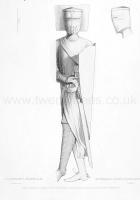
Monumental Effigies. A Knight Templar in St Mary's Church, Walkern.
Ermine Street 2a London to Braughing leaves the city of London at Bishopsgate Gate [Map] and thereafter travelled north through Shoreditch [Map], Stoke Newington [Map], Stamford Hill [Map], Tottenham [Map], Edmonton [Map], Waltham Cross, Hertfordshire [Map], Broxbourne, Hertfordshire [Map], Puckeridge, Hertfordshire [Map] to Braughing, Hertfordshire [Map].
On 13th December 1290 Eleanor of Castile Queen Consort England [deceased] body rested at Waltham Cross, Hertfordshire [Map].
Annals of the six Kings of England by Nicholas Trivet
Translation of the Annals of the Six Kings of England by that traces the rise and rule of the Angevin aka Plantagenet dynasty from the mid-12th to early 14th century. Written by the Dominican scholar Nicholas Trivet, the work offers a vivid account of English history from the reign of King Stephen through to the death of King Edward I, blending political narrative with moral reflection. Covering the reigns of six monarchs—from Stephen to Edward I—the chronicle explores royal authority, rebellion, war, and the shifting balance between crown, church, and nobility. Trivet provides detailed insight into defining moments such as baronial conflicts, Anglo-French rivalry, and the consolidation of royal power under Edward I, whose reign he describes with particular immediacy. The Annals combines careful year-by-year reporting with thoughtful interpretation, presenting history not merely as a sequence of events but as a moral and political lesson. Ideal for readers interested in medieval history, kingship, and the origins of the English state, this chronicle remains a valuable and accessible window into the turbulent world of the Plantagenet kings.
Available at Amazon in eBook and Paperback format.
Vesta Monumenta. Plate 1.7: Engraving of Waltham Cross [Map]
Plate 1.7 of Vetusta Monumenta depicts the Waltham Cross, one of the twelve monuments that Edward I ordered to be built between 1291 and 1294 to commemorate the funeral procession of Queen Eleanor. The print documents the early preservation efforts of the Society of Antiquaries of London. The cross was re-engraved by James Basire Sr. after Jacob Schnebbelie for the third volume of Vetusta Monumenta (Plate 3.16), where it appears with two more of the Eleanor Crosses. Engraving by George Vertue [aged 37] after William Stukeley [aged 33]. 490 x 301 mm. Published by the Society of Antiquaries of London in 1721. Current location: Waltham Cross, Hertfordshire, UK.

The River Lea rises near Leagrave, Bedfordshire [Map] after which it travels through Wheathampstead, Hertfordshire [Map], Hertford, Hertfordshire [Map], Ware, Hertfordshire [Map], Broxbourne, Hertfordshire [Map], Waltham Cross, Hertfordshire [Map], Tottenham [Map] before joining the River Thames at Leamouth, Essex [Map].
Waltham Abbey is also in Abbeys in England.
Around 3rd May 1060 Archbishop Cynesige consecrated Waltham Abbey [Map] in the presence of King Edward "The Confessor" of England [aged 57] at the invitation of Harold Godwinson [aged 38].
Samuel Pepys' Diary. 13th October 1664. After being at the office all the morning, I home and dined, and taking leave of my wife with my mind not a little troubled how she would look after herself or house in my absence, especially, too, leaving a considerable sum of money in the office, I by coach to the Red Lyon in Aldersgate Street, and there, by agreement, met W. Joyce and Tom Trice, and mounted, I upon a very fine mare that Sir W. Warren helps me to, and so very merrily rode till it was very darke, I leading the way through the darke to Welling, and there, not being very weary, to supper and to bed. But very bad accommodation at the Swan. In this day's journey I met with Mr. White, Cromwell's chaplin that was, and had a great deale of discourse with him. Among others, he tells me that Richard [aged 38] is, and hath long been, in France, and is now going into Italy. He owns publiquely that he do correspond, and return him all his money. That Richard hath been in some straits at the beginning; but relieved by his friends. That he goes by another name, but do not disguise himself, nor deny himself to any man that challenges him. He tells me, for certain, that offers had been made to the old man, of marriage between the King [aged 34] and his daughter [aged 26], to have obliged him, but he would not1. He thinks (with me) that it never was in his power to bring in the King with the consent of any of his officers about him; and that he scorned to bring him in as Monk [aged 55] did, to secure himself and deliver every body else. When I told him of what I found writ in a French book of one Monsieur Sorbiere, that gives an account of his observations herein England; among other things he says, that it is reported that Cromwell did, in his life-time, transpose many of the bodies of the Kings of England from one grave to another, and that by that means it is not known certainly whether the head that is now set up upon a post be that of Cromwell, or of one of the Kings. Mr. White tells me that he believes he never had so poor a low thought in him to trouble himself about it. He says the hand of God is much to be seen; that all his children are in good condition enough as to estate, and that their relations that betrayed their family are all now either hanged or very miserable.
Note 1. The Protector wished the Duke of Buckingham [aged 36] to marry his daughter Frances. She married, 1. Robert Rich, grandson and heir to Robert, Earl of Warwick, on November 11th, 1657, who died in the following February; 2. Sir John Russell, Bart [aged 24]. She died January 27th, 1721-22 [Note. Other sources day 1720], aged eighty-four. In T. Morrice's life of Roger, Earl of Orrery [aged 43], prefixed to Orrery's "State Letters" (Dublin, 1743, vol. i., p. 40), there is a circumstantial account of an interview between Orrery (then Lord Broghill) and Cromwell, in which the former suggested to the latter that Charles II should marry Frances Cromwell. Cromwell gave great attention to the reasons urged, "but walking two or three turns, and pondering with himself, he told Lord Broghill the King would never forgive him the death of his father. His lordship desired him to employ somebody to sound the King in this matter, to see how he would take it, and offered himself to mediate in it for him. But Cromwell would not consent, but again repeated, 'the King cannot and will not forgive the death of his father;' and so he left his lordship, who durst not tell him he had already dealt with his majesty in that affair. Upon this my Lord withdrew, and meeting Cromwell's wife and daughter, they inquired how he had succeeded; of which having given them an account, he added they must try their interest in him, but none could prevail"..
Samuel Pepys' Diary. 13th October 1664. After being at the office all the morning, I home and dined, and taking leave of my wife with my mind not a little troubled how she would look after herself or house in my absence, especially, too, leaving a considerable sum of money in the office, I by coach to the Red Lyon in Aldersgate Street, and there, by agreement, met W. Joyce and Tom Trice, and mounted, I upon a very fine mare that Sir W. Warren helps me to, and so very merrily rode till it was very darke, I leading the way through the darke to Welling, and there, not being very weary, to supper and to bed. But very bad accommodation at the Swan. In this day's journey I met with Mr. White, Cromwell's chaplin that was, and had a great deale of discourse with him. Among others, he tells me that Richard [aged 38] is, and hath long been, in France, and is now going into Italy. He owns publiquely that he do correspond, and return him all his money. That Richard hath been in some straits at the beginning; but relieved by his friends. That he goes by another name, but do not disguise himself, nor deny himself to any man that challenges him. He tells me, for certain, that offers had been made to the old man, of marriage between the King [aged 34] and his daughter [aged 26], to have obliged him, but he would not1. He thinks (with me) that it never was in his power to bring in the King with the consent of any of his officers about him; and that he scorned to bring him in as Monk [aged 55] did, to secure himself and deliver every body else. When I told him of what I found writ in a French book of one Monsieur Sorbiere, that gives an account of his observations herein England; among other things he says, that it is reported that Cromwell did, in his life-time, transpose many of the bodies of the Kings of England from one grave to another, and that by that means it is not known certainly whether the head that is now set up upon a post be that of Cromwell, or of one of the Kings. Mr. White tells me that he believes he never had so poor a low thought in him to trouble himself about it. He says the hand of God is much to be seen; that all his children are in good condition enough as to estate, and that their relations that betrayed their family are all now either hanged or very miserable.
Note 1. The Protector wished the Duke of Buckingham [aged 36] to marry his daughter Frances. She married, 1. Robert Rich, grandson and heir to Robert, Earl of Warwick, on November 11th, 1657, who died in the following February; 2. Sir John Russell, Bart [aged 24]. She died January 27th, 1721-22 [Note. Other sources day 1720], aged eighty-four. In T. Morrice's life of Roger, Earl of Orrery [aged 43], prefixed to Orrery's "State Letters" (Dublin, 1743, vol. i., p. 40), there is a circumstantial account of an interview between Orrery (then Lord Broghill) and Cromwell, in which the former suggested to the latter that Charles II should marry Frances Cromwell. Cromwell gave great attention to the reasons urged, "but walking two or three turns, and pondering with himself, he told Lord Broghill the King would never forgive him the death of his father. His lordship desired him to employ somebody to sound the King in this matter, to see how he would take it, and offered himself to mediate in it for him. But Cromwell would not consent, but again repeated, 'the King cannot and will not forgive the death of his father;' and so he left his lordship, who durst not tell him he had already dealt with his majesty in that affair. Upon this my Lord withdrew, and meeting Cromwell's wife and daughter, they inquired how he had succeeded; of which having given them an account, he added they must try their interest in him, but none could prevail"..
In 1513 John Boteler was born to Philip Boteler [aged 21] and Elizabeth Drury at Whatton on Stone, Hertfordshire. He married Griselda Roche and had issue.
In or before 1419 Abbot John Whethampstede was born to Hugh Bostock. in Wheathampstead, Hertfordshire [Map].
The River Lea rises near Leagrave, Bedfordshire [Map] after which it travels through Wheathampstead, Hertfordshire [Map], Hertford, Hertfordshire [Map], Ware, Hertfordshire [Map], Broxbourne, Hertfordshire [Map], Waltham Cross, Hertfordshire [Map], Tottenham [Map] before joining the River Thames at Leamouth, Essex [Map].

On 7th May 1625 John Garrard [aged 79] died. He was buried in St Helen's Church, Wheathampstead.
On 13th January 1701 John Garrard 3rd Baronet [aged 63] died without male issue. He was buried at St Helen's Church, Wheathampstead. His brother Samuel [aged 51] succeeded 4th Baronet Garrard of Lamer.
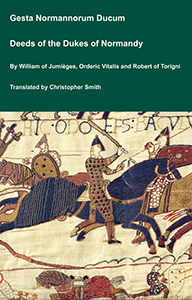
The Deeds of the Dukes of Normandy
The Gesta Normannorum Ducum [The Deeds of the Dukes of Normandy] is a landmark medieval chronicle tracing the rise and fall of the Norman dynasty from its early roots through the pivotal events surrounding the Norman Conquest of England. Originally penned in Latin by the monk William of Jumièges shortly before 1060 and later expanded at the behest of William the Conqueror, the work chronicles the deeds, politics, battles, and leadership of the Norman dukes, especially William’s own claim to the English throne. The narrative combines earlier historical sources with firsthand information and oral testimony to present an authoritative account of Normandy’s transformation from a Viking settlement into one of medieval Europe’s most powerful realms. William’s history emphasizes the legitimacy, military prowess, and governance of the Norman line, framing their expansion, including the conquest of England, as both divinely sanctioned and noble in purpose. Later chroniclers such as Orderic Vitalis and Robert of Torigni continued the history, extending the coverage into the 12th century, providing broader context on ducal rule and its impact. Today this classic work remains a foundational source for understanding Norman identity, medieval statesmanship, and the historical forces that reshaped England and Western Europe between 800AD and 1100AD.
Available at Amazon in eBook and Paperback format.
On 10th March 1724 Samuel Garrard 4th Baronet [aged 74] died. He was buried at St Helen's Church, Wheathampstead. His son Samuel [aged 31] succeeded 5th Baronet Garrard of Lamer.
On 21st January 1772 Amelia Hume Baroness Farnborough was born to Abraham Hume 2nd Baronet [aged 22] and Amelia Egerton [aged 20] at Wormley, Hertfordshire. She married 1793 Charles Long 1st Baron Farnborough.
In 1292 Lora de Vere [aged 60] died at Wymondley, Hertfordshire.