

Abbot John Whethamstede’s Chronicle of the Abbey of St Albans
Abbot John Whethamstede's Register aka Chronicle of his second term at the Abbey of St Albans, 1451-1461, is a remarkable text that describes his first-hand experience of the beginning of the Wars of the Roses including the First and Second Battles of St Albans, 1455 and 1461, respectively, their cause, and their consequences, not least on the Abbey itself. His text also includes Loveday, Blore Heath, Northampton, the Act of Accord, Wakefield, and Towton, and ends with the Coronation of King Edward IV. In addition to the events of the Wars of the Roses, Abbot John, or his scribes who wrote the Chronicle, include details in the life of the Abbey such as charters, letters, land exchanges, visits by legates, and disputes, which provide a rich insight into the day-to-day life of the Abbey, and the challenges faced by its Abbot.
Available at Amazon in eBook and Paperback format.
Hexham Abbey is in Hexham, Northumberland [Map], Abbeys in England.
In 678 Eata Prior Melrose was appointed Bishop of Hexham.
Bede. 678. In the year of our Lord's incarnation 678, which is the eighth of the reign of Egfrid [aged 33], in the month of August, appeared a star, called a comet, which continued for three months, rising in the morning, and darting out, as it were, a pillar of radiant flame. The same year a dissension broke out between King Egfrid and the most reverend prelate, Wilfrid, who was driven from his see, and two bishops substituted in his stead, to preside over the nation of the Northumbrians, namely, Bosa, to preside over the nation of the Deiri; and Eata over that of the Bernicians; the latter having his see in the city of York [Map], the former in the church of Hagulstad [Map], or else Lindisfarne [Map]; both of them promoted to the episcopal dignity from a society of monks. With them also was Edhed ordained bishop in the province of Lindsey, which King Egfrid had but newly subdued, having overcome and vanquished Wulfhere; and this was the first bishop of its own which that province had; the second was Ethelwin; the third Eadgar; the fourth Cynebert, who is there at present. Before Edhed, Sexwulf was bishop as well of that province, as of the Mercians and Midland Angles; so that when expelled from Lindsey, he continued in the government of those provinces. Edhed, Bosa, and Eata, were ordained at York [Map] by Archbishop Theodore [aged 76]; who also, three years after the departure of Wilfrid, added two bishops to their number; Trumbert, in the church of Hagulstad [Map], Eata still continuing in that of Lindisfarne; and Trumwine in the province of the Picts, which at that time was subject to the English. Edhed returning from Lindsey, because Ethelred had recovered that province, was placed by him over the church of Ripon.
In 678 Bishop Eata of Hexham was appointed Bishop of Hexham.
In 681 Bishop Trumbert was consecrated Bishop of Hexham.
In 685 Saint Cuthbert [aged 51] was consecrated Bishop of Hexham at York [Map].
Bede. How Bishop John cured a dumb man by his blessing. [687 a.d.]
In the beginning of Aldfrid's reign, Bishop Eata died, and was succeeded in the bishopric of the church of Hagustald [Map] by the holy man John, of whom those that knew him well are wont to tell many miracles, and more particularly Berthun, a man worthy of all reverence and of undoubted truthfulness, and once his deacon, now abbot of the monastery called Inderauuda [Map], that is, "In the wood of the Deiri": some of which miracles we have thought fit to hand on to posterity. There is a certain remote dwelling [Map] enclosed by a mound, among scattered trees, not far from the church of Hagustald [Map], being about a mile and a half distant and separated from it by the River Tyne, having an oratory dedicated to St. Michael the Archangel, where the man of God used frequently, as occasion offered, and specially in Lent, to abide with a few companions and in quiet give himself to prayer and study. Having come hither once at the beginning of Lent to stay, he bade his followers find out some poor man labouring under any grievous infirmity, or want, whom they might keep with them during those days, to receive alms, for so he was always used to do.
In 687 Bishop John of Beverley was consecrated Bishop of Hexham.
Anglo-Saxon Chronicle. 710. This year Acca [aged 50], priest of Wilferth, succeeded to the bishopric that Wilferth ere held; and Alderman Bertfrith fought with the Picts between Heugh and Carau. Ina [aged 40] also, and Nun his relative, fought with Grant, king of the Welsh; and the same year Hibbald was slain.
On 8th September 734 Bishop Frithbert was consecrated Bishop of Hexham.
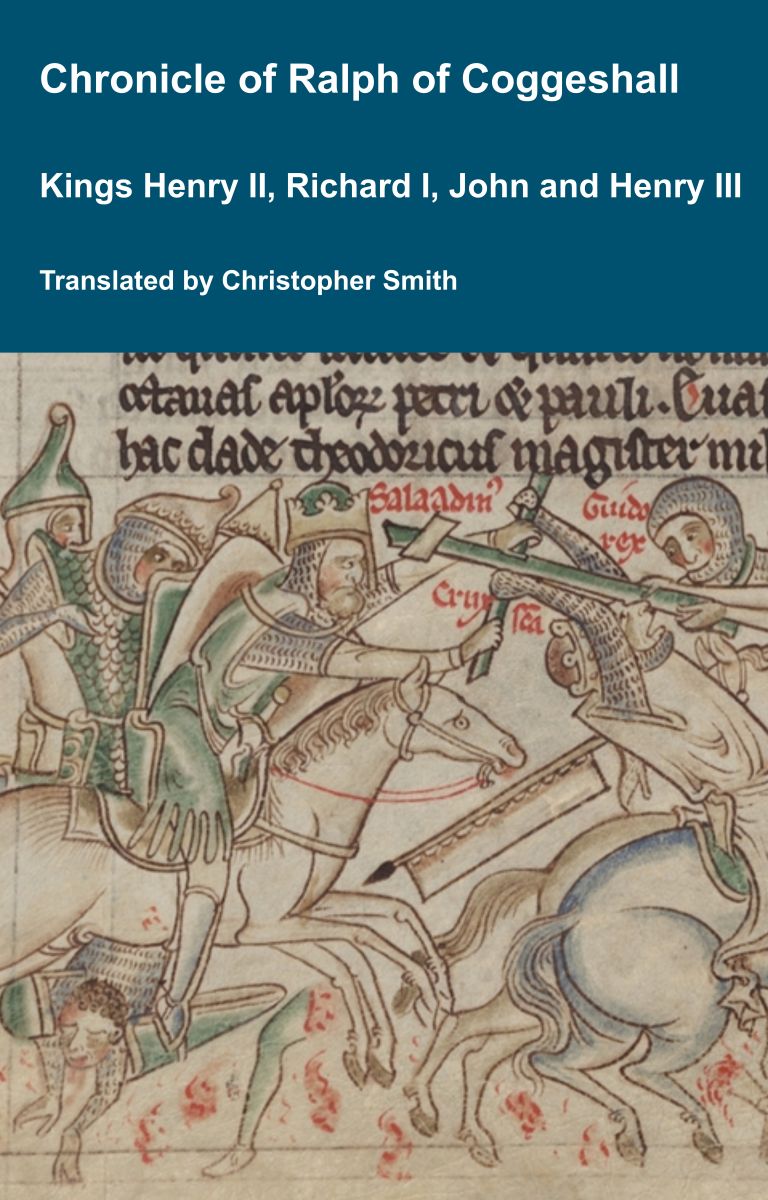
Chronicle of Abbot Ralph of Coggeshall
The Chronicle of Abbot Ralph of Coggeshall (Chronicon Anglicanum) is an indispensable medieval history that brings to life centuries of English and European affairs through the eyes of a learned Cistercian monk. Ralph of Coggeshall, abbot of the Abbey of Coggeshall in Essex in the early 13th century, continued and expanded his community’s chronicle, documenting events from the Norman Conquest of 1066 into the tumultuous reign of King Henry III. Blending eyewitness testimony, careful compilation, and the monastic commitment to record-keeping, this chronicle offers a rare narrative of political intrigue, royal power struggles, and social upheaval in England and beyond. Ralph’s work captures the reigns of pivotal figures such as Richard I and King John, providing invaluable insights into their characters, decisions, and the forces that shaped medieval rule. More than a simple annal, Chronicon Anglicanum conveys the texture of medieval life and governance, making it a rich source for scholars and readers fascinated by English history, monastic authorship, and the shaping of the medieval world.
Available at Amazon in eBook and Paperback format.
On or before 24th April 767 Bishop Alchmund of Hexham was appointed Bishop of Hexham.
On 2nd October 780 Bishop Tilbeorht was consecrated Bishop of Hexham.
Anglo-Saxon Chronicle. Bishop Cynewulf retired to Holy-island; Elmund, Bishop of Hexham, died on the seventh day before the ides of September [7th September 781], and Tilbert was consecrated in his stead, on the sixth day before the nones of October [2nd October 780]; Hibbald was consecrated Bishop of Holy-island at Sockbury; and King Elwald sent to Rome for a pall in behoof of Archbishop Eanbald.
Anglo-Saxon Chronicle. 788. This year Elwald, king of the Northumbrians, was slain by Siga, on the eleventh day before the calends of October; and a heavenly light was often seen on the spot where he was slain. He was buried in the church of Hexham [Map]; and Osred, the son of Alred, who was his nephew, succeeded him in the government. This year there was a synod assembled at Acley.
On 23rd September 788 Ælfwald I King of Northumbria was murdered. He was buried at Hexham Abbey [Map]. Osred King of Northumbria succeeded King Northumbria.
In 800 Bishop Eanbert was consecrated Bishop of Hexham.
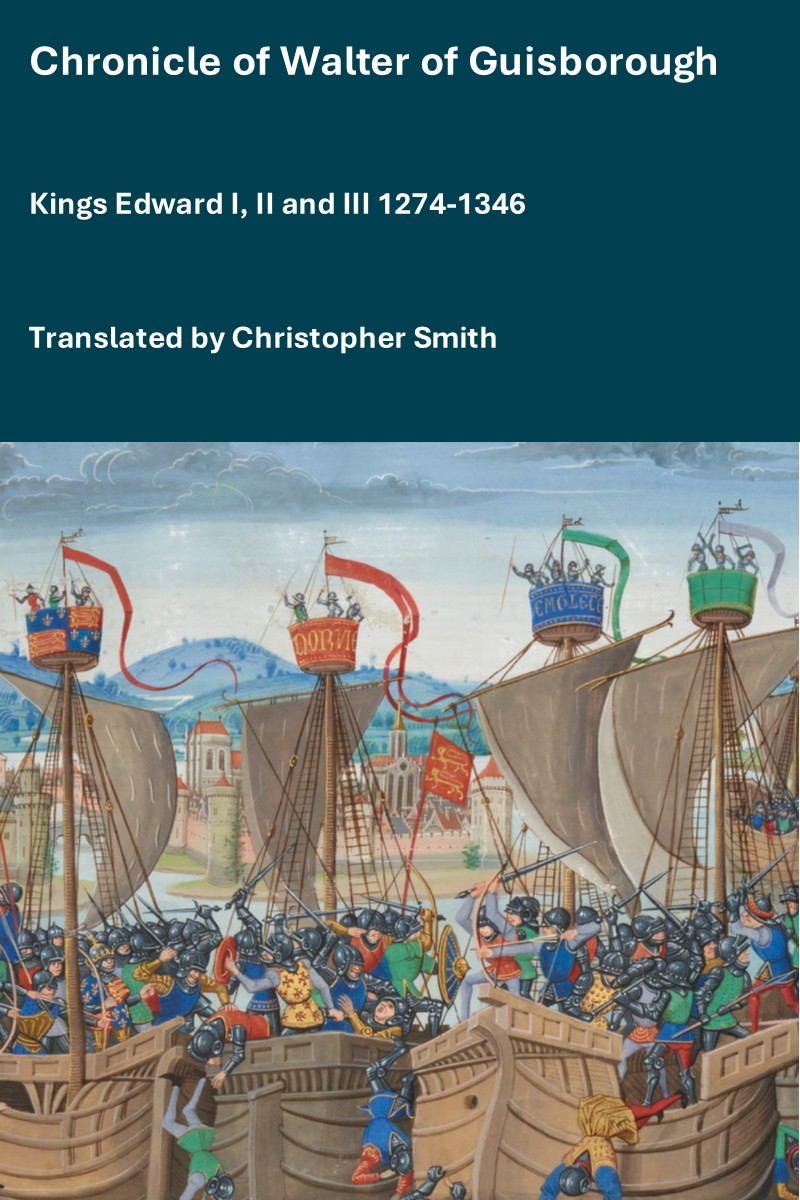 Chronicle of Walter of Guisborough. In the same month of April, the above-mentioned Scottish earls, with a large army of Scots, having come from the castle of Jedburgh, entered our lands in the valley of the Rede on the sixth day before the Ides of April [8th April 1296], and laid siege to the castle of Harbottle for two days. But when they saw that they were making no progress, in fact, having lost some of their men, they left there, devastating and burning the lands on the eastern side of the Tyne, Coquetdale, Redesdale, and Northumberland, including Corbridge, as far as Hexham. There, with the canons having fled, they took lodging and forcibly intruded, on the feast day of Saint Leo the Pope [11th April 1296], which fell on a Wednesday. The next morning, having already plundered the monastery [Hexham Abbey [Map]] of almost all its goods, they set it on fire, not only the church, but also the entire monastery and village, in a deed almost unheard of. For they had forgotten, or rather, held in contempt, the memory of the revered patron of that house and of all Scotland, namely the most blessed apostle Andrew, whom they had long claimed as the patron saint of their kingdom. From there, they turned and burned with dreadful fire the house of the holy nuns of Lambley [Map], along with other nearby properties in the region. At the end of that Thursday they lodged at Lanercost [Map]. But though it had been their intention to continue farther, God did not will it, and so they were hindered. For a messenger from their own side arrived, announcing that the army of the king of England was coming soon or was already at the gates. Terrified and stunned at this, and having already burned some of the buildings of that monastery, but not the church, they turned back very early on Friday morning through the middle of Nicholas Forest with a great amount of plunder.
Eodem mense Aprili prædicti comites Scotia superius nominati, cum Scotorum exercitu copioso, a castro de Gedeworth venientes, sexto idus Aprilis ingressi sunt fines nostros in Valle de Reede, obsidentes castellum de Hyrbotil per duos dies; sed cum proficere se non viderent, immo perdidissent ex suis aliquos, digressi sunt inde, vastantes et concremantes ex orientali parte de Tyne, Cokedale, Redesdale et Northumbriam, cum Corebrigge, usque Hexceldesham, ibidemque, fugientibus canonicis, hospitati sunt et intrusi, die scilicet sancti Leonis papæ, quæ fuit feria quarta. Mane autem facto, cum jam monasterium illud omnibus quasi bonis spoliassent, apposuerunt et ignem, et non tantum ecclesiam immo et monasterium cum villa tota inaudito facinore combusserunt. Obliti namque sunt, immo potius contempserunt, memoriam reverendi patroni ejusdem domus et quondam totius Scotiæ, beatissimi scilicet Andreæ apostoli, parvipendentes illum quem patronum regni Scotia antiquitus nominare solebant. Inde vero divertentes, domum sanctarum monialium de Lameslay, cum cæteris adjacentibus in patria, incendio horribili concremarunt, in fine illius diei Jovis pernoctantes apud Lanercost. Cumque eorum fuisset voluntatis ulterius procedere, noluit ipse Deus, et ideo impediti sunt: affuit enim nuncius ex suis qui diceret quod exercitus regis Angliæ veniens in proximo vel in januis assisteret. Attoniti vero et stupefacti in hoc, cum quasdam domus ejusdem monasterii, non tamen ecclesiam, incendissent, summo mane diei Veneris per medium forestæ Nicholay cum magna præda reversi sunt.
On 27th April 2013 Michael Julian Marsham [aged 34] and Lucy Harriet Beaumont [aged 32] were married at Hexham Abbey [Map]. He the son of Julian Charles Marsham 8th Earl of Romney [aged 65].
Bede. The same bishop John by his prayers healed a sick maiden.
The same Berthun told another miracle concerning the said bishop. When the most reverend Wilfrid, after a long banishment, was admitted to the bishopric of the church of Hagustald [Map], and the aforesaid John, upon the death of Bosa, a man of great sanctity and humility, was, in his place, appointed bishop of York, he himself came, once upon a time, to the monastery [Map] of nuns, at the place called Wetadun, where the Abbess Heriburg then presided. "When we were come thither," said he, "and had been received with great and universal joy, the abbess told us, that one of the nuns, who was her own daughter after the flesh, laboured under a grievous sickness, for she had been lately let blood in the arm, and whilst she was under treatment, was seized with an attack of sudden pain, which speedily increased, while the wounded arm became worse, and so much swollen, that it could scarce be compassed with both hands; and she lay in bed like to die through excess of pain. Wherefore the abbess entreated the bishop that he would vouchsafe to go in and give her his blessing; for she believed that she would soon be better if he blessed her or laid his hands upon her. He asked when the maiden had been let blood, and being told that it was on the fourth day of the moon, said, 'You did very indiscreetly and unskilfully to let blood on the fourth day of the moon; for I remember that Archbishop Theodore, of blessed memory, said, that blood-letting at that time was very dangerous, when the light of the moon is waxing and the tide of the ocean is rising. And what can I do for the maiden if she is like to die? ".
But the abbess still earnestly entreated for her daughter, whom she dearly loved, and designed to make abbess in her stead, and at last prevailed with him to go in and visit the sick maiden. Wherefore he went in, taking me with him to the maid, who lay, as I said, in sore anguish, and her arm swelling so greatly that it could not be bent at all at the elbow; and he stood and said a prayer over her, and having given his blessing, went out. Afterwards, as we were sitting at table, at the usual hour, some one came in and called me out, saying, 'Quoenburg' (that was the maid's name) 'desires that you should immediately go back to her.' This I did, and entering the chamber, I found her of more cheerful countenance, and like one in good health. And while I was sitting beside her, she said, 'Shall we call for something to drink?'-'Yes,' said I, 'and right glad am I, if you can.' When the cup was brought, and we had both drunk, she said, 'As soon as the bishop had said the prayer for me and given me his blessing and had gone out, I immediately began to mend; and though I have not yet recovered my former strength, yet all the pain is quite gone both from my arm, where it was most burning, and from all my body, as if the bishop had carried it away with him; notwithstanding the swelling of the arm still seems to remain.' But when we departed thence, the cure of the pain in her limbs was followed by the assuaging of the grievous swelling; and the maiden being thus delivered from pains and death, returned praise to our Lord and Saviour, in company with His other servants who were there.
Bede. In short, we afterwards saw five bishops taken out of that monastery, and all of them men of singular merit and sanctity, whose names were Bosa, Eda, Oftfor, John, and Wilfrid. We have above taken notice, that the first of them was consecrated bishop at York; of the second, it is to be observed that he was appointed bishop of Dorchester. Of the two last we shall speak hereafter, as they were consecrated: the first was bishop of Hagulstad [Map], the second of the church of York; of the third we will here take notice, that having applied himself to the reading and observation of the Scriptures, in both the monasteries of Hilda, at length being desirous to attain to greater perfection, he went into Kent, to Archbishop Theodore, of blessed memory; where having spent some more time in sacred studies, he also resolved to go to Rome, which, in those days, was reckoned of great moment: returning thence into Britain, he took his way into the province of the Wiccii, where King Osric then ruled, and continued there a long time, preaching the word of faith, and making himself an example of ofood life to all that saw and heard him. At that time, Bosel, the bishop of that province, laboured under such weakness of body, that he could not himself perform the episcopal functions; for which reason, this Oftfor was, by universal consent, chosen bishop in his stead, and by order of King Ethelred, consecrated by Bishop Wilfrid, of blessed memory, who was then bishop of the Midland Angles, because Archbishop Theodore was dead, and no other bishop ordained in his place. Before the aforesaid man of God, Bosel, Tatfrid, a most learned and indus- trious man, and of excellent ability, had been chosen bishop there, from the same abbess's monastery, but had been snatched away by an untimely death, before he could be ordained.