

The Deeds of the Dukes of Normandy
The Gesta Normannorum Ducum [The Deeds of the Dukes of Normandy] is a landmark medieval chronicle tracing the rise and fall of the Norman dynasty from its early roots through the pivotal events surrounding the Norman Conquest of England. Originally penned in Latin by the monk William of Jumièges shortly before 1060 and later expanded at the behest of William the Conqueror, the work chronicles the deeds, politics, battles, and leadership of the Norman dukes, especially William’s own claim to the English throne. The narrative combines earlier historical sources with firsthand information and oral testimony to present an authoritative account of Normandy’s transformation from a Viking settlement into one of medieval Europe’s most powerful realms. William’s history emphasizes the legitimacy, military prowess, and governance of the Norman line, framing their expansion, including the conquest of England, as both divinely sanctioned and noble in purpose. Later chroniclers such as Orderic Vitalis and Robert of Torigni continued the history, extending the coverage into the 12th century, providing broader context on ducal rule and its impact. Today this classic work remains a foundational source for understanding Norman identity, medieval statesmanship, and the historical forces that reshaped England and Western Europe between 800AD and 1100AD.
Available at Amazon in eBook and Paperback format.
Lincoln, Lincolnshire is in Lincolnshire.
See: Bailgate, Lincoln [Map], Lincoln Castle [Map], Lincoln Cathedral [Map], St Mark's Church, Lincoln, St Mary le Wigford Church, Lincoln, St Peter at Arches Church, Lincoln.
Around 70AD. Lindum Colonia aka Lincoln, Lincolnshire [Map] was founded as a Roman Legionary Fortress during the reign of the Emperor Nero. Evidence from Roman tombstones suggests that Lincoln was first garrisoned by the Ninth Legion Hispana which was subseuqntly replaced by the Second Legion Adiutrix, which then went on to Deva [Map] in 77-78 AD. The primary evidence that modern Lincoln was referred to as Lindum comes from Ptolemy's Geography, which was compiled in about 150 AD, where Lindum is referred to as a polis or town within the tribal area of the Corieltauvi.
Fosse Way 5f Leicester to Lincoln. Leaving Ratae Corieltavorum [Map] aka Leicester the Fosse way continues north-west through Thurmaston, Leicestershire [Map], past Syston [Map], where it makes a slight change in direction, through Six Hills, Leicestershire [Map] where Roman road (RM58) forks off north east to Grantham [Map]. Then passing Vernementum [Map] aka Willoughby-on-the-Wolds the Fosse Way make another minor change in alignment at Cotgrave [Map] before continuing through Margidunum, Nottinghamshire [Map], Ad Pontem [Map] aka East Stoke. Ad Pontem refers to it being close to the River Trent. The road continues through Newark on Trent, Nottinghamshire [Map] then Crococalana Roman Settlement [Map] near present day Brough. At Bracebridge [Map] the Fosse Way meets Ermine Street 2 before continuing into Lindum Colonia [Map] aka Lincoln.
Ermine Street. From Durobrivae [Map] Ermine Street crosses the River Welland at Stamford [Map] then continues through Great Casterton [Map], Colsterworth [Map], Ancaster [Map]. Continuing on a new alignment Ermine Street passes east of Navenby [Map] meeting the Fosse Way at Bracebridge [Map] with both roads continuing together to Lindum Colonia [Map] aka Lincoln.
Anglo-Saxon Chronicle. 627. This year was King Edwin [aged 41] baptized at Easter, with all his people, by Paulinus, who also preached baptism in Lindsey [Map], where the first person who believed was a certain rich man, of the name of Bleek, with all his people. At this time Honorius succeeded Boniface in the papacy, and sent hither to Paulinus the pall; and Archbishop Justus having departed this life on the tenth of November, Honorius was consecrated at Lincoln, Lincolnshire [Map] Archbishop of Canterbury by Paulinus; and Pope Honorius sent him the pall. And he sent an injunction to the Scots, that they should return to the right celebration of Easter.
Chronicon ex Chronicis by Florence and John of Worcester. 1068. After Easter [23rd March], the countess Matilda [aged 37] came to England from Normandy, and was crowned queen by Aldred, archbishop of York, on Whitsunday [1lth May]. After this, Mariesweyn and Cospatric, and some of the most noble of the Northumbrian nation, in order to escape the king's tyranny, and fearing that, like others, they might be thrown into prison, took with them Edgar [aged 17] the etheling, with his mother Agatha and his two sisters, Margaret [aged 23] and Christina [aged 11], and, embarking for Scotland, wintered there under favour of Malcolm [aged 36], king of Scots. Meanwhile, king William [aged 40] marched his army to Nottingham, Nottinghamshire [Map], and, having fortified the castle there, proceeded to York [Map], where he erected two strong forts, and having stationed in them five hundred men, he gave orders that strong castles should be built at Lincoln, Lincolnshire [Map] and other places.
In December 1157 King Henry "Curtmantle" II of England [aged 24] and Eleanor of Aquitaine Queen Consort Franks and England [aged 35] held Christmas Court at Lincoln, Lincolnshire [Map].
Before May 1217 Nichola de la Haie [aged 67] held Lincoln Castle against the besiegers led by Prince Louis.
On 20th May 1217 William Marshal 1st Earl Pembroke [aged 71] and Ranulf de Blondeville Gernon 6th Earl Chester 1st Earl Lincoln [aged 47] fought at Lincoln, Lincolnshire [Map] during the Second Battle aka Fair of Lincoln.
Rebels William Mowbray 6th Baron Thirsk [aged 44] and William Ros [aged 17] were captured. William de Albini [aged 66] fought for the rebels. Thomas Chateaudun I Count Perche [aged 22] died fighting for the rebels.
Bishop Peter de Roches led a division of the royal army and earned some distinction by his valour.
In 1207 William Cantilupe Baron [aged 48] was present at the Second Battle aka Fair of Lincoln.
Annals of Tewkesbury. [20th May 1217] While barons were besieging Lincoln Castle, the Marshal was sent as a legate with a strong army. They went there and, breaking in, clashed with the barons. The Count of Perche1 was killed, and about forty barons and Frenchmen were captured, along with about three hundred knights and more. The number of servants is unknown, and the city was given over to plunder2 on the feast of St. Athelbert, the Saturday of Pentecost.
Baronibus obsidentibus castrum Lincolniæ, legatus est Marescallus et robur exercitus; iverunt illuc, et irrumpentes congressi sunt cum baronibus; et occiso comite de Pertico, capti sunt barones et Franci, de magnatibus circiter xl., de militibus ccc. et eo amplius; de servientibus ignoratur numerus, et civitas data est in direptionem die Sancti Athelberti, sabbato Pentecostes.
Note 1. Thomas, Count of Perche. Son of Geoffrey III, Count of Perche.
Note 2. Euphemistically known as "Lincoln's Fair".
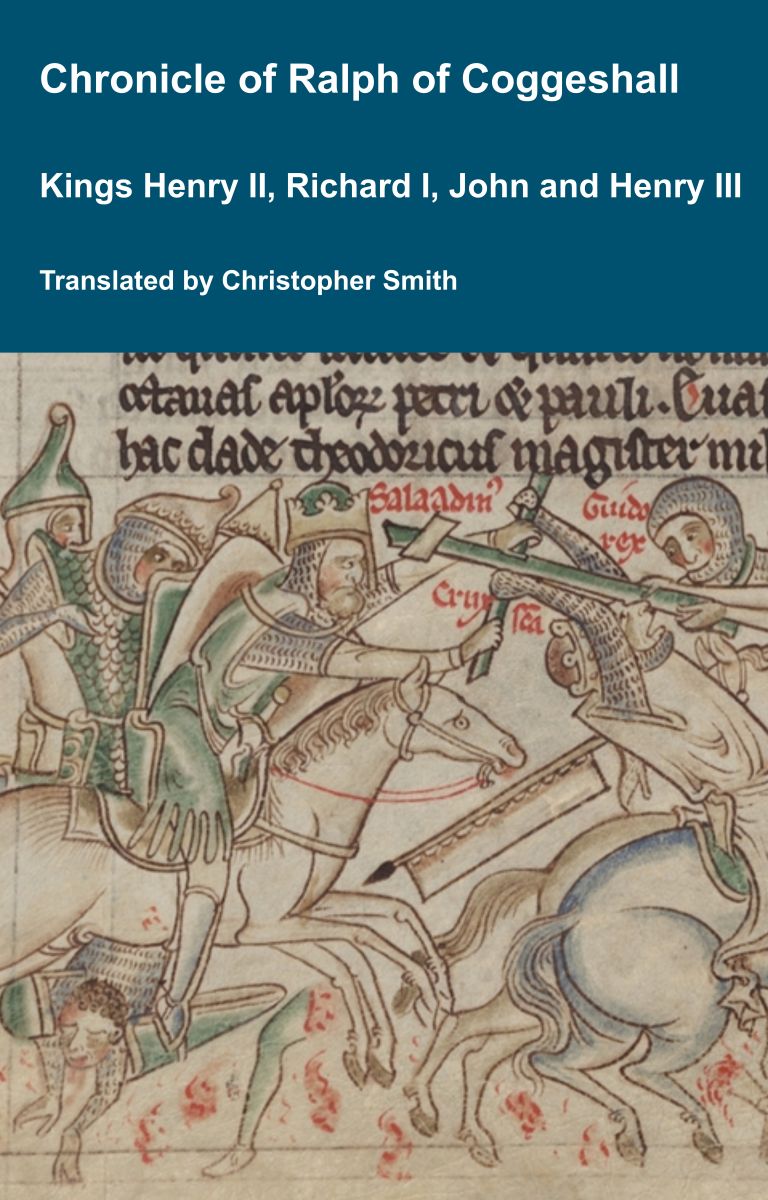 Chronicum Anglicanum by Ralph Coggeshall. In the year of grace 1217, Louis crossed back from England to seek greater aid; and meanwhile many nobles who had adhered to him were brought back to the king's allegiance through the persuasion of the legate and the bishops. When Louis returned, he again besieged Dover, but in vain. For the barons and knights who favoured him, as they went with a great army to Lincoln, plundering much along the way, were captured at Lincoln1 on the vigil of the Holy Trinity, which that year fell on the 20th of May, and they were led away captive by the king's men, who remained steadfastly loyal to John, and were heavily ransomed. The Count of Perche too was killed there with many others. This capture was directed by the legate Guala, together with the earls and with Falkes [de Bréauté]. When Louis heard of this misfortune, he abandoned the siege of Dover and came to London, awaiting in vain aid from overseas. At length the chief barons of France, along with a certain Eustace, once a monk, having prepared a great fleet, namely, sixty ships, set out to come to England to aid Louis, with a multitude of armed men. But lord Hubert de Burgh, constable of Dover and justiciar of the king, went out to meet them at sea with a host of armed men and ships from the Cinque Ports, and Eustace, the leader of the rest, was slain, he being the first to join battle with his ship; and all who were in that ship were captured, some drowned. Thus the Lord smote the heads of His enemies who came to scatter the English people; and many others were captured with their ships, and brought back as prisoners; and upon some of those fleeing the Lord brought back the waters of the sea, and they sank like lead in the mighty waters. And so Almighty God, not fighting with numbers, shattered the strength of the enemy, and His right hand was glorified in His people.
Anno gratiæ MCCXVII, Lodowicus transfretavit ab Anglia pro majori succursu; et interim multi nobiles qui ei adhæserant, conversi sunt ad fidelitatem regis per suggestionem legati et episcoporum. Reversus autem Lodowicus, iterum obsedit Dovere, sed frustra. Nam barones et milites qui ei favebant, cum magno exercitu Lincolniam adeuntes, et in itinere multa rapientes, capti sunt apud Lincolniam in vigilia Sanctæ Trinitatis, quæ tunc temporis evenit xiii. kalendas Junii, et ducti sunt captivi a regalibus qui firmiter Johanni adhæserant, ac graviter redempti. Comes etiamn de Pertico ibidem cum pluribus interfectus est. Huic captioni præfuit Guale legatus, cum comitibus et Falcone. Quod infortunium audiens Lodowicus, recessit ab obsidione de Dovere, et venit Londoniam, succursum transmarinum frustra exspectans. Tandem majores Franciæ barones, cum quodam Eustachio quondam monacho, patrato maximo navigio, scilicet LX navibus, iter aggrediuntur veniendi in Angliam in succursum Lodowici, cum multitudine armatorum. Sed dominus Hubertus de Burch, constabularius Dovere et justitiarius regis, cum multitudine armatorum et navium de Quinque-portubus, processit eis obviam in mari, et interfectus est Eustachius ductor cæterorum, qui primus cum sua navi congressus est, atque omnes capti sunt qui in navi illa fuerunt, partim submersi. Atque ita Dominus percussit capita inimicorum suorum venientium ad dispergendum gentem Anglicanam, et capti sunt plures cum cæteris navibus, et captivi adducti; et reduxit Dominus super quosdam eorum diffugientes aquas maris, et submersi sunt quasi plumbum in aquis vehementibus. Et sic Deus Omnipotens, non in multitudine dimicans, hostium contrivit fortitudinem, et dextera sua glorificata est in populo suo.
Note 1. The Second Battle of Lincoln, euphemistically known as "Lincoln's Fair". Annals of Tewkesbury: "While barons were besieging Lincoln Castle, the Marshal was sent as a legate with a strong army. They went there and, breaking in, clashed with the barons. The Count of Perche was killed, and about forty barons and Frenchmen were captured, along with about three hundred knights and more. The number of servants is unknown, and the city was given over to plunder on the feast of St. Athelbert, the Saturday of Pentecost."
Chronicle of Abbot Ralph of Coggeshall
The Chronicle of Abbot Ralph of Coggeshall (Chronicon Anglicanum) is an indispensable medieval history that brings to life centuries of English and European affairs through the eyes of a learned Cistercian monk. Ralph of Coggeshall, abbot of the Abbey of Coggeshall in Essex in the early 13th century, continued and expanded his community’s chronicle, documenting events from the Norman Conquest of 1066 into the tumultuous reign of King Henry III. Blending eyewitness testimony, careful compilation, and the monastic commitment to record-keeping, this chronicle offers a rare narrative of political intrigue, royal power struggles, and social upheaval in England and beyond. Ralph’s work captures the reigns of pivotal figures such as Richard I and King John, providing invaluable insights into their characters, decisions, and the forces that shaped medieval rule. More than a simple annal, Chronicon Anglicanum conveys the texture of medieval life and governance, making it a rich source for scholars and readers fascinated by English history, monastic authorship, and the shaping of the medieval world.
Available at Amazon in eBook and Paperback format.
 Annals of Six Kings of England by Nicholas Trivet [1258-1328]. 1217. After the expiry of the truce, Louis VIII of France, returning to England and landing at Dover, laid siege to its castle; but, his efforts frustrated, he advanced as far as the notable castle of Windsor Castle. When he made no progress in taking it, he arranged his forces and marched with a strong army towards Lincoln. On the Saturday [20th May 1217] in the week of Pentecost, the army of the young king Henry III of England, having in a short time been greatly increased, came upon Louis at Lincoln and offered battle. Thus, near the city, a very fierce engagement was fought, and by divine favour the victory and triumph fell to the young King Henry, while Louis and his men fled. About four hundred French knights are said to have been slain, among whom fell that noble count Thomas of Perche, who, being related through his sister to the emperor Otto IV, Holy Roman Emperor and thus kinsman to both the kings of France and England, ought rather to have pursued peace than war, instead of disinheriting his own blood. It is also reported that fifty-two knights of Louis's party were taken prisoner, among whom was Gilbert de Clare, a renowned man, whom William Marshal, 1st Earl of Pembroke captured and had taken to Gloucester to be held in custody; later, when affairs were settled and peace restored, he gave him his daughter Isabella in marriage. A few days after this battle, Louis's naval force was destroyed by the English. It was commanded by Eustace the Monk, once, it is said, a monk, who, as befitted an apostate, showed his inconstancy by frequently passing from one king to another, and, as though turned from monk into a demon, was full of deceit and treachery. His head, once cut off, was carried about various parts of England upon a stake.
1217. Post lapsum treugarum Lodovicus in Angliam rediens, et applicans Dovoriæ, castrum ejus obsedit; sed intentione frustratus, usque Windelesoram castrum insigne contendit. Quod cumad capiendum non proficeret, ordinatis dietis cum exercitu valido versus Lincolniam dirigit iter suum. Sabbato vero in hebdomada Pentecostes, exercitus regis juvenis, brevi tempore vehementer auctus, Lodovico in Lincolnia existentisuperveniens bellum indixit. Igitur juxta civitatem gravissimo conserto prælio nutu Divino juveni regi Henrico cessit victoria et trumphus, fugiente Lodovico nempe cum suis. Interfecti sunt de Gallicis milites ut fertur quadringenti, inter quos cecidit nobilis ille comes Thomas de Perticis, quem cum ex sorore Othonis imperatoris utriusque regis Francorum scilicet et Anglorum consanguineus esset, paci potius quam bello, in exheredationem sanguinis, decuerat studuisse. Feruntur etiam captivati quinquaginta duo milites de complicibus Lodovici, de quorum numero erat Gilbertus de Clare, vir inclytus, quem cepit Willelmus Marescalli, et Gloverniam deduci fecit custodiæ mancipandum; cui postea, sedatis rebus paceque reflorente, Isabellam filiam suam matrimonio copulavit. Lapsis post hoc prælium diebus paucis, cæsus est ab Anglicis navalis exercitus Lodovici. Huic præerat Eustachius quondam ut fertur monachus, qui ut decebat apostatam, suam ostendens inconstantiam, sæpe de uno rege transiit ad alium, et tanquam de monacho factus dæmoniacus, dolo et perfidia plenus fuit; cujus caput abscissum, delatum est per diversa loca Angliæ super palum.
On 31st October 1453 Philip Tilney [aged 53] died at Lincoln, Lincolnshire [Map].
On 6th March 1537 Thomas Moigne [aged 27] was tried for treason at Lincoln, Lincolnshire [Map]. and sentenced to be hanged, drawn and quartered the following day which sentence was duly carried out. He was attainted, and his estates forfeited. These were recovered by his younger brothers in 1544.
On 29th June 1537 John Hussey 1st Baron Hussey of Sleaford [aged 72] was beheaded at Lincoln, Lincolnshire [Map]. Baron Hussey of Sleaford forfeit.
Chronicle of Edward Hall [1496-1548]. 2nd June 1537 In June the lord Darcy [aged 70] and the lord Hosey [Map] were arraigned at Westminster before the Marques of Exceter [aged 41], then High Steward of England, and they were both found guilty and had their judgement as in cases of high treason.
After 2nd June 1537. Shortly after were also arraigned Sir Robert Constable [aged 59], Sir Thomas Percy [deceased], Sir Fraunces Bygod [deceased], Sir Stephin Hamelton, Sir Jhon Bulmer and his wife [deceased], which some reported was not his wife but his paramour, also William Lumley, Nicholas Tempest [aged 57], and the Abbots of Jerney [deceased] and Rivers, and Robert Aske [aged 37], and all found guilty of high treason, and all put to death at Tiborne [Map], saving Sir Robert Constable, which was hanged in chains on Beverley gate at Hull and Aske was also hanged in chains in Yorke on a Tower, and Sir John Bulmer's Paramour, was burned in Smithfclde [Map] in London. And in the latter end of June, was the Lord Darcy beheaded at Tower Hill [Map], and shortly after was the Lord Hosey beheaded at Lyncolne [Map].
In 1559 Elizabeth Gascoigne Baroness Kyme [aged 88] died at Lincoln, Lincolnshire [Map]. She was buried at Lincoln Cathedral [Map].
On 11th September 1580 Robert Dymoke [aged 49] died at Lincoln, Lincolnshire [Map]. He was buried at St Benedict's Church, Scrivelsby.
John Evelyn's Diary. 19th August 1654. All marsh ground till we came to Brigg, famous for the plantations of licorice, and then had brave pleasant riding to Lincoln [Map], much resembling Salisbury Plain. Lincoln is an old confused town, very long, uneven, steep, and ragged; formerly full of good houses, especially churches and abbeys. The Minster [Map] almost comparable to that of York [Map] itself, abounding with marble Pillars, and having a fair front (herein was interred Queen Eleanora, the loyal and loving wife who sucked the poison out of her husband's wound); the abbot founder, with rare carving in the stone; the great bell, or Tom, as they call it. I went up the steeple, from whence is a goodly prospect all over the country. The soldiers had lately knocked off most of the brasses from the gravestones, so as few inscriptions were left; they told us that these men went in with axes and hammers, and shut themselves in, till they had rent and torn off some barge loads of metal, not sparing even the. Monuments of the dead; so hellish an avarice possessed them: beside which, they exceedingly ruined the city.
On 10th January 1681 John Disney [aged 77] died at Lincoln, Lincolnshire [Map].
On 1st December 1756 William Murray 3rd Earl Dunmore [aged 60] died at Lincoln, Lincolnshire [Map]. His son John [aged 26] succeeded 4th Earl Dunmore. Charlotte Stewart Countess Dunmore [aged 26] by marriage Countess Dunmore.
The River Till rises near Stow [Map] from where it flows past Sturton by Stow [Map], Broxholme [Map] to Saxilby [Map] where it is joined by the Foss Dyke which provides an inter-connection with the River Trent after which it flows to Lincoln, Lincolnshire [Map] where it joins the River Witham.
The River Witham rises near South Witham, South Kesteven [Map] from where it flows past North Witham, South Kesteven [Map], Colsterworth, South Kesteven [Map], Easton, South Kesteven [Map] to Great Ponton, South Kesteven [Map] where it is joined by the Cringle Brook.
From Great Ponton, South Kesteven [Map] the River Witham flows through Grantham [Map], Belton, Grantham [Map], past Barkston, South Kesteven [Map], Marston, South Kesteven [Map] and Hougham, South Kesteven [Map], Westborough, South Kesteven [Map], Long Benington, South Kesteven [Map], Claypole, South Kesteven [Map], Beckingham, North Kesteven [Map], Norton Disney, North Kesteven [Map], Bassingham, North Kesteven [Map], Haddington, North Kesteven [Map], Aubourn, North Kesteven [Map] through the centre of Lincoln, Lincolnshire [Map] where it joined by the River Till.
From Lincoln, Lincolnshire [Map] it flows under Five Mile Bridge [Map], past Bardney Abbey [Map], Kirkstead [Map], under Tattershall Bridge [Map] after which it is joined by the River Bain
After Tattershall the River Witham flows through canalised sections under Lanrick Bridge [Map], past Anton's Gowt [Map] to Boston [Map] where it is joined by the South Forty Foot Drain. After Boston [Map] the River Witham flows into the The Wash around eight kilometres away.
Henrici Quinti, Angliæ Regis, Gesta, is a first-hand account of the Agincourt Campaign, and subsequent events to his death in 1422. The author of the first part was a Chaplain in King Henry's retinue who was present from King Henry's departure at Southampton in 1415, at the siege of Harfleur, the battle of Agincourt, and the celebrations on King Henry's return to London. The second part, by another writer, relates the events that took place including the negotiations at Troye, Henry's marriage and his death in 1422.
Available at Amazon in eBook and Paperback format.
Anglo-Saxon Chronicle. Then it was told the king, that the people in the North had gathered themselves together, and would stand against him if he came. Whereupon he went to Nottingham, Nottinghamshire [Map], and wrought there a castle; and so advanced to York [Map], and there wrought two castles; and the same at Lincoln, Lincolnshire [Map], and everywhere in that quarter. Then Earl Gospatric and the best men went into Scotland. Amidst this came one of Harold's sons from Ireland with a naval force into the mouth of the Avon unawares, and plundered soon over all that quarter; whence they went to Bristol, Gloucestershire [Map], and would have stormed the town; but the people bravely withstood them. When they could gain nothing from the town, they went to their ships with the booty which they had acquired by plunder; and then they advanced upon Somersetshire, and there went up; and Ednoth, master of the horse, fought with them; but he was there slain, and many good men on either side; and those that were left departed thence.
Ermine Street 2d Lincoln to Winterton. Ermine Street left Lincoln through Bailgate, Lincoln [Map] and travelled north past Fox Owmby [Map], Caenby Corner [Map], Hibaldstow Roman Fort [Map], Appeby [Map] to Winteringham [Map] where a ferry across the Humber Estuary to Petuaria [Map].
St Mary Magdalene Church, Bailgate, Lincoln is also in Churches in Lincolnshire.
On or before 5th March 1801, the date she was baptised at St Mary Magdalene Church, Bailgate, Lincoln [Map], Anna Maria Patten-Bold was born to Peter Patten-Bold [aged 37]. She married 15th April 1828 her first cousin John Wilson aka Wilson-Patten 1st Baron Winmarleigh and had issue.
Henry Chaplin A Memoir: Youth VI. For some years during the hunting season Mr. Chaplin lived in Lincoln at the old house at Burghersh Chantry. Blankney was on the outskirts of the country, some of the meets being thirty miles distant, while Lincoln was much more central. In consequence he saw a great deal of Lord Henry, who lived what he called his "vagabond life" at an inn in Lincoln, the White Hart [Map], where he had a bedroom and a sitting-room. He had also a first-rate cook and an admirable cellar of his own. Some of Mr. Chaplin's reminiscences of this remarkable man, which in part will be familiar to the readers of Lord Beaconsfield's Life, may be set down in his own words.
Lincoln Castle is also in Castles in Lincolnshire.
In 1169 Richard de la Haie died. His daughter Nichola de la Haie [aged 19] inherited the office of hereditary Constable of Lincoln Castle.
In 1191 regent Bishop William Longchamp removed the offices of High Sheriff of Lincolnshire and Constable of Lincoln Castle from Nichola de la Haie [aged 41] and her husband Gerard Canville [aged 59].They refused to hand over the castle. While Camville stayed with Prince John at Nottingham, Nicola held out against a month-long siege. Having failed to take the castle, Longchamp reached a compromise with Camville and restored him to his two posts, but then had him excommunicated. When King Richard returned from crusade and captivity in 1194, he removed Camville from both posts.
In 1199 King John of England [aged 32] restored the offices of High Sheriff of Lincolnshire and Constable of Lincoln Castle to Nichola de la Haie [aged 49] and her husband Gerard Canville [aged 67].
Chronicle of Roger de Hoveden. On the same day, the king dispossessed Gerard de Camville of Lincoln Castle [Map] and the Sheriffdom of Lincolnshire, as well as Hugh Bardolf of the Sheriffdom of Yorkshire, York Castle, Scarborough Castle [Map], and the custody of Westmorland. All of these properties were then put up for sale. As a result, when the chancellor negotiated to pay the king 1,500 marks upfront for the sheriffdoms of Yorkshire, Lincolnshire, and Northamptonshire, along with an additional 100 marks annually from each county. Geoffrey, Archbishop of York, instead offered the king 3,000 marks for the sheriffdom of Yorkshire, along with an annual payment of 100 marks. Thus, the chancellor was dismissed, and the Archbishop of York won control of the sheriffdom, effectively becoming the king's servant and throwing himself into the king's power.
Fodem die rex dissaisivit Gyrardum de Camvilla de castello et vicecomitatu Lincolniensi, et Hugonem Bardolf de vicecomitatu Eboraci siræ, et de castello Eboraci, et de castello de Scardheburg, et de custodia de Westmerilande; et omnia supradicta exposuit venditioni. Unde factum est, quod cum cancellarius conventionasset, se daturum regi pro vicecomitatu Eboraci siræ, et pro vicecomitatu Lincolniensi, et pro vicecomitatu Nordhamtesiræ, mille et quingentas marcas in principio conventionis, et singulis annis de unoquoque prædictorum comitatuum centum marcas de incremento; Gaufridus Eboracensis archiepiscopus obtulit regi tria millia marcarum pro vicecomitatu Eboracensi, et singulis annis centum marcas de incremento: et sic abjecto cancellario, Eboracensis archiepiscopus obtinuit vicecomitatum Eboracensem, et ita facta est regis serviens, et præcipitavit se in potentias regis.
On or before 13th September 1801, the day she was baptised at St Mark's Church, Lincoln, Justinia Kent was born to Reverend George Davies Kent [aged 28] and Anne Chaplin [aged 22]. She married 26th February 1828 William Hilton.


Chronicle of Walter of Guisborough
A canon regular of the Augustinian Guisborough Priory, Yorkshire, formerly known as The Chronicle of Walter of Hemingburgh, describes the period from 1066 to 1346. Before 1274 the Chronicle is based on other works. Thereafter, the Chronicle is original, and a remarkable source for the events of the time. This book provides a translation of the Chronicle from that date. The Latin source for our translation is the 1849 work edited by Hans Claude Hamilton. Hamilton, in his preface, says: 'In the present work we behold perhaps one of the finest samples of our early chronicles, both as regards the value of the events recorded, and the correctness with which they are detailed; Nor will the pleasing style of composition be lightly passed over by those capable of seeing reflected from it the tokens of a vigorous and cultivated mind, and a favourable specimen of the learning and taste of the age in which it was framed.'
Available at Amazon in eBook and Paperback format.

On 3rd June 1786 William Hilton was born to William Hilton [aged 34] at Vicar's Court, Lincoln Cathedral Close. He was baptised at St Mary le Wigford Church, Lincoln. He married 26th February 1828 Justinia Kent.
On 7th October 1800 Reverend George Davies Kent [aged 27] and Anne Chaplin [aged 21] were married at St Peter at Arches Church, Lincoln.