

Chronicle of Walter of Guisborough
A canon regular of the Augustinian Guisborough Priory, Yorkshire, formerly known as The Chronicle of Walter of Hemingburgh, describes the period from 1066 to 1346. Before 1274 the Chronicle is based on other works. Thereafter, the Chronicle is original, and a remarkable source for the events of the time. This book provides a translation of the Chronicle from that date. The Latin source for our translation is the 1849 work edited by Hans Claude Hamilton. Hamilton, in his preface, says: 'In the present work we behold perhaps one of the finest samples of our early chronicles, both as regards the value of the events recorded, and the correctness with which they are detailed; Nor will the pleasing style of composition be lightly passed over by those capable of seeing reflected from it the tokens of a vigorous and cultivated mind, and a favourable specimen of the learning and taste of the age in which it was framed.'
Available at Amazon in eBook and Paperback format.
Bishop is in Lords Spritual England.
On 29th January 1857 Bishop William Clifford [aged 33] was appointed Bishop Clifton.
In 1884 1884 Bishop George Ridding [aged 55] was appointed first Bishop Southwell.
On 9th December 1537 Bishop John Hodgkins was consecrated Bishop of Bedford by Bishop John Stokesley [aged 62], Bishop Robert Parfew aka Warton and Bishop John Hilsey.
Bishop of Colchester is a suffragan to the Bishop of Ely.
On 20th October 1536 Bishop William More was consecrated the first Bishop of Colchester.
Before 1027 Bishop Burhweald was appointed Bishop of Cornwall.
In 1027 Bishop Lyfing was appointed Bishop of Crediton. Around the same time he was appointed Bishop of Cornwall, succeeding his uncle Bishop Burhweald. He combined the two sees with his seat at Crediton, Devon.
Around 1011 Bishop Eadnoth was elected Bishop of Crediton.
In 1027 Bishop Lyfing was appointed Bishop of Crediton. Around the same time he was appointed Bishop of Cornwall, succeeding his uncle Bishop Burhweald. He combined the two sees with his seat at Crediton, Devon.
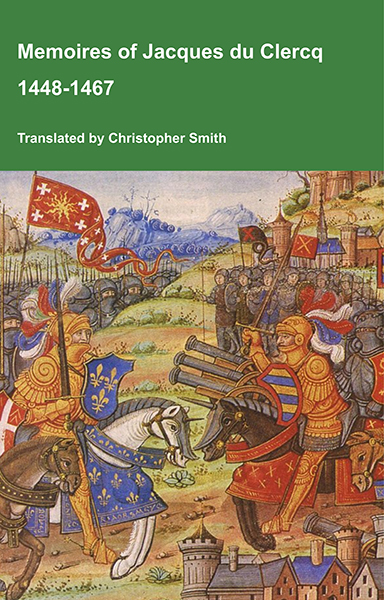
This is a translation of the 'Memoires of Jacques du Clercq', published in 1823 in two volumes, edited by Frederic, Baron de Reissenberg. In his introduction Reissenberg writes: 'Jacques du Clercq tells us that he was born in 1424, and that he was a licentiate in law and a counsellor to Philip the Good, Duke of Burgundy, in the castellany of Douai, Lille, and Orchies. It appears that he established his residence at Arras. In 1446, he married the daughter of Baldwin de la Lacherie, a gentleman who lived in Lille. We read in the fifth book of his Memoirs that his father, also named Jacques du Clercq, had married a lady of the Le Camelin family, from Compiègne. His ancestors, always attached to the counts of Flanders, had constantly served them, whether in their councils or in their armies.' The Memoires cover a period of nineteen years beginning in in 1448, ending in in 1467. It appears that the author had intended to extend the Memoirs beyond that date; no doubt illness or death prevented him from carrying out this plan. As Reissenberg writes the 'merit of this work lies in the simplicity of its narrative, in its tone of good faith, and in a certain air of frankness which naturally wins the reader’s confidence.' Du Clercq ranges from events of national and international importance, including events of the Wars of the Roses in England, to simple, everyday local events such as marriages, robberies, murders, trials and deaths, including that of his own father in Book 5; one of his last entries.
Available at Amazon in eBook and Paperback format.
Between 652 and 653 Bishop Brigilsus was consecrated Bishop of Dunwich aka East Anglia.
In 672 Bishop Bisi was appointed Bishop of Dunwich aka East Anglia.
In or after 672 Bishop Bedwinus was consecrated the first Bishop of Elmham after its creation following the division of the Bishop of Dunwich aka East Anglia.
In or after 1672 Bishop Acca of Dunwich was consecrated Bishop of Dunwich aka East Anglia.
On 1st April 1554 the Lord Chancellor Bishop Edmund "Bloody" Bonner of London [aged 54], assisted by Bishop Stephen Gardiner [aged 71], Bishop Nicholas Ridley [aged 54] and Bishop Cuthbert Tunstall [aged 80], consecrated seven bishops at Southwark Cathedral [Map]:
Bishop George Cotes was consecrated Bishop of Chester.
Bishop Gilbert Bourne was consecrated Bishop of Bath and Wells.
Bishop James Brooks [aged 41] was consecrated Bishop of Gloucester.
Bishop Maurice Griffiths [aged 47] was consecrated Bishop of Rochester.
Bishop Henry Morgan was consecrated Bishop of St David's.
Bishop John White [aged 44] was consecrated Bishop of Lincoln.
Bishop Robert Parfew aka Warton was consecrated Bishop of Hereford.
Henry Machyn's Diary. 1st April 1554. [The first day of April my lord chancellor [aged 54] did consecrate six new bishops at St. Mary Overy's [Map], before the high altar; and a goodly mass was said. And when all] was done thay yede unto my lord ch[ancellor's,] for ther was as grett a dener as youe ha[ve seen.] Thes be the bysshopes names that wher consecrated, [doctor] Whyt [aged 44], warden of Wynchastur, the bysshope of Ly[ncoln]; doctur Borne, bysshope of Bathe; doctur Morgan, bishop of sant Davys; doctur Brokes [aged 41], bysshope of Gloss [ter]; doctur Cottes, bysshope of Westtchastur; bysshope of sant Asse changyd to be bysshope of Arfford; master [Griffith] [aged 47] parsun of sant Magnus bysshope of Rochastur.
Before December 1661 Bishop William Nicholson [aged 70] was consecrated Bishop of Gloucester.
In 1672 Bishop John Pritchett was appointed Bishop of Gloucester.
John Evelyn's Diary. 27th February 1676. Dr. Pritchard, Bishop of Gloucester, preached at Whitehall [Map], on Isaiah v. 5, very allegorically, according to his manner, yet very gravely and wittily.
In 1691 Bishop Edward Fowler [aged 59] was appointed Bishop of Gloucester which position he held for life.
John Evelyn's Diary. 19th April 1691. The Archbishop of Canterbury [aged 74], and Bishops of Ely [aged 53], Bath and Wells [aged 53], Peterborough [aged 63], Gloucester [aged 69], and the rest who would not take the oaths to King William [aged 40], were now displaced; and in their rooms, Dr. Tillotson [aged 60], Dean of St. Paul's, was made Archbishop: Patrick [aged 64] removed from Chichester to Ely; Cumberland [aged 59] to Gloucester. Note. A mistake. Bishop Edward Fowler was made Bishop of Gloucester. Bishop Richard Cumberland [aged 59] was made Bishop of Peterborough.


William of Worcester's Chronicle of England
William of Worcester, born around 1415, and died around 1482 was secretary to John Fastolf, the renowned soldier of the Hundred Years War, during which time he collected documents, letters, and wrote a record of events. Following their return to England in 1440 William was witness to major events. Twice in his chronicle he uses the first person: 1. when writing about the murder of Thomas, 7th Baron Scales, in 1460, he writes '… and I saw him lying naked in the cemetery near the porch of the church of St. Mary Overie in Southwark …' and 2. describing King Edward IV's entry into London in 1461 he writes '… proclaimed that all the people themselves were to recognize and acknowledge Edward as king. I was present and heard this, and immediately went down with them into the city'. William’s Chronicle is rich in detail. It is the source of much information about the Wars of the Roses, including the term 'Diabolical Marriage' to describe the marriage of Queen Elizabeth Woodville’s brother John’s marriage to Katherine, Dowager Duchess of Norfolk, he aged twenty, she sixty-five or more, and the story about a paper crown being placed in mockery on the severed head of Richard, 3rd Duke of York.
Available at Amazon in eBook and Paperback format.
In 1779 Bishop James Yorke [aged 48] was appointed Bishop of Gloucester.
In 1815 Bishop Henry Dudley Ryder [aged 37] was appointed Bishop of Gloucester.
Bishop of Grimsby is an episcopal title used by a suffragan bishop of the Church of England Diocese of Lincoln.
In 1966 Bishop Gerald Fitzmaurice Colin [aged 52] was appointed Bishop of Grimsby.
On 2nd October 780 Bishop Higbald was consecrated Bishop of Holy Island.
Anglo-Saxon Chronicle. 803. This year died Hibbald, Bishop of Holy-island, on the twenty-fourth of June, and Egbert was consecrated in his stead, on the thirteenth of June following. Archbishop Ethelherd also died in Kent, and Wulfred was chosen archbishop in his stead. Abbot Forthred, in the course of the same year, departed this life.
Before 729 Bishop Aldwine was appointed Bishop of Lichfield and Bishop of Leicester.
In 1903 Bishop Lewis Clayton [aged 64] was appointed Bishop of Leicester.
In 678 Bishop Eadhed was appointed Bishop of Lindsey.
In 678 Bishop Eadhæd of Lindsey was consecrated Bishop of Lindsey.
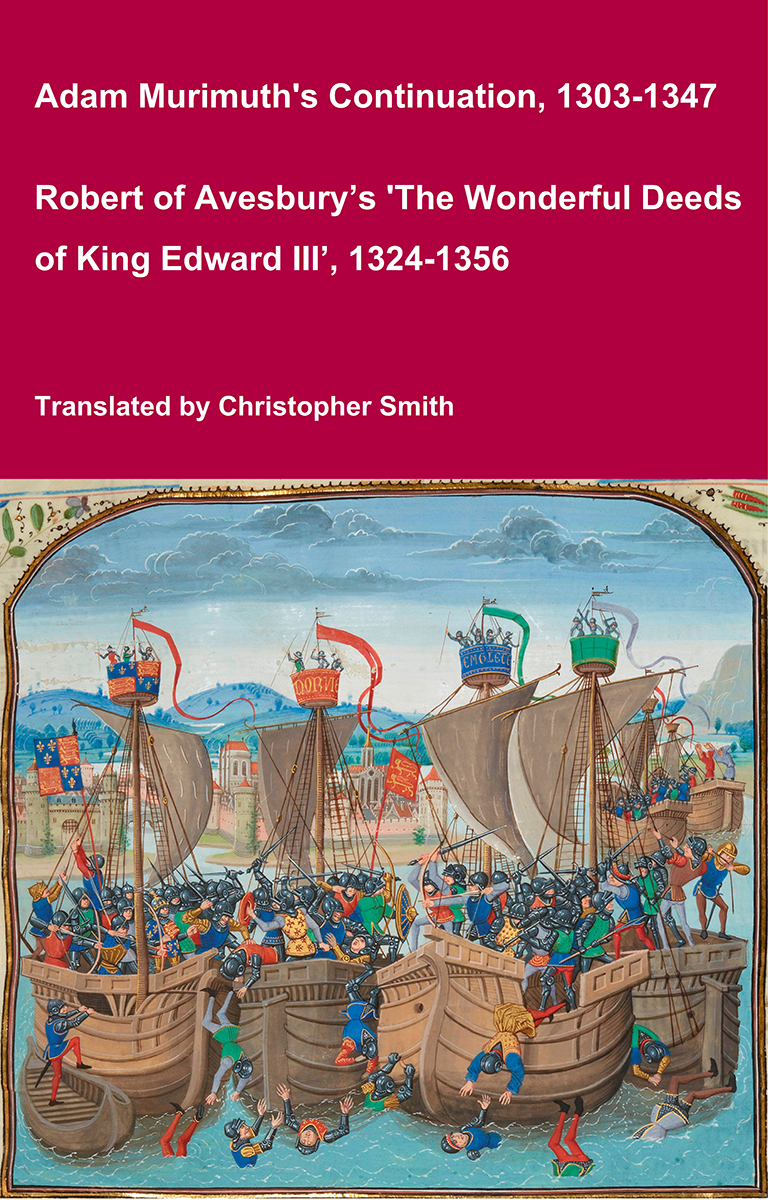
Adam Murimuth's Continuation and Robert of Avesbury’s 'The Wonderful Deeds of King Edward III'
This volume brings together two of the most important contemporary chronicles for the reign of Edward III and the opening phases of the Hundred Years’ War. Written in Latin by English clerical observers, these texts provide a vivid and authoritative window into the political, diplomatic, and military history of fourteenth-century England and its continental ambitions. Adam Murimuth Continuatio's Chronicarum continues an earlier chronicle into the mid-fourteenth century, offering concise but valuable notices on royal policy, foreign relations, and ecclesiastical affairs. Its annalistic structure makes it especially useful for establishing chronology and tracing the development of events year by year. Complementing it, Robert of Avesbury’s De gestis mirabilibus regis Edwardi tertii is a rich documentary chronicle preserving letters, treaties, and official records alongside narrative passages. It is an indispensable source for understanding Edward III’s claim to the French crown, the conduct of war, and the mechanisms of medieval diplomacy. Together, these works offer scholars, students, and enthusiasts a reliable and unembellished account of a transformative period in English and European history. Essential for anyone interested in medieval chronicles, the Hundred Years’ War, or the reign of Edward III.
Available at Amazon in eBook and Paperback format.
Bede. 678. In the year of our Lord's incarnation 678, which is the eighth of the reign of Egfrid [aged 33], in the month of August, appeared a star, called a comet, which continued for three months, rising in the morning, and darting out, as it were, a pillar of radiant flame. The same year a dissension broke out between King Egfrid and the most reverend prelate, Wilfrid, who was driven from his see, and two bishops substituted in his stead, to preside over the nation of the Northumbrians, namely, Bosa, to preside over the nation of the Deiri; and Eata over that of the Bernicians; the latter having his see in the city of York [Map], the former in the church of Hagulstad [Map], or else Lindisfarne [Map]; both of them promoted to the episcopal dignity from a society of monks. With them also was Edhed ordained bishop in the province of Lindsey, which King Egfrid had but newly subdued, having overcome and vanquished Wulfhere; and this was the first bishop of its own which that province had; the second was Ethelwin; the third Eadgar; the fourth Cynebert, who is there at present. Before Edhed, Sexwulf was bishop as well of that province, as of the Mercians and Midland Angles; so that when expelled from Lindsey, he continued in the government of those provinces. Edhed, Bosa, and Eata, were ordained at York [Map] by Archbishop Theodore [aged 76]; who also, three years after the departure of Wilfrid, added two bishops to their number; Trumbert, in the church of Hagulstad [Map], Eata still continuing in that of Lindisfarne; and Trumwine in the province of the Picts, which at that time was subject to the English. Edhed returning from Lindsey, because Ethelred had recovered that province, was placed by him over the church of Ripon.
Around 680 Bishop Æthelwine of Lindsey was consecrated Bishop of Lindsey.
Around 693 Bishop Edgar of Lindsey was consecrated Bishop of Lindsey.
Between 716 and 731 Bishop Cyneberht of Lindsey was consecrated Bishop of Lindsey.
On 25th January 1896 Edgar Jacob [aged 51] was consecrated Bishop of Newcastle upon Tyne.
Before 928 Archbishop Oda was consecrated as Bishop of Ramsbury.
In 1005 Bishop Bertwald of Ramsbury was appointed Bishop of Ramsbury.
After 22nd April 1045 Bishop Herman was appointed Bishop of Ramsbury.
Bede. 678. In the year of our Lord's incarnation 678, which is the eighth of the reign of Egfrid [aged 33], in the month of August, appeared a star, called a comet, which continued for three months, rising in the morning, and darting out, as it were, a pillar of radiant flame. The same year a dissension broke out between King Egfrid and the most reverend prelate, Wilfrid, who was driven from his see, and two bishops substituted in his stead, to preside over the nation of the Northumbrians, namely, Bosa, to preside over the nation of the Deiri; and Eata over that of the Bernicians; the latter having his see in the city of York [Map], the former in the church of Hagulstad [Map], or else Lindisfarne [Map]; both of them promoted to the episcopal dignity from a society of monks. With them also was Edhed ordained bishop in the province of Lindsey, which King Egfrid had but newly subdued, having overcome and vanquished Wulfhere; and this was the first bishop of its own which that province had; the second was Ethelwin; the third Eadgar; the fourth Cynebert, who is there at present. Before Edhed, Sexwulf was bishop as well of that province, as of the Mercians and Midland Angles; so that when expelled from Lindsey, he continued in the government of those provinces. Edhed, Bosa, and Eata, were ordained at York [Map] by Archbishop Theodore [aged 76]; who also, three years after the departure of Wilfrid, added two bishops to their number; Trumbert, in the church of Hagulstad [Map], Eata still continuing in that of Lindisfarne; and Trumwine in the province of the Picts, which at that time was subject to the English. Edhed returning from Lindsey, because Ethelred had recovered that province, was placed by him over the church of Ripon.
In 679 Bishop Eadhæd of Lindsey was consecrated Bishop of Ripon.
Jean de Waurin's Chronicle of England Volume 6 Books 3-6: The Wars of the Roses
Jean de Waurin was a French Chronicler, from the Artois region, who was born around 1400, and died around 1474. Waurin’s Chronicle of England, Volume 6, covering the period 1450 to 1471, from which we have selected and translated Chapters relating to the Wars of the Roses, provides a vivid, original, contemporary description of key events some of which he witnessed first-hand, some of which he was told by the key people involved with whom Waurin had a personal relationship.
Available at Amazon in eBook and Paperback format.
In 1836 Archbishop Charles Longley [aged 41] was consecrated Bishop of Ripon.


Before 716 Bishop Eadberht of Selsey was appointed Bishop of Selsey.
Around 717 Bishop Eolla was appointed Bishop of Selsey.
Before 811 Bishop Æthelwulf of Selsey was consecrated Bishop of Selsey.
Anglo-Saxon Chronicle. 980. In this year was Ethelgar consecrated bishop, on the sixth day before the nones of May, to the bishopric of Selsey; and in the same year was Southampton, Hampshire [Map] plundered by a pirate-army, and most of the population slain or imprisoned. And the same year was the Isle of Thanet [Map] overrun, and the county of Chester was plundered by the pirate-army of the North. In this year Alderman Alfere fetched the body of the holy King Edward at Wareham, Dorset [Map], and carried him with great solemnity to Shaftsbury [Map]
In 1058 Bishop Egelric was elected Bishop of Selsey.
Anglo-Saxon Chronicle. 1058. This year was Earl Elgar banished: but he soon came in again by force, through Griffin's assistance: and a naval armament came from Norway. It is tedious to tell how it all fell out. In this same year Bishop Aldred consecrated the minster church [Map] at Gloucester, which he himself had raised82 to the honour of God and St. Peter; and then went to Jerusalem83 with such dignity as no other man did before him, and betook himself there to God. A worthy gift he also offered to our Lord's sepulchre; which was a golden chalice of the value of five marks, of very wonderful workmanship. In the same year died Pope Stephen; and Benedict was appointed pope. He sent hither the pall to Bishop Stigand; who as archbishop consecrated Egelric a monk at Christ church, Bishop of Sussex; and Abbot Siward Bishop of Rochester.
Note 82 He built a new church from the foundation, on a larger plan. The monastery existed from the earliest times.
Note 83 Florence of Worcester says, that he went through Hungary to Jerusalem.
In 1058 Bishop Æthelric of Selsey was consecrated Bishop of Selsey.
Chronicon ex Chronicis by Florence and John of Worcester. 23rd May 1070. On Whitsunday [3rd May] the king [aged 42], at Windsor, Berkshire [Map], gave the archbishopric of York to the venerable Thomas, canon of Bayeux, and the bishopric of Winchester to his chaplain, Walkeline. On the following day, by the king's command, Ermenfrid, bishop of Sion, held a synod, [the other legates] the cardinals John and Peter having returned to Rome. At this synod, Ethelric, bishop of Sussex, was uncanonically deposed; and although he was guilty of no crime, the king soon afterwards placed him in confinement at Marlborough, Wiltshire [Map]; several abbots were also deprived. After these depositions, the king gave the bishopric of East-Anglia to Arfast, and the bishopric of Sussex to Stigand79, who were both his chaplains; which Stigand transferred his see to Chichester, the chief city in his diocese: the king also gave abbeys to some Norman monks. The archbishop of Canterbury being degraded, and the archbishop of York dead, Walkeline was, by the king's command, consecrated by the same Ermenfrid, bishop of Sion, on the octave of Whitsunday [30th May].
Note 79. This first bishop of Chichester must not be confounded with the archbishop of the same name.
In January 1546 Bishop Henry Man was elected Bishop of Sodor and Man.
On 14th February 1546 Bishop Henry Man was consecrated Bishop of Sodor and Man at St Paul's Cathedral [Map] by Bishop Edmund "Bloody" Bonner of London [aged 46], Bishop Thomas Chetham and Bishop John Hodgkins.
Adam Murimuth's Continuation and Robert of Avesbury’s 'The Wonderful Deeds of King Edward III'
This volume brings together two of the most important contemporary chronicles for the reign of Edward III and the opening phases of the Hundred Years’ War. Written in Latin by English clerical observers, these texts provide a vivid and authoritative window into the political, diplomatic, and military history of fourteenth-century England and its continental ambitions. Adam Murimuth Continuatio's Chronicarum continues an earlier chronicle into the mid-fourteenth century, offering concise but valuable notices on royal policy, foreign relations, and ecclesiastical affairs. Its annalistic structure makes it especially useful for establishing chronology and tracing the development of events year by year. Complementing it, Robert of Avesbury’s De gestis mirabilibus regis Edwardi tertii is a rich documentary chronicle preserving letters, treaties, and official records alongside narrative passages. It is an indispensable source for understanding Edward III’s claim to the French crown, the conduct of war, and the mechanisms of medieval diplomacy. Together, these works offer scholars, students, and enthusiasts a reliable and unembellished account of a transformative period in English and European history. Essential for anyone interested in medieval chronicles, the Hundred Years’ War, or the reign of Edward III.
Available at Amazon in eBook and Paperback format.
Henry Machyn's Diary. 22nd October 1556. The xxij day of October was bered doctur [Man], sumtime the pryor of Shen the charterhowse, and after mad bysshope of Man by kyng Edward the vjth; [and] was mared [married]; and bered at sant Andrews hundershaft [Map], London, and ded at master Whetheley('s) marchand tayller.
Note. P. 116. Burial of bishop Man at St. Andrew's Undershaft. "Henry Man, doctor of divinity in the university of Oxenford, and sometime bishop of Man, which Henry departed this life the 19. day of October, An. Do. 1556, and lyeth buried under this stone."—"before the doore within the chancell." (Stowe.) The letters patent of his appointment by Henry VIII. dated 22 Jan. 1545–6 are printed in Rymer's Fœdera, xv. 85.
On 1st October 1671 Bishop Henry Bridgeman was consecrated as Bishop of Sodor and Man.

On 7th January 1683 Bishop John Lake [aged 59] was appointed Bishop of Sodor and Man.

On 13th July 1838 Bishop James Bowstead [aged 37] was elected Bishop of Sodor and Man by Queen Victoria [aged 19].
On 22nd July 1838 Bishop James Bowstead [aged 37] was consecrated Bishop of Sodor and Man by Archbishop William Howley [aged 72].


On 10th January 1847 Bishop Walter Augustus Shirley [aged 49] was consecrated as Bishop of Sodor and Man.

On 23rd May 1847 Bishop Robert Eden 3rd Baron Auckland [aged 47] was consecrated Bishop of Sodor and Man.
In 1877 Bishop Thomas Legh Claughton [aged 68] was appointed Bishop of St Albans.
On 24th June 1890 Bishop John Wogan Festing [aged 52] was appointed Bishop of St Albans. The diocese had been created in 1877 and had only had one bishop before Festing.
In May 1903 Bishop Edgar Jacob [aged 58] was translated to Bishop of St Albans in which office he remained until December 1919 when he retired.
Chronicle of a Bourgeois of Valenciennes
Récits d’un bourgeois de Valenciennes aka The Chronicle of a Bourgeois of Valenciennes is a vivid 14th-century vernacular chronicle written by an anonymous urban chronicler from Valenciennes in the County of Hainaut. It survives in a manuscript that describes local and regional history from about 1253 to 1366, blending chronology, narrative episodes, and eyewitness-style accounts of political, military, and social events in medieval France, Flanders, and the Low Countries. The work begins with a chronological framework of events affecting Valenciennes and its region under rulers such as King Philip VI of France and the shifting allegiances of local nobility. It includes accounts of conflicts, sieges, diplomatic manoeuvres, and the impact of broader struggles like the Hundred Years’ War on urban life in Hainaut. Written from the perspective of a burgher (bourgeois) rather than a monastery or royal court, the chronicle offers a rare lay viewpoint on high politics and warfare, reflecting how merchants, townspeople, and civic institutions experienced the turbulence of the 13th and 14th centuries. Its narrative style combines straightforward reporting of events with moral and civic observations, making it a valuable source for readers interested in medieval urban society, regional politics, and the lived experience of war and governance in pre-modern Europe.
Available at Amazon in eBook and Paperback format.
On 1st May 1980 Bishop John Bernard Taylor [aged 50] was consecrated Bishop of St Albans. He was enthroned at St Albans Cathedral [Map] on 14th June 1980.
On 28th September 1891 Bishop John Gott [aged 60] was elected Bishop of Truro.
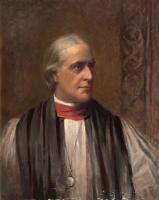
On 29th September 1891 Bishop John Gott [aged 60] was consecrated Bishop of Truro at St Paul's Cathedral [Map] by Archbishop Edward White Benson [aged 62].
In 1889 Bishop William Walsham How [aged 65] was was appointed the first Bishop of Wakefield.
On 7th May 735 Bishop Frithwald was consecrated Bishop of Whithorn aka Galloway.
On 16th July 762 Bishop Pehthelm was consecrated Bishop of Whithorn aka Galloway.
Anglo-Saxon Chronicle. 765. This year Eanbert was invested archbishop, on the fortieth day over mid-winter; and Frithwald, Bishop of Whitern, died on the nones of May. He was consecrated at York, on the eighteenth day before the calends of September, in the sixth year of the reign of Ceolwulf, and was bishop nine and twenty winters. Then was Petwin consecrated Bishop of Whitern at Adlingfleet, on the sixteenth day before the calends of August.
On 14th June 776 Archbishop Æthelbert of York was consecrated Bishop of Whithorn aka Galloway.
In 678 Bishop Bosa of York was appointed Bishop of York.
In 691 Bishop Bosa of York was appointed Bishop of York.
Bede. The same bishop John by his prayers healed a sick maiden.
The same Berthun told another miracle concerning the said bishop. When the most reverend Wilfrid, after a long banishment, was admitted to the bishopric of the church of Hagustald [Map], and the aforesaid John, upon the death of Bosa, a man of great sanctity and humility, was, in his place, appointed bishop of York, he himself came, once upon a time, to the monastery [Map] of nuns, at the place called Wetadun, where the Abbess Heriburg then presided. "When we were come thither," said he, "and had been received with great and universal joy, the abbess told us, that one of the nuns, who was her own daughter after the flesh, laboured under a grievous sickness, for she had been lately let blood in the arm, and whilst she was under treatment, was seized with an attack of sudden pain, which speedily increased, while the wounded arm became worse, and so much swollen, that it could scarce be compassed with both hands; and she lay in bed like to die through excess of pain. Wherefore the abbess entreated the bishop that he would vouchsafe to go in and give her his blessing; for she believed that she would soon be better if he blessed her or laid his hands upon her. He asked when the maiden had been let blood, and being told that it was on the fourth day of the moon, said, 'You did very indiscreetly and unskilfully to let blood on the fourth day of the moon; for I remember that Archbishop Theodore, of blessed memory, said, that blood-letting at that time was very dangerous, when the light of the moon is waxing and the tide of the ocean is rising. And what can I do for the maiden if she is like to die? ".
But the abbess still earnestly entreated for her daughter, whom she dearly loved, and designed to make abbess in her stead, and at last prevailed with him to go in and visit the sick maiden. Wherefore he went in, taking me with him to the maid, who lay, as I said, in sore anguish, and her arm swelling so greatly that it could not be bent at all at the elbow; and he stood and said a prayer over her, and having given his blessing, went out. Afterwards, as we were sitting at table, at the usual hour, some one came in and called me out, saying, 'Quoenburg' (that was the maid's name) 'desires that you should immediately go back to her.' This I did, and entering the chamber, I found her of more cheerful countenance, and like one in good health. And while I was sitting beside her, she said, 'Shall we call for something to drink?'-'Yes,' said I, 'and right glad am I, if you can.' When the cup was brought, and we had both drunk, she said, 'As soon as the bishop had said the prayer for me and given me his blessing and had gone out, I immediately began to mend; and though I have not yet recovered my former strength, yet all the pain is quite gone both from my arm, where it was most burning, and from all my body, as if the bishop had carried it away with him; notwithstanding the swelling of the arm still seems to remain.' But when we departed thence, the cure of the pain in her limbs was followed by the assuaging of the grievous swelling; and the maiden being thus delivered from pains and death, returned praise to our Lord and Saviour, in company with His other servants who were there.