

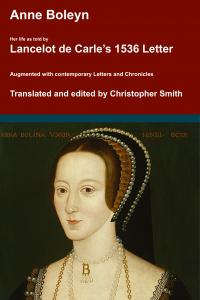
Anne Boleyn. Her Life as told by Lancelot de Carle's 1536 Letter.
In 1536, two weeks after the execution of Anne Boleyn, her brother George and four others, Lancelot du Carle, wrote an extraordinary letter that described Anne's life, and her trial and execution, to which he was a witness. This book presents a new translation of that letter, with additional material from other contemporary sources such as Letters, Hall's and Wriothesley's Chronicles, the pamphlets of Wynkyn the Worde, the Memorial of George Constantyne, the Portuguese Letter and the Baga de Secrets, all of which are provided in Appendices.
Available at Amazon in eBook and Paperback format.
Earl Marshal is in Offices of State.
1236 Marriage of Henry III and Eleanor of Provence
1536 Trial of Anne and George Boleyn
1680 Trial and Execution of William Howard 1st Viscount Stafford
Around 1130 John Fitzgilbert [aged 25] was appointed Earl Marshal.
In 1165 John Marshal [aged 20] was appointed Earl Marshal.
Chronica Majora by Matthew Paris. 20th January 1236. There were assembled at the king's [aged 28] nuptial festivities such a host of nobles of both sexes, such numbers of religious men, such crowds of the populace, and such a variety of actors, that London, with its capacious bosom, could scarcely contain them. The whole city was ornamented with flags and banners, chaplets and hangings, candles and lamps, and with wonderful devices and extraordinary representations, and all the roads were cleansed from mud and dirt, sticks, and everything offensive. The citizens, too, went out to meet the king and queen [aged 13], dressed out in their ornaments, and vied with each other in trying the speed of their horses. On the same day, when they left the city for Westminster, to perform the duties of butler to the king (which office belonged to them by right of old, at the coronation), they proceeded thither dressed in silk garments, with mantles worked in gold, and with costly changes of raiment, mounted on valuable horses, glittering with new bits and saddles, and riding in troops arranged in order. They carried with them three hundred and sixty gold and silver cups, preceded by the king's trumpeters and with horns sounding, so that such a wonderful novelty struck all who beheld it with astonishment. The archbishop of Canterbury [aged 61], by the right especially belonging to him, performed the duty of crowning, with the usual solemnities, the bishop of London assisting him as a dean, the other bishops taking their stations according to their rank. In the same way all the abbats, at the head of whom, as was his right, was the abbat of St. Alban's (for as the Protomartyr of England, St. Alban, was the chief of all the martyrs of England, so also was his abbat the chief of all the abbats in rank and dignity), as the authentic privileges of that church set forth. The nobles, too, performed the duties, which, by ancient right and custom, pertained to them at the coronations of kings. In like manner some of the inhabitants of certain cities discharged certain duties which belonged to them by right of their ancestors. The earl of Chester [aged 29] carried the sword of St. Edward, which was called "Curtein", before the king, as a sign that he was earl of the palace, and had by right the power of restraining the king if he should commit an error. The earl was attended by the constable of Chester [aged 44], and kept the people away with a wand when they pressed forward in a disorderly way. The grand marshal of England, the earl of Pembroke [aged 39], carried a wand before the king and cleared the way before him both, in the church and in the banquet-hall, and arranged the banquet and the guests at table. The Wardens of the Cinque Ports carried the pall over the king, supported by four spears, but the claim to this duty was not altogether undisputed. The earl of Leicester [aged 28] supplied the king with water in basins to wash before his meal; the Earl Warrenne performed the duty of king's Cupbearer, supplying the place of the earl of Arundel, because the latter was a youth and not as yet made a belted knight. Master Michael Belet was butler ex officio; the earl of Hereford [aged 32] performed the duties of marshal of the king's household, and William Beauchamp [aged 51] held the station of almoner. The justiciary of the forests arranged the drinking cups on the table at the king's right hand, although he met with some opposition, which however fell to the ground. The citizens of London passed the wine about in all directions, in costly cups, and those of Winchester superintended the cooking of the feast; the rest, according to the ancient statutes, filled their separate stations, or made their claims to do so. And in order that the nuptial festivities might not be clouded by any disputes, saving the right of any one, many things were put up with for the time which they left for decision at a more favourable opportunity. The office of chancellor of England, and all the offices connected with the king, are ordained and assized in the Exchequer. Therefore the chancellor, the chamberlain, the marshal, and the constable, by right of their office, took their seats there, as also did the barons, according to the date of their creation, in the city of London, whereby they each knew his own place. The ceremony was splendid, with the gay dresses of the clergy and knights who were present. The abbat of Westminster sprinkled the holy water, and the treasurer, acting the part of sub-dean, carried the Paten. Why should I describe all those persons who reverently ministered in the church to God as was their duty? Why describe the abundance of meats and dishes on the table & the quantity of venison, the variety of fish, the joyous sounds of the glee-men, and the gaiety of the waiters? Whatever the world could afford to create pleasure and magnificence was there brought together from every quarter.
On 10th February 1316 Thomas of Brotherton 1st Earl Norfolk [aged 15] was appointed Earl Marshal.
On 4th August 1338 Thomas of Brotherton 1st Earl Norfolk [aged 38] died at Framlingham Castle, Suffolk [Map]. His daughter Margaret succeeded 2nd Countess Norfolk. She also succeeded to the title Earl Marshal, the only woman to have held this office, and inherited Framlingham Castle, Suffolk [Map].
In 1377 John Fitzalan 1st Baron Arundel Baron Maltravers [aged 29] was appointed Earl Marshal.
On 13th June 1385 Thomas Mowbray 1st Duke of Norfolk [aged 17] as appointed Earl Marshal.
On 22nd September 1399 Thomas Mowbray 1st Duke of Norfolk [aged 31] died of plague in Venice [Map] whilst in exile. He was buried at St Mark's Cathedral, Venice [Map]. Duke Norfolk forfeit. His son Thomas [aged 14] succeeded 4th Earl Norfolk, 2nd Earl Nottingham, 7th Baron Mowbray, 8th Baron Segrave and Earl Marshal.
On 30th September 1399 King Henry IV of England [aged 32] became King of England usurping the throne of his cousin Richard II [aged 32] and Richard's heir, the seven year old Edmund Mortimer 5th Earl of March [aged 7] who was descended from Edward III's second son Lionel of Antwerp Duke of Clarence. This second usurption was to have far reaching consequences since it subsequently became the descent by which the House of York claimed precedence over the House of Lancaster being one of the causes of the Wars of the Roses. Duke Lancaster, Duke of Hereford, Earl Derby, Earl Lancaster and Earl of Leicester merged with the Crown.
Ralph Neville 1st Earl of Westmoreland [aged 35] was appointed Earl Marshal.


On 19th October 1432 John Mowbray 2nd Duke of Norfolk [aged 40] died at Epworth. His son John [aged 17] succeeded 3rd Duke Norfolk, 6th Earl Norfolk, 4th Earl Nottingham, 9th Baron Mowbray, 10th Baron Segrave and Earl Marshal.
On 6th November 1461 John Mowbray 3rd Duke of Norfolk [aged 46] died. He was buried at Thetford Priory, Norfolk [Map]. His son John [aged 17] succeeded 4th Duke Norfolk, 7th Earl Norfolk, 5th Earl Nottingham, 10th Baron Mowbray, 11th Baron Segrave and Earl Marshal.
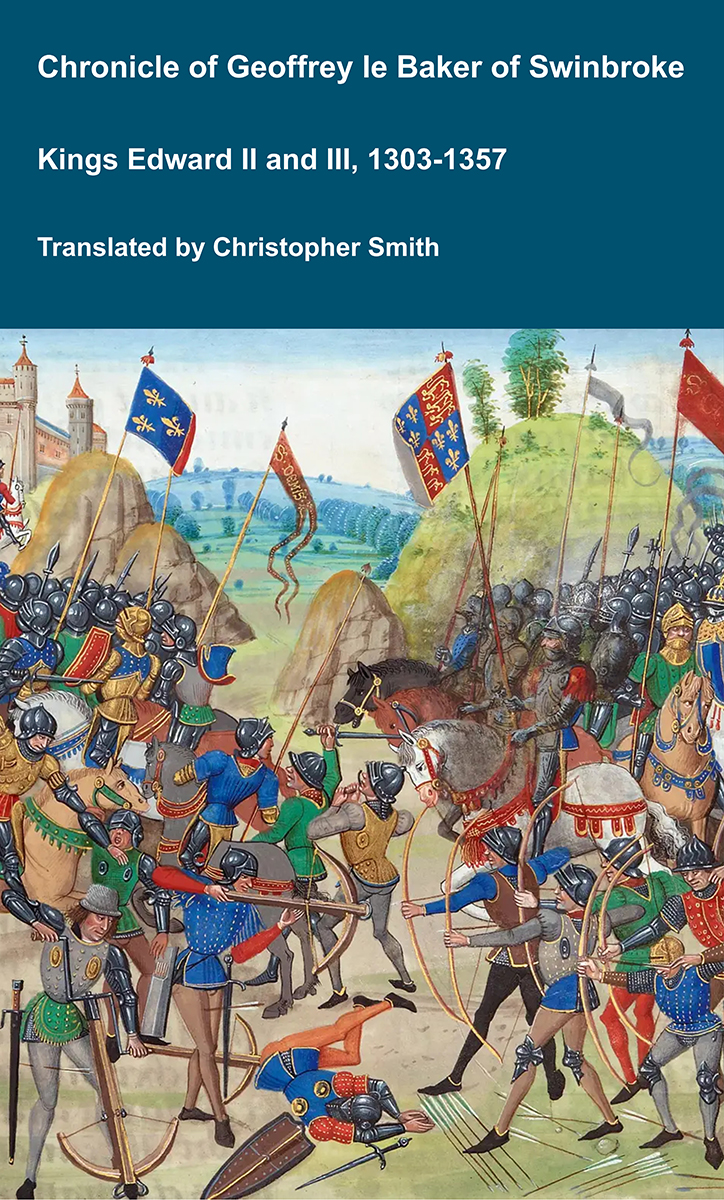
Chronicle of Geoffrey le Baker of Swinbroke
Baker was a secular clerk from Swinbroke, now Swinbrook, an Oxfordshire village two miles east of Burford. His Chronicle describes the events of the period 1303-1356: Gaveston, Bannockburn, Boroughbridge, the murder of King Edward II, the Scottish Wars, Sluys, Crécy, the Black Death, Winchelsea and Poitiers. To quote Herbert Bruce 'it possesses a vigorous and characteristic style, and its value for particular events between 1303 and 1356 has been recognised by its editor and by subsequent writers'. The book provides remarkable detail about the events it describes. Baker's text has been augmented with hundreds of notes, including extracts from other contemporary chronicles, such as the Annales Londonienses, Annales Paulini, Murimuth, Lanercost, Avesbury, Guisborough and Froissart to enrich the reader's understanding. The translation takes as its source the 'Chronicon Galfridi le Baker de Swynebroke' published in 1889, edited by Edward Maunde Thompson.
Available at Amazon in eBook and Paperback format.
On 19th February 1485 William Berkeley 1st Marquess Berkeley [aged 59] was appointed Earl Marshal for life.
In 1514 Thomas Howard 2nd Duke of Norfolk [aged 71] was appointed Earl Marshal.
In May 1533 William Howard 1st Baron Howard [aged 23] was appointed Earl Marshal.

On 28th May 1533 Thomas Howard 3rd Duke of Norfolk [aged 60] was appointed Earl Marshal.
Wriothesley's Chronicle [1508-1562]. Item, on Munday,c the 15th of May, 1536, there was arreigned within the Tower of London [Map] Queene Anne [aged 35],d for treason againste the Kinges owne person, and there was a great scaffold made in the Kinges Hall within the Tower of London [Map], and there were made benches and seates for the lordes, my Lord of Northfolke [aged 63] sittinge under the clothe of estate, representinge there the Kinges person as Highe Steward of Englande and uncle to the Queene, he holdinge a longe white staffe in his hande, and the Earle of Surrey [aged 20] his sonne and heire, sittinge at his feete before him holdinge the golden staffe for the Earle Marshall of Englande, which sayde office the saide duke had in his handes; the Lord Awdley Chauncellour of England [aged 48], sittinge on his right hande, and the Duke of Suffolke on his left hande, with other marqueses, earles, and lordes, everie one after their degrees.
Note c. Stow's account seems to hare been taken from this, with considerable verbal differences and some omissions.
Note d. There was no precedent for the trial of a Queen for treason, so Henry determined that she should be arraigned before a commission of Lords, as had been practised in the case of the Duke of Buckingham.


On 17th May 1569 George Dacre 5th Baron Dacre Gilsland 9th Baron Greystoke [aged 8] died. Baron Greystoke abeyant. There was a dispute as to whether his uncle Leonard Dacre should inherit Baron Dacre Gilsland which would be the case if it was created by letters patent, or whether the Barony was in abeyance between the 5th Baron's three sisters which would be the case of the barony had been created through a writ of summons. Such decisions would normally be referred to the Duke of Norfolk [aged 33] in his capacity as Earl Marshal but he, Thomas Howard 4th Duke of Norfolk, had married Elizabeth Leybourne Duchess Norfolk, the mother of the three daughters although she had died in the meantime; he was not impartial - the three daughters were now his step-daughters. The matter was referred to Commissioners who decided the Barony had been created by writ between and was, therefore, abeyant between the three daughters who were now the step-daughters of Thomas Howard 4th Duke of Norfolk. He, Thomas Howard 4th Duke of Norfolk subsequently married his eldest son Philip Howard 13th or 20th Earl of Arundel [aged 11] to his eldest step-daughter Anne Dacre Countess Arundel [aged 12]. After Thomas Howard's execution in 1572 the two remaining daughters, Mary Dacre [aged 5] and Elizabeth Dacre [aged 4] were married to his two remaining sons Thomas Howard 1st Earl Suffolk [aged 7] and William Howard [aged 5] respectively ensuring all of the Dacre and Greystoke wealth and estates in Cumberland, Yorkshire and Northumberland would become the property of the Howard family.


In 1572 George Talbot 6th Earl of Shrewsbury [aged 44] was appointed Earl Marshal.


On 23rd April 1661 King Charles II of England Scotland and Ireland [aged 30] was crowned II King England Scotland and Ireland at Westminster Abbey [Map].
John Bennet 1st Baron Ossulston [aged 44], Francis Fane [aged 23] and Edward Hungerford [aged 28] was appointed Knight of the Bath.
Francis Godolphin [aged 55] was knighted.
Josceline Percy 11th Earl of Northumberland [aged 16] attended.
James Howard 3rd Earl Suffolk [aged 42] was appointed Earl Marshal.


John Evelyn's Diary. 26th September 1672. I carried with me to dinner my Lord H. Howard [aged 44] (now to be made Earl of Norwich and Earl Marshal of England) to Sir Robert Clayton's [aged 43], now Sheriff of London, at his new house, where we had a great feast; it is built indeed for a great magistrate, at excessive cost. The cedar dining room is painted with the history of the Giants' War, incomparably done by Mr. Streeter [aged 51], but the figures are too near the eye.


John Evelyn's Diary. 29th August 1678. I was called to London to wait upon the Duke of Norfolk [aged 50], who having at my sole request bestowed the Arundelian Library on the Royal Society; sent to me to take charge of the books, and remove them, only stipulating that I would suffer the Herald's chief officer, Sir William Dugdale [aged 72], to have such of them as concerned heraldry and the marshal's office, books of armory and genealogies, the Duke being Earl Marshal of England. I procured for our Society, besides printed books, near one hundred MSS. some in Greek of great concernment. The printed books being of the oldest impressions, are not the less valuable; I esteem them almost equal to MSS. Among them, are most of the Fathers, printed at Basil, before the Jesuits abused them with their expurgatory Indexes; there is a noble MS. of Vitruvius. Many of these books had been presented by Popes, Cardinals, and great persons, to the Earls of Arundel and Dukes of Norfolk; and the late magnificent Earl of Arundel bought a noble library in Germany, which is in this collection. I should not, for the honor I bear the family, have persuaded the Duke to part with these, had I not seen how negligent he was of them, suffering the priests and everybody to carry away and dispose of what they pleased; so that abundance of rare things are irrecoverably gone.
John Evelyn's Diary. 30th November 1680. The signal day begun the trial (at which I was present) of my Lord Viscount Stafford [aged 66], (for conspiring the death of the King [aged 50], second son to my Lord Thomas Howard, Earl of Arundel and Surrey, Earl Marshal of England, and grandfather to the present Duke of Norfolk [aged 52], whom I so well knew, and from which excellent person I received so many favors. It was likewise his birthday, The trial was in Westminster Hall [Map], before the King, Lords, and Commons, just in the same manner as, forty years past, the great and wise Earl of Strafford (there being but one letter differing their names) received his trial for pretended ill government in Ireland, in the very same place, this Lord Stafford's father being then High Steward. The place of sitting was now exalted some considerable height from the paved floor of the hall, with a stage of boards. The throne, woolsacks for the Judges, long forms for the Peers, chair for the Lord Steward, exactly ranged, as in the House of Lords. The sides on both hands scaffolded to the very roof for the members of the House of Commons. At the upper end, and on the right side of the King's state, was a box for his Majesty, and on the left others for the great ladies, and over head a gallery for ambassadors and public ministers. At the lower end, or entrance, was a bar, and place for the prisoner, the Lieutenant of the Tower of London, the ax-bearer and guards, my Lord Stafford's two daughters, the Marchioness of Winchester being one; there was likewise a box for my Lord to retire into. At the right hand, in another box, somewhat higher, stood the witnesses; at the left, the managers, in the name of the Commons of England, namely, Serjeant Maynard [aged 76] (the great lawyer, the same who prosecuted the cause against the Earl of Strafford forty years before, being now near eighty years of age), Sir William Jones [aged 49], late Attorney-General, Sir Francis Winnington [aged 46], a famous pleader, and Mr. Treby, now Recorder of London, not appearing in their gowns as lawyers, but in their cloaks and swords, as representing the Commons of England: to these were joined Mr. Hampden, Dr. Sacheverell, Mr. Poule, Colonel Titus [aged 57], Sir Thomas Lee [aged 45], all gentlemen of quality, and noted parliamentary men. The first two days, in which were read the commission and impeachment, were but a tedious entrance into matter of fact, at which I was but little present. But, on Thursday, I was commodiously seated among the Commons, when the witnesses were sworn and examined. The principal witnesses were Mr. Oates [aged 31] (who called himself Dr.), Mr. Dugdale [aged 40], and Turberville [aged 32]. Oates swore that he delivered a commission to Viscount Stafford from the Pope, to be Paymaster-General to an army intended to be raised; Dugdale, that being at Lord Aston's, the prisoner dealt with him plainly to murder his Majesty; and Turberville, that at Paris he also proposed the same to him.
On 13th January 1684 Henry Howard 6th Duke of Norfolk [aged 55] died. His son Henry [aged 29] succeeded 7th Duke Norfolk, 18th or 25th Earl Arundel, 8th Earl Surrey, 5th Earl Norfolk, 2nd Earl Norwich, 18th Baron Mowbray, 19th Baron Segrave, 16th Baron Furnivall, 20th Baron Strange Blackmere, 17th Baron Talbot, 15th Baron Maltravers, 15th Baron Arundel, 2nd Baron Howard of Castle Rising, Earl Marshal. Mary Mordaunt Duchess Norfolk [aged 25] by marriage Duchess Norfolk.
On 23rd December 1732 Thomas Howard 8th Duke of Norfolk [aged 49] died without issue. His brother Edward [aged 46] succeeded 9th Duke Norfolk, 20th or 27th Earl Arundel, 10th Earl Surrey, 7th Earl Norfolk, 4th Earl Norwich, 20th Baron Mowbray, 21st Baron Segrave, 18th Baron Furnivall, 22nd Baron Strange Blackmere, 19th Baron Talbot, 17th Baron Maltravers, 17th Baron Arundel, 4th Baron Howard of Castle Rising and Earl Marshal. Mary Blount Duchess Norfolk [aged 21] by marriage Duchess Norfolk.
Parliament Rolls Richard II. 33. Also, on the same Saturday [10 February 1397], a charter of the king made to the earl marshal touching his office of marshal of England, and the gold staff adorned with the emblem of the king's arms which he will carry in his office, was read and delivered to the said earl. The tenor of which charter follows:
The king to the same, greeting. Know that whereas recently by our letters patent of our special grace we granted to our beloved kinsman Thomas, Earl of Nottingham, the office of marshal of England, together with the name and honour of earl marshal, to have to him and his male heirs issuing from his body, with all the fees, profits, and appurtenances whatsoever pertaining in any way to the said office, in perpetuity; as is fully contained in the same letters. We, mindful of the gracious and laudable services often performed by the aforementioned earl, on either side of the sea, for the benefit and honour of us and our kingdom, at no small effort, cost, and charge to him; and wishing therefore to provide for the estate and honour of that earl, of our special grace have granted in our present parliament for us and our heirs to the same earl the said office, and the name, title, and honour of earl marshal of England, to have to him and his male heirs issuing from his body, together with all offices, commodities, profits and other appurtenances whatsoever, both in our courts and elsewhere, relating or pertaining in any way to the same office, in the same manner and as fully, freely, wholly, and peacefully as Thomas Brotherton, lately Earl of Norfolk and marshal of England, father of our beloved kinswoman Margaret Countess of Norfolk, [widow] of the aforesaid late earl, or Roger Bigod sometime Earl of Norfolk and marshal of England, or any other after the death of the same former earl, or the same present earl, had or held the said office of marshal of England in their time.
Willing further and granting for us and our heirs, that the office of marshal of our Bench before us, which John Wicks holds for the term of his life by our grant, and the office of marshal in our treasury which Richard Gascoigne holds for his life by grant of our beloved brother Thomas Earl of Kent, lately marshal of England, by our confirmation; and also the office of herald of the marshal before the steward and marshal of our household, which Guy Allesley holds for his life by grant of the lord Edward [III], late king of England, our grandfather, and by our confirmation; which offices after the death of the aforesaid John, Richard and Guy should revert to us and our heirs, after the death of the same John, Richard, and Guy shall remain to the aforementioned earl marshal, to have to him and his male heirs in perpetuity. And that the same offices, and all other offices in any of our courts and elsewhere, which pertained, and used to pertain to the said office of marshal of England in times past, shall be fully restored, annexed, and reunited to the said office of marshal of England in perpetuity. And that the same earl and his male heirs may give, grant, or confer those offices on any suitable persons freely and without hindrance as soon as they shall have fallen vacant by death, demise, resignation, surrender, or in any other way, notwithstanding any of our letters patent made to the contrary.
Considering also the vigour and nobility of that earl, and that he may in future the more fittingly and honourably perform and exercise the aforesaid office, we have granted for us and our heirs to the same present earl that he and his said male heirs, marshals of England, by virtue of their aforesaid office should have, carry, and bear, as well in the presence as in the absence of us and our heirs, a certain gold staff, with both ends enamelled in black, and with the emblem of our arms decorating the top of the said staff, and with the emblem of the arms of that earl decorating the bottom of the said staff; notwithstanding that the same present earl in his time, or the aforementioned former earls, or any other who had the said office of marshal of England before this time, used to carry or bear a wooden staff. Witnessed by these, the venerable fathers Thomas archbishop of Canterbury, primate of all England, Robert of London, William of Winchester, John of Ely, Edmund of Exeter, our chancellor, bishops; John of Aquitaine and Lancaster, Edmund of York, dukes, our beloved uncles; Henry of Derby, Edward of Rutland, Henry of Northumberland, earls; Reginald Grey of Ruthin, Ralph Neville, John Lovell, knights; Roger Walden, dean of York, our treasurer, Thomas Percy, steward of our household, and others. Given by our hand at Westminster on 10 February 1397.
In March 1816 Henry Howard-Molyneux-Howard [aged 49] was appointed Deputy Earl Marshal.
On 8th September 1831 King William IV of the United Kingdom [aged 66] was crowned IV King Great Britain and Ireland at Westminster Abbey [Map].
Kenneth Alexander Howard 1st Earl of Effingham [aged 63] attended as Deputy Earl Marshal as a result of Henry Howard-Molyneux-Howard being ill.
Thomas William Anson 1st Earl Lichfield [aged 35] was created 1st Earl Lichfield. Louisa Barbara Catherine Phillips Countess Lichfield [aged 31] by marriage Countess Lichfield.


Anne Boleyn. Her Life as told by Lancelot de Carle's 1536 Letter.
In 1536, two weeks after the execution of Anne Boleyn, her brother George and four others, Lancelot du Carle, wrote an extraordinary letter that described Anne's life, and her trial and execution, to which he was a witness. This book presents a new translation of that letter, with additional material from other contemporary sources such as Letters, Hall's and Wriothesley's Chronicles, the pamphlets of Wynkyn the Worde, the Memorial of George Constantyne, the Portuguese Letter and the Baga de Secrets, all of which are provided in Appendices.
Available at Amazon in eBook and Paperback format.
On 19th July 1821 Kenneth Alexander Howard 1st Earl of Effingham [aged 53] attended as Deputy Earl Marshal as a result of Henry Howard-Molyneux-Howard [aged 54] being ill at Westminster Abbey [Map] during the Coronation of William IV.
On 19th July 1821 King George IV of Great Britain and Ireland [aged 58] was crowned IV King Great Britain and Ireland.
King George IV of Great Britain and Ireland barred Caroline of Brunswick Queen Consort England [aged 53] from attending the Coronation. She attempted to attend but was turned away at the doors of Westminster Abbey. Refused entry at both the doors to the East Cloister and the doors to the West Cloister, Caroline attempted to enter via Westminster Hall, where many guests were gathered before the service began. A witness described how the Queen stood at the door fuming as bayonets were held under her chin until the deputy lord chamberlain had the doors slammed in her face. Henry Brougham recorded his distaste.1. She died three weeks later.
William Cavendish 6th Duke Devonshire [aged 31] carried the Orb at Westminster Abbey [Map].
Kenneth Alexander Howard 1st Earl of Effingham [aged 53] attended as Deputy Earl Marshal as a result of Henry Howard-Molyneux-Howard [aged 54].
See Creevy Papers.


In 1604 Thomas Vavasour [aged 44] was appointed Knight Marshall.
In October 1618 Thomas Vavasour [aged 58] sold his office of Knight Marshall to.