

The Deeds of the Dukes of Normandy
The Gesta Normannorum Ducum [The Deeds of the Dukes of Normandy] is a landmark medieval chronicle tracing the rise and fall of the Norman dynasty from its early roots through the pivotal events surrounding the Norman Conquest of England. Originally penned in Latin by the monk William of Jumièges shortly before 1060 and later expanded at the behest of William the Conqueror, the work chronicles the deeds, politics, battles, and leadership of the Norman dukes, especially William’s own claim to the English throne. The narrative combines earlier historical sources with firsthand information and oral testimony to present an authoritative account of Normandy’s transformation from a Viking settlement into one of medieval Europe’s most powerful realms. William’s history emphasizes the legitimacy, military prowess, and governance of the Norman line, framing their expansion, including the conquest of England, as both divinely sanctioned and noble in purpose. Later chroniclers such as Orderic Vitalis and Robert of Torigni continued the history, extending the coverage into the 12th century, providing broader context on ducal rule and its impact. Today this classic work remains a foundational source for understanding Norman identity, medieval statesmanship, and the historical forces that reshaped England and Western Europe between 800AD and 1100AD.
Available at Amazon in eBook and Paperback format.
Maine is in France.
Anglo-Saxon Chronicle. 1073. This year led King William [aged 45] an army, English and French, over sea, and won the district of Maine [Map]; which the English very much injured by destroying the vineyards, burning the towns, and spoiling the land. But they subdued it all into the hand of King William, and afterwards returned home to England.
On 24th February 1191 John Montgomery I Count Alençon died at his Château d'Alençon. His son John succeeded II Count Alençon albeit he survived only three months.
On 2nd July 866 Ranulf I Duke Aquitaine [aged 46] and Robert "Strong" [aged 36] were killed fighting the joint Breton-Viking army at the Battle of Brissarthe at Brissarthe.
On 19th May 1106 Geoffrey "Martel" Anjou IV Count Anjou [aged 34] was killed at Candé.
On 26th March 1199 King Richard "Lionheart" I of England [aged 41] was besieging Châlus Chabrol Castle. During the course of the evening King Richard "Lionheart" I of England was shot by a crossbow. Richard died on 6th April 1199. His brother John [aged 32] succeeded I King of England.
His mother Eleanor appears to have been present at his death as confirmed in a Charter by her on 21st April: 'quia dilectus noster Lucas, abjbas de Torpiniaco, affuit nobiscum infirmitati et funeri karissimi filii nostri regis, et circa eiusdem exequias pre omnibus aliis religiosis laboravit.' i.e. 'because our beloved Luke, abbot of Turpenay, was with us during the illness and at the funeral of our most dear son the king, and worked more than all other religious men in carrying out his obsequies.' 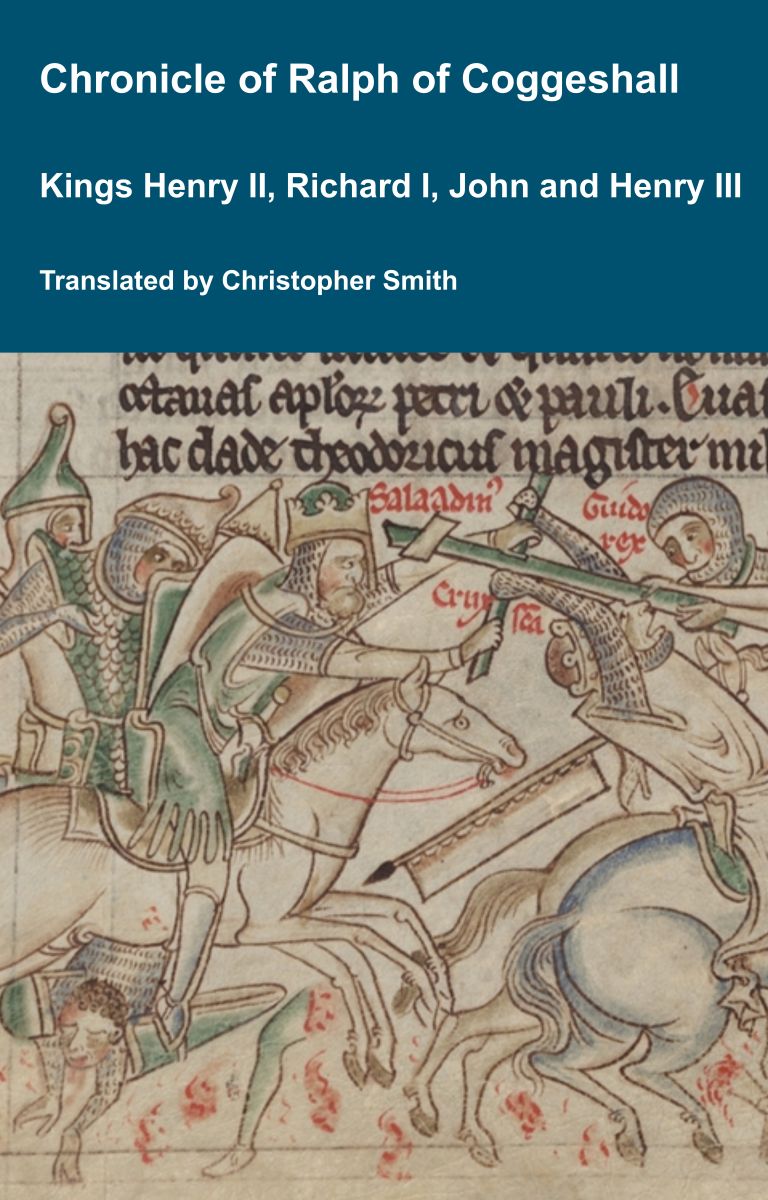 Coggeshall also mentioned that Richard 'summoned by letter his mother, who was dwelling at Fontevraud'.
There was a brother between Richard and John named Geoffrey Duke of Brittany who had a son Arthur [aged 11], who was around twelve, and a daughter Eleanor [aged 15], who was around fifteen, whose mother was Constance Penthièvre Duchess Brittany [aged 38].
King Philip II of France [aged 33] had planned for Eleanor to marry his son, probably to bring Brittany into the French Royal family, possibly to pursue a claim on England.
King Philip II of France supported Arthur's claim to the English throne. In the resulting war Arthur was captured, imprisoned and never seen again. Eleanor was captured, probably around the same time as Arthur, and imprisoned, more or less, for the remainder of her life, even after King John's death through the reign of King Henry III since she represented a threat to Henry's succession.
Effigy of King Richard I. Shortly after it was Richard's fate to lose his life in a petty feud. The Count of Limoges, a dependant on the Dukes of Aquitaine, having found a treasure on his land, Richard, as lord paramount, laid claim to the whole, and to enforce his right, besieged the Castle of Chaluz, where it was supposed the treasure was deposited. He was wounded by a quarrel, from the steelbow of an arbalister on the ramparts of the Castle. Hearing the twang of the implement, he stooped forward to avoid the shot, and in consequence of that movement received it in his left shoulder. The barbed head of the arrow remained in the wound, the severity of which was much increased by the attempts of an unskilful surgeon to cut it out. The Castle being taken, and the archer brought before the King, he justified the deed, by saying that Richard with his own hand had killed his father and his two brothers. The King, with a true magnanimity, commanded him to be set at liberty with a reward of a hundred shillings; an order basely disregarded after the King s death by one of his mercenary chiefs, who caused the arbalister to be flayed alive and hanged. Richard having received the Sacraments of the Church, died in the fortress above-mentioned on Tuesday 6th April 1199, after a reign of nine-years and nine months. He directed his heart to be carried to his faithful city of Rouen for interment in the Cathedral; his bowels, as his ignoble parts, to the rebellious Poictevins; and his body to be buried at the feet of his father Henry the Second at Fontevraud [Map]. This gave rise to the following Leonine verses, which are quoted by Matthew Paris as having been written for him by some rhimer of the day by way of epitaph, in which the idea that so mighty a ruin was too great for one place, is not destitute of point:
Pictavus exta ducis sepelit tellusque Chalutis; [Pictavus buried the existence of the leader and the land of Châlus]
Corpus dat claudi sub marmore Fontis Ebraudi; [The body is closed under the marble of the Fontevraud]
Neustria, tuque tegis cor inexpugnabile regis; [Neustria (Rouen?), and you cover the impregnable heart of the king]
Sic loca per trina te sparsit tanta ruina. [Thus you were scattered in three places by so great a fall]
Non fuit hoc funus cui sufHceret locus unus. [This was not a funeral for which one place would suffice]
Chronicle of Roger de Hoveden. King Richard I of England Is Fatally Wounded at Châlus Chabrol Castle.
Ricardus rex Angliæ vulneratur plaga insanabili apud Chaluz.
Archaeologia Volume 29 Section XV. Richard having received his death wound under the walls of the castle of Chaluz in Limosin, directed that his body should be interred at Fontevrault [Map], at the foot of his father's tomb; his effigy is still preserved there, and has been accurately represented by Charles Stothard. His heart he bequeathed to the Canons of Rouen, to whom in his lifetime he had been a benefactor, and who gratefully enshrined the relic in a sumptuous receptacle, as we learn from a contemporary writer, Guillaume le Breton.
"Cujus cor Rotomagensis [Whose heart is Rouen]
Ecclesie clerus argento clausit et auro, [The clergy closed the church with silver and gold]
Sanctorumque inter sacra corpora, in æde sacratâ [And among the sacred bodies of the saints, in the sacred meal]
Compositum, nimio devotus honorat honore; [The compound, the most devout, honors with honor]
Ut tante ecclesia devotio tanta patenter [So much devotion to the church so openly]
Innuat in vita quantum dilexerit illum." [He hints in life how much he loves him] Putipripos, Lib. v.
Around 994 Warin Belleme Seigneur de Domfront was born to William "Princeps" Belleme [aged 34] and Mathilde Condé Sur Noireau [aged 24] in Domfront Orne. He married before 1026 Melisende Viscountess Châteaudun and had issue.
Around 984 Herbert "Wakedog" Maine I Count Maine was born to Hugh Maine III Count Maine [aged 24] and Unamed Penthièvre Countess Maine at Le Mans [Map].
Chronicon ex Chronicis by Florence and John of Worcester. 1073. William [aged 45], king of England, reduced to subjection the city of Mans [Map], and the province belonging to it, chiefly by the aid of the English whom he had taken over with him. Edgar [aged 22] the etheling came from Scotland to Normandy, passing through England; and was reconciled to the king.
On 5th March 1133 King Henry "Curtmantle" II of England was born to Geoffrey Plantagenet Duke Normandy [aged 19] and Empress Matilda [aged 31] at Le Mans [Map]. The date somewhat uncertain since contemporary Chroniclers only mention his birth as being in March. He a grandson of King Henry I "Beauclerc" England. He married 18th May 1152 his half third cousin Eleanor of Aquitaine Queen Consort Franks and England, daughter of William "Saint" Poitiers X Duke Aquitaine and Aenor Chatellerault Duchess Aquitaine, and had issue.
On 4th December 1370 Thomas Grandison 4th Baron Grandison [aged 31] was captured by Bertrand Du Guesclin [aged 50] and Olivier III de at Le Mans [Map].
Abbot John Whethamstede’s Chronicle of the Abbey of St Albans
Abbot John Whethamstede's Register aka Chronicle of his second term at the Abbey of St Albans, 1451-1461, is a remarkable text that describes his first-hand experience of the beginning of the Wars of the Roses including the First and Second Battles of St Albans, 1455 and 1461, respectively, their cause, and their consequences, not least on the Abbey itself. His text also includes Loveday, Blore Heath, Northampton, the Act of Accord, Wakefield, and Towton, and ends with the Coronation of King Edward IV. In addition to the events of the Wars of the Roses, Abbot John, or his scribes who wrote the Chronicle, include details in the life of the Abbey such as charters, letters, land exchanges, visits by legates, and disputes, which provide a rich insight into the day-to-day life of the Abbey, and the challenges faced by its Abbot.
Available at Amazon in eBook and Paperback format.
In 1425 Thomas Montagu 1st Count Perche 4th Earl Salisbury [aged 36] was captured at Le Mans [Map].
On 7th September 1151 Geoffrey Plantagenet Duke Normandy [aged 38] died at Château du Loir [Map]. He was buried at St Julien's Cathedral [Map].
Archaeologia Volume 29 Section III. The volume of Monumental Effigies, drawn and engraved by Mr. Charles Alfred Stothard, F.S.A. the late draughtsman to the Society, is so generally known and so highly appreciated wherever known, that it is only necessary, in order to introduce the subject of the following remarks, to remind the reader that it was left imperfect, in consequence of the author's sudden death, from a lamentable accident which occurred in the pursuit of his congenial profession. It was a part of Mr. Stothard's plan to have included in his work a complete series of the effigies of the Kings and Queens of this country; and for that purpose he visited France, and brought from Fontevraud [Map] his drawings of the statues of Henry the Second and his Queen, of Richard the First, and of Isabella Queen of John; and from the Abbey of L'Espan, near le Mans, the effigy of Berengaria, Queen of Richard I., as well as the figure of Geoffrey, Comte of Anjou, from an enamelled Plate in the church of St. Julien at le Mans [Map]. There were others, however, and those by no means inferior to any in beauty or interest, which had been left, perhaps from the very reason of their being within immediate reach, until some convenient opportunity, which was frustrated by the premature close of the artist's career. I allude particularly to thosea of Queen Philippa, King Richard the Second, and his Queen Anne of Bohemia, all in Westminster Abbey.
Note a. Mr. Stothard also intended to have included in his work all the knightly effigies in the Temple church. Those he omitted will be given by the Messrs. Hollis.


On 4th December 1370 the Battle of Pontvallain was a French army under Bertrand du Guesclin [aged 50] heavily defeated an English force at Pontvallain which had broken away from an army commanded by Robert Knollys [aged 45].
Thomas Grandison 4th Baron Grandison [aged 31] commanded.
Philip Courtenay [aged 15] and Hugh Despencer [aged 32] were captured.
Alan Buxhull [aged 47] fought.