

The Deeds of the Dukes of Normandy
The Gesta Normannorum Ducum [The Deeds of the Dukes of Normandy] is a landmark medieval chronicle tracing the rise and fall of the Norman dynasty from its early roots through the pivotal events surrounding the Norman Conquest of England. Originally penned in Latin by the monk William of Jumièges shortly before 1060 and later expanded at the behest of William the Conqueror, the work chronicles the deeds, politics, battles, and leadership of the Norman dukes, especially William’s own claim to the English throne. The narrative combines earlier historical sources with firsthand information and oral testimony to present an authoritative account of Normandy’s transformation from a Viking settlement into one of medieval Europe’s most powerful realms. William’s history emphasizes the legitimacy, military prowess, and governance of the Norman line, framing their expansion, including the conquest of England, as both divinely sanctioned and noble in purpose. Later chroniclers such as Orderic Vitalis and Robert of Torigni continued the history, extending the coverage into the 12th century, providing broader context on ducal rule and its impact. Today this classic work remains a foundational source for understanding Norman identity, medieval statesmanship, and the historical forces that reshaped England and Western Europe between 800AD and 1100AD.
Available at Amazon in eBook and Paperback format.
1340-1349 Plague and Crecy is in 14th Century Events.
On 24th June 1340 King Edward III of England [aged 27] attacked the French fleet at anchor during the Battle of Sluys capturing more than 200 ships, killing around 18000 French. The English force included John Beauchamp 1st Baron Beauchamp Warwick [aged 24], William Bohun 1st Earl of Northampton [aged 30], Henry Scrope 1st Baron Scrope of Masham [aged 27], William Latimer 4th Baron Latimer of Corby [aged 10], John Lisle 2nd Baron Lisle [aged 22], Ralph Stafford 1st Earl Stafford [aged 38], Henry of Grosmont 1st Duke Lancaster [aged 30], Walter Manny 1st Baron Manny [aged 30], Hugh Despencer 1st Baron Despencer [aged 32] and Richard Pembridge [aged 20].
Thomas Monthermer 2nd Baron Monthermer [aged 38] died from wounds. His daughter Margaret succeeded 3rd Baroness Monthermer.
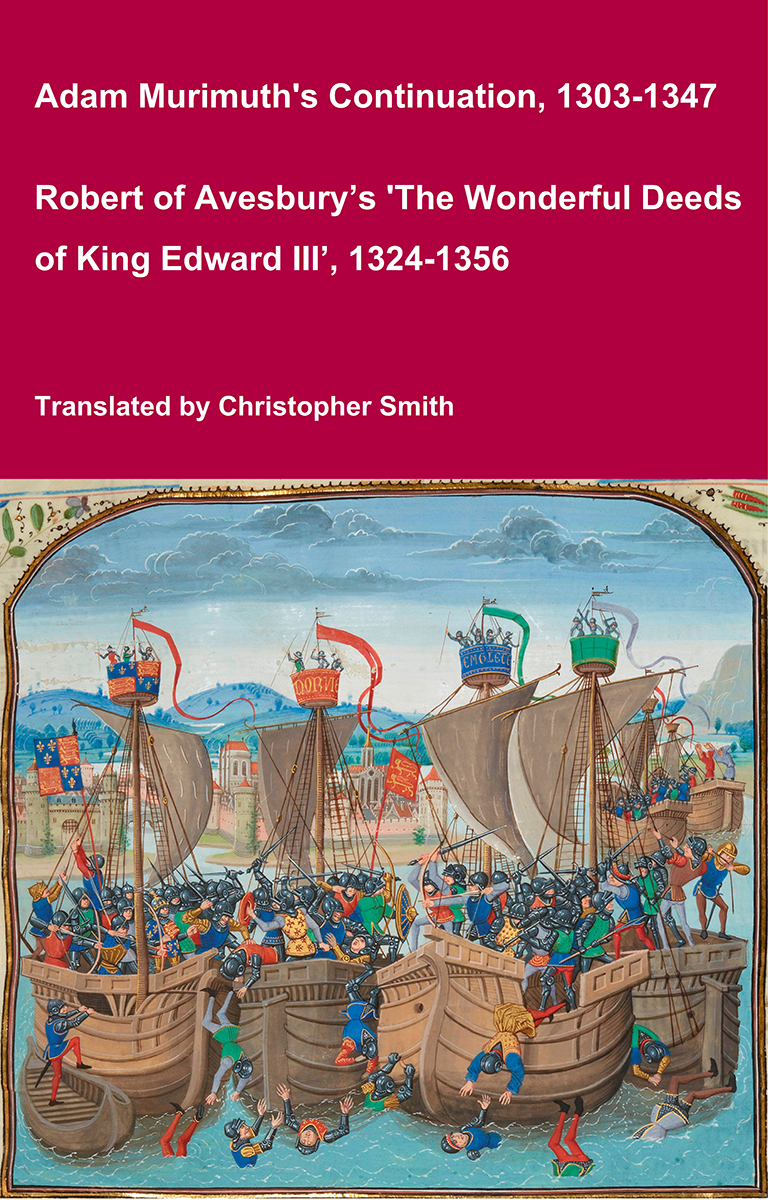 Adam Murimuth Continuation. And on the Thursday before the feast of the Nativity of Saint John the Baptist, the king had a favourable wind and began to sail successfully. On the following Friday, that is, on the vigil of Saint John [23rd June 1340], he saw the fleet of France drawn up in the port of Sluys, arranged like ranks of fortified positions. Throughout that day he deliberated what would be best to do. On the feast of Saint John the Baptist 24th June 1340, in the morning, the French fleet, dividing itself into three squadrons, advanced about a mile toward the fleet of the king of England. Perceiving this, the king of England declared that there was no longer time to wait, and he prepared himself and his men for battle. Thus, shortly after the ninth hour, having the wind and the sun at his back and the force of the tide with him, he likewise divided his fleet into three squadrons and attacked the French.
A great naval battle was then fought, because of the strength and size of the ships of Spain and France prepared for combat. Nevertheless, the English overcame the French and broke into the ships of the first division, among them a very large vessel called the Saint Denis, another called the Saint George, and others named the Christopher and the Black Cogges, which the French had earlier deceitfully seized in the port of Sluys. In this first clash were present the earls of Gloucester, Northampton, and Huntingdon, who was commander and admiral of the ships of the Cinque Ports, and Sir Robert de Morley, admiral and leader of the northern fleet from Yarmouth, Lynn, and other northern ports, along with many other nobles. When the first French division had been defeated, though with great difficulty, the English attacked the second, which they overcame more easily, for many of the enemy cast themselves into the sea; and they captured their ships, as evening approached. With nightfall, because of the darkness and extreme exhaustion, they wished to rest until morning. But the ships of the third French division attempted to flee secretly, and about thirty ships escaped. One large ship among them, called the James of Dieppe, tried in its flight to seize a ship of Sandwich belonging to the priory of Christ Church, Canterbury; but its crew defended themselves, with the aid of the earl of Huntingdon. The fighting continued until morning, that is, on the day after the feast of Saint John the Baptist; but in the end the English defeated the Normans and captured their ship, in which they found more than four hundred men slain and dead.
Et die Jovis ante festum Nativitatis sancti Johannis baptistæ habuit ventum bonum, et incepit feliciter navigare. Et die Veneris sequenti, scilicet in vigilia sancti Johannis, vidit classem navium Franciæ in portu de la Swyne paratam cet quasi castrorum acies ordinatam; et per totam illam diem deliberavit quid essect consultius faciendum. Et in festo sancti Johannis Daptistie, mane, classis Franciæ, se dividens in tres turmas, movit se per spatium unius milliaris versus classem regis Angliæ. Quod percipiens rex Angliæ dixit non esse ulterius exspectandum, sed se et suos ad arma paravit; it quod cito post horam nonam, quando habuit ventum et solem ad tergum et vim fluminis secum, divisit navigium suum similiter in tres turmas et Francis dedit insultum.
Ubi fuit magnum prœlium navale commissum, propter fortitudinem et magnitudinem navium Hispanite et Franciæ ad prœlium paratarum. Tamen Anglici Gallicos devicerunt et naves primæ cohortis intrarunt, videlicet unam maximaun navem vocatam Sanctus Dionisius et aliam vocatam Sanetus Georgius et alias naves, videlicet Christofre, et Blakekoges, quas Gallici primitus, ut supra seriptum est, in portu de Swyne dolose ceperunt. Et in isto primo conflictu fuerunt comites Gloucestriæ, Northamptoniæ, e Huntyngdoniæ, qui fuit dux et admirallus navium de Quinque Portubus, et dominus Robertus de Morley, qui fuit admirallus et dux navium borealium, scilicet de Yarnemouth, Lynne, et ceterarum navium borealium, et multi alii nobiles. Victa igitur prima cohorte Gallicorum, licet cum magna difficultate, dederunt insultum secundæ, quam facilius devicerunt, quia multi se gratis submerserunt; et naves eorum ceperunt, quasi in crepusculo noctis Adveniente nocte, tam propter obscuritatem quam propter nimiam fatigationem, quiescere voluerunt usque mane. Sed naves tertiæ cohortis Gallicorum latenter fugere voluerunt; et fugerunt circa XXX naves. Sed una magna navis illarum,quæ vocabatur James de Depe, voluit fugiendo cepisse quandam navem de Sandewyco, quæ fuit prioris ecclesiæ Christi Cantuariæ; sed ipsi se defenderunt, cum adjutorio comitis Huntyngdoniæ. Et duravit conflictus usque mane, scilicet in crastino sancti Johannis baptistæ, sed finaliter Anglici vicerunt Normannos et navem illorum ceperunt, in qua quadringentos homines et ultra interfectos et mortuos invenerunt.
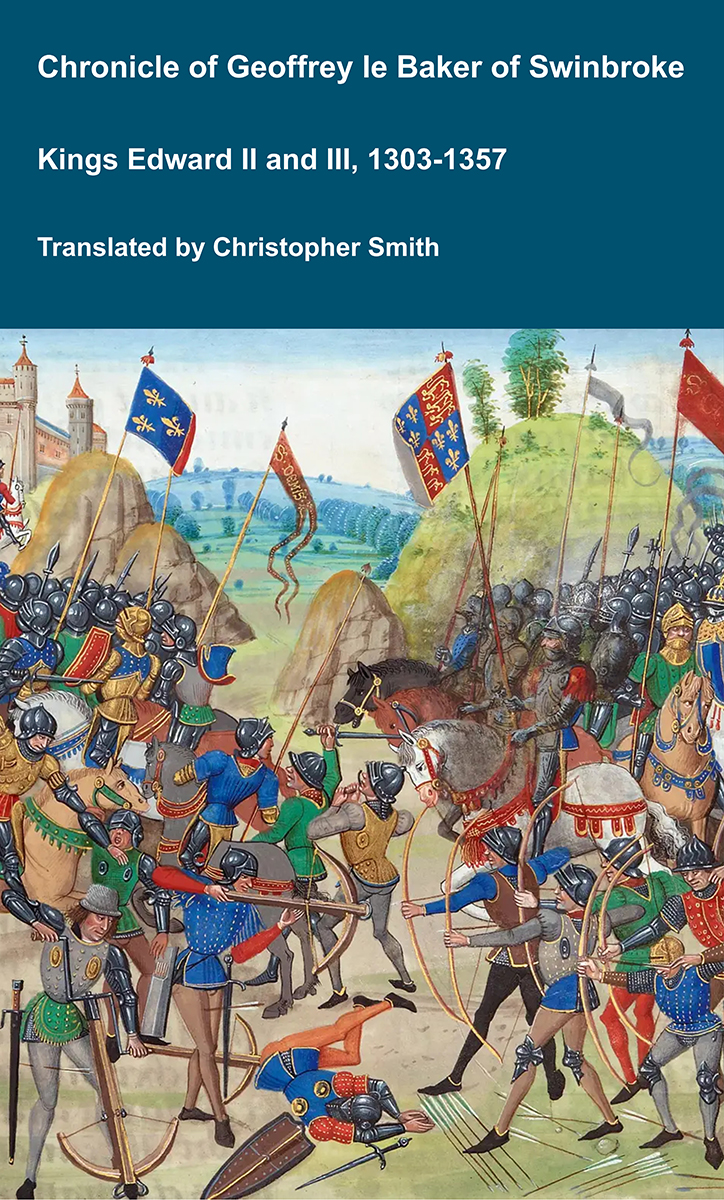 Chronicle of Geoffrey le Baker of Swinbroke. On the feast of Saint John the Baptist1 [24th June 1340], very early in the morning, the French fleet divided itself into three squadrons, moved about a mile toward the king's fleet. Upon seeing this, King Edward declared that it was no longer the time to wait, and he and his men hastened to arm themselves and were quickly ready. After the ninth hour, when he had the wind, the sun, and the river's current at his back, he launched an attack on the enemy, dividing his own forces into three squadrons. A terrible cry rose to the heavens over the wooden horses, as Merlin's prophecy foretold. A rain of iron bolts from crossbows and arrows from longbows slaughtered thousands of men; they fought hand-to-hand with lances, axes, and swords, those who dared or were able. Stones hurled from the masts of ships cracked open many skulls. In sum, a great and terrible naval battle was fought without pretence, the kind that a madman2 would not have dared to witness even from afar.
In festo vero sancti Iohannis valde mane classis Francorum se dividens in tres turmas movit se per spacium unius miliaris versus classem regis; quod percipiens rex Anglie dixit non esse ulterius expectandum, se et suis ad arma currentibus et cito paratis. Post horam nonam, quando habuit ventum et solem a tergo et impetum fluminis secum, divise in tres turmas, hostibus dedit optatum insultum. Horridus clamor ad ethera conscendit super equos ligneos, iuxta Merlini propheciam; ferreus imber quarellorum de balistis atque sagittarum de arcubus in necem milia populi detraxit; hastis, securibus et gladiis pugnabant cominus, qui voluerunt aut fuerunt ausi; lapides a turribus malorum proiecti multos excerebrarunt; in summa committitur sine ficticio ingens et terribile et navale bellum, quale vecors vidisse a longe non fuisset ausus.
Note 1. Details, more or less full, of the battle of Sluys are to be found in Edward's own letters, in Guisborough, Nangis, Murimuth, Avesbury, Knighton, Minot, Le Bel, and Froissart and, later, in Walsingham:
Among modern writers, sir N. Harris Nicolas, A History of the Royal Navy, 2.51, has given the most exact account. He has embodied all the information to be gathered from contemporary writers known to him, but, having found that which is given here in Baker's text and in Murimuth (whose chronicle was not then fully in print) only as quoted by Stow and other later historians, he excluded it from his narrative and placed it in a foot-note (p. 56) as being of an 'apocryphal character.' Murimuth and Baker are the authorities for the statement that the French fleet sailed out the space of a mile to meet the English; and the movement is also, though more obscurely, described by Knighton ('divertit se de portu de Swyne' i.e. 'he turned away from the port of Zwin'). The English fleet had lain the previous night off Blanckenberghe, some ten miles westward of the haven of Sluys. Edward would have therefore approached the enemy from nearly due west. But, before engaging, he executed a manoeuvre which is thus described by Froissart 114.
That is to say, the wind blowing probably from the north or north-east, the English fleet went about and stood away to the north-west, thus getting the advantage of the wind for the attack. (The manoeuvre, as appears both from Froissart and Avesbury, was mistaken by the enemy for a retreat.) But the object of the movement was, further, to get the advantage of the sun and also of the tide. Baker's words (following Murimuth) are "After the ninth hour, when he had the wind, the sun, and the river's current at his back." Edward himself also, in his letter to his son describing the battle (Nicolas, 2.501 Edward's letter Attacking in the afternoon from a position north-west of the enemy, Edward would bear down upon them with the tide running down channel, thus literally having the 'impetum fluminis,' the ebbing ocean stream, in his favour, and with the sun, not indeed actually 'a tergo' i.e. 'from behind' but, rapidly drawing away behind him.
Note 2. Froissart 115.
[24th June 1340] The French had a fleet half as large again as that of the others, and they possessed the great ship called Cristofle, which could destroy many smaller vessels. Indeed, it inflicted great damage upon the English, and if God had not aided them, they would have had neither the power nor the hope to withstand the French. But King Edward bore himself so valiantly and performed such feats of arms with his own body that he encouraged and gave heart to all the others. Thus, through his prowess, and that of the Earl of Derby and Sir Walter Manny, who acquitted himself most nobly, as well as many others whom I cannot name, and above all through the grace of God, the French, Normans, Gascons, Bretons, and Genoese, were in the end slain, drowned, and defeated, and few escaped. The English also suffered heavy losses, but they recaptured the fine ship called Cristofle, along with a great number of other vessels. In that battle the said Sir Hugh Kiriel was killed, together with many of his kin, and, as was said, fully thirty thousand men, whether slain or drowned. Of these, the sea cast a great number upon the shores of Sluys and Cadzand1, and some were found still fully armed, just as they had fought.
Les Françoys avoient de navire la moitié plus deux fois que les aultres, et sy avoient la grosse nave que on appelloit Cristofle, qui pouoit destruire moult de petites, aussy fist elle moult de dommages aux Anglois, et se Dieu ne leur eust aidié, ilz n'avoient pas pouoir n'esperance de resister aux Françoys. Maiz le roy Edowart se maintint sy vassaument, et faisoit de si grands proesses de son propre corps que il resbaudissoit el donnoil cuer à lous les aultres, siques par la proesse de luy, et du conte Derby, et de messire Walier de Manny, qui trés bien s'y porta, aussy firent pluseurs aultres que je ne sçay nommer, et par la grace de Dieu principaument, les Françoys, Normans, Gascons, Bretons, Genevoys furent au desrain mors, noyez et desconfitz, et petit en eschappa. Et les Anglois aussi perdirent grandement, maiz ilz regaignerrent la belle nave que on appelloit Cristofle avecques grand foison d'aultres vasseaulx. A celle bataille fut mort ledit messire Hue Kyrès et pluseurs de son lignage, et bien XXXm hommes, que morts que noyez, ainsy comme on disoit, desquelx la mer en jetta grand partie sur la rive de l'Escluse et de Cagant, et furent trouvez aucuns tous armez, ainsy que combastus s'estoient.
Note 1. Cadzand, an island situated between the town of Sluys and the island of Walcheren, in Zeeland.
1. Auj. Cadsand, île située entre la ville de l'Écluse et l'île de Walcheren, en Zélande.
Bourgeois de Valenciennes. On that same day of which mention has been made above, the king of England was at sea with all his fleet. And as he intended to come and land in Flanders, between Sluys and Blankenberge, there came against him Barbevaire, who claimed allegiance to the king of France, a robber, pirate, and sea-raider, with a great force, guarding the passage on behalf of the king of France so that the king of England might not pass. And they fell upon one another most fiercely, and there were many dead on both sides1. In the end Barbevaire was defeated and fled, and a great number of his men; and there were slain of Barbevaire’s company well twenty-five thousand and more, besides those of the English party. And this was on the night of Saint John the Baptist [24th June] in the year 1340.
En ce jour mesmes, dont dessus est dit, le roy d'Engleterre estoit en mer à toute sa navie. Et ainsy qu'il euidoit venir et ariver en Flandres, entre l'Escluse et le BlancheBerge, il leur vint au-devant Barbevaire, qui se disoit au roy de France, ung robeur, piratte et escumeur de raer, à tout grans gens, et gardoit le passage de par le roy de France que le roy d'Engleterre ne passast; et coururent sus l'un à l'autre moult mervilleusement, et y eult moult de mors d'un costé et d'aultre, et enfin fut Barbevaire desconfit, et s'enfuy et grant plenté de ses gens, et y eult Barbevaire mors de ses gens bien XXV mille et plus, sans ceulx de la partye des Englecqs, et fut la nuit Saint- Jehan-Baptiste l'an mil CCC et XL.
Note 1.
Chronicle of Geoffrey le Baker of Swinbroke: "On the feast of Saint John the Baptist, very early in the morning, the French fleet divided itself into three squadrons, moved about a mile toward the king's fleet. Upon seeing this, King Edward declared that it was no longer the time to wait, and he and his men hastened to arm themselves and were quickly ready. After the ninth hour, when he had the wind, the sun, and the river's current at his back, he launched an attack on the enemy, dividing his own forces into three squadrons. A terrible cry rose to the heavens over the wooden horses, as Merlin's prophecy foretold. A rain of iron bolts from crossbows and arrows from longbows slaughtered thousands of men; they fought hand-to-hand with lances, axes, and swords, those who dared or were able. Stones hurled from the masts of ships cracked open many skulls. In sum, a great and terrible naval battle was fought without pretence, the kind that a madman would not have dared to witness even from afar.
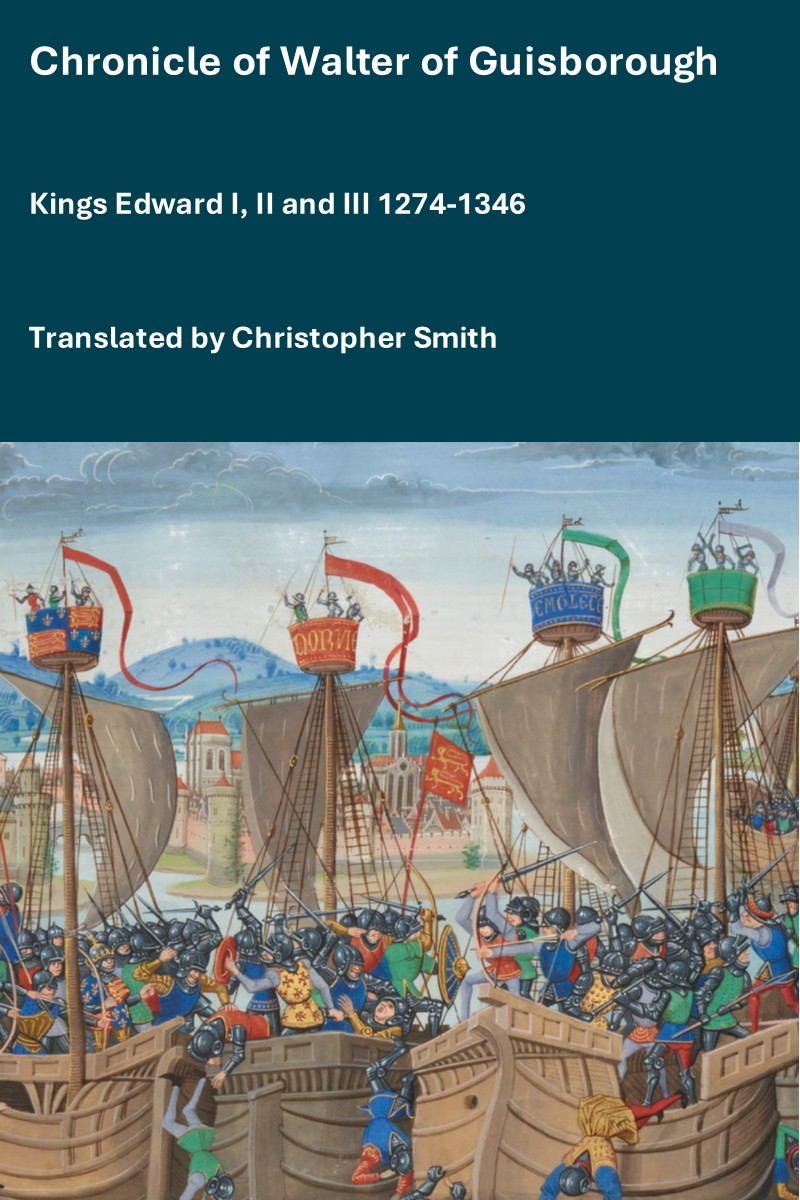 Chronicle of Walter of Guisborough: "On that same day [24th June 1340], shortly before the hour of vespers, the ship of Lord Robert de Morley was the first of all to attack the French fleet; after that came the ship of the Earl of Huntingdon, then the Earl of Northampton, then Walter de Manny. In this way, each ship, hastening toward the enemy, had both the sun and the wind in their favour, just as they wished. And almost at the beginning of the struggle, they captured three of the largest cogs, called Edward, Katherine, and Rose, which had once been taken from the English at sea. Once this first French naval line was subdued, those within being slain by the sword and the French king's banner trampled down, while the English king's banner was raised high on the three captured ships, the remaining ships each tried to flee. But, surrounded by the English, those inside threw down their arms and tried to escape into small boats. Before they could reach shore, however, the little vessels, overloaded, sank, sending about two thousand men into the depths. Thus, with the first three French battle-lines subdued, the fourth line, about sixty ships strong, still contained some armed men who had escaped from the captured vessels, and who were difficult to overpower. And after the middle of the night had passed, with many thousands slain, they could scarcely be subdued. In this final fight the English lost one ship and a galley from Hull, all those inside being crushed by stones. In the ship where the wardrobe of the King of England was kept, all but two men and one woman were killed; yet the ship was afterwards taken by the English. From the French side there fell, some by the sword, some who leapt into the sea, and others who, descending from their great ships into small boats, were sunk by the excessive weight, about thirty thousand men. On the English side, no nobleman was killed that day, except for Sir Thomas de Monthermer, knight. Thus, with victory granted by the Lord over the French, the King of England, coming ashore with certain others, humbly gave the highest thanks to Almighty God."
Chronicle of Walter of Guisborough. On that same day [24th June 1340], shortly before the hour of vespers, the ship of Lord Robert de Morley was the first of all to attack the French fleet; after that came the ship of the Earl of Huntingdon, then the Earl of Northampton, then Walter de Manny. In this way, each ship, hastening toward the enemy, had both the sun and the wind in their favour, just as they wished. And almost at the beginning of the struggle, they captured three of the largest "cogs," called Edward, Katherine, and Rose, which had once been taken from the English at sea. Once this first French naval line was subdued, those within being slain by the sword and the French king's banner trampled down, while the English king's banner was raised high on the three captured ships, the remaining ships each tried to flee. But, surrounded by the English, those inside threw down their arms and tried to escape into small boats. Before they could reach shore, however, the little vessels, overloaded, sank, sending about two thousand men into the depths. Thus, with the first three French battle-lines subdued, the fourth line, about sixty ships strong, still contained some armed men who had escaped from the captured vessels, and who were difficult to overpower. And after the middle of the night had passed, with many thousands slain, they could scarcely be subdued. In this final fight the English lost one ship and a galley from Hull, all those inside being crushed by stones. In the ship where the wardrobe of the King of England was kept, all but two men and one woman were killed; yet the ship was afterwards taken by the English. From the French side there fell, some by the sword, some who leapt into the sea, and others who, descending from their great ships into small boats, were sunk by the excessive weight, about thirty thousand men. On the English side, no nobleman was killed that day, except for Sir Thomas de Monthermer, knight. Thus, with victory granted by the Lord over the French, the King of England, coming ashore with certain others, humbly gave the highest thanks to Almighty God.
Et eodem die, parum ante horam vesperam, navis domini Roberti de Morlee navigio Gallicorum primo omnium insultum dedit, post illam navis comitis de Huntingdon, deinde comitis de Northampton, deinde Walteri de Mannay, sicque singulæ naves versus inimicos festinantes, solem et ventum secum habuerunt juxta votum. Et quasi in agonis principio tres maximos cogones quos vocabant Edwardum, Katerinam, et Rosam, olim de manibus Anglorum in mari sublatos, adepti sunt. Subjugata, que prima navali acie, qui intus erant gladio deletis et conculcato regis Franciæ vexillo, regisque Angliæ in sublimi in tribus dictis navibus elevato, reliquæ naves singulæ fugam inire temptabant; circumclusæ tamen ab Anglis, depositis armis suis, qui intus erant scaphas intrabant, sed antequam terram tangere possent naviculæ, nimis oneratæ, submersis circa duo millibus hominum profundum maris petierunt, sicque tribus gagement at aciebus subditis, in IV acie, circa LX naves habente, erant nonnulli armati a prædictis fugati navibus difficiles ad subjiciendum. Transactaque media nocte occisis multis millibus vix subjugari potuerunt. In hoc enim ultimo bello perdiderunt Anglici unam navem et galeam de Hull, cunctis qui intus erant lapidibus oppressis. Illi vero qui erant in navi, ubi garderoba regis Angliæ posita est, præter duos homines et mulierem quandam omnes occisi sunt: navis tamen postea ab Anglicis adepta est. Ceciderunt autem ex parte Gallicorum tum ferro tum ex illis qui in mari saltaverunt tum ex illis qui de magnis navibus in naviculas parvas descendentes nimio navali pondere submersi sunt circa triginta millia virorum. Ex parte vero Anglicorum nullus nobilis, præter solum dominum Thomam de Monte-Hermeri militem, interfectus fuit die illo. Collata itaque super Francigenas a Domino victoria, rex Angliæ cum quibusdam ad terram veniens, summas Altissimo gratias humiliter referebat.
Deeds of King Edward III by Robert of Avesbury. "Edward, by the grace of God king of England and France and lord of Ireland, etc. We think it fitting to make known to you, for your consideration and joy, the outpouring of divine mercy which has lately been shown toward us. You know indeed, and you and our other faithful people have in some measure felt it, by how many storms of war we have been assailed and how, as upon a great sea, we have been tossed by violent waves. Yet although the surges of the sea are mighty, more mighty is the Lord on high, who, turning the storm into a calm, has now most graciously looked upon us amid so many adversities. For when we had lately arranged our necessary passage toward the parts of Flanders, Philip of Valois, our most hostile persecutor, foreseeing this, sent to the port of Sluys a very great fleet of armed ships, which he had prepared to destroy us and our faithful followers, lying in wait to capture us or at least to hinder our passage. Had that passage been hindered, which God forbid, the important undertakings which we pursue would have fallen entirely into ruin; indeed we and our people would likely have been exposed to great danger and confusion. But God, the Father of mercies, seeing us placed in such dangers, more graciously and more swiftly than human reason could judge, sent us a great naval aid and an unexpected number of armed men, and always a favourable wind according to our desire. Thus, trusting in heavenly help and in the justice of our cause, when we came by ship to the said port we found the said fleet and our enemies there, very ready for battle in great numbers. Against them, on the feast of the Nativity of Saint John the Baptist [24th June 1340] last past, Christ our God, our hope, granted us victory in a strong and fierce conflict. A great slaughter was made among those enemies, and the whole fleet was in a manner captured, with comparatively little loss among our own people. Thus, the passage over the sea will henceforth lie more safely open to our faithful subjects, and many other advantages will likely come from this to us and to our faithful people, from which a most fair hope now arises. Contemplating so great a heavenly grace with devotion, we humbly render praise and thanks to our Saviour, praying that He who has already and always graciously assisted us in times of need may continue His help, and grant that we may so rule in this world that we may rejoice eternally in Him above. We earnestly ask your affection and beseech you by the mercy of God that, rising in the praise of devout thanksgiving to the living God who has wrought so great a sign of good with us, you will commend us, now far away and seeking not only to recover our rights but also to uphold the holy Catholic Church and to govern the people in justice, to Him through your devoted prayers. Cause masses and other works of pious devotion to be performed for us, and by wholesome exhortations encourage the clergy and people of your diocese to do the same, so that God Himself, having mercy upon us, may grant a happy progress and a gracious outcome, and give His servant an understanding heart to judge and rule rightly, and so to do what He commands that we may deserve to obtain what He promises. Witness Edward, duke of Cornwall and earl of Chester, our most dear son, guardian of England, at Waltham Holy Cross, on the twenty-eighth day of June [1340], in the fourteenth year of our reign of England and the first year of our reign of France."
"Edwardus, Dei gratia rex Angliæ et Franciæ et dominus Hiberniæ, etc. Effusam circs nos his diebus propitiationis divinæ clementiam ad vestri contemplationem et lætitiam vobis ducimus intimandam. Scitis autem immo vos et alii fideles nostri, quadam participatione sensitis, quantis fuimus et sumus guerrarum lacessiti turbinibus et velut in mari magno procellosis fluctibus agitati. Sed, licet sint mirabiles elationes maris, mirabilior tamen est in altis Dominus, qui, procellam convertens in auram, jam inter tot adversa clementissime nos respexit. Nam, cum pridem ordinassemus passagium nostrum necessarium versus partes Flandriæ, dominus Philippus de Valesio, persecutor noster infestissimus, hoc prævidens, classem maximam navium armatarum, quam in expugnationem nostram nostrorumque fidelium parari fecerat, ad insidiandum nobis, in portu de Swina transmisit, ut vel sic nos caperet vel nostrum transitam impediret. Qui transitus si, quod absit, fuisset impeditus, ardua negotia, quæ prosequimur, fuissent penitus in ruina; quin immo nos et nostri fuissemus verisimiliter periculo confusionis magnæ subjecti. Sed Deus misericordiarum, videns nos in tantis periculis constitutos, gratius et citius quam humana ratio judicare poterat, misit nobis magnum navale subsidiam et insperatum numerum armatorum, ac semper ventum prosperum juxta votum; et sic, sub spe cœlestis auxilii et justitiæ nostræ fiducia, dictum portum navigio venientes, invenimus' dictam classem et hostes mnostros ibidem paratissimos ad prœlium in multitudine copiosa. Quibus, in festo Nativitatis sancti Johannis baptistæ proximo præterito, ipse spes nostra Christus Deus per conflictum fortem et validum nos prævalere concessit, facta strage non modica dictorum hostium, capta etiam quodammodo tota dicta classe, cum læsione gentis noatræ modica respective. Sicque tutior de cetero patebit transitus nostris fidelibus supra mare, et alia bona plurima sunt ex hoc nobis et nostris fidelibus verisimiliter proventura, de quo spes palcherrima jam arridet. Nos autem, tantam cœlestem gratiam devotissime contemplantes, ipsi Salvatori nostro laudes et gratias humiliter exsolvimus, deprecantes ut, qui jam et semper in opportunitatibus copiosis gratis nos prævenit, continuatis nos auxiliis prosequatur, et nobis regere tem poraliter sic concedat in terris, ut in Eo lætemur æternaliter in excelsis. Dilectionem vestram attente rogamus et per Dei misericordiam obsecramus, quatinus soli Deo vivo, qui tantum signum nobiscum fecit in bonum, in devotæ laudis præconium assurgentes,nos, jam in remotis agentes, et nedum jura nostra recuperare sed sanctam eocle siam catholicam attollere et in justitia populum regere cupientes, Sibi devotis orationum instantiis recommendare cuaretis, facientes pro nobis missas et alia piæ placationis officia misericorditer exerceri; et ad hoc clerum et populum vestræ dioceseos salutaribus monitis inducatis, ut Deus ipse, miseratus nobis, progressum felicem et exitum annuat gratiosum, detque servo suo cor docile, ut recte judicare possimus et regere et sic facere quod præcipit, ut mereamur assequi quod promittit. Testo Edwardo, duce Cornubiæ et comite Cestriæ, filio nostro carissimo, custode Angliæ, apud Waltham Sanctæ Crucis, XXVIIJ die Junii, anno regni nostri Angliæ XIIIJ, regni vero Franciæ primo."
Chronicle of William Nangis, -1300. [24th June 1340] In this year, King Philip of France, upon hearing that King Edward of England, who had long remained hidden, had prepared a large fleet to cross the sea in aid of the Flemings, assembled a considerable fleet from Picardy and Normandy, and fortified it to block his crossing, as well as that of Lord Robert of Artois, who was with him. He appointed two admirals over this fleet: namely, Lord Hugh Quieret and Nicholas called Béhuchet. But when, on or around the feast of Saint John the Baptist, the English crossed the sea and came to battle, the French, who were waiting for the King of England and his ships at the port of Sluys to prevent him from taking the harbour, although some advised it would be better to intercept him in the open sea, where neither the English nor the Flemings could assist each other, initially held their ground fairly well. However, when Flemish reinforcements arrived both from the port of Sluys and nearby harbours to support the English, the French were unable to withstand them and took to flight. Many threw themselves headlong into the sea in hopes of escaping by swimming, but were immediately killed by the Flemings upon reaching the shore. Many ships were lost. Nicholas Béhuchet was also killed, and, insultingly to the King of France, was hanged from the mast of a ship. Lord Hugh Quieret was captured aboard his vessel. And as some claimed, all of this happened because the two admirals were not in harmony and were stirred by bitter envy; one could not tolerate the other's rank. As Lucan says:
No trust exists among co-rulers of a kingdom; all power
Resents a partner. Do not trust such alliances among nations,
Nor seek distant examples from fate,
The first city walls were soaked in a brother's blood.
This saying affirms and agrees with the idea that, whatever may be said or imagined, no one truly wishes to share authority, but seeks to claim all power for himself.
Hoc anno rex Franciæ Philippus, audiens quod rex Angliæ Eduardus, qui diu latuerat, magnum navlgium ad transfretandum in auxilium Flammingorum præparasset, classem non modlcam Plcardiæ ac Normanniæ acceptit, ipsamque munivit ad impediendum transitum ejus, necnon et domlni Roberti de Attrebato qui cum eo erat. Congregavit duos admiraldos; dominum scilicet Hugonem Queret et Nicholaum dictum Behuchet eldem classi præficiens. Sed cum in die beati Johannis Baplistæ vel circa transfretasset, et ventum esset ad conflictum, nostri, ad portum Sclusæ regem Angliæ cum navibus suis exspectantes, ut a captione portus ipsum impedirent, (licet aliqui consulerent in medio raaris obviare sibi melius esse ad finem, quod nec Anglici nec Flammingi possent sibi auxilium ferre) primo impetu satis bene se habuerunt. Sed supervenientibus Flammingis tam de portu Sclusæ quam de portubus vicinis in auxilium Anglorum, ipsos sustinere non valentes fugam arripuerunt, multique in mari præcipites se dederunt ut natando evaderent, sed a Flammingis statim occidebantur in littore; et amissis pluribus navibus, Nicholaum dictum Behuchet etiam occiderunt, et in despectum regis Franciæ ad malum navis suspenderunt. Dominum etiam Hugonem dictum Queret in navi acceperunt. Et ut aliqui asserebant, hoc totum accidit quia isti duo admiraldi male concordes erant ac felle invidiæ commoti; unus alterius dignitatem ferre non valebat, secundum Lucani verba, qui dicit:
Nulla fides regni sociis, omuisque potestas
Impatiens consortis erit, nec gentibus ullis
Credite, nec longe fatorum exempla petantur,
Fraterno primi maduerunt sanguine muri
Volens dicere et annuere quod quidquid dicatur seu fingatur, niillus \ult habere socium in auctoritate, sed totam sibi attribuere auctoritatem.
On the day that had been agreed upon between the lords and the Flemings, they all came before Tournai and laid siege to it on every side1. The noble king was positioned fairly close on one side, with Jacquemart d’Artevelde and the Flemings; the Duke of Brabant was on another side with all his forces; and the Count of Hainaut, together with all the other lords who made up the third division of the host, took their position elsewhere. Thus the whole city was surrounded. Afterward they constructed several bridges over the Scheldt, which there is wide and deep, setting them upon boats, so that one army could easily go to the other without danger1.
A celluy jour qui fut acordé entre les seigneurs et les Flamens, tous vindrent devant Tournay et l'assiegerrent tout autour; le noble roy assez prez, d'une part, de Jacquemart d'Artevelle et des Flamens, le duc de Brabant, d'aultre part, à toutes ses gens, le conte de Haynau et tous les aultres seigneurs qui faisoient le tiers ost, d'une part, par quoy toute la cité fut assiegée par quoy en aprez firent pluseurs pons sur l'Escaut, qui là est grand et parfont, sur nefs, ainsy l'un ost pouoit legierement aler à l'aultre sans peril.
Note 1. The siege of Tournai lasted from 1 August to 27th September 1340, the day on which Philip VI dismissed his army assembled at Bouvines. However, after the 27th, the defenders of Tournai remained in the city until 1st October, "because it was necessary to settle payment of what they owed in the said town, and they could not depart sooner." (Bibliothèque nationale, ms. fr. nouv. acq. 9238, fols. 54v–55r.) This explains why all the accounts of the defenders of the city run from 1st August to 1st October, "during which time they were enclosed in the said town of Tournai for sixty days." See ibid., fols. 55–90 and 141–165, for the names of the knights and squires who took part in the defense of Tournai. The dates given prior to 1st August for the beginning of the siege are no doubt the dates of assembly of the various army corps that were to invest the city. Cf. Chronique normande, ed. Molinier, p. 255, note 4; Chronographia, vol. II, p. 139, note 1; Chronique de Richard Lescot, p. 53, note 1; Appendix, p. 207.
1. Le siège de Tournai dura du 1o août au 27 septembre 1340, jour où Philippe VI donna congé à son armée réunie à Bouvines. Mais, après le 27, les défenseurs de Tournai restèrent encore dans la ville jusqu'au 1o octobre, «pour ce qu'il esconvint faire finance de ce qu'il devoient en ladicte ville, et plus tost ne sen poouoient partir.» (Bibl. nat., ms. fr. nouv. acq. 9238, fol. 54 vo et 55 ro.) C'est ce qui explique que tous les comptes des défenseurs de cette ville vont du 1er août au 1er" octobre, «qu'ils furent enclos en ladicte ville de Tournay par zx: jours.» Voy., Ibid., fol. 55 à 90 et 141 à 165, les noms des chevaliers et écuyers qui prirent part à la défense de Tournai. Les dates données avant le 1er août pour le commencement du siège sont sans doute les dates de rassemblement des différents corps d'armée qui devaient investir la ville. Cf. Chronique normande, éd. Molinier, p. 255, note 4; Chronographia, t. II, p. 139, note 1; Chronique de Richard Lescot, p. 53, note 1; Appendice, p. 207.
Note 2. For the arrangements made around Tournai by Edward II and his allies, see Froissart, ed. Luce, vol. II, p. xxi.
2. Pour les dispositions prises autour de Tournai par Édouard II et ses alliés, voy. Froissart, éd. Luce, 1. II, p. xxi.
Deeds of King Edward III by Robert of Avesbury. Meanwhile, the said lord Philip of Valois, assembling a very great army, set out toward the said siege, intending, as many believed, to raise it. However, he feared to engage in battle with the said King of England, and remained encamped at a considerable distance from the English king. Although the Count of Hainault, Lord Walter de Manny, Reginald de Cobham, then Marshal of the said King of England, and others from the said army ventured out from the siege and destroyed the towns of Orchies, Urssis, Greneye, Archis, Odynt, Saint-Amand, and the town of Lisle, killing there three hundred men-at-arms of the kingdom of France, and near Saint-Omer slew the noble lords de Duskune, de Maurfelon, de Rely, de Chastelon, de Melly, de Fenys, de Hamelcourt, de Monfaucon, and other barons, fourteen in all, with six score knights also killed, and in the direction of Douai destroyed the town of Seclin and more than 300 small towns and villages within six leagues of the region of Tournai, carrying off plunder and spoils and devastating by fire. Still, the said lord Philip did not dare to oppose such losses or to resist in defence of the people of that region, but remained continuously in the same place, far removed from the siege, until, because more than 20,000 men of his army, due to the multitude and their prolonged stay, miserably perished from hunger and thirst, at his insistence a truce was arranged. To this truce the said King of England, lacking sufficient treasure, whereby he might attend to his own needs and pay the wages due to those serving him in war, was compelled to consent. The terms of the truce are as follows, as will appear below:
Interim vero dictus dominus Philippus de Valesio, exercitum congregans magnum valde, versus dictam obsidionem gressus suos direxit, ad removendam eandem, ut a multis opinabatur; tamen cum dicto rege Anglorum bellum committere formidabat et in campis ab eodem rege Angliæ multum distantibus cum suo exercitu moram traxit. Et, licet comes Hannoniæ ac dominus Walterus de Manny et Reginaldus de Cobham, tunc marescallus dicti domini regis Anglorum, et alii dicti exercitus, in destructionem rebellium & dicta obsidione egredientes, villas de Ortys, Urssis, Greneye, Archis, et Odynt, Seint Amand, villamque Lisle, interfectis ibidem CCC hominibus armorum regni Francis, et juxta Sanctum Omerum nobilibus dominis de Duskune, de Maurfelon, de Rely, de Chastelon, de Melly, de Fenys, de Hamelcourt, de Monfaucon, et aliis baronibus XIIIJ, cum VJxx militibus etiam interfectis versus Dowe villam de Chely, aliasque villas parvas plus quam CCC, quasi in circuitu de Tourneye per VJ leucas illius patriæ, captis prædis et spoliis, per incendium devastassent—tamen dictus dominus Philippus hujusmodi dampna occurrere seu resistere in defensionem populi dietæ patriæ non audebat, sed continue in eodem loco a dicta obsidione remoto permansit, donec, plus quam XX, millibus hominum sui exercitus, propter ipsius exercitus multitudinem et moram ibidem diutinam, fame et siti miserabiliter necatis, ad ipsius domini Philippi instantiam, treugæ captæ fuissent. Quibus treugis dictum dominum regem Anglorum, sufficienti thesauro, unde debuit propriis necessitatibus subvenire et debita stipendia suis obsequiis militantibus erogare, destituto, oportuit consentire. Quarum tenor talis est, ut patet consequenter:
The Deeds of the Dukes of Normandy
The Gesta Normannorum Ducum [The Deeds of the Dukes of Normandy] is a landmark medieval chronicle tracing the rise and fall of the Norman dynasty from its early roots through the pivotal events surrounding the Norman Conquest of England. Originally penned in Latin by the monk William of Jumièges shortly before 1060 and later expanded at the behest of William the Conqueror, the work chronicles the deeds, politics, battles, and leadership of the Norman dukes, especially William’s own claim to the English throne. The narrative combines earlier historical sources with firsthand information and oral testimony to present an authoritative account of Normandy’s transformation from a Viking settlement into one of medieval Europe’s most powerful realms. William’s history emphasizes the legitimacy, military prowess, and governance of the Norman line, framing their expansion, including the conquest of England, as both divinely sanctioned and noble in purpose. Later chroniclers such as Orderic Vitalis and Robert of Torigni continued the history, extending the coverage into the 12th century, providing broader context on ducal rule and its impact. Today this classic work remains a foundational source for understanding Norman identity, medieval statesmanship, and the historical forces that reshaped England and Western Europe between 800AD and 1100AD.
Available at Amazon in eBook and Paperback format.
Let it be known to all that in the year of grace 1340, in the month of September, three Saracen kings had laid siege to a good and strong city in the kingdom of Castile called Tarifa, situated on or near the sea. The three kings were the King of Granada, the great King of Benamarin, and King Aboemard, his son. They had a very great force, estimated at 60,000 mounted men-at-arms and 300,000 foot soldiers armed with pikes, bows, and crossbows, equipped according to their custom, not counting their queens, admirals, and wives, whom they always brought with them. They had long been before the city, which greatly troubled the King of Spain.
Sache chascun que l'an de grace mil CCC et XL, ou moys de septembre, avoient trois roys Sarrasins assiegié une bonne ville et forte ou royaume de Castille qu'on appelle Tarifle, seant sur mer ou assez prez. Les trois roys estoient le roy de Guernade, Île grand roy de Bennamarin et le roy Aboemard, son filz, qui avoient une trés grande poissance, bien estimée à LXm hommes à cheval, gens d'armes, et CCCm hommes de pyé, à piques, arcs, arbalestes, armez aussy selonc leur usage, sans leurs roynes, leurs amiraldes, leurs femmes, que tousjours mainent avecques eulx. Ilz avoient esté devant la cité par longtemps, de quoy il ennuyoit trés fort au roy d'Espaigne.
The King of Spain and his men were then fully assured of victory, and fell upon the Saracens like hungry wolves among a flock of sheep, killing as many as they could and pursuing them all day, from the hour of tierce until nightfall without resting. In like manner the other divisions fought, slaying and killing so many that no certain number was ever known; but it was said that never in battle had there been such a slaughter. Some reckoned the dead at more than one hundred thousand men, while the Christians, whether good or ill, lost no more than forty. The great King of Benamarin2 and the King of Granada3 saved themselves as best they could, but the King of Tlemcen4 was taken prisoner, along with several other great lords whose names I do not know.
Le roy d'Espaigne et ses gens furent adoncques tous asseurez, et ferirent entre les Sarrasins comme les loups familleux entre ung tropeau de brebis, et en ochirrent tant qu'ilz peurent, et les chasserent tout le jour, de leure de tierce jusques à la nuit sans reposer. Et tout par semblable maniere firent les aultres batailles, et en ocirent et tuerrent tant qu'il n'en fut oncques fait certain nombre, maiz on disoit que jamaiz en bataille ne fut faicte telle occision, et les aucuns nombroient les mors à plus de cm hommes, qu'onques les crestiens n'y perdirent plus hault de xL hommes que bons que mauvaïz. Le grand roy de Benmarin et le roi de Guernade se mirent à sauveté comment que ce fust, maiz le roy de Tarmente fut pris et pluseurs aultres grands seigneurs dont je ne sçay les noms.
Note 1. This victory is that of the Battle of Río Salado, won by the Kings of Castile and Portugal over the Saracens on 30th October 1340. Edward III of England wrote a letter of congratulations to the King of Castile on 12th June 1341 (Rymer, vol. II, part II, p. 1164). In the Appendix ad Murimuth, p. 263, M. Thompson published the letter of an Englishman who had been present at the Battle of the Salado and who wrote to Edward on the subject, sending him a copy of a letter that Sultan Abu’l-Hasan had addressed to Benamarin.
1. Cette victoire est celle du Salado, remportée par les rois de Castille et de Portugal sur les Sarrasins le 30 octobre 1340. Édouard IN écrivit au roi de Castille une lettre de félicitations le 12 juin 1341. Rymer, t. II, Ilo partie, p. 1164.) Dans l'Appendix ad Murimutk, p. 263, M: Thompson a publié la lettre d'un anglais qui avait assisté à la bataille du Salado et qui écrivit à Édouard à ce sujet, en lui envoyant copie d'une lettre que le sultan Abu'l Hassan avait adressée à Band Marin.
Note 2. The King of Benamarin i.e. the Sultain of Marinid was Abu al-Hasan Ali. He ruled the Marinid Sultanate of Morocco from 1331 to 1351 and personally led the Marinid army that crossed into Iberia to support the Emir of Granada against the Christian coalition of Castile and Portugal. After the decisive defeat at Río Salado on 30 October 1340, he retreated to North Africa.
Note 3. The King of Granada was Yusuf I of Granada. He ruled the Nasrid Emirate of Granada from 1333 to 1354.
Note 4. The King of Tlemcen, now in north-west Algeria. Its last King, Abu Tashfin I, had died in 1337. In 1340 it was controlled by Abu al-Hasan Ali, Sultain of Marinid. It is not known who the author is referring to.
Adam Murimuth Continuation. Right honourable and most gentle lord, please you to know that, on the day of All Saints [1st November 1340] last past, the king of Spain, in Granada, had a battle with the Saracens, and, by the grace of God, had there the fairest victory that hath been, for long time past, over the said Saracens. In which battle there were slain five Saracen kings and one hundred and fifty thousand men. And, the battle being fought, the king of Spain returned back to the tents of the king of the Bani Marin, which was chief of all the Saracens, the which king escaped and passed over the sea in a little bark; and there, in his tents, the king of Spain found a letter written in letters of gold and sealed with a seal of gold. The which letter came from the great soldan of Egypt, bidding him make the passage of the sea upon the king of Spain and upon the Christians. [And the king of Spain] which took a part of the Saracens to ransom made cne of the Saracens translate the said letter into Latin, and then was it translated into Spanish, and from Spanish into French; and it beginneth in this wise:"
"From me, the Khalifa, the lord, the noble, the soldan, great lord, wise, mighty, and puissant lord of the house of Mecca of the holy Mahomet, puissant and trusting in his highness and in his holy virtue, doing justice to high and low, and ruling over all that rule; lord of the realm of Turkey and of Persia, holder of the lands of the two holy cities, lord of the dynasty and of the dynasties of the Persian sea, comrade of the weak, believer in the holy law of Mahomet, lord of the mighty sword of Elias and of David, that slew and cut off the heads of the men of the city of Ancyra and destroyed them altogether, lord of the kingdoms of all the world from the creation downwards, and of the parts of Asia, of Africa, and of Europe, and conqueror of battles and of the hosts of the Christians and of all the kingdoms of the world: to thee, king of the Banû Marin, health and commandment in the fear of our mighty sword. We make thee to know that our wise men, Saracens, have made us to understand that thy son Pichnco, the honourable child, strong knight and nursling son of the holy Mahomet, went against the law of the Christians of the accursed law, which is cast-away and evil-fated, that know not how they live, for they believe in their soul [on him that] they call pope, and say that he is pardoner of sins; and therefore are they deceived for the belief which they hold. And for that the king of Spain, vassal as he ought of right to be held, and all the other kings in the world, that believe in that law, which are against our Saracens, that are pure, clean, and believers in the holy Mahomet and in our holy Koran, slew so holy a creature as was the child Pichaco, thy son, noble as he was, and they slew him falsely, for otherwise he could not have died in battle; and I verily believe that, for the holy belief that he had in the holy Mahomet and in our holy Koran, he is in the holy Paradise, in the embrace of the holy Mahomet, and that he feedeth on cakes, honey, butter, milk, and cheese, and that he is raised up again and liveth, and that, so holy a creature as he is, he will have sixty virgin wives in the holy Paradise. Therefore we command thee, on pain of our law, that thou rest not until all Christendom be put to shame and destroyed; and we give power to our doctors and our Knights, that they may pardon and spread abroad the holy name of those which shall go against the Christians by sea and by land, and that they have pardon for themselves and for eleven persons of their blood, each of them. So we command thee, by the fear of our mighty sword, that thou march with all the power that I have given to thee, on this side the sea and on that, and that thou attack ail the lands of the Christians, Ly sea and by land. And for those which shall die, I lift my hand in presence of our holy Koran, that within three days thereafter they shall be raised up again in the holy paradise of Mahomet, witl their wives aud their children, and that they shall feed on cakes, honey, butter, milk, and cheese, and that each of them shall have seven virgin wives; for which holy faith we hold to be saved those which shall be strong and of good heart. And those which shall not be able to go, and shall give of their goods, shall have this same pardon aforesaid, as if they went themselves to battle. And I bid thee, noble king, eater of the herbs and drinker of the waters beyond the sea and on this side the sea, and destroyer of Christians, that thou straightway march with all the power that I have bidden thee, and that thou go by way of Gibraltar, our happy joy, with Algeciras, the stronghold of right great virtue, and pass over the sea against the king of Spain and against the other Christians, that on none of them you have mercy or pity, but that all Christendom be destroyed. And do in such wise that all the churches which they have be straightway destroyed; and make of them stalls for the beasts, and of their altars make mangers, and of their crosses make posts whereto to tether the cattle. Little children dash against the wall; women with child rip open; of other women cut off breasts, arms, noses, and feet; and all this do in dishonour of Christendom; and so depart not thence, till thou have overcome and destroyed all Christendom from sea to sea. And we hold these deeds, if thou canst do well, to be in the guerdon of our lord Mahomet, the elect of God, which will be with thee in all thy battles, when thou shalt call apon him; for never was born so holy a man of our law, from creation downwards, from the time of the holy Mahomet, the elect of God, as thou shalt be in all thy battles."
"Tres honurable et tresdoce seignur, vous plaist a savoir qe, le jour de Tutz Seintz derrein passe, si avoit le roi Despaigne, en Granade, un bataille contre les Sarazins, et, par la grace de Dieu, fist illoeges la plus hele victorie qe fut, grant tenps pazse, sur les ditz Sarazins. À quele bataille furent occis V rois Sarazins et C et L mil personis Sarazins. Et, la bataille faite, le roi Despaigoe retourna a les pavilons le roi de Belmarim, qi estoit chevetein de toutz les Surazins, le quel roi eschapa et passa la mer en une petisto galiot; et la, en ses pavillons, ei trova le dit roi Despuigne une bille escripte as lettres dor et assele dun seal dor. La quele bille viut du grant soudan de Babiloyne, comandant qil feist le passage sour le dit roi Despuigne et sur les Chrestienes. Et le roi de Espanye qi prist partie des Sarazins n rauncoun si fist ou des Sarazins translater la dito bille en Latin, et puis fait ele translate en Espaignolf, et despaignolf en Fraunceys; la quele comence en ceste manere:"
"'De moi Goldifa, un ley exarif, soudan, grant seignur, sages, fort, et puissant seignur de la maison de Meke du seint Mahomet, puissant et creiant en la sue hautesce et en la suo scinte vertu, faisant justices as hautes et basses, et constreignant sour toutz constreignaunz; seignur du roislme de Turkye et de Percie, retenour des terres de Hermenie, seignur de la dobble et de les dobbles de la mier mervaillouse, parceinour de les fiebles, creyaunt en la seinte ley de Mahomet, seiguur de la forte espee de Elyas et de Davyd, qi tua et coupa les tentes de ceux de la citee Dangere et les destruyt du tout, seignur des roialmes de tout le mond de creatour en aval, et des parties Dasia, Daffrica, et Deuropa, et vencour des bateilles et des hostes des Crestiens et des toutz roialmes du mounde: a toi, roi de Belmaryn, salutz et commandement sus la timure de la nostre fort espee. Nous toc faceons assavoir qe les nostres sages Sarazins nous firent entendre qe toun fitz Pichaco, lenfaunt honurable, chivaler fort et fieux noritz de seint Mahomet, ala contre la ley des OCrestienes de la ley maudite, perdue et desaventure, qi ne sevent coment ils vivent, car ils creyent en la sue alme, gils appellent pape, et dient qil est pardonour de pecches; et de ceo sont ils enginiz pur la creaunce qils tignent. Et pur ceo qe le roi Despaigne, auxint qil devoit estre tenutz vassal de droit, et toutz les autres rois gen monde mount, qi creyent en cele ley, qi sont encontre les nos Sarazins, qi sont clieres, nettes, et creyauntz en le seint Mahomet et en le nostre seint Alcoran, et tuerent taunt seint creature come cest enfaunt Pichaco, ton fitz, taunt noble come il iert—et si le tuerent fauxement, qar autrement ne purreit estre mort en bataille; et jeo croi vereiment qe pur la seinte creaunce qil tenoit en le seint Mahomet et en la nostre seint Alcoran, qil est en le seint Parays, bras et bras cole seint Mahomet, et qil mange bienges, mel, bure, leet, et fourmage, et qil est resuscitez et vive, et ge, tant seint creature come il est, avera lx. femmes puceles en le seint Parays—Et pur ceo te comandons, sour la peine de nostre ley, qe ne reposez jesqes tote la Crestienete soit honie et destruite; et donons poer as nos Alfakyns et as nos Alfiers, ils puissent pardonner et sermoner le seint non de ceux qi alerount contre les Crestiens par mier et par terre, et qils eyent pardoun pur eux mesmes et pur XJ persones de lour lignage, chescon deux. Auxint te comandong, sour la timure de nostre fort espee, qe tu te muez a tout le poer ge jeo te ai donee, de cea la mer et de la la mier, et ge tu coures toutz les terres de Crestiens, par mier et per terre. Et ceux gi murrent, jeo leve la main de per nostre seint Alcoran, qe dedeinz les treis jours apres serrent resuecitez en le seint Parais du Mahomet, ovesge lours femmes et Jlours enfauntz, et qils mangerent bienges, mel, bure, leet et fourmage, ct chescon deux avera VIJ femmes puceles; par la quele seint foy nous tendons destre salve ceux qi serrent forts et de bon queor. Et ceux qi ne purrent aler, et durrent de lour avoir, gils eyent ceste mesme pardoun susdite, auxi bien come ila alassent meismes a la bataille Et jeo te comand, noble roi, pastour des herbes et bevour des cawes de la la mier et de ceæ la mer, et destruour des Crestiens, qe tu te mues tantost a tout le poer qe jeo tay comande, et qe tu te vois par Gilbalbar, uostre joye aventure, ovesqe Aclier, chastel de mult grant vertu, et passez la mier contre le roi Despaigne et contre les autres Crestiens, qe neiez deux nul merci ne pete, mes qe tote la Crestiente soit destruite. Et faites en tiele manere ge toutz les esglises qils averent, soyent tantost destruitz; et en facez estables pur les Le-tes, ct en lours auteres facez manjours, et des croys facez cstaches par lier les bestes. Les petitz enfauntz fuites gettre au mur; les femmes engrocez faites overir les ventres; les autres femmes faites tailler les mameles, les bras, le niez, et les pices; et tout ceo facez pur deshonur de la Crestiente; et si ne te partez de illoeges, si la qe tote la Crestiente eyez conquise et destruyte de mier a mier. Et nous tenons ses faitz, si ta puissez bien faire, au paier de sire Mahomet et de seint Almofoffan, qi serrent ovesqe toy en tutz tes bateilles, quant tu les appelleras; qar unges tiel seint homme fut niez de nostre ley, desoutz la creature en aval, de seint Mahomet et de seint Almofoffan come tu serras en toutz tes bateilles.'"
When the said Count of Montfort saw that he had a great number of men on foot and on horseback, he took counsel to go and conquer by force or by persuasion all the country and to destroy all rebels within his power. Thus he left Nantes and first made his way toward a very strong castle, which stands on one side by the sea, and is called Brest. Its keeper and castellan was a noble knight named Sir Garnier de Clisson1, cousin to the late duke and cousin to Sir Olivier de Clisson [aged 43], a noble knight and one of the highest barons of Brittany, whom King Philip of France afterward had shamefully beheaded in Paris2 on suspicion of treason. For this all men bore him ill will, holding the knight to have died without guilt, and believing that the king had rather caused him to die in order to seize his inheritance than for any other reason. Before the said count came to Brest, he had so compelled those of the open country that everyone followed him, on foot or on horseback, so that he had a marvelously great host. When he arrived before the castle of Brest with all his army, he had the above-named knight, Sir Garnier de Clisson, summoned by Sir Henry of Leon, and required him to obey him and to surrender the fortress as to the Duke of Brittany. The knight replied that he was not advised to do so, and that he would do nothing of the kind, nor would he acknowledge him as lord unless he had command and tokens from the one to whom he was bound by right. Then the count withdrew and defied the knight and those within the castle.
Quant ledit conte de Montfort vit qu'il eut gens à pyé et à cheval en grand nombre, il eut conseil d'aler conquerre par force ou par amours tout le païz et destruire tous rebelles à son pouoir. Si issi hors de Nantes et se tray premierement vers ung chastel moult fort, qui siet d'ung costé sur la mer, et l'appelle on Brait, et en estoit garde et chastellain ung gentil chevalier qu'on appelloit messire Garnier de Clichon, cousin au duc qui mort estoit, et cousin à messire Olivier de Clichon, ung noble chevalier et ung des plus haults barons de Bretaigne, lequel Philippe roy de France fist puis aprez villainement decoler à Paris par souspechon de trahison, dont toutes gens Iny en sceurent mal gré, et tenoicnt le chevalicr mort sans coulpe, et tenoient que le roy l'avoit fait mielx morir pour avoir ses heritages que aultrement. Ainçoys que ledit conte venist à Brait, il avoit si contraint ceulx du plat pays que chascun le suivoit à pié ou à cheval, siques il avoit si grahd ost que merveille. Quant il fut devant le chastel de Brait à tout son ost, II fist appeller le chevalier dessusdit, monseigneur Garnier de Clichon, par messire Henry de Lyon, et luy requist qu'il voulsist obeir à luy et rendre la fortresse comme au duc de Bretaigne. Le chevalier respondi qu'il n'estoit point conseillié de ce faire, et qu'il n'en feroit riens, et ne le tendroit à seigneur, s'il n'avoit mandement et enseignes du seigneur à cui il debvoit estre par droit. Adonq se retray ledit conte el deffya le chevalier et ceulx du chastel.
Note 1. Dom Lobineau, in his History of Brittany (vol. I, p. 312), and Dom Morice (ibid., vol. I, p. 246) call him Gautier, though it is not known why, since the Chronographia (vol. II, p. 169) also gives him the first name Garnier.
1. Dom Lobineau Hist. de Bretagne, t. 1, p. 312) et dom Morice (Ibid., t. I, p. 246) le nomment, on ne sait pourquoi, Gautier, car la Chronographia, t. II, p. 169, lui donne aussi le prénom de Garnier.
Note 2. Olivier de Clisson was executed on 2nd August 1343. See Froissart, ed. Luce, vol. III, pp. IX–X.
2. Olivier de Clisson fut exécuté le 2 août 1343. Voy. Froissart, éd. Luce, t. III, p. IX et X.
Sir Charles of Blois and the other lords remained a long time before the city of Rennes, and there they caused much damage and made many great assaults by means of the Spaniards and the Genoese. Those within defended themselves, by the counsel of Sir William of Quadudal, so wisely that those outside more often lost there than they gained.
Messire Charles de Bloys et les aultres seigneurs seirent assez longuement devant la cité de Rennes, et y firent maints dommages et grands assaulx par les Espaignolz et les Jennevoys. Ceulx de dedens se deffendoient par le conseil messire Guillaume Quadudal si sagement que ceulx de dehors plus souvent y perdoient qu'ilz n'y gaagnoient.
On 30th September 1342 the French army attacked the English besiegers of Morlaix forcing the English to retreat to the nearby woods. William Bohun 1st Earl of Northampton [aged 32] commanded, John de Vere 7th Earl of Oxford [aged 30] and Hugh Despencer 1st Baron Despencer [aged 34] fought.
Chronicle of Geoffrey le Baker of Swinbroke. Thus, in the field near Morlaix, the hostile armies clashed [30th September 1342], where the courage of both nations, namely the Bretons, the French, and the English, was put to the test. The battle was fought fiercely on both sides, so much so that it happened, in that engagement, what we have not heard of occurring at the battles of Halidon Hill, or Crécy, or Poitiers. The commanders of the opposing forces, Charles of Blois, to whom the tyrant of the French had granted the duchy of that land, and William de Bohun, Earl of Northampton, whom the king had appointed commander of the English army to uphold the rights of John of Montfort, the natural duke of that land, fought with such noble valour that, rather than be accused of cowardice or dishonour for retreating from the field, they would have more willingly lost all. And so the fighting continued on both sides with great spirit. Indeed, in the entire French war prior to the capture of the false king of France, John, never had the French been fought so fiercely or for so long in hand-to-hand combat on the field, as any Englishman or Frenchman would affirm unless he were a liar. Three times that day, worn out from fighting, both sides withdrew briefly to catch their breath, leaning on stakes, lances, and swords to rest. But at last, the great-hearted Charles, as his troops began to flee, was compelled to take flight himself leaving the English free to tend to their victory and safety in peace.
Igitur in campo iuxta Morleys exercitus hostiles conflixerunt, ubi animositas utriusque gentis, Britonum videlicet, Gallicorum atque Anglicorum, fuerat experta. Pugnatum est fortiter ex utraque parte, ita quod contigit in illo certamine quod nec in bellis, nec Halydonehiel nec de Cressi nec de Petters, audivimus contigisse. Duces nempe parcium, scilicet Karolus de Bloys, cui illius terre dederat ducatum Francorum tirannus, et Willelmus de Bohun, comes Norhamptonie, quem pro tuendo iure Iohannis de Mountfort, naturalis ducis illius terre, rex exercitui Anglicorum prefecit, animositate quam habuerunt heroes generosi, omnia libencius perdidissent quam turpi vecordia arguendi, campo relicto, terga vertissent. Pugnatur proinde ex utraque parte animose, nec unquam in tota Gallica guerra, que capturam seudo-regis Francorum Iohannis antecessit, Francos tam acriter vel ita diu manualiter in campo pugnasse potuerit asserere Anglicus aut Francus aliquis, nisi mendax. Ter eodem die lassati ex utraque parte se modicum retraxere anelitum respiraturi, palis, lanceis et spatis ad quiescendum appodiati. Set tandem magnanimus ille Karolus, suis fugientibus, compulsus erat fugam inire; unde Anglici saluti pacifice vacabant.
Adam Murimuth Continuation. The king, Edward III of England, rode throughout the whole winter across the land of Brittany, covering four days' journey in length and two in breadth. Yet he did not burn or kill, but lived off what he found there. Afterwards, he caused the city of Vannes to be besieged. Meanwhile, the earl of Warwick and his companions went toward the city of Nantes to reconnoitre how it might best be besieged. There they destroyed a bridge adjoining the city across the river Loire River, on the side toward Poitou. But while all this was taking place, the two aforementioned cardinals, riding between the two armies, at last negotiated a truce. This truce was granted with difficulty on the part of the king of England, on the nineteenth day of January [1343], in the following form:
Rex vero per totam hiemem equitavit per terram Britanniæ, per iiij. dietas in longitudine et duas in latitudine, non tamen comburendo nec occidendo, sed de his quæ ibi invenerant victitando; et postea fecit obsideri civitatem de Vanys. Comes vero Warewykiæ et sui complices accesserunt ad civitatem de Nauntys ad explorandum quomodo melius posset obsideri; ubi fregerunt pontem, civitati contiguum, ultra flumen Lygeris versus Pictaviam. Sed, dum hæc omnia agerentur, duo cardinales prædicti, inter duos exercitus equitantes, unam treugam finaliter procurarunt, quæ fuit cum difficultate ex parte regis Angliæ concessa, decimo nono die mensis Januarii sub hac forma:
On 23rd April 1344 King Edward III of England [aged 31] created the Order of the Garter. The date nominal as there are different accounts; some sources say 1348.
2 Henry of Grosmont 1st Duke Lancaster.
3 Thomas Beauchamp 11th Earl Warwick.
4 Jean Grailly.
5 Ralph Stafford 1st Earl Stafford.
6 William Montagu 2nd Earl Salisbury.
7 Roger Mortimer 2nd Earl March.
9 Bartholomew "The Younger" Burghesh 2nd Baron Burghesh.
10 John Beauchamp 1st Baron Beauchamp Warwick.
11 John Mohun 2nd Baron Mohun of Dunster.
12 Hugh Courtenay.
13 Thomas Holland 1st Earl Kent.
15 Richard Fitzsimon.
16 Miles Stapleton.
17 Thomas Wale.
18 Hugh Wrottesley.
19 Neil Loring.
20 John Chandos.
21 James Audley.
22 Otho Holland.
23 Henry Eam.
24 Sanchet Abrichecourt.
Adam Murimuth Continuation. In this year the lord king ordained that most noble jousts or tournaments should be held at the place of his birth, namely at the castle of Windsor, on the 19th day of January [1344] and the 14th day before the Kalends of February, which he caused to be publicly proclaimed beforehand both overseas and in England. For these he also caused all the ladies of the southern parts of England and the wives of the burgesses of London to be invited by his letters. Therefore, when earls, barons, knights, and very many ladies had assembled on Sunday, namely the 13th day before the Kalends of February [20th January], in the said castle, the king held a solemn feast, so that the great hall of the castle was filled with ladies, and there was no man among them except two knights who alone had come from France for this solemnity. At this feast there were two queens, nine countesses, and the wives of barons, knights, and burgesses, who could not easily be counted; and the king himself personally placed them in their seats according to rank. But the Prince of Wales, the Duke of Cornwall, the earls, barons, and knights, together with all the people, dined in tents and other places, where food and all other necessities were prepared and distributed to all generously and without complaint; and in the evening dances and various festivities were solemnly arranged. And for the three following days the king, with nineteen other knights, held the tournament against all comers from outside; and the king himself, not out of royal favour, but because of the great effort he made and the success he had during those three days, won the prize among those within. Among those from outside, Sir — of Stapleton won the prize on the first day, Sir Philip Despenser on the second day, and Sir John Blount on the third day. On the Thursday following, after the tournaments of the squires, the lord king held a great feast in which he began also a Round Table, and received the oaths of certain earls, barons, and knights whom he wished to be of that Round Table, under a certain form pertaining to it; and he appointed a day for holding the said Round Table there at the coming feast of Pentecost, and gave permission to all present to return home with thanks. He also afterwards ordered that there should be built there a most noble building in which the said Round Table might be held at the appointed time; for which purpose he assigned masons, carpenters, and other craftsmen, and commanded that timber and stone be provided, sparing neither labour nor expense. But this work was afterwards abandoned for certain reasons.
Hoc anno ordinavit dominus rex habere nobilissima, hastiludia sive tirocinium in loco nativitatis suæ, videlicet in castro de Wyndesore die videlicet Januarii xix. et xiiij. kalendas Februarii, quæ competenti tempore præcedenti fecit tam in partibus transmarinis quam in Anglia publice proclamarium. Ad quæ etiam fecit omnes dominas australium partium Angliæ et uxores burgensium Londoniensium per suas literas invitari. Congregatis igitur comitibus, baronibus, militibus, et quam plurimis dominabus die Dominica, videlicet xiij. kalendas Februarii, in castro prædicto, fecit rex solempne convivium, ita quod magna aula ipsius castri plena exstitit dominabus, nec fuit aliquis masculus inter eas, præter duos milites qui soli de Francia ad solempnitatem hujusmodi accesserunt. In quo convivio fuerunt duæ reginæ, ix. comitissæ, uxores baronum, militum, et burgensium, quæ non potuerunt faciliter numerari, quas rex ipse personaliter in locis suis secundum ordinem collocavit. Princeps vero Walliæ, dux Cornubiæ, comites, barones, et milites, una cum toto populo in tentorio et locis aliis comederunt, ubi fuerunt cibaria et omnia alia necessaria præparata et omnibus liberaliter et sine murmure liberata; et in sero choreæ et tripudia diversa solempniter ordinata. Et tribus diebus sequentibus rex cum aliis decem et novem militibus tenuit hastiludia contra omnes ab extrinseco venientes; et idem dominus, non propter favorem regium, sed propter magnum laborem quem sustinuit et propter fortunam quam dicto triduo habuit, inter intrinsecos gratias reportavit. Extrinsecus vero dominus miles de Stapeltona primo die, dominus Philippus Despenser secundo die, dominus Johannes Blount tertio die, gratias reportarunt. Die vero Jovis sequente post hastiludia domicellorum, dominus rex fecit cœnam magnam in qua euam rotundam tabulam inchoavit, et juramenta quorumdam comitum et baronum et militum quos voluit esse de dicta tabula rotunda recepit sub certa forma ad dictam rotundam tabulam pertinente; et præfixit diem rotundæ tabulæ tenendæ ibidem in festo Pentecostes proxime tunc futuro, et omnibus præsentibus dedit licentiam cum gratiarum actionibus ad propria remeandi. Ordinavit etiam postea quod ibidem fieret una nobilissima domus, in qua posset dicta rotunda tabula teneri in termino assignato; ad quam faciendam, cæmentarios et carpentarios ceterosque artifices deputavit, et tam ligna quam lapides provideri præcepit, non parcendo laboribus vel expensis. A quo opere fuit postea ex certis causis cessatum.
Abbot John Whethamstede’s Chronicle of the Abbey of St Albans
Abbot John Whethamstede's Register aka Chronicle of his second term at the Abbey of St Albans, 1451-1461, is a remarkable text that describes his first-hand experience of the beginning of the Wars of the Roses including the First and Second Battles of St Albans, 1455 and 1461, respectively, their cause, and their consequences, not least on the Abbey itself. His text also includes Loveday, Blore Heath, Northampton, the Act of Accord, Wakefield, and Towton, and ends with the Coronation of King Edward IV. In addition to the events of the Wars of the Roses, Abbot John, or his scribes who wrote the Chronicle, include details in the life of the Abbey such as charters, letters, land exchanges, visits by legates, and disputes, which provide a rich insight into the day-to-day life of the Abbey, and the challenges faced by its Abbot.
Available at Amazon in eBook and Paperback format.
On 23rd April 1344. The date somewhat unclear; it may have been before. King Edward III of England [aged 31] formed the Order of the Garter. The first reliable record occurs in autumn of 1348 when the King's wardrobe account shows Garter habits being issued. The Order may have been formed before then with some traditions such as the mantle, and the garter and motto, possibly being introduced later. The Garter refers to an event at Wark Castle, Northumberland [Map] at which King Edward III of England picked up the Countess of Salisbury's fallen garter and saying to the crowd "Honi soit qui mal y pense" ie Shame on him who thinks badly of it, or possibly, he brings shame on himself who thinks badly of it. The Countess of Salisbury could refer to his future daughter-in-law Joan "Fair Maid of Kent" Princess Wales [aged 15] or her former mother-in-law Catherine Grandison Countess of Salisbury [aged 40]. The event has also been described as taking place at Calais [Map].


Around 25th August 1345 Henry of Grosmont, Earl of Derby [aged 35], commanded the English forces at Bergerac, Dordogne during the Battle of Bergerac. The English army including Walter Manny 1st Baron Manny [aged 35] won a decisive victory over the French with Henri Montigny captured.
Bourgeois de Valenciennes. On the day after the engagement, they went to assault the town of La Réole, which, after several assaults, surrendered, saving body and goods. But the castle of La Réole would not yield and held out for the space of nine weeks after the taking of the town. In the end, however, they surrendered at the will of the English, when they saw that they would receive no aid and that the castle had been mined beneath. There was within a knight who showed my lord Walter of Mauny the place where his father had been buried. The said lord of Mauny had the body exhumed, took the bones, and had them placed in a well-closed coffer. He carried them to Valenciennes and had them buried at Saint Francis beside his wife; there his father lies. He also caused the funeral service to be performed anew and offered the covered horse, shield, and helm.
Et lendemain de la journée alèrent assallir la ville de la Riolle, laquelle, après pluseurs assaulx, se rendy, sauf corps et biens; mais le chastel de le Riolle ne se velut point rendre et se tint l'espasse de IX sepmaines depuis la prinse de la ville; mais, en la fin, ils se rendirent à la volenté des Englecqs, quant ils virent qu'ils n'auroient nuls secours et que le chastel estoit miné par dessoubs. Et y avoit dedens ung chevalier qui ensaigna à monseigneur Gaultier de Mausny la plache où son père avoit esté enfouy, et fist ledit monseigneur de Mausny defFouir le. corps, et print les os et les fist mettre en ung coiTre bien fermé, et les apporta à Valenchiennes, et les fist ensépulturer à Saint-Franchois dalés sa femme, et sy y gist son père, et y fist de nouvel faire le service, et offrit le cheval couvert et l'escu et healme.
Bourgeois de Valenciennes. When Monday [26th September 1345] morning came and the Count of Hainault [aged 38] had heard Mass, he ordered his ship to be brought as near to the shore as possible and had his boats prepared to embark and land. Then he called for his banner, and my lord Gérard of Florenville answered, "Sire, here it is." At that moment my lord Gérard of Antoing begged the Count of Hainault to wait for his uncle [John of Beaumont [aged 57]], who was close at hand. At these words, the count leapt into the boat after his banner, saying, "He who loves me, let him follow me in the honour of God and of my lord Saint George!" And his men followed him. The men of Holland and of Zeeland pressed after him so eagerly that they leapt from the boats into the water and followed their lord ashore.
Quant ce vint le lundy au matin et que le conte de Haynault eult oy messe, il fist bouter sa nef au plus près de terre qu'il peult, et fist apparillier ses bateaux pour entrer ens et pour venir à terre, et puis demanda sa banière; et monseigneur Gérard de Flouriville respondy; "Sire, le vechy." Adont prya monseigneur Gérard d'Antoing au conte de Haynault qu'il volsist attendre son oncle, qui estoit là assés près. A ce mot, le conte sally au batel après sa banière en disant: "Tant m'ayme, sy me sieve en l'oneur de Dieu et de monseigneur saint Gorge!", et ses gens le siévirent. Et ceulx de Holande et de Zélande le siévoient sy tangrement qu'ils salloient des bateaux en l'eaue et siévoient monseigneur.
On 26th September 1345 William Hainaut II Count Hainaut [aged 38] was killed at the Battle of Warns. His sister Margaret [aged 33] succeeded II Countess Hainault. Louis Wittelsbach IV Holy Roman Emperor [aged 63] by marriage Count Hainault.
After 22nd September 1345 Henry Plantagenet 3rd Earl of Leicester 3rd Earl Lancaster [deceased] was buried at Church of the Annunciation of our Lady of the Newark [Map], or possibly the Hospital Chapel, at a ceremony attended by King Edward III of England [aged 32] and his wife Philippa of Hainaut Queen Consort England [aged 35]. His son Henry of Grosmont 1st Duke Lancaster [aged 35] subsequently had his remains moved to St Mary de Castro Leicester, Leicestershire [Map].
On 12th July 1346 King Edward III of England [aged 33] landed at La Hogue [Map] with army of around 10,000 men including John Lisle 2nd Baron Lisle [aged 28].
Chronicle of Geoffrey le Baker of Swinbroke. Afterwards, the lord king hastened his passage into Normandy,1 where his fleet was awaiting him at Portsmouth and Porchester. Thus, accompanied by the earls of Northampton, Arundel, Warwick, and the lord of Harcourt, as well as the earls of Huntingdon, Oxford, and Suffolk, the bishop of Durham, and Sir William de Kyllesby, a cleric, each of whom brought with him a large force of armed men and archers, the king remained at the aforementioned ports from the calends of June [1st June] until the fifth day of July, awaiting a wind, slow but favourable. At last, with a fleet of a thousand ships, pinnaces, and transports, they began to sail in remarkable fashion. The royal council was kept secret: indeed, even the shipmasters, having left port, did not know where the fleet was to be directed, but were ordered to follow the admiral. However, on that same day, the king sent messengers from his own ship to the other vessels, already far from shore, instructing their captains to follow the admiral and steer toward the port of Hogue in Normandy.
Postea dominus rex suum passagium in Neustriam properavit, ipsum apud Portusmutham et Porcestriam navigio expectante. Igitur cum comitibus Norhamptonie, Arundelie, Warwykie, et domino de Harecourt, Huntyndonie, Oxenfordie, et Suffolchie, et episcopo Dunelmensi, et domino Willelmo de Kyllesby, clerico, quorum quilibet copiosam massam armatorum atque sagittariorum secum deduxit, dominus rex ad predictos portus a kalendis Iunii usque ad quintum diem mensis Iulii ventum tardum set prosperum expectavit. Tandem cum mille navibus, spinaciis, atque cariariis inceperunt velificare mirabiliter. Secretum tenebatur tunc concilium regale; magistri nempe navium adhuc de portu amoti nescierunt quo deberent naves dirigere, set iussi sequebantur amirallum. Attamen eodem die rex de sua nave emisit nuncios ad cetera vasa, iam longe ab litore distancia, precipiens eorum rectoribus ut sequerentur amirallum, ad portum de Hoggis in Normannia naves directuri.
Note 1. Stow Annales 377.
Bourgeois de Valenciennes. In the month of July, about the feast of Saint James and Saint Christopher [25th July]1 in the year 1346, when the battle before the city of Liège had taken place, as we have said, and when the duke of Normandy, son of King Philip of France, was holding siege before the town and castle of Aiguillon in Gascony, near La Réole and Bordeaux, where the Earl of Derby and my lord Walter of Mauny and their men were stationed on behalf of King Edward of England to guard the land of Gascony and defend it against the said duke of Normandy and his forces. King Edward of England set out from England with a great host. With him were the Prince of Wales his son, the Bishop of Durham, the Earl of Warwick, the Earl of Montfort, my lord Godfrey who had been driven out of France, and many other knights and men-at-arms, as well as squires, pikemen, and archers. When they were all assembled, they numbered about eight thousand men-at-arms in harness of steel and twenty-five thousand archers, both Welsh and others. They had thirteen hundred ships, including those carrying provisions, and thirty-five thousand horses, and they put to sea. The wind drove them toward the coast of Cornwall, where they rested. While they were there, sixteen ships from Bayonne passed by, carrying five thousand tuns of wine into Normandy. They made it known that they were bringing the wine to Sluys in Flanders, but this was proven false by the letters they carried, which were found upon them, showing that they were taking it to Normandy. The King of England and his men seized all the wine and distributed it throughout the host, but returned the ships and vessels to the mariners. On the following day they had favourable wind to sail for Normandy.
Ou mois de jullet et en celle saison, environ la SaintJaques et Saint-Cristoffle, l'an mil IIIc et XLVI que la bataille devant la cité de Liège avoit esté, ainsy comme nous avons dit, et que le duc de Normendie, fils du roy Philippe de France, estoit et tenoit siège devant la ville et le chastel de Mont-Aguillon en Gascongne assez près de la Riolle et de Bordeaux en Gascogne où le conte d'Erby et monseigneur Gaultier de Mauny et leurs gens estoient de par le roy Édouart d'Engleterre pour garder le pays et la terre de Gascongne et deffendre à leur pooir contre le dit duc de Normendie et ses gens .... Et avoit le dit roy d'Engleterre avoec luy le prinche de Galles, son fils, l'évesque de Durâmes, le conte de Werwic, le conte de Monfort, monseigneur Godeffroy qui estoit encachiet de France et maints aultres chevaliers et gens d'armes, coustilliers, picquiers et archiers. Et quant ils furent tous assamblés, ils furent environ VIII mille hommes armés de harnas d'achier et XXV mille archiers, que Gallois, que aultres. Sy eult XIIIc nefs parmy celles des pourvéances et XXXV mille chevaulx, et entrèrent en mer; mais le vent les mena en la marche de Cornuaille, et se reposèrent là. Et en tandis qu'ils estoient là, passoient XVI nefs de Bayonne qui menoient V mille tonneaux de vin en Norraendie, et ils faisoient et donnoient à entendre qu'ils les menoient à l'Escluse en Flandres, et ce fut bien prouvé par les lettres qu'ils portoient et qu'on trouva sur eulx, qu'ils mentoient et qu'ils les menoient en Normendie. Sy eurent le roy d'Engleterreetsesgens tous les vins, et les départirent en l'ost, et rendirent aux mariniers leurs nefs et navires; et lendemain eurent bon vent pour aller en Normendie.
Note 1. The date clearly incorrect since in the next History he describes King Edward arriving in Normandy on 12th July.
Chronicle of Geoffrey le Baker of Swinbroke: "Afterwards, the lord king hastened his passage into Normandy, where his fleet was awaiting him at Portsmouth and Porchester. Thus, accompanied by the earls of Northampton, Arundel, Warwick, and the lord of Harcourt, as well as the earls of Huntingdon, Oxford, and Suffolk, the bishop of Durham, and Sir William de Kyllesby, a cleric, each of whom brought with him a large force of armed men and archers, the king remained at the aforementioned ports from the calends of June [1st June] until the fifth day of July, awaiting a wind, slow but favourable. At last, with a fleet of a thousand ships, pinnaces, and transports, they began to sail in remarkable fashion. The royal council was kept secret: indeed, even the shipmasters, having left port, did not know where the fleet was to be directed, but were ordered to follow the admiral. However, on that same day, the king sent messengers from his own ship to the other vessels, already far from shore, instructing their captains to follow the admiral and steer toward the port of Hogue in Normandy. Finally, on the thirteenth day of the same month of July [1346], they arrived at the desired port."
On 26th July 1346 the English army attacked and took Caen [Map] killing around 5000 French soldiers and militia. Otho Holland [aged 30] fought.
Bourgeois de Valenciennes. In the end, the English gained the city of Caen by force of battle [on 26th July 1346]. There were taken the Count of Eu, Constable of France, the Chamberlain of Tancarville, and one hundred and six knights. There was great slaughter on both sides. The women and children and all who could escape fled to Saint-Lô. When the English had taken what pleased them within the city, they set fire to it everywhere. The plunder was great; they took a large number of horses, and about three thousand men were slain.
Dont se party le roy d'Engleterre hors de Quen, et chevaucha à Corvelach et à Argense et à Saint-Laurent et à Lizieux, à Brione, à Harcourt, à Bastreville, à Forges, à Bray, au Noefbourg, à Le Bouef-sur-Saine et puis alèrent ardoir les fourbours de le cité de Rouen; et se loga le roy d'Engleterre en une abbaye près de Rouen.
Chronicle of Geoffrey le Baker of Swinbroke. Then they went to Valognes, a fine town, which was burned, then to Saint-Côme-du-Mont near the bridge of the river Douve, and then to Carentan, and then to Serins, and to the city of Saint Lô, and the fine town of Torigni, all of which were burned; that night, the king lodged at Cormolain. Then he came to Juvigny, a cell of the monastery of Caen, where nothing was left unburned. On Tuesday, they launched an assault and, after a great struggle, entered the noble city of Caen at the bridge, which had been fiercely defended. There were taken and slain 114 knights, including the Count of Eu1 and the chamberlain of Tankerville,2 brave knights, who were sent as prisoners to England, as well as the abbess of Caen.3 Of the townspeople who resisted, more than 1,300 were killed. The army remained there for six days, during which time the spoils that had been acquired in towns and countryside were either sent or sold to the sailors, who followed the king along the coast, laying waste to everything that could serve a naval purpose.
Deinde ad Valoygnes, bonam villam combustam; deinde ad Seint Combe de Mont, iuxta pontem Dove, et ad Karantam; deinde ad Serins et ad civitatem sancti Ludowici et bonam villam de Turny profecti, omnia combusserunt; et illa nocte ospitatus rex ad Cormolin. Deinde apud Gerin, cellam monasterii de Came, nihil relinquitur inconsumptum. Postea, in die Martis, dederunt insultum, et cum magno certamine ingressi sunt nobilem civitatem de Came, ad pontem, qui acerrime fuerat defensus. Illic fuerunt capti et occisi centum et XlIIJ milites, inter quos fuerunt comes de Ew et camberlinus de Tankervyle, probi milites, cum aliis captivis in Angliam missi, et abbatissa de Came; de civibus ville qui resistebant fuerunt occisi amplius quam mille trecenti. Ibi morabatur exercitus per sex dies, qui spolia usque tunc in villis et patria adquisita vel miserunt vel vendiderunt nautis vel per nautas, qui iuxta maritima regem sequebantur, omnia vastantes, que possent ad artem navalem pertinere.
Note 1. Raoul II de Brienne, comte d'Eu, became constable of France, on the death of his father, in 1344. He remained prisoner in England for some years; and, returning to France in 1350, was beheaded by king John about the 19th November in that year.
Note 2. Jean de Melun, sire de Tancarville, grand chamberlain of France, died in 1350.
Note 3. The abbess of the Abbé aux Dames (or of the Holy Trinity) at this time was Georgia de Mollay, who succeeded in 1336 and died in 1376. The letter of Bartholomew, lord Burghersh, written from Caen three days after the assault (
Murimuth 202.
Knighton 2586, gives pretty nearly the same account. Letter of Northburgh narrating the advance to Caen in Avesbury 359.
William of Worcester's Chronicle of England
William of Worcester, born around 1415, and died around 1482 was secretary to John Fastolf, the renowned soldier of the Hundred Years War, during which time he collected documents, letters, and wrote a record of events. Following their return to England in 1440 William was witness to major events. Twice in his chronicle he uses the first person: 1. when writing about the murder of Thomas, 7th Baron Scales, in 1460, he writes '… and I saw him lying naked in the cemetery near the porch of the church of St. Mary Overie in Southwark …' and 2. describing King Edward IV's entry into London in 1461 he writes '… proclaimed that all the people themselves were to recognize and acknowledge Edward as king. I was present and heard this, and immediately went down with them into the city'. William’s Chronicle is rich in detail. It is the source of much information about the Wars of the Roses, including the term 'Diabolical Marriage' to describe the marriage of Queen Elizabeth Woodville’s brother John’s marriage to Katherine, Dowager Duchess of Norfolk, he aged twenty, she sixty-five or more, and the story about a paper crown being placed in mockery on the severed head of Richard, 3rd Duke of York.
Available at Amazon in eBook and Paperback format.
On 3rd September 1346 King Edward III of England [aged 33] commenced the Siege of Calais. It lasted eleven months with Calais eventually surrendering on 3rd August 1347.
In or after 3rd September 1346 John Savile of Shelley and Golcar [aged 21] took part in the Siege of Calais.
Deeds of King Edward III by Robert of Avesbury. Concerning the arrival of the king of England to besiege Calais.
De adventu regis Anglorum ad obsidendum Caleys.
On 9th April 1347 Edward "Black Prince" [aged 16] attended a Tournament at Lichfield. John Lisle 2nd Baron Lisle [aged 28], Hugh Courtenay 2nd or 10th Earl Devon [aged 43] (or possibly his son also Hugh Courtenay [aged 20] ) and Robert Ferrers 3rd Baron Ferrers of Chartley [aged 38] took part in the Tournament.
Deeds of King Edward III by Robert of Avesbury. During the said siege of Calais, on the eighth day of June in the morning, in the year of the Lord 1347, John of France, the firstborn son of Philip of Valois, came with a very large French army to the town of Cassel on the frontier of Flanders. There were present only Flemings with many English archers. The French made a continuous assault from morning until midday, but, by the Lord's favour, the French were confounded and driven back, many of them being wounded, killed, or captured. On the side of the Flemings no one was killed nor mortally wounded; only a few were slightly injured, the Lord protecting them. In this encounter the archers behaved bravely, and therefore the Flemings praised them greatly. Thus, John of France, deprived of his purpose and as though defeated in battle, returned empty-handed to the place from which he had come.
Item, dicta obsidione de Caleys durante, viijye die Junii, mane, anno Domini millesimo cccmoxz vIrmo, dominus Johannes de Francia, dicti domini Philippi de Valesio primogenitus, cum infinito exercitu Gallicorum, venit ad villam de Casseles, in confinio Flandriæ, in qua erant tantum Flemengi cum Anglicis sagittariis bene multis et, facto per Gallicos insultu continuo de mane usque meridiem, propitio Domino, forti et potenti in prœlio confutati sunt Gallici et repulsi, multis ex eis vulneratis, occisis, et captis. Ex parte vero Flandrensium nullus fuit occisus neque vulneratus mortaliter, sed pauci solummodo leviter, Domino protegente. In quo congressu -sagittarii viriliter se habebant, et ideo Flandrenses ipsos non modicum commendabant. Sicque dictus dominus Johannes de Francia, proposito suo fraudatus, quasi in bello devictus, vacuus rediit unde venit.
On 20th June 1347 Charles of Blois Duke Brittany [aged 28] was captured by Thomas Dagworth 1st Baron Dagworth [aged 71] at La Roche Derrien.
Bourgeois de Valenciennes. On Wednesday, the twentieth day of June in the year of grace 1347, it happened that Sir Charles of Blois was in Brittany and had laid siege to the town and castle of La Roche-Derrien. With him were twelve hundred men-at-arms, knights and squires, six hundred other men-at-arms, six hundred archers from the country, a thousand crossbowmen, and so many common soldiers that their number was unknown. On that day it came to pass that Sir Thomas Dagworth1, husband of the Countess of Ormond, who was captain for the King of England in Brittany, together with several other knights and good men-at-arms, lay in ambush throughout the night.
Le merquedy XXe jour du mois de juing, l'an de grâce mil IIIc et XLVII, avint que monseigneur Charles de Blois estoit en Bretaingne, et avoit assiégiet la ville et le chastel de la Roche-Dirien, et avoit en sa compaignie XIIc de maints gens d'armes, chevaliers et escuiers, et VIc d'aultres gens d'armes et VIc archiers du pays et mille arbalestriers et tant de commun qu'on ne sçavoit le nombre. Dont il avint qu'en celuy jour monseigneur Thomas d'Agourdes, mary de la contesse d'Oirmont, lequel estoit capitaine du roy d'Engleterre en Bretaingne, avoec pluseurs aultres chevaliers et bons gens d'armes, lesquels furent en agait toute nuit, ...
Note 1. Thomas Dagworth, 1276-1350, married in 1343 Eleanor de Bohun, daughter of Humphrey de Bohun, 4th Earl of Hereford and Elizabeth Plantagenet, sister of King Edward II; he was a first cousin of King Edward III. She, Eleanor was married firstly in 1327 James Butler, 1st Earl of Ormond.
On 25th June 1347 a English fleet commanded by William Bohun 1st Earl of Northampton [aged 37] and Laurence Hastings 1st Earl Pembroke [aged 28] defeated a French fleet that was intending to re-supply the besiege Calais precipitating the surrender of Calais two months later.
Deeds of King Edward III by Robert of Avesbury. Very dear sir, you should know that on the day [25th June 1347] after Saint John's Day the wind, which had been from the west, turned toward the east at the hour of tierce. Because of this the earls of Northampton [aged 37] and Pembroke [aged 28], and the lords Morley, Talbot, and Bradeston, together with the two admirals and a great number of archers from their retinues and from the commons, boarded their ships and sailed toward Boulogne and Crotoy in order to observe the enemies who had arranged to provision Calais. Thus, they encountered, on this side of Crotoy about the hour of vespers, the said enemies, who were counted within sight of our men as forty-four vessels: hulks, galleys, and victualling ships loaded with various supplies. Some of those enemies who were at the rear threw their provisions into the sea and swam toward England, while others made for the port of Crotoy. The ten galleys abandoned their boats and their cargo and put out to the high sea. One hulk and twelve victualling ships which were ahead were so vigorously pursued that they ran as close to the shore as they could, and all the men leapt into the sea and drowned so completely that not a single person remained alive in their vessels. But on the following night, at daybreak, two boats came out of the town into the open sea, and they were quickly noticed by a mariner named William Roke together with a man called Stephen Hikeman. One of the boats returned to the town with great difficulty, but the other was driven ashore. In that boat was captured a great master who was the commander of the Genoese galleys and the leader of the Genoese who are inside the town, and with him seventeen others of the same company and about forty letters. But the said commander, before he was taken, tied with an axe a letter which carried an important message and threw it into the sea. That letter and the axe were found on the shore when the sea had receded, of which you will find a copy enclosed within this. And what I have already sent you concerning this matter before this hour, know that it is true, for I heard it from a knight who was within the ships."
"Tres chier sire, voilletz savoir qe lendemain de seint; Johan le vent, qestoit vers le west, se tourna vers lorient a houre de tiercz, si qe lez countes de Northamtone et Penbrok et les seignurs de Morleye, Talbot, Bradston, et lez IJ amirals, od graunt foison darchiers de lor retenances et des comunes, qe entrerent noz niefs et siglerent vers Buloigne et Croteye, pur visiter lez enemys qount ordeigne de vitaller Caleys, si qils encountrerent decea Croteye environ heure de vespre lez dits enemys, qe fusrent acountez deinz la veue de noz gentz XLIIIJ vesseaux: des fluynes, galeyes, et vitaillers, chargetz des diverses vitailles. Dez queux enemys ascuns qestoient a derere dischargeront lor vitailles par meer et nagierent devers Engleterre, ascuns devers le porte de Oroteye. Lez X galeyes qe fusront gueperount lour bateux et lour charge, se mistrent al haut meer. Et un fluyne et XIJ vitaillers od lor vitailles qe fasront devaunt fusrent si fortement pursuiz qils se mistrent si pres de terre come ils poount, et saillerent trestoutz en meer et neierent si purement qe une soul persone ne remient en vie deinz lor vesseaux. Mais la nuyt suant, en laube de jour, al haut meer isserent hors de la ville IJ bateaux, qe fusrent bien tost aparceux par un mariner gest appelle William Roke, od une Hikeman Stephene, si ge lun batel retourna en la ville od graunt paine et lautre estoit chace a terre. En quele bateux estoit pris un grant maistre, qestoit patroun des galeyes de Gene et maistre de Geneuoys qe sount dedeinz la ville, et ovesqe luy XVIJ de mesmes lez persones et bien XL lettres. Mais le dit patroun, devaunt qil estoit pris, la a une hache une lettre ge portoit graunt charge, et le getta en meer; geles lettre et hache estoient treovetz a la retret de la meer, de qi vous troueretz a cople enclose dedeinz ceste. Et qoi jeo vous aay maunde devaunt ceste heure touchant ceste matiere, sachietz qe ceo est verite; car jeo lay oye dun chivaler ge fust dedeintz lez niefs."
On 3rd August 1347 the English captured Calais [Map] providing England with a French port for the next two hundred years. Thomas Beauchamp 11th Earl Warwick [aged 34] commanded, John Lisle 2nd Baron Lisle [aged 29], Richard Vache and Henry of Grosmont 1st Duke Lancaster [aged 37] fought during the year long siege.
The History of William Marshal was commissioned by his son shortly after William’s death in 1219 to celebrate the Marshal’s remarkable life; it is an authentic, contemporary voice. The manuscript was discovered in 1861 by French historian Paul Meyer. Meyer published the manuscript in its original Anglo-French in 1891 in two books. This book is a line by line translation of the first of Meyer’s books; lines 1-10152. Book 1 of the History begins in 1139 and ends in 1194. It describes the events of the Anarchy, the role of William’s father John, John’s marriages, William’s childhood, his role as a hostage at the siege of Newbury, his injury and imprisonment in Poitou where he met Eleanor of Aquitaine and his life as a knight errant. It continues with the accusation against him of an improper relationship with Margaret, wife of Henry the Young King, his exile, and return, the death of Henry the Young King, the rebellion of Richard, the future King Richard I, war with France, the death of King Henry II, and the capture of King Richard, and the rebellion of John, the future King John. It ends with the release of King Richard and the death of John Marshal.
Available at Amazon in eBook and Paperback format.
Bourgeois de Valenciennes. On Saturday [23rd July 1347] morning the banners of the King of England were set upon the towers and battlements of the castle and town of Calais. On Sunday, the fifth day of August in the year 1347, Sir Walter Manny entered the town with Sir John Beauchamp and brought Sir Jean de Vienne and five noble gentlemen before King Edward and his council, through the midst of the host. They came bareheaded and barefoot, holding their drawn swords by the points, and carrying the keys of the town and castle on a lance before them.
Et le samedy au matin on mist les banières du roy d'Engleterre dedens le chastel et la ville de Callais aux tours et aux cresteaux, et le dimence après le jour SaintPierre entrant aoust, V jours au mois d'aoust, l'an mil IIIc et XLVII, entra monseigneur Gaultier de Mausny dedens la ville de Callais entre luy et monseigneur de Beaucliamp, et amenèrent monseigneur Jehan de Viane, chastelain du chastel et le capitaine de la ville, luy VP de gentils hommes, par devant le roy d'Engleterre et son conseil tout parmy l'ost, en pur les chiefs et en pur les corps, leurs espées toutes nues tenans par les pointes, et les clefs de la ville et du chastel portant devant eulx en une lanche.
Chronicle of Geoffrey le Baker of Swinbroke. When the besieged in Calais learned of the disgraceful flight of the French tyrant, they threw his standard from the tower into a ditch with great sorrow. And on the following Saturday, their captain, an experienced and well-trained soldier in the art of war, named John of Vienne, opened the gates, and seated on a small horse, unable to walk due to gout, with a rope around his neck, came before the king. He was followed by other knights and townsmen on foot, with bare heads and barefoot, also with ropes around their necks.
Turpi fuga tiranni Francorum Calisiensibus obsessis comperta, eius stacionardum cum ingenti luctu de turri in foveam proiecerunt, et sabbato sequenti illorum capitaneus, in bellica praxici miles multum eruditus, vocatus lohannes de Vienna, ianuis apertis, insidebat parvo runcino, impos pre gutta pedes incedere, collum corda constrictus, venit coram rege; quern alii milites et burgenses pedites, nudi capita et discalciati, funes ad colla eciam habentes, sequebantur.
Deeds of King Edward III by Robert of Avesbury. On the Friday [3rd August 1347] mentioned above, on which day, if the said lord Philip had observed the offer of battle that had been made on his behalf, as stated earlier, by certain nobles of France, the king of England would have fought him in open field, the besieged in the town of Calais, being entirely without provisions and seeing themselves abandoned by all aid from the said lord Philip, surrendered the town, themselves, and all that they possessed to the will of the said king of England. And the same lord king, always merciful and gracious, having taken and detained a few of the principal men, graciously allowed the community of the said town to depart with all their goods, and retained the said town subjected to his rule. These things having been successfully accomplished by the Lord's favour, the king of England remained there for many days, intending, after deliberation, to ride further on a military campaign. However, at the supplication of the said lord Philip, who continually sought delays, and at the urging of the aforesaid cardinals, out of reverence for the Apostolic See, truces were taken, and the said king returned to England. The wording of the said truces was as follows:
Die vero Veneris prædicto, in quo, dictus dominus Philippus si observasset oblationem belli factam, ut præemittitur, ex parte sua per quosdam nobiles Franciæ, rex Angliæ cum eodem domino Philippo in campestri prœlio dimicasset, obsessi in villa de Caleys, victualibus omnino carentes et videntes se omni auxilio dicti domini Philippi destitutos, ipsam villam ac se et sua omnia voluntati dicti domini regis Angliæ reddiderunt. Et idem dominus rex, semper misericors et benignus, captis et retentis paucis de majoribus, communitatem dictæ ville cum bonis suis omnibus gratiose permisit abire, dictamque villam suo retinuit imperio subjugatam. Præmissis, auctore Domino, feliciter expeditis, dominus rex Anglorum per multos dies moram traxit ibidem, proponens in expeditionem guerræ, deliberatione præhabita, ulterius equitare. Sed tamen, ad supplicationem dicti domini Philippi, semper dilationes quærentis, dictis dominis cardinalibus ad hoc instantibus, ob reverentiam scdis apostolicæ captæ sunt treugæ, et dictus doniinus rex Angliam remeavit.
Tenor vero dictarum treugarum talis est:
In 1349 Parlament enacted the Ordinance of Labourers in response to the shortage of labour caused by the 1348 Black Death Plague Outbreak. The Ordinance introduced
In 23rd April 1349 King Edward III of England [aged 36] created new Garter Knights:
26th William Fitzwarin [aged 33]. The date may be earlier.
27th. Robert Ufford [aged 50].
28th William Bohun 1st Earl of Northampton [aged 39].
Chronicle of Geoffrey le Baker of Swinbroke. As the aforementioned solemnity1 was approaching, the king was informed, through the secretaries of Americo of Padua,2 a mercenary knight, that on the 14th day of January, Geoffroi de Charny,3 a French knight, and a great number of other Frenchmen were to be admitted into Calais, which had been sold to them by the said Americo, but was by the king's grace rescued by the following intervention. The said Americo of Padua, who had been staying in Calais during its siege among the Genoese, served for pay under the tyrant of the French [the King of France], against the English king, who was then besieging the city. But after the surrender of the town, like the others, he was granted clemency of life, limbs, and knightly liberty, and remained in the king's service as a mercenary, assigned to the defence of Calais. At the time, Geoffroi, Lord of Matas, was regarded, so the rumours spread, as the most experienced of all the French in military affairs: a man of long experience in arms, endowed with keen natural intelligence, and thus principal counsellor to the French "tyrants" [the French royalists], until his death and the capture of the crowned French king at the Battle of Poitiers. This man, a most cunning schemer of crimes, attempted to corrupt the loyalty of Americo, who had been summoned by letters and lured with gifts of gold and deceitful promises. Finally, driven by greed, Americo agreed that for thousands of gold écus,4 he would open a tower under his command to provide the French with easy access into the town, and help them as much as he could in seizing the town and castle. Thus, this treacherous pact, though confirmed by oath and even by sharing the sacrament of the altar, was still a most wicked undertaking, initiated in treacherous cunning and false faith. Indeed, not at the walls of Ilium,5 but at the walls of Calais, sin was committed both without and within: for although a truce was still in effect, the laws of moral conscience would have forbidden the French from any deceit, open or secret, that could violate the peaceful possession of Calais by the English king. Moreover, Americo should have been deterred, by reverence for knightly honour, from any betrayal or unworthy promise, even one not binding, for by right, faith must be kept even with an enemy. But he kept faith with neither enemy nor king, serving the King of Heaven most wickedly, when he falsely invoked the Body of the Savior to seal his deceitful agreement, and furthermore received the communion of the chalice. Nevertheless, he wrote to the king, disclosing the entire affair without hiding anything, thus keeping himself prepared either to support the French, if they succeeded, or to retain the favour of the king, if the French plot failed and they were convicted of breaking the truce, and possibly many would be captured for ransom. And so it happened.
Instante prefata solempnitate, nunciatum est regi per secretarios. Americoi de Padua, militis stipendiarii, quod quartadecima die mensis Ianuarii forent in Calesiam recipiendi Galfridus de Charny, miles, et alii Gallici in magno numero, quibus Calesia per predictum Americoum fuerat vendita, set per regem graciose rescutata tali processu. Predictus Americous Paduensis inter ceteros Ianuenses morabatur in Calesia obsessa, ad stipendia tiranni Francorum contra regem obsidentem; set sibi, sicud ceteris, post ville dedicionem concessa gracia vite et membrorum atque libertatis militaris, de cetero mansit cum rege stipendiarius ad eiusdem Calesie tuicionem. Erat pro tunc Galfridus dominus de Matas miles plus quam aliquis Gallicus, ut fama ventilavit, in re militari exercitatus atque, cum longa experiencia armorum, nature vivacis sagacitate excellenter dotatus, et ideo Francie tirannorum, usque ad suum interitum et coronati Francorum capcionem in prelio Pictavensi, conciliarius principalis. Iste facinorum calidissimus machinator fidem prefati Americoi literis sibi evocati auri donis et sofisticis promissis conatus pervertere. Finaliter cum falso cupidus convenit quod, pro milibus scutatorum aureorum, per turrim, cui Americous preficiebatur, facilem introitum Gallicis in villam prepararet, atque ad ville et castri plenam capcionem quatenus posset adiuvaret. Pactum itaque prodiciosum quantumcunque per iuramentum et communionem sacramenti altaris utrimque confirmatum, attamen ut plenum versuta calliditate et fide mentita pessime fuerat iniciatum. Equidem non iam 'IIiacos,' set Calesios, 'muros extra peccatur et intra,' nam Gallicos, treuge adhuc durantes, pie consciencie legibus proibuissent ob omni circumvencione pupplica vel occulta, qua pacifice possessioni regis Anglie, quoad predictam villam, poterant derogasse. Eciam prefatum Americoum reverencia fidei militaris terruisset ab omni prodicione et inonesta, non eciam servanda, sponsione, cum de iure sit hosti servanda fides; set ipse nec hosti fidem servavit, nec regi terreno aliter quam dubie militavit, et Eterno Principi impiissime servivit, quando corpus Salvatoris, in testimonium sue versute convencionis, fallaciter invocavit, et insuper communionem calicis recepit. Scripsit tamen regi literas de toto negocio, nihil occultans, itaque paratus ad Gallicorum amiciciam, si ipsi expedivissent, et in regis benevolenciam, casu quo Gallici a proposito frustrati fuissent convicti de fraccione treugarum et insuper forte multi redimendi caperentur. Set ita contingebat.
Note 1. Stow Annales 387.
The story of the attempt on Calais is best known from Froissart's picturesque narrative, founded on Le Bel. It is curious that there should be confusion regarding the date of the event. Le Bel gives the year 1348, and in this he is followed by certain MSS. of Froissart while in others the more correct date 1349 is found. Baker also, as we have seen, inclines to 1348. The actual attempt took place in the night between the last day of 1349 and New Year's day 1350. The Grandes Chroniques de France, 5.491, and Avesbury 408, whose account of the affair is very well given, are both in the right as regards the year. The confusion between 1348 and 1349 may have arisen (as it does appear to have arisen in Baker's mind) from the fact that Edward was at Calais at about the same time in both years.
Avesbury 408-410: "In the year of our Lord 1349, while a certain Genoese [Amerigo of Pavia] served as captain of the castle of Calais under the King of England, Sir Geoffroy de Charny, a knight and a native of Picardy, who was one of the principal counsellors of King Philip of Valois, plotted and conspired to seize the castle of Calais deceitfully and secretly since he could not take it by open assault. Having held a secret discussion with the said Genoese, Charny promised him many thousands of florins if he would agree and lend his effort to help carry out the scheme in secret. However, the Genoese, unwilling to betray the King of England, his lord, whose bread he ate and who placed great trust in him, wanted nonetheless to pocket the promised gold. So, speaking peacefully with Sir Geoffroy de Charny, he feigned agreement, cleverly pretending to go along with the plan. On the appointed day, namely on the morrow of the Feast of the Circumcision of the Lord 1st January 1349
Note 2. Americo di Pavia. The description here given of him seems to be a true one. He was apparently a Lombard mercenary. Avesbury calls him a Genoese; see previous note. Jean Le Bel 2.177. Froissart 317 Le Bel tells us that Edward discovered the intended treachery, not through the traitor's confession, but by some other means. Americo's position in Calais has been exaggerated. He is generally represented as captain of the castle; Froissart also puts him in command of the town, whereas John Beauchamp had held that command since 1st January 1349. He was probably nothing more than captain of one of the towers forming part of the walls of the town, as stated in the text. He had been appointed captain of the king's galleys, 24th April 1348; Rymer's Fœdera 3.159.
Note 3. Geoffroi de Charny, seigneur de Pierre-Perthuis, de Montfort et de Savoisy, a soldier, who was at this time captain of Saint-Omer. In 1352 he was made one of the knights of the newly-founded order of the Star. He fell at Poitiers. In the present affair he was taken prisoner by sir John de Potenhale (Devon, Issue Rolls of the Exchequer, 158). Baker gives him the title of 'dominus de Matas' i.e. 'Lord of Matas', which however is not found attached to his name in the French accounts of him. But it is a coincidence, if nothing else, that Chandos Herald, the author of The Black Prince (Roxburghe Club), names 'Matas' as one of the chief men who fell at Poitiers; and that Bartholomew, lord Burghersh, in his letter describing the battle (ibid. 369), gives the two names 'mons. Geffray Charny; mons. Geffrey Matas' in juxtaposition, in his list of the slain; and also that, in the same manner, the two names 'Mounsire Geffray Charny; Le sire de Mathas' come together in the list at the end of Avesbury's chronicle. With Baker's statement confronting us, we are tempted to think that in the Poitiers lists two men have been made out of one.
Note 4. The amount of the bribe was 20,000 ecus d'or. This coin was worth a little more than a half-noble, or about 2s 10d.
Note 5. Paraphrasing Horace's Epistles Book 1 Chapter 2 Line 16: 'Iliacos intra muros peccatur et extra.' i.e. 'There is sin both within the walls of Ilium and outside them.'
Chronicle of Geoffrey le Baker of Swinbroke. [31st December 1349] Therefore, on the day before the appointed day of treachery, Geoffroi de Charny sent fifteen of his trusted men, bringing with them a large sum of gold, the price of betrayal, to test Americo's loyalty and inspect the layout of the castle. These men, scouting every tower and hidden corner, perceived nothing contrary to their hopes. Thus, on the next day, they planted the royal French standard on the highest tower of the castle, and the banners of Geoffroi and those of other French lords were raised upon the other towers. Because the common townsfolk, who knew nothing of the plot, saw this, great terror seized them. Rushing to arms, they prepared to attack the castle at once. Immediately, the French, who had entered the day before, seized Sir Thomas de Kyngestone,1 who was pretending ignorance of the conspiracy, and bound him in wooden stocks. Then some of the French were sent out to their lords, who were lying in ambush outside the fortress, and showed them the raised standards, promising that all was going well, and urging them to hurry to the castle under the pretence of helping defend it against the townsfolk. Rising from their hiding places, with their customary pomp and pride, the French forces surged in great numbers, breaking through the gates of the castle. At that moment, the townsfolk barely restrained themselves from attacking, though their leaders held them back, and the danger seemed to pass as the French streamed into the fortress. Then, the king's loyal men, who had been hidden like anchorites under the vaulted arches of the walls for three long days, weary of the delay, prepared to strike. At the same time, the man hidden in the false tower chamber with the great stone, seeing that enough Frenchmen had entered for his comrades to overcome, released the huge stone entrusted to him. The stone shattered the drawbridge, cutting off the way by which the French had so eagerly entered, now trapped inside, they could no longer escape that way. The stone had thus taken the place of the portcullis, which had originally been removed from its proper position and left in the control of the French, as a deceptive show of security. At the crash of the falling stone and the collapse of the bridge, the armed "anchorites", bursting through the false wall that had hidden them, threw off their disguise, and welcomed the French knights back to their "order" with a fierce and deadly greeting. A furious assault followed, lasting some time but at last the French, defeated, submitted humbly to the will of the victors.
Igitur pridie peremtorie diei Galfridus de Charny misit quindecim suos fideles, cum magna parte auri, premii prodicionis, exploraturos fidem Americoi et castri disposicionem. Qui, circumquaque quamlibet turrim et angulum opertum visitantes, nihil suis votis contrarium perceperunt. Unde in crastino fixerunt stacionardum regium Francorum in eminenciori turri castelle, et vexilla Galfridi aliorum quoque dominorum super alias turres locaverunt. Proinde populares de ville custodia, quos latuit facinus, tantus terror agitavit, quod ad arma convolantes insultum disponebant in castrum festinare. Confestim Gallici pridie ingressi dominum Thomam de Kyngestone nescium facinoris se fingentem violenter ceperunt et in bogis ligneis captivarunt. Deinde quidam ex illis, emissi ad Francos suos dominos extra municionem imboscatos, ostenderunt stacionardum et erecta vexilla, cetera prospera compromittentes, si tamen festinarent ad defensionem castri contra villanos. Igitur, surgentes de latibulis, cum pompa solita et innata genti Gallicorum, portas castri irruperunt Franci copiose. Tunc villani vix manus ab insultu continuerunt, ipsos tamen ducibus eorum retrahentibus quasi periculum insiliencium diffugitivis, statim fideles regis amici, qui sub arcuatis murorum latibulis instar anacoritarum fuerant inclusi, trium dierum longam moram fastidientes, se prepararunt ad irrupcionem. Nec minus ille qui cum saxo grandi fuit in foramine nuper inclusus, postquam vidit tot ingressos ad quorum debellacionem estimabat suos consentaneos sufficienter potuisse, molarem illum ingentem sibi commissum direxit ruine; quo pons versatilis rumpebatur, et via fuerat preclusa per quam hostes fuerant nimium ingressuri, atque, semel ingressi, non poterant per illud iter evadere. Saxum predictum supplevit quodammodo vices pectinis ruituri, quod in principle fuit ab officio debito suspensum atque Gallicis traditum tutcle in illorum delusoriam assecuritacionem. Ad strepitum saxi et pontis fracti armati anacorite, depulso muro fictili eos occultante, apostatarunt, et ad suum ordinem milites Francigenas coegerunt dira salutacione invitatos. Insultus acerrimus quam diu duravit, set tandem devicti hostes suppliciter victorum voluntati se commiserunt.
Note 1. Sir Thomas Kingston must either have been carried away prisoner, or have surrendered unconditionally; for in 1352 the king gave him £100 in aid of his ransom. Issue Rolls Exchequer, 156. Baker seems to imply that he allowed himself to be taken in order to keep up the delusion of the French that they were effecting a surprise. He was afterwards, 13 June 1361, made warden of the castle of Calais. Rymer's Fœdera 3.619.
Deeds of King Edward III by Robert of Avesbury. Thereupon, Sir Geoffroy sent a number of armed men to seize and hold the castle. But when these men entered [on 31st December 1349], a wooden drawbridge at the castle gates, previously prepared as a trap, was cleverly raised, locking all those who had entered inside and keeping the others out. Then, about sixty armed Englishmen, who had been hiding silently within the castle, sprang up and valiantly captured all the French who had entered. Meanwhile, King Edward III of England, having been warned of this treacherous plot by Sir Geoffroy de Charny, had secretly entered Calais days before with a suitable number of men-at-arms and archers, unbeknownst to his enemies. Once the trap had been sprung, the king left the town of Calais through one gate, heading toward the fields, while his son, Edward, Prince of Wales, the king's firstborn, exited by another gate toward the sea, each leading their own detachments. They boldly attacked the French, who were twice as numerous as the English, and fought them fiercely. The main force of the English had been so occupied engaging the French in battle apart from the king that King Edward was left with barely thirty men-at-arms and very few archers. Observing this, the said Lord Geoffroi de Charny, being not far from the king, began to advance toward him with a large company of French noblemen, all heavily armed and on horseback. Then the said Lord King, placed in such great and present danger, did not yield, but, like a valiant and high-spirited knight, drew his sword and cried out in a loud voice: "A! Edward, Saint George! A! Edward, Saint George!" When the French heard these words, they were so astonished that they lost their nerve, as one noble knight among them, who was later taken prisoner, recounted afterward. Immediately after these words had been spoken by the king, many armed Englishmen and archers rushed to him, and they made such an assault upon the French that more than a hundred noble men-at-arms of them were slain there by the sword and by flying arrows. Some were put to flight, and the said Sir Geoffrey de Charny and thirty other Frenchmen with him were taken captive. And thus the deceit of the deceivers, cleverly outwitted, was turned back to their own destruction.
Tunc dictus dominus Galfridus multos homines armatos, ad capiendum et tenendum dictum castrum, transmisit ibidem; quibus dictum castrum ingressis, pons ligneus ante fores ejusdem castri ex præordinata cautela subtiliter elevatus omnes includebat ingressos, et alios extra detinebat exclusos. Tunc circiter LX Anglici armati infra dictum castrum, caute juxta quandam materiem. latitantes, viriliter surrexerunt omnesque Francos ingressos illico ecapiebant. Dominus vero rex Anglorum supradictus, de dicta proditione per dictum dominum Galfridum de Charny machinata præmunitus, ante dictum diem cum competenti numero hominum armorum et sagittariorum infra villam de Caleys, adversariis suis insciis, se recepit, et statim, præmissis expletis, per portam villæ de Caleys versus campos, et dominus Edwardus, princeps Wallis, regis primogenitus, per aliam portam ville ejusdem versus mare, cum suis turmis, egredientes, suos adversarios de Francia, in duplo majori numero quam ipsi Anglici ibidem fuerant venientes, viriliter sunt aggressi et cum ipsis fortiter præliarunt. In majori enim conflictu Anglici fuerant seorsum a rege in præliando cum Francigenis adeo occupati, quod dominus rex sfans vix habuit secum XXX homines armatos, et sagittarios habuit valde paucos. Hoc considerans prædictus dominus Galfridus de Charny, modicum distans a rege, cum una magna acie nobilium hominum armorum equitum de Francigenis movebat se versus regem. Tunc dictus dominus rex, in tali et tanto periculo constitutus, nimum non submisit, sed, sicut miles strenuus et magnanimus, evaginavit gladium suum et alta voce protulit hee verba: "A! Edward, seint George! A! Edward, seint George!" Et cum Francigeni hac verba audissent, adeo fuerant attoniti quod perdiderunt animum, sicut unus nobilis miles de eisdem Francigenis ibidem captus postea narravit. Confestim vero, dictis verbis prolatis a rege, plures Anglici armati et sagittarii confluebant ad ipsum, et talem Francigenis dederunt insultum quod plus quam ceti nobiles homines armoram ex eisdem in ore gladii et a sagittis volantibus perierunt ibidem, quibusdamque in fugam conversis, dictus dominus Galfridus de Charny et XXX alii Francigeni cum eo fuerant captivati. Et sic dolus dolosi caute delusi in perniciem propriam retortus est.