

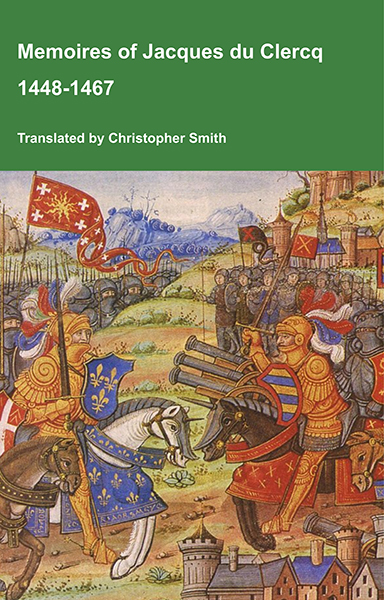
This is a translation of the 'Memoires of Jacques du Clercq', published in 1823 in two volumes, edited by Frederic, Baron de Reissenberg. In his introduction Reissenberg writes: 'Jacques du Clercq tells us that he was born in 1424, and that he was a licentiate in law and a counsellor to Philip the Good, Duke of Burgundy, in the castellany of Douai, Lille, and Orchies. It appears that he established his residence at Arras. In 1446, he married the daughter of Baldwin de la Lacherie, a gentleman who lived in Lille. We read in the fifth book of his Memoirs that his father, also named Jacques du Clercq, had married a lady of the Le Camelin family, from Compiègne. His ancestors, always attached to the counts of Flanders, had constantly served them, whether in their councils or in their armies.' The Memoires cover a period of nineteen years beginning in in 1448, ending in in 1467. It appears that the author had intended to extend the Memoirs beyond that date; no doubt illness or death prevented him from carrying out this plan. As Reissenberg writes the 'merit of this work lies in the simplicity of its narrative, in its tone of good faith, and in a certain air of frankness which naturally wins the reader’s confidence.' Du Clercq ranges from events of national and international importance, including events of the Wars of the Roses in England, to simple, everyday local events such as marriages, robberies, murders, trials and deaths, including that of his own father in Book 5; one of his last entries.
Available at Amazon in eBook and Paperback format.
Coronation of Edward III is in 1320-1329 Despencer War.
On 1st February 1327 King Edward III of England [aged 14] was crowned III King of England at Westminster Abbey [Map] by Archbishop Walter Reynolds.
Froissart Book 1: 1307-1340. [25th December 1326] 21. As it had been agreed by the highest barons and the councils of the good towns, so it was done. The young King Edward was crowned with the royal crown in the palace at Westminster, near London — he who would later be so fortunate and glorious in arms. This took place in the year of grace 1326, on Christmas Day. He was then about sixteen years old, and he turned sixteen at the Feast of the Conversion of Saint Paul (25th January). There, the noble knight Sir John of Hainault was greatly honored and served by all the princes, nobles, and commoners of the realm. He and all the companions who had remained with him were given great and very rich gifts. Afterward, he and his companions stayed on, enjoying great feasts and festivities held by the lords and ladies present, until the day of the Epiphany (Feast of the Three Kings), when he heard that the King of Bohemia, the Count of Hainault (his brother), and a great number of French lords were preparing to gather at Condé-sur-l'Escaut for a tournament that had been announced there.
21. Ensi que acordé fu par les plus haus barons et par les consaulz des bonnes villes, fu il fait. Et fu adonc couronnés de couronne royal, ens ou palais de Wesmoustier, dalés Londres, li jones rois Edowars, qui tant fu de puis ewireus et fortunés en armes. Ce fu l'an de grasce Nostre Signeur mil trois cens vingt et sis, le jour dou Noel. Et pooit avoir adonc environ seize ans; il les eut à le Conversion saint Pol. Et là fu très grandement servis et honnourés li gentilz chevaliers messires Jehans de Haynau de tous les princes et de tous les nobles et non nobles dou pays. Et là [lui] [] furent donnet grans joiaus et très rices, et à tous les compagnons qui demoret estoient dalés lui. Et demora de puis il et si compagnon, en grandes festes et en grans solas des signeurs et des dames qui là estoient, jusques au jour des Trois Rois que il oy dire que li rois de Behagne, li contes de Haynau, ses frères, et grant plenté de signeurs de France se ordonnoient, pour estre à Condet sour Escaut, à un tournoi qui là estoit criés.
Chronicle of Henry Knighton. Now it must be known that this Edward of Windsor, the third crowned since the Conquest, was crowned at Westminster on the Sunday next before the feast of the Purification of the Blessed Virgin Mary, on the day before [31st January 1327] the Kalends of February; and the Londoners and the magnates mutually swore and made security that they would mutually cherish and support the king and his mother the queen according to the whole of their power. In this place it is to be seen how the chronicler of Chester errs, saying that King Edward was to be crowned on the day of the Purification. Nevertheless, the Westminster chronicle says that he was crowned on the Conversion of Saint Paul [25th January], namely the eighth day before the Kalends of February; and thus these three chronicles differ among themselves. But it can perhaps be said that Lord William Trussell rendered up the homage Question on the Conversion of Saint Paul, from which day the right of the kingdom immediately on that same day devolved upon this king Edward; and that he was perhaps crowned on the day before the Kalends of February, but on the day of the Purification the solemnity was celebrated. Then Hugh Despenser, son of Hugh the Younger, rendered to the king the castle of Caerphilly, which he had held since the death of his uncle Hugh, and placed himself in the king’s grace; and he granted him life and limb. The abbey of Abingdon was despoiled by the citizens of the same town.
Nunc sciendum est quod iste Edwardus de Wyndesoure tertius a conquestu coronatus est apud Westmonasterium dominica proxima ante festum Purificationis beatæ Mariæ pridie kalendas Februarii, et Londonienses atque magnates mutuo juraverunt et fecerunt securitatem quod mutuo foverent et sustentarent regem et reginam matrem suam secundum totum suum posse. In quo loco videndum est qualiter claudicat Cistrensis dicens regem Edwardum die Purificationis fore coronatum. Verumtamen chronica Westmonasteriensis dicit eum coronatum in Conversione sancti Pauli scilicet viij. kalendarum Februarii; sicque istæ tres chronicæ inter se variant. Sed potest forte dici quod dominus Willelmus Trussell reddidit Question sursum homagium in conversione sancti Pauli ex quo day of the jus regni statim eodem die devolutum est ad istum coronation. Edwardum regem, et forte pridie kalendas Februarii coronatus, sed die Purificationis solemnitas celebrata Twys. col. est. Tune Hugo Dispensator filius Hugonis junioris reddidit regi castellum de Karfyly quod a morte Hugonis patrui sui tenuerat, et misit se in gratiam regis; qui ei concessit vitam et membra. Abbathia de³ Abyndon spoliata est a civibus ejusdem villæ.
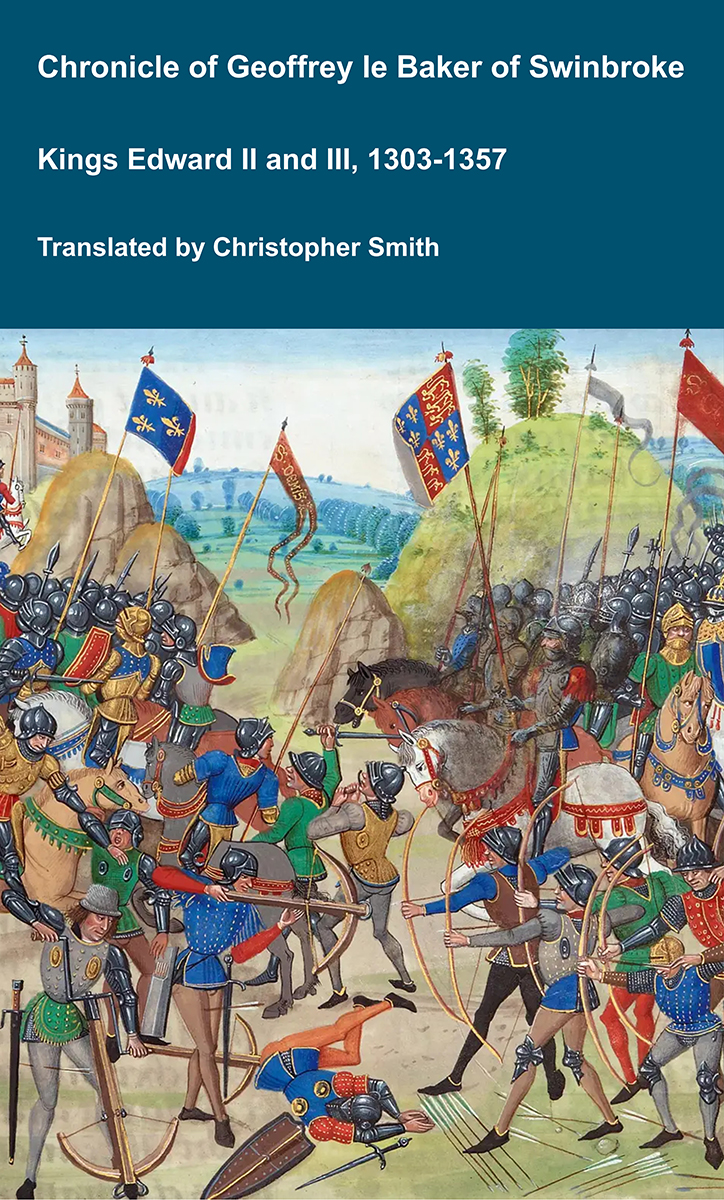 Chronicle of Geoffrey le Baker of Swinbroke. After the glorious King Edward had, as previously stated, resigned the crown of the realm to his firstborn son, Lord Edward of Windsor, and once certain reports of this had spread, the nobles and prelates of the realm gathered in Parliament at London and most eagerly acknowledged this same Edward, son of Edward, then a youth of about fifteen years,1 as successor to the throne, a young man gracious in the sight of God and of all the world. On the first day of February at Westminster, he was crowned by the Archbishop of Canterbury, Walter Reynolds. Many attended this great solemnity, both foreigners and natives, and especially the hired soldiers of Queen Isabella, his mother, whom, as has been said, she had summoned from Hainault and Germany. Thus the new king was adorned with the royal crown, the same which the most blessed confessor Saint Edward, his predecessor, had been accustomed to wear. Though the crown was of great weight and size, he bore it with such manly strength that all who knew the tenderness of his youth, the crown's great size, and its heaviness, were filled with wonder. On the same day, three sons of Roger de Mortimer, along with many others, were honoured with the belt of knighthood.
Postquam gloriosus rex Edwardus regni diadema, ut prescriptum est, suo primogenito, domino Edwardo de Wyndesore, resignaverat, habitis de hoc certis rumouribus, in parliamento Londoniis regni proceres ct prelati ipsum Edwardum Edwardi primogenitum, quindecim circiter annorum adolescentem, Deo et toti mundo graciosum, in patris successorem promtissime admiserunt, atque prima die Februarii, apud Westmonasterium, per archiepiscopum Cantuariensem, Walterum Renald, coronari fecerunt. Tante solemnitati interfuerunt multi tam alienigene quam indigene et precipue stipendiarii Isabelle regine matris sue, quos, ut dictum est, de Hanonia et Germania ipsa invitavit. Novus itaque rex regia corona insignitus, quam beatissimus confessor sanctus Edwardus suus predecessor gestare solebat, quantumcumque gravis ponderis et amplam, tamen ita viriliter ipsam gessit, ut inde mirarentur qui pueri teneritudinem et amplitudinem corone atque ponderositatem experti noverunt. Eodem die IIJ filii Rogeri de Mortuo mari atque multi alii milicie cingulo fuerunt decorati.
Note 1. Edward was just over fourteen years and two months old. The memorandum in the Rymer's Fœdera 2.683, relating to the coronation states that there were present the bishops of Ely, Hereford, Winchester, Chichester, Worcester, Durham, Lincoln, Llandaff, and Norwich; the earls of Norfolk, Kent, Surrey, and Hereford; Roger Mortimer, Henry Beaumont, and others.
Life of Edward II of Carnarvan by a Monk of Bridlington. After King Edward, called of Caernarfon, as is premised, had relinquished the royal dignity, the prelates, earls, barons, and other nobles of the realm came together at London, and they appointed his first-born son Edward king; and on the Lord’s Day, which was the day [1st February 1327] immediately preceding the feast of the Purification of the Blessed Virgin Mary, in the year of the Lord 1326 [1327], of his age fourteen, he received the order of knighthood from Lord John, brother of the Count of Hainault. Him, when anointed, Walter, Archbishop of Canterbury, as the custom is, adorned with the diadem of the kingdom. To him all the nobles of the land then rendered fealty and homage. And not long afterwards, the lands seized into the king’s hand in the time of his father as forfeited, the new king himself graciously restored to the rightful heirs. We read that Arthur, king of the Britons, in the fifteenth year of his age, was admitted to the governance of the kingdom. Who, because of a true token of love, bore on his shield a painted image of the glorious Virgin. This king, of youthful age, as is said, raised up on the throne of the kingdom, carries with himself the likeness of the Blessed Virgin, carved in the triclinium of his heart, reverently, on account of a pure affection of devotion; whose honey-sweet name also dwells frequently in his mouth, to be spoken.
Postquam rex Edwardus dictus de Carnarvan, ut præmittitur, cessit regia dignitate, prælati, comites, barones, et alii regni proceres Londonias convenerunt, ejusque primogenitum Edwardum regem constituerunt, et die Dominica, quæ fuit dies proxime præcedens festum Purificationis beatæ Mariæ Virginis, anno Domini MCCCXXVI, ætatis suæ xiiii, de domino Johanne fratre comitis Hanoniæ suscepit ordinem militarem. Quem inunctum Walterus Cantuariensis archiepiscopus, sicuti mos est, regni diademate insignivit. Cui omnes proceres terræ fidelitatem et homagium tune fecerunt. Nec multum post terras, in manum regis seisitas tempore patris sui tanquam forisfactas, ipse novus rex rectis heredibus reddit gratiose. Legimus quod Arthurus rex Britonum anno ætatis suæ xv ad regni regimen est admissus. Qui propter verum dilectionis indicium in scuto depictam gessit ymaginem Virginis gloriosæ. Rex iste junioris ætatis, ut prædicitur, in regni solio sublimatus benedictæ Virginis speciem ob purum devotionis affectum secum defert sculptam in cordis triclinio reverenter, cujus etiam nomen mellifluum in ipsius ore frequenter residet nominandum.
Annales Paulini. In the same year, on the first day of the month of February [1327], namely on the Lord’s Day, Lord Edward, son of King Edward and of Queen Isabella, the firstborn, in the fifteenth year of his age, by the common election of the whole realm and with the consent of his father Edward, as it was said, was crowned at Westminster by the Archbishop of Canterbury; with the other bishops, namely those of London and Winchester, ministering in the solemnization of the coronation; and all the magnates of the realm held their offices according to the ancient custom of the kingdom, without any impediment.
Eodem anno, primo die mensis Februarii, videlicet die Dominica, dominus Edwardus filius Edwardi regis et dominæ Isabellæ reginæ primogenitus, anno ætatis suæ quinto decimo, per communem electionem totius regni, et ex consensu Edwardi patris sui, ut dicebatur, apud Westmonasterium per archiepiscopum Cantuariensem fuit coronatus; aliis episcopis, videlicet Londoniensi et Wyntoniensi, ministrantibus circa solempnizationem coronationis; et omnes magnates regni officium suum secundum antiquam regni consuetudinem sine aliquo impedimento habuerunt.
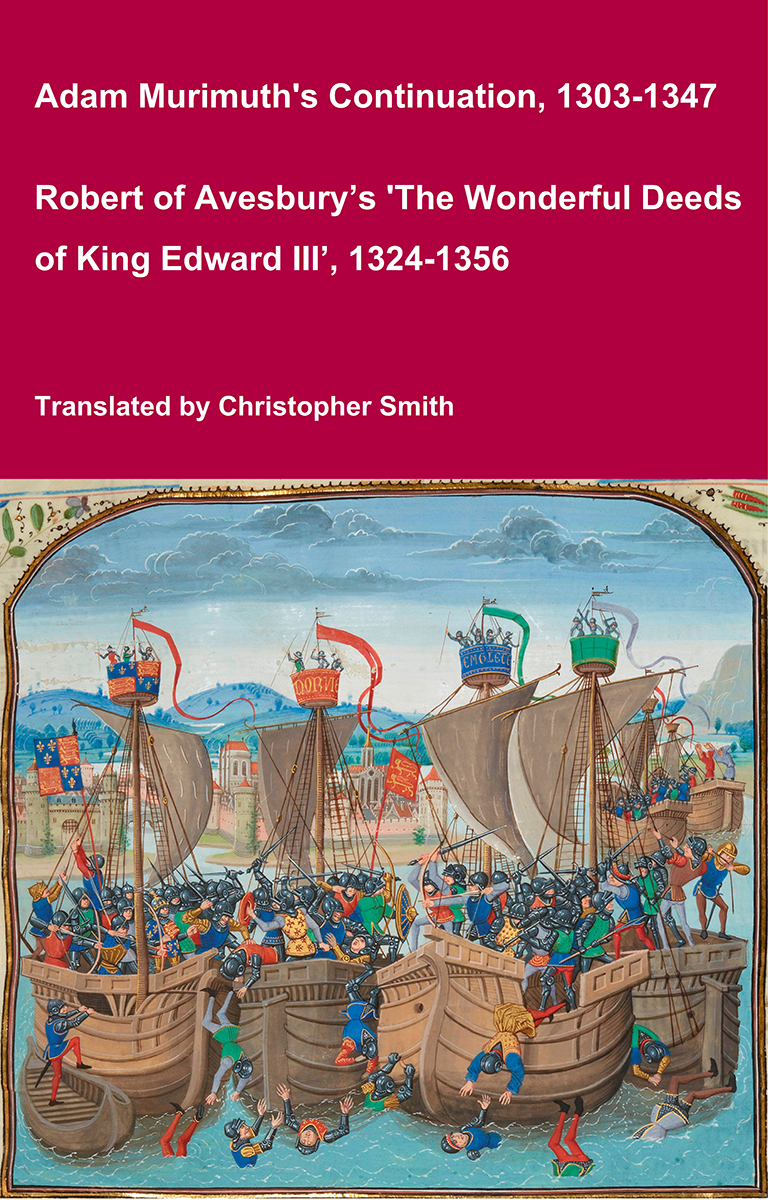 Adam Murimuth Continuation. The envoys returned to the parliament in London and reported the king's answer fully, even more fully than it had actually been given. After hearing this reply, the whole community of the realm accepted the young Edward as king, Edward the Third from the Conquest, and on the first day of February in the year of our Lord 1327 he was crowned at Westminster by Archbishop Walter. On that day three sons of Roger Mortimer and many others were made knights. A dower was also assigned to the queen so large that scarcely a third part of the kingdom remained for her son the king.
Nuncii vero, ad parliamentum Londoniis redeuntes, et responsionem regis plene, et plenius quam facta fuit retulerunt. Qua responsione accepta tota communitas regni ipsum Edwardum juvenem, tertium conquæstu, in regem promptissime admiserunt, et prima die Februarii, anno Domini MCCCXXVJ, coronari fecerunt apud Westmonasterium per archiepiscopum Walterum. Quo die IIJ filii domini Rogeri de Mortuo mari, et multi alii, milites facti fuerunt. Item, dos assignata fuit reginæ talis et tanta quod regi filio suo regni pars tertia vix remanasit.
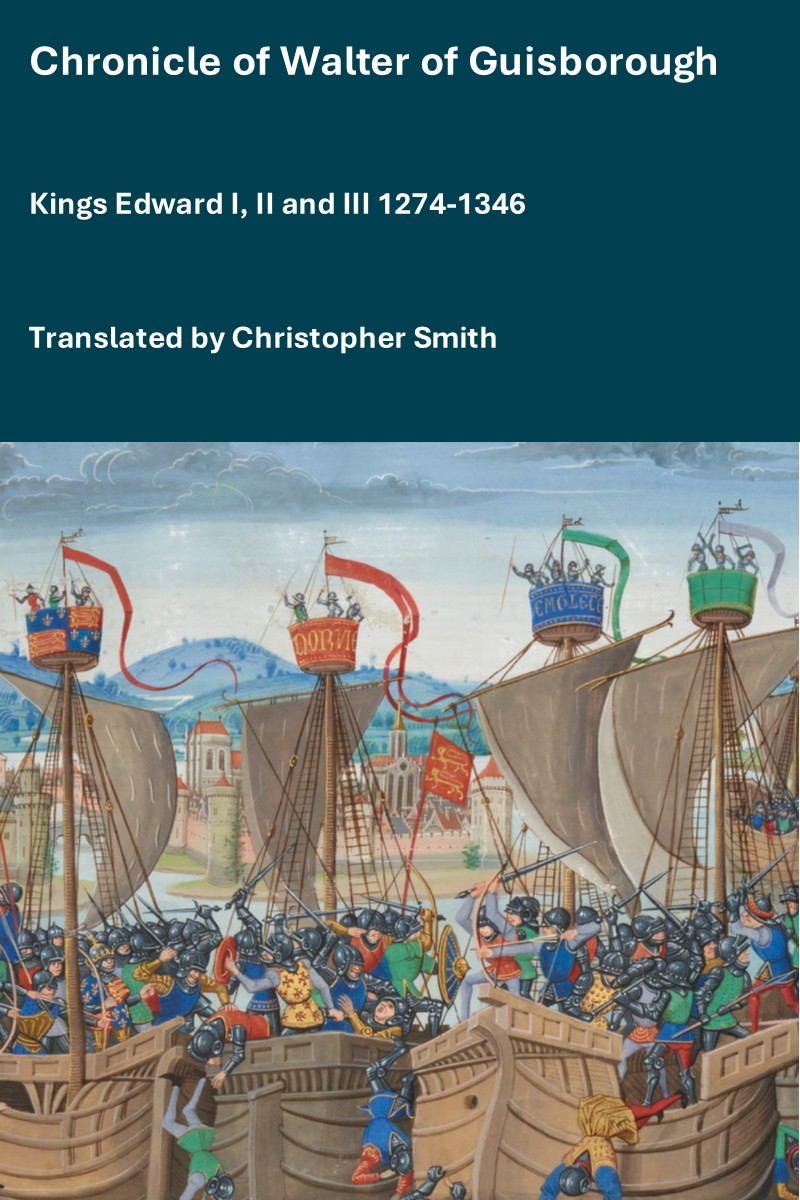 Chronicle of Walter of Guisborough. Edward, therefore, the third after the Conquest, already aged fourteen years on the feast of Saint Brice before his coronation1, was solemnly crowned on the vigil of the Purification of the Blessed Mary [1st February 13272] at Westminster.
Edwardus igitur post Conquæstum tertius, annos quatuordecim in festo. Sancti Bricii ante coronationem suam jam habens, in vigilia Purificationis beatæ Mariæ apud Westmonasterium solemniter coronatur.
Note 1. Edward III was born at Windsor Castle on Monday, November 13, 1312.
Note 2. Adopted from MS. Harl. 655. The date in the text is supported by the Wardrobe Accounts of the expenses of the coronation in the Augmentation Office, cited in Brayley's History of the Houses of Parliament, p. 141: "Among the Rolls preserved in the Augmentation Office, is one intituled 'Counter-roll of John de Feryby, counter-roller to Thomas de Useflete, clerk of the King's Great Wardrobe, appointed by the King and Council, of various items purchased and expenses incurred for the coronation of the said lord King Edward the Third since the Conquest, in the Church of Blessed Peter at Westminster and in the palace of the same, namely on the first day of February, in the first year of his reign; as appears below.'" Avesbury.
Chronicle of Robert Fabyan [-1512]. Edwarde, the iii. of that name, and sone of Edwarde ye seconde and of Isabell the allonly doughter & chylde of Phylyppe le Beawe, or Phylyp the fayre, father to Charlys laste kyng of France, began to reygne as kynge of Englande, his father yet lyuynge, the xxvi. daye of lanuarii, in the ende of the yere of grace. M.CCC. and. xxvi. and the iiii. yere of Charlys the v. laste kyng of France, & was crownyd at Westmynster upon the day of the Puryfycacion of our Lady [2nd February 1327] nexte ensuynge.
Chester Chronicle aka Polychronicon of Ralph Higden Volume 8 Chapter 44. Edward, Sonne of kynge Edwarde, after the conqueste the thrydde, of xv. yere in age, was crownede into kynge in the feste of the Purificacion of oure blissed Lady [2nd February 1327] at Westemynstre, his fader beynge in lyve and under kepynge. In the begynnynge of whom the erthe began to ʒiffe moche fruite, the aier temperance, the see tranquilite, the churche liberte.
Eulogium Historiam. In the same year [1327], Edward III, since the Conquest, on the third day of February, was crowned king in London by the Archbishops of Canterbury and York. All these aforesaid events were carried out under the number immediately above.
Eodem vero anno Edwardus III a Conquæstu tertio die Februarii in regem coronatur Londoniis ab archiepiscopis Cantuariæ et Eboraci. Omnia ista prænotata peracta sunt sub numero proximo prænotato.