

Henrici Quinti, Angliæ Regis, Gesta, is a first-hand account of the Agincourt Campaign, and subsequent events to his death in 1422. The author of the first part was a Chaplain in King Henry's retinue who was present from King Henry's departure at Southampton in 1415, at the siege of Harfleur, the battle of Agincourt, and the celebrations on King Henry's return to London. The second part, by another writer, relates the events that took place including the negotiations at Troye, Henry's marriage and his death in 1422.
Available at Amazon in eBook and Paperback format.
Paternal Family Tree: Vere
In 1425 [his father] John de Vere 12th Earl of Oxford [aged 16] and [his mother] Elizabeth Howard Countess of Oxford [aged 15] were married. She by marriage Countess of Oxford. He the son of [his grandfather] Richard de Vere 11th Earl of Oxford and [his grandmother] Alice Sergeaux Countess Oxford.
On 8th September 1442 John de Vere 13th Earl of Oxford was born to [his father] John de Vere 12th Earl of Oxford [aged 34] and [his mother] Elizabeth Howard Countess of Oxford [aged 32].
On 26th February 1462 [his father] John de Vere 12th Earl of Oxford [aged 53] was hanged at Tower Hill [Map]. His son John [aged 19] succeeded 13th Earl of Oxford.
In or before 1465 John de Vere 13th Earl of Oxford [aged 22] and Margaret Neville Countess of Oxford [aged 20] were married. She by marriage Countess of Oxford. She the daughter of Richard Neville Earl Salisbury and Alice Montagu 5th Countess of Salisbury. He the son of John de Vere 12th Earl of Oxford and Elizabeth Howard Countess of Oxford [aged 54]. They were third cousin once removed. She a great x 2 granddaughter of King Edward III of England.
On 26th May 1465 John de Vere 13th Earl of Oxford [aged 22] was appointed Knight of the Bath.
On 6th September 1465 [his brother-in-law] Archbishop George Neville [aged 33] was enthroned as Archbishop of York at Cawood Castle, North Yorkshire [Map]. Isabel Neville Duchess Clarence [aged 14], Anne Neville Queen Consort England [aged 9] and King Richard III of England [aged 12] were present.
In 1468 Thomas Tresham [aged 48] was imprisoned for having taken part in the plots of John de Vere 13th Earl of Oxford [aged 25] at Tower of London [Map].
On 11th July 1469 George York 1st Duke of Clarence [aged 19] and Isabel Neville Duchess Clarence [aged 17] were married by [his brother-in-law] Archbishop George Neville [aged 37] at the Église Notre-Dame de Calais [Map] witnessed by Richard "Kingmaker" Neville Earl Warwick, 6th Earl Salisbury [aged 40]. She by marriage Duchess Clarence. She the daughter of Richard "Kingmaker" Neville Earl Warwick, 6th Earl Salisbury and Anne Beauchamp 16th Countess Warwick [aged 42]. He the son of Richard Plantagenet 3rd Duke of York and Cecily "Rose of Raby" Neville Duchess York [aged 54]. They were first cousin once removed. He a great x 2 grandson of King Edward III of England. She a great x 3 granddaughter of King Edward III of England.
On 12th August 1469 Woodvilles father and son were beheaded at Kenilworth Castle [Map] by supporters of [his brother-in-law] Richard "Kingmaker" Neville Earl Warwick, 6th Earl Salisbury [aged 40].
Richard Woodville 1st Earl Rivers [aged 64] was beheaded. His son Anthony [aged 29] succeeded 2nd Earl Rivers, 2nd Baron Rivers. Elizabeth Scales Countess Rivers by marriage Countess Rivers.
John Woodville [aged 24] was beheaded.
On 29th September 1469 brothers Humphrey Neville of Brancepeth [aged 30] and Charles Neville of Brancepeth were beheaded at York [Map] in the presence of King Edward IV of England [aged 27] and [his brother-in-law] Richard "Kingmaker" Neville Earl Warwick, 6th Earl Salisbury [aged 40] bringing to an end the Neville-Neville feud that arose as a consequence of the senior line being dis-inherited.
Around 1470 [his illegitimate daughter] Katherine Vere was born illegitimately to John de Vere 13th Earl of Oxford [aged 27].
On 26th March 1470 [his brother-in-law] John Neville 1st Marquess Montagu [aged 39] revoked his title of Earl of Northumberland so that the Earldom could be given to of the Percy family who were its traditional holders.
Henry Percy 4th Earl of Northumberland [aged 21] was restored 4th Earl of Northumberland, 7th Baron Percy of Alnwick, 15th Baron Percy of Topcliffe. Maud Herbert Countess Northumberland [aged 12] by marriage Countess of Northumberland.
A deeply unpopular move with the Neville family who had been longstanding enemies of the Percies in the North. He was created 1st Marquess Montagu instead. Possibly a consequence of the defection of Warwick the Kingmaker [aged 41] to the Lancastrian cause as evidenced by the Welles Rebellion earlier in the year.
On 27th March 1470 George Neville 1st Duke Bedford [aged 9] was created 1st Duke Bedford by King Edward IV of England [aged 27] in preparation for his marriage to Elizabeth York Queen Consort England [aged 4] which didn't, in the end, take place. He, George, was nephew to [his brother-in-law] Richard "Kingmaker" Neville Earl Warwick, 6th Earl Salisbury [aged 41] whose defection to the Lancastrian side may have caused the King to change his mind about his daughter's marriage.


Warkworth's Chronicle [1461-1474]. 18th October 1470. And thenne was takene the Earl of Worcetre [aged 43], whiche was arested and areynede befor Sere Jhon Veere [aged 28], the Earl of Oxenforde, sonne and heyre to the forseide [his father] Earl of Oxenforde whiche was behedede1 at the Toure Hille, as before wrytene; and so the Earl of Worcetre was juged be suche lawe as he dyde to other menne; and, whenne he was dede, his body and his hede was buryede togedyr at the Blacke Frerys in Londone, with alle the honoure and worschyppe that his frendes coude do.
Note 1. "Was behedede." "His diebus captus est ille trux carnifex, et hominum decollator horridus, Comes de Wacester, et in Turri Londonie incarceratus, et in breve prope dictam turrim decapitatus, et apud Fratres Predicatores, juxta Ludgate, obscure sepultus [In these days, that cruel executioner and dreadful decapitator of men, the Earl of Worcester, was captured and imprisoned in the Tower of London, shortly thereafter beheaded near the said tower, and buried in obscurity at the Dominican Friars, near Ludgate]." -MS. Arundel, Coll. Arm. 5, fol. 171, v°. This coming from a partizan of the same side with the Earl, at a period when party politics necessarily ran so high, is strikingly conclusive of that nobleman's character. Cf. Chron. p. 9, l. 13—21.
On 14th April 1471 Edward IV [aged 28] commanded at the Battle of Barnet supported by his brothers George [aged 21] and Richard [aged 18], John Babington [aged 48], Wiliam Hastings [aged 40] (commanded), Ralph Hastings, William Norreys [aged 30], William Parr [aged 37], John Savage [aged 49], William Bourchier Viscount Bourchier [aged 41], Thomas St Leger [aged 31], John Tuchet 6th Baron Audley, 3rd Baron Tuchet [aged 45], Thomas Burgh 1st Baron Burgh of Gainsborough [aged 40], John Scott [aged 48] and Thomas Strickland.
The Yorkists William Blount [aged 29], Humphrey Bourchier [aged 36], Henry Stafford [aged 46] and Thomas Parr were killed.
Humphrey Bourchier 1st Baron Cromwell [aged 40], was killed. Baron Cromwell extinct.
The Lancastrians...
[his brother-in-law] Warwick the Kingmaker [aged 42] was killed. Earl Salisbury, Baron Montagu, Baron Montagu and Baron Monthermer forfeit on the assumption he was attainted either before or after his death; the date of his attainder is unknown. If not attainted the titles may have been abeyant between his two daughters Isabel Neville Duchess Clarence [aged 19] and Anne Neville Queen Consort England [aged 14].
John Neville 1st Marquess Montagu [aged 40] was killed. Marquess Montagu, Baron Montagu forfeit; unclear as to when he was attainted. He was buried at Bisham Abbey [Map].
William Tyrrell was killed.
William Fiennes 2nd Baron Saye and Sele [aged 43] was killed. His son Henry [aged 25] succeeded 3rd Baron Saye and Sele. Anne Harcourt Baroness Saye and Sele by marriage Baroness Saye and Sele.
Henry Holland 3rd Duke Exeter [aged 40] commanded the left flank, was badly wounded and left for dead, Henry Stafford and John Paston [aged 27] were wounded, John de Vere 13th Earl of Oxford [aged 28] commanded, and John Paston [aged 29] and William Beaumont 2nd Viscount Beaumont [aged 33] fought.
Robert Harleston [aged 36] was killed.
Thomas Hen Salusbury [aged 62] was killed.
Thomas Tresham [aged 51] escaped but was subsequently captured and executed on the 6th of May 1471.
 Become a Member via our Buy Me a Coffee page to read more.
On 25th April 1472 William Norreys [aged 31] and Isabel Ingaldsthorpe [aged 31] were married. The date the anniversary of her marriage fifteen years before to [his brother-in-law] John Neville 1st Marquess Montagu.
On 25th December 1475 [his mother] Elizabeth Howard Countess of Oxford [aged 65] died at Stratford.
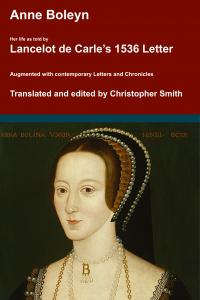
Anne Boleyn. Her Life as told by Lancelot de Carle's 1536 Letter.
In 1536, two weeks after the execution of Anne Boleyn, her brother George and four others, Lancelot du Carle, wrote an extraordinary letter that described Anne's life, and her trial and execution, to which he was a witness. This book presents a new translation of that letter, with additional material from other contemporary sources such as Letters, Hall's and Wriothesley's Chronicles, the pamphlets of Wynkyn the Worde, the Memorial of George Constantyne, the Portuguese Letter and the Baga de Secrets, all of which are provided in Appendices.
Available at Amazon in eBook and Paperback format.
On 20th May 1476 Isabel Ingaldsthorpe [aged 35] died. She was buried with her first husband [his brother-in-law] John Neville 1st Marquess Montagu at Bisham Abbey [Map].
On 8th June 1476 [his brother-in-law] Archbishop George Neville [aged 44] died.
In 1477 William Beaumont 2nd Viscount Beaumont [aged 38] and [his future wife] Elizabeth Scrope Countess of Oxford [aged 9] were married. She by marriage Viscountess Beaumont. The difference in their ages was 29 years. He the son of John Beaumont 1st Viscount Beaumont and Katherine Neville Duchess Norfolk [aged 77]. They were half first cousin twice removed. He a great x 2 grandson of King Edward III of England.
On 4th May 1483 George Neville 1st Duke Bedford [aged 22] died. He being the son of [his brother-in-law] John Neville 1st Marquess Montagu, the nephew of Warwick the Kingmaker who should, perhaps, have inherited the Earldoms of Warwick and Salisbury from his mother that had been appropriated by George Neville 1st Duke Bedford and King Richard III of England [aged 30]. The timing somewhat suspicious. The future Richard III would now enjoy the whole of the Warwick inheritance.
On 7th December 1484 King Richard III of England [aged 32] issued a proclamation against the Lancastrian rebels:
Forasmuch as the King our sovereign lord hath certain knowledge that Piers Bishop of Exeter, Thomas Grey [aged 29] late Marquis Dorset, Jasper Tydder [aged 53] son of Owen Tidder calling himself Earl of Pembroke, John [aged 42] late Earl of Oxford and Sir Edward Wideville [aged 28], with other diverse his rebels and traitors disabled and attainted by authority of the high court of parliament (of whom many ben known for open murderers, adulterers & extortioners, contrary to the pleasure of God and against all truth, honour & nature), have forsaken their natural country, taking them first to be under the observance of the duke of Brittany, and to him promised certain things which by him & his council were thought things too greatly unnatural and abominable for them to grant, observe, keep and perform, and therefore the same utterly refused.
The said traitors, seeing that the said duke and his council would not aid and succour them nor follow their ways, privily departed out of his country into France, there taking them to be under th'obeissance of the King's ancient enemy Charles calling himself king of France; and, to abuse and blind the commons of this said realm, the said rebels & traitors have chosen to be their captain one Henry Tydder [aged 27], son of Edmond Tydder, son of Owen Tidder, which of his ambitious & insatiable covetise, stirred and excited by the confederacy of the King's said rebels and traitors, encroacheth upon him the name and title of royal estate of this realm of England, whereunto he hath no manner interest, right or colour, as every man well knoweth.
And, to th'intent to achieve the same by the aid, support and assistance of the King's said ancient enemies and of this his realm, hath covenanted and bargained with him and with all the council of France to give up and release in perpetuity all the title and claim that the kings of England have had and ought to have to the crown and realm of France, together with the duchies of Normandy, Gascony and Guienne, castles and towns of Calais, Guisnes, Hammes with the marches pertaining to the same. And over this, and beside the alienation / of all the premises into the possession of the king's said ancient enemies, to the greatest aneyntesment, shame and rebuke that ever might fall to this land, the said Herry Earl of Richmond and all the other the king's rebels and traitors aforesaid have intended at their coming to do the most cruel murders, slaughters, robberies and disherisons that ever were seen in any Christian realm.
For the which, and other inestimable dangers to be eschewed, and to th'intent that the King's said rebels and traitors may either be utterly put from their said malicious purposes or soon discomfited if they enforce to land, the King our said sovereign lord desireth, willeth and chargeth all and everyche of the natural subjects of this his realm to call the premises to their mind and, like good and true Englishmen, to endeavour themselves at all their powers for the defence of themselves, their wives, children, goods and inheritances against the said malicious purposes and conspirations which the ancient enemies of this land have made with the King's said rebels for the final destruction of the same land as is aforesaid.
And our said sovereign lord, as a well-willed, diligent and courageous prince, will put his most royal person to all labour and pain necessary in this behalf for the resistence and subduing of his said enemies, rebels and traitors, to the most comfort, wele and surety of all and singular his true and faithful liegemen and subjects. And these our letters shall be therein your warrant.
Given under our Signet at our palace of Westminster the 7 day of December the 2nd year of our reign.
To the right reverend father in God our right trusty and wellbeloved the Bishop of Lincoln, our chancellor of England.


Become a Member via our Buy Me a Coffee page to read more.
On 22nd August 1485 King Richard III of England [aged 32] was killed during the Battle of Bosworth. His second cousin once removed Henry Tudor [aged 28] succeeded VII King of England.
Humphrey Cotes [aged 35] died. It isn't clear on which side he was fighting.
Those supporting Henry Tudor included:
John Blount 3rd Baron Mountjoy [aged 35].
John Cheney 1st Baron Cheyne [aged 43].
Richard Guildford [aged 35].
Walter Hungerford [aged 21].
Thomas Stanley 1st Earl of Derby [aged 50].
Edward Woodville Lord Scales [aged 29].
Edward Courtenay 1st Earl Devon [aged 26].
Rhys ap Thomas Deheubarth [aged 36].
Jasper Tudor 1st Duke Bedford [aged 53].
William Beaumont 2nd Viscount Beaumont [aged 47].
Giles Daubeney 1st Baron Daubeney [aged 34].
William Stanley [aged 50].
Roger Kynaston of Myddle and Hordley [aged 52].
Henry Marney 1st Baron Marney [aged 38].
William Brandon [aged 29] was killed.
James Harrington [aged 55] was killed.
John Howard 1st Duke of Norfolk [aged 60] was killed and attainted. He was buried firstly at Thetford Priory, Norfolk [Map] and therafter at Church of St Michael the Archangel, Framlingham [Map]. Duke Norfolk, Baron Mowbray, Baron Segrave, Baron Howard forfeit.
John Sacheverell [aged 85] was killed.
Philibert Chandee 1st Earl Bath
William Norreys [aged 44], Gilbert Talbot [aged 33], John de Vere 13th Earl of Oxford [aged 42] and John Savage [aged 41] commanded,.
Robert Poyntz [aged 35] was knighted.
Those who fought for Richard III included:
John Bourchier 6th Baron Ferrers of Groby [aged 47].
John Conyers [aged 74].
Thomas Dacre 2nd Baron Dacre Gilsland [aged 17].
William Berkeley 1st Marquess Berkeley [aged 59].
Richard Fitzhugh 6th Baron Fitzhugh [aged 28].
John Scrope 5th Baron Scrope of Bolton [aged 48].
Thomas Scrope 6th Baron Scrope of Masham [aged 26].
Henry Grey 4th or 7th Baron Grey of Codnor [aged 50].
Edmund Grey 1st Earl Kent [aged 68].
Ralph Neville 3rd Earl of Westmoreland [aged 29].
John de la Pole Earl Lincoln 1st [aged 23].
Humphrey Stafford [aged 59].
George Talbot 4th Earl of Shrewsbury [aged 17].
Thomas Howard 2nd Duke of Norfolk [aged 42] was wounded, captured and imprisoned in the Tower of London [Map] for three years. He was attainted; Earl Surrey forfeit.
Francis Lovell 1st Viscount Lovell [aged 29] fought and escaped.
John Zouche 7th Baron Zouche Harringworth [aged 26] was captured.
John Babington [aged 62], William Alington [aged 65], Robert Mortimer [aged 43], Robert Brackenbury, Richard Ratclyffe [aged 55] and Richard Bagot [aged 73] were killed
Walter Devereux Baron Ferrers of Chartley [aged 53] was killed.
William Catesby [aged 35] was executed at Leicester, Leicestershire [Map] after the battle.
George Stanley 9th Baron Strange Knockin 5th Baron Mohun Dunster [aged 25] held as a hostage by Richard III before the Battle of Bosworth.
Henry Percy 4th Earl of Northumberland [aged 36] betrayed King Richard III of England by not committing his forces at the Battle of Bosworth.
John Iwardby [aged 35] was killed.
Become a Member via our Buy Me a Coffee page to read more.
On 29th October 1485 King Henry VII of England and Ireland [aged 28] processed from Tower of London [Map] to Westminster Abbey [Map]. Ahead of him marched the heralds and serjeants-at-arms, the Esquire of the Body, the King's Secretary Richard Fox [aged 37], almoner Christopher Urswick [aged 37], the mayor of London and the Garter King of Arms. Also ahead of him were Thomas Stanley 1st Earl of Derby [aged 50], John de la Pole Earl Lincoln 1st [aged 23], John de Vere 13th Earl of Oxford [aged 43] and William Berkeley 1st Marquess Berkeley [aged 59]. Following behind were the only two Dukes: Jasper Tudor 1st Duke Bedford [aged 53], created the day before, and John de la Pole 2nd Duke of Suffolk [aged 43].
On 30th October 1485 King Henry VII of England and Ireland [aged 28] was crowned VII King of England by Cardinal Thomas Bourchier [aged 67] at Westminster Abbey [Map]. Earl Richmond merged with the crown. Margaret Beaufort Countess Richmond [aged 42], his mother, attended.
Robert Dymoke [aged 24] attended as the Kings' Champion.
John de Vere 13th Earl of Oxford [aged 43] carried the King's train.

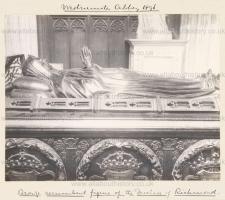
Around 1486 John de Vere 13th Earl of Oxford [aged 43] was appointed 228th Knight of the Garter by King Henry VII of England and Ireland [aged 28].
In 1486 [his son-in-law] Robert Broughton [aged 11] and [his illegitimate daughter] Katherine Vere [aged 16] were married. She the illegitmate daughter of John de Vere 13th Earl of Oxford [aged 43].

On 24th September 1486 Prince Arthur Tudor was christened at Winchester Cathedral [Map] by Bishop John Alcock [aged 56].
Cecily "Rose of Raby" Neville Duchess York [aged 71] held the child. His godparents included Thomas Stanley 1st Earl of Derby [aged 51], William Fitzalan 9th or 16th Earl of Arundel [aged 68], John de Vere 13th Earl of Oxford [aged 44], Thomas Fitzalan 10th or 17th Earl of Arundel [aged 36], Elizabeth Woodville Queen Consort England [aged 49] and Cecily York Viscountess Welles [aged 17]. Richard Woodville 3rd Earl Rivers [aged 33] was present.
His grandmother Margaret Beaufort Countess Richmond [aged 43] has written the Ordinances as to what Preparation is to be made for the Christening of the Child of which she shall be delivered that describe the form of the Christening.
On 16th June 1487 a Lancastrian army defeated a Yorkist army at the Battle of Stoke Field; considered by many to be the last battle of the Wars of the Roses.
The Lancastrian army of Henry Tudor comprised:
John de Vere 13th Earl of Oxford [aged 44].
Jasper Tudor 1st Duke Bedford [aged 55].
George Talbot 4th Earl of Shrewsbury [aged 19].
Henry Willoughby [aged 36].
John Cheney 1st Baron Cheyne [aged 45].
John Mordaunt [aged 31].
Richard Neville 2nd Baron Latimer of Snape [aged 19].
William Norreys [aged 46].
Edward Norreys [aged 23] wounded.
John Paston [aged 43].
George Stanley 9th Baron Strange Knockin 5th Baron Mohun Dunster [aged 27].
Edward Woodville Lord Scales [aged 31].
Thomas Lovell, knighted.
Henry Marney 1st Baron Marney [aged 40].
Edward Belknapp of Blackfriars in London
William Lyttelton [aged 37] who was knighted after the battle.
The Yorksists:
John de la Pole Earl Lincoln 1st [aged 25] was killed. Earl Lincoln extinct.
Thomas Fitzgerald [aged 29] and Martin Schwartz were killed.
Lambert Simnel [aged 10] fought and was captured. He was pardoned by King Henry VII and put to work in the in the royal kitchen as a spit-turner. When he grew older, he became a falconer. Almost no information about his later life is known.
Francis Lovell 1st Viscount Lovell [aged 31] fought and escaped. He was attainted. Viscount Lovell, Baron Deincourt, Baron Grey of Rotherfield, Baron Lovel of Titchmarsh, Baron Holand forfeit.
Edmund Peckham was granted the manors of Alford, Eccles, Alderley, Chester, and Flint.
Become a Member via our Buy Me a Coffee page to read more.
Collectanea by John Leland [1502-1552]. On the Morne, the Day of the Coronation [25th November 1487], she was apparelde in a Kirtill and a Mantell of Purple Velvett furred with Ermyns, with a Lace afor the Mantell. On her Hair, a Serkelett of Golde richely garnysshede with Perle and precious Stonys. And fo apparelled, my Lady Cecill [aged 18] bering her Trayne, the remevede furthe of Westminster Hall, and ther stode under a Cloth of Aftate unto the Tyme the Proceffion was orderde, from the whiche Place to the Pulpit in Westminster Chirche she wentt upon new Ray Clothe1. Al the Day from thens forth, the Bande of the v Ports [Cinque Ports] bare the Canapie according to ther Privileges. And the Order of the Proceffion was as eufueth.
Furst, Esquiers proceded, and Knyghts folowed them. After theym went the new made Knyghts wele besene in dyvers Silks, every Man as hym best likede after his Degre. After theym the Barons, and other Estats in Order as they wer, the Heraldes on every Side the Proceffion, and Sergeannts of Armes to make Rome. Then folowed Abbotts, and next theym Bisshops in Pontificalibus, to the Nomber of xv [15] Bishops, besyde Abbotts, wherof the Bisshop of bare Seint Edwards Chales, the Bishop of Norwiche bare the Patent, byfor whiche Prelats went the Monks of Westminster al in Albes, and the Kings Chapell folowing theym. Next to the Quene went al the other Bishops, except the Bisshop of Wynchester, and the Bishop of Ely, whiche went on ether Hande the Quene under the Canapie to fufteyne her Grace. Then went th Archebisshop of Yorke [aged 64]. After him was Garter King of Armes; the Maire of London next byfor the Counstable and Marshall as befor rehersede. Next unto theym th Erle of Aronndell [aged 70] bering the Virge of Iverye, with a Dove in the Tope. After hym the Duc of Suffolke [aged 45] bering the Septre. Then th Erle of Oxinforde [aged 45] Great Chamberlayn, in his Parliament Roobees, having in his Hand the Staff of his Office. Then the Duc of Bedforde [aged 56] bar hedede in his Roobees of Aftate bering a riche Corowne of Golde. Then folowed the Quene apparelde as is afor rehersede; and next her my Lady Cecill, whiche bar her Trayne. Next her folowd the Duchesse of Bedeforde [aged 29], and another Duchesse and Comtesse apparelled in Mantells and Sircoots of Scarlet, furred and powderde, the Duchesses having on ther Heds Coronatts of Golde richely garnysshed with Perle and precious Stones, and the Comtesse on her Hed Serkeletts of Golde in like wife garnysshed, as dooth apper in the Bok of Picture therof made. But the more Pitie ther was so Hoge a People inordynatly presing to cut the Ray Cloth, that the Quenes Grace gede upon, so that in the Prefence certeyne Persones wer slayne, and the Order of the Ladies folowing the Quene was broken and diftrobled.
The Quenes Grace thus comyng forth, when she came to the Entre of the West Dore of the Chirche of Westminster, ther was saide by the. this Orifon, Omnipotens fempiterne Deus, &c. That doon she procedede thorowgh the Quer unto the Pulpit, wherin was a Sege Royall2 dressed with Cloth of Golde, and Cusshins accordingly. Th Archebisshop of Canterbury [aged 67] ther being present, and revested as apperteyneth to the Celebration of the Maffe, receyved the Quene comyng from her Royall Sege with the Lordes bering her Crowne, Septer, and Rodde, and the Bisshops fusteynyng her as is abovesaide. The Grecis byfor the High Auter wer honorably dressed and arrayed with Carpetts and Cufshions of Aftate, wherupon the Quene lay prostrate afor the Archebisshop, whiles he seide over her this Orifon, Deus qui folus habes, &c. That doon she aros and kneled, and my Lady .... toke her Kerchef from her Hede, and th Archebysshop opend her Brest, and anoynted her ij [2] Tymes. Furst, in the former Parte of her Hede, and fecondly, in her Breste afor, sayng thies Wordes, In nomine Patris & Filii, &c. profit tibi hec unctio, with this Orison, Omnipotens Sempiterne Deus. That doon the said Lady closed her Breft, and folowingly the saide Archebisshop blessed her Ring, seing this Orifon, Creator, and cast holy Water upon it. Then he put this same Ring on the iiij [4] Finger of the Quenes right Hande, saing theyes Words, Accipe annulum, and then he faid, Dominus vobifcum, with this Collect, Deus cujus, &c. Then after the said Archebisshop had blessed the Quenes Corone, seing, Oremus Deus tuorum, he sett the Crowne uppon her Hede, wherupon was a Coyff put by my seid Lady for the Conservation of the holy Uncion, whiche is afterwarde to be delyverede unto the saide Archebisshop, feing theys Words, Officium noftrum, &c. Then he delyverede unto the Quene a Septer in her right Hande, and a Rodde in her left Hande, faing this Orifon, Omnipotens Domine. The Quene thus corowned, was lede by the abovefaide Bisshops up into the Sege of her Estate, al the Ladies folowing her. Whiles the Offratory was in playing at Organs, she was ledde corowned, from her Sege Roiall by the faide ij [2] Bisshops unto the High Auter, her Septer and Rodde of Golde borne byfor her as is aforsaide. Then th Archebisshop turned his Face to the Quer warde, and after this the Quene was, as byfor, brought up ageyn to her Sege Royall of Aftate, wher the fatt stille, until Agnus Dei was begone, and after Per omnia fecula feculorum, he turned hym to the Quene, blessing her with this Orifon, Omnipotens Deus carismate, &c. wherunto the Quene answerde, Amen. In the Tyme of finging of Agnus Dei, the Pax was brought to the Qwene by the Bishop of Worcester, whiche brought, when the Quene had kissed it, she descendid and came to the High Auter, and had a Towell holden byfor her by ij [2] Bisshops. And ther the lowly inclynyng herself to the Grounde, feide her Confiteor, the Prelats feing Misereatur, and th'Archebisshop the Abfolution, and then the Quene fumwhat areyfyng her: self, receyved the Blessed Sacrament. Thies Things reverently accomplishede, the Quene retourned to her Sette Roiall, and ther abode til the Masse was ended. The Maffe doon, her Grace, accompanyed with Prelats and Nobles, descended from her Sege Roiall of Aftate, and went to the High Auter, and then the faide Archebisshop arrayde in Pontificalibus, as he saide Masse, with all the Mynifters of the Auter byfore hym, went byfor the Auter of the Shryne of Seint Edwarde the King, and after hym folowed al other Prelats and Lordes. Then the Quenes Grace commyng byfor the faide Auter of the Shryne, the said Archebisshop toke the Crowne from her Hede, and fett upon the fame Auter.
Note 1. In the Tudor period a 'ray cloth' (sometimes rey, raie, ray, or reye, ray-cloth or rays cloth) is a woollen textile characterized by weft-faced coloured stripes or bands, used especially for floor coverings, procession carpets, and sometimes garments. The word "ray" comes from Old French raie meaning 'stripe' or 'line'.
Note 2. 'Sege Royall' i.e. Royal seat, throne.
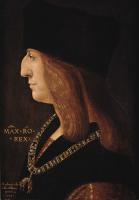
Chronicle of Edward Hall [1496-1548]. After that, all this army was arrayed and even ready to set forward whereof were chieftains and leaders, Jasper Duke of Bedford [aged 61], and John, Earl of Oxford [aged 50] beside other the King [aged 35] sent Christopher Urswick [aged 44] almoner, and syr John Wriothesley knight to Maximilia [aged 33], to certify him that the King was all in a readiness, and would shortly arrive in the continent land, as soon as he were advertised that Maximilian and his men, were ready and prepared to join with him. The Ambassadors sailed into Flanders, and after their message done, they sent two letters in all hast to King Henry, the which not only sore unquieted and vexed him, but also caused him to take more thought, care and study on him then he did before: for they declared that no prince could be more unprovided or more destitute of men and armure, no more lacking all things, appertaining to war than was Maximilian, and that he lay lurking in a corner, sore sick of the flux of the purse, so that he had neither men, horses, munitions, armour nor money, nevertheless his mind and will was good, if his power and ability had been correspondent and therefore there was no trust to be put in his aide or puissance. Their letters both appalled and made sorrowful the King of England, which like a prudent prince did well consider and ponder, that it were both jeopardous and costly, for him alone to enterprise so great a war. And on the other part, if he should desist and leave of his pretended purpose, all me might call him coward and recreant prince. Beside this, he thought that his own nation would not take his tarrying at home in good nor favourable part, considering that syth they had given so large money for the preparation of all things necessary and convenient for the same, they might conceive in their heads and imagine, that under colour and pretence of a dissimulated war he had exacted of the notable sums of money, and now the treasure was once paid, then the war was done, and his coffers well enriched, and the commons impoverished. So that at this time he doubted and cast perils on every side and part, and beside this he was not a little sorry that Maximilia author of this war did absent himself and defraud him of his society and assistance. And while he studied and mused what counsel he should best take in such a doubtful and sudden case, he like a grave prince, remembering the saying of the wise man, work by counsel and thou shall not repent the, assembled together all his lords and other of his private counsel, by whose minds it was concluded and determined, that he should manfully and courageously persevere and precede in this broached and begun enterprise, recording well with themselves, and affirming plainly that all chivalry and martial prowess, the more difficult and heard that it is to attain to, the more renowned is the glory, and the fame more immortal of the vanquisher and obtainer. Therefore by this counsel of his friends and senate, he made Proclamation that every man should set forward into France, and yet not opening how Judasly Maximilian had deceived him, least that they knowing the whole fact, should not be so courageous to go toward that battle and precede forward on their journey. And therefore, to provide and force all perils and dangers that might accidentally ensue, he so strengthened, multiplied and augmented his army in such number before he took ship, that he with his own power might discourage and overcome the whole puissance of his adversaries.
Become a Member via our Buy Me a Coffee page to read more.
On 21st November 1499 John de Vere 13th Earl of Oxford [aged 57] presided at Westminster Hall [Map] during the trial of Perkin Warbreck [aged 25].
The History of Richard III Book 3. [21st November 1499] Now I will add to this tragedy of these Plantagenets one act more, and of the Earl of Oxford [aged 57], and worthy to be well regarded [for example's sake,] besides that here it also may make [somewhat for the cause] and for the innocency of the two young men, Edward, Earl of Warwick, and Richard, Duke of York. And this it is. [T]he Earl of Oxford, Sir John de Vere, who was much affected and devoted to this King Henry VII, as we have seen here by some good instances, was a great ene[my to] this Richard, alias Perkin, and I think the only [en]emy which he had of the greater nobility. And wheth[er his] evil will grew out of incredulity, or were it out of malice, or because he hated King Edward and all the House of York; or else because he applied himself very obsequiously [to o]bserve and to humour the king then reigning in everything - but [I] cannot determine whether of these. But this is certain, [th]at he was so vehement a persecutor of Perkin [aged 25] as that he and t[he Cardinal were] said to be the chief persuaders and procurers of the more hasty dispatching of Perkin out of the way and of his destruction. And this earl also [pronounced the] cruel [sentence against the] Earl of Warwick, son of the Duke of Clarence (for he was High Judge or Constable in that action), [whose dealing thus in those matters] was much misliked.
After 20th June 1504 [his illegitimate daughter] Katherine Vere [deceased] died.
In 1506 [his wife] Margaret Neville Countess of Oxford [aged 62] died.
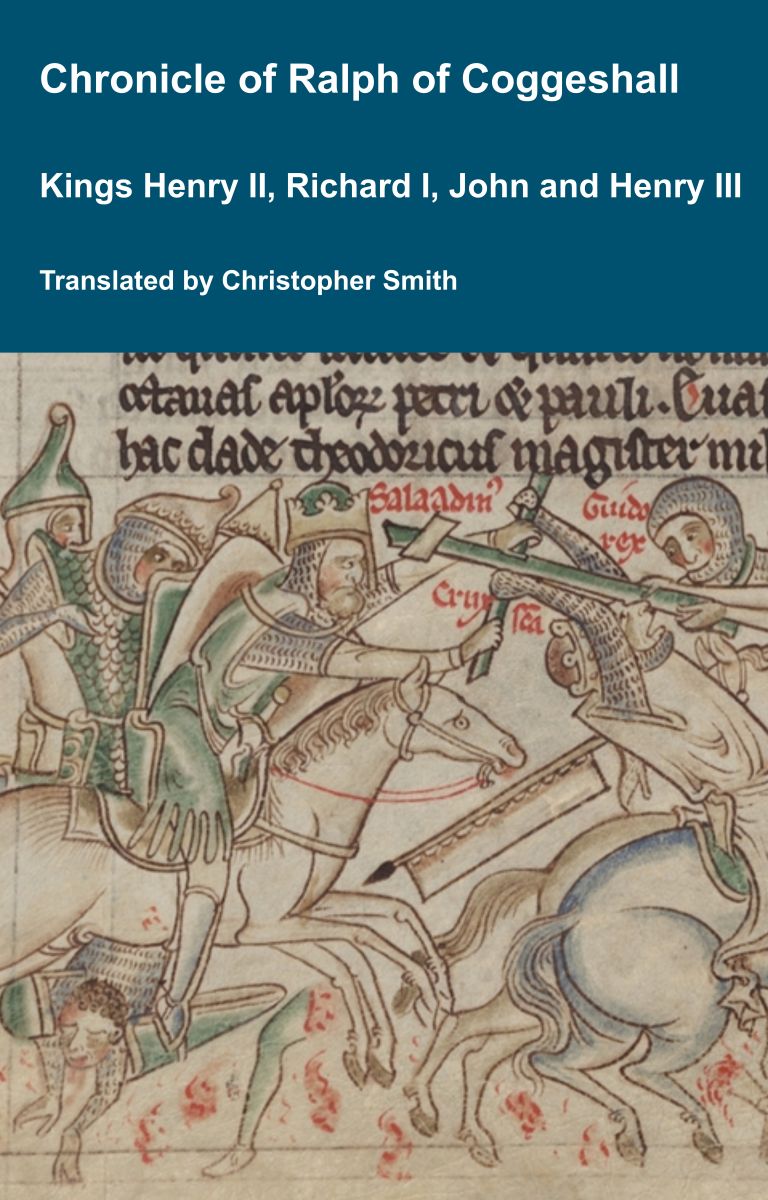
Chronicle of Abbot Ralph of Coggeshall
The Chronicle of Abbot Ralph of Coggeshall (Chronicon Anglicanum) is an indispensable medieval history that brings to life centuries of English and European affairs through the eyes of a learned Cistercian monk. Ralph of Coggeshall, abbot of the Abbey of Coggeshall in Essex in the early 13th century, continued and expanded his community’s chronicle, documenting events from the Norman Conquest of 1066 into the tumultuous reign of King Henry III. Blending eyewitness testimony, careful compilation, and the monastic commitment to record-keeping, this chronicle offers a rare narrative of political intrigue, royal power struggles, and social upheaval in England and beyond. Ralph’s work captures the reigns of pivotal figures such as Richard I and King John, providing invaluable insights into their characters, decisions, and the forces that shaped medieval rule. More than a simple annal, Chronicon Anglicanum conveys the texture of medieval life and governance, making it a rich source for scholars and readers fascinated by English history, monastic authorship, and the shaping of the medieval world.
Available at Amazon in eBook and Paperback format.
On 14th January 1507 John de Vere 13th Earl of Oxford [aged 64] and Elizabeth Scrope Countess of Oxford [aged 39] were married. She by marriage Countess of Oxford. The difference in their ages was 25 years. He the son of John de Vere 12th Earl of Oxford and Elizabeth Howard Countess of Oxford. They were fourth cousin once removed.
On 10th March 1513 John de Vere 13th Earl of Oxford [aged 70] died at Hedingham Castle [Map]. He was buried at Colne Priory, Essex [Map]. His nephew John [aged 13] succeeded 14th Earl of Oxford.
In 1537 [his former wife] Elizabeth Scrope Countess of Oxford [aged 69] died.
Kings Wessex: Great x 12 Grand Son of King Edmund "Ironside" I of England
Kings Gwynedd: Great x 11 Grand Son of Owain "Great" King Gwynedd
Kings Seisyllwg: Great x 15 Grand Son of Hywel "Dda aka Good" King Seisyllwg King Deheubarth
Kings Powys: Great x 12 Grand Son of Maredudd ap Bleddyn King Powys
Kings England: Great x 6 Grand Son of King John of England
Kings Scotland: Great x 11 Grand Son of King Duncan I of Scotland
Kings Franks: Great x 19 Grand Son of Charles "Charlemagne aka Great" King of the Franks King Lombardy Holy Roman Emperor
Kings France: Great x 13 Grand Son of Hugh I King of the Franks
Kings Duke Aquitaine: Great x 16 Grand Son of Ranulf I Duke Aquitaine
Great x 4 Grandfather: Robert de Vere 5th Earl of Oxford 
Great x 3 Grandfather: Alphonse Vere
Great x 4 Grandmother: Alice Sanford Countess of Oxford
Great x 2 Grandfather: John de Vere 7th Earl of Oxford
Great x 4 Grandfather: Jordan Foliot
Great x 3 Grandmother: Jane Foliot
Great x 1 Grandfather: Aubrey de Vere 10th Earl of Oxford 5 x Great Grand Son of King Henry "Curtmantle" II of England
Great x 4 Grandfather: Gunselin Badlesmere 
Great x 3 Grandfather: Bartholomew Badlesmere 1st Baron Badlesmere
Great x 4 Grandmother: Joan Fitzbernard
Great x 2 Grandmother: Maud Badlesmere Countess of Oxford 4 x Great Grand Daughter of King Henry "Curtmantle" II of England
Great x 4 Grandfather: Thomas de Clare  4 x Great Grand Son of King Henry I "Beauclerc" England
Great x 3 Grandmother: Margaret Clare Baroness Badlesmere 3 x Great Grand Daughter of King Henry "Curtmantle" II of England
Great x 4 Grandmother: Juliana Fitzgerald  2 x Great Grand Daughter of King Henry "Curtmantle" II of England
GrandFather: Richard de Vere 11th Earl of Oxford 5 x Great Grand Son of King Henry "Curtmantle" II of England
Great x 4 Grandfather: Robert Fitzwalter 1st Baron Fitzwalter Great Grand Son of King Henry "Curtmantle" II of England
Great x 3 Grandfather: Robert Fitzwalter 2nd Baron Fitzwalter 2 x Great Grand Son of King Henry "Curtmantle" II of England
Great x 4 Grandmother: Eleanor Ferrers Baroness Fitzwalter  5 x Great Grand Daughter of King Henry I "Beauclerc" England
Great x 2 Grandfather: John Fitzwalter 3rd Baron Fitzwalter 3 x Great Grand Son of King Henry "Curtmantle" II of England
Great x 4 Grandfather: Thomas de Multon 1st Baron Multon 
Great x 3 Grandmother: Joan de Multon Baroness Fitzwalter
Great x 4 Grandmother: Eleanor Burgh Baroness Multon Egremont 
Great x 1 Grandmother: Alice Fitzwalter Countess of Oxford 4 x Great Grand Daughter of King Henry "Curtmantle" II of England
Great x 4 Grandfather: Henry Percy 9th and 1st Baron Percy
Great x 3 Grandfather: Henry Percy 10th and 2nd Baron Percy 5 x Great Grand Son of King John of England
Great x 4 Grandmother: Eleanor Fitzalan Baroness Percy  4 x Great Grand Daughter of King John of England
Great x 2 Grandmother: Eleanor Percy Baroness Fitzwalter 5 x Great Grand Daughter of King Henry "Curtmantle" II of England
Great x 4 Grandfather: Robert Clifford 1st Baron Clifford  6 x Great Grand Son of King Henry I "Beauclerc" England
Great x 3 Grandmother: Idonia Clifford Baroness Percy 4 x Great Grand Daughter of King Henry "Curtmantle" II of England
Great x 4 Grandmother: Maud Clare Baroness Clifford Baroness Welles 3 x Great Grand Daughter of King Henry "Curtmantle" II of England
Father: John de Vere 12th Earl of Oxford 6 x Great Grand Son of King Henry "Curtmantle" II of England
GrandMother: Alice Sergeaux Countess Oxford
John de Vere 13th Earl of Oxford 6 x Great Grand Son of King John of England
Great x 4 Grandfather: William Howard 
Great x 3 Grandfather: John Howard
Great x 2 Grandfather: Robert Howard 2 x Great Grand Son of King John of England
Great x 4 Grandfather: Richard Cornwall  Grand Son of King John of England
Great x 3 Grandmother: Joan Cornwall Great Grand Daughter of King John of England
Great x 4 Grandmother: Joan Fitzalan 5 x Great Grand Daughter of King Henry I "Beauclerc" England
Great x 1 Grandfather: John Howard 3 x Great Grand Son of King John of England
Great x 4 Grandfather: Roger Scales 2nd Baron Scales
Great x 3 Grandfather: Robert Scales 3rd Baron Scales 6 x Great Grand Son of King Henry I "Beauclerc" England
Great x 4 Grandmother: Egeline or Eleanor Courtenay Baroness Scales  5 x Great Grand Daughter of King Henry I "Beauclerc" England
Great x 2 Grandmother: Margaret Scales 7 x Great Grand Daughter of King Henry I "Beauclerc" England
Great x 4 Grandfather: Robert Ufford 1st Earl Suffolk 
Great x 3 Grandmother: Catherine Ufford Baroness Scales
Great x 4 Grandmother: Margaret Norwich Countess Suffolk
GrandFather: John Howard 4 x Great Grand Son of King John of England
Great x 2 Grandfather: John 5th Lord Plaiz Unknown
Great x 1 Grandmother: Margaret Unknown
Mother: Elizabeth Howard Countess of Oxford 5 x Great Grand Daughter of King John of England
Great x 1 Grandfather: John Walton
GrandMother: Joan Walton