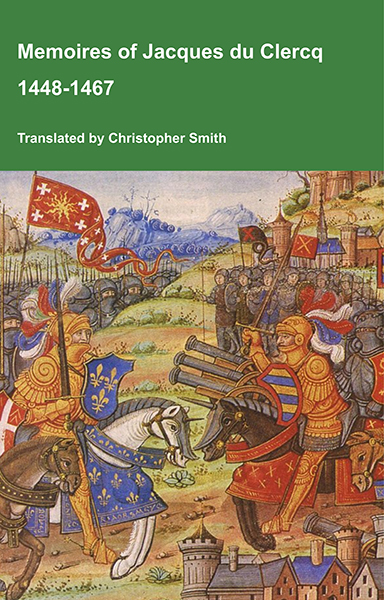
This is a translation of the 'Memoires of Jacques du Clercq', published in 1823 in two volumes, edited by Frederic, Baron de Reissenberg. In his introduction Reissenberg writes: 'Jacques du Clercq tells us that he was born in 1424, and that he was a licentiate in law and a counsellor to Philip the Good, Duke of Burgundy, in the castellany of Douai, Lille, and Orchies. It appears that he established his residence at Arras. In 1446, he married the daughter of Baldwin de la Lacherie, a gentleman who lived in Lille. We read in the fifth book of his Memoirs that his father, also named Jacques du Clercq, had married a lady of the Le Camelin family, from Compiègne. His ancestors, always attached to the counts of Flanders, had constantly served them, whether in their councils or in their armies.' The Memoires cover a period of nineteen years beginning in in 1448, ending in in 1467. It appears that the author had intended to extend the Memoirs beyond that date; no doubt illness or death prevented him from carrying out this plan. As Reissenberg writes the 'merit of this work lies in the simplicity of its narrative, in its tone of good faith, and in a certain air of frankness which naturally wins the reader’s confidence.' Du Clercq ranges from events of national and international importance, including events of the Wars of the Roses in England, to simple, everyday local events such as marriages, robberies, murders, trials and deaths, including that of his own father in Book 5; one of his last entries.
Available at Amazon in eBook and Paperback format.
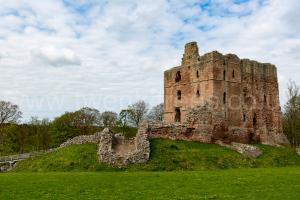
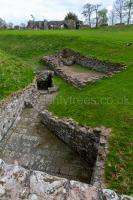
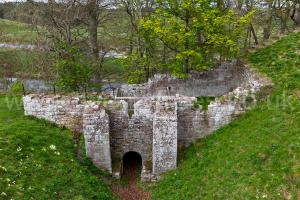
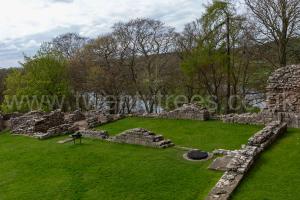
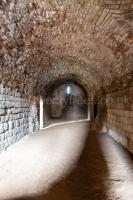
Norham Castle is in Norham, Northumberland, Castles in Northumberland.
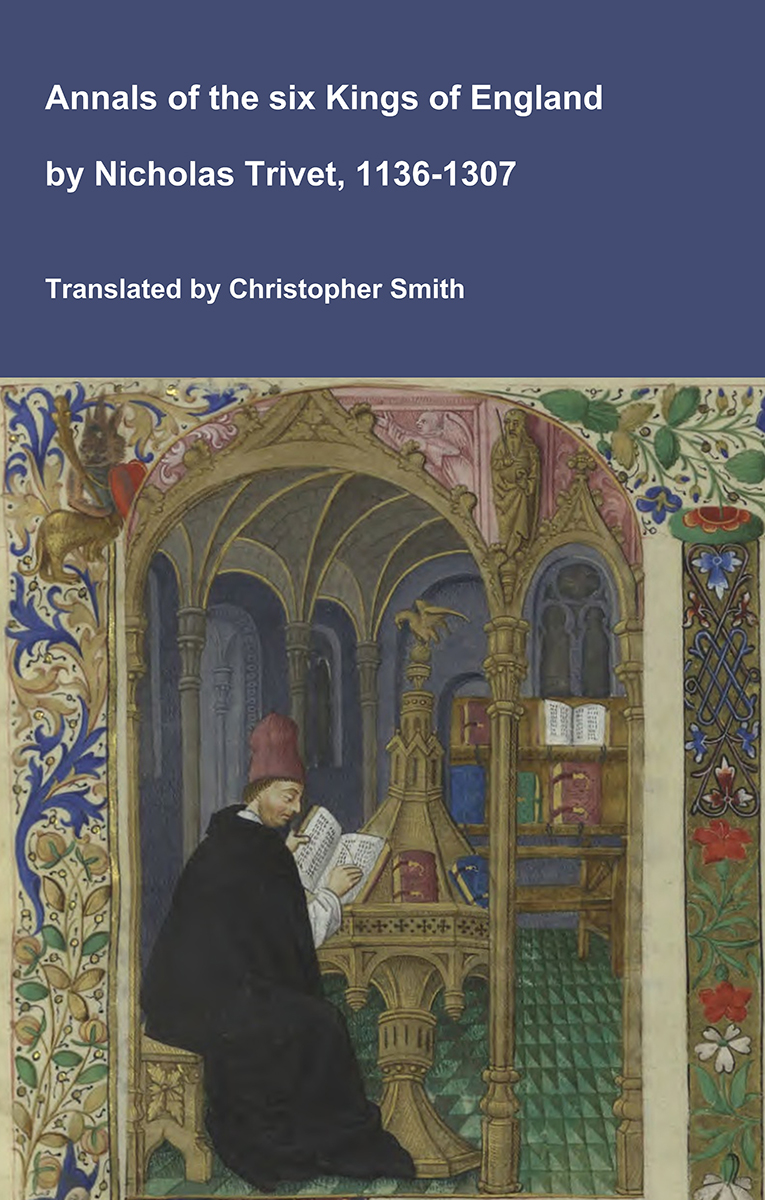 Annals of Six Kings of England by Nicholas Trivet [1258-1328]. Charles, brother of the King of France, renouncing his right to the kingdom of Aragon, married the daughter of Charles, King of Sicily, to whom, together with her, for the said renunciation, he granted the counties of Anjou and Maine. In the same year the King of England, approaching Scotland, after Easter held a parliament at Norham [Map], where, the prelates and those learned in both laws having been consulted, and the annals of former times having been examined, he caused the prelates and the greater men of the kingdom of Scotland to be summoned, and before them in the parish church of Norham he faithfully declared his right and superior lordship over the kingdom of Scotland, and requested that they should acknowledge this, protesting that he would defend the right of his crown even to the shedding of blood. Therefore by all who claimed right in the kingdom of Scotland he was acknowledged as superior lord of Scotland, by letters drawn up thereupon and sealed with their seals, containing the tenor set down below in French.
Carolus frater regis Francorum, renuntians juri suo in regnum Aragoniæ, uxorem duxit filiam Caroli regis Siciliæ; cui cum ea pro dicta renuntiatione Andegaviæ et Cenomanniæ contulit comitatus. Eodem anno rex Angliæ, Scotiæ appropinquans, [post Pascha] parliamentum tenuit apud Noreham, ubi consultis prælatis ac utriusque juris peritis, revolutisque priorum temporum annalibus, vocari fecit prælatos ac majores regni Scotiæ; et coram eis in ecclesia parochiali de Norham jus suum et superius dominium in regnum Scotiæ fideliter declaravit, petivitque ut hoc recognoscerent, protestando jus coronæ suæ usque ad effusionem sanguinis defensurum. Ab omnibus igitur, qui jus in regnum Scotiæ vindicabant, recognitus est superior dominus Scotiæ, per litteras inde confectas eorum sigillis munitas tenorem subscriptum in Gallico continentes:
Annals of Six Kings of England by Nicholas Trivet [1258-1328]. 'To all who shall see or hear the present letters, Florent, Count of Holland, Robert de Brus, lord of Annandale, John de Balliol, lord of Galloway, John de Hastings, lord of Abergavenny, John Comyn, lord of Badenoch, Patrick de Dunbar, Earl of March, John de Vesci, in place of his father, Nicholas de Soulis, William de Ros, greeting in the Lord. Whereas we believe that we have a right in the kingdom of Scotland, and intend to declare, claim, and prove that right before him who has the greater power, jurisdiction, and authority of examining our claim, and whereas the noble prince, lord Edward, by the grace of God King of England, has informed us by good and sufficient reasons that to him pertains, and ought to pertain, the superior lordship of the kingdom of Scotland, and the authority to hear, examine, and determine our claim, we, of our own free will, without any violence or compulsion, are willing, consent, and grant that we shall receive justice before him as superior lord of the land. We moreover will and promise that we shall hold and maintain his decision firm and stable, and that he shall have the kingdom to whom before him that right shall be adjudged. In testimony of these things, we have set our seals to these letters. Given at Norham [Map] on the Tuesday [5th June 1291] next after the Ascension of the Lord, in the year of grace one thousand two hundred and ninety-one.'
'Omnibus præsentes litteras visuris vel audituris, Florentius comes Holandiæ, Robertus Le Brus dominus Vallis Anandiæ, Joannes de Balliolo dominus Galwidiæ, Joannes de Hastinges dominus Abergavenniæ, Joannes Comin dominus de Badenau, Patricius de Dunbar comes Marchiæ, Joannes de Vesci vice patris sui, Nicolaus de Sules, Willelmus de Ros, salutem in Domino. Cum nos in regno Scotiæ jus habere credamus, et jus illud coram illo, qui potiorem potestatem, jurisdictionem, et rationem examinandi jus nostrum habeat, declarare, vindicare, et probare intendamus: Nobilis quoque princeps dominus Edwardus, gratia DEI rex Angliæ, per bonas sufficientesque rationes nos informaverit quod ad eum spectat et habere debet superius dominium regni Scotiæ, et cognitionem in audiendo, [examinando] et diffiniendo jus nostrum: Nos de propria nostra voluntate, sine omni violentia et coactione, volumus, annuimus, [et concedimus] ut recipjamus jus coram eo tamquam superiori domino terræ. Volumus Sinsuper et promittimus, quod habebimus et tenebimus firmum et stabile factum suum, et quod ille habebit regnum, cui coram eo jus potiusillud dabat. In testimonium istorum, nos litteris istis apposuimus sigilla nostra. Datum apud Noreham feria tertia proxima post Ascensionem Domini, anno gratiæ millesimo ducentesimo nonagesimo primo.'
In 1319 Thomas Grey [aged 39] was appointed Constable of Norham Castle.
Around June 1462 a Scottish and Lancastrian force, including King James III of Scotland [aged 10], his mother Mary of Guelders Queen Consort Scotland [aged 28], King Henry VI of England and II of France [aged 40] and his wife Margaret of Anjou Queen Consort England [aged 32], laid siege to Norham Castle [Map]. They held Norham for eighteen days until a force led by Richard "Kingmaker" Neville Earl Warwick, 6th Earl Salisbury [aged 33] and his brother John Neville 1st Marquess Montagu [aged 31] advanced to Norham Castle [Map] at which time the Scottish and Lancastrian force fled in panic pursued by the Yorkist army. Margaret of Anjou Queen Consort England and her son Edward of Westminster Prince of Wales [aged 8] escaped to Berwick-upon-Tweed, Northumberland [Map] and then to the continent. King Henry VI of England and II of France remained in Scotland - he and his wife never saw each other again.
Chronicle of Gregory. June 1463. And thenne aftyr that come Kyng Harry that was, and the Quene to the King of Schottys, Syr Perys de Brasylle [aged 53], with iiijxx M1 Schottys, and layde a sege unto the castelle of Norham [Map], and lay there xviij [18] dayes.
Chronicle of Gregory. [Before 25th April 1464] The poyntement was that they Schottys and [t]ey shulde mete at Yorke. And then was my Lord of Mountegewe [aged 33] assygnyd to fecche yn the Schottys pesseabylly, for he was Wardon of the Marchys. And then my Lord of Mountegewe toke his jornaye towarde the Newe Castelle [Map]. And by the waye was full falsely i-purvyde that fals Duke Harry of Somersett [aged 28] and Percy [aged 39], with her feleschyppe assocyat unto them, that there was layde by the waye, a lytylle from the Newecastel, in a woode, that fals traytoure Syr Umfray Nevyle [aged 25], with iiij schore [80] sperys, and the bowys there too. And they shulde have falle on the Lord Mountegeue sodenly, and slayne him sodenly, but, God be thonkyd, her fals treson was aspyde and knowe. And thenne the Lord Montegewe toke a nothyr waye, and made to be gaderyd a grete feleschippe, and went to the Newecastelle [Map], and soo toke his jornaye unto Norham [Map] warde.
Chronicle of Scotland by Robert Lindesay Volume 1 Book 20 Chapter 18. [September 1513] Hou the king passit to the feild of floudane. Hou the king cuist doun werk [Map]1 and norem [Map]2 and fuird [Map]3 and atill [Map]4. Hou the king mellit with the lady furd. Hou the men of weiris wictuallis wer spendit. Hou the lady of fuird askit licence at the king to wisie hir freindis. Hou the lady fuird schowit the Erle of Surrie all the king of Scotlandis secreittis.
Note 1. Wark Castle, Northumberland [Map].
Note 2. Norham Castle [Map].
Note 3. Ford Castle [Map].
Note 4. Etal Castle, Northumberland [Map].
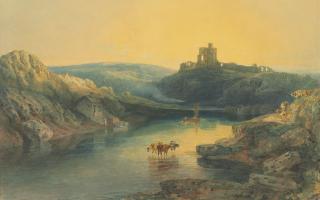
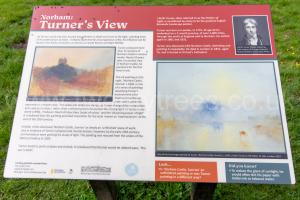
1798. Joseph Mallord William Turner [aged 22]. Norham Castle [Map]: Sunrise.
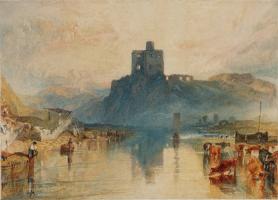
Around 1822. Joseph Mallord William Turner [aged 46]. Norham Castle [Map], on the River Tweed.
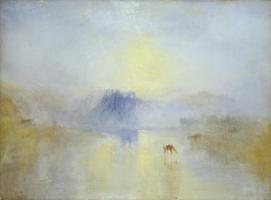
1845. Joseph Mallord William Turner [aged 69]. Norham Castle [Map]: Sunrise.
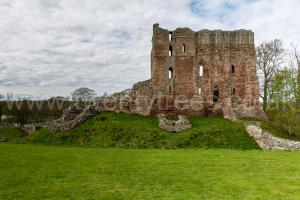
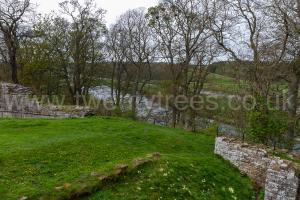
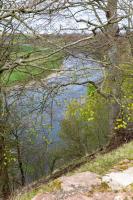
2022. Norham Castle [Map] protects a strategically important crossing of the River Tweed.