

Jean de Waurin's Chronicle of England Volume 6 Books 3-6: The Wars of the Roses
Jean de Waurin was a French Chronicler, from the Artois region, who was born around 1400, and died around 1474. Waurin’s Chronicle of England, Volume 6, covering the period 1450 to 1471, from which we have selected and translated Chapters relating to the Wars of the Roses, provides a vivid, original, contemporary description of key events some of which he witnessed first-hand, some of which he was told by the key people involved with whom Waurin had a personal relationship.
Available at Amazon in eBook and Paperback format.
Earl Cambridge is in Earldoms of England Alphabetically.
There have been five creations of Earl Cambridge:
1st. 1340. William Jülich V Duke Jülich. Extinct. 25th February 1361.
2nd. 1362. Edmund of Langley 1st Duke of York. Extinct. 1414.
3rd. 1414. Richard of Conisbrough 1st Earl Cambridge. Merged with the Crown. 28th June 1461. Coronation of Edward IV.
4th. 16th June 1619. James Hamilton 2nd Marquess Hamilton. Extinct. 12th September 1651. Battle of Worcester.
5th. 13th May 1659. Henry Stewart 1st Duke Gloucester. Extinct. 13th September 1660.
Earl Cambridge is also in Earldoms of England Chronologically, Extinct Earldoms of England.
Summary
1340. William Jülich V Duke Jülich [aged 41] created.
25th February 1361. William Jülich I Duke Jülich [aged 34] extinct.
In 1340 William Jülich V Duke Jülich [aged 41] was created 1st Earl Cambridge. The creation somewhat vague; he was the brother-in-law of King Edward III of England [aged 27]; his wife Joanna Hainaut Duchess Guelders [aged 25] was the sister of Philippa of Hainaut Queen Consort England [aged 29].
On 25th February 1361 William Jülich V Duke Jülich [aged 62] died. His son William [aged 34] succeeded I Duke Jülich. Earl Cambridge extinct. The provenance of this title is vague. It isn't entirely clear when he was created Earl of Cambridge, or whether it was for life only, or if he renounced it; his son didn't succeed to it.
Earl Cambridge is also in Earldoms of England Chronologically, Extinct Earldoms of England.
Summary
1362. Edmund of Langley 1st Duke of York [aged 20] created.
1st August 1402. Son Edward 2nd Duke of York 1st Duke Albemarle [aged 29] succeeded.
1414. Edward 2nd Duke of York 1st Duke Albemarle extinct.
In 1362 Edmund of Langley 1st Duke of York [aged 20] was created 1st Earl Cambridge.
On 11th July 1372 Edmund of Langley 1st Duke of York [aged 31] and Isabella of Castile Duchess York [aged 17] were married at Wallingford, Oxfordshire [Map]. She by marriage Countess Cambridge. She being the younger sister of Constance [aged 18] who had married Edmund's older brother John of Gaunt 1st Duke Lancaster [aged 32] a year before. An example of Marriage of Two Sets of Siblings. She the illegitmate daughter of Peter "Cruel" I King Castile and Maria Padilla. He the son of King Edward III of England [aged 59] and Philippa of Hainaut Queen Consort England. They were half third cousin twice removed.
On 1st August 1402 Edmund of Langley 1st Duke of York [aged 61] died at King's Langley, Hertfordshire [Map]. His son Edward [aged 29] succeeded 2nd Duke York, 2nd Earl Cambridge and inherited his estates which included Conisbrough Castle [Map]. Philippa Mohun Duchess York [aged 35] by marriage Duchess York.
In 1414 Edward 2nd Duke of York 1st Duke Albemarle [aged 41]resigned the Earldom of Cambridge. It appears he took this action so that his brother Richard of Conisbrough 1st Earl Cambridge [aged 28] could be created Earl Cambridge (of the third creation) later that year.
Earl Cambridge is also in Earldoms of England Chronologically, Merged with the Crown Earldoms of England.
Abbot John Whethamstede’s Chronicle of the Abbey of St Albans
Abbot John Whethamstede's Register aka Chronicle of his second term at the Abbey of St Albans, 1451-1461, is a remarkable text that describes his first-hand experience of the beginning of the Wars of the Roses including the First and Second Battles of St Albans, 1455 and 1461, respectively, their cause, and their consequences, not least on the Abbey itself. His text also includes Loveday, Blore Heath, Northampton, the Act of Accord, Wakefield, and Towton, and ends with the Coronation of King Edward IV. In addition to the events of the Wars of the Roses, Abbot John, or his scribes who wrote the Chronicle, include details in the life of the Abbey such as charters, letters, land exchanges, visits by legates, and disputes, which provide a rich insight into the day-to-day life of the Abbey, and the challenges faced by its Abbot.
Available at Amazon in eBook and Paperback format.
Summary
1414. Richard of Conisbrough 1st Earl Cambridge [aged 28] created.
5th August 1415. Son Richard Plantagenet 3rd Duke of York [aged 3] succeeded. See Southampton Plot.
30th December 1460. Son King Edward IV of England [aged 18] succeeded. See Battle of Wakefield.
28th June 1461. King Edward IV of England merged with the crown. See Coronation of Edward IV.
In 1414 Richard of Conisbrough 1st Earl Cambridge [aged 28] was created 1st Earl Cambridge. Maud Clifford Countess Cambridge [aged 25] by marriage Countess Cambridge.
On 5th August 1415 two executions of those involved in the Southampton Plot took place at the North Gate aka Bargate [Map]:
Richard of Conisbrough 1st Earl Cambridge [aged 30] was beheaded. His son Richard [aged 3] succeeded 2nd Earl Cambridge.
Henry Scrope 3rd Baron Scrope of Masham [aged 42] was beheaded. His brother John [aged 27] succeeded 4th Baron Scrope of Masham.
On 30th December 1460 the Lancastrian army took their revenge for the defeats of the First Battle of St Albans and the Battle of Northampton at the Battle of Wakefield near Sandal Castle [Map]. The Lancastrian army was commanded by Henry Holland 3rd Duke Exeter [aged 30], Henry Beaufort 2nd or 3rd Duke of Somerset [aged 24] and Henry Percy 3rd Earl of Northumberland [aged 39], and included John Courtenay 7th or 15th Earl Devon [aged 25] and William Gascoigne XIII [aged 30], both knighted, and James Butler 1st Earl Wiltshire 5th Earl Ormonde [aged 40], John "Butcher" Clifford 9th Baron Clifford [aged 25], John Neville 1st Baron Neville of Raby [aged 50], Thomas Ros 9th Baron Ros Helmsley [aged 33], Henry Roos and Thomas St Leger [aged 20].
The Yorkist army was heavily defeated.
Richard Plantagenet 3rd Duke of York [aged 49] was killed. His son Edward [aged 18] succeeded 4th Duke York, 7th Earl March, 9th Earl of Ulster, 3rd Earl Cambridge, 9th Baron Mortimer of Wigmore.
Thomas Neville [aged 30], and Edward Bourchier were killed.
Father and son Thomas Harrington [aged 60] and John Harrington [aged 36] were killed, the former dying of his wounds the day after.
William Bonville 6th Baron Harington [aged 18] was killed. His daughter Cecily succeeded 7th Baroness Harington.
Thomas Parr [aged 53] fought in the Yorkist army.
Following the battle Richard Neville Earl Salisbury [aged 60] was beheaded by Thomas "Bastard of Exeter" Holland. William Bonville [aged 40] was executed.
Edmund York 1st Earl of Rutland [aged 17] was killed on Wakefield Bridge [Map] by John "Butcher" Clifford. Earl of Rutland extinct.
On 28th June 1461 King Edward IV of England [aged 19] was crowned IV King of England. Duke York, Earl March, Earl of Ulster, Earl Cambridge, Baron Mortimer of Wigmore merged with the Crown. Cardinal Thomas Bourchier [aged 43] was assisted by Archbishop William Booth [aged 73] at Westminster Abbey [Map].
Earl Cambridge is also in Earldoms of England Chronologically, Extinct Earldoms of England.
Summary
16th June 1619. James Hamilton 2nd Marquess Hamilton [aged 30] created.
2nd March 1625. Son James Hamilton 1st Duke Hamilton [aged 18] succeeded.
9th March 1649. Brother William Hamilton 2nd Duke Hamilton [aged 32] succeeded. See Execution of Three Lords.
12th September 1651. Anne Hamilton 3rd Duchess Hamilton [aged 19] extinct. See Battle of Worcester.
On 16th June 1619 James Hamilton 2nd Marquess Hamilton [aged 30] was created 1st Earl Cambridge, 1st Baron Innerdale.


On 2nd March 1625 James Hamilton 2nd Marquess Hamilton [aged 36] died at Whitehall Palace [Map]. His son James [aged 18] succeeded 3rd Marquess Hamilton, 2nd Earl Cambridge, 2nd Baron Innerdale. Margaret aka Mary Feilding [aged 12] by marriage Marchioness Hamilton.
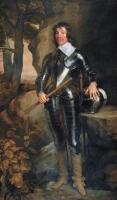

On 9th March 1649 at the Old Palace Yard, Westminster Palace three Royalist Lords were beheaded ...
Arthur Capell 1st Baron Capell Hadham [aged 41] was beheaded. His son Arthur [aged 17] succeeded 2nd Baron Capell Hadham.
Henry Rich 1st Earl Holland [aged 58] was beheaded. His son Robert [aged 30] succeeded 2nd Earl Holland. Elizabeth Ingram Countess Holland [aged 26] by marriage Countess Holland.
James Hamilton 1st Duke Hamilton [aged 42] was beheaded. His brother William [aged 32] succeeded 2nd Duke Hamilton, 3rd Earl Cambridge, 3rd Baron Innerdale by special remainder.
John Owen [aged 49] had been sentenced to death but was subsequently pardoned.


On 12th September 1651 William Hamilton 2nd Duke Hamilton [aged 34] died from wounds received at the Battle of Worcester. His niece Anne [aged 19], daughter of the 1st Duke, succeeded 3rd Duchess Hamilton. Earl Cambridge, Baron Innerdale extinct.
Earl Cambridge is also in Earldoms of England Chronologically, Extinct Earldoms of England.
Summary
13th May 1659. Henry Stewart 1st Duke Gloucester [aged 18] created.
13th September 1660. Henry Stewart 1st Duke Gloucester extinct.
On 13th May 1659 Henry Stewart 1st Duke Gloucester [aged 18] was created 1st Duke Gloucester, 1st Earl Cambridge by King Charles I of England, Scotland and Ireland.


On 13th September 1660 Henry Stewart 1st Duke Gloucester [aged 20] died of smallpox. Duke Gloucester and Earl Cambridge extinct. He was buried at Westminster Abbey [Map] in the same vault as Mary Queen of Scots.